2490903 Search Results

JLJ4651118: Plaque commemorating Louis XVI's hunts in Compiegne forest, featuring a valet decoupling the old pack, 1778-81 (painting), Oudry, Jean-Baptiste (1686-1755) (after) / Bridgeman Images

JLJ4686915: Happy Family, 1790 (oil on canvas), Watteau, Francois Louis Joseph (1758-1823) / Bridgeman Images

JLJ4686966: Hanging of Revelation (1373-1383), 14th century (tapestry), Bataille, Nicolas (fl. 1363-1400) / Bridgeman Images

LRI4687171: Various statues from archaeological excavations in Samos under study., Greek / Bridgeman Images

LRI4620568: The Holy Family with Virgin animals leafing through a book, and holding the child Jesus, surrounded by a dog, fox, birds, crab, owl, owl, parrot; frog, snail and an iris. Painting by Jan Breugel the Elder called Bruegel of Velvet (Brueghel or Breughel, 1568-1625) Rome, Galleria Doria Pamphilj, Brueghel, Jan the Elder (1568-1625) / Bridgeman Images

PIX4620728: Nebula NGC 7635 in Cassiopee - The Bubble Nebula: This nebula is located about 8000 light years from Earth. A star 40 times more massive than our Sun, called Wolf-Rayet, is responsible for the formation of this bubble; it is the star BD+60* 2522. Image obtained by the space telescope Hubble - The Bubble Nebula, also known as NGC 7635, is an emission nebula located 8 000 light-years away - This complete view of the Bubble Nebula allows us to fully appreciate the almost perfectly symmetrical shell which gives the nebula its name. This shell is the result of a powerful flow of gas - known as a stellar wind - from the bright star visible just to the left of centre in this image. The star, SAO 20575, is between ten and twenty times the mass of the Sun and the pressure created by its stellar wind forces the surrounding interstellar material outwards into this bubble-like form - The giant molecular cloud that surrounds the star - glowing in the star's intense ultraviolet radiation - tries to stop the expansion of the bubble. However, although the sphere already measures around ten light-years in diameter, it is still growing, owing to the constant pressure of the stellar wind - currently at more than 100,000 kilometers per hour! - This stunning new image was observed by the NASA/ESA Hubble Space Telescope / Bridgeman Images

LRI4620800: The Dutch Nobles Walk on horseback. Painting by Albert (Aelbert or Aelbrecht) Cuyp (1620-1691) 17th century Sun. 119x152,5 cm Paris, musee du Louvre, Cuyp, Aelbert (1620-91) / Bridgeman Images

PIX4620841: Nebula NGC 346 in the Small Magellan Cloud - Nebula NGC 346 in the Small Magellanic Cloud - Photo of the nebula NGC 346, located about 210,000 years ago - light in the galaxy of the Little Magellan Cloud, obtained by the 2.2-metre MPG/ESO telescope. Nebula NGC 346 in the Small Magellanic Cloud, a nearby irregular galaxy, seen by the 2.2 - metre MPG/ESO telescope at the La Silla Observatory in Chile / Bridgeman Images

PIX4620885: Nebula N55 in the Great Magellan Cloud - Star forming region north of the Great Magellan Cloud. Image from the 1.2m Schmidt UK Telescope of Siding Spring / Bridgeman Images

PIX4620894: Nebula N55 in the Great Magellan Cloud - Henize 55 (NGC 2014) is a star-forming region located north of the Great Magellan Cloud. Image obtained by Siding Spring's 3.9m telescope / Bridgeman Images

PIX4620950: Nebula Sharpless 2 - 1 (SH2 - 1) in Scorpio - Nebula Sharpless 2 - 1 (SH2 - 1) in Scorpio / Bridgeman Images

JLJ4620994: Sixth Italian War (1521-1526): the fleet from Doria to Naples, Italy, 1909 (illustration), Robida, Albert (1848-1926) / Bridgeman Images

PIX4621042: Nebula Sh2 - 142 in Cephee - Star formation region in Cephee and star clusters NGC 7380 / Bridgeman Images

LRI4621066: The field concert Musicians on the grass, women are naked. Detail. Painting attributed to Tiziano Vecellio known as the Titian (1485-1576) or to Giorgio da Castelfranco called Giorgione (1476/1478-1510) Sun. 1,05 X 1.36 m Paris, Museum of the Louvre, Titian (Tiziano Vecellio) (c.1488-1576) (attr. to) / Bridgeman Images

PIX4621081: Nebuleuse Sh2 - 155 in Cephe / Bridgeman Images

PIX4621115: Star Formation in the DR21 Region - Star Formation in the DR21 Region - This star formation region is about 6200 years old - light. Hidden in light visible by interstellar dust, this region rises in infrared light. Gas filaments appear in red; they emphasize the presence of aromatic polycyclic hydrocarbons (PAH); they are organic molecules composed of carbon atoms and hydrogen that could be the germs on which the first bricks of life appeared. Composite image in different wavelengths obtained by the Spitzer space telescope; in blue the visible light, in yellow and red the infrared light. Hidden behind a shroud of dust in the constellation Cygnus is a stellar nursery called DR21, which is giving birth to some of the most massive stars in our galaxy. Visible light images reveal no trace of this interstellar cauldron because of heavy dust obscuration. This image from Nasa's Spitzer Space Telescope allow us to peek behind the cosmic veil and pinpoint one of the most massive natal stars yet seen in our Milky Way galaxy. The never - before - seen star is 100,000 times as bright as the Sun. Also revealed for the first time is a powerful outflow of hot gas emanating from this star and bursting through a giant molecular cloud. This colorful image is a large - scale composite mosaic assembled from data collected at a variety of different wavelengths. Views at visible wavelengths appear blue, near - infrared light is depicted as green, and mid - infrared data is portrayed as red. The result is a contrast between structures seen in visible light (blue) and those observed in the infrared (yellow and red). The image covers an area about two times that of a full moon. The red filaments stretching across the Spitzer image denote the presence of polycyclic aromatic hydrocarbons. These organic molecules, comprised of carbon and hydrogen, are excited by surrounding i / Bridgeman Images

LRI4651419: Pierrot, 1913 (oil on canvas), Macke, August (1887-1914) / Bridgeman Images

JLJ4651829: Calliope, muse of arts & letters. Marble sculpture, 150 AD, 2nd century (marble), Roman, (2nd century) / Bridgeman Images

JLJ4651912: Tsar Nicholas II (1868-1918) and President Emile Loubet (1836-1929), 20th century (lithograph) / Bridgeman Images

PIX4651973: CERGA Observatory: Laser - Moon & Laser - Satellite - CERGA Observatory: Laser - Moon & Laser - Satellite - 21/01/0 / Bridgeman Images

JLJ4687493: Visitation, 1445 (miniature), Fouquet, Jean (c.1420-80) / Bridgeman Images

JLJ4687511: Turkish astrology: the seven planets and the different metiers. Manuscript from the Middle Ages (miniature), Turkish School / Bridgeman Images

JLJ4687517: Visitation, 16th century (oil on canvas), Macip, Vicente Juan (Juan de Juanes) (c.1510-79) / Bridgeman Images

JLJ4687673: History of the French colonies, 19th century (engraving), French School, (19th century) / Bridgeman Images

JLJ4687691: Cover page of the book "Nouveau voyage aux Iles de l'Amerique", 1722 (engraving), Unknown artist, (18th century) / Bridgeman Images

LRI4688071: Columns of St. Lawrence, 4th century, Roman, (4th century AD) / Bridgeman Images

PIX4652094: 21/01/00: Calern Observatory (CERGA): interferometer GI2T - Calern observatory (CERGA): the GI2T/Regain interferometer / Bridgeman Images

PIX4652173: 21/01/00: Calern Observatory (CERGA): interferometer GI2T - Calern observatory (CERGA): the GI2T/Regain interferometer / Bridgeman Images
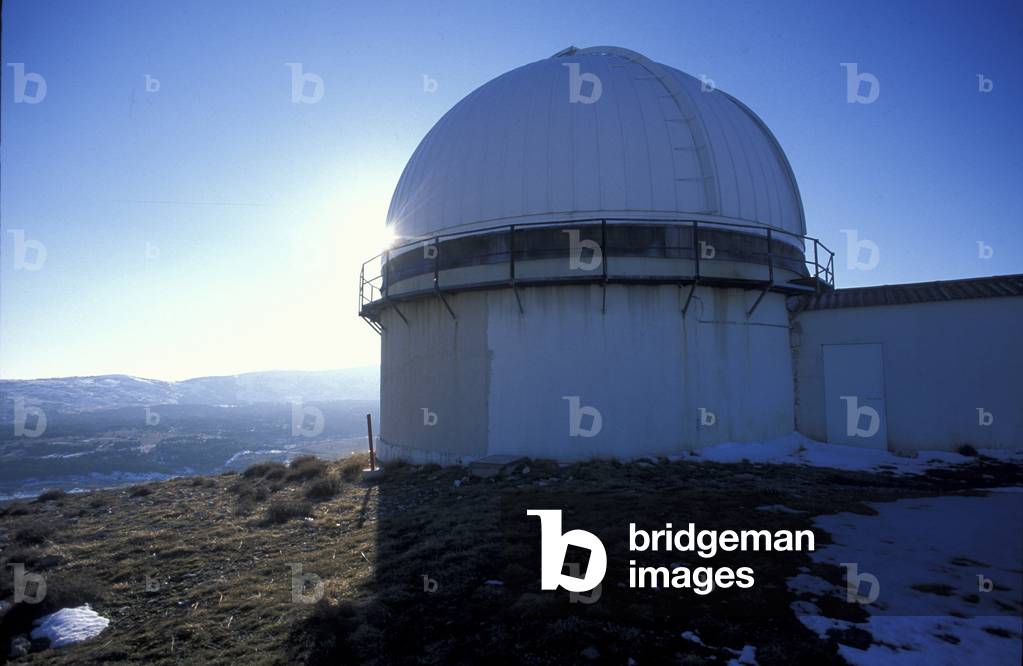
PIX4652196: 21/01/00: Observatoire du Cerga-France-Coupole du telescope de Schmidt - Calern observatory (CERGA): the Schmidt telescope / Bridgeman Images

PIX4652212: Chajnantor Plateau - ESO's 12 m diameter APEX antenna observes the Universe in submillimetre radiation. The APEX telescope is the precursor of the Alma network. Chajnantor Plateau, 5100 m altitude, Chile / Bridgeman Images

PIX4652262: ALMA - Japanese antennas - ALMA - Japanese antennas - Two of the 12-metre Japanese antennas (ACA), June 2008, Chajnantor Plateau, Atacama Desert, Chile. View of two of the 12 - m english radiotelescope located on the 5100 meters high Chajnantor plateau in Atacama Desert, Chile. June 2008 / Bridgeman Images

JLJ4652300: Chinese art: porcelain statuette representing a knight from the Ming period, 17th century (porcelain), Chinese School, (17th century) / Bridgeman Images

JLJ4652306: Small Metiers of Paris: street singers, 1909 (lithograph), Pezeu-Carlopez, Charles (1838-1914) / Bridgeman Images

LRI4652669: Lettrine with representation of Aeolus, the keeper of the winds. (Miniature, 15th century), Liberale (Bonfanti) da Verona, (c.1445-1527) / Bridgeman Images

PIX4621162: Dark nebula and globular cluster NGC 4372 - Dark nebula and globular cluster NGC 4372 - HMSTG 436 is a molecular cloud visible near the globular cluster NGC 4372 (on the right, above the bright star Gamma Musca) in the southern constellation of the Fly. HMSTG 436 is a linear molecular cloud in the southern constellation Musca, the fly. It is easily found by targeting the globular cluster NGC 4372, visible at right, above the bright star gamma Musca / Bridgeman Images

PIX4621239: Nebulae B175 and VDB 152 in Cephee - Dark nebula B175 and reflection nebula VDB 152 - In the center of the image, a large dust trail leads to a blue nebula. This is the dark nebula, Barnard 175, which coaches the nebula by reflexion VDB 152 (Ced 201). In the center of the image a large dust band, B175; above is the reflection nebula VDB 152 (or Ced 201). These objects are located in Cepheus constellation / Bridgeman Images
