Bayard, Emile Antoine (1837-91) Assets (225 in total)

Search options

Orientation
Colour

Display options

View

Print

To print search results, use print friendly version of this page.

Results

Rixe on the heights that dominate Tong-hay (or Tong hay), one of the members of the expedition that left on the heights of the city to draw by nature, is followed by a crowd of curious, who declare a general fight, each wishing to see as closely as possible the works of the cartoonist, engraving after the drawing of Emile Bayard, to illustrate the journey of exploration in Indochina by Francis Garnier, lieutenant of ship, in 1866-1868, published in “Le tour du monde”” 1873, edited by Edouard Charton, edition Hachette, Paris. Selva Collection.

LSE4329422: Rixe on the heights that dominate Tong-hay (or Tong hay), one of the members of the expedition that left on the heights of the city to draw by nature, is followed by a crowd of curious, who declare a general fight, each wishing to see as closely as possible the works of the cartoonist, engraving after the drawing of Emile Bayard, to illustrate the journey of exploration in Indochina by Francis Garnier, lieutenant of ship, in 1866-1868, published in “Le tour du monde”” 1873, edited by Edouard Charton, edition Hachette, Paris. Selva Collection., Bayard, Emile Antoine (1837-91) / Bridgeman Images

The exchange of blood between King Rionga and Sir Baker, after drinking a large amount of banana cider and spending a night watching and young, the ceremony takes place, each in turn they cut their forearms and drink a drop of blood, then Rionga Vakil is proclaimed new king of Ounyoro (Eastern Sudan), engraving after a drawing by Emile Bayard, illustrating an armed expedition in Central Africa, for the suppression of the black trade, from 1869 to 1873, by Sir Samuel White Baker, published in “Le tour du monde”” 1875, edited by Edouard Charton, Hachette edition, Paris. Selva Collection.

LSE4329965: The exchange of blood between King Rionga and Sir Baker, after drinking a large amount of banana cider and spending a night watching and young, the ceremony takes place, each in turn they cut their forearms and drink a drop of blood, then Rionga Vakil is proclaimed new king of Ounyoro (Eastern Sudan), engraving after a drawing by Emile Bayard, illustrating an armed expedition in Central Africa, for the suppression of the black trade, from 1869 to 1873, by Sir Samuel White Baker, published in “Le tour du monde”” 1875, edited by Edouard Charton, Hachette edition, Paris. Selva Collection., Bayard, Emile Antoine (1837-91) / Bridgeman Images

A sailor of the expedition, who recuperated convolvus (edible aquatic plant that spreads on the surface of the water), is seized at the elbow by a crocodile; he owes his survival only to the intervention of his comrades, etching by Emile Bayard illustrating an expedition in Central Africa, for the suppression of the black trade, from 1869 to 1873, by Sir Samuel White Baker, published in “Le tour du monde”” 1875, edited by Edouard Charton, Hachette edition, Paris. Selva Collection.

LSE4329950: A sailor of the expedition, who recuperated convolvus (edible aquatic plant that spreads on the surface of the water), is seized at the elbow by a crocodile; he owes his survival only to the intervention of his comrades, etching by Emile Bayard illustrating an expedition in Central Africa, for the suppression of the black trade, from 1869 to 1873, by Sir Samuel White Baker, published in “Le tour du monde”” 1875, edited by Edouard Charton, Hachette edition, Paris. Selva Collection., Bayard, Emile Antoine (1837-91) / Bridgeman Images

A leopard leaps on a man and bites him cruelly on his back, in the vicinity of Bambare (Congo), engraving after a drawing by Emile Bayard, illustrating David Livingstone's last diary (1813-1873), in 1866-1873, published in “” Le tour du monde”” 1875, edited by Edouard Charton, Hachette edition, Paris. Selva Collection.

LSE4330124: A leopard leaps on a man and bites him cruelly on his back, in the vicinity of Bambare (Congo), engraving after a drawing by Emile Bayard, illustrating David Livingstone's last diary (1813-1873), in 1866-1873, published in “” Le tour du monde”” 1875, edited by Edouard Charton, Hachette edition, Paris. Selva Collection., Bayard, Emile Antoine (1837-91) / Bridgeman Images

Mounza, king of the Mombuttous (tribe of Sudan), headdress of a bun covered with a cylindrical top cap adorned with parrot feathers, a crescent-shaped copper plate attached to the forehead, around the neck, a collar of copper slats and on his arms and dowels are fasteners many copper rings and cylinders, as a scepter, he branched the cemeterre of his tribe, a species of copperate sickle; next to his throne, 2 gueridons loads of cola nuts (kola), dried bananas and cassava porridge, etched after the drawing of Emile Bayard, illustrating a voyage to the heart of Africa, in 1868-1871, by Dr. George Schweinfurth, published in “” Round the world”” 1874, under the direction of Edouard Charton, edition Hachette, Paris. Selva Collection.

LSE4329867: Mounza, king of the Mombuttous (tribe of Sudan), headdress of a bun covered with a cylindrical top cap adorned with parrot feathers, a crescent-shaped copper plate attached to the forehead, around the neck, a collar of copper slats and on his arms and dowels are fasteners many copper rings and cylinders, as a scepter, he branched the cemeterre of his tribe, a species of copperate sickle; next to his throne, 2 gueridons loads of cola nuts (kola), dried bananas and cassava porridge, etched after the drawing of Emile Bayard, illustrating a voyage to the heart of Africa, in 1868-1871, by Dr. George Schweinfurth, published in “” Round the world”” 1874, under the direction of Edouard Charton, edition Hachette, Paris. Selva Collection., Bayard, Emile Antoine (1837-91) / Bridgeman Images

Negres and negresses of the Sahara, on the banks of the Oued Rihr. Engraving by E.Bayard, to illustrate the Algerian Sahara, by V.Largeau, in 1874-1878, published in the Tour du monde, under the direction of Edouard Charton (1807-1890), 1881, Paris. Selva Collection.

LSE4332601: Negres and negresses of the Sahara, on the banks of the Oued Rihr. Engraving by E.Bayard, to illustrate the Algerian Sahara, by V.Largeau, in 1874-1878, published in the Tour du monde, under the direction of Edouard Charton (1807-1890), 1881, Paris. Selva Collection., Bayard, Emile Antoine (1837-91) / Bridgeman Images
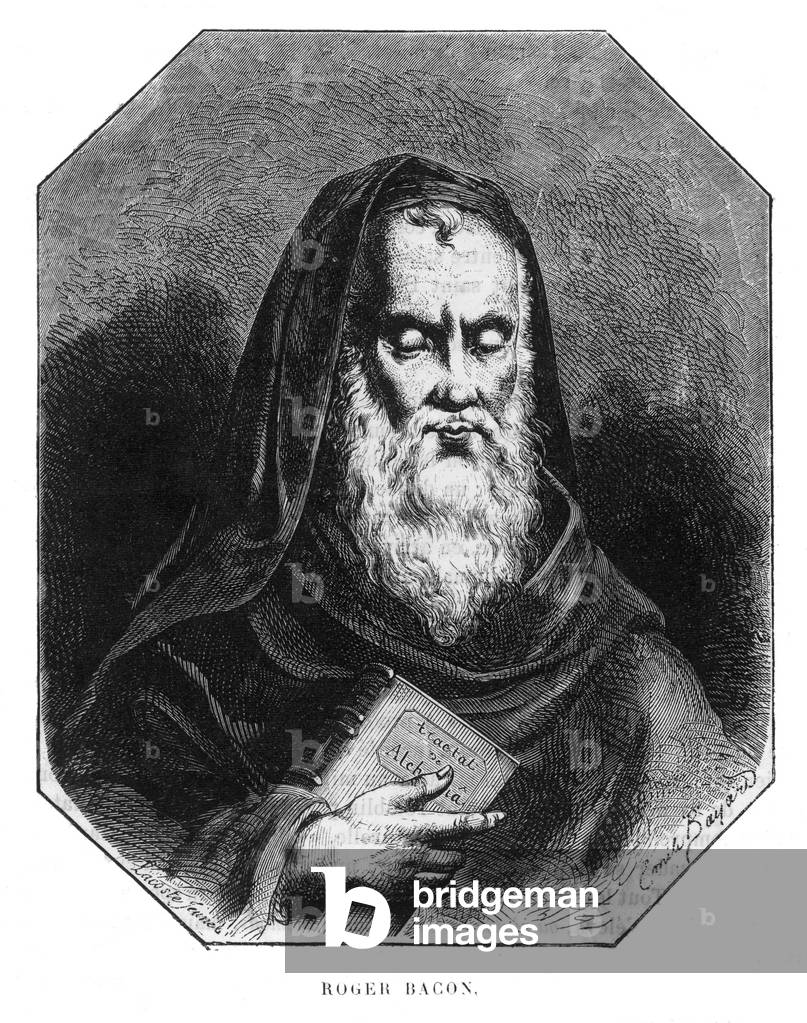
ROGER BACON Scientist and scholar  Date: 1214 - 1294  Source: Engraving by Emile Bayard after Lacoste Jeunet

XRH1718831: ROGER BACON Scientist and scholar Date: 1214 - 1294 Source: Engraving by Emile Bayard after Lacoste Jeunet, Bayard, Emile Antoine (1837-91) / Bridgeman Images

Village of warlike termites (termitiere), Africa. Engraving 1897

JAB4120842: Village of warlike termites (termitiere), Africa. Engraving 1897, Bayard, Emile Antoine (1837-91) / Bridgeman Images

The restaurant's rating, 1866 (engraving)

JAB4120672: The restaurant's rating, 1866 (engraving), Bayard, Emile Antoine (1837-91) / Bridgeman Images


Back to top