Search options

Orientation
Colour

Display options

View

Print

To print search results, use print friendly version of this page.

2491514 Search Results

Astronaut Karen Nyberg in Space - Astronaut Karen Nyberg in ISS - Astronaut Karen Nyberg looks at Earth through the window of the Kibo module of the International Space Station. 10 June 2008. Astronaut Karen Nyberg, STS - 124 mission specialist, looks through a window in the newly installed Kibo laboratory of the International Space Station while Space Shuttle Discovery is docked with the station. (June 10 2008)

PIX4602119: Astronaut Karen Nyberg in Space - Astronaut Karen Nyberg in ISS - Astronaut Karen Nyberg looks at Earth through the window of the Kibo module of the International Space Station. 10 June 2008. Astronaut Karen Nyberg, STS - 124 mission specialist, looks through a window in the newly installed Kibo laboratory of the International Space Station while Space Shuttle Discovery is docked with the station. (June 10 2008) / Bridgeman Images
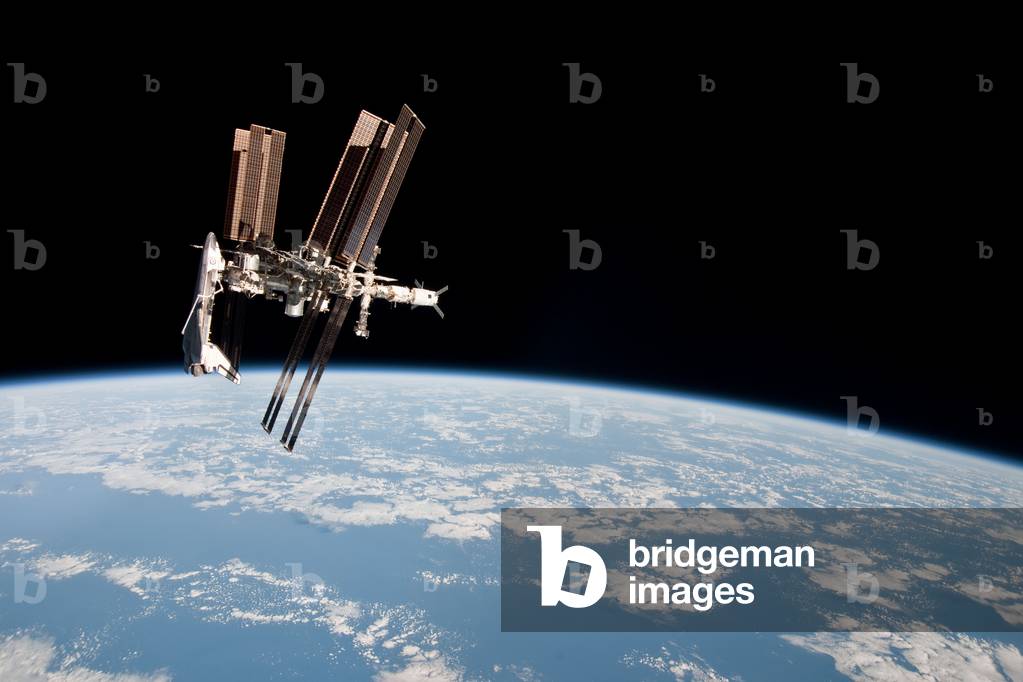
The International Space Station (ISS) and the Shuttle Endeavour 05/2011 - The Space Shuttle Endeavour docked to the International Space Station (ISS) 05/2011 - View of the Space Shuttle Endeavour moored at the International Space Station, from the Soyuz TMA spaceship - 20 on 23 May 2011. This series of images shows for the first time a shuttle moored to the space station from a Russian Soyuz spaceship. This image of the International Space Station and the docked Space Shuttle Endeavour, flying at an altitude of approximately 220 miles, was taken by Expedition 27 crew member Paolo Nespoli from the Soyuz TMA - 20 following its undocking on May 23, 2011 (USA time). The pictures are the first taken of a shuttle docked to the International Space Station from the perspective of a Russian Soyuz spacecraft. Onboard the Soyuz were Russian cosmonaut and Expedition 27 commander Dmitry Kondratyev; Nespoli, a European Space Agency astronaut; and NASA astronaut Cady Coleman. Coleman and Nespoli were both flight engineers. The three landed in Kazakhstan later that day, completing 159 days in space

PIX4603157: The International Space Station (ISS) and the Shuttle Endeavour 05/2011 - The Space Shuttle Endeavour docked to the International Space Station (ISS) 05/2011 - View of the Space Shuttle Endeavour moored at the International Space Station, from the Soyuz TMA spaceship - 20 on 23 May 2011. This series of images shows for the first time a shuttle moored to the space station from a Russian Soyuz spaceship. This image of the International Space Station and the docked Space Shuttle Endeavour, flying at an altitude of approximately 220 miles, was taken by Expedition 27 crew member Paolo Nespoli from the Soyuz TMA - 20 following its undocking on May 23, 2011 (USA time). The pictures are the first taken of a shuttle docked to the International Space Station from the perspective of a Russian Soyuz spacecraft. Onboard the Soyuz were Russian cosmonaut and Expedition 27 commander Dmitry Kondratyev; Nespoli, a European Space Agency astronaut; and NASA astronaut Cady Coleman. Coleman and Nespoli were both flight engineers. The three landed in Kazakhstan later that day, completing 159 days in space / Bridgeman Images

ISS. Edward Lu 10/03 - Edward Lu, playing music on a keyboard, in Destiny. 26/10/2003

PIX4601185: ISS. Edward Lu 10/03 - Edward Lu, playing music on a keyboard, in Destiny. 26/10/2003 / Bridgeman Images

Release of C. Noriega 12/2000 - Astronaut Carlo I. Noriega EVA 12/2000 - Astronaut Carlo I. Noriega during his third scheduled extravehicular excursion. 07/12/2000. Astronaut Carlo I. Noriega, mission specialist, is pictured during the third of three STS - 97 space walks to perform work on the International Space Station (ISS). The photo was taken by astronaut Joseph R. Tanner, mission specialist

PIX4600158: Release of C. Noriega 12/2000 - Astronaut Carlo I. Noriega EVA 12/2000 - Astronaut Carlo I. Noriega during his third scheduled extravehicular excursion. 07/12/2000. Astronaut Carlo I. Noriega, mission specialist, is pictured during the third of three STS - 97 space walks to perform work on the International Space Station (ISS). The photo was taken by astronaut Joseph R. Tanner, mission specialist / Bridgeman Images

Decolving the Ariane 5 ECA 02/2005 - Launch of Ariane 5 ECA 02/2005 - Decolving the Ariane V ECA rocket for launching two satellites: XTAR - EUR and Sloshsat - FLEVO. 12/02/2005. Vol 164. Launch of Ariane 5 ECA, Guiana Space Centre, on February 12, 2005. On this flight (V164), two satellites were lifted to orbit: XTAR - EUR and Sloshsat - FLEVO

PIX4604189: Decolving the Ariane 5 ECA 02/2005 - Launch of Ariane 5 ECA 02/2005 - Decolving the Ariane V ECA rocket for launching two satellites: XTAR - EUR and Sloshsat - FLEVO. 12/02/2005. Vol 164. Launch of Ariane 5 ECA, Guiana Space Centre, on February 12, 2005. On this flight (V164), two satellites were lifted to orbit: XTAR - EUR and Sloshsat - FLEVO / Bridgeman Images

ISS STS-112 10/02 - The International Space Station after stowage from Shuttle Atlantis. ISS STS - 112. 16/10/2002

PIX4600940: ISS STS-112 10/02 - The International Space Station after stowage from Shuttle Atlantis. ISS STS - 112. 16/10/2002 / Bridgeman Images

The International Space Station (ISS) 03/2009 - The International Space Station (ISS) 03/2009 - View of the International Space Station after the start of the Space Shuttle Discovery (STS - 119) on 25 March 2009. Backdropped by the blackness of space and Earth's horizon, the International Space Station is seen from Space Shuttle Discovery as the two spacecraft begin their relative separation. Earlier the STS - 119 and Expedition 18 crews concluded 9 days, 20 hours and 10 minutes of cooperative work onboard the shuttle and station. Undocking of the two spacecraft occurred at 2:53 p.m. (CDT) on March 25, 2009

PIX4602393: The International Space Station (ISS) 03/2009 - The International Space Station (ISS) 03/2009 - View of the International Space Station after the start of the Space Shuttle Discovery (STS - 119) on 25 March 2009. Backdropped by the blackness of space and Earth's horizon, the International Space Station is seen from Space Shuttle Discovery as the two spacecraft begin their relative separation. Earlier the STS - 119 and Expedition 18 crews concluded 9 days, 20 hours and 10 minutes of cooperative work onboard the shuttle and station. Undocking of the two spacecraft occurred at 2:53 p.m. (CDT) on March 25, 2009 / Bridgeman Images

Fusee Soyuz FG - Fregat - Venus Express Probe - View of the Soyuz FG - Fregat rocket in the integration building in Baikonour, Kazakhstan, before being transferred to the fire pad. This rocket was launched on 9 November 2005, successfully placing the European Venus Express probe in orbit. The fully integrated Soyuz FG - Fregat vehicle carrying ESA's Venus Express probe, on its erector - transporter wagon in the MIK - 40 assembly and integration building, in Baikonour, Kazakhstan. The vehicle, already fitted with its payload, will then be transferred to launch complex no.31 for four days of pre - launch check out and countdown rehearsals before the flight. The lift - off occurred at 04:33 CET (03:33 UT) on November 9, 2005, and Venus Express was successfully launched on a solar orbit towards Venus

PIX4604675: Fusee Soyuz FG - Fregat - Venus Express Probe - View of the Soyuz FG - Fregat rocket in the integration building in Baikonour, Kazakhstan, before being transferred to the fire pad. This rocket was launched on 9 November 2005, successfully placing the European Venus Express probe in orbit. The fully integrated Soyuz FG - Fregat vehicle carrying ESA's Venus Express probe, on its erector - transporter wagon in the MIK - 40 assembly and integration building, in Baikonour, Kazakhstan. The vehicle, already fitted with its payload, will then be transferred to launch complex no.31 for four days of pre - launch check out and countdown rehearsals before the flight. The lift - off occurred at 04:33 CET (03:33 UT) on November 9, 2005, and Venus Express was successfully launched on a solar orbit towards Venus / Bridgeman Images

Fusee Ariane V 02/05 - Fusee Ariane V ECA on its firing pad with two satellites on board: XTAR - EUR and Sloshsat - FLEVO. 12//02/2005

PIX4604140: Fusee Ariane V 02/05 - Fusee Ariane V ECA on its firing pad with two satellites on board: XTAR - EUR and Sloshsat - FLEVO. 12//02/2005 / Bridgeman Images

The French painter Nicolas Poussin (1594-1660) Marble sculpture, 1804 (marble)

JLJ4602004: The French painter Nicolas Poussin (1594-1660) Marble sculpture, 1804 (marble), Julien, Pierre (1731-1804) / Bridgeman Images

Aerial view of the city and Lake Paranoa (1983 - Photography)

LRI4600315: Aerial view of the city and Lake Paranoa (1983 - Photography) / Bridgeman Images

Aerial view of river Rio African-American (1983 - Photography)

LRI4600200: Aerial view of river Rio African-American (1983 - Photography) / Bridgeman Images

Aerial view of Carajas railroad bridge over Tocantins river, Para state (1983 - Photography)

LRI4600018: Aerial view of Carajas railroad bridge over Tocantins river, Para state (1983 - Photography) / Bridgeman Images

Aerial view of Itabira iron mines (1983 - Photography)

LRI4600105: Aerial view of Itabira iron mines (1983 - Photography) / Bridgeman Images
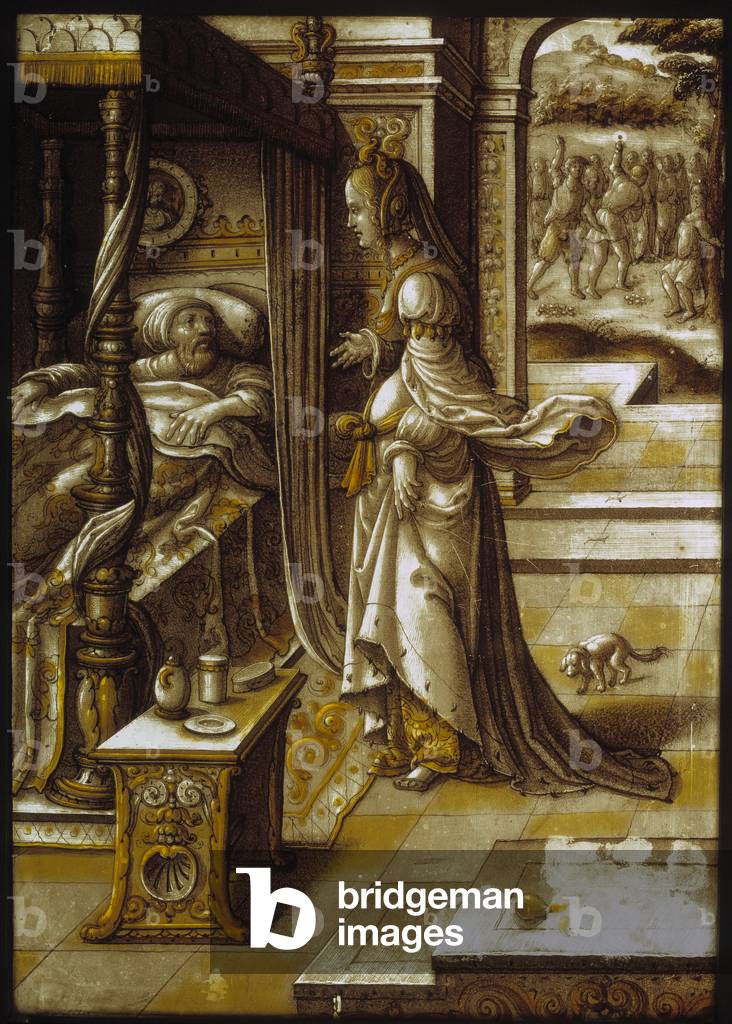
Jezabel promises Ahab she'll get him Naboth's vineyard, 16th century (stained glass)

JLJ4604233: Jezabel promises Ahab she'll get him Naboth's vineyard, 16th century (stained glass), Unknown Artist, (16th century) / Bridgeman Images

North wall of the king's Salon, 1837 (photo)

JLJ4602525: North wall of the king's Salon, 1837 (photo), Delacroix, Ferdinand Victor Eugene (1798-1863) / Bridgeman Images

Ancient Rome: mosaic of the seasons representing flowers and animals, 325-330 (mosaic)

JLJ4601503: Ancient Rome: mosaic of the seasons representing flowers and animals, 325-330 (mosaic), Roman, (4th century AD) / Bridgeman Images
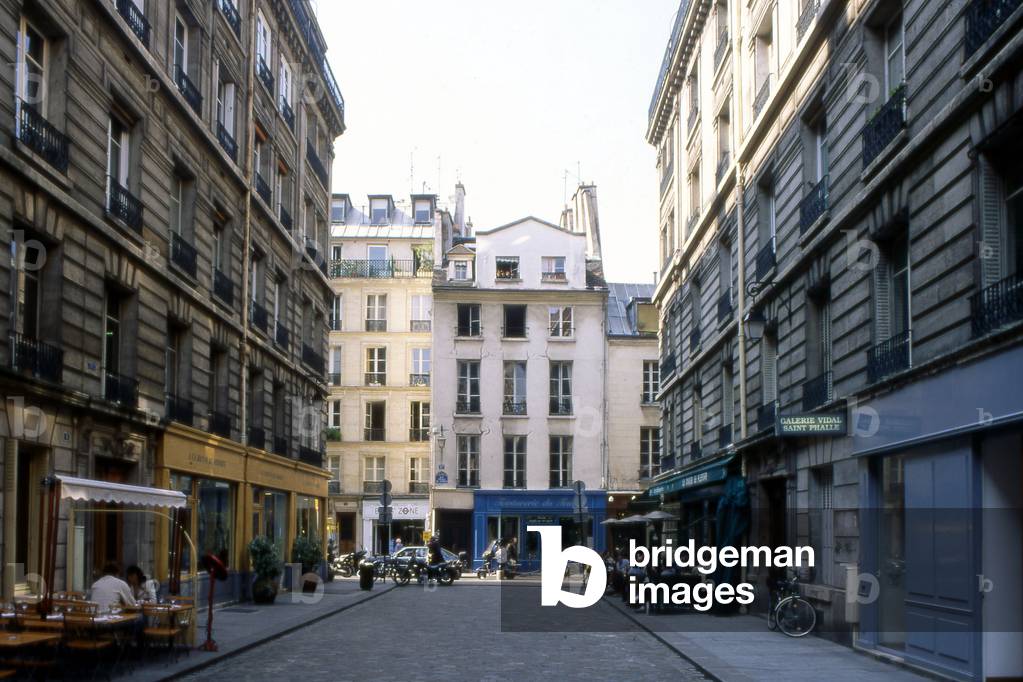
Rue du Tresor and Rue Vieille du Temple in Paris.

TEC4600971: Rue du Tresor and Rue Vieille du Temple in Paris. / Bridgeman Images

Pont des Arts Pont des Arts, Paris 6th arrondissement, reconstruction in 1981 by Louis Arretche. The Passerelle des Arts, the first iron bridge in Paris, had the mission of joining the Institut de France and the Louvre, which was then called the Palais des Arts. Reserved for pawns, it was built from 1801 to 1804. It initially consisted of nine arches. Following numerous river accidents, its reconstruction was decided in 1981 but two arches were removed to line them up on the Pont Neuf.

TEC4604894: Pont des Arts Pont des Arts, Paris 6th arrondissement, reconstruction in 1981 by Louis Arretche. The Passerelle des Arts, the first iron bridge in Paris, had the mission of joining the Institut de France and the Louvre, which was then called the Palais des Arts. Reserved for pawns, it was built from 1801 to 1804. It initially consisted of nine arches. Following numerous river accidents, its reconstruction was decided in 1981 but two arches were removed to line them up on the Pont Neuf. / Bridgeman Images
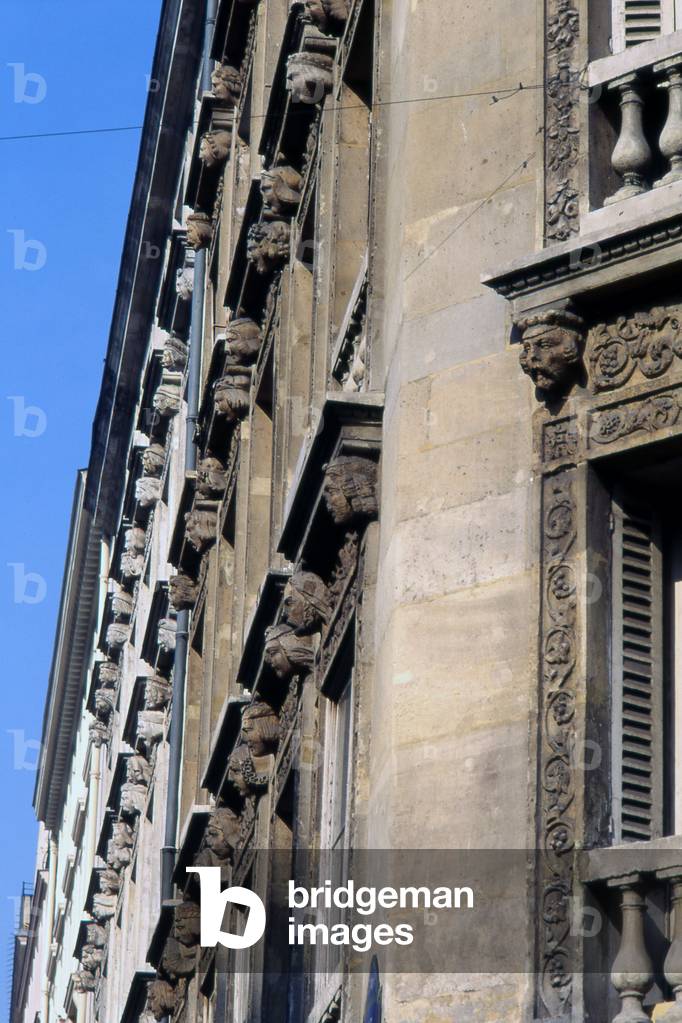
A 19th century building in Paris 4th arrondisement.

TEC4601051: A 19th century building in Paris 4th arrondisement. / Bridgeman Images
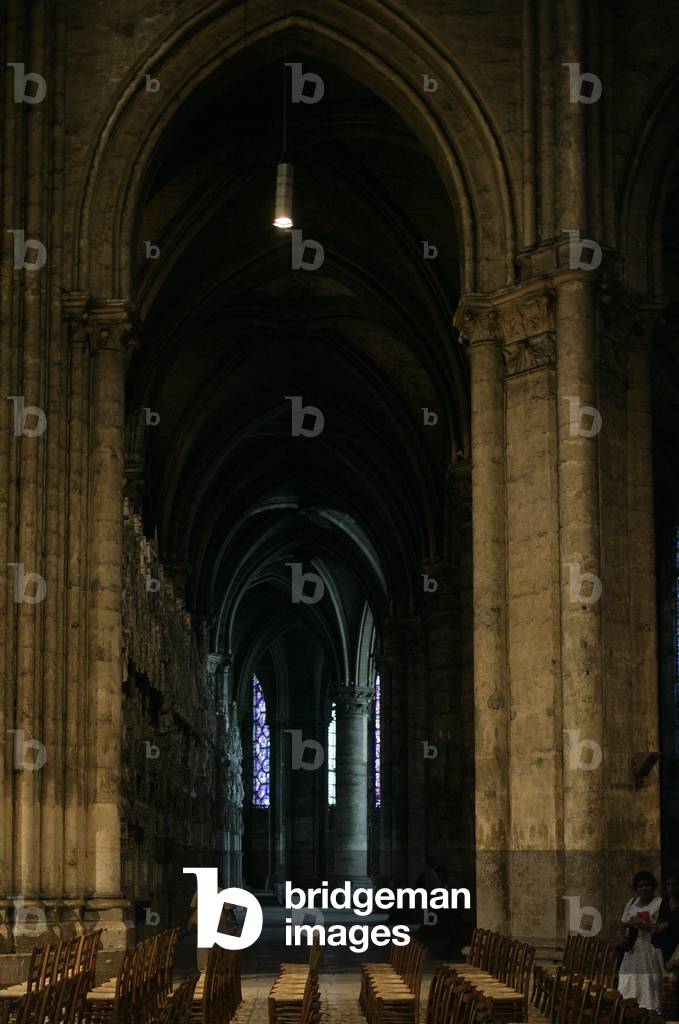
The Cathedral of Chartres (Eure and Loire). Built partly from 1145, and rebuilt in twenty-six years after the fire of 1194, it is the monument par excellence of French Gothic art. Its vast nave of the purest ogival style, its porches with admirable mid-12th century sculptures, its shimmering set of stained glass windows from the 12th and 13th centuries make it an exceptional masterpiece and remarkably well preserved. The Cathedrale de Chartres has been listed as a UNESCO World Heritage Site since 1979. Photography 30/06/05.

TEC4602575: The Cathedral of Chartres (Eure and Loire). Built partly from 1145, and rebuilt in twenty-six years after the fire of 1194, it is the monument par excellence of French Gothic art. Its vast nave of the purest ogival style, its porches with admirable mid-12th century sculptures, its shimmering set of stained glass windows from the 12th and 13th centuries make it an exceptional masterpiece and remarkably well preserved. The Cathedrale de Chartres has been listed as a UNESCO World Heritage Site since 1979. Photography 30/06/05. / Bridgeman Images
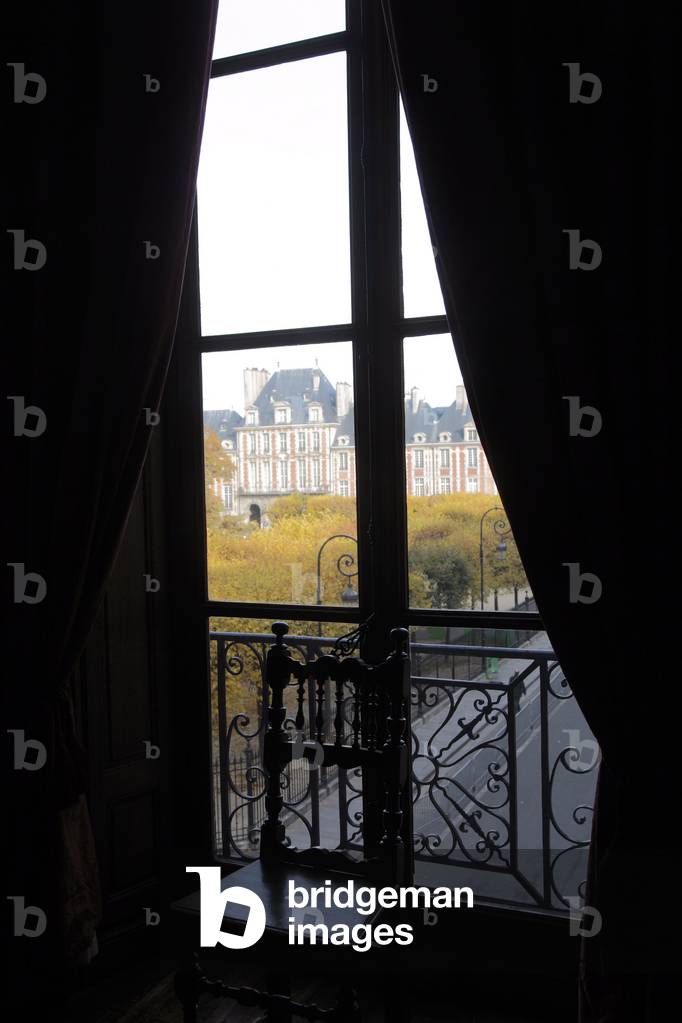
La Maison de Victor Hugo, in the Hotel Rohan-Guemenee (Rohan Guemenee), 6 place des Vosges, Paris 75004. Architecture by Isaac Arnaud, 1605.

ITR4602358: La Maison de Victor Hugo, in the Hotel Rohan-Guemenee (Rohan Guemenee), 6 place des Vosges, Paris 75004. Architecture by Isaac Arnaud, 1605. / Bridgeman Images
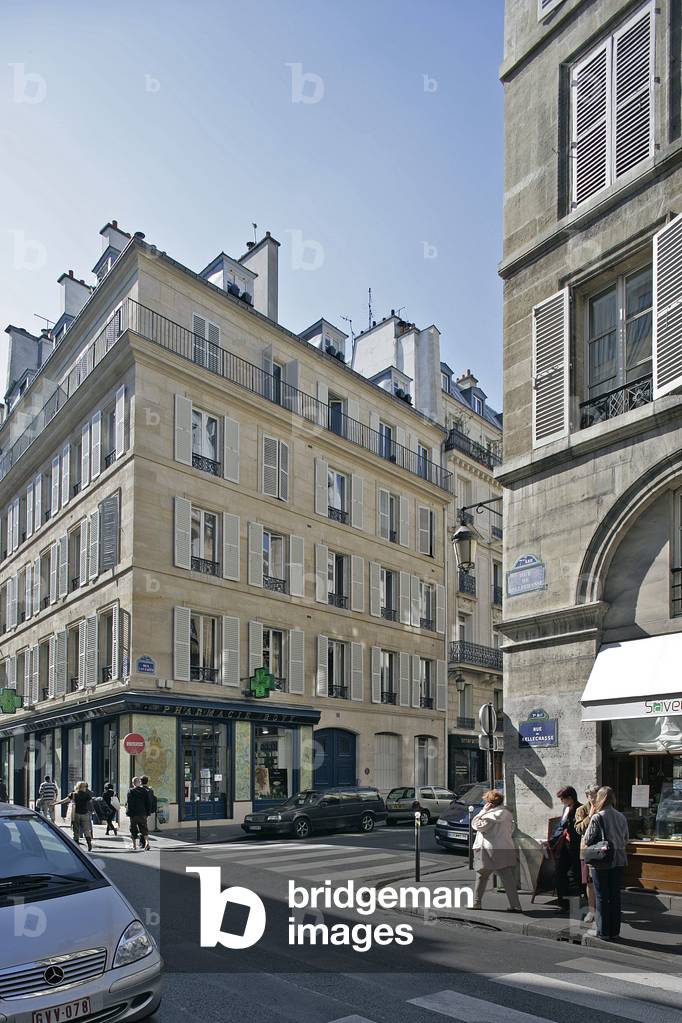
La rue de Bellechasse, Paris 7th arrondissement.

TEC4600279: La rue de Bellechasse, Paris 7th arrondissement. / Bridgeman Images
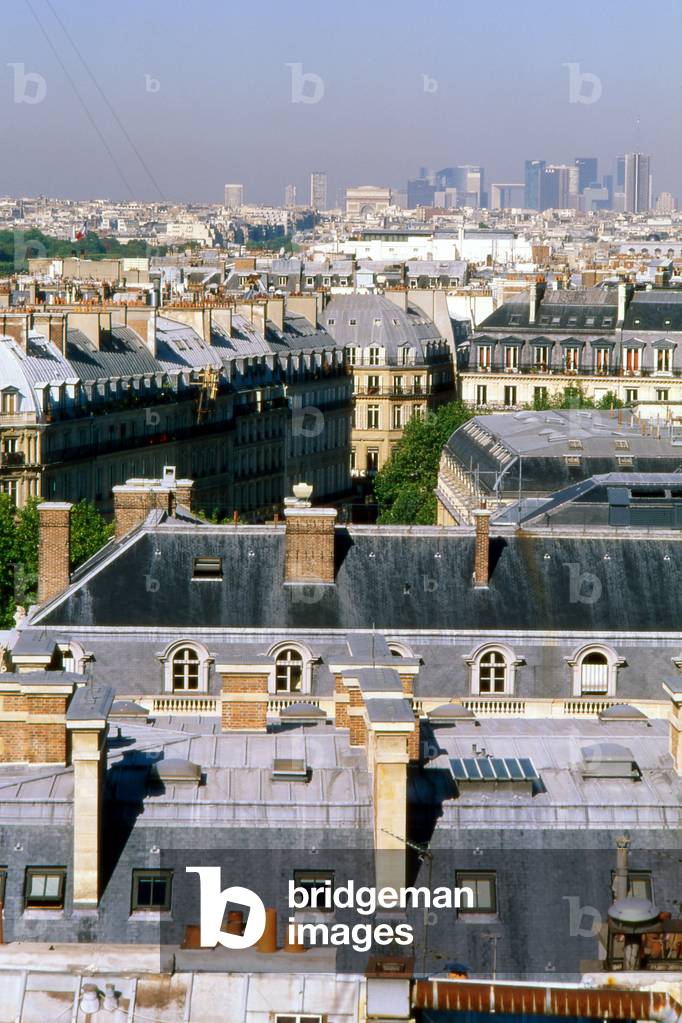
Panoramic view of Paris.

TEC4603688: Panoramic view of Paris. / Bridgeman Images
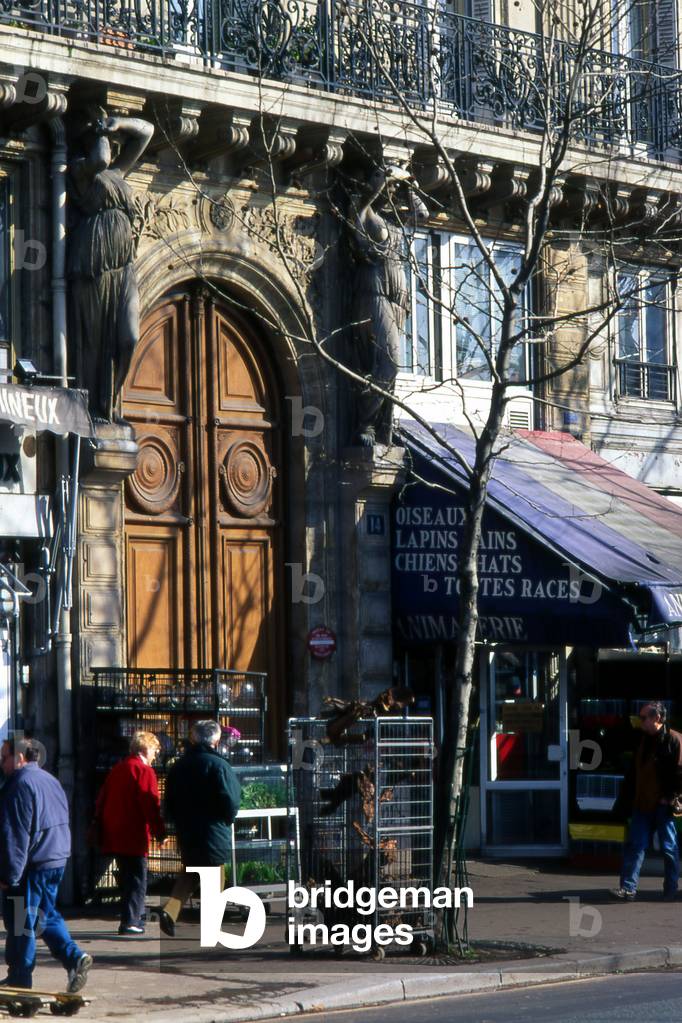
Quai de la Megisserie in Paris.

TEC4604541: Quai de la Megisserie in Paris. / Bridgeman Images
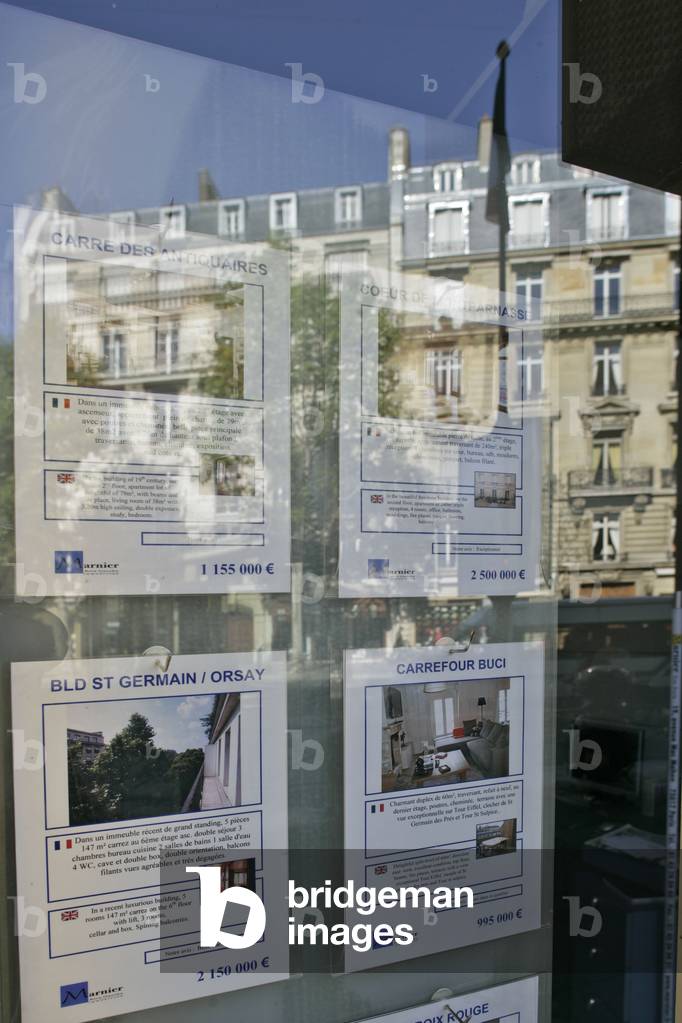
Real estate agency in Paris. Photography 22/09/08.

TEC4600259: Real estate agency in Paris. Photography 22/09/08. / Bridgeman Images
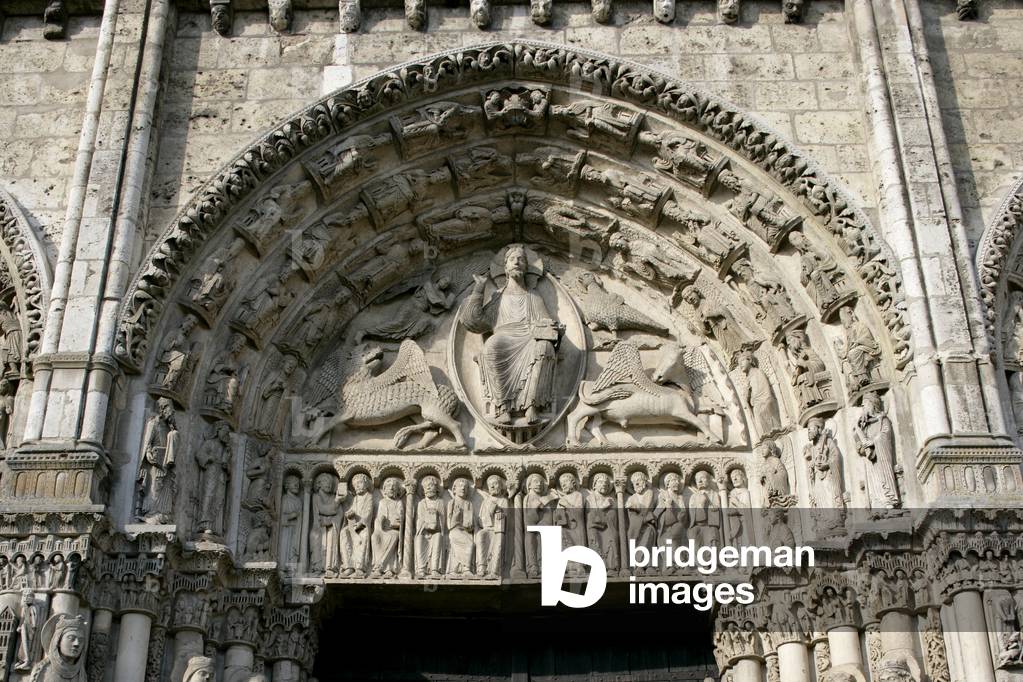
The Cathedral of Chartres (Eure and Loire). Built partly from 1145, and rebuilt in twenty-six years after the fire of 1194, it is the monument par excellence of French Gothic art. Its vast nave of the purest ogival style, its porches with admirable mid-12th century sculptures, its shimmering set of stained glass windows from the 12th and 13th centuries make it an exceptional masterpiece and remarkably well preserved. The Cathedrale de Chartres has been listed as a UNESCO World Heritage Site since 1979. Photography 30/06/05.

TEC4602502: The Cathedral of Chartres (Eure and Loire). Built partly from 1145, and rebuilt in twenty-six years after the fire of 1194, it is the monument par excellence of French Gothic art. Its vast nave of the purest ogival style, its porches with admirable mid-12th century sculptures, its shimmering set of stained glass windows from the 12th and 13th centuries make it an exceptional masterpiece and remarkably well preserved. The Cathedrale de Chartres has been listed as a UNESCO World Heritage Site since 1979. Photography 30/06/05. / Bridgeman Images
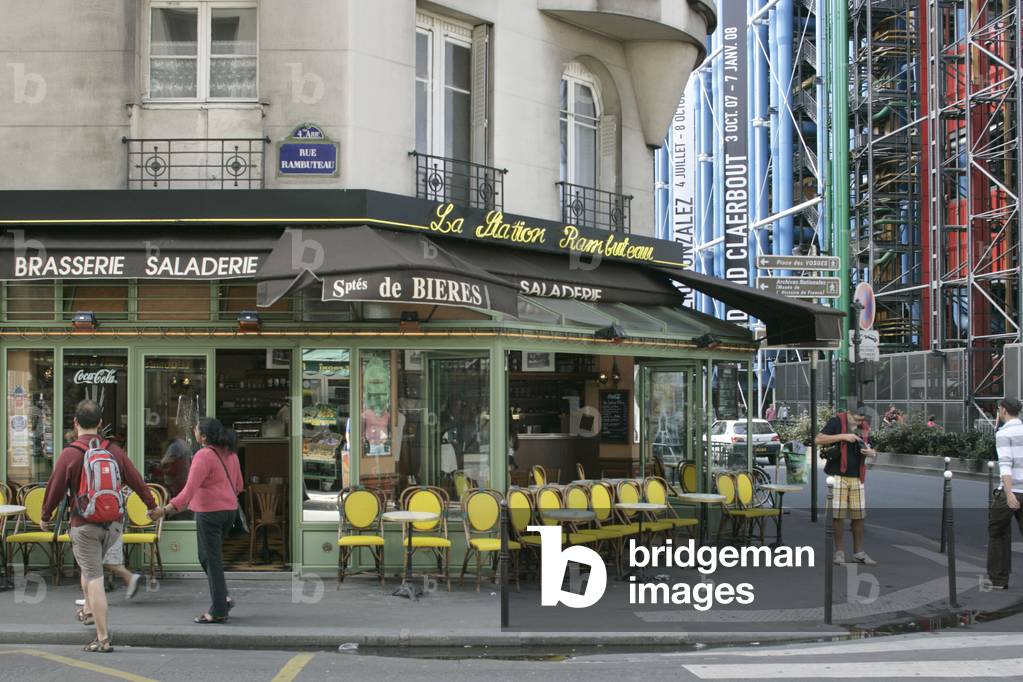
A cafe rue Rambuteau in Paris. Photography 18/08/07.

TEC4601419: A cafe rue Rambuteau in Paris. Photography 18/08/07. / Bridgeman Images

Stained glass windows of the Cathedrale de Chartres (Eure and Loire). Built partly from 1145, and rebuilt in twenty-six years after the fire of 1194, it is the monument par excellence of French Gothic art. Its vast nave of the purest ogival style, its porches with admirable mid-12th century sculptures, its shimmering set of stained glass windows from the 12th and 13th centuries make it an exceptional masterpiece and remarkably well preserved. The Cathedrale de Chartres has been listed as a UNESCO World Heritage Site since 1979. Photography 30/06/05.

TEC4602553: Stained glass windows of the Cathedrale de Chartres (Eure and Loire). Built partly from 1145, and rebuilt in twenty-six years after the fire of 1194, it is the monument par excellence of French Gothic art. Its vast nave of the purest ogival style, its porches with admirable mid-12th century sculptures, its shimmering set of stained glass windows from the 12th and 13th centuries make it an exceptional masterpiece and remarkably well preserved. The Cathedrale de Chartres has been listed as a UNESCO World Heritage Site since 1979. Photography 30/06/05. / Bridgeman Images
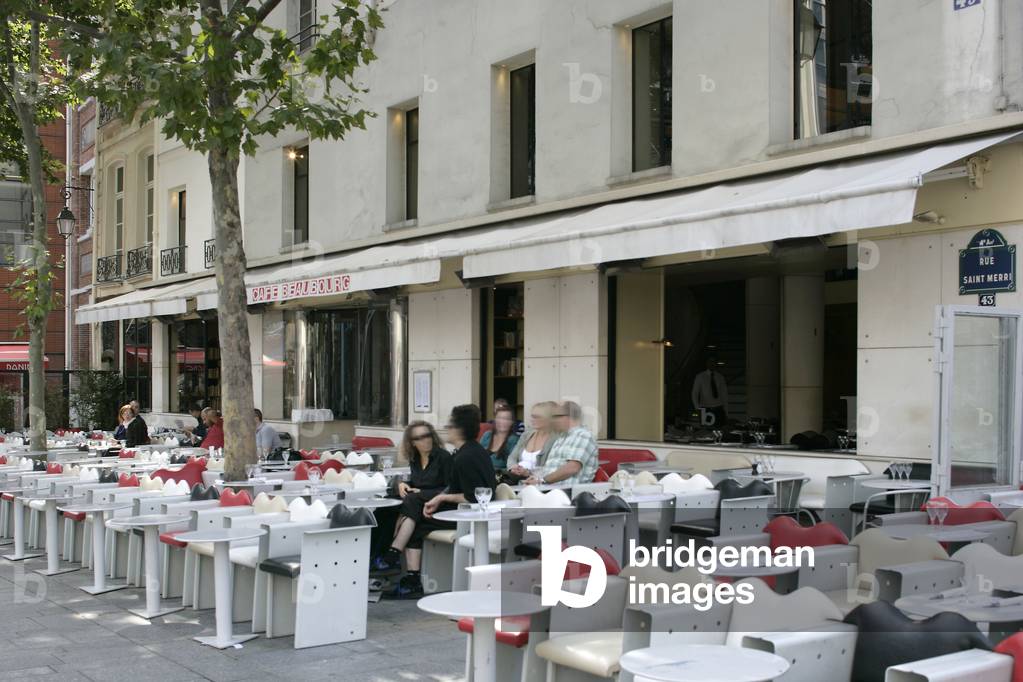
Terrasse du Cafe Beaubourg, rue Saint Merri, Paris.

TEC4601404: Terrasse du Cafe Beaubourg, rue Saint Merri, Paris. / Bridgeman Images
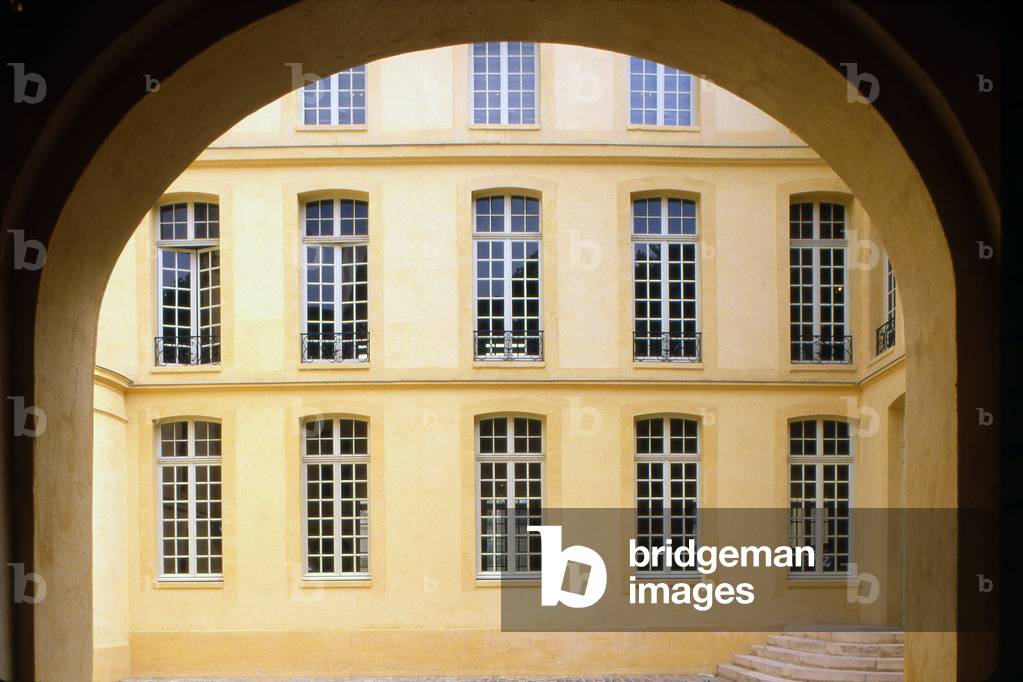
L'Hotel de Croisilles, Mediatheque de l'architecture et du patrimoine, 12 rue du Parc Royal, Paris 3rd arrondissement. Construction around 1620. Conversion carried out by architect Christiane Schmuckle-Mollard in 1988

TEC4601142: L'Hotel de Croisilles, Mediatheque de l'architecture et du patrimoine, 12 rue du Parc Royal, Paris 3rd arrondissement. Construction around 1620. Conversion carried out by architect Christiane Schmuckle-Mollard in 1988 / Bridgeman Images

The Pont des Arts, Paris. The Passerelle des Arts, the first iron bridge in Paris, had the mission of joining the Institut de France and the Louvre, which was then called the Palais des Arts. Reserved for pawns, it was built from 1801 to 1804. It initially consisted of nine arches. Following numerous river accidents, its reconstruction was decided in 1981 but two arches were removed to line them up on the Pont Neuf. Reconstruction in 1981 by Louis Arretche.

TEC4603411: The Pont des Arts, Paris. The Passerelle des Arts, the first iron bridge in Paris, had the mission of joining the Institut de France and the Louvre, which was then called the Palais des Arts. Reserved for pawns, it was built from 1801 to 1804. It initially consisted of nine arches. Following numerous river accidents, its reconstruction was decided in 1981 but two arches were removed to line them up on the Pont Neuf. Reconstruction in 1981 by Louis Arretche. / Bridgeman Images
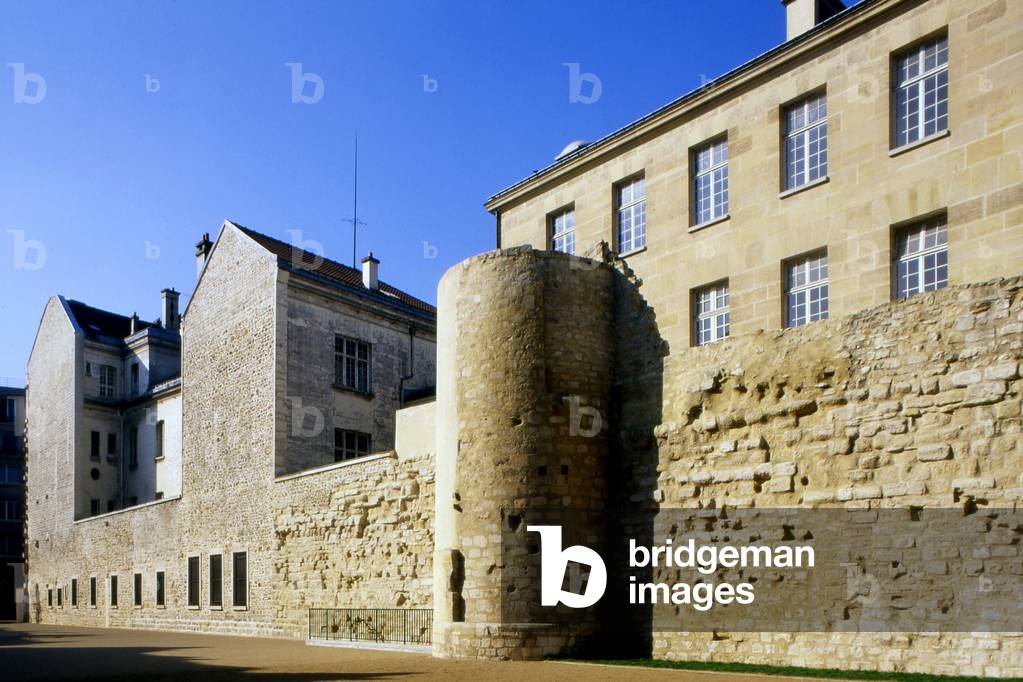
The remains of the Philippe Auguste compound in Paris, construction 1190.

TEC4600928: The remains of the Philippe Auguste compound in Paris, construction 1190. / Bridgeman Images

Church Saint Eustache, Paris.

TEC4603326: Church Saint Eustache, Paris. / Bridgeman Images

Le Pont Neuf in Paris.

TEC4604839: Le Pont Neuf in Paris. / Bridgeman Images
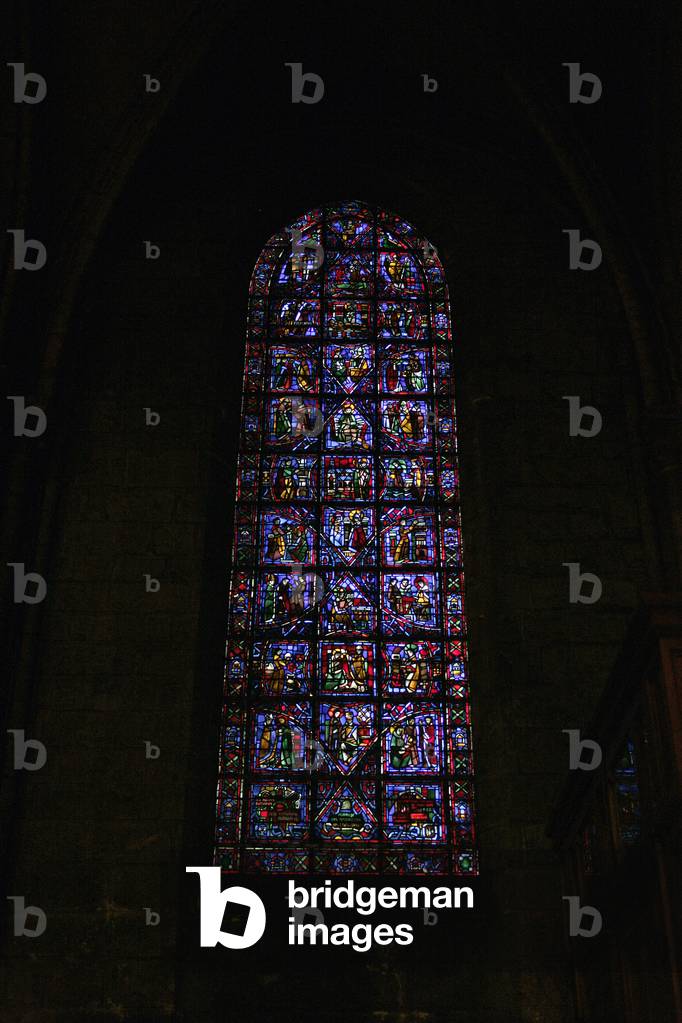
Stained glass windows of the Cathedrale de Chartres (Eure and Loire). Built partly from 1145, and rebuilt in twenty-six years after the fire of 1194, it is the monument par excellence of French Gothic art. Its vast nave of the purest ogival style, its porches with admirable mid-12th century sculptures, its shimmering set of stained glass windows from the 12th and 13th centuries make it an exceptional masterpiece and remarkably well preserved. The Cathedrale de Chartres has been listed as a UNESCO World Heritage Site since 1979. Photography 30/06/05.

TEC4602539: Stained glass windows of the Cathedrale de Chartres (Eure and Loire). Built partly from 1145, and rebuilt in twenty-six years after the fire of 1194, it is the monument par excellence of French Gothic art. Its vast nave of the purest ogival style, its porches with admirable mid-12th century sculptures, its shimmering set of stained glass windows from the 12th and 13th centuries make it an exceptional masterpiece and remarkably well preserved. The Cathedrale de Chartres has been listed as a UNESCO World Heritage Site since 1979. Photography 30/06/05. / Bridgeman Images


Back to top