2497570 Search Results

BAL121433: The Smoker (oil on panel), Vois, Arie de (1631-80) / Bridgeman Images

BAL121439: A Wedding Party by a Frozen River (oil on panel), Battem, Gerrit van (c.1636-84) / Bridgeman Images

BAL122945: Chon-Mon-I-Case or 'L'Ietan', an Oto Half-chief, 1821, illustration from 'The Indian Tribes of North America, Vol.1', by Thomas L. McKenney and James Hall, pub. by John Grant (colour litho), King, Charles Bird (1785-1862) (after) / Bridgeman Images

BAL142510: Office In The Desert, camouflaged against enemy view, from 'Signal' Magazine, Number 7, first edition of April 1942 (litho), German Photographer, (20th Century) / Bridgeman Images

BAL142513: Flower stand, in Brussels, from 'Signal' Magazine, Number 10, second edition of May 1942 (litho), German Photographer, (20th Century) / Bridgeman Images

BAL122562: Article 22 of the Treaty of Whampoa, 24th October 1844, from 'Grandeur and SUpremacy of Peking', by Alphonse Hubrecht, 1928 (engraving), French School, (20th century) / Bridgeman Images

BAL122571: Gourd Beater, illustration from 'Calls, Sounds and Merchandise of the Peking Street Peddlers', by Samuel V. Constant, 1937 (colour litho), English School, (20th century) / Bridgeman Images

BAL122606: Victorian Greetings Card / Bridgeman Images
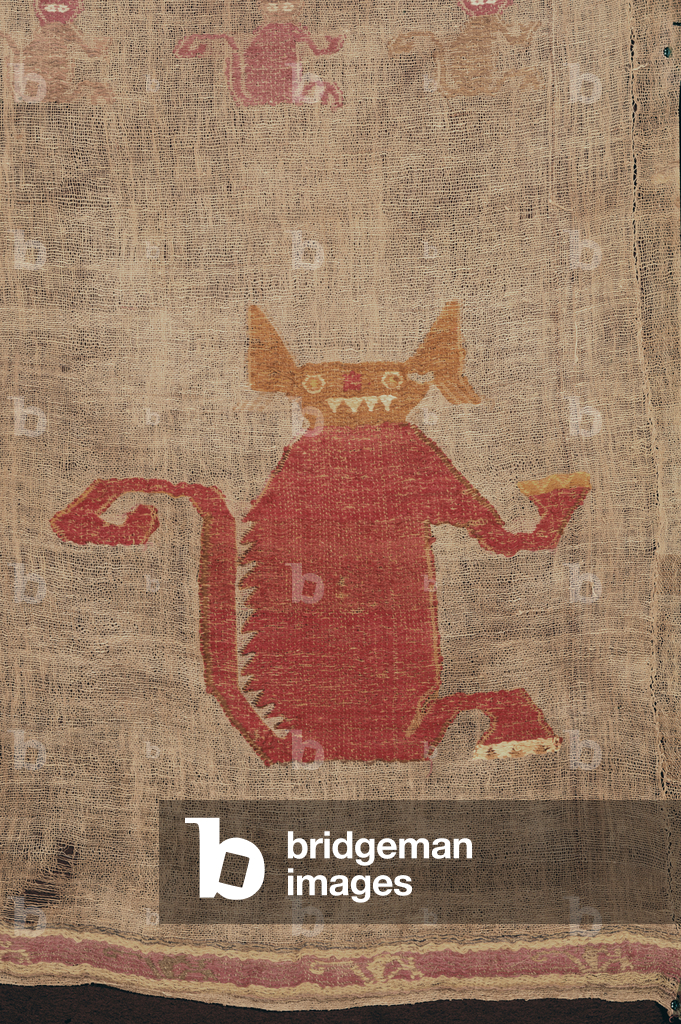
BAL122612: Detail from a shroud, 1400s (woven cotton & vicuna brocaded in coloured wools), Peruvian School (15th Century) / Bridgeman Images

BAL122979: Ongewae, a Chippeway Chief, illustration from 'The Indian Tribes of North America, Vol.3', by Thomas L. McKenney and James Hall, pub. by John Grant (colour litho), American School, (20th century) / Bridgeman Images

BAL122978: Tukosee Mathla, a Seminole Chief from Florida, illustration from 'The Indian Tribes of North America, Vol.3', by Thomas L. McKenney and James Hall, pub. by John Grant (colour litho), American School, (20th century) / Bridgeman Images

BAL124519: The Interior of Fort Sumter During the Bombardment, 12th April 1861, from 'Harper's Weekly', April 27th 1861 (engraving) (b&w photo), American School, (19th century) / Bridgeman Images

BAL143059: Allemachtij, from 'The Leaguer of Ladysmith', 1900 (colour litho), Captain Clive Dixon (fl.1900) / Bridgeman Images

BAL143063: Flag of Truce after Surprise Hill, from 'The Leaguer of Ladysmith', 1900 (colour litho), Captain Clive Dixon (fl.1900) / Bridgeman Images

BAL143066: The Volunteers' Ponies, from 'The Leaguer of Ladysmith', 1900 (colour litho), Captain Clive Dixon (fl.1900) / Bridgeman Images

BAL143070: 'Defence Commanders proving that the two 6.3 inch Howlitzers are absolutely necessary in his particular section', from 'The Leaguer of Ladysmith', 1900 (colour litho), Captain Clive Dixon (fl.1900) / Bridgeman Images

BAL144974: Sir Edmund Hillary (b.1919) 1954 (b/w/photo) / Bridgeman Images

BAL212001: Lute player, 1609 (oil on panel), Zyll, Roelof van (fl.1608-28) / Bridgeman Images

BAL212680: Queen Victoria in the House of Lords (colour engraving), Nash, Joseph (1809-78) (after) / Bridgeman Images

BAL223578: Richard the Lionheart (1157-99) assailed by a group of Turkish Horsemen, illustration from 'The Crusaders: A Story of the War for the Holy Sepulchre' published 1912 (colour litho), Morrow, George (Geo. M) (1870-1955) / Bridgeman Images

BAL226649: Still Life of Assorted Flowers, 1634 (oil on panel), Bosschaert, Ambrosius the Younger (1609-45) / Bridgeman Images

BAL226685: A Vase of Flowers, 1635 (oil on panel), Bosschaert, Ambrosius the Younger (1609-45) / Bridgeman Images

BAL234933: Man on a horse with a woman and child (oil on panel), Wouwermans or Wouwerman, Philips (1619-68) / Bridgeman Images

BAL136737: View of the scaena (stage) and orchestra of the theatre, Roman, late 2nd century AD, restored 1937 (photo) (for detail see 85401) / Bridgeman Images
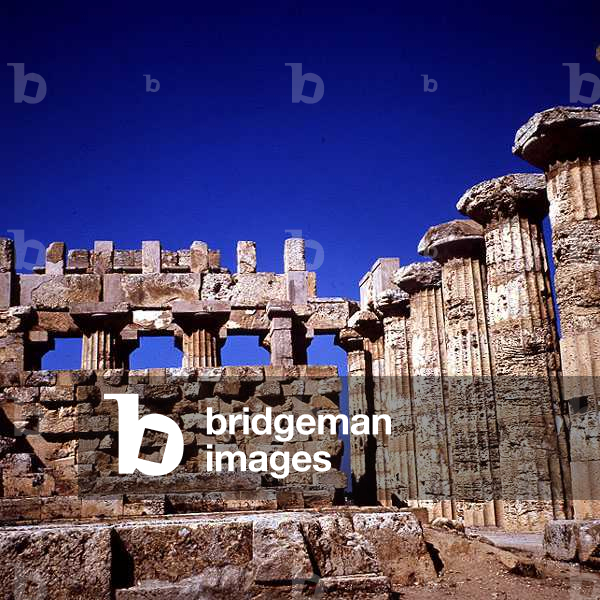
BAL136749: View of Temple 'E', Selinus, Greek, c.490-480 BC (photo) / Bridgeman Images

BAL139074: I Must Fetch Down all the Stars in Order to Polish Them, from the story of 'Ole-Luk-Oie' in an edition of 'Fairy Tales' by Hans Christian Andersen (1805-75) 1920 (w/c on paper), Appleton, Honor Charlotte (1879-1951) / Bridgeman Images

BAL140600: Palace of the Jurisconsults, Cremona, Italy, built in 1292, from 'Examples of the Municipal, Commercial, and Street Architecture of France and Italy from the 12th to the 15th century', 1841 (engraving), Anderson, R. (19th century) / Bridgeman Images

BAL140606: Windows in the Hall of the Monastery, Cluny, from 'Examples of the Municipal, Commercial, and Street Architecture of France and Italy from the 12th to the 15th Century', 1841 (engraving), Anderson, R. (19th century) / Bridgeman Images

BAL140609: Palazzo Pubblico, Orvieto, Italy, from 'Examples of the Municipal, Commercial, and Street Architecture of France and Italy from the 12th to the 15th Century' publ. by W.Mackenzie, 1841 (engraving), Anderson, R. (19th century) (after) / Bridgeman Images

BAL140607: Part of the Piazza San Pellegrino, Viterbo, Italy, from 'Examples of the Municipal, Commercial, and Street Architecture of France and Italy from the 12th to the 15th Century, publ. by W.Mackenzie, 1841 (engraving), Anderson, R. (19th century) (after) / Bridgeman Images

BAL141070: Empress Ying Tsung, from 'Portraits of Emperors and Empresses of Mongolia' (litho), English School, (20th century) / Bridgeman Images

BAL140616: House in the Piazza del Duomo, Viterbo, Italy, from 'Examples of the Municipal, Commercial, and Street Architecture of France and Italy from the 12th to the 15th Century', publ. by W.Mackenzie, 1841 (engraving), Anderson, R. (19th century) (after) / Bridgeman Images

BAL140622: Scientific equipment, from 'The Elements of Chemistry' by Antoine Laurent de Lavoisier (1743-94) engraved by D.Lizars, 1796 (engraving), French School, (18th century) / Bridgeman Images

BAL227468: Townsfolk on the Riverbank (oil on panel), Boudewyns, A.F.(1644-1711) & Bouts, P. (1658-1702) / Bridgeman Images

BAL136300: Homer Singing to the People on the Chian Strand, engraved by B.Barloccini, 1849 (engraving), Perkins, C.C (19th century) (after) / Bridgeman Images

BAL136753: The north entrance to the palace, Minoan, c.1500 BC (photo) / Bridgeman Images
