2497528 Search Results

BAL212680: Queen Victoria in the House of Lords (colour engraving), Nash, Joseph (1809-78) (after) / Bridgeman Images

BAL223578: Richard the Lionheart (1157-99) assailed by a group of Turkish Horsemen, illustration from 'The Crusaders: A Story of the War for the Holy Sepulchre' published 1912 (colour litho), Morrow, George (Geo. M) (1870-1955) / Bridgeman Images

BAL226649: Still Life of Assorted Flowers, 1634 (oil on panel), Bosschaert, Ambrosius the Younger (1609-45) / Bridgeman Images

BAL226685: A Vase of Flowers, 1635 (oil on panel), Bosschaert, Ambrosius the Younger (1609-45) / Bridgeman Images

BAL234933: Man on a horse with a woman and child (oil on panel), Wouwermans or Wouwerman, Philips (1619-68) / Bridgeman Images

BAL136737: View of the scaena (stage) and orchestra of the theatre, Roman, late 2nd century AD, restored 1937 (photo) (for detail see 85401) / Bridgeman Images
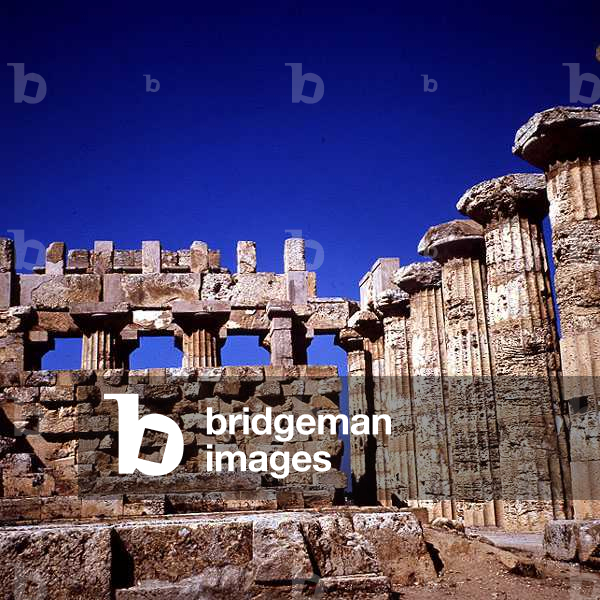
BAL136749: View of Temple 'E', Selinus, Greek, c.490-480 BC (photo) / Bridgeman Images

BAL139074: I Must Fetch Down all the Stars in Order to Polish Them, from the story of 'Ole-Luk-Oie' in an edition of 'Fairy Tales' by Hans Christian Andersen (1805-75) 1920 (w/c on paper), Appleton, Honor Charlotte (1879-1951) / Bridgeman Images

BAL140600: Palace of the Jurisconsults, Cremona, Italy, built in 1292, from 'Examples of the Municipal, Commercial, and Street Architecture of France and Italy from the 12th to the 15th century', 1841 (engraving), Anderson, R. (19th century) / Bridgeman Images

BAL140606: Windows in the Hall of the Monastery, Cluny, from 'Examples of the Municipal, Commercial, and Street Architecture of France and Italy from the 12th to the 15th Century', 1841 (engraving), Anderson, R. (19th century) / Bridgeman Images

BAL140609: Palazzo Pubblico, Orvieto, Italy, from 'Examples of the Municipal, Commercial, and Street Architecture of France and Italy from the 12th to the 15th Century' publ. by W.Mackenzie, 1841 (engraving), Anderson, R. (19th century) (after) / Bridgeman Images

BAL140607: Part of the Piazza San Pellegrino, Viterbo, Italy, from 'Examples of the Municipal, Commercial, and Street Architecture of France and Italy from the 12th to the 15th Century, publ. by W.Mackenzie, 1841 (engraving), Anderson, R. (19th century) (after) / Bridgeman Images

BAL141070: Empress Ying Tsung, from 'Portraits of Emperors and Empresses of Mongolia' (litho), English School, (20th century) / Bridgeman Images

BAL140616: House in the Piazza del Duomo, Viterbo, Italy, from 'Examples of the Municipal, Commercial, and Street Architecture of France and Italy from the 12th to the 15th Century', publ. by W.Mackenzie, 1841 (engraving), Anderson, R. (19th century) (after) / Bridgeman Images

BAL140622: Scientific equipment, from 'The Elements of Chemistry' by Antoine Laurent de Lavoisier (1743-94) engraved by D.Lizars, 1796 (engraving), French School, (18th century) / Bridgeman Images

BAL227468: Townsfolk on the Riverbank (oil on panel), Boudewyns, A.F.(1644-1711) & Bouts, P. (1658-1702) / Bridgeman Images

BAL136300: Homer Singing to the People on the Chian Strand, engraved by B.Barloccini, 1849 (engraving), Perkins, C.C (19th century) (after) / Bridgeman Images

BAL136753: The north entrance to the palace, Minoan, c.1500 BC (photo) / Bridgeman Images

BAL135998: The Triumph of Quintus Fabius, engraved by B.Barloccini, 1849 (engraving), Perkins, C.C (19th century) (after) / Bridgeman Images

BAL136303: Psyche Discovers Cupid, engraved by Agostino Veneziano (1490-1540) (engraving), Coxie or Coxcie, Michiel I (1499-1592) (after) / Bridgeman Images

BAL246817: Fashion plate from the 'Allgemeine Moden-Zeitung', Leipzig, 1872 (coloured engraving), French School, (19th century) (after) / Bridgeman Images

BAL136754: Chateau Chaumont, 15th century (photo) / Bridgeman Images

BAL121432: Wooded Landscape with Figures near a Church, c.1660 (oil on panel), Hobbema, Meindert (1638-1709) / Bridgeman Images

BAL121438: An Anamorphic Vanitas (oil on panel), Kettle, Henry (1704-73) / Bridgeman Images

BAL122534: Chiang Tzu-ya at K'un-lun, illustration from 'Myths and Legends of China', by Edward T.C. Werner, pub. by George G. Harrap & Co., 1922 (colour litho), English School, (20th century) / Bridgeman Images

BAL122567: Model for acupuncture, illustration from 'Grandeur and Supremacy of Peking', by Alphonse Hubrecht, 1928 (engraving), French School, (20th century) / Bridgeman Images

BAL122911: Looking for a Friend, illustration from 'Battles and Leaders of the Civil War', edited by Robert Underwood Johnson and Clarence Clough Buel (engraving), Taber, J.W. (fl.1850-1928) (after) / Bridgeman Images

BAL140602: Palace of the Jurisconsults, Cremona, Italy, built in 1292, from 'Examples of the Municipal, Commercial, and Street Architecture of France and Italy from the 12th to the 15th Century', 1841 (engraving), Anderson, R. (19th century) / Bridgeman Images

BAL143069: 'The sight of our men washing so infuriated the Boers that they immediately opened fire', from 'The Leaguer of Ladysmith', 1900 (colour litho), Captain Clive Dixon (fl.1900) / Bridgeman Images

BAL111011: Portrait of Sebastian Brant (c.1458-1521) from 'The Narrative and Critical History of America', edited by Justin Winsor, London, 1886 (woodcut), English School, (19th century) / Bridgeman Images

BAL111019: Portrait of Juan Ponce de Leon (1460-1521) who discovered Florida, from 'The Narrative and Critical History of America', edited by Justin Winsor', London, 1886 (engraving), English School, (19th century) / Bridgeman Images

BAL111026: Mexico Before the Conquest, from 'The Narrative and Critical History of America', edited by Justin Winsor, London, 1886 (woodcut), English School, (19th century) / Bridgeman Images

BAL111049: 'Guatemala', in Spanish North America, from Gage's Voyages, Amsterdam, 1720 (engraving), Netherlandish School, (18th century) / Bridgeman Images

BAL1238: Sugar bowl or vase by John Arnell, 1772 (silver-gilt), English School, (18th century) / Bridgeman Images

BAL1252: Bookcase after a design by Sheraton, early 19th century, English School, (19th century) / Bridgeman Images

BAL1282: English balustraded doll's house with balcony, c.1775, English School, (18th century) / Bridgeman Images
