Search options

Orientation
Colour

Display options

View

Print

To print search results, use print friendly version of this page.

2502215 Search Results

Ottoman Empire: Portrait of Sultan Ahmed I (1590-1617)”” Miniature Library of Topkapi Sarayi Istanbul Museum

LRI4661918: Ottoman Empire: Portrait of Sultan Ahmed I (1590-1617)”” Miniature Library of Topkapi Sarayi Istanbul Museum, Ottoman School / Bridgeman Images

Theatre des Champs Elysees, 13-15 avenue Montaigne in Paris 75008. Architects Les Freres Auguste (1874-1954) and Gustave (1876-1952) Perret and Henry Van de Velde (1863-1957). Since its construction in 1913, this theatre was perceived as a symbol of French architectural modernity through its classical writing combined with the use of the new concrete. The marble-covered facade incorporates three high reliefs by Antoine Bourdelle (1861-1929).

LBY4661296: Theatre des Champs Elysees, 13-15 avenue Montaigne in Paris 75008. Architects Les Freres Auguste (1874-1954) and Gustave (1876-1952) Perret and Henry Van de Velde (1863-1957). Since its construction in 1913, this theatre was perceived as a symbol of French architectural modernity through its classical writing combined with the use of the new concrete. The marble-covered facade incorporates three high reliefs by Antoine Bourdelle (1861-1929)., Boegly, Luc / Bridgeman Images

Diligence, Louveciennes, 1870 (oil on canvas)

JLJ4661993: Diligence, Louveciennes, 1870 (oil on canvas), Pissarro, Camille (1830-1903) / Bridgeman Images

Bepicolombo will be a mission to explore the planet Mercury, carried out jointly by the Japanese Space Agency and the European Space Agency. Its launch is scheduled in October 2018, to reach Mercure in 2025. Two probes form the Bepicolombo mission, the Mercury Planet Orbiter (DFO), which will perform a complete mapping of the surface of Mercury and the Mercury Magnetospheric Orbiter (MMO), which will study the Mercurian magnetosphere.

PIX4643577: Bepicolombo will be a mission to explore the planet Mercury, carried out jointly by the Japanese Space Agency and the European Space Agency. Its launch is scheduled in October 2018, to reach Mercure in 2025. Two probes form the Bepicolombo mission, the Mercury Planet Orbiter (DFO), which will perform a complete mapping of the surface of Mercury and the Mercury Magnetospheric Orbiter (MMO), which will study the Mercurian magnetosphere. / Bridgeman Images

The New Horizons probe near 2014 MU69 - Artist's View - New Horizons and 2014 MU69 (binary) - Artwork: Artist's view of the New Horizons probe near the small object of Kuiper 2014 MU69. Observations in 2017 show that 2014 MU69 would be either a binary object (model favors), in contact or not, or a single object lengthens. Speculative illustration of Nasa's New Horizons interplanetary probe flying by classical Kuiper belt object (486958) 2014 MU69, about 3 billion miles from the Earth, on 1 January 2019. 2014 MU69 is either a single elongated object about 30 miles long, or two smaller objects orbiting very closely together, maybe even touching; this image illustrates the latter. New Horizons is about the size and shape of a grand piano and weighed 1,054 pounds at launch. The high-gain dish antenna is about 7 feet in diameter and is employed for communication with the Earth

PIX4643732: The New Horizons probe near 2014 MU69 - Artist's View - New Horizons and 2014 MU69 (binary) - Artwork: Artist's view of the New Horizons probe near the small object of Kuiper 2014 MU69. Observations in 2017 show that 2014 MU69 would be either a binary object (model favors), in contact or not, or a single object lengthens. Speculative illustration of Nasa's New Horizons interplanetary probe flying by classical Kuiper belt object (486958) 2014 MU69, about 3 billion miles from the Earth, on 1 January 2019. 2014 MU69 is either a single elongated object about 30 miles long, or two smaller objects orbiting very closely together, maybe even touching; this image illustrates the latter. New Horizons is about the size and shape of a grand piano and weighed 1,054 pounds at launch. The high-gain dish antenna is about 7 feet in diameter and is employed for communication with the Earth / Bridgeman Images

Intelsat satellite 6 - Intelsat VI satellite - Recoveration of the Intelsat VI satellite by shuttle Endeavour in May 1992. From left to right are astronauts Richard J. Hieb, Thomas D. Akers, and Pierre J. Thuot. Three STS - 49 crewmembers hold onto the 4.5 - ton Intelsat VI satellite in May 1992 after a six - handed “” capture””” was made minutes earlier. Left to right are astronauts Richard J. Hieb, Thomas D. Akers and Pierre J. Thuot. Thuot stands on the end of the Canadarm, which was instrumental as a mobile working platform in the capture

PIX4642853: Intelsat satellite 6 - Intelsat VI satellite - Recoveration of the Intelsat VI satellite by shuttle Endeavour in May 1992. From left to right are astronauts Richard J. Hieb, Thomas D. Akers, and Pierre J. Thuot. Three STS - 49 crewmembers hold onto the 4.5 - ton Intelsat VI satellite in May 1992 after a six - handed “” capture””” was made minutes earlier. Left to right are astronauts Richard J. Hieb, Thomas D. Akers and Pierre J. Thuot. Thuot stands on the end of the Canadarm, which was instrumental as a mobile working platform in the capture / Bridgeman Images

Satellite Artemis - Satellite Artemis - Artist's view of the European satellite Artemis (Advanced Relay and Technology Mission). Communication and relay satellite for other satellites, it was launched in July 2001

PIX4642921: Satellite Artemis - Satellite Artemis - Artist's view of the European satellite Artemis (Advanced Relay and Technology Mission). Communication and relay satellite for other satellites, it was launched in July 2001 / Bridgeman Images

Roman Art: Mosaic of the seasons from the courtyard of the Constantine villa of

JLJ4642989: Roman Art: Mosaic of the seasons from the courtyard of the Constantine villa of "Daphne" representing two hunters, 325-330 (mosaic), Roman, (4th century AD) / Bridgeman Images

Galileo satellites - Illustration - Artist's view of the European satellite network Galileo consists of 30 satellites at about 24,000 km of altitude (27 operationals, 3 reserve). This satellite positioning system is expected to be operational in 2011

PIX4643031: Galileo satellites - Illustration - Artist's view of the European satellite network Galileo consists of 30 satellites at about 24,000 km of altitude (27 operationals, 3 reserve). This satellite positioning system is expected to be operational in 2011 / Bridgeman Images

The Giove satellite - Deploying its solar panels - Vue d'artiste

PIX4643101: The Giove satellite - Deploying its solar panels - Vue d'artiste / Bridgeman Images

Fusee Soyuz - Fregat et satellite Giove - B - Vue d'artiste - Giove - B satellite in Soyuz - Fregat rocket - Artist view - Vue d'artiste du satellite Giove - B (Galileo In - Orbit Validation Element - B) places in the cap of a Soyuz - Fregat rocket. Giove - B (Galileo In - Orbit Validation Element - B) into a Soyuz - Fregat rocket. Artist view

PIX4643111: Fusee Soyuz - Fregat et satellite Giove - B - Vue d'artiste - Giove - B satellite in Soyuz - Fregat rocket - Artist view - Vue d'artiste du satellite Giove - B (Galileo In - Orbit Validation Element - B) places in the cap of a Soyuz - Fregat rocket. Giove - B (Galileo In - Orbit Validation Element - B) into a Soyuz - Fregat rocket. Artist view / Bridgeman Images

Satellite Giove - B - Artist's view - View of the Giove satellite - B (Galileo In - Orbit Validation Element - B), the second satellite intended to validate the positioning system of Galileo

PIX4643136: Satellite Giove - B - Artist's view - View of the Giove satellite - B (Galileo In - Orbit Validation Element - B), the second satellite intended to validate the positioning system of Galileo / Bridgeman Images

Allegory of the government of the city of Siena surrounded by citizens who are symbolically linked to it by a rope, 1385 (painting on wood)

LRI4643310: Allegory of the government of the city of Siena surrounded by citizens who are symbolically linked to it by a rope, 1385 (painting on wood), Italian School, (14th century) / Bridgeman Images

The New Horizons probe near 2014 MU69 - Artist's View - New Horizons and 2014 MU69 (single) - Artwork: Artist's view of the New Horizons probe near the small object of Kuiper 2014 MU69. Observations in 2017 show that 2014 MU69 would be either a binary object (model favors), in contact or not, or a single object lengthens (as here). Speculative illustration of Nasa's New Horizons interplanetary probe flying by classical Kuiper belt object (486958) 2014 MU69, about 3 billion miles from the Earth, on 1 January 2019. 2014 MU69 is either a single elongated object about 30 miles long, or two smaller objects orbiting very closely together, maybe even touching; this image illustrates the latter. New Horizons is about the size and shape of a grand piano and weighed 1,054 pounds at launch. The high-gain dish antenna is about 7 feet in diameter and is employed for communication with the Earth

PIX4643771: The New Horizons probe near 2014 MU69 - Artist's View - New Horizons and 2014 MU69 (single) - Artwork: Artist's view of the New Horizons probe near the small object of Kuiper 2014 MU69. Observations in 2017 show that 2014 MU69 would be either a binary object (model favors), in contact or not, or a single object lengthens (as here). Speculative illustration of Nasa's New Horizons interplanetary probe flying by classical Kuiper belt object (486958) 2014 MU69, about 3 billion miles from the Earth, on 1 January 2019. 2014 MU69 is either a single elongated object about 30 miles long, or two smaller objects orbiting very closely together, maybe even touching; this image illustrates the latter. New Horizons is about the size and shape of a grand piano and weighed 1,054 pounds at launch. The high-gain dish antenna is about 7 feet in diameter and is employed for communication with the Earth / Bridgeman Images

The New Horizons probe near 2014 MU69 - Artist's View - New Horizons and 2014 MU69 (single) - Artwork: Artist's view of the New Horizons probe near the small object of Kuiper 2014 MU69. Observations in 2017 show that 2014 MU69 would be either a binary object (model favors), in contact or not, or a single object lengthens (as here). Speculative illustration of Nasa's New Horizons interplanetary probe flying by classical Kuiper belt object (486958) 2014 MU69, about 3 billion miles from the Earth, on 1 January 2019. 2014 MU69 is either a single elongated object about 30 miles long, or two smaller objects orbiting very closely together, maybe even touching; this image illustrates the latter. New Horizons is about the size and shape of a grand piano and weighed 1,054 pounds at launch. The high-gain dish antenna is about 7 feet in diameter and is employed for communication with the Earth

PIX4643784: The New Horizons probe near 2014 MU69 - Artist's View - New Horizons and 2014 MU69 (single) - Artwork: Artist's view of the New Horizons probe near the small object of Kuiper 2014 MU69. Observations in 2017 show that 2014 MU69 would be either a binary object (model favors), in contact or not, or a single object lengthens (as here). Speculative illustration of Nasa's New Horizons interplanetary probe flying by classical Kuiper belt object (486958) 2014 MU69, about 3 billion miles from the Earth, on 1 January 2019. 2014 MU69 is either a single elongated object about 30 miles long, or two smaller objects orbiting very closely together, maybe even touching; this image illustrates the latter. New Horizons is about the size and shape of a grand piano and weighed 1,054 pounds at launch. The high-gain dish antenna is about 7 feet in diameter and is employed for communication with the Earth / Bridgeman Images

Measuring instrument: 16th century

JLJ4643840: Measuring instrument: 16th century, Portuguese School, (16th century) / Bridgeman Images

La Chapelle de La Pie Salpetriere in Paris 75013.

LBY4643885: La Chapelle de La Pie Salpetriere in Paris 75013. / Bridgeman Images

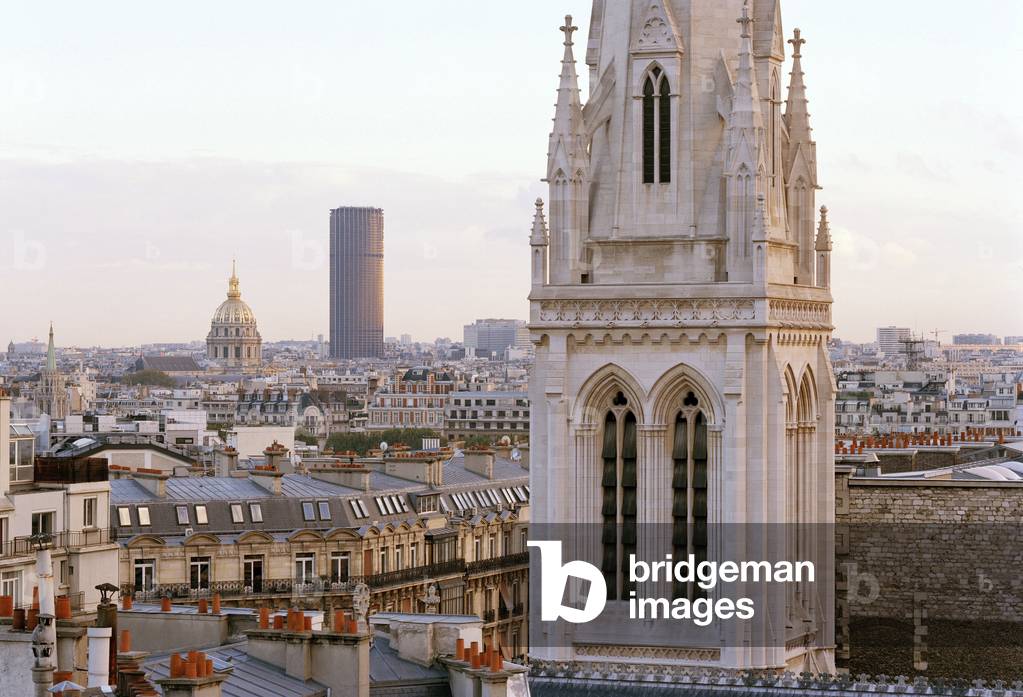
Panoramic view of Paris 75013. Photography 10/05/06.

LBY4643916: Panoramic view of Paris 75013. Photography 10/05/06. / Bridgeman Images

Satellite Spot - 4 - Artist's view of the Earth observation satellite Spot - 4. Spot - 4 is a english earth observation satellite launched on march 23 199

PIX4643921: Satellite Spot - 4 - Artist's view of the Earth observation satellite Spot - 4. Spot - 4 is a english earth observation satellite launched on march 23 199 / Bridgeman Images

Satellite Spot - 5 - Satellite Spot - 5, artwork - Vue d'artiste du satellite d'observation de la terre Spot - 5, launched on May 3, 2002. Spot - 5 is an earth observation satellite launched on May 3 2002

PIX4643958: Satellite Spot - 5 - Satellite Spot - 5, artwork - Vue d'artiste du satellite d'observation de la terre Spot - 5, launched on May 3, 2002. Spot - 5 is an earth observation satellite launched on May 3 2002 / Bridgeman Images

Panoramic view of the towers of the 13th arrondissement in Paris (75013).

MDA4643990: Panoramic view of the towers of the 13th arrondissement in Paris (75013). / Bridgeman Images

Satellite Parasol - Artist's view of the microsatellite Parasol in orbit around the Earth. This satellite launched in December 2004 studies the Earth's atmosphere. Parasol is a english earth observation microsatellite launched in december 2004 to study the Earth atmosphere

PIX4644031: Satellite Parasol - Artist's view of the microsatellite Parasol in orbit around the Earth. This satellite launched in December 2004 studies the Earth's atmosphere. Parasol is a english earth observation microsatellite launched in december 2004 to study the Earth atmosphere / Bridgeman Images

Skylab station 07/1973 - Skylab station seen from Skylab module - 3 just before mooring. 28/07/1973. The Skylab space station photographed from the Skylab 3 Command/Service Module during station keeping maneuvers prior to docking. Aboard the command module were astronauts Alan Bean, Owen Garriott and Jack Lousma, who remained with the Skylab space station in Earth's orbit for 59 days. Note the one solar array system wing on the Orbital Workshop (OWS) which was successfully deployed during extravehicular activity (EVA) on the first manned Skylab flight. The parasol solar shield which was deployed by the Skylab 2 crew can be seen through the support struts of the Apollo Telescope Mount. Jul 28 1973

PIX4643341: Skylab station 07/1973 - Skylab station seen from Skylab module - 3 just before mooring. 28/07/1973. The Skylab space station photographed from the Skylab 3 Command/Service Module during station keeping maneuvers prior to docking. Aboard the command module were astronauts Alan Bean, Owen Garriott and Jack Lousma, who remained with the Skylab space station in Earth's orbit for 59 days. Note the one solar array system wing on the Orbital Workshop (OWS) which was successfully deployed during extravehicular activity (EVA) on the first manned Skylab flight. The parasol solar shield which was deployed by the Skylab 2 crew can be seen through the support struts of the Apollo Telescope Mount. Jul 28 1973 / Bridgeman Images

Battle between Sienese and Florentines at Poggio Imperiale on 8/10/1479. Detail. Fresco by G. di Cristoforo and F. D'Andrea, 1480. Palazzo Pubblico, Siena

LRI4643345: Battle between Sienese and Florentines at Poggio Imperiale on 8/10/1479. Detail. Fresco by G. di Cristoforo and F. D'Andrea, 1480. Palazzo Pubblico, Siena, Cristofano Ghini, Giovanni di & d’Andrea, Francesco (15th century) / Bridgeman Images

Feast of Corpus Christi in Saint Peter square in Rome (Painting, 17th century)

LRI4643402: Feast of Corpus Christi in Saint Peter square in Rome (Painting, 17th century), Italian School, (17th century) / Bridgeman Images

Skylab station 02/1974 - Skylab station above earth. 02/1974 - Skylab station seen from Skylab 4 module before returning to Earth. 08/02/1974. The Skylab Orbital Workshop in Earth orbit photographed from the Skylab 4 Command and Service Modules during the final fly - around by the CSM before returning home. Feb 08 1974

PIX4643443: Skylab station 02/1974 - Skylab station above earth. 02/1974 - Skylab station seen from Skylab 4 module before returning to Earth. 08/02/1974. The Skylab Orbital Workshop in Earth orbit photographed from the Skylab 4 Command and Service Modules during the final fly - around by the CSM before returning home. Feb 08 1974 / Bridgeman Images

Livestock branding near Rome, detail (painting, 18th century)

LRI4643562: Livestock branding near Rome, detail (painting, 18th century), Bottani, Giuseppe (1717-84) / Bridgeman Images

Bepicolombo will be a mission to explore the planet Mercury, carried out jointly by the Japanese Space Agency and the European Space Agency. Its launch is scheduled for October 2018, to reach Mercure in 2025. Two probes form the Bepicolombo mission, the Mercury Planet Orbiter (DFO), which will perform a complete mapping of the surface of Mercury, and the Mercury Magnetospheric Orbiter (MMO), which will study the Mercurian magnetosphere. On his 7-year journey, the probe will pass twice near Venus.

PIX4643590: Bepicolombo will be a mission to explore the planet Mercury, carried out jointly by the Japanese Space Agency and the European Space Agency. Its launch is scheduled for October 2018, to reach Mercure in 2025. Two probes form the Bepicolombo mission, the Mercury Planet Orbiter (DFO), which will perform a complete mapping of the surface of Mercury, and the Mercury Magnetospheric Orbiter (MMO), which will study the Mercurian magnetosphere. On his 7-year journey, the probe will pass twice near Venus. / Bridgeman Images

Un abris S.D.F in Paris 75013.

LBY4643697: Un abris S.D.F in Paris 75013. / Bridgeman Images

Launch of the Helios 2A satellite - Satellite Helios 2A launch - Artist's view of the launch of the military satellite Helios 2A and the parasol and swarm microsatellites by an Ariane 5 G+rocket in December 2004. Artwork of the launch of the military satellite Helios 2A with the microsatellites Essaim and Parasol by an ariane 5 rocket in december 2004

PIX4644070: Launch of the Helios 2A satellite - Satellite Helios 2A launch - Artist's view of the launch of the military satellite Helios 2A and the parasol and swarm microsatellites by an Ariane 5 G+rocket in December 2004. Artwork of the launch of the military satellite Helios 2A with the microsatellites Essaim and Parasol by an ariane 5 rocket in december 2004 / Bridgeman Images

Artist view of the European satellite GOCE in orbit around the Earth. - GOCE satellite - Artist view - Artist view of the European satellite GOCE in orbit around the Earth. GoCE (Gravity - Field and Steady - State Ocean Circulation Explorer) is expected to be launched in 2009. Artist view of the European satellite GOCE in Earth orbit. GOCE (Gravity - Field and Steady - State Ocean Circulation Explorer) aims to measure the Earth's gravitational field and is scheduled in 2009

PIX4644106: Artist view of the European satellite GOCE in orbit around the Earth. - GOCE satellite - Artist view - Artist view of the European satellite GOCE in orbit around the Earth. GoCE (Gravity - Field and Steady - State Ocean Circulation Explorer) is expected to be launched in 2009. Artist view of the European satellite GOCE in Earth orbit. GOCE (Gravity - Field and Steady - State Ocean Circulation Explorer) aims to measure the Earth's gravitational field and is scheduled in 2009 / Bridgeman Images

Joseph Stalin (1879-1953) giving a speech in 1941 (w/c)

JLJ4644139: Joseph Stalin (1879-1953) giving a speech in 1941 (w/c), Unknown Artist, (20th century) / Bridgeman Images

The Simone de Beauvoir bridge in Paris 75013. Architect Dietmar Feichtinger, 2006. Photography 25/11/08.

MDA4644271: The Simone de Beauvoir bridge in Paris 75013. Architect Dietmar Feichtinger, 2006. Photography 25/11/08. / Bridgeman Images

Artist's view of the European satellite Sentinel - 1 in orbit around the Earth

PIX4644288: Artist's view of the European satellite Sentinel - 1 in orbit around the Earth / Bridgeman Images

View over Campo Vaccino in Rome (painting, 18th century)

LRI4643627: View over Campo Vaccino in Rome (painting, 18th century), Monaldi, Paolo (fl.1760) / Bridgeman Images

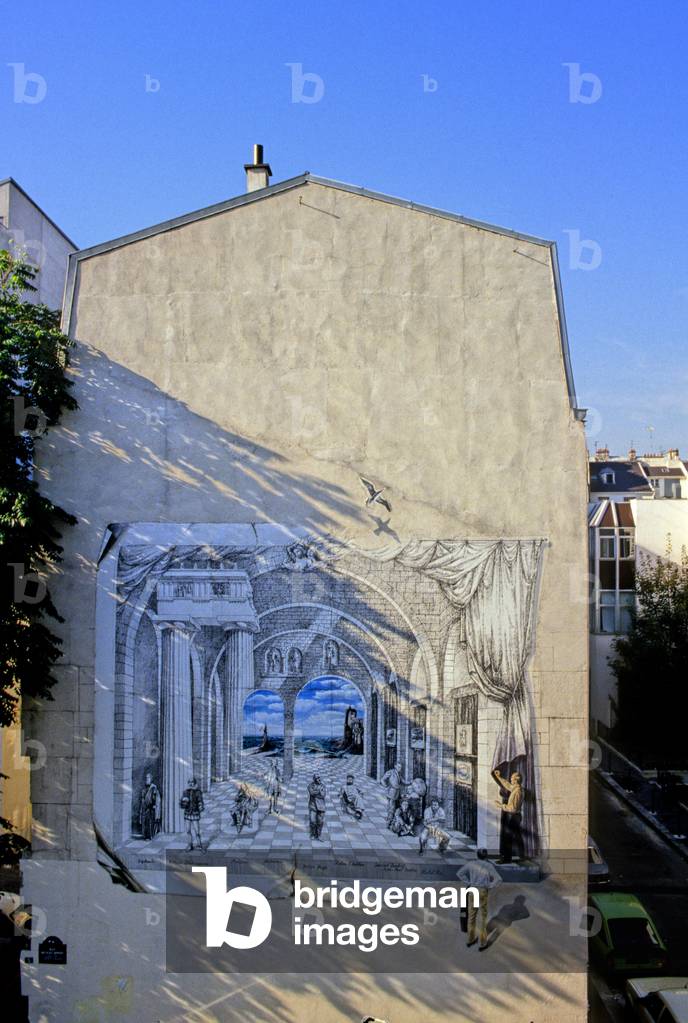
Wall painted Jean Sebastien Bach, rue Clisson, Paris 75013. Design Rieti, 1980.

LBY4643628: Wall painted Jean Sebastien Bach, rue Clisson, Paris 75013. Design Rieti, 1980., Reiti, Fabio (b.1925) / Bridgeman Images


Back to top