2497603 Search Results

LRI4565317: Portrait of Adrien Francois Servais (Illustration, 19th century), Unknown photographer, (19th century) / Bridgeman Images

LRI4563566: Sheet music page of the Periodic Symphony by Karl Ditters von Dittersdorf, 1779, Unknown artist, (18th century) / Bridgeman Images

LRI4563844: Page taken from Franchino Gaffurio's Practica Musicae, 1493, Unknown Artist, (15th century) / Bridgeman Images

LRI4563907: Pentagram. Page taken from Regola Rubertina by Silvestro Ganassi dal Fontego, 1542, Unknown Artist, (16th century) / Bridgeman Images

FLO4564401: Wormseed, Jesus's tea or Mexican-tea, Dysphania ambrosioides Chenopodium ambrosioides). Handcoloured copperplate engraving from Dr. Willibald Artus' Hand-Atlas sammtlicher mediinisch-pharmaceutischer Gewachse, (Handbook of all medical-pharmaceutical plants), Jena, 1876. / Bridgeman Images
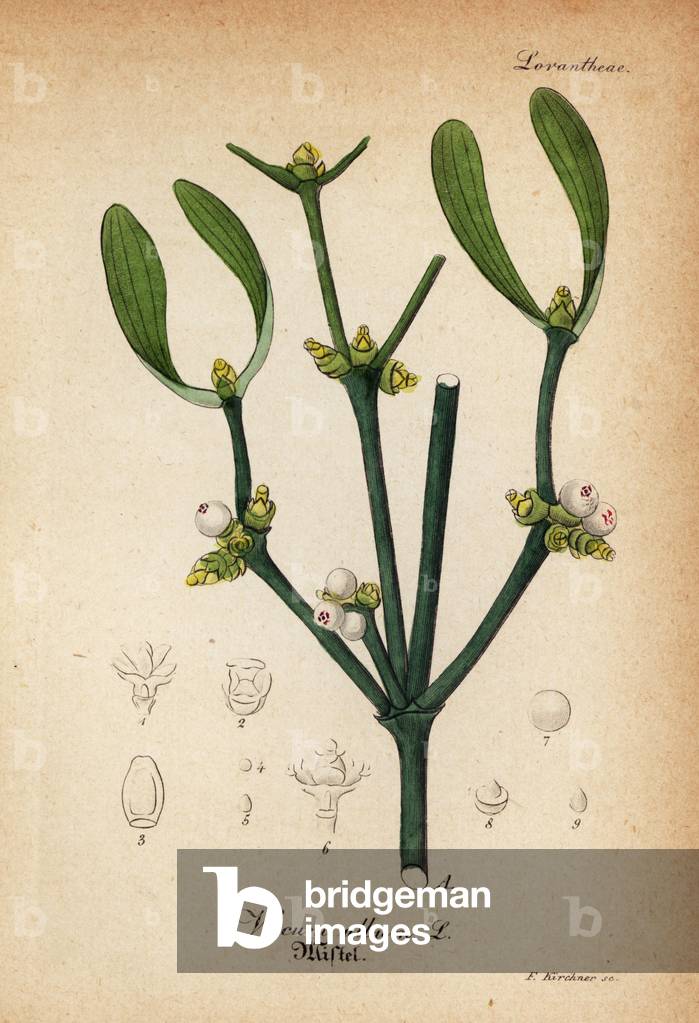
FLO4564434: European mistletoe, Visum album. Handcoloured copperplate engraving from Dr. Willibald Artus' Hand-Atlas sammtlicher mediinisch-pharmaceutischer Gewachse, (Handbook of all medical-pharmaceutical plants), Jena, 1876. / Bridgeman Images

FLO4564437: Indian sandalwood, Santalum album. Handcoloured copperplate engraving from Dr. Willibald Artus' Hand-Atlas sammtlicher mediinisch-pharmaceutischer Gewachse, (Handbook of all medical-pharmaceutical plants), Jena, 1876. / Bridgeman Images

FLO4564564: Downy birch or white birch, Betula alba. Handcoloured copperplate engraving from Dr. Willibald Artus' Hand-Atlas sammtlicher mediinisch-pharmaceutischer Gewachse, (Handbook of all medical-pharmaceutical plants), Jena, 1876. / Bridgeman Images

FLO4564567: Bay willow, Salix pentandra. Handcoloured copperplate engraving from Dr. Willibald Artus' Hand-Atlas sammtlicher mediinisch-pharmaceutischer Gewachse, (Handbook of all medical-pharmaceutical plants), Jena, 1876. / Bridgeman Images

FLO4564640: Arum lily, Arum maculatum. Handcoloured copperplate engraving from Dr. Willibald Artus' Hand-Atlas sammtlicher mediinisch-pharmaceutischer Gewachse, (Handbook of all medical-pharmaceutical plants), Jena, 1876. / Bridgeman Images

FLO4564662: Herb Paris, Paris quadrifolia. Handcoloured copperplate engraving from Dr. Willibald Artus' Hand-Atlas sammtlicher mediinisch-pharmaceutischer Gewachse, (Handbook of all medical-pharmaceutical plants), Jena, 1876. / Bridgeman Images

LRI4564716: Portrait of Prospero Pedrazzi (engraving) / Bridgeman Images

FLO4565977: Wild cormier or rowan birds. Coloured copper engraving from a drawing by Isaac Russell from William Baxter's book “English Botanical Phenomenes””, 1834. William Baxter (1788-1871) was the curator of the Oxford Botanical Garden from 1813 to 1854. Wild service tree, Pyrus torminalis. Handcoloured copperplate engraving by WE Albutt of a drawing by Isaac Russell from William Baxter's “” British Phaenogamous Botany”” 1834. Scotsman William Baxter (1788-1871) was the curator of the Oxford Botanic Garden from 1813 to 1854. / Bridgeman Images

FLO4566011: Scutellaire has helmet or big hat. Coloured copper engraving from a drawing by Isaac Russell from William Baxter's book “English Botanical Phenomenes””, 1834. William Baxter (1788-1871) was the curator of the Oxford Botanical Garden from 1813 to 1854. Common skull cap, Scutellaria galericulata. Handcoloured copperplate engraving from a drawing by Isaac Russell from William Baxter's “” British Phaenogamous Botany”” 1834. Scotsman William Baxter (1788-1871) was the curator of the Oxford Botanic Garden from 1813 to 1854. / Bridgeman Images

LRI4566234: Page from Liber octo missarum (1541), Unknown Artist, (16th century) / Bridgeman Images

FLO4566238: Odagrarian egopod. Coloured copper engraving from a drawing by Isaac Russell from William Baxter's book “English Botanical Phenomenes””, 1834. William Baxter (1788-1871) was the curator of the Oxford Botanical Garden from 1813 to 1854. Gout weed, Agopodium podagraria. Handcoloured copperplate engraving by Charles Mathews of a drawing by Isaac Russell from William Baxter's “” British Phaenogamous Botany”” 1835. Scotsman William Baxter (1788-1871) was the curator of the Oxford Botanic Garden from 1813 to 1854. / Bridgeman Images

FLO4566344: Vergerette acre - Blue flea-bane, Erigeron acris - Handcoloured copperplate drawn and engraved by Charles Mathews from William Baxter's “” British Phaenogamous Botany”” 1835 / Bridgeman Images

FLO4566423: Nielle des bles - Corn cockle, Agrostemma githago - Handcoloured copperplate engraving by Charles Mathews from a drawing by Isaac Russell from William Baxter's “” British Phaenogamous Botany”” 1836 / Bridgeman Images

FLO4566469: White water-lily, Nymphaea alba, sections of flower, berry and seeds - Handcoloured copperplate engraving by J. Whessell from a drawing by Isaac Russell from William Baxter's “” British Phaenogamous Botany”” 1836 / Bridgeman Images

LRI4564917: Portrait of Luigi Ricci (engraving, 19th century), Unknown Artist, (19th century) / Bridgeman Images

FLO4564956: Fancy dress costume for Summer, with dress of sun rays, roses, wheat and butterflies. Handcoloured lithograph after a design by Leon Sault from “” L'Art du Travestissement” (The Art of Fancy Dress), Paris, c.1880. Sault was a theatre and opera designer and luxury fashion magazine publisher. / Bridgeman Images

FLO4564970: Fancy dress costume of the game of badminton, with dress of racquets, shuttlecocks and feathers. Handcoloured lithograph after a design by Leon Sault from “” L'Art du Travestissement” (The Art of Fancy Dress), Paris, c.1880. Sault was a theatre and opera designer and luxury fashion magazine publisher. / Bridgeman Images

FLO4565238: Costume of Henry IV of France (1553-1610), called the Bearnais, 16th century. Lace ruff, suit of black silk with slashed breeches, sword. Handcoloured lithograph after a design by Leon Sault from “” L'Art du Travestissement” (The Art of Fancy Dress), Paris, c.1880. Sault was a theatre and opera designer and luxury fashion magazine publisher. / Bridgeman Images

FLO4565480: Fakir or fukeer, enthusiast, in muslin loincloth, pricking his skin with brassforks and sharp needles. Handcoloured copperplate engraving by an unknown artist from “” Asiatic Costumes,”” Ackermann, London, 1828. / Bridgeman Images

LRI4565531: Portrait of Karl Taussig (engraving after photo), Unknown photographer, (19th century) / Bridgeman Images

LRI4565544: Portrait ofFrancesco Antonio Tenaglia (engraving) / Bridgeman Images

FLO4565818: Skeleton of a European perch, Perca fluviatilis, from Dr. Barclay's Museum, Edinburgh. Copperplate engraving by Edward Mitchell after an anatomical illustration by Robert Kaye Greville from John Barclay's A Series of Engravings of the Human Skeleton, MacLachlan and Stewart, Edinburgh, 1824. / Bridgeman Images

LRI4565740: Portrait of Adrian Willaert (woodcut, 16th century), Unknown Artist, (16th century) / Bridgeman Images

LRI4565754: Portrait of Johannes Wolf (b/w photo), Unknown photographer, (20th century) / Bridgeman Images

FLO4565782: Comparison of the skeletons of the human male, female and foetus at birth. Copperplate engraving by Edward Mitchell after an anatomical illustration by Jean-Joseph Sue from John Barclay's A Series of Engravings of the Human Skeleton, MacLachlan and Stewart, Edinburgh, 1824. / Bridgeman Images

LRI4565795: Portrait of Nicola Antonio Zingarelli (engraving, 19th century), Unknown Artist, (19th century) / Bridgeman Images

LRI4565846: Portrait of Guglielmo Zuelli (b/w photo, 20th century), Unknown photographer, (20th century) / Bridgeman Images

FLO4562969: Arab jasmine, oenothera, lisianthus and alpinia. Lithograph by James Andrews (1801-1876), published in Fleurs des pays etrangers, by Robert Tyas, London, 1853, edited by Houlston and Stoneman. / Bridgeman Images

FLO4562977: Bouquet of poinciana, Chinese hypericum, crimson hibiscus and orchid epidendrum. Lithograph by James Andrews (1801-1876), published in Fleurs des pays etrangers, by Robert Tyas, London, 1853, edited by Houlston and Stoneman. / Bridgeman Images

LRI4563018: Sheet music page for The pirate, opera by Vincenzo Bellini, Bellini, Vincenzo (1801-1835) / Bridgeman Images

FLO4563359: Juniper, Juniperus communis. Handcoloured copperplate engraving from Dr. Willibald Artus' Hand-Atlas sammtlicher mediinisch-pharmaceutischer Gewachse, (Handbook of all medical-pharmaceutical plants), Jena, 1876. / Bridgeman Images
