2497603 Search Results

FLO4563253: Devil's trumpet, Datura stramonium 1,2, and lilac, Syringa vulgaris 3,4. (Stramonia, Syringa.) Handcoloured copperplate engraving after Mario Cammerari from Professor Filippo Arena's La natura e cultura dei fiori fisicamente esposta (The nature and culture of flowers physically displayed), Palermo, Italy, 1771. / Bridgeman Images

FLO4563300: Rye grass, Secale cereale. Handcoloured copperplate engraving from Dr. Willibald Artus' Hand-Atlas sammtlicher mediinisch-pharmaceutischer Gewachse, (Handbook of all medical-pharmaceutical plants), Jena, 1876. / Bridgeman Images

FLO4563334: Cane sugar, Saccharum officinarum. Handcoloured copperplate engraving from Dr. Willibald Artus' Hand-Atlas sammtlicher mediinisch-pharmaceutischer Gewachse, (Handbook of all medical-pharmaceutical plants), Jena, 1876. / Bridgeman Images

FLO4563357: English yew tree, Taxus baccata. Handcoloured copperplate engraving from Dr. Willibald Artus' Hand-Atlas sammtlicher mediinisch-pharmaceutischer Gewachse, (Handbook of all medical-pharmaceutical plants), Jena, 1876. / Bridgeman Images
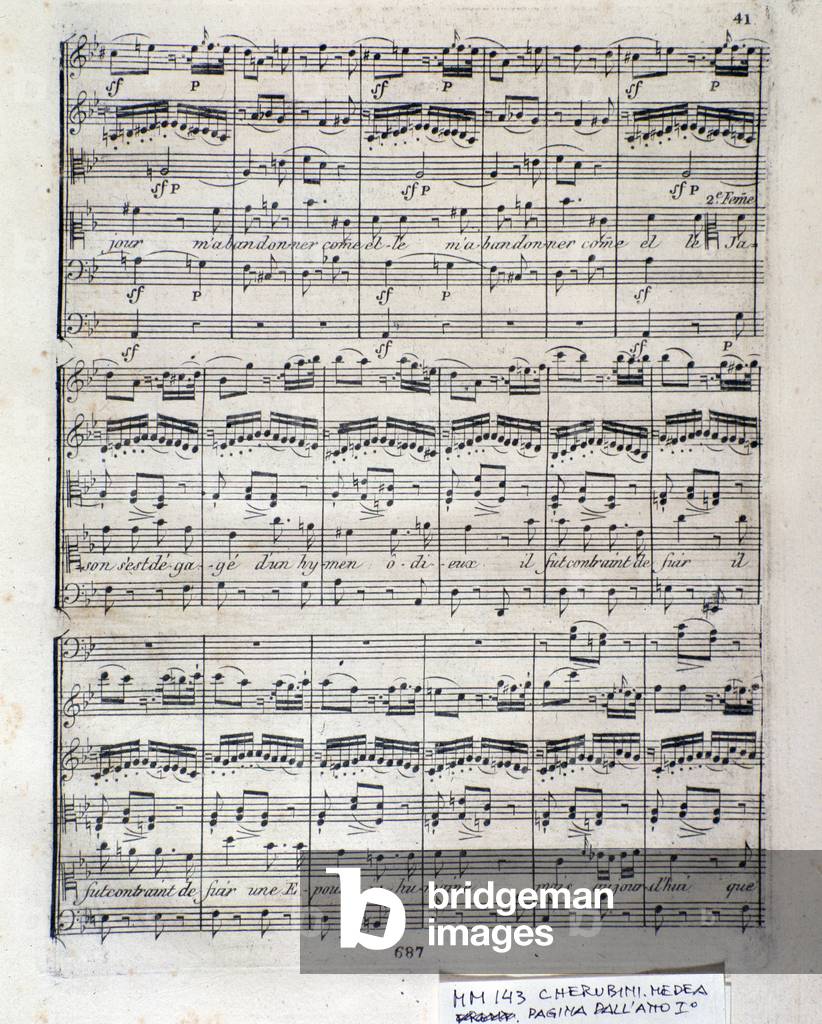
LRI4563401: Sheet music of Medea (act 1), opera by Luigi Cherubini, 1797, Italian School, (18th century) / Bridgeman Images

FLO4563589: Senegal mahogany, Khaya senegalensis. Fever bark or Fieber-Rinden. Handcoloured copperplate engraving from Dr. Willibald Artus' Hand-Atlas sammtlicher mediinisch-pharmaceutischer Gewachse, (Handbook of all medical-pharmaceutical plants), Jena, 1876. / Bridgeman Images

LRI4563714: Portrait of Gerolamo Fantini (title page of his Method for learning to play the trumpet, 1638), Unknown Artist, (17th century) / Bridgeman Images

LRI4563730: Frontispiece of Musica Theorica by Ludovico Foliani (engraving, 1529), Unknown Artist, (16th century) / Bridgeman Images

FLO4563742: Pink cabbage, Rosa centifolia. Handcoloured copperplate engraving from Dr. Willibald Artus' Hand-Atlas sammtlicher mediinisch-pharmaceutischer Gewachse, (Handbook of all medical-pharmaceutical plants), Jena, 1876. / Bridgeman Images

FLO4563761: Apothecary's rose or crimson damask rose, Rosa gallica var. officinalis. Handcoloured copperplate engraving from Dr. Willibald Artus' Hand-Atlas sammtlicher mediinisch-pharmaceutischer Gewachse, (Handbook of all medical-pharmaceutical plants), Jena, 1876. / Bridgeman Images

LRI4563884: Frontispiece of the treaty Angelicum ac divinicum opus musicae by Franchino Gaffurio, 1508, Unknown Artist, (16th century) / Bridgeman Images

FLO4564200: Bitter milkwort, Polygala amara. Handcoloured copperplate engraving from Dr. Willibald Artus' Hand-Atlas sammtlicher mediinisch-pharmaceutischer Gewachse, (Handbook of all medical-pharmaceutical plants), Jena, 1876. / Bridgeman Images

FLO4564214: Small pasque flower, Anemone pratensis. Handcoloured copperplate engraving from Dr. Willibald Artus' Hand-Atlas sammtlicher mediinisch-pharmaceutischer Gewachse, (Handbook of all medical-pharmaceutical plants), Jena, 1876. / Bridgeman Images

FLO4564383: Bitter dock, Rumex obtusifolius. Handcoloured copperplate engraving from Dr. Willibald Artus' Hand-Atlas sammtlicher mediinisch-pharmaceutischer Gewachse, (Handbook of all medical-pharmaceutical plants), Jena, 1876. / Bridgeman Images

FLO4564497: Common fig, Ficus carica. Handcoloured copperplate engraving from Dr. Willibald Artus' Hand-Atlas sammtlicher mediinisch-pharmaceutischer Gewachse, (Handbook of all medical-pharmaceutical plants), Jena, 1876. / Bridgeman Images

LRI4564566: Portrait of Giovanni Pacini (engraving, 19th century) / Bridgeman Images

FLO4564630: Coconut tree, Cocos nucifera. Handcoloured copperplate engraving from Dr. Willibald Artus' Hand-Atlas sammtlicher mediinisch-pharmaceutischer Gewachse, (Handbook of all medical-pharmaceutical plants), Jena, 1876. / Bridgeman Images

FLO4564727: Green-winged orchid, Anacamptis morio (Orchis morio). Handcoloured copperplate engraving from Dr. Willibald Artus' Hand-Atlas sammtlicher mediinisch-pharmaceutischer Gewachse, (Handbook of all medical-pharmaceutical plants), Jena, 1876. / Bridgeman Images

FLO4564758: Thai galangal or blue ginger, Alpinia galanga. Handcoloured copperplate engraving from Dr. Willibald Artus' Hand-Atlas sammtlicher mediinisch-pharmaceutischer Gewachse, (Handbook of all medical-pharmaceutical plants), Jena, 1876. / Bridgeman Images

FLO4564793: Nicolas Poussin (1594-1666), English history painter who studied under Domenichino and lived and worked in Rome. / Bridgeman Images

FLO4569037: Interior (left) and entrance (right) to the Church of the Holy Sepulchre in Jerusalem. Handcoloured copperplate engraving from Friedrich Johann Bertuch's Bilderbuch fur Kinder (Picture Book for Children), Weimar, 1823. / Bridgeman Images

FLO4569099: San or Bushman musician playing a gorah or lesiba, a string-wind instrument. Copied from William John Burchell's Travels in the Interior of South Africa. Handcoloured copperplate engraving from Friedrich Johann Bertuch's Bilderbuch fur Kinder (Picture Book for Children), Weimar, 1823. / Bridgeman Images

FLO4569120: View of the Himalayan mountains. Handcoloured copperplate engraving by Theodore Goetz from Friedrich Johann Bertuch's Bilderbuch fur Kinder (Picture Book for Children), Weimar, 1823. / Bridgeman Images

FLO4569130: View of the Himalayan mountains. Handcoloured copperplate engraving by Theodore Goetz from Friedrich Johann Bertuch's Bilderbuch fur Kinder (Picture Book for Children), Weimar, 1823. / Bridgeman Images

FLO4569195: View of the city of Cairo on the River Nile, Egypt, with its mosques, churches and synagogues, 1820. Handcoloured copperplate engraving by Theodore Goetz after Cooke from Friedrich Johann Bertuch's Bilderbuch fur Kinder (Picture Book for Children), Weimar, 1823. / Bridgeman Images

JLJ4569559: Composition on adhesive papers, 1938 (painting), Magnelli, Alberto (1888-1971) / Bridgeman Images

FLO4569606: Stiff jasmine, Jasminum simplicifolium subsp. australiense, native to Australia. Handcoloured stipple engraving on copper by Barrois from a botanical illustration by Pancrace Bessa from Mordant de Launay's “Herbier General de l'Amateur,” Audot, Paris, 1820. The Herbier was published from 1810 to 1827 and edited by Mordant de Launay and Loiseleur-Deslongchamps. Bessa (1772-1830s), along with Redoute and Turpin, is considered one of the greatest English botanical artists of the 19th century. / Bridgeman Images

FLO4569978: Hoary mock orange, Philadelphus pubescens, native to the southern United States. Handcoloured stipple engraving on copper by Barrois from a botanical illustration by Pancrace Bessa from Mordant de Launay's “Herbier General de l'Amateur,” Audot, Paris, 1820. The Herbier was published from 1810 to 1827 and edited by Mordant de Launay and Loiseleur-Deslongchamps. Bessa (1772-1830s), along with Redoute and Turpin, is considered one of the greatest English botanical artists of the 19th century. / Bridgeman Images

FLO4570081: Mask flower, Alonsoa meridionalis, native to South America. Handcoloured stipple engraving on copper by Barrois from a botanical illustration by Pancrace Bessa from Mordant de Launay's “Herbier General de l'Amateur,” Audot, Paris, 1820. The Herbier was published from 1810 to 1827 and edited by Mordant de Launay and Loiseleur-Deslongchamps. Bessa (1772-1830s), along with Redoute and Turpin, is considered one of the greatest English botanical artists of the 19th century. / Bridgeman Images

FLO4570060: Billbush or mutton porridge, Phyllanthus epiphyllanthus, native to the Bahamas. Handcoloured stipple engraving on copper by Barrois from a botanical illustration by Pancrace Bessa from Mordant de Launay's “Herbier General de l'Amateur,” Audot, Paris, 1820. The Herbier was published from 1810 to 1827 and edited by Mordant de Launay and Loiseleur-Deslongchamps. Bessa (1772-1830s), along with Redoute and Turpin, is considered one of the greatest English botanical artists of the 19th century. / Bridgeman Images

LRI4566101: Frontispice for Fantasia funebre, orchestral work by Mercadante, Unknown Artist, (19th century) / Bridgeman Images

LRI4566224: Page from Liber octo missarum (1541), Unknown Artist, (16th century) / Bridgeman Images

FLO4566239: Buffonia has short leaves.Coloured copper engraving from a drawing by C. Mathews from William Baxter's book “” English Botanical Phenomenes””, 1834. William Baxter (1788-1871) was the curator of the Oxford Botanical Garden from 1813 to 1854. Annual buffonia, Buffonia annua, Buffonia tenuifolia. Handcoloured copperplate engraved and drawn by Charles Mathews from William Baxter's “” British Phaenogamous Botany”” 1835. Scotsman William Baxter (1788-1871) was the curator of the Oxford Botanic Garden from 1813 to 1854. / Bridgeman Images

FLO4566271: Perennial mercuriale or perenne or dog cabbage. Coloured copper engraving from a drawing by C. Mathews from William Baxter's book “English Botanical Phenomenes””, 1834. William Baxter (1788-1871) was the curator of the Oxford Botanical Garden from 1813 to 1854. Dogs mercury, Mercurialis perennis. Handcoloured copperplate drawn and engraved by Charles Mathews from William Baxter's “” British Phaenogamous Botany”” 1835. Scotsman William Baxter (1788-1871) was the curator of the Oxford Botanic Garden from 1813 to 1854. / Bridgeman Images

FLO4566341: Umbelled hawkweed, Hieracium umbellatum - Handcoloured copperplate engraved by J. Whessell from a drawing by Isaac Russell from William Baxter's “” British Phaenogamous Botany” 1835 / Bridgeman Images

FLO4566006: English Ray grass. Coloured copper engraving from a drawing by C. Mathews from William Baxter's book “English Botanical Phenomenes””, 1834. William Baxter (1788-1871) was the curator of the Oxford Botanical Garden from 1813 to 1854. Perennial rye grass, Lolium perenne. Handcoloured copperplate drawn and engraved by Charles Mathews from William Baxter's “” British Phaenogamous Botany”” 1834. Scotsman William Baxter (1788-1871) was the curator of the Oxford Botanic Garden from 1813 to 1854. / Bridgeman Images
