Search options

Orientation
Colour

Display options

View

Print

To print search results, use print friendly version of this page.

2491514 Search Results

House servant to the king in livery, reign of Henri III of France.

FLO4571522: House servant to the king in livery, reign of Henri III of France. / Bridgeman Images

King Louis XI of France, 1423-1483. In a short velvet casaque lined with fur and hose, with the chain of the Order of St. Michael. Handcoloured lithograph by Leopold Massard after a portrait in oils from Le Bibliophile Jacob aka Paul Lacroix's Costumes Historique de la France (Historical Costumes of France), Administration de Librairie, Paris, 1852.

FLO4570595: King Louis XI of France, 1423-1483. In a short velvet casaque lined with fur and hose, with the chain of the Order of St. Michael. Handcoloured lithograph by Leopold Massard after a portrait in oils from Le Bibliophile Jacob aka Paul Lacroix's Costumes Historique de la France (Historical Costumes of France), Administration de Librairie, Paris, 1852., Massard, Leopold (1812-1889) / Bridgeman Images

Magnified image of common moss, Phasum cuspidatum 1, and microscopic enlargment of pond algae. Handcoloured copperplate engraving from Bertuch's “” Bilderbuch fur Kinder”” (Picture Book for Children), Weimar, 1798. Friedrich Johann Bertuch (1747-1822) was a German publisher and man of arts most famous for his 12-volume encyclopedia for children illustrated with 1,200 engraved plates on natural history, science, costume, mythology, etc., published from 1790-1830.

FLO4574183: Magnified image of common moss, Phasum cuspidatum 1, and microscopic enlargment of pond algae. Handcoloured copperplate engraving from Bertuch's “” Bilderbuch fur Kinder”” (Picture Book for Children), Weimar, 1798. Friedrich Johann Bertuch (1747-1822) was a German publisher and man of arts most famous for his 12-volume encyclopedia for children illustrated with 1,200 engraved plates on natural history, science, costume, mythology, etc., published from 1790-1830. / Bridgeman Images

Nile monitor lizard (Nile varan), Varanus niloticus 1, common basilisk (basil commun), Basiliscus basiliscus 2, and flying lizard (common flying dragon), Draco volans 3. Handcoloured copperplate engraving from Friedrich Johann Bertuch's Bilderbuch fur Kinder (Picture Book for Children), Weimar, 1798.

FLO4574810: Nile monitor lizard (Nile varan), Varanus niloticus 1, common basilisk (basil commun), Basiliscus basiliscus 2, and flying lizard (common flying dragon), Draco volans 3. Handcoloured copperplate engraving from Friedrich Johann Bertuch's Bilderbuch fur Kinder (Picture Book for Children), Weimar, 1798. / Bridgeman Images

Master of the Chamber of Accounts, reign of King Henry IV of France. Handcoloured lithograph directed by Breton and Borromee after a miniature from Le Bibliophile Jacob aka Paul Lacroix's Costumes Historique de la France (Historical Costumes of France), Administration de Librairie, Paris, 1852.

FLO4571655: Master of the Chamber of Accounts, reign of King Henry IV of France. Handcoloured lithograph directed by Breton and Borromee after a miniature from Le Bibliophile Jacob aka Paul Lacroix's Costumes Historique de la France (Historical Costumes of France), Administration de Librairie, Paris, 1852. / Bridgeman Images

King Francis II of France, Francois II, as a young prince. Handcoloured lithograph after a portrait in Roger de Gaignieres' gallery portfolio from Le Bibliophile Jacob aka Paul Lacroix's Costumes Historique de la France (Historical Costumes of France), Administration de Librairie, Paris, 1852.

FLO4571251: King Francis II of France, Francois II, as a young prince. Handcoloured lithograph after a portrait in Roger de Gaignieres' gallery portfolio from Le Bibliophile Jacob aka Paul Lacroix's Costumes Historique de la France (Historical Costumes of France), Administration de Librairie, Paris, 1852. / Bridgeman Images

Gum benjamin tree, Styrax benzoin 1, and logwood, Haematoxylon campechianum 2. Handcoloured copperplate engraving from Bertuch's “” Bilderbuch fur Kinder”” (Picture Book for Children), Weimar, 1798. Friedrich Johann Bertuch (1747-1822) was a German publisher and man of arts most famous for his 12-volume encyclopedia for children illustrated with 1,200 engraved plates on natural history, science, costume, mythology, etc., published from 1790-1830.

FLO4574301: Gum benjamin tree, Styrax benzoin 1, and logwood, Haematoxylon campechianum 2. Handcoloured copperplate engraving from Bertuch's “” Bilderbuch fur Kinder”” (Picture Book for Children), Weimar, 1798. Friedrich Johann Bertuch (1747-1822) was a German publisher and man of arts most famous for his 12-volume encyclopedia for children illustrated with 1,200 engraved plates on natural history, science, costume, mythology, etc., published from 1790-1830. / Bridgeman Images

Francoise Robertet, wife of Tristan de Rostaing, Baron de Brou. Handcoloured lithograph after a portrait in Roger de Gaignieres' gallery portfolio X 11 from Le Bibliophile Jacob aka Paul Lacroix's Costumes Historique de la France (Historical Costumes of France), Administration de Librairie, Paris, 1852.

FLO4571622: Francoise Robertet, wife of Tristan de Rostaing, Baron de Brou. Handcoloured lithograph after a portrait in Roger de Gaignieres' gallery portfolio X 11 from Le Bibliophile Jacob aka Paul Lacroix's Costumes Historique de la France (Historical Costumes of France), Administration de Librairie, Paris, 1852. / Bridgeman Images

Doctor to the court of King Louis XVI of France, 1776. Handcoloured lithograph from Le Bibliophile Jacob aka Paul Lacroix's Costumes Historique de la France (Historical Costumes of France), Administration de Librairie, Paris, 1852.

FLO4572332: Doctor to the court of King Louis XVI of France, 1776. Handcoloured lithograph from Le Bibliophile Jacob aka Paul Lacroix's Costumes Historique de la France (Historical Costumes of France), Administration de Librairie, Paris, 1852. / Bridgeman Images
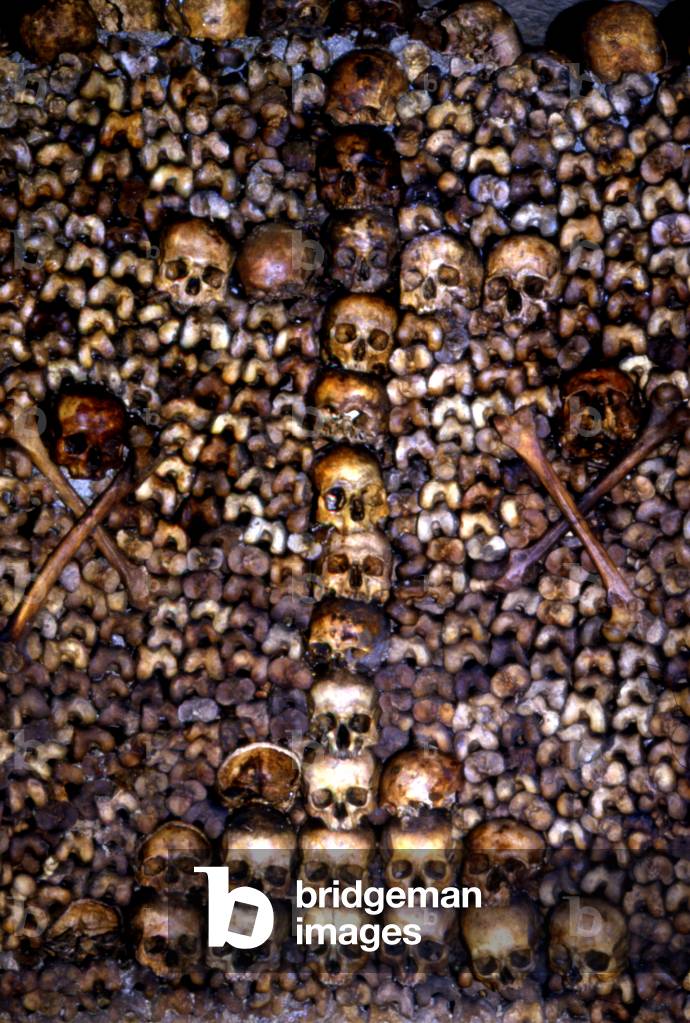
Les Catacombes, Paris 14th arrondissement. The origin of the catacombs dates back to the end of the 18th century, and collected all the bones found in the soil of Paris until around 1950. Anonymity is complete. It is estimated that six million of the individuals whose remains were collected in the catacombs.

LBY4572739: Les Catacombes, Paris 14th arrondissement. The origin of the catacombs dates back to the end of the 18th century, and collected all the bones found in the soil of Paris until around 1950. Anonymity is complete. It is estimated that six million of the individuals whose remains were collected in the catacombs. / Bridgeman Images
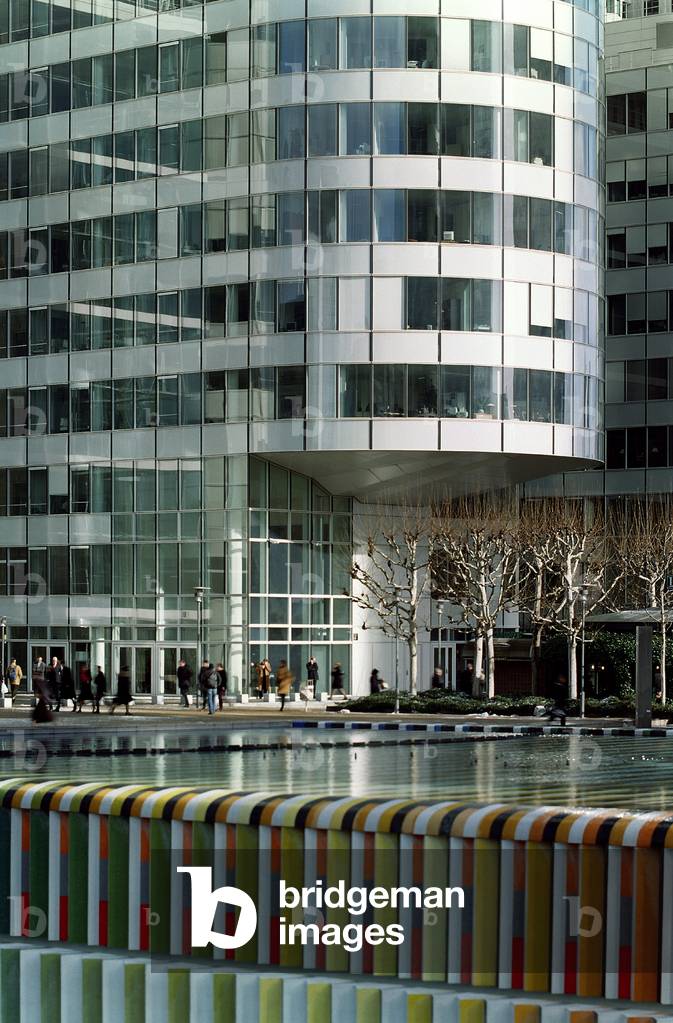
Tours Coeur Defense in Levallois (Hauts de Seine).

LBY4573893: Tours Coeur Defense in Levallois (Hauts de Seine)., Boegly, Luc / Bridgeman Images
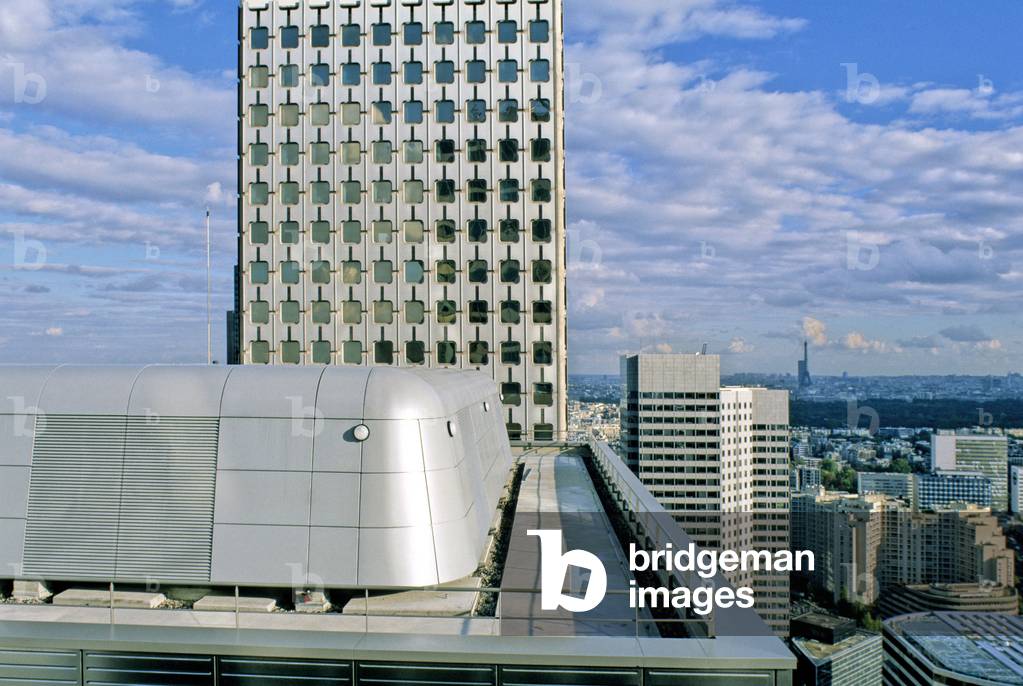
La Defense in the Hauts de Seine.

TEC4573411: La Defense in the Hauts de Seine. / Bridgeman Images
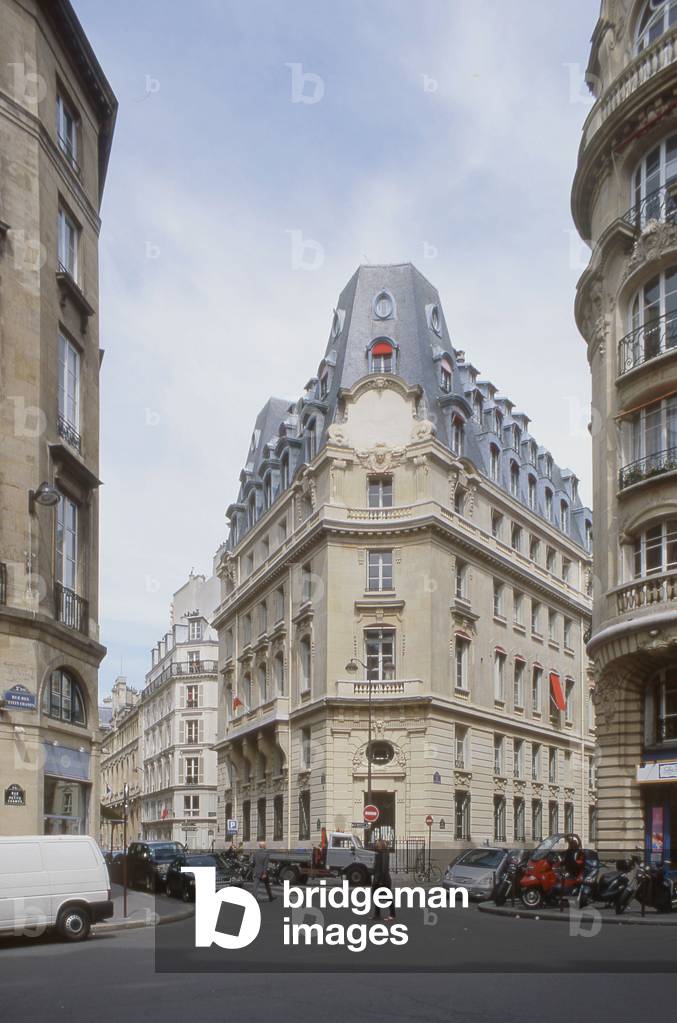
Corner building of Rue Reaumur and Rue d'Aboukir, Paris 2nd arrondissement. Photography 05/05/02.

TEC4571212: Corner building of Rue Reaumur and Rue d'Aboukir, Paris 2nd arrondissement. Photography 05/05/02. / Bridgeman Images
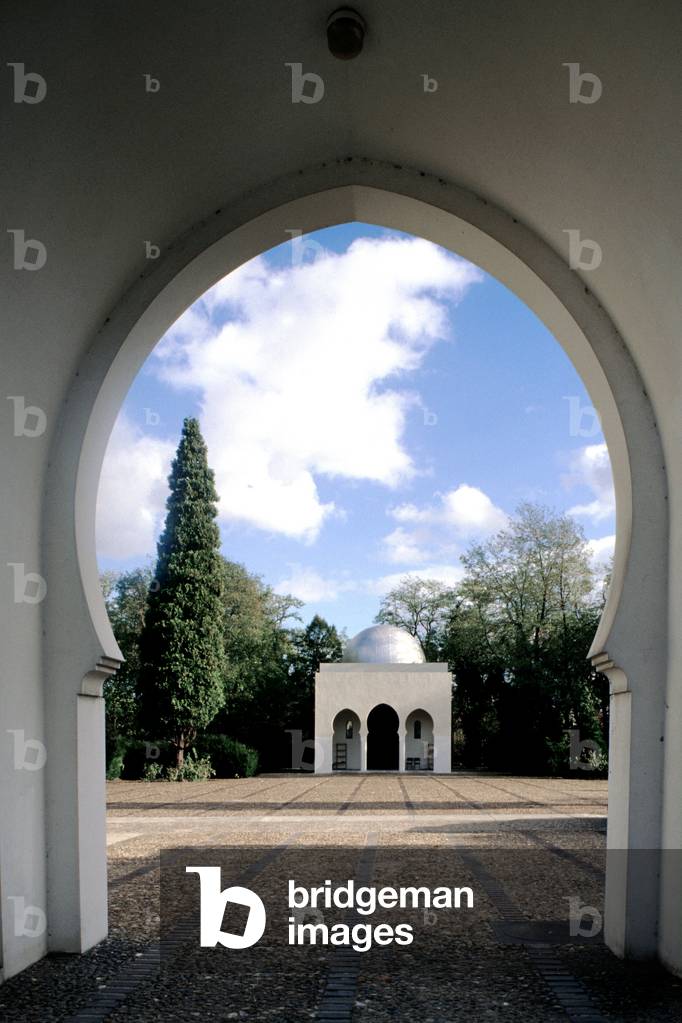
Dome of the mosque of the Muslim cemetery, rue Arago a Bobigny en Seine Saint Denis.

ITR4570797: Dome of the mosque of the Muslim cemetery, rue Arago a Bobigny en Seine Saint Denis. / Bridgeman Images

Comete McNaught 01/2007 - Comet McNaught 01/2007 - View of the McNaught comet obtained on January 20, 2007 from Australia. Chiro Observatory - Western Australia. Comet McNaught as seen from Chiro Observatory, W. Australia. Jan 20 2007

PIX4570789: Comete McNaught 01/2007 - Comet McNaught 01/2007 - View of the McNaught comet obtained on January 20, 2007 from Australia. Chiro Observatory - Western Australia. Comet McNaught as seen from Chiro Observatory, W. Australia. Jan 20 2007 / Bridgeman Images

Europe - satellite of Jupiter - Galileo - Image in false colours obtained by the Galileo probe on 26 September 1998. The area covers about 525 by 300 km

PIX4574838: Europe - satellite of Jupiter - Galileo - Image in false colours obtained by the Galileo probe on 26 September 1998. The area covers about 525 by 300 km / Bridgeman Images

Lovejoy Comet - December 2011 - Lovejoy Comet seen in Australia, (Yorkrakine Rock). 26 December 2011. Comet Lovejoy wide - angle taken near Yorkrakine Rock, West Australia on Dec. 26, 201

PIX4571217: Lovejoy Comet - December 2011 - Lovejoy Comet seen in Australia, (Yorkrakine Rock). 26 December 2011. Comet Lovejoy wide - angle taken near Yorkrakine Rock, West Australia on Dec. 26, 201 / Bridgeman Images

Comete Hyakutake 27/03/1996 - Comet Hyakutake March 27 199

PIX4570028: Comete Hyakutake 27/03/1996 - Comet Hyakutake March 27 199 / Bridgeman Images
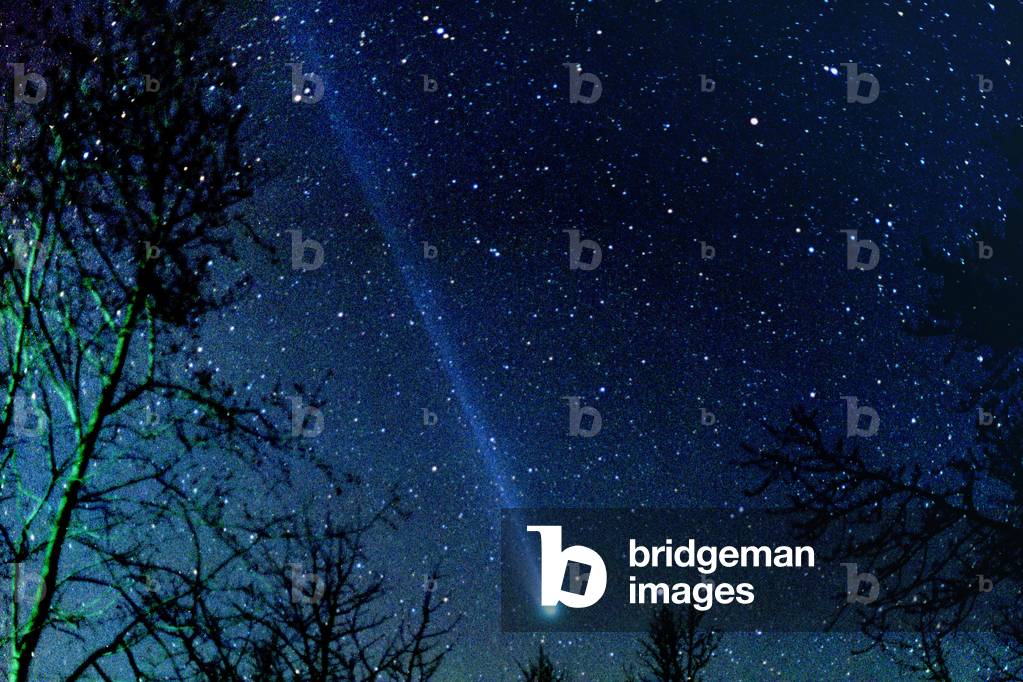
Comete Hyakutake 27/03/1996 - Comet Hyakutake March 27 199

PIX4570099: Comete Hyakutake 27/03/1996 - Comet Hyakutake March 27 199 / Bridgeman Images

Planet around the star Fomalhaut - Planet orbiting star Fomalhaut - First visible light photo of an extrasolar planet obtained by the space telescope Hubble. The planet called Fomalhaut b, is a planet with a mass close to Jupiter, orbiting the star Fomalhaut, 25 years - light from Earth in the constellation of Southern Fish. The star Fomalhaut (indicated by a white dot) is hidden here to show the dust disc surrounding it and the position of the planet. Located at a distance of about four times that separating Neptune from the Sun, Fomalhaut b makes a complete orbit around its star in 872 years. November 2008 - This image, taken with the Advanced Camera for Surveys aboard the NASA/ESA Hubble Space Telescope, shows the newly discovered planet, Fomalhaut b, orbiting its parent star, Fomalhaut. The small white box at lower right pinpoints the planet's location. Fomalhaut b has carved a path along the inner edge of a vast, dusty debris ring encircling Fomalhaut that is 34.5 billion kilometers across. Fomalhaut b lies three billion kilometers inside the ring's inner edge and orbits 17 billion kilometers from its star. The inset at bottom right is a composite image showing the planet's position during Hubble observations taken in 2004 and 2006. Astronomers have calculated that Fomalhaut b completes an orbit around its parent star every 872 years. The white dot in the centre of the image marks the star's location. The region around Fomalhaut's location is black because astronomers used the Advanced Camera's coronagraph to block out the star's bright glare so that the dim planet could be seen. Fomalhaut b is 100 million times fainter than its star. The radial streaks are scattered starlight. The red dot at lower left is a background star. The Fomalhaut system is 25 light - years away in the constellation Piscis Austrinus. This false - colour image was taken in October 2004 and July 2006

PIX4573100: Planet around the star Fomalhaut - Planet orbiting star Fomalhaut - First visible light photo of an extrasolar planet obtained by the space telescope Hubble. The planet called Fomalhaut b, is a planet with a mass close to Jupiter, orbiting the star Fomalhaut, 25 years - light from Earth in the constellation of Southern Fish. The star Fomalhaut (indicated by a white dot) is hidden here to show the dust disc surrounding it and the position of the planet. Located at a distance of about four times that separating Neptune from the Sun, Fomalhaut b makes a complete orbit around its star in 872 years. November 2008 - This image, taken with the Advanced Camera for Surveys aboard the NASA/ESA Hubble Space Telescope, shows the newly discovered planet, Fomalhaut b, orbiting its parent star, Fomalhaut. The small white box at lower right pinpoints the planet's location. Fomalhaut b has carved a path along the inner edge of a vast, dusty debris ring encircling Fomalhaut that is 34.5 billion kilometers across. Fomalhaut b lies three billion kilometers inside the ring's inner edge and orbits 17 billion kilometers from its star. The inset at bottom right is a composite image showing the planet's position during Hubble observations taken in 2004 and 2006. Astronomers have calculated that Fomalhaut b completes an orbit around its parent star every 872 years. The white dot in the centre of the image marks the star's location. The region around Fomalhaut's location is black because astronomers used the Advanced Camera's coronagraph to block out the star's bright glare so that the dim planet could be seen. Fomalhaut b is 100 million times fainter than its star. The radial streaks are scattered starlight. The red dot at lower left is a background star. The Fomalhaut system is 25 light - years away in the constellation Piscis Austrinus. This false - colour image was taken in October 2004 and July 2006 / Bridgeman Images

Comete - Illustration - Comet - Illustratio

PIX4571399: Comete - Illustration - Comet - Illustratio / Bridgeman Images

A neutron star at the Florida scale - Size comparison: a neutron star with Florida - A neutron star is a very dense star resulting from the explosion of a massive supernova star. These stars are very small as in this illustration on scale. Neutron stars are incredibly dense remnants of older stars that have blown off their outer gas layers. Many are only as far across as a city. In this cosmic comparison, we see a typical neutron star compared to the gulf coast of the US

PIX4572462: A neutron star at the Florida scale - Size comparison: a neutron star with Florida - A neutron star is a very dense star resulting from the explosion of a massive supernova star. These stars are very small as in this illustration on scale. Neutron stars are incredibly dense remnants of older stars that have blown off their outer gas layers. Many are only as far across as a city. In this cosmic comparison, we see a typical neutron star compared to the gulf coast of the US / Bridgeman Images

The Io satellite seen by the Galileo probe - The Jupiter Io satellite photographed by the Galileo probe from 25 to 29 June 199

PIX4574742: The Io satellite seen by the Galileo probe - The Jupiter Io satellite photographed by the Galileo probe from 25 to 29 June 199 / Bridgeman Images

Pavilion area in Aulnay sous Bois in the Seine Saint Denis.

RCT4570853: Pavilion area in Aulnay sous Bois in the Seine Saint Denis., Castan, Remy / Bridgeman Images

Artist's view of a magnetar and its magnetic field - A magnetar with its magnetic field. Artwork - Illustration showing the magnetic field lines of a magnetar that intertwine causing tensions on the surface of the neutron star that partially breaks causing an emission of X-rays and gamma rays. A magnetar is a neutron star with an extremely powerful magnetic field. This artwork shows magnetic field lines of the star causing X and gamma rays burst when they mix

PIX4572812: Artist's view of a magnetar and its magnetic field - A magnetar with its magnetic field. Artwork - Illustration showing the magnetic field lines of a magnetar that intertwine causing tensions on the surface of the neutron star that partially breaks causing an emission of X-rays and gamma rays. A magnetar is a neutron star with an extremely powerful magnetic field. This artwork shows magnetic field lines of the star causing X and gamma rays burst when they mix / Bridgeman Images

Artist's view of a fugitive star - A runaway star in the Large Magellanic cloud - The star HE0457 - 5439 is a massive star in the Grand Cloud of Magellan; it is a star escaping from this galaxy at a speed of 2.6 Million km/h Background image obtained at the observatory of La Silla in Chile; the star fleeing has been added on the image. The star HE0457 - 5439 is a massive star wich lies closer to one of the Milky Way satellite galaxies, the Large Magellanic Cloud, located 160,000 light - years away from us. This is a runaway star, moving at more than 2.6 million kilometers per hour. Astronomers find it likely for the star to have reached its present position had it been ejected from the centre of the LMC. The background image has been obtained at La Silla observatory, the star moving has been added

PIX4572713: Artist's view of a fugitive star - A runaway star in the Large Magellanic cloud - The star HE0457 - 5439 is a massive star in the Grand Cloud of Magellan; it is a star escaping from this galaxy at a speed of 2.6 Million km/h Background image obtained at the observatory of La Silla in Chile; the star fleeing has been added on the image. The star HE0457 - 5439 is a massive star wich lies closer to one of the Milky Way satellite galaxies, the Large Magellanic Cloud, located 160,000 light - years away from us. This is a runaway star, moving at more than 2.6 million kilometers per hour. Astronomers find it likely for the star to have reached its present position had it been ejected from the centre of the LMC. The background image has been obtained at La Silla observatory, the star moving has been added / Bridgeman Images

Planisphere de Io - False colors - Planisphere of 11,420 km wide made from images obtained by the Galileo probe between July and September 1996 has distances between 485,000 and 2,243,000 kilometres from the satellite. The overlaid grid corresponds to longitude and latitude intervals of 30 degrees

PIX4574751: Planisphere de Io - False colors - Planisphere of 11,420 km wide made from images obtained by the Galileo probe between July and September 1996 has distances between 485,000 and 2,243,000 kilometres from the satellite. The overlaid grid corresponds to longitude and latitude intervals of 30 degrees / Bridgeman Images

Callisto - Jupiter satellite - Galileo - Jupiter Callisto satellite, in real colors, seen in May 2001 by the Galileo probe

PIX4574863: Callisto - Jupiter satellite - Galileo - Jupiter Callisto satellite, in real colors, seen in May 2001 by the Galileo probe / Bridgeman Images

Jupiter Red Spot - Jupiter: the Great Red Spot - The Jupiter Red Spot seen by the Voyager 1 probe in March 1979. The red spot of Jupiter is a gigantic tempete measuring nearly 25,000 km in diameter, about twice the diameter of the Earth. As Voyager 1 flew by Jupiter, it captured this photo of the Great Red Spot in march 1979. The Great Red Spot is an anti - cyclonic (high - pressure) storm on Jupiter that can be likened to the worst hurricanes on Earth

PIX4574612: Jupiter Red Spot - Jupiter: the Great Red Spot - The Jupiter Red Spot seen by the Voyager 1 probe in March 1979. The red spot of Jupiter is a gigantic tempete measuring nearly 25,000 km in diameter, about twice the diameter of the Earth. As Voyager 1 flew by Jupiter, it captured this photo of the Great Red Spot in march 1979. The Great Red Spot is an anti - cyclonic (high - pressure) storm on Jupiter that can be likened to the worst hurricanes on Earth / Bridgeman Images

Comete McNaught 01/2007 - Comet McNaught 01/2007 - View of McNaught comet in broad daylight obtained on January 18, 2007 from Australia. Day view of the Comet McNaught as seen from W. Australia. Jan 18 2007

PIX4570743: Comete McNaught 01/2007 - Comet McNaught 01/2007 - View of McNaught comet in broad daylight obtained on January 18, 2007 from Australia. Day view of the Comet McNaught as seen from W. Australia. Jan 18 2007 / Bridgeman Images

Comete Hyakutake 25/03/1996 - Comet Hyakutake March 25 199

PIX4570045: Comete Hyakutake 25/03/1996 - Comet Hyakutake March 25 199 / Bridgeman Images

Capella Star in the Coach - Star Capella in Auriga - The brightest star in the constellation of the Coach, Capella (Aur), is a yellow giant star with an apparent magnitude of 0.08 and the sixth brightest star in the sky. Located 42 years of light from us, it is one of the 100 closest stars on Earth. Star Capella in Auriga constellation is the 6th brightest star in the night sky. It is located 42 light years from the earth

PIX4571743: Capella Star in the Coach - Star Capella in Auriga - The brightest star in the constellation of the Coach, Capella (Aur), is a yellow giant star with an apparent magnitude of 0.08 and the sixth brightest star in the sky. Located 42 years of light from us, it is one of the 100 closest stars on Earth. Star Capella in Auriga constellation is the 6th brightest star in the night sky. It is located 42 light years from the earth / Bridgeman Images

Comete McNaught 01/2007 - Comet McNaught 01/2007 - View of McNaught comet in broad daylight obtained on January 14, 2007 from Australia. Day binocular view of the Comet McNaught as seen from W. Australia. Jan 14 2007

PIX4570738: Comete McNaught 01/2007 - Comet McNaught 01/2007 - View of McNaught comet in broad daylight obtained on January 14, 2007 from Australia. Day binocular view of the Comet McNaught as seen from W. Australia. Jan 14 2007 / Bridgeman Images

The city Le Lilas in the Seine Saint Denis. The iconography comes from the book “” Mille Billion de milieu”” by Claro (text) and Michel Denance (photographs) published by Le Bec in 2010.

MDA4570708: The city Le Lilas in the Seine Saint Denis. The iconography comes from the book “” Mille Billion de milieu”” by Claro (text) and Michel Denance (photographs) published by Le Bec in 2010., Denance, Michel / Bridgeman Images

A public garden in Clichy sous Bois in the Seine Saint Denis. The iconography comes from the book “” Mille Billion de milieu”” by Claro (text) and Michel Denance (photographs) published by Le Bec in 2010.

MDA4570660: A public garden in Clichy sous Bois in the Seine Saint Denis. The iconography comes from the book “” Mille Billion de milieu”” by Claro (text) and Michel Denance (photographs) published by Le Bec in 2010., Denance, Michel / Bridgeman Images

The bookshop Acte Sud in Arles (Bouches du Rhone).

RCT4571871: The bookshop Acte Sud in Arles (Bouches du Rhone)., Castan, Remy / Bridgeman Images


Back to top