Search options

Orientation
Colour

Display options

View

Print

To print search results, use print friendly version of this page.

2491514 Search Results

Chrysanthemum, Chrysanthemum indicum. Handcoloured copperplate engraving by Weddell from Samuel Curtis' Botanical Magazine, London, 1819.

FLO4609124: Chrysanthemum, Chrysanthemum indicum. Handcoloured copperplate engraving by Weddell from Samuel Curtis' Botanical Magazine, London, 1819. / Bridgeman Images

Fringed bleeding heart, Dicentra eximia. Handcoloured botanical illustration drawn and engraved by William Clark from Richard Morris's “Flora Conspicua” London, Longman, Rees, 1826. William Clark was former draughtsman to the London Horticultural Society and illustrated many botanical books in the 1820s and 1830s.

FLO4607309: Fringed bleeding heart, Dicentra eximia. Handcoloured botanical illustration drawn and engraved by William Clark from Richard Morris's “Flora Conspicua” London, Longman, Rees, 1826. William Clark was former draughtsman to the London Horticultural Society and illustrated many botanical books in the 1820s and 1830s. / Bridgeman Images

Nalta jute, tossa jute, Jew's mallow, Corchorus olitorius. Handcoloured copperplate engraving by Swan after an illustration by William Jackson Hooker from Samuel Curtis' Botanical Magazine, London, 1828.

FLO4608763: Nalta jute, tossa jute, Jew's mallow, Corchorus olitorius. Handcoloured copperplate engraving by Swan after an illustration by William Jackson Hooker from Samuel Curtis' Botanical Magazine, London, 1828. / Bridgeman Images

Water Trefle or Menyanthe Water Trefle (Menyanthes trifoliata) - Strong Water by William Clarke to illustrate “” Medical Botanical, Description of the Medicinal Plants of London, Edinburgh and Dublin” by John Stephenson and James Morss Churchill, published in London by John Churchill in 1831

FLO4606146: Water Trefle or Menyanthe Water Trefle (Menyanthes trifoliata) - Strong Water by William Clarke to illustrate “” Medical Botanical, Description of the Medicinal Plants of London, Edinburgh and Dublin” by John Stephenson and James Morss Churchill, published in London by John Churchill in 1831 / Bridgeman Images
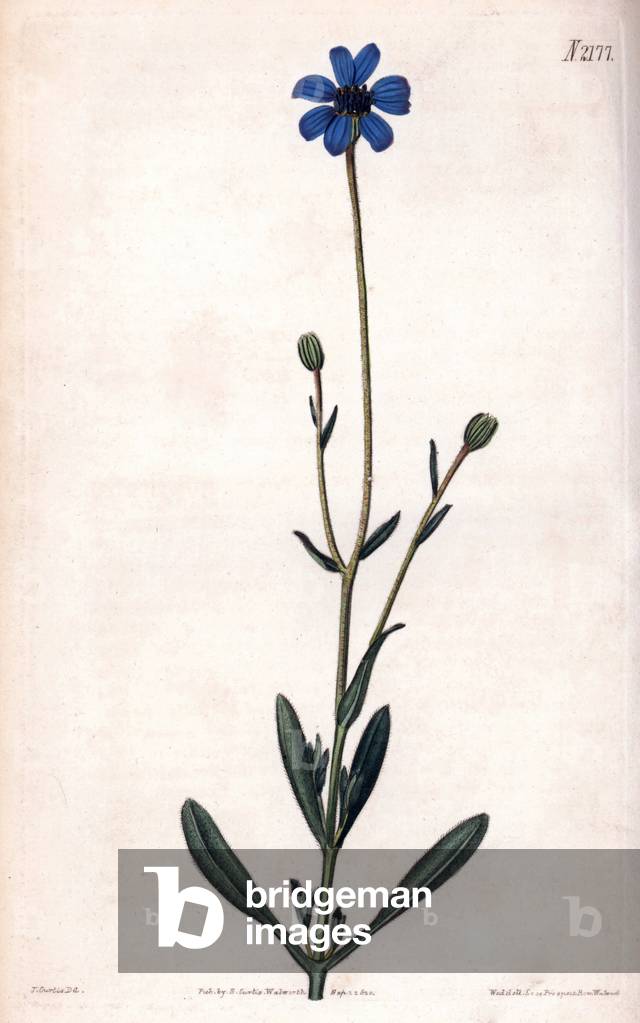
Kaulfussia, blue flower. Copper engraving, painted by John Curtis and grave by Weddell, published in the “Curtis Botanical Magazine”, 1820, by Samuel Curtis, London, England.

FLO4609571: Kaulfussia, blue flower. Copper engraving, painted by John Curtis and grave by Weddell, published in the “Curtis Botanical Magazine”, 1820, by Samuel Curtis, London, England. / Bridgeman Images
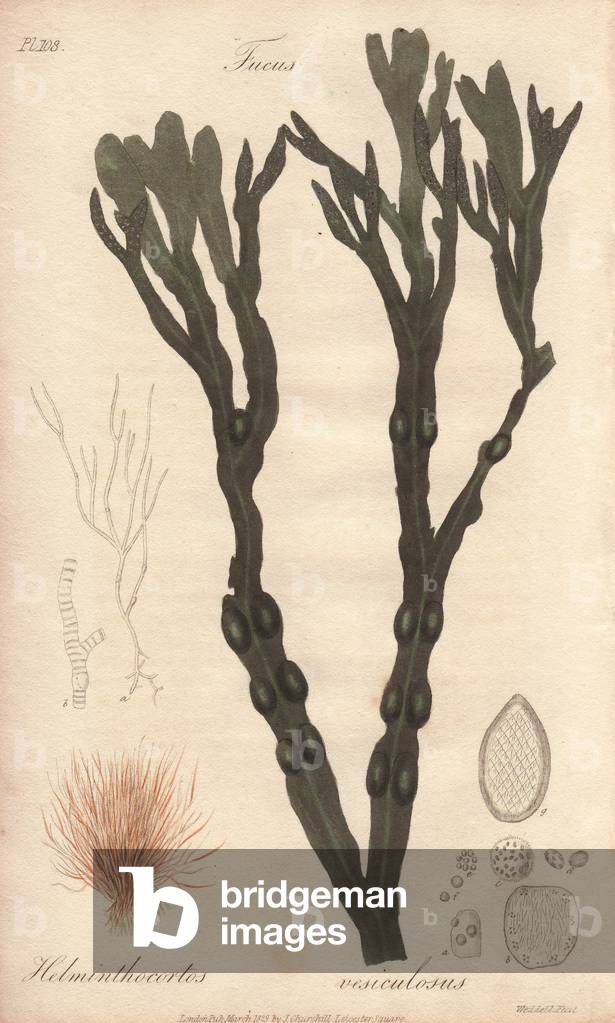
Fucus vesiculosus - Strong Water by William Clarke to illustrate “” Medical Botanical, Description of the Medicinal Plants of London, Edinburgh and Dublin” by John Stephenson and James Morss Churchill, published in London by John Churchill in 1831

FLO4605424: Fucus vesiculosus - Strong Water by William Clarke to illustrate “” Medical Botanical, Description of the Medicinal Plants of London, Edinburgh and Dublin” by John Stephenson and James Morss Churchill, published in London by John Churchill in 1831 / Bridgeman Images

Small digital. Copper engraving, painted by John Curtis and grave by Weddell, published in the “Curtis Botanical Magazine”, 1820, by Samuel Curtis, London, England.

FLO4609528: Small digital. Copper engraving, painted by John Curtis and grave by Weddell, published in the “Curtis Botanical Magazine”, 1820, by Samuel Curtis, London, England. / Bridgeman Images

Compendial borage. Coloriee copper engraving, in herbarium of English medicinal plants (published by Joshua Hamilton in 1792) by Nicolas Culpeper (1616-1654), English herbalist, botanist, and astrologer. Borage, Borago officinalis. Handcoloured copperplate engraving from Joshua Hamilton's “Culpeper's English Family Physician” 1792. Nicholas Culpeper (1616-1654) was an English botanist, herbalist and astrologer famous for his “” Complete Herbal””” of 1653.

FLO4608644: Compendial borage. Coloriee copper engraving, in herbarium of English medicinal plants (published by Joshua Hamilton in 1792) by Nicolas Culpeper (1616-1654), English herbalist, botanist, and astrologer. Borage, Borago officinalis. Handcoloured copperplate engraving from Joshua Hamilton's “Culpeper's English Family Physician” 1792. Nicholas Culpeper (1616-1654) was an English botanist, herbalist and astrologer famous for his “” Complete Herbal””” of 1653. / Bridgeman Images

Constellation of Sagittarius - Constellation of Sagittarius - The constellation of Sagittarius with its mythological form extracted from the Uranographia of Hevelius. Map showing the constellation of Sagittarius with its mythological form from “Uranographia”” star atlas by Hevelius (1690) added

PIX4593678: Constellation of Sagittarius - Constellation of Sagittarius - The constellation of Sagittarius with its mythological form extracted from the Uranographia of Hevelius. Map showing the constellation of Sagittarius with its mythological form from “Uranographia”” star atlas by Hevelius (1690) added / Bridgeman Images

Constellations of Dove and Lievre - Constellations of Columba and Lepus - Constellations of Dove (near the horizon) and Lievre (above). The bright star on the left is Sirius. Columba (originally Columba Noachi, Noah's dove) is seen here low on the horizon and easily found between Sirius and Canopus - - if you live in the southern hemisphere. It is one of the smaller and less obvious constellations, with an area of 270 square degrees. Lepus (the Hare) is about the same size as Columba and rather more obvious to the eye, lying to the south of Orion. It is one of Ptolemy's 48 constellations preserved to this day

PIX4590022: Constellations of Dove and Lievre - Constellations of Columba and Lepus - Constellations of Dove (near the horizon) and Lievre (above). The bright star on the left is Sirius. Columba (originally Columba Noachi, Noah's dove) is seen here low on the horizon and easily found between Sirius and Canopus - - if you live in the southern hemisphere. It is one of the smaller and less obvious constellations, with an area of 270 square degrees. Lepus (the Hare) is about the same size as Columba and rather more obvious to the eye, lying to the south of Orion. It is one of Ptolemy's 48 constellations preserved to this day / Bridgeman Images

Constellation of the Ship Argo - Constellation of Argo Navis - Constellation of the Ship Argo from the Uranographia of Hevelius. Recolorized image. Vessel Argo is a missing constellation; the astronomer Nicolas - Louis de Lacaille divided it in the 1750s into three smaller constellations: the Carene, the Poupe and the Voiles. Map showing the constellation of Argo Navis with its mythological form from “” Uranographia”” star atlas by Hevelius (1690). Recolored image. Argo Navis (or simply Argo) was a large constellation in the southern sky that has since been divided into three constellations (Carina, Puppis and Vela)

PIX4594538: Constellation of the Ship Argo - Constellation of Argo Navis - Constellation of the Ship Argo from the Uranographia of Hevelius. Recolorized image. Vessel Argo is a missing constellation; the astronomer Nicolas - Louis de Lacaille divided it in the 1750s into three smaller constellations: the Carene, the Poupe and the Voiles. Map showing the constellation of Argo Navis with its mythological form from “” Uranographia”” star atlas by Hevelius (1690). Recolored image. Argo Navis (or simply Argo) was a large constellation in the southern sky that has since been divided into three constellations (Carina, Puppis and Vela) / Bridgeman Images

Star Sky - Winter Hexagon - Under the Winter Hexagon: A couple observes the star sky in winter. The winter hexagon is an asterism formed by the stars Sirius, Procyon, Pollux, Capella, Aldebaran and Rigel. A couple admires the Northern winter sky. Above them, the Winter Hexagon can be seen

PIX4593057: Star Sky - Winter Hexagon - Under the Winter Hexagon: A couple observes the star sky in winter. The winter hexagon is an asterism formed by the stars Sirius, Procyon, Pollux, Capella, Aldebaran and Rigel. A couple admires the Northern winter sky. Above them, the Winter Hexagon can be seen / Bridgeman Images

Constellations of the Telescopium and Sagittarius - The Telescope is a small constellation of the southern hemisphere located just above Sagittarius

PIX4594195: Constellations of the Telescopium and Sagittarius - The Telescope is a small constellation of the southern hemisphere located just above Sagittarius / Bridgeman Images

Dragon Constellations and Little Bear - Constellations of Draco and Ursa Minor - Plate extracted from the Mirror of Urania by Jehoshaphat Aspin - 1825 Urania's Mirror, by Jehoshaphat Aspin, 1825

PIX4590534: Dragon Constellations and Little Bear - Constellations of Draco and Ursa Minor - Plate extracted from the Mirror of Urania by Jehoshaphat Aspin - 1825 Urania's Mirror, by Jehoshaphat Aspin, 1825 / Bridgeman Images

Constellation of the Great Bear - Constellation of Ursa Major - The constellation of the Great Bear with its mythological form, extracted from the Uranographia of Hevelius. Map showing the constellation of the Big Dipper with its mythological form from “Uranographia”” star atlas by Hevelius (1690) added

PIX4591634: Constellation of the Great Bear - Constellation of Ursa Major - The constellation of the Great Bear with its mythological form, extracted from the Uranographia of Hevelius. Map showing the constellation of the Big Dipper with its mythological form from “Uranographia”” star atlas by Hevelius (1690) added / Bridgeman Images

Constellations of the Virgin, the Raven and the Cup - Constellations of Virgo, Corvus and Crate

PIX4594443: Constellations of the Virgin, the Raven and the Cup - Constellations of Virgo, Corvus and Crate / Bridgeman Images
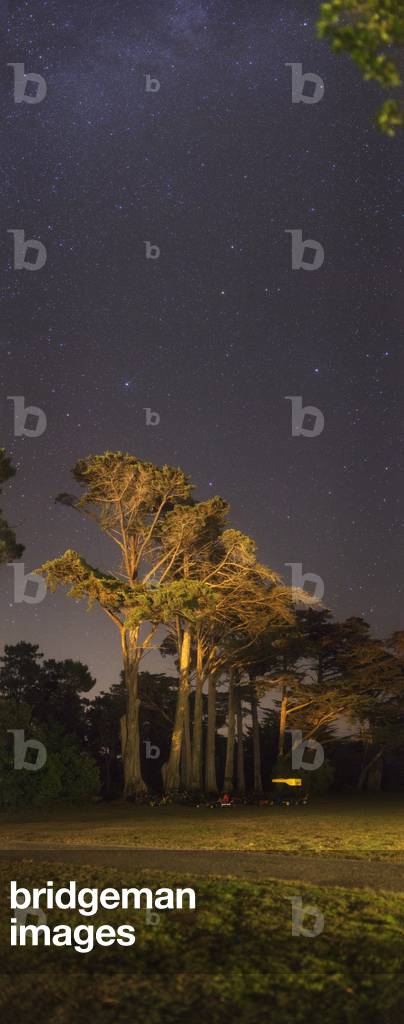
Pegase Constellation - Constellation of Pegasus - The large edge of Pegase is visible just above the trees. In fact, the star that forms its left corner is part of the Andromede constellation. Under Pegase, the Pisces, masks partly by trees. The upper left zigzag is the constellation of Lizard. August 18, 2009. The Great Square of Pegasus is visible just above trees. August 18, 2009

PIX4593142: Pegase Constellation - Constellation of Pegasus - The large edge of Pegase is visible just above the trees. In fact, the star that forms its left corner is part of the Andromede constellation. Under Pegase, the Pisces, masks partly by trees. The upper left zigzag is the constellation of Lizard. August 18, 2009. The Great Square of Pegasus is visible just above trees. August 18, 2009 / Bridgeman Images

Orion and Taurus Constellations - Orion and Taurus constellations - January 22, 2007. Quimper. January 22, 2007. Quimper. France

PIX4592482: Orion and Taurus Constellations - Orion and Taurus constellations - January 22, 2007. Quimper. January 22, 2007. Quimper. France / Bridgeman Images

Winter constellations - Winter constellations - The Moon sets on the horizon to the west this 28 April 2006 in Maryland. In the sky on the left, the constellation of Orion, in the center the Taurus with the clusters of the Hyades and Pleiades, on the right the constellation of Persee, above to the center the Coach with the bright star Capella, on its left, the Gemels with the planet Mars. The crescent Moon with Earthshine sets in the twilight in the west with the Winter constellations of Orion, Gemini, Auriga, Taurus and Perseus

PIX4594068: Winter constellations - Winter constellations - The Moon sets on the horizon to the west this 28 April 2006 in Maryland. In the sky on the left, the constellation of Orion, in the center the Taurus with the clusters of the Hyades and Pleiades, on the right the constellation of Persee, above to the center the Coach with the bright star Capella, on its left, the Gemels with the planet Mars. The crescent Moon with Earthshine sets in the twilight in the west with the Winter constellations of Orion, Gemini, Auriga, Taurus and Perseus / Bridgeman Images

Constellation Pegase - detail - Contellation of Pegasus - detail - The great square of Pegase. The Great Square of Pegasu

PIX4593186: Constellation Pegase - detail - Contellation of Pegasus - detail - The great square of Pegase. The Great Square of Pegasu / Bridgeman Images

Cup and Raven Constellations - Cup and Raven Constellations extracted from Hevelius Uranographia. Recolorised image. Map showing the constellations of Crater and Corvus with their mythological forms from “” Uranographia”” star atlas by Hevelius (1690). Recolored Image

PIX4590099: Cup and Raven Constellations - Cup and Raven Constellations extracted from Hevelius Uranographia. Recolorised image. Map showing the constellations of Crater and Corvus with their mythological forms from “” Uranographia”” star atlas by Hevelius (1690). Recolored Image / Bridgeman Images

Debut de nuit de Printemps - Beginning of a spring night - In this early night of Spring, the winter constellations lie down; from left to right, the Great Dog, Orion, the Taurus. Here, the Moon is close to the Pleiades cluster with above the brilliant planet Venus. 19 April 2007, Le Guilvinec (Finistere - France). Beginning of a spring night where winter constellations are setting. from left to right, Canis Major, Orion, Taurus. Also visible are the moon near Pleiades cluster with Venus above. April 19 2007, Le Guilvinec (Finistere - France)

PIX4594142: Debut de nuit de Printemps - Beginning of a spring night - In this early night of Spring, the winter constellations lie down; from left to right, the Great Dog, Orion, the Taurus. Here, the Moon is close to the Pleiades cluster with above the brilliant planet Venus. 19 April 2007, Le Guilvinec (Finistere - France). Beginning of a spring night where winter constellations are setting. from left to right, Canis Major, Orion, Taurus. Also visible are the moon near Pleiades cluster with Venus above. April 19 2007, Le Guilvinec (Finistere - France) / Bridgeman Images

Constellation Aquarius - Constellation of Aquarius - The constellation Aquarius with its main stars. Constellation of Aquarius with its main stars

PIX4594421: Constellation Aquarius - Constellation of Aquarius - The constellation Aquarius with its main stars. Constellation of Aquarius with its main stars / Bridgeman Images

Lactee Way and Constellation of the Southern Cross - The Southern Cross and Carina from Australia

PIX4590299: Lactee Way and Constellation of the Southern Cross - The Southern Cross and Carina from Australia / Bridgeman Images

Constellation of the boreal crown - Constellation of corona borealis - Constellation of the boreal crown extracted from the Hevelius Uranographia. Recolorised image. Map showing the constellation of corona borealis with its mythological form from “” Uranographia”” star atlas by Hevelius (1690). Recolored Image

PIX4590123: Constellation of the boreal crown - Constellation of corona borealis - Constellation of the boreal crown extracted from the Hevelius Uranographia. Recolorised image. Map showing the constellation of corona borealis with its mythological form from “” Uranographia”” star atlas by Hevelius (1690). Recolored Image / Bridgeman Images

Constellations of Sagittarius, Scorpio and Jupiter - Sagittarius and Scorpius constellations with Jupiter - Jupiter (the brightest point on the image) in the constellation of Scorpio, on the left, Sagittarius, July 5, 2007, Beg Meil (Finistere - France). In overprint, the mythological forms of these constellations, extracted from the Uranographia of Hevelius. Jupiter (brightest spot in the image) in Scorpius constellation and clouds above the sea. Mythological Constellations forms from “” Uranographia”” star atlas by Hevelius (1690) have been added. July 5 2007, Beg Meil (Finistere - France)

PIX4593796: Constellations of Sagittarius, Scorpio and Jupiter - Sagittarius and Scorpius constellations with Jupiter - Jupiter (the brightest point on the image) in the constellation of Scorpio, on the left, Sagittarius, July 5, 2007, Beg Meil (Finistere - France). In overprint, the mythological forms of these constellations, extracted from the Uranographia of Hevelius. Jupiter (brightest spot in the image) in Scorpius constellation and clouds above the sea. Mythological Constellations forms from “” Uranographia”” star atlas by Hevelius (1690) have been added. July 5 2007, Beg Meil (Finistere - France) / Bridgeman Images

Constellations of the Little Horse, Dauphin, Fleche and Petite Fox - Constellation of Equuleus and Vulpecula - At the top right, the constellation of the Little Fox, below, the Fleche, on the left, the Dolphin; at the bottom left, the Little Horse. Equuleus (the Little Horse or colt) is a small and undistinguished constellation located about 10 degrees north of the celestial equator. It is the second smallest constellation in the sky: only Crux is smaller. It contains no bright stars, so, unlike Crux, it is difficult to find, though Delphinus is a useful guide. There is little of astronomical interest here that is accessible to small telescopes. Vulpecula, the Fox, first appears in Johannes Hevelius' atlas of 1690 and was originally called Vulpecula Cum Anser, the fox with goose, but the bird has flown and the fox is hardly obvious. The constellation crosses part of the northern Milky Way and lies just south of Cygnus. The main stars of Sagitta are also well seen here

PIX4593306: Constellations of the Little Horse, Dauphin, Fleche and Petite Fox - Constellation of Equuleus and Vulpecula - At the top right, the constellation of the Little Fox, below, the Fleche, on the left, the Dolphin; at the bottom left, the Little Horse. Equuleus (the Little Horse or colt) is a small and undistinguished constellation located about 10 degrees north of the celestial equator. It is the second smallest constellation in the sky: only Crux is smaller. It contains no bright stars, so, unlike Crux, it is difficult to find, though Delphinus is a useful guide. There is little of astronomical interest here that is accessible to small telescopes. Vulpecula, the Fox, first appears in Johannes Hevelius' atlas of 1690 and was originally called Vulpecula Cum Anser, the fox with goose, but the bird has flown and the fox is hardly obvious. The constellation crosses part of the northern Milky Way and lies just south of Cygnus. The main stars of Sagitta are also well seen here / Bridgeman Images

The constellation Orion on on a full moon night - Orion constellation and moonlight - Orion constellation and moonlight

PIX4592468: The constellation Orion on on a full moon night - Orion constellation and moonlight - Orion constellation and moonlight / Bridgeman Images

Star sky above the snow-covered Pyrenean chain - Starry sky above pyrenees - Photo taken from the observatory of the Pic du Midi. Lighting from the Moon. Pyrenees in moonlight seen from Pic du Midi observatory

PIX4590955: Star sky above the snow-covered Pyrenean chain - Starry sky above pyrenees - Photo taken from the observatory of the Pic du Midi. Lighting from the Moon. Pyrenees in moonlight seen from Pic du Midi observatory / Bridgeman Images

Constellation of Orion and Ziggurate of Chogha Zanbil - Constellation of Orion above the Chogha Zanbil ziggurat - Constellation of Orion and Ziggurat of Chogha Zanbil. The Ziggourate of Chogha Zanbil is an Elamite temple built around 1250 BC near Susa, southwest Iran. Constellation of Orion above the Choghzanbil ziggurat. Chogha Zanbil ziggurat is an elamite temple built about 1250 B.C. near Susa, southwest of Iran

PIX4592633: Constellation of Orion and Ziggurate of Chogha Zanbil - Constellation of Orion above the Chogha Zanbil ziggurat - Constellation of Orion and Ziggurat of Chogha Zanbil. The Ziggourate of Chogha Zanbil is an Elamite temple built around 1250 BC near Susa, southwest Iran. Constellation of Orion above the Choghzanbil ziggurat. Chogha Zanbil ziggurat is an elamite temple built about 1250 B.C. near Susa, southwest of Iran / Bridgeman Images

Apollo mission: astronaut training - Apollo desert survival training - Three astronauts participate in survival training in the desert (Washington State). From left to right, astronauts Charles M. Duke, Jr. and Thomas K. Mattingly, Colonel Bohart, and astronaut John L. Swigert. August 1967. Three astronauts participating in Apollo desert survival training in Washington state pose with Air Force Col. Chester Bohart (second from right). Standing from left to right are Charles M. Duke, Jr., Thomas K Mattingly, Col. Bohart, and John L. Swigert. Since the Mercury Program, astronauts have taken survival courses in case they are forced to land on a remote part of the Earth where they may need to do without human help for several weeks. August 1967

PIX4594943: Apollo mission: astronaut training - Apollo desert survival training - Three astronauts participate in survival training in the desert (Washington State). From left to right, astronauts Charles M. Duke, Jr. and Thomas K. Mattingly, Colonel Bohart, and astronaut John L. Swigert. August 1967. Three astronauts participating in Apollo desert survival training in Washington state pose with Air Force Col. Chester Bohart (second from right). Standing from left to right are Charles M. Duke, Jr., Thomas K Mattingly, Col. Bohart, and John L. Swigert. Since the Mercury Program, astronauts have taken survival courses in case they are forced to land on a remote part of the Earth where they may need to do without human help for several weeks. August 1967 / Bridgeman Images
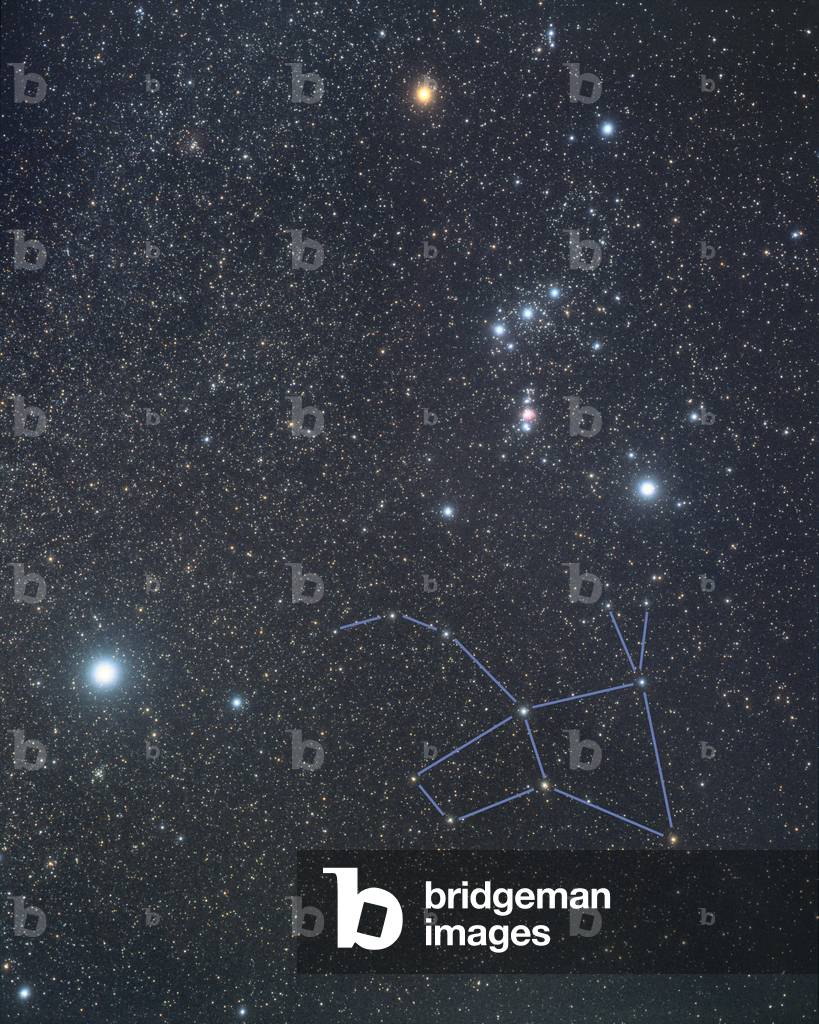
Constellation Lievre - Constellation of Lepus - The constellation Lievre is located below the constellation Orion. On the left, the bright star Sirius. Despite the faintness of its stars, Lepus (the Hare) was known in ancient Greece, as was Orion the hunter, at whose feet it resides, inconspicuously. The hare (or rabbit) is a creature traditionally associated with the Moon, since, with imagination, the man in the Moon features can also be seen as a rabbit. This connection with Orion makes mythological sense, since the Moon was perpetually chased across the sky by the Sun and Orion is a Sun god. Lepus is a middling - sized constellation, ranking 51 in size in the modern 88. Its brightest star is Alpha Leporis (Arneb), from the Arabic al-arnab meaning 'the hare'. Also visible in the image is R Leporis, Hind's Crimson star, whose brightness varies over 5 magnitudes (100 times) over a period of 423 days. It is a carbon star and at its maximum is a fine sight in a small telescope or good binoculars

PIX4592024: Constellation Lievre - Constellation of Lepus - The constellation Lievre is located below the constellation Orion. On the left, the bright star Sirius. Despite the faintness of its stars, Lepus (the Hare) was known in ancient Greece, as was Orion the hunter, at whose feet it resides, inconspicuously. The hare (or rabbit) is a creature traditionally associated with the Moon, since, with imagination, the man in the Moon features can also be seen as a rabbit. This connection with Orion makes mythological sense, since the Moon was perpetually chased across the sky by the Sun and Orion is a Sun god. Lepus is a middling - sized constellation, ranking 51 in size in the modern 88. Its brightest star is Alpha Leporis (Arneb), from the Arabic al-arnab meaning 'the hare'. Also visible in the image is R Leporis, Hind's Crimson star, whose brightness varies over 5 magnitudes (100 times) over a period of 423 days. It is a carbon star and at its maximum is a fine sight in a small telescope or good binoculars / Bridgeman Images

Constellations of the Indian, the Crane and Toucan - Constellations of Indus, Grus and Tucana - The southern constellation of the Indian, with to its left the constellations of the Crane (top) and Toucan. Indus (the Indian, widely taken to mean the American Indian) is a constellation devoid of bright stars in a mostly undistinguished part of the southern sky. It was created by Johann Bayer and appeared in his atlas of 1603. The reference to the American Indian comes from the constellation engraving by Bayer, which shows a figure carrying arrows; however, even if it was conspicuous, most of the constellation is invisible from the USA

PIX4591833: Constellations of the Indian, the Crane and Toucan - Constellations of Indus, Grus and Tucana - The southern constellation of the Indian, with to its left the constellations of the Crane (top) and Toucan. Indus (the Indian, widely taken to mean the American Indian) is a constellation devoid of bright stars in a mostly undistinguished part of the southern sky. It was created by Johann Bayer and appeared in his atlas of 1603. The reference to the American Indian comes from the constellation engraving by Bayer, which shows a figure carrying arrows; however, even if it was conspicuous, most of the constellation is invisible from the USA / Bridgeman Images

The constellation Raven - The Corvus constellation - Crow constellation among the clouds above a field of flowering rapeseed. Stars of trapezium - shape constellation “” Corvus” or the crow over a field

PIX4590067: The constellation Raven - The Corvus constellation - Crow constellation among the clouds above a field of flowering rapeseed. Stars of trapezium - shape constellation “” Corvus” or the crow over a field / Bridgeman Images

Aquarius Constellations, Capricorn, Southern Fish and Microscope - Constellations of Aquarius, Capricorn, Piscis Austrinus, Microscopiu

PIX4594350: Aquarius Constellations, Capricorn, Southern Fish and Microscope - Constellations of Aquarius, Capricorn, Piscis Austrinus, Microscopiu / Bridgeman Images

Constellation of the Great Bear on Yellowstone - The Big Bear in Bear Country - Constellation of the Great Bear on a road in Yellowstone National Park. The constellation of Ursa Major is seen here above a boardwalk in Yellowstone National Park

PIX4591284: Constellation of the Great Bear on Yellowstone - The Big Bear in Bear Country - Constellation of the Great Bear on a road in Yellowstone National Park. The constellation of Ursa Major is seen here above a boardwalk in Yellowstone National Park / Bridgeman Images


Back to top