2490891 Search Results
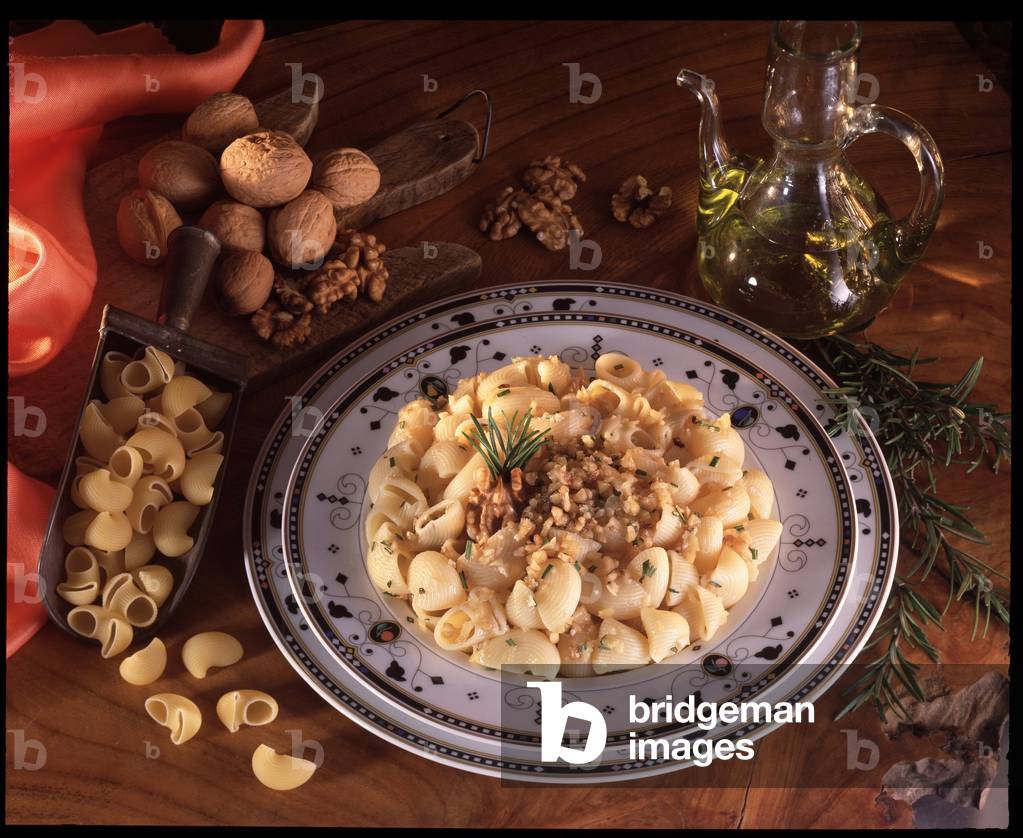
LRI4735070: Food still life: plate of italian maccheroni with walnuts (photography) / Bridgeman Images
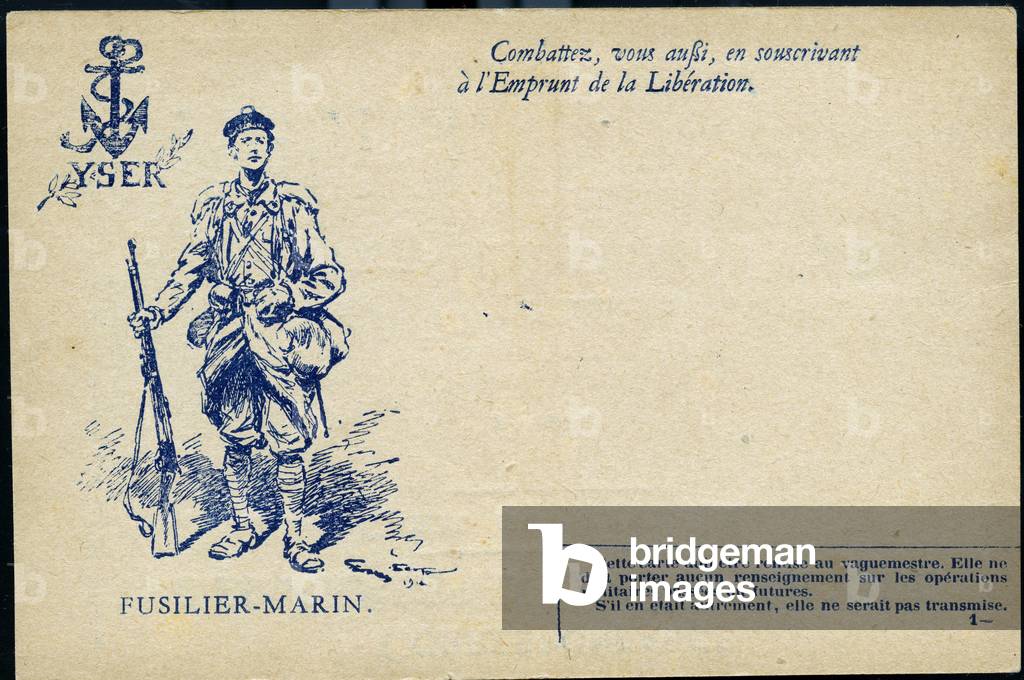
LUX4735194: First World War: France, Postcard showing the drawing of a marine rifle intended to promote a loan, 1916 / Bridgeman Images

LRI4735516: Food still life, spaghetti with redfish sauce (photography) / Bridgeman Images

LUX4735580: First World War: France, Postcard showing a soldier with his fiance in a web of araignee entitled “God of love””, 1918 / Bridgeman Images
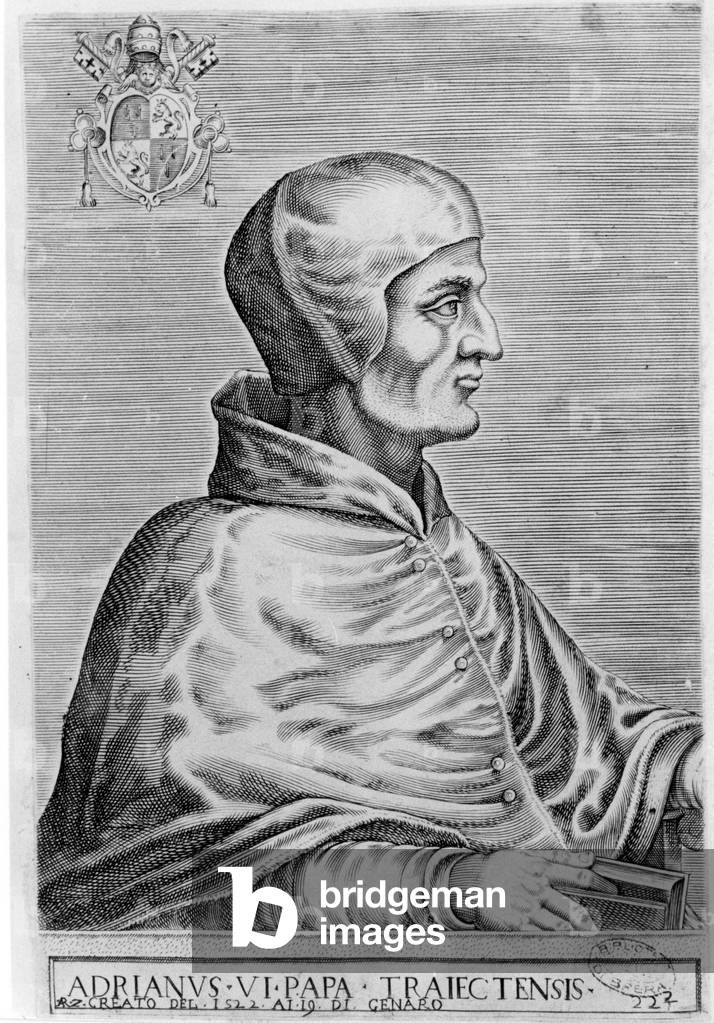
GIA4735590: Pope Adrien VI (1459 - 1523)., Unknown artist, (18th century) / Bridgeman Images

LUX4735689: First World War: France, Postcard, photo of a little girl wearing a bow and a tricolor bouquet, thinking of her father, soldier in uniform and wearing a flag, 1916, to celebrate the eternal glories of the flag, I picked this bouquet of eternal rose / Bridgeman Images

ETE4896539: WWII:St Jores (Manche) France July 1944: Laundry day for two infantrymen from 358th RI of the 90th DI US who liberated the city on 4 July 1944. / Bridgeman Images

ETE4896642: WWII:Germany September 12, 1944: Aerian view of American troops of the 1st US Army crossing the “Dragon teeth” of the Siegfried Line before advancing into German territory / Bridgeman Images

ICA4896713: Diogene, 1867_11_30 - Illustration by Henri Meyer (1844-1899): Press/Media, Literature, Hourglass - Time (Allegory de), Journalist Journalism, Neefftzer Auguste Nefftzer (1820-1876) / Bridgeman Images

ETE4897015: WWII:St Lo (Manche) France 18 July 1944: Aspect of the railway tracks after the liberation of the city by the 29th US DI. / Bridgeman Images

ICA4897088: Fantasio, 1911_10_15 - Illustration of A Barrere (1874-1931): Italy, Maritime Marine Seaside - Victor-Emmanuel III - Reification, Barrere, Adrien (1874-1931) / Bridgeman Images

ICA4897153: Fantasio, 1911_12_1 - Illustration of A Barrere (1874-1931): Theatre, Medaille - Actor, Actress Comedian, Guitry Sacha, Barrere, Adrien (1874-1931) / Bridgeman Images

ICA4897320: Fantasio, 1911_4_1 - Illustration of A Barrere (1874-1931): Champagne - Monis Ernest, Barrere, Adrien (1874-1931) / Bridgeman Images

ICA4897626: Ballot 2nd series, Satirical en Colours: De Mun Albert / Bridgeman Images

ETE4897656: WWII:Gumbrechtshoffen (Alsace) March 1945: Two infantrymen from the 103rd DI of the VIIe US Army with a Browing 30/30 machine gun wait for a possible counterattack by the enemy. / Bridgeman Images

LUX4817873: France: genre scene showing a bourgeois girl being read the future by maps, 1865 / Bridgeman Images

LUX4817905: France, Ile-de-France, Paris (75): Roman villa on the Elysees fields, 1860 / Bridgeman Images

GIA4817943: Culture, civilization and Indian society: portrait of a Brahman, priest of India., Unknown Artist, (19th century) / Bridgeman Images
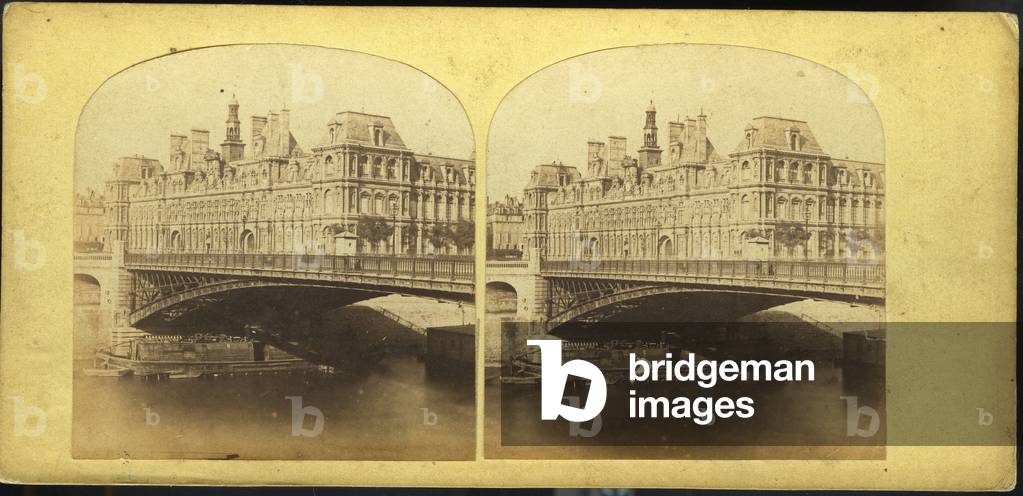
LUX4817959: France, Ile-de-France, Paris (75): The City Hall of Paris before its destruction, 1870 / Bridgeman Images

GIA4817992: Water carrier near the Hooghly (Indian river) in Calcutta (or Kolkata), India., Unknown Artist, (19th century) / Bridgeman Images

GIA4818040: Indian culture, civilization and society: musician with traditional Indian string instrument. Engraving from 1808., Unknown Artist, (19th century) / Bridgeman Images

LUX4818088: France, Ile-de-France, Paris (75): Exposition Universelle, stand des fontes d'art du Val d'Osne, 1867 / Bridgeman Images

GIA4818130: Thyme (Thymus) - In “” Herbarium Mattioli”””., Mattioli, Pietro Andrea (1501-77) / Bridgeman Images

LUX4818131: Quebec: Studio portrait of an Indian selling baskets, 1865 / Bridgeman Images

GIA4818166: Botanical plate: Acanthus or Acanthus - in “” De Historia Stirpium commentarii insignias”” by Leonhart Fuchs, 1542., Fuchs, Leonhard (1501-66) / Bridgeman Images
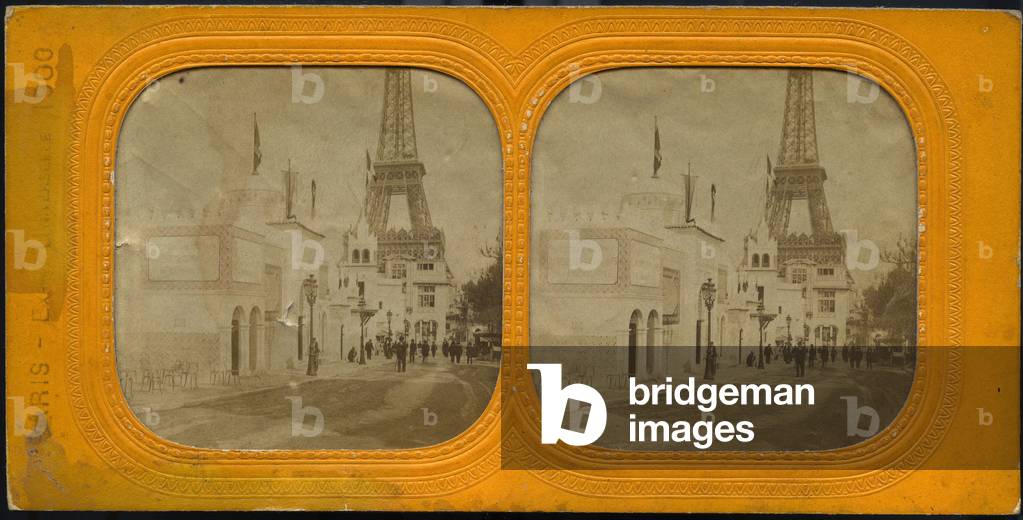
LUX4818273: France, Ile-de-France, Paris (75): The Eifel Tower, the Pavilion of Algeria, 1889 / Bridgeman Images
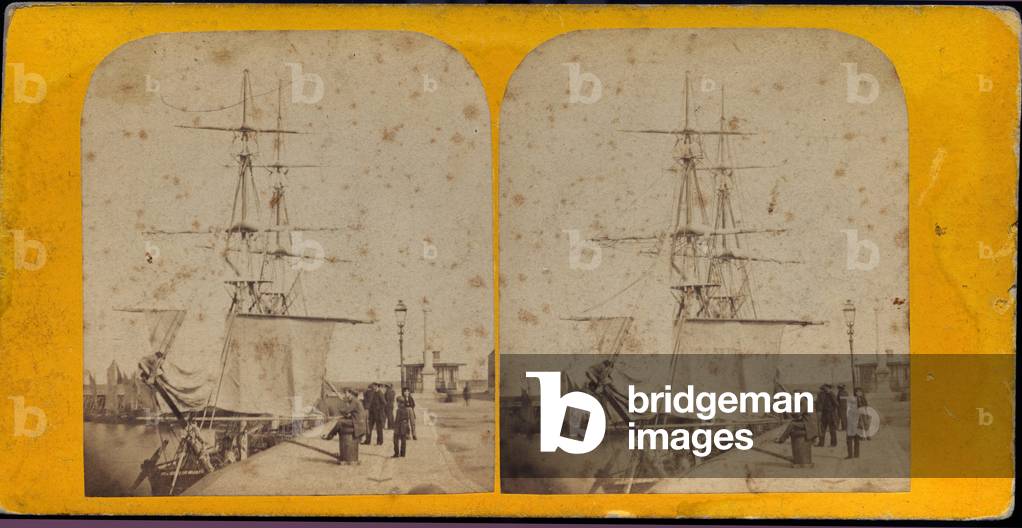
LUX4818301: France, Pays de la Loire, Loire-Atlantique (44), Saint Nazaire: A sailboat on the pier of the port of Saint Nazaire, 1860 / Bridgeman Images
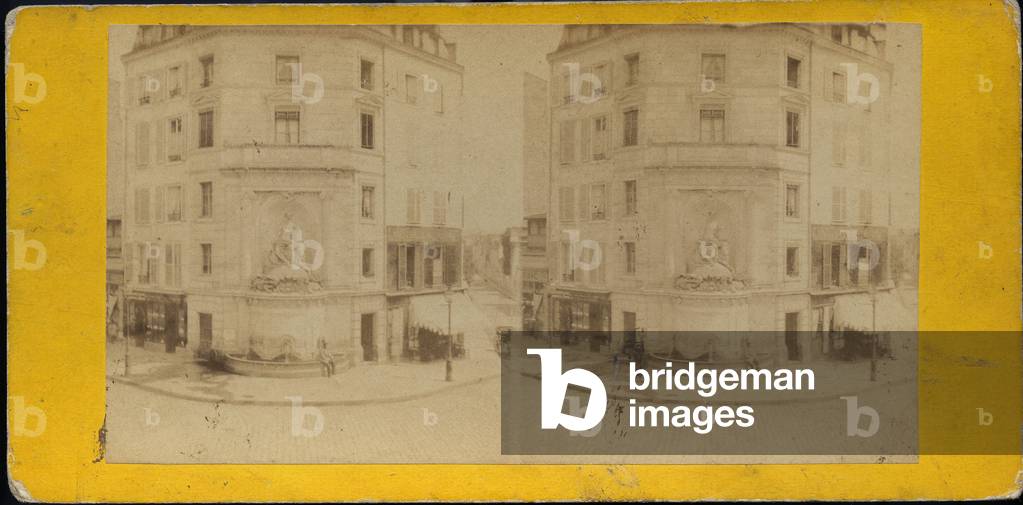
LUX4818334: France, Ile-de-France, Paris (75): La Fontaine Cuvier, 1865 - Alphonse Vigreux / Bridgeman Images

CH4820464: Robert Devereux, 2nd Earl of Essex (vellum with tortoiseshell frame & gold mount), Oliver, Isaac (c.1565-1617) / Bridgeman Images
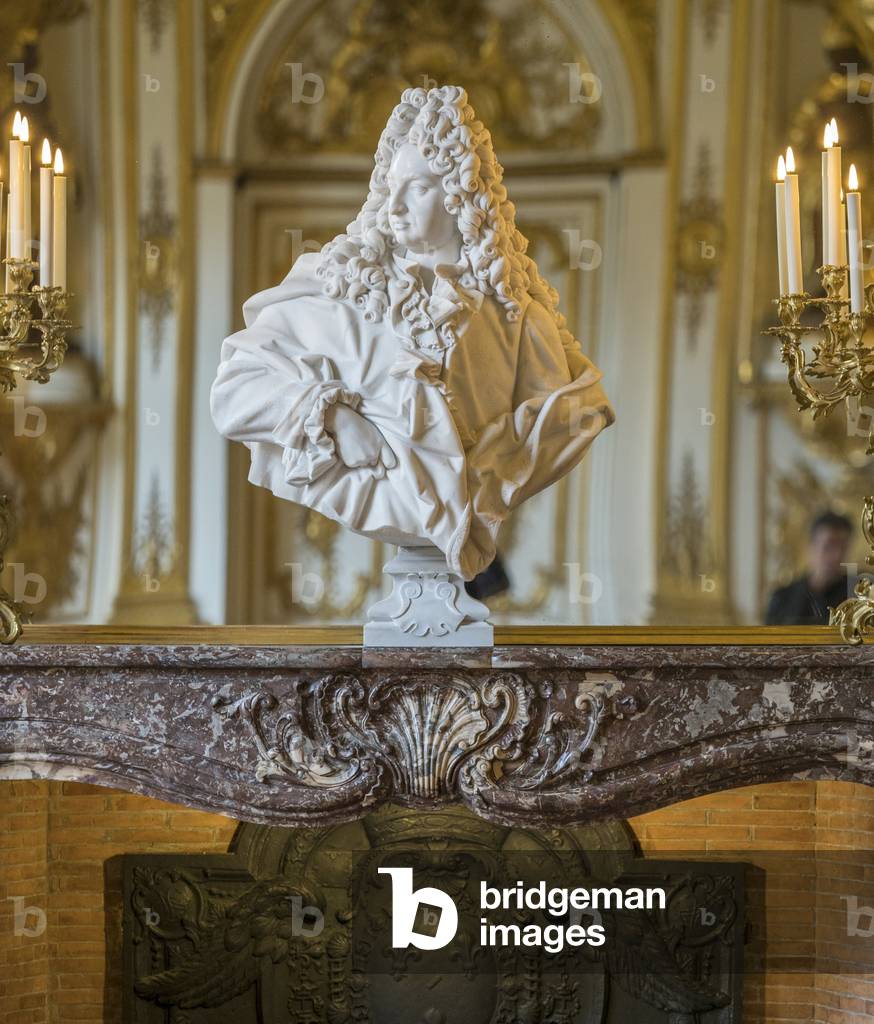
SYC4822666: Bust representing Jules Hardouin Mansart (1598-1666), architect of the Bank of France, Hotel de Toulouse, former hotel de la Vrilliere, 1640, Paris - Hotel de Toulouse, headquarters of the Banque de France - / Bridgeman Images

ETE4822867: Evreux - Fauville Air Base in 1956 - Evreux Fauville Air Base - NATO Air Base in France - used by the United States Air Forces in Europe from 1952 to 1967 - 1956 - / Bridgeman Images

LRI4736007: Capitals of the church, Romanesque, (12th century) / Bridgeman Images

LUX4736035: First World War: France, Postcard, photo studio showing a soldier with his fiancee waiting for him with a patriotic bouquet and declaring patriotic verses to him, 1915, often fighting I thought of the happiness I would have today when I found your heart / Bridgeman Images

GIA4736071: Horoscope: sign of the zodiac, the Virgin. 16th century engraving., Unknown Artist, (16th century) / Bridgeman Images

LRI4736211: View of Roman bridge on river, Tormes and cathedral, Spanish School / Bridgeman Images

LUX4736220: First World War: France, Postcard of a photo taken in the studio showing a woman and her two children reverting to her husband fighting on the front entitled “” the dream””, 1914, Finally hope and confidence because after all it is for France / Bridgeman Images
