2491528 Search Results
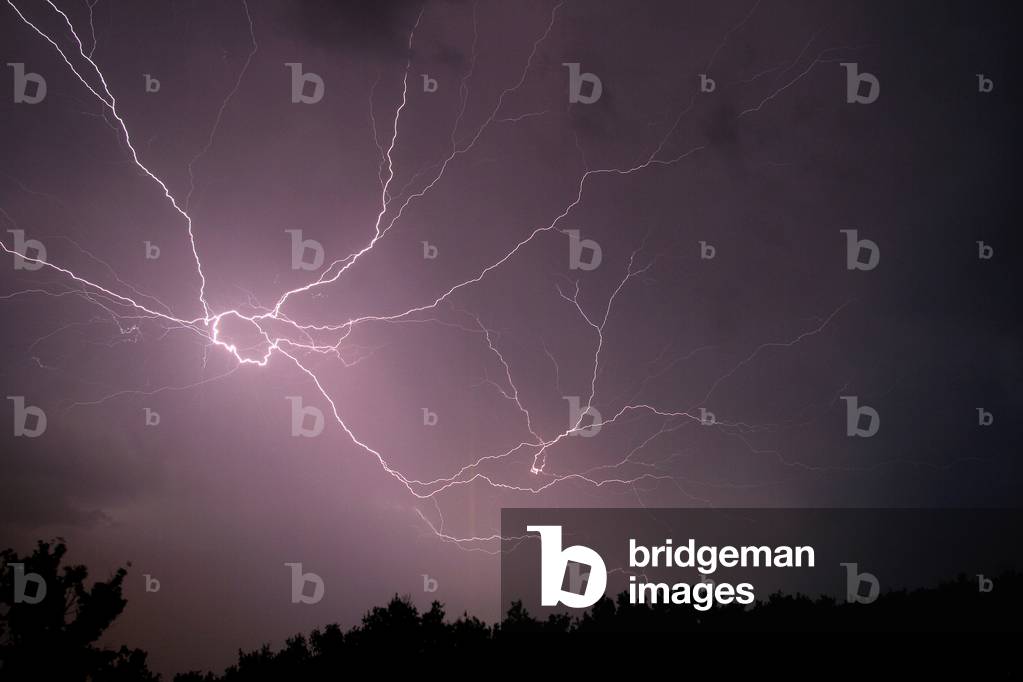
PIX4670848: Stormy night - Lightnin / Bridgeman Images
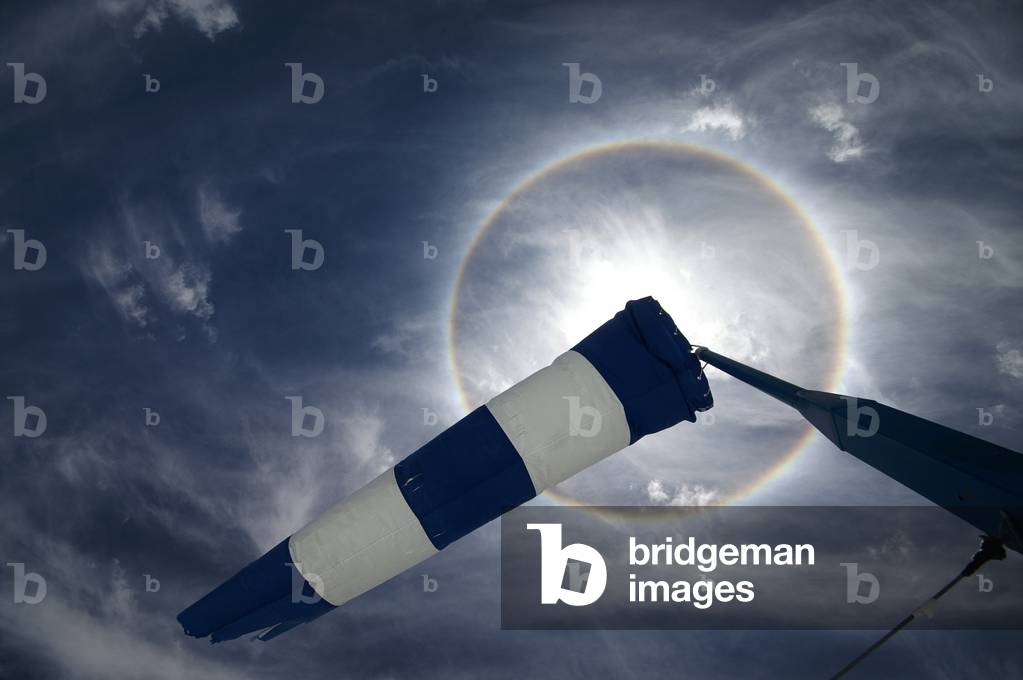
PIX4671029: Halo around the Sun - Sun Halo - Halos are due to the light of the Sun reflected by high-altitude clouds, cirrostratus, composed of ice crystals. They bend the light and cause a perfect circle around the Sun. Halos are caused by sunlight being refracted by cirro - stratus clouds. These are thin clouds, very high in the atmosphere, and are composed of ice crystals. They bend light at a 22 degree angle, which creates a halo around the sun that is 44 degrees in diameter / Bridgeman Images

PIX4671117: Rainbow - Rainbow - Rainbow - Arc - en - ciel observed in Brittany on 2 May 2005. 23 minutes before the sun sets, a contrasting rainbow appears in the east. It is very high (the lower the Sun, the higher the bow). Note at the level of the “feet” of the rainbow the difference in luminosite between the interior of the rainbow (under the main arch) and the band between the main arch and the secondary arch (lower and higher). This dark band is called Alexander's Band. It should also be noted that blue is almost absent from the rainbow, because the Sun is setting, therefore orange, betrays a blue light faults that can be seen at the level of the rainbow. May 2, 2005. 23 minutes before the sunset, a contrasted rainbow appear toward the East. It's a tall rainbow, because the Sun is low. Notice the difference of luminosity at the “” feet”” of the rainbow between the inside of the rainbow (under the main arc) and the band located between the main and secondary arcs (fainter and higher). This darker band is called the Alexander's dark band. Notice too that the blue tints are missing in the rainbow, because the sun is setting, so is orange, which means that its blue tints are absent / Bridgeman Images

PIX4671138: Rainbow at sunrise - Rainbow at sunrise - Arc - en - ciel observes 17 December 2005. At sunrise, the glowing light of the Sun caused an almost complete absence of blue and green colors in the rainbow. December 17, 2005. Rainbow seen at sunrise. Blue and green colors are almost invisible, because of this bright reddish sunshine / Bridgeman Images

PIX4671151: Rainbow in Lapland - Rainbow in Lapland - Rainbow in Lapland. Muonio, Mount Pallas (Finland), July 2003. Rainbow above Lapland landscape. Pallas fells, Finland. July 2003 / Bridgeman Images
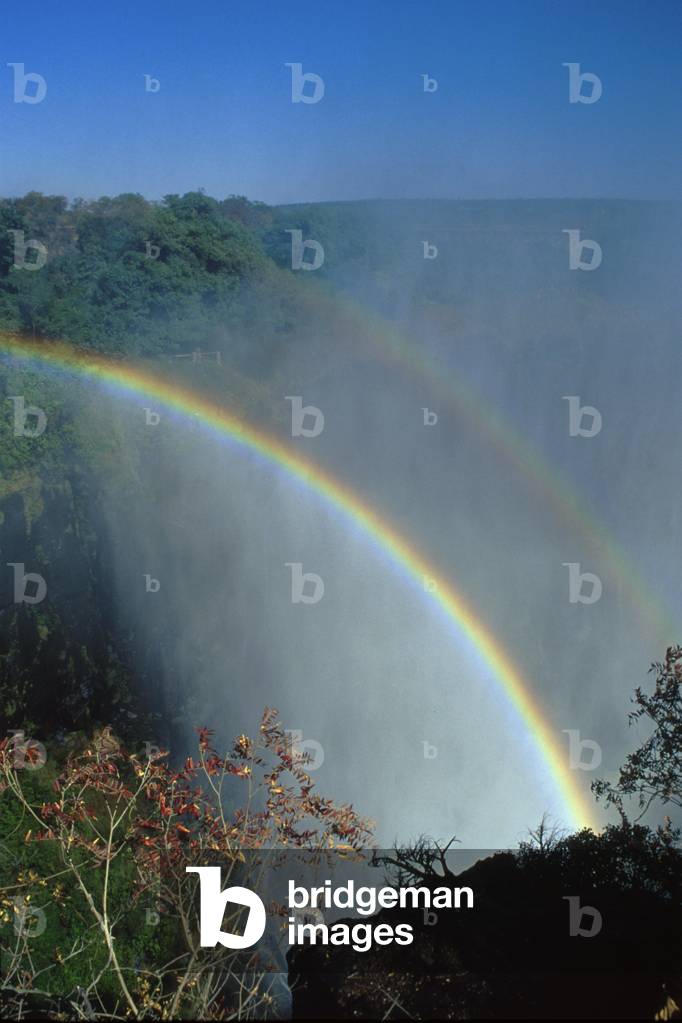
PIX4671196: Rainbow - Rainbow - Double Rainbow - Victoria Falls. Double rainbow over Victoria falls / Bridgeman Images

PIX4671365: Parhely - Sun dog - Parhelies are optical phenomena due to the interaction of solar light on ice crystals. Sundogs appear generally when the sun is low, and the atmosphere is filled with ice crystals forming cirrus clouds; they are caused by the refraction of sunlight passing through ice crystals / Bridgeman Images

PIX4671636: Noctulescent clouds - Noctilucent clouds - Noctilucent clouds, very high altitude clouds, photographs in July 2009 in Russia. These rare clouds are called noctilucent or “” night shining” as they seem to glow in the dark. They are caused by ice crystals at about 80 km altitude. These crystals reflect sunlight when the sun is well below the horizon. They are properly known as polar mesospheric clouds and are under intense study as it remains a mystery as to how they are formed. Image taken in july 2009 in Russia / Bridgeman Images

PIX4652734: Radiotelescopes ALMA - The Atacama Large Millimeter Array (ALMA) - Artist's view of the European network of submilimeter antennas Alma located in the Atacama Desert, Chile. Its construction is due to be completed in 2010. The Atacama Large Millimeter Array (ALMA), one of the largest ground - based astronomy projects of the next decade, is a major new facility for world astronomy. ALMA will be comprised of a giant array of 12 - m submillimetre quality antennas, with baselines of several kilometers. An additional, compact array of 7 - m and 12 - m antennas is also foreseen. Construction of ALMA started in 2003 and will be completed in 2010. The ALMA project is an international collaboration between Europe, Japan and North America in cooperation with the Republic of Chile / Bridgeman Images
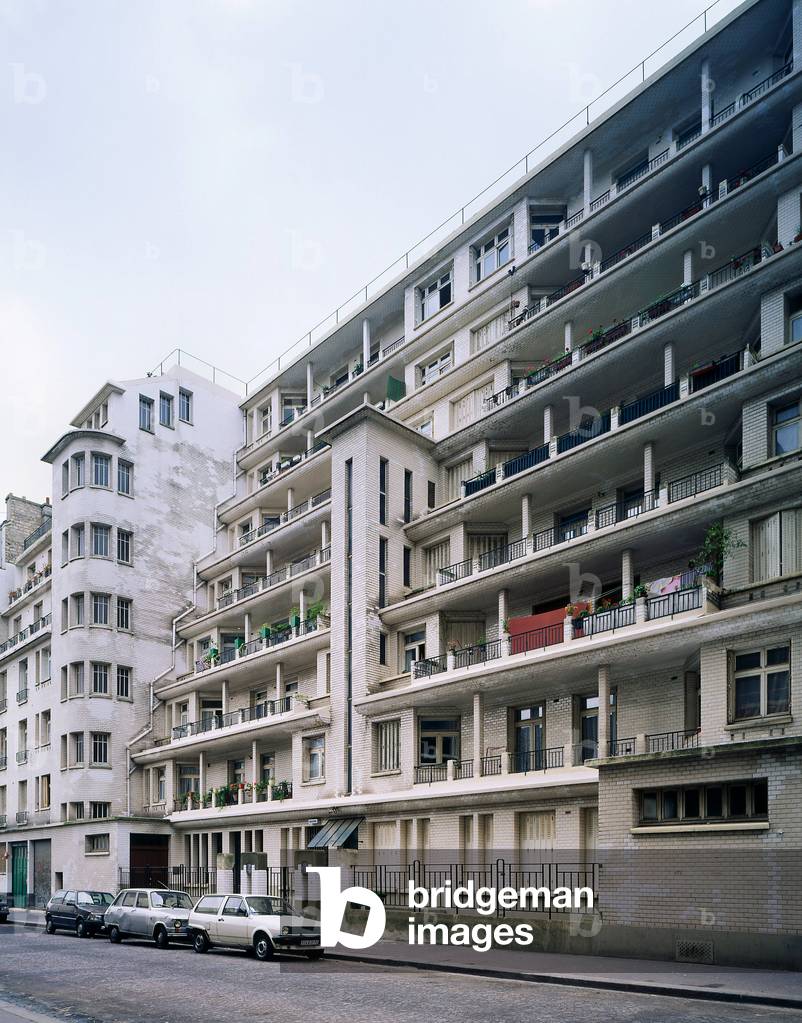
TEC4652997: Building, 13 rue des Amiraux, Paris 75018. Architect Henri Sauvage (1873-1932), 1922-1927. / Bridgeman Images
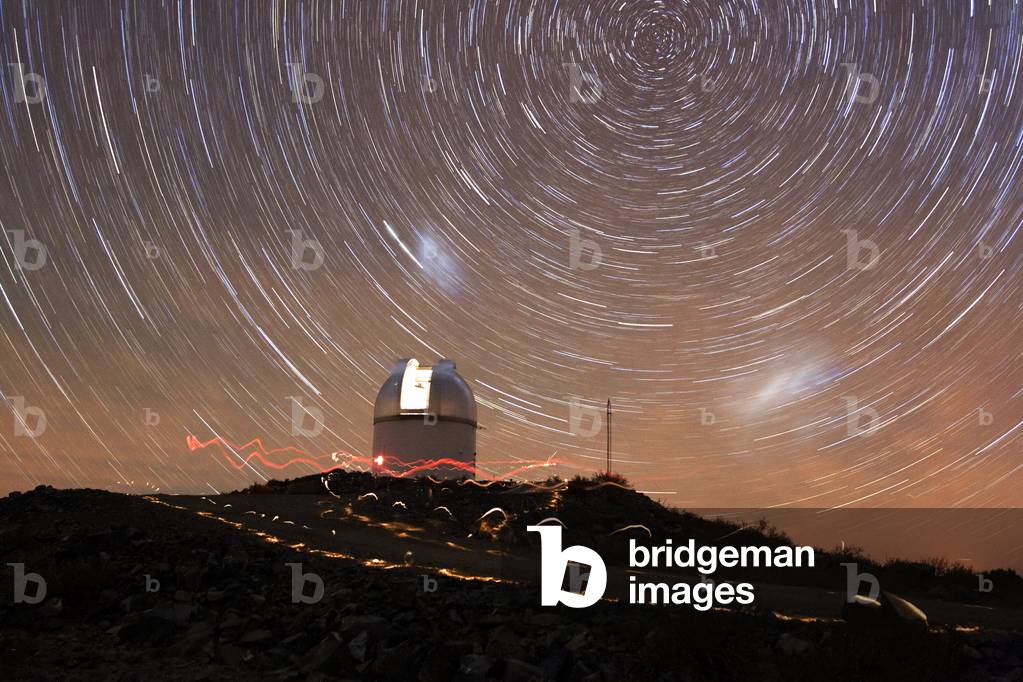
PIX4654082: Las Campanas Observatory - Las Campanas Observatory - Circumpolar on the Las Campanas Observatory, Chile. The dome of the 1 meter Henrietta Swope telescope. Circumpolar above the 1 meter Swope telescope in Las Campanas observatory, Chile / Bridgeman Images

PIX4654145: Magellan telescope. Las Campanas Observatory - Magellan telescope. Las Campanas observatory - Telescope Magellan of 6,5m in diameter. Las Campanas Observatory, Chile. 6.5 meter Magellan telescope. Las Campanas observatory, Chile / Bridgeman Images

PIX4654887: Mauna Kea Observatory - Telescope Gemini north - Mauna Kea Observatory - Telescope Gemini north - The 8.2 meter Gemini North telescope, at the Mauna Kea Observatory, Hawaii / Bridgeman Images

PIX4654906: Mauna Kea Observatory - Telescope Gemini north - Laser Shooting - Mauna Kea Observatory - Telescope Gemini north - Laser Shooting - The 8.2 metre telescope Gemini North, at the Mauna Kea Observatory, Hawaii. Laser shot creating an artificial star in the high atmosphere. This repere is analyzed several times per second; each variation of turbulence in the atmosphere is detected and corrected by the adaptive optics of the telescope / Bridgeman Images

PIX4654931: Sunset at Mauna Kea. Big Island. Hawaii. Usa. - Sunset at Mauna Kea. Big Island. Hawaii. USA / Bridgeman Images

PIX4655194: Mauna Kea Observatory JCMT Radiotelescope - JCMT radiotelescope of Mauna Kea observatory - The 15-metre JCMT (James Clerk Maxwell Telescope) radiotelescope, at the Mauna Kea Observatory, Hawaii. The JCMT (James Clerk Maxwell Telescope) is a 15m diameter submillimeter wavelength telescope situated at Mauna Kea Observatory, Hawaii / Bridgeman Images
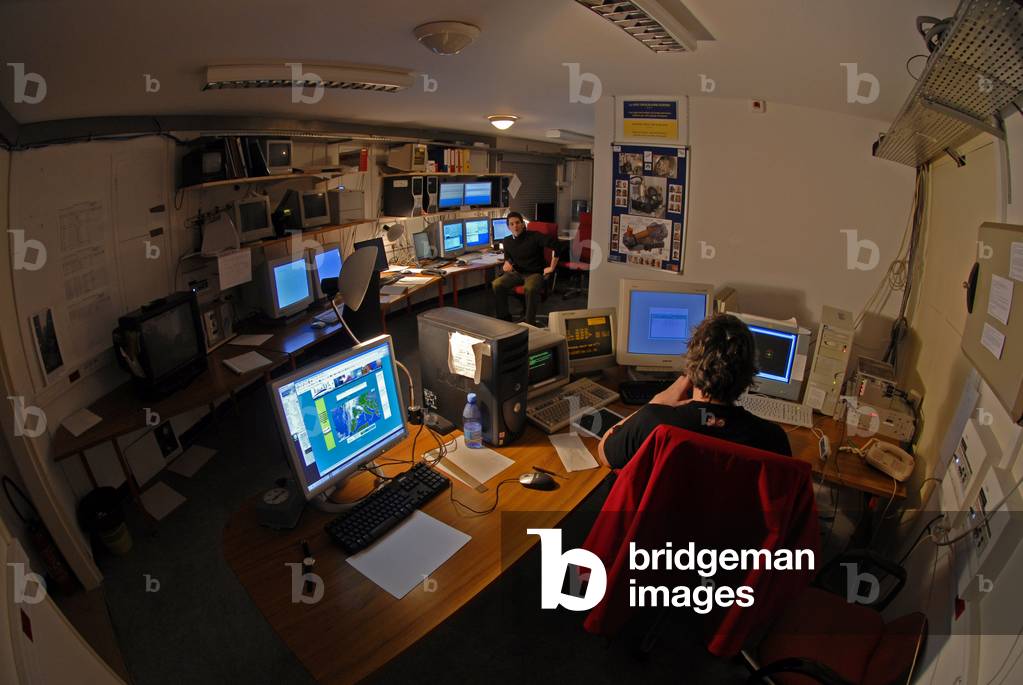
PIX4655342: The control room of the telescope of 1,93m of the OHP - Haute - Provence Observatory, 1,93 m telescope control room. - The control room of the telescope of 2 meters of the observatory of Haute Provence. This telescope is mainly used to search for other planetary systems. This is where the first exoplanet was discovered in 1995. The 1,93 m telescope control room of the Haute-Provence Observatory (OHP). Here has been discovered the first exoplanet in 1995. / Bridgeman Images

PIX4655650: Telescope observation from the Pic du Midi observatory - Amateur astronomer at Pic du Midi observatory - An amateur astronomer observes the Moon at Pic du Midi observatory. An amateur astronomer observing the Moon at Pic du Midi observatory / Bridgeman Images

PIX4655699: Observatory of the Pic du Midi - Pic du Midi observatory - In the foreground the dome of the T60, in the middle the dome of the T1M and to the right the dome of the coronographers / Bridgeman Images

PIX4655756: Star sky and 1 m telescope of the observatory of the Pic du Midi - Starry sky above Pic du Midi observatory - Star sky and dome of the telescope of the observatory of the Pic du Midi. January 2012. Starry sky above the 1 meter telescope dome at Pic du Midi observatory. January 2012 / Bridgeman Images

PIX4655760: Star sky above the snow-covered Pyrenean chain - Starry sky above pyrenees - Photo taken from the observatory of the Pic du Midi. Lighting from the Moon. Starry sky above Pyrenees in moonlight, seen from Pic du Midi observatory / Bridgeman Images

PIX4655791: Star sky from the observatory of the Pic du Midi - Starry sky above Pic du Midi observator / Bridgeman Images

PIX4655823: Jean Rosch solar bezel at Pic du Midi - Pic du Midi observatory - Jean Rosch bezel - Jean Rosch solar bezel used for the first time in 1961, it received its 50 cm lens in 1972. It allows the observation of the photosphere of our star. 50 cm refractor to study the Sun / Bridgeman Images

LRI4655975: Aerial view of the polder, 1990 ca - Photography / Bridgeman Images

LRI4656061: Aerial view of Marken island, 1990 ca - Photography / Bridgeman Images

GYS4722062: Senegal, walk to the fish of Mbour / Bridgeman Images

LRI4722144: Clock of the south portal (photography) / Bridgeman Images

GYS4722279: Senegal: peanut threshing / Bridgeman Images

PIX4676204: Easter Island Moais - Moai on Easter islan / Bridgeman Images

PIX4676211: Moais de l'île de Easter - Moai on Easter island - Moais de l'île de Easter. Rano Raraku's career. Moai on Easter island. Quarry of Rano Raraku / Bridgeman Images

PIX4676235: Moais de l'île de Easter - Moai on Easter island - Anakena beach / Bridgeman Images
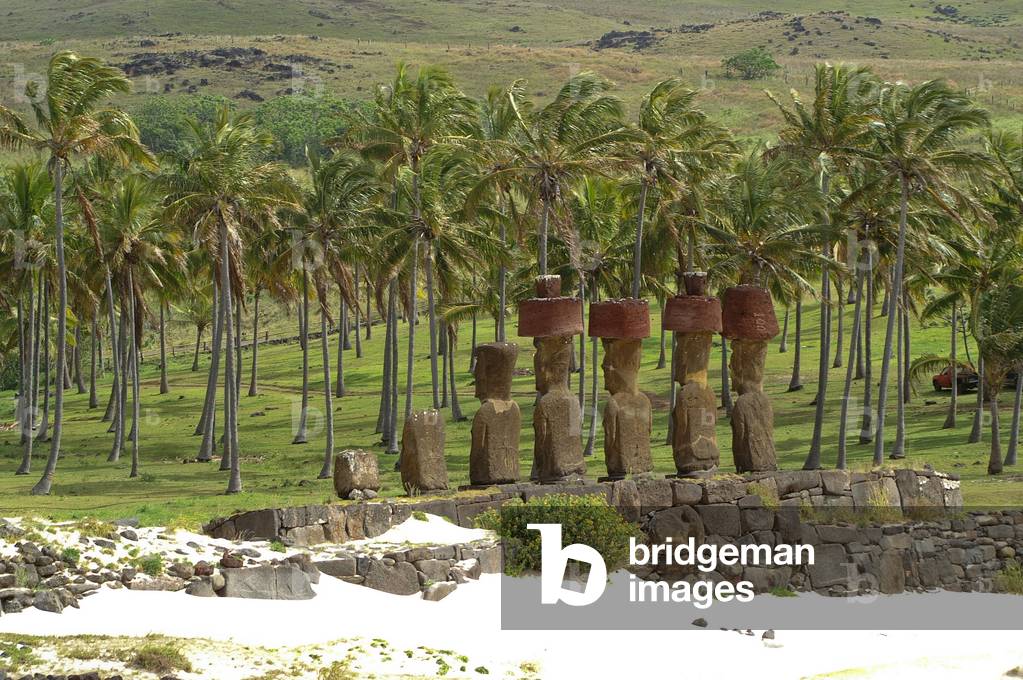
PIX4676245: Moais de l'île de Easter - Moai on Easter island - Anakena beach / Bridgeman Images

PIX4676355: Easter Island Moais and Star Sky - Starry sky above Moai on Easter island - Star sky above the statues of Anakena Beach. September 2009 Milky way above statues of Anakena beach. September 2009 / Bridgeman Images

PIX4676405: Galapagos Islands - The Galapagos Islands seen from the space shuttle - Volcanoes of Galapagos Islands seen by the shuttle Endeavour in December 2001. In the center the island of Isabela, in the top left the island of Fernanda. Lava flows appear as dark stringy patches leading down the flanks of volcanoes which comprise the large, seahorse - shaped island of Isabela. Other flows appear on the flanks of Fernandina Island, the smaller round island to the left, which is made up of a single large volcanic cone. The Galapagos Islands lie above a hot spot underneath the oceanic plate that has been active at least for tens of millions of years. December 200 / Bridgeman Images

PIX4676418: The Andes Cordillere with the Titicaca seen from the Columbia shuttle, November 2, 1995. - The Andes Cordillere with the Titicaca seen from the Columbia shuttle, November 2, 1995 / Bridgeman Images

PIX4676560: Lava flow from Etna - Lava flow from Etna - Lava flow on the slopes of Etna, one of the most active volcanoes in the world. In the distance, the lights of the city of Catania. Lava flow on the slopes of Mount Etna, one of the most active volcano on earth. Background are the citylights of Catania / Bridgeman Images
