Search options

Orientation
Colour

Display options

View

Print

To print search results, use print friendly version of this page.

2491632 Search Results

View of the Venereum of the House of Sallust, Reg VI, Ins 2, 3-5,30, Pompeii. The large painting on the rear wall shows Actaeon and Diana. Chromolithograph and illustration by D. Capri from Antonio Niccoliniõs Pompeii: Views and Restorations (Pompeii: Essaies et Restorations), published by Zucchi & De Luca, Naples, 1898. Antonio was grandson of the architect Antonio Niccolini Sr.

FLO4688110: View of the Venereum of the House of Sallust, Reg VI, Ins 2, 3-5,30, Pompeii. The large painting on the rear wall shows Actaeon and Diana. Chromolithograph and illustration by D. Capri from Antonio Niccoliniõs Pompeii: Views and Restorations (Pompeii: Essaies et Restorations), published by Zucchi & De Luca, Naples, 1898. Antonio was grandson of the architect Antonio Niccolini Sr. / Bridgeman Images
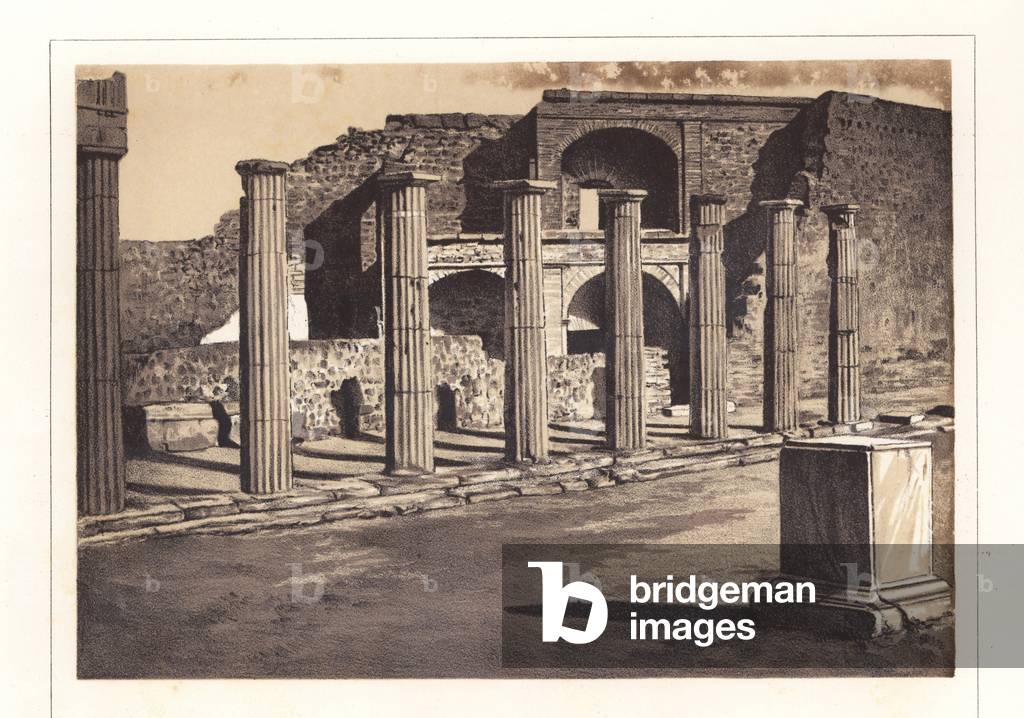
Exterior of the Small Theatre or Odeon, Pompeii VIII.7.19. Columns in the street, and plinth for a statue. Chromolithograph and illustration by S. De Stefano from Antonio Niccoliniõs Pompeii: Views and Restorations (Pompeii: Essaies et Restorations), published by Fausto Niccolini, Naples, 1898. Antonio was grandson of the architect Antonio Niccolini Sr.

FLO4688219: Exterior of the Small Theatre or Odeon, Pompeii VIII.7.19. Columns in the street, and plinth for a statue. Chromolithograph and illustration by S. De Stefano from Antonio Niccoliniõs Pompeii: Views and Restorations (Pompeii: Essaies et Restorations), published by Fausto Niccolini, Naples, 1898. Antonio was grandson of the architect Antonio Niccolini Sr. / Bridgeman Images

Musee Guggenheim in Bilbao, Spain. End of construction 1997, architect Frank Gehry. Photography 05/05/06.

TEC4688289: Musee Guggenheim in Bilbao, Spain. End of construction 1997, architect Frank Gehry. Photography 05/05/06., Gehry, Frank (1929-2025) / Bridgeman Images

Frieze of the months of main entrance (sculpture, 1220-1230)

LRI4688301: Frieze of the months of main entrance (sculpture, 1220-1230), Italian School, (13th century) / Bridgeman Images

Cafeier, cafe - Branch, leaf, fruit and flower of the coffee tree, Coffea arabica. Copperplate engraving from Abbe Antoine Francois Prevost's Histoire generale des voyages, Paris, 1746.

FLO4688307: Cafeier, cafe - Branch, leaf, fruit and flower of the coffee tree, Coffea arabica. Copperplate engraving from Abbe Antoine Francois Prevost's Histoire generale des voyages, Paris, 1746. / Bridgeman Images

Musee Guggenheim in Bilbao, Spain. End of construction 1997, architect Frank Gehry. Photography 1997.

LBY4688350: Musee Guggenheim in Bilbao, Spain. End of construction 1997, architect Frank Gehry. Photography 1997., Gehry, Frank (1929-2025) / Bridgeman Images

Musee Guggenheim in Bilbao, Spain. End of construction 1997, architect Frank Gehry. Photography 1997.

LBY4688375: Musee Guggenheim in Bilbao, Spain. End of construction 1997, architect Frank Gehry. Photography 1997., Gehry, Frank (1929-2025) / Bridgeman Images

Musee Guggenheim in Bilbao, Spain. End of construction 1997, architect Frank Gehry. Photography 1997.

LBY4688389: Musee Guggenheim in Bilbao, Spain. End of construction 1997, architect Frank Gehry. Photography 1997., Gehry, Frank (1929-2025) / Bridgeman Images

Natives of the Sandwich Islands (Hawaii), 19th century. Copied from Louis Choris '” Picturesque Journey.”” Handcoloured lithograph by J. Bull from James Cowles Prichard's Natural History of Man, Balliere, London, 1855.

FLO4688412: Natives of the Sandwich Islands (Hawaii), 19th century. Copied from Louis Choris '” Picturesque Journey.”” Handcoloured lithograph by J. Bull from James Cowles Prichard's Natural History of Man, Balliere, London, 1855. / Bridgeman Images

Musee Guggenheim in Bilbao, Spain. End of construction 1997, architect Frank Gehry. Photography 1997.

LBY4688421: Musee Guggenheim in Bilbao, Spain. End of construction 1997, architect Frank Gehry. Photography 1997., Gehry, Frank (1929-2025) / Bridgeman Images
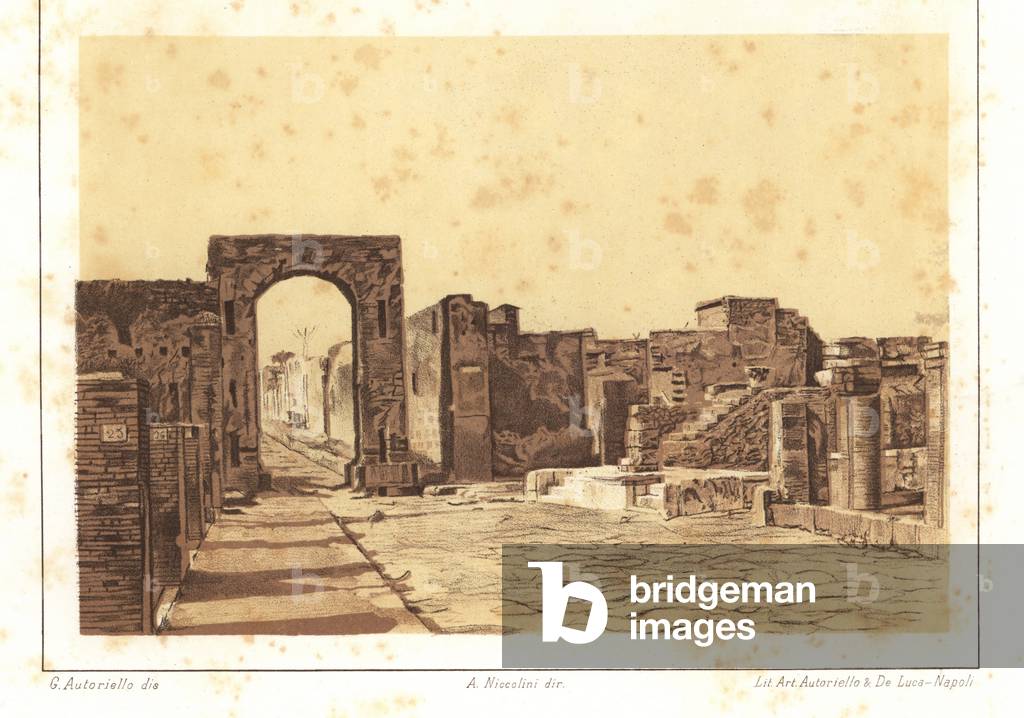
View of the Temple of Fortuna Augusta, Pompeii. On the corner of Via del Foro and Via della Fortuna. Chromolithograph and illustration by G. Autoriello from Antonio Niccoliniõs Pompeii: Views and Restorations (Pompeii: Essaies et Restorations), published by Autoriello & De Luca, Naples, 1898. Antonio was grandson of the architect Antonio Niccolini Sr.

FLO4688107: View of the Temple of Fortuna Augusta, Pompeii. On the corner of Via del Foro and Via della Fortuna. Chromolithograph and illustration by G. Autoriello from Antonio Niccoliniõs Pompeii: Views and Restorations (Pompeii: Essaies et Restorations), published by Autoriello & De Luca, Naples, 1898. Antonio was grandson of the architect Antonio Niccolini Sr. / Bridgeman Images
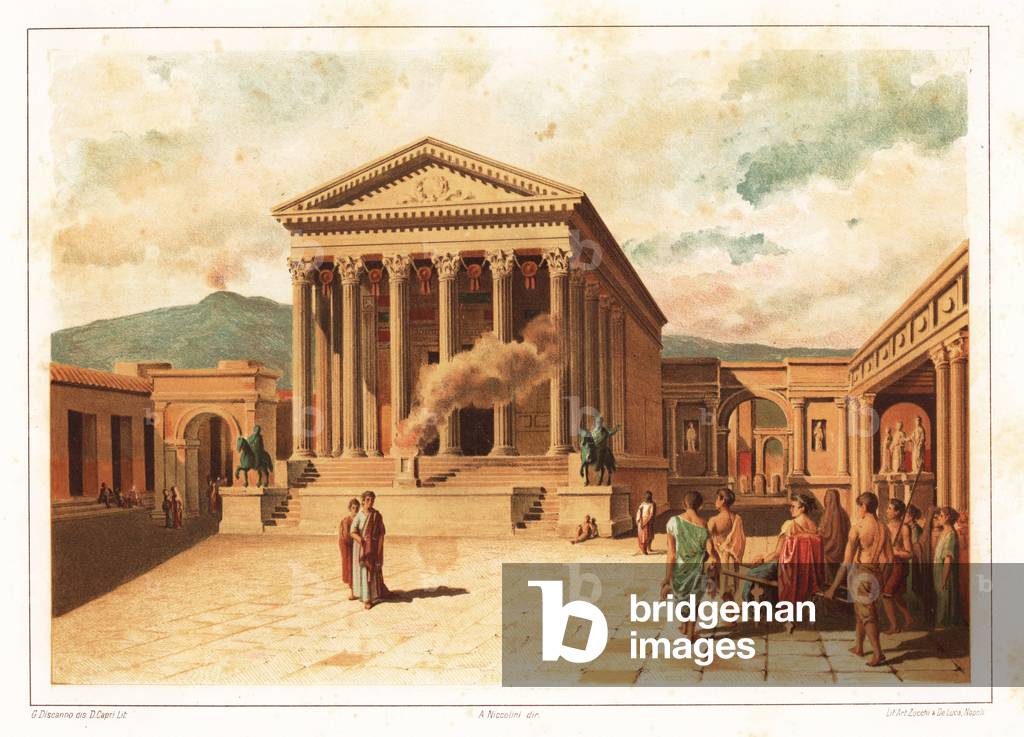
View of the Forum, Pompeii. A nobleman is carried in a sedan chair to the steps of the Forum. Chromolithograph by D. Capri after an illustration by G. Discanno from Antonio Niccoliniõs Pompeii: Views and Restorations (Pompeii: Essaies et Restorations), published by Zucchi & De Luca, Naples, 1898. Antonio was grandson of the architect Antonio Niccolini Sr.

FLO4688132: View of the Forum, Pompeii. A nobleman is carried in a sedan chair to the steps of the Forum. Chromolithograph by D. Capri after an illustration by G. Discanno from Antonio Niccoliniõs Pompeii: Views and Restorations (Pompeii: Essaies et Restorations), published by Zucchi & De Luca, Naples, 1898. Antonio was grandson of the architect Antonio Niccolini Sr. / Bridgeman Images

Musee Guggenheim in Bilbao, Spain. End of construction 1997, architect Frank Gehry. Photography 1997.

LBY4688332: Musee Guggenheim in Bilbao, Spain. End of construction 1997, architect Frank Gehry. Photography 1997., Gehry, Frank (1929-2025) / Bridgeman Images

A man of the Tuda race of the Nilagiri hills in India. He wears a handlebar mustache and silver necklace. Handcoloured lithograph from James Cowles Prichard's Natural History of Man, Balliere, London, 1855.

FLO4688349: A man of the Tuda race of the Nilagiri hills in India. He wears a handlebar mustache and silver necklace. Handcoloured lithograph from James Cowles Prichard's Natural History of Man, Balliere, London, 1855. / Bridgeman Images
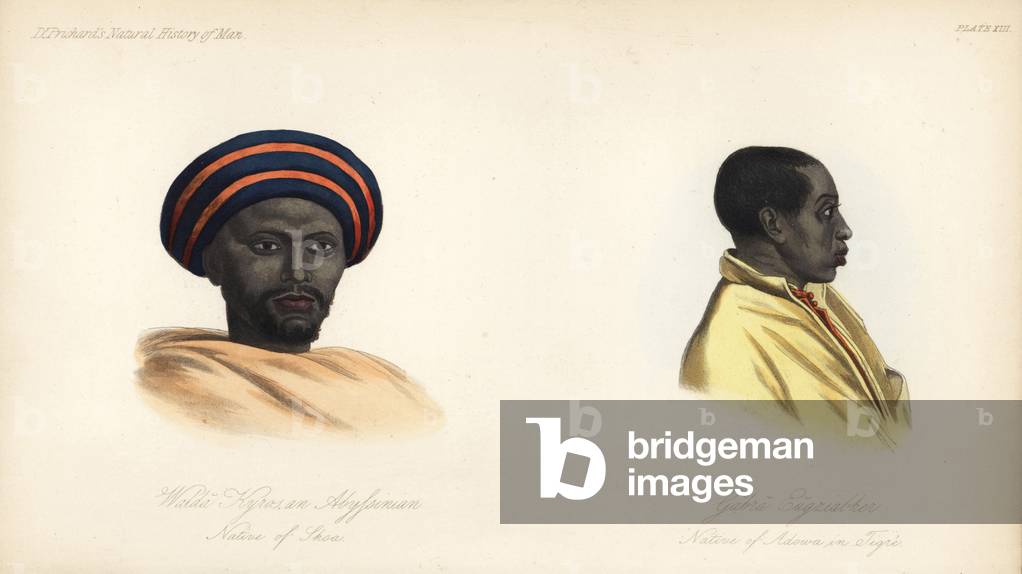
Walda Kyros, an Abyssinian, native of Shoa, and Gabra Eugziabher, a native of Adowa in Tigre. Handcoloured lithograph after d'Abbadie from James Cowles Prichard's Natural History of Man, Balliere, London, 1855.

FLO4688354: Walda Kyros, an Abyssinian, native of Shoa, and Gabra Eugziabher, a native of Adowa in Tigre. Handcoloured lithograph after d'Abbadie from James Cowles Prichard's Natural History of Man, Balliere, London, 1855. / Bridgeman Images

Musee Guggenheim in Bilbao, Spain. End of construction 1997, architect Frank Gehry. Photography 1997.

LBY4688353: Musee Guggenheim in Bilbao, Spain. End of construction 1997, architect Frank Gehry. Photography 1997., Gehry, Frank (1929-2025) / Bridgeman Images

Musee Guggenheim in Bilbao, Spain. End of construction 1997, architect Frank Gehry. Photography 1997.

LBY4688377: Musee Guggenheim in Bilbao, Spain. End of construction 1997, architect Frank Gehry. Photography 1997., Gehry, Frank (1929-2025) / Bridgeman Images

Ajetas or Negritos, male and female aborigines of Luzon, Philippines, in earrings, loincloth, holding bow and arrows, standing over the carcass of a deer. Taken from J. Mallat's “” The Philippines”” 1846Handcoloured lithograph by Madeley from James Cowles Prichard's Natural History of Man, Balliere, London, 1855.

FLO4688466: Ajetas or Negritos, male and female aborigines of Luzon, Philippines, in earrings, loincloth, holding bow and arrows, standing over the carcass of a deer. Taken from J. Mallat's “” The Philippines”” 1846Handcoloured lithograph by Madeley from James Cowles Prichard's Natural History of Man, Balliere, London, 1855. / Bridgeman Images

Woman of the Mapuche people, Araucania, Chile, in traditional poncho. In the 1890s, the Chilean government occupied the Araucania, forced the Mapuche into camps and decimated the population. Handcoloured lithograph by J. Bull from James Cowles Prichard's Natural History of Man, Balliere, London, 1855.

FLO4688614: Woman of the Mapuche people, Araucania, Chile, in traditional poncho. In the 1890s, the Chilean government occupied the Araucania, forced the Mapuche into camps and decimated the population. Handcoloured lithograph by J. Bull from James Cowles Prichard's Natural History of Man, Balliere, London, 1855. / Bridgeman Images

The Four Bears, Mah-to-Toh-pa, second chief of the Mandan or Numakiki nation. In undress, being in mourning, with a few locks of hair cut off. His hair put up in plaits or slabs, with glue and red paint, a custom of the tribe. Handcoloured lithograph by J. Harris after a painting by George Catlin from James Cowles Prichard's Natural History of Man, Balliere, London, 1855.

FLO4688567: The Four Bears, Mah-to-Toh-pa, second chief of the Mandan or Numakiki nation. In undress, being in mourning, with a few locks of hair cut off. His hair put up in plaits or slabs, with glue and red paint, a custom of the tribe. Handcoloured lithograph by J. Harris after a painting by George Catlin from James Cowles Prichard's Natural History of Man, Balliere, London, 1855., Catlin, George (1796-1872) / Bridgeman Images

Tribes of South America: Yuri man with tattooed mouth, and Botocudo man with necklace, Brazil. Handcoloured lithograph by J. Bull from James Cowles Prichard's Natural History of Man, Balliere, London, 1855.

FLO4688651: Tribes of South America: Yuri man with tattooed mouth, and Botocudo man with necklace, Brazil. Handcoloured lithograph by J. Bull from James Cowles Prichard's Natural History of Man, Balliere, London, 1855. / Bridgeman Images

Aleut woman of the Aleutian islands, northern Pacific Ocean. She wears a cross on a necklace, earrings, and her hair in plaits. Taken from Louis Choris '” Picturesque Journey.”” Handcoloured lithograph by J. Bull from James Cowles Prichard's Natural History of Man, Balliere, London, 1855.

FLO4688613: Aleut woman of the Aleutian islands, northern Pacific Ocean. She wears a cross on a necklace, earrings, and her hair in plaits. Taken from Louis Choris '” Picturesque Journey.”” Handcoloured lithograph by J. Bull from James Cowles Prichard's Natural History of Man, Balliere, London, 1855. / Bridgeman Images

Hee-doh-gee-ats, a Chinook boy of 15 or 18 years of age whose head had never been flattened. Handcoloured lithograph by J. Harris after a painting by George Catlin from James Cowles Prichard's Natural History of Man, Balliere, London, 1855.

FLO4688617: Hee-doh-gee-ats, a Chinook boy of 15 or 18 years of age whose head had never been flattened. Handcoloured lithograph by J. Harris after a painting by George Catlin from James Cowles Prichard's Natural History of Man, Balliere, London, 1855., Catlin, George (1796-1872) / Bridgeman Images

Councellor or lawyer in the court of law, with black robes and wig, holding legal briefs on a table. Handcoloured copperplate engraving from William Henry Pyne's The World in Miniature: England, Scotland and Ireland, Ackermann, 1827.

FLO4688622: Councellor or lawyer in the court of law, with black robes and wig, holding legal briefs on a table. Handcoloured copperplate engraving from William Henry Pyne's The World in Miniature: England, Scotland and Ireland, Ackermann, 1827. / Bridgeman Images

Jockeys in racing silks on thoroughbred horses on a race course before a cheering crowd. Handcoloured copperplate engraving from William Henry Pyne's The World in Miniature: England, Scotland and Ireland, Ackermann, 1827.

FLO4688653: Jockeys in racing silks on thoroughbred horses on a race course before a cheering crowd. Handcoloured copperplate engraving from William Henry Pyne's The World in Miniature: England, Scotland and Ireland, Ackermann, 1827. / Bridgeman Images

Jewish Pedlar selling fob watches to a milkmaid with jug. Handcoloured copperplate engraving from William Henry Pyne's The World in Miniature: England, Scotland and Ireland, Ackermann, 1827.

FLO4688678: Jewish Pedlar selling fob watches to a milkmaid with jug. Handcoloured copperplate engraving from William Henry Pyne's The World in Miniature: England, Scotland and Ireland, Ackermann, 1827. / Bridgeman Images

Parish Beadle, a petty officer of the police, in uniform with mace, bicorn and cape. Handcoloured copperplate engraving from William Henry Pyne's The World in Miniature: England, Scotland and Ireland, Ackermann, 1827.

FLO4688689: Parish Beadle, a petty officer of the police, in uniform with mace, bicorn and cape. Handcoloured copperplate engraving from William Henry Pyne's The World in Miniature: England, Scotland and Ireland, Ackermann, 1827. / Bridgeman Images

Statuette in human form. 850-800 BC (bronze)

LRI4688739: Statuette in human form. 850-800 BC (bronze), Etruscan / Bridgeman Images

Philippa de Hainaut - Philippine - Philippa of Hainault, consort of King Edward III of England. Steel engraving by W.H. Egleton after a portrait by Edward Corbould from Mary Howitt's Biographical Sketches of The Queens of England, Virtue, London, 1868.

FLO4688788: Philippa de Hainaut - Philippine - Philippa of Hainault, consort of King Edward III of England. Steel engraving by W.H. Egleton after a portrait by Edward Corbould from Mary Howitt's Biographical Sketches of The Queens of England, Virtue, London, 1868. / Bridgeman Images

Etruscan art: three types of bronze fibules from the tomb 59 by Poggio Selciatello, Pian della Regina, Tarquinia - 9th century BC - Dim 3,8 cm 3,3 cm and 3,5 cm - (Etruscan art: three kinds of fibula from tomb 59 in Poggio Selciatello, Pian della Regina, Tarquinia - 8th century BC) Florence Museo Cheologico, inv 83533 d1, d1 e d3

LRI4688815: Etruscan art: three types of bronze fibules from the tomb 59 by Poggio Selciatello, Pian della Regina, Tarquinia - 9th century BC - Dim 3,8 cm 3,3 cm and 3,5 cm - (Etruscan art: three kinds of fibula from tomb 59 in Poggio Selciatello, Pian della Regina, Tarquinia - 8th century BC) Florence Museo Cheologico, inv 83533 d1, d1 e d3, Etruscan / Bridgeman Images

Anne of Denmark - Anne of Denmark, queen consort and wife of King James I of England. Steel engraving by W.H. Mote after a portrait by H. Warren from Mary Howitt's Biographical Sketches of The Queens of England, Virtue, London, 1868.

FLO4688875: Anne of Denmark - Anne of Denmark, queen consort and wife of King James I of England. Steel engraving by W.H. Mote after a portrait by H. Warren from Mary Howitt's Biographical Sketches of The Queens of England, Virtue, London, 1868. / Bridgeman Images

Moss rose, Rosa muscosa, from Robert Tyas' “Queen of Flowers, or Memoirs of the Rose,” London, 1840. Unsigned handcoloured lithograph, but probably by James Andrews. Little is known about the artist James Andrews (1801 ~ 1876) apart from his work. This gifted artist taught flower-painting to young ladies and published a treatise “” Lessons in Flower Painting”” in 1835. Blunt calls him “” an illustrator of sentimental flower books,””” but admits that he was “” very talented.”” His signature JA can be found in many botanical gift books for publisher Robert Tyas from “” The Sentiment of Flowers”” (1836) to “” Flowers from Foreign Lands”” (1853).

FLO4688911: Moss rose, Rosa muscosa, from Robert Tyas' “Queen of Flowers, or Memoirs of the Rose,” London, 1840. Unsigned handcoloured lithograph, but probably by James Andrews. Little is known about the artist James Andrews (1801 ~ 1876) apart from his work. This gifted artist taught flower-painting to young ladies and published a treatise “” Lessons in Flower Painting”” in 1835. Blunt calls him “” an illustrator of sentimental flower books,””” but admits that he was “” very talented.”” His signature JA can be found in many botanical gift books for publisher Robert Tyas from “” The Sentiment of Flowers”” (1836) to “” Flowers from Foreign Lands”” (1853). / Bridgeman Images

Vase with classical reliefs by John Flaxman. Chromolithograph drawn by Grivell and lithographed by Parrot et Co. from Frederick Rathone's Old Wedgwood, the Decorative or Artistic Ceramic Work Produced by Josiah Wedgwood, Quaritch, London, 1898.

FLO4688944: Vase with classical reliefs by John Flaxman. Chromolithograph drawn by Grivell and lithographed by Parrot et Co. from Frederick Rathone's Old Wedgwood, the Decorative or Artistic Ceramic Work Produced by Josiah Wedgwood, Quaritch, London, 1898. / Bridgeman Images
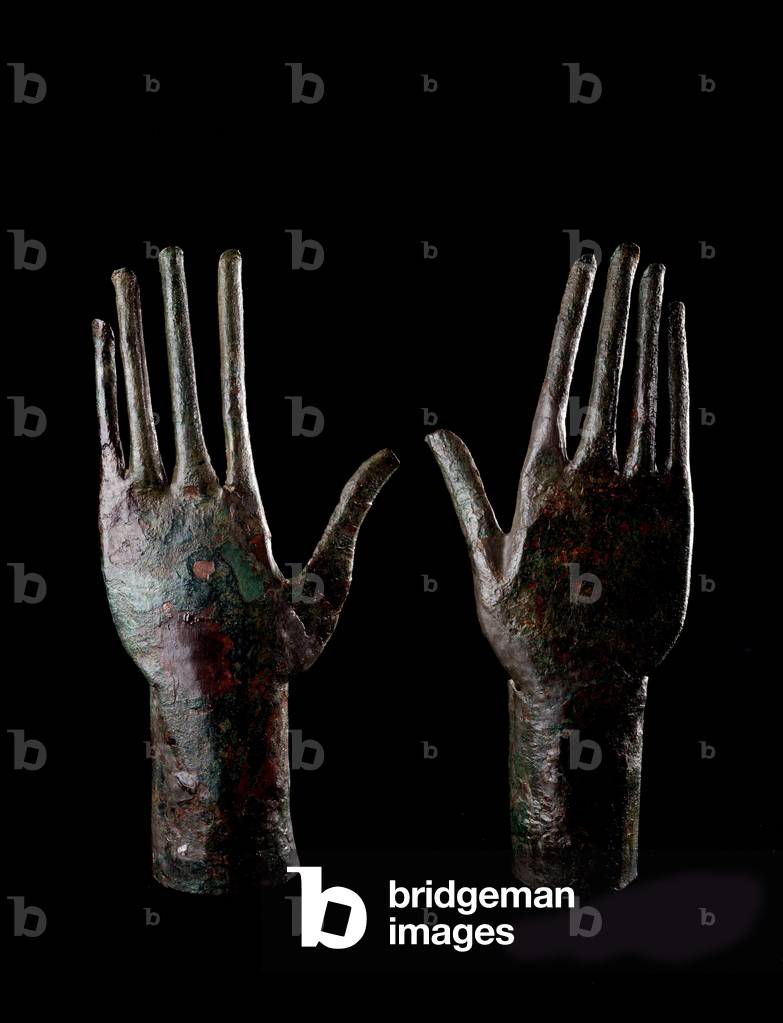
Two bronze hands, 680-670 BC

LRI4688963: Two bronze hands, 680-670 BC, Etruscan, (7th century BC) / Bridgeman Images

The skeleton of Death as a priest celebrating the wedding between a young woman and an ugly old man. Handcoloured copperplate drawn and engraved by Thomas Rowlandson from The English Dance of Death, Ackermann, London, 1816.

FLO4690212: The skeleton of Death as a priest celebrating the wedding between a young woman and an ugly old man. Handcoloured copperplate drawn and engraved by Thomas Rowlandson from The English Dance of Death, Ackermann, London, 1816., Rowlandson, Thomas (1756-1827) / Bridgeman Images

The flight from the apostles. Detail. 15th century (fresco)

LRI4690620: The flight from the apostles. Detail. 15th century (fresco), Umbrian School, (15th century) / Bridgeman Images


Back to top