2497532 Search Results

LRI4675525: French Revolution: Declaration of Human and Citizen Rights (lithography. 18th century), French School, (18th century) / Bridgeman Images

LRI4675729: Allies of Prussia under Schwartzenberg defeated French under Marmont/Mortier (engraving), Unknown Artist, (19th century) / Bridgeman Images

LRI4675768: The wedding of Napoleon III and Eugenia Maria de Montijo de Guzman, on 30/01/1853 at the Cathedral of Our Lady (engraving, 19th century), Anonymous / Bridgeman Images

LRI4638886: View of the temple of Zeus (photography), Greek / Bridgeman Images

LRI4639006: View of the bastions of the Byzantine fortress (Heptapyrgion or Yedi Kule), 4th century (photography), Byzantine, (4th century) / Bridgeman Images

LRI4639094: Houses built in the fortifications of the city, around 1200 BC (photography), Mycenaean, (13th century BC) / Bridgeman Images

LRI4625931: Small vase and ceramics of protoattic period, 7th century BC, Greek school, (7th century BC) / Bridgeman Images

LRI4626365: View of the Eiffel Tower made in 1889 by Gustave Eiffel (1832-1923). Paris, Eiffel, Gustave (1832-1923) / Bridgeman Images

LRI4607717: Duck Hunting in the Lagoon Painting by Pietro Longhi (1702-1785) 1765-1770 Sun. 61x50 cm Venice Pinacoteca Querini-Stampalia, Longhi, Pietro (c.1701-85) / Bridgeman Images

LRI4639400: Etruscan civilization: terracotta acrotere representing a seated character from the 2nd Palace of Murlo. 575-570 BC. Dim. 80 cm Murlo, Antiquarium Comunale, Etruscan, (6th century BC) / Bridgeman Images

LRI4639700: Egyptian antiquite: small wooden box with ivory inlay representing the hunting parts of Pharaoh Tutankhamun. 18th dynasty. From the tomb of Tutankhamun (All-Ankh-amun or Tutankhamun) (1345-1327 BC) Valley of the Kings. Thebes Cairo, Egyptian Museum, Egyptian 18th Dynasty (c.1567-1320 BC) / Bridgeman Images

LRI4626776: Chair. Marble sculpture by Giovanni Pisano (1248-1314). 1302-1311 Cathedrale of Pisa (Duomo di Santa Maria Assunta di Pisa), Italy, Pisano, Giovanni (c.1245-p.1314) / Bridgeman Images

LRI4608612: Fresco of the life of Saint Martin. Saint Martin's dream: Christ, surrounded by angels, reveals to him that he was the beggar to whom he gave his coat. Painting by Simone Martini (1280-1344). Fresco, 1315-1317. Assisi, Basilica Inferiore di San Francesco, Cappella di San Martino (Assisi, Lower Basilica of Saint Francois, Chapel of Saint Martin), Martini, Simone (1284-1344) / Bridgeman Images

LRI4608731: Saint Clare of Assisi (Chiara Offreduccio di Favarone, 1193-1253) and Saint Louis (Louis IX, 1214-1270) (Clare of Assisi and St Louis), detail of Five saints - Fresco by Simone Martini (ca. 1284-1344), 1312-1318, height 120 cm - Basilica of Saint Francois of Assisi, lower church, Assisi, Assisi, Martini, Simone (1284-1344) / Bridgeman Images

LRI4639872: Egyptian antiquitis: the high priest of Heliopolis and prince of Pe Rahotep. Painted limestone sculpture detail. 4th dynasty. From the mastaba of Rahotep to Meidoum. Egyptian Museum, Cairo., Egyptian 4th Dynasty (c.2613-2498 BC) / Bridgeman Images

LRI4640155: The goddess Ishtar on a wafer (left) and a fertility goddess with raised arms, 15th century-12th century BC (hammered gold statuettes), Phoenician, (14th century BC) / Bridgeman Images

LRI4640438: Recipient in the shape of a crouching monkey, 6th-5th century BC, Carthaginian (7th-3rd century BC) / Bridgeman Images

LRI4640505: Statuette of a woman playing tambourine, 6th century BC (terracotta), Carthaginian (7th-3rd century BC) / Bridgeman Images

LRI4578938: Saint Peter (Drawing, 15th-16th century), Vinci, Leonardo da (1452-1519) / Bridgeman Images

LRI4579031: Peasants plowing the fields. Detail of The effects of good and bad government on the city and the countryside. (Fresco, 1338-1339), Lorenzetti, Ambrogio (1285-c.1348) / Bridgeman Images

LRI4579798: The bishoph Enee Silvio Piccolomini (Pius II)) presents Eleonora of Aragonto Emperor Frederic III of the Holy Empire. Detail - Fresco, 1508, Pinturicchio, Bernardino di Betto (c.1452-1513) / Bridgeman Images

LRI4611184: The marriage by proxy of Maria De Medici and Henry IV (oil on canvas, 17th century), Rubens, Peter Paul (1577-1640) / Bridgeman Images

LRI4611312: Prehistoric Algeria Allegorie. Painting by Alberto Savinio (Andrea de Chirico, 1891-1952) 1933 Milan, museum of contemporary art, Savinio, Alberto (Chirico, Andrea de) (1891-1952) / Bridgeman Images

LRI4611370: Das Sekretariat (The Secretariat) Mixed media by Kurt Schwitters (1887-1948) (ec.all.) 20th century London, Lord Gallery, Schwitters, Kurt (1887-1948) / Bridgeman Images

LRI4598733: View of the remains of the fortress (1983 - Photography), Incan / Bridgeman Images

LRI4611608: Saint John in the Desert Painting by Tanzio da Varallo (Antonio d'Enrico) (1580 around-1635) Tulsa (Oklahoma), Philbrook Art Center, Varallo, Tanzio da (c.1575/80-c.1633) / Bridgeman Images
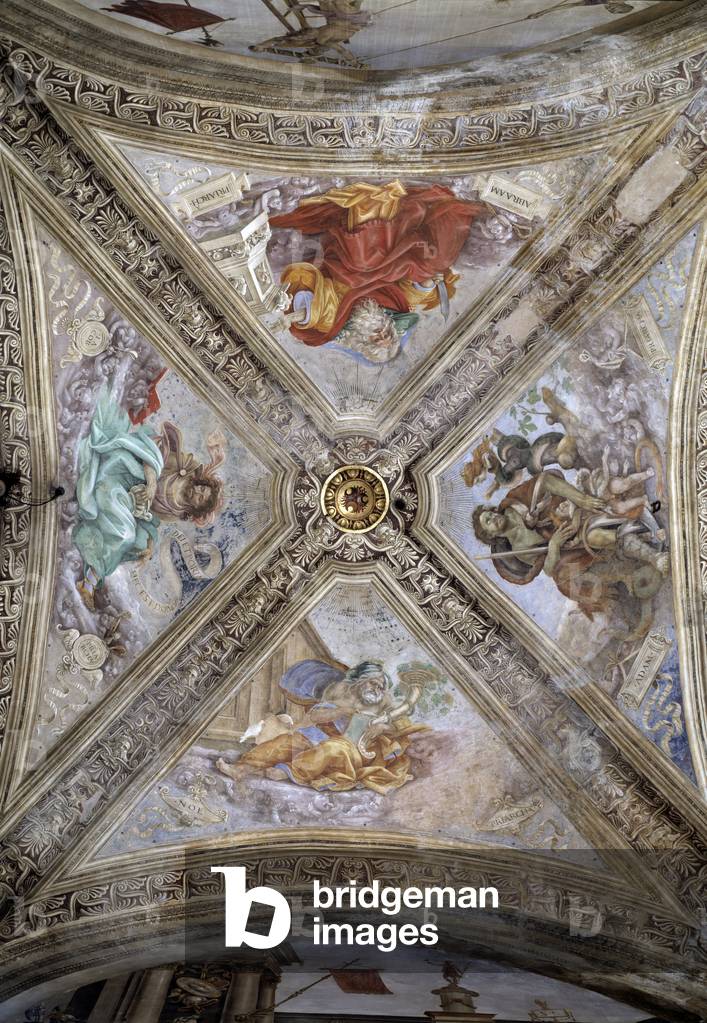
LRI4583416: Patriarchs Adam, Abraham, Jacob and Noah. 14th century, fresco, Italian School, (14th century) / Bridgeman Images

LRI4583515: Marbled pulpit placed on a carved wall, 1207, Florentine School, (13th century) / Bridgeman Images

LRI4583605: Interior view of the Church of Santo Spirito, nave on the right, projected by Brunelleschi in 1444 (Interior of St Mary of the Holy Spirit Church, right nave) Florence, Italy, Brunelleschi, Filippo (1377-1446) / Bridgeman Images

LRI4602274: The animal manure collected (oil on canvas, 1868), Boldini, Giovanni (1842-1931) / Bridgeman Images

LRI4602300: Portrait of the Countess of Leusse, born Berthier, 19th-20th century (painting), Boldini, Giovanni (1842-1931) / Bridgeman Images

LRI4602380: Portrait of Madame Corbitt, 1925 (painting), Boldini, Giovanni (1842-1931) / Bridgeman Images

LRI4602567: Self Portrait Painting by Pierre Bonnard (1867-1947) 1945 Dim. 56x46 cm New York, Collection Donald S. Stralem, Bonnard, Pierre (1867-1947) / Bridgeman Images

LRI4602774: Virgin adoring the child Painting by Francesco Bonsignori (ca. 1455-1519) 1483 Verone, Museo di Castelvecchio Italy, Bonsignori, Francesco (c.1455-1519) / Bridgeman Images

LRI4602808: Triptych of Epiphany, with St Agnes of Rome and donor (oil on panel, 1510), Bosch, Hieronymus (c.1450-1516) / Bridgeman Images

LRI4584363: Detail of the reliefs of the Chair realised by Giovanni Pisano (1248-1314): Detail of the reliefs of the marble pulpit, the adoration of the magi 1302-1311 Cathedrale of Pisa (Duomo di Pisa), Italy, Pisano, Giovanni (c.1245-p.1314) / Bridgeman Images
