
Print this page or go back to standard view.
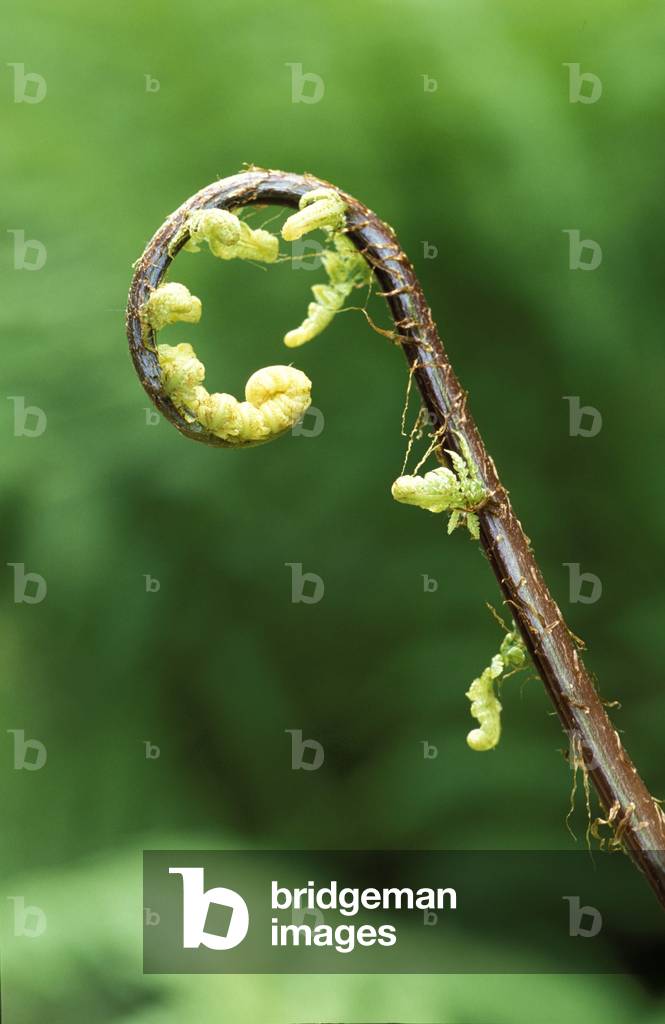
CUB4510456: Athirium Filix-Foemina, Fern, Italy / Bridgeman Images

CUB4510470: Blechnum Spicant, Fern, Italy / Bridgeman Images

CUB4510503: Pteridium Aguilinum, Fern, Italy / Bridgeman Images

CUB4510528: Oreopteris Limbosperma, Fern, Alpi, Italy / Bridgeman Images

CUB4510551: Lichen, Italy / Bridgeman Images

CUB4510559: Stereocaulon Sp., Lichen, Italy / Bridgeman Images

LRI4568271: Sheet music for the reduced symphony for the piano of Tancredi, opera by Gioacchino Rossini, Rossini, Gioachino (1792-1868) / Bridgeman Images

PIX4568298: Open clusters M6 and M7 in Scorpio - Open clusters M6 and M7 in Scorpius - The star clusters M6 (NGC 6405), at the top right, and M7 (NGC 6475), at the bottom of the image, are two open clusters located in the constellation Scorpio. M6, the Butterfly Cluster, at upper right, is a wonderful open cluster, it can be seen about 4 degrees northwest of M7, with both clusters being located in Scorpius. M7, at bottom, consists of 80 stars brighter than magnitude 10 in a field of about 1.3 degrees apparent diameter. It was known to Ptolemy who mentioned it in 130 AD. Both clusters are visible with the unaided eye in a rich area of Milky Way located between Sagittarius and Scorpius / Bridgeman Images

PIX4568402: Open cluster M26 in the ECU of Sobieski - Open cluster M26 in Scutum - M26 (NGC 6694) is located about 5000 years - light from Earth and is about 90 million years old. M26 is an open cluster in the constellation Scutum. A fairly tight cluster, in this deep image it has to compete with a very populous background of Milky Way stars. It is about 5000 light - years away and around 90 million years old / Bridgeman Images

PIX4568451: Open cluster M11 in the Sobieski ECU - M11 open cluster in Scutum - M11 (NGC 6705) is a particularly compact and star-rich open cluster (about 3000), located in the constellation Sobieski ECU. M11 (NGC 6705) is one of the richest and most compact of the known open clusters containing about 3,000 stars. It is located in the Scutum constellation / Bridgeman Images

JLJ4568483: The Ice Scene de rue in Paris during the winter, a clerk slides on the floorboard because of the ice, as well as a horse pulling a carriage, 20th century (chromolithograph), French School, (20th century) / Bridgeman Images

LRI4568506: Page of musical score of Psalm 23, op 132, D 706 by Franz Schubert / Bridgeman Images

JLJ4606770: Decorating panel of the Turkish cabinet of the Count of Artois in Versailles., 17th century (painting on wood), Rousseau, Jacques (1630-1693) / Bridgeman Images

JLJ4568662: Reconstruction of a photoy workshop, with different cameras, (photo) / Bridgeman Images

CUB4514874: Beans, Italy / Bridgeman Images

CUB4516103: Cultivated fields, Sicily, Italy / Bridgeman Images

CUB4516135: Preda Rossa plain, Val Masino, Lombardy, Italy / Bridgeman Images

CUB4516160: Cityscape, Opi, Abruzzo national park, Abruzzo, Italy / Bridgeman Images

PIX4610948: Galaxies NGC 3718 and NGC 3729 in the Great Bear - Galaxies NGC 3718 and NGC 3729 in Ursa Major - NGC 3718 is a special galaxy located about 42 million years ago - light from Earth in the constellation of the Great Bear. It's an active nucleus galaxy. Its tormented shape is probably due to the attraction exerted by another galaxy, NGC 3729, visible to its left. To the south, Arp 322 (or Hickson 56), is a group of 5 galaxies far farther away, located about 300 million light years away from Earth. NGC 3718 and its companion NGC 3729 (left) are physically related members of the Ursa Major galaxy cluster. The two galaxies appear to orbit each other at a projected separation of 147,000 light years. NGC 3718 (Arp 214) seems to have a rudimentary bar and spiral structure although it is recognized as a peculiar galaxy and as such is listed within ARP's Atlas of Peculiar Galaxies. NGC 3718 contains an active galactic nucleus (AGN) and is known as a Seyfert type 1.9 galaxy. Its strange shape is probably due to a gravitational interaction with its companion NGC 3729. A grouping of 5 background galaxies 300 million light years distant are projected to the south of NGC 3718 and are designated Arp 322 (also Hickson 56). Several members of the group appear to be a strongly interacting / Bridgeman Images

CUB4516303: Farmstead and cows in the meadow, Valsassina, Lombardy, Italy / Bridgeman Images

CUB4516380: Marsh with gooses, Pian Gembro natural reserve, Tirano, Lombardy, Italy / Bridgeman Images
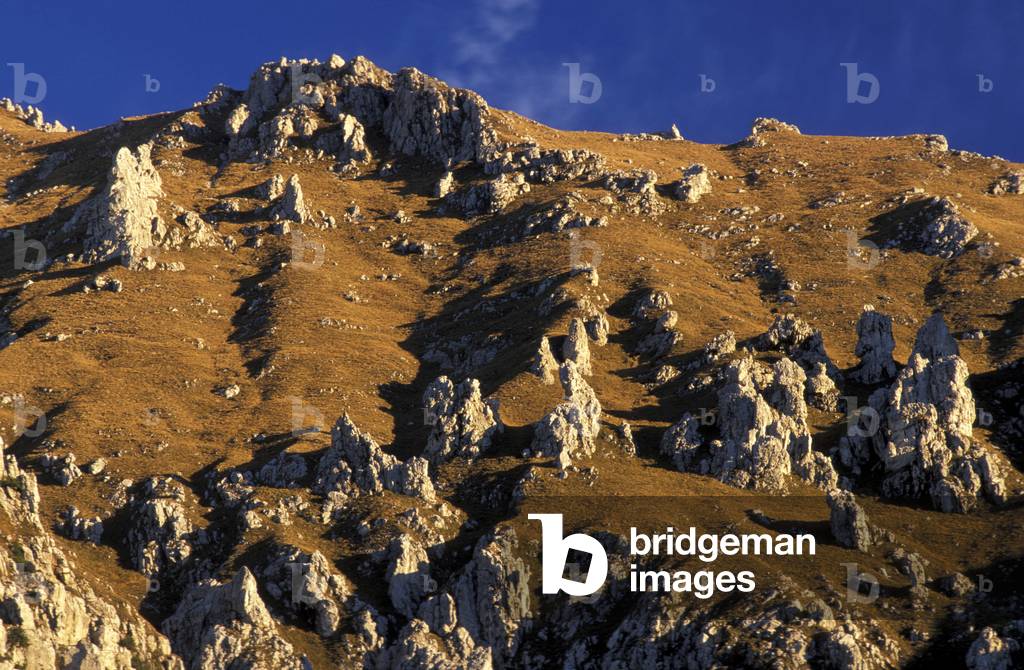
CUB4516387: Calcrete, Grigna Meridionale (Grignetta) mountain, Lecco, Lombardy, Italy / Bridgeman Images

PIX4611054: Galaxy NGC 4027 in the Raven - Galaxy NGC 4027 in Corvus - NGC 4027 is a spiral galaxy located about 80 million years ago - light. One of his arms is more extended, probably by the presence of a nearby dwarf galaxy. Image made with Siding Spring's 3.9m telescope. This galaxy is of interest because of its similarity to the Large Magellanic Cloud, (LMC) our nearest extra - galactic neighbour. Like the LMC, its light comes predominantly from young stars, which are hotter than the Sun and give the galaxy a bluish colour. However, because this galaxy is over 80 million light - years distant we see only the integrated light of millions of unresolved stars, rather than the individuals we see in the LMC. NGC 4027 has a somewhat distorted appearance and an elongated spiral arm, probably due to the gravitational effect of a smaller companion galaxy, not visible in this photograph but rather obvious on a much deeper image. NGC 4027 is less than half a degree south of the Antennae interacting galaxies / Bridgeman Images

CUB4516521: Alpine pond, Prealpi, Lombardy, Italy / Bridgeman Images

CUB4516559: Juniper wiith snow, Italy / Bridgeman Images

CUB4516603: Buddleia globosa with frost, Italy / Bridgeman Images

CUB4516637: Physalis Alkekengi with frost, Italy / Bridgeman Images

JLJ4611223: Parisian Costumes: Ash blue satin evening coat with Irish trim. Draw, Ec. Esp, 1912 (litho), Gose, Francisco Xavier (1876-1915) / Bridgeman Images

PIX4611379: Spiral Galaxy NGC 4450 - Spiral Galaxy NGC 4450 in Coma Berenices. Image obtained with a telescope of 80 cm. NGC 4450 is a spiral galaxy in the constellation Coma Berenices. Image was taken with a 32 - inch Schulman Telescope (RC Optical Systems) / Bridgeman Images

LRI4611420: The Coronation of The Virgin, The Veil Of Veronique And Saints (Detail) (oil on canvas, 17th century), Serodine, Giovanni (c.1600-30) / Bridgeman Images

JLJ4572768: Portrait of Catherine de Brunswick Grubenhagen, 16th century (oil on canvas), Cranach, Lucas the Elder (1472-1553) / Bridgeman Images

PIX4572809: Artist's view of a magnetar and its magnetic field - A magnetar with its magnetic field. Artwork - Illustration showing the magnetic field lines of a magnetar. This artist's concept shows a magnetar - - a neutron star with a super - strong magnetic field, represented by the lines in this illustration / Bridgeman Images

JLJ4572836: Madame de Julienne and Madame de Serre doing music by Louis carrogis dit Carmontelle, 18th century (w/c), Carmontelle, Louis Carrogis (1717-1806) / Bridgeman Images

PIX4572892: Binary pulsar and gravitational waves - Artist's impression of the pulsar PSR J0348+0432 and its white dwarf companion - Artist's view of a gravitational wave generated by a system of a neutron star associated with a white dwarf, spreading on the fabric of space - time. This artist's impression shows the exotic double object that consists of a tiny, but very heavy neutron star that spins 25 times each second, orbited every two and a half hours by a white dwarf star. The neutron star is a pulsar named PSR J0348+0432 that is giving off radio waves that can be picked up on Earth by radio telescopes. Although this unusual pair is very interesting in its own right it is also a unique laboratory for testing the limits of physical theories. This system is radiating gravitational radiation, ripples in spacetime. Although these waves cannot be detected directly by astronomers on Earth they can be detected indirectly by measuring the change in the orbit of the system as it loses energy. As the pulsar is so small the relative sizes of the two objects are not drawn to scale / Bridgeman Images

JLJ4572926: L'apprentice, 1908 (oil on canvas), Raffaelli, Jean Francois (1850-1924) / Bridgeman Images

PIX4573107: Planet around the star Fomalhaut - Planet orbiting star Fomalhaut - First visible light photo of an extrasolar planet obtained by the space telescope Hubble. The planet called Fomalhaut b, is a planet with a mass close to Jupiter, orbiting the star Fomalhaut, 25 years - light from Earth in the constellation of Southern Fish. The star Fomalhaut (indicated by a white dot) is hidden here to show the dust disc surrounding it and the position of the planet. Located at a distance of about four times that separating Neptune from the Sun, Fomalhaut b makes a complete orbit around its star in 872 years. November 2008 - This image, taken with the Advanced Camera for Surveys aboard the NASA/ESA Hubble Space Telescope, shows the newly discovered planet, Fomalhaut b, orbiting its parent star, Fomalhaut. The small white box at lower right pinpoints the planet's location. Fomalhaut b has carved a path along the inner edge of a vast, dusty debris ring encircling Fomalhaut that is 34.5 billion kilometers across. Fomalhaut b lies three billion kilometers inside the ring's inner edge and orbits 17 billion kilometers from its star. The inset at bottom right is a composite image showing the planet's position during Hubble observations taken in 2004 and 2006. Astronomers have calculated that Fomalhaut b completes an orbit around its parent star every 872 years. The white dot in the centre of the image marks the star's location. The region around Fomalhaut's location is black because astronomers used the Advanced Camera's coronagraph to block out the star's bright glare so that the dim planet could be seen. Fomalhaut b is 100 million times fainter than its star. The radial streaks are scattered starlight. The red dot at lower left is a background star. The Fomalhaut system is 25 light - years away in the constellation Piscis Austrinus. This false - colour image was taken in October 2004 and July 2006 / Bridgeman Images