Print Friendly Version Page

2502127 Search Results

Annunciation, 1545 (oil on canvas)

JLJ4600732: Annunciation, 1545 (oil on canvas), Bordone, Paris (1500-71) / Bridgeman Images

The concert, 17th century (painting)

JLJ4600799: The concert, 17th century (painting), Duck, Jacob (c.1600-67) / Bridgeman Images

Office building on Boulevard Unirii in Bucharest, Romania. Photograph 10/10/05.

OMG4580849: Office building on Boulevard Unirii in Bucharest, Romania. Photograph 10/10/05. / Bridgeman Images

The Place Forte de Neuf Brisach in Alsace. Construction 1703, plans by Sebastien Le Prestre de Vauban (1633-1707).

ITR4580011: The Place Forte de Neuf Brisach in Alsace. Construction 1703, plans by Sebastien Le Prestre de Vauban (1633-1707). / Bridgeman Images

Cassone featuring 5 portraits of the Master of the Florentine Renaissance detail with the portrait of Manetti Rutilio di Lorenzo, 16th century (painting)

JLJ4580962: Cassone featuring 5 portraits of the Master of the Florentine Renaissance detail with the portrait of Manetti Rutilio di Lorenzo, 16th century (painting), Italian School, (16th century) / Bridgeman Images

The training camp of the commandos of the Armee de Terre, in the citadel of Mont Louis (Languedoc Roussillon). Construction 1679, plans by Sebastien Le Prestre de Vauban (1633-1707).

ITR4580032: The training camp of the commandos of the Armee de Terre, in the citadel of Mont Louis (Languedoc Roussillon). Construction 1679, plans by Sebastien Le Prestre de Vauban (1633-1707). / Bridgeman Images

Ornithology: a sparrow from the Indes, plate of the 18th century (litho)

JLJ4580678: Ornithology: a sparrow from the Indes, plate of the 18th century (litho), Unknown artist, (18th century) / Bridgeman Images

King Louis XIV before the prioress of Fives at the seat of Lille in August 1667 Detail representing the king, 1667 (oil on canvas)

JLJ4580719: King Louis XIV before the prioress of Fives at the seat of Lille in August 1667 Detail representing the king, 1667 (oil on canvas), Meulen, Adam Frans van der (1632-90) / Bridgeman Images

Gothic Art: Column statue of King Solomon. Limestone sculpture from Collegiale Notre Dame de Corbeil, 1175, 1200 (sculpture)

JLJ4580777: Gothic Art: Column statue of King Solomon. Limestone sculpture from Collegiale Notre Dame de Corbeil, 1175, 1200 (sculpture), French School, (12th century) / Bridgeman Images

Judaism: architectural element in basalt of a synagogue decorated with a candlestick with seven branches, palm and trumpet, c.100 AD (stone)

JLJ4580865: Judaism: architectural element in basalt of a synagogue decorated with a candlestick with seven branches, palm and trumpet, c.100 AD (stone), Jewish School, (1st century AD) / Bridgeman Images

Orpheus, 1928 (plaster)

JLJ4580906: Orpheus, 1928 (plaster), Zadkine, Ossip (1890-1967) / Bridgeman Images
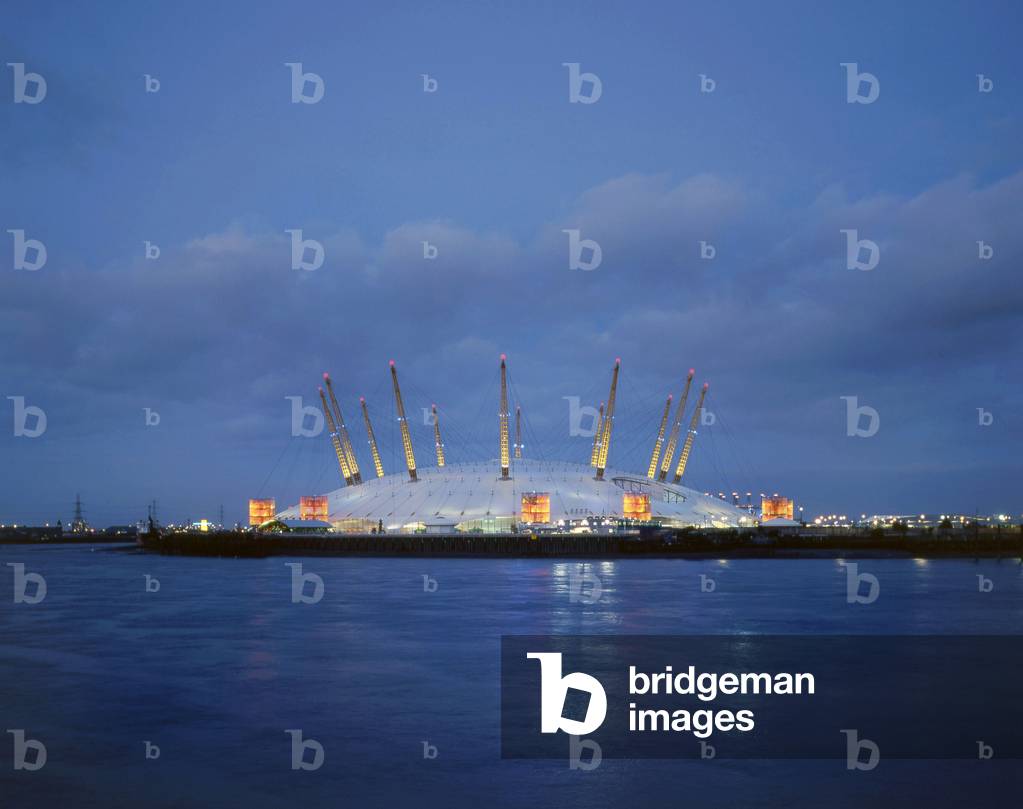
Millennium Dome - London - Richard Rogers - 1999 -

MDA4580909: Millennium Dome - London - Richard Rogers - 1999 -, Rogers, Richard (b.1933) / Bridgeman Images

Fort de Bellegarde, Fort Saint Louis, in Toulon in the Var. Construction 1778, plans by Sebastien Le Prestre de Vauban (1633-1707).

ITR4580066: Fort de Bellegarde, Fort Saint Louis, in Toulon in the Var. Construction 1778, plans by Sebastien Le Prestre de Vauban (1633-1707). / Bridgeman Images

Dunes near the north pole on Mars - Dunes at North Polar Cap on Mars: Image obtained on March 26, 2014 by the HIRISE camera on board the Mars Reconnaissance orbiter probe. HIRISE is a 50 cm telescope that observes visible and near infrared. Formative down-slope winds descending on Mars' North Polar ice cap likely play an important role in transporting sediment from the base of the ice cap into the dune fields that sit beyond the ice cap. The deep chasm that formed on the polar cap edge is identified as an area of strong down-slope winds and has a clear connection to Mars' largest dune field, Olympia Undae. Repeat HiRise images from this chasm that specifically targets the dunes, provides the basis to evaluate the sand fluxes which are associated with the dune and ripple movement in this area

PIX4580075: Dunes near the north pole on Mars - Dunes at North Polar Cap on Mars: Image obtained on March 26, 2014 by the HIRISE camera on board the Mars Reconnaissance orbiter probe. HIRISE is a 50 cm telescope that observes visible and near infrared. Formative down-slope winds descending on Mars' North Polar ice cap likely play an important role in transporting sediment from the base of the ice cap into the dune fields that sit beyond the ice cap. The deep chasm that formed on the polar cap edge is identified as an area of strong down-slope winds and has a clear connection to Mars' largest dune field, Olympia Undae. Repeat HiRise images from this chasm that specifically targets the dunes, provides the basis to evaluate the sand fluxes which are associated with the dune and ripple movement in this area / Bridgeman Images

The coldest place on Mars - Coolest place on Mars: Detail of the ice cap of the southern pole of Mars, composed mainly of carbon dioxide. This dry ice accumulates on the surface mainly in winter, the temperature of this area can sometimes drop to 130 degrees Celsius below zero. Image obtained on August 29, 2016 by the HIRISE camera on board the Mars Reconnaissance orbiter probe. HIRISE is a 50 cm telescope that observes visible and near infrared. The polar cap is made from carbon dioxide (dry ice), which does not occur naturally on the Earth. The circular pits are holes in this dry ice layer that expand by a few meters each Martian year. New dry ice is constantly being added to this landscape by freezing directly out of the carbon dioxide atmosphere or falling as snow. Freezing out the atmosphere like this limits how cold the surface can get to the frost point at -130 degrees Celsius (-200 F). Nowhere on Mars can ever get any colder this, making this coolest landscape on Earth and Mars combined

PIX4580080: The coldest place on Mars - Coolest place on Mars: Detail of the ice cap of the southern pole of Mars, composed mainly of carbon dioxide. This dry ice accumulates on the surface mainly in winter, the temperature of this area can sometimes drop to 130 degrees Celsius below zero. Image obtained on August 29, 2016 by the HIRISE camera on board the Mars Reconnaissance orbiter probe. HIRISE is a 50 cm telescope that observes visible and near infrared. The polar cap is made from carbon dioxide (dry ice), which does not occur naturally on the Earth. The circular pits are holes in this dry ice layer that expand by a few meters each Martian year. New dry ice is constantly being added to this landscape by freezing directly out of the carbon dioxide atmosphere or falling as snow. Freezing out the atmosphere like this limits how cold the surface can get to the frost point at -130 degrees Celsius (-200 F). Nowhere on Mars can ever get any colder this, making this coolest landscape on Earth and Mars combined / Bridgeman Images

Angelica and the Hermit. From Orlando Furioso (Painting, 1616)

LRI4580111: Angelica and the Hermit. From Orlando Furioso (Painting, 1616), Rubens, Peter Paul (1577-1640) / Bridgeman Images

Photographing the Milky Way - Photographing the Milky Way - An astrophotographer photographs the lactee lane in Yellowstone Park. An astrophotographer images the Milky Way close to Old Faithful Village in Yellowstone National Park

PIX4580112: Photographing the Milky Way - Photographing the Milky Way - An astrophotographer photographs the lactee lane in Yellowstone Park. An astrophotographer images the Milky Way close to Old Faithful Village in Yellowstone National Park / Bridgeman Images

La Porte Royale de La Citadelle de Lille (Nord Pas de Calais). Construction 1670 on the plans of Sebastien Le Prestre de Vauban (1633-1707).

ITR4580161: La Porte Royale de La Citadelle de Lille (Nord Pas de Calais). Construction 1670 on the plans of Sebastien Le Prestre de Vauban (1633-1707). / Bridgeman Images

The pediment of the Porte Royale de La Citadelle de Lille (Nord Pas de Calais). Construction 1670 on the plans of Sebastien Le Prestre de Vauban (1633-1707).

ITR4580176: The pediment of the Porte Royale de La Citadelle de Lille (Nord Pas de Calais). Construction 1670 on the plans of Sebastien Le Prestre de Vauban (1633-1707). / Bridgeman Images

La dam du Fort de Querqueville (1786) à Cherbourg (Manche, Normandy).

ITR4580206: La dam du Fort de Querqueville (1786) à Cherbourg (Manche, Normandy). / Bridgeman Images

Circumpolar - Star trails around north celestial pole - Photographic pose around the polar star. Organ Pipe National Monument, Aizona, USA. The setting for this star trails photo is the pristine desert landscape of the Organ Pipe National Monument in Southern Arizona. The cactus in the foreground is a 25 foot tall Seguaro. Star trails are made by the combination of: the spinning of the Earth, the use of a stationary mount or tripod and a long exposure of the film. As the Earth spins, the stars begin to make concentric circles on the photograph. The closer stars are to Polaris, our North pole star, the smaller their circles. Thar farther away they are, the larger their circles

PIX4580210: Circumpolar - Star trails around north celestial pole - Photographic pose around the polar star. Organ Pipe National Monument, Aizona, USA. The setting for this star trails photo is the pristine desert landscape of the Organ Pipe National Monument in Southern Arizona. The cactus in the foreground is a 25 foot tall Seguaro. Star trails are made by the combination of: the spinning of the Earth, the use of a stationary mount or tripod and a long exposure of the film. As the Earth spins, the stars begin to make concentric circles on the photograph. The closer stars are to Polaris, our North pole star, the smaller their circles. Thar farther away they are, the larger their circles / Bridgeman Images

View of Avignon, 1930 (oil on canvas)

JLJ4580242: View of Avignon, 1930 (oil on canvas), Lhote, Andre (1885-1962) / Bridgeman Images

Circumpolar - Circumpolar - Photographic pose showing the apparent rotation of stars around the polar star. Church of Champaubert, on the shore of Lake Der, in the Marne. Long exposure image of starry sky around the pole star

PIX4580992: Circumpolar - Circumpolar - Photographic pose showing the apparent rotation of stars around the polar star. Church of Champaubert, on the shore of Lake Der, in the Marne. Long exposure image of starry sky around the pole star / Bridgeman Images

Circumpolar - South Hemisphere - Star trails around the south celestial pole - 10h30 photographic installation on 400 ISO film around the south celeste pole. Siding Spring's 3.9m telescope dome in the foreground. By pointing a camera towards the south (or to the north in the northern hemisphere) at night, we can record the paths of stars which never set. They appear to circle the apparent position of the Earth's axis of rotation projected on the sky. The elevation of this position above the local horizon indicates our local geographical latitude, about 30 degrees south at Siding Spring. The angle swept out by the arcs is an indication of the exposure time, which was about 10.5 hours on 400 ISO colour film. This kind of exposure is only possible from an extremely dark site

PIX4581074: Circumpolar - South Hemisphere - Star trails around the south celestial pole - 10h30 photographic installation on 400 ISO film around the south celeste pole. Siding Spring's 3.9m telescope dome in the foreground. By pointing a camera towards the south (or to the north in the northern hemisphere) at night, we can record the paths of stars which never set. They appear to circle the apparent position of the Earth's axis of rotation projected on the sky. The elevation of this position above the local horizon indicates our local geographical latitude, about 30 degrees south at Siding Spring. The angle swept out by the arcs is an indication of the exposure time, which was about 10.5 hours on 400 ISO colour film. This kind of exposure is only possible from an extremely dark site / Bridgeman Images

Circumpolar - South Hemisphere - South celestial pole star trails - Photographic pose of several hours around the south celeste pole. As the earth spins beneath the stars they appear to move across the sky from east to west. However, if one looks in the direction of the celestial poles, the stars appear to circle a single point on the sky. This is the position of the earth's axis of rotation projected into space. This picture was made from Siding Spring Observatory in Australia, so the pivotal point is 30 degrees above the northern horizon, which is the geographical latitude of Siding Spring. In the northern sky there is a bright star very close to the celestial pole. By contrast the region of the south celestial pole is barren

PIX4581110: Circumpolar - South Hemisphere - South celestial pole star trails - Photographic pose of several hours around the south celeste pole. As the earth spins beneath the stars they appear to move across the sky from east to west. However, if one looks in the direction of the celestial poles, the stars appear to circle a single point on the sky. This is the position of the earth's axis of rotation projected into space. This picture was made from Siding Spring Observatory in Australia, so the pivotal point is 30 degrees above the northern horizon, which is the geographical latitude of Siding Spring. In the northern sky there is a bright star very close to the celestial pole. By contrast the region of the south celestial pole is barren / Bridgeman Images

Portrait of President Felix Faure 19th century (sculpture)

JLJ4581122: Portrait of President Felix Faure 19th century (sculpture), Unknown Artist, (19th century) / Bridgeman Images

The Potsdamer Platz in Berlin, Germany.

TEC4581366: The Potsdamer Platz in Berlin, Germany. / Bridgeman Images

Star Line - The constellation of Orion - Star trails - The constellation of Orion - Because of the Earth's rotation, leaving the camera open, the stars advance towards the background of the sky. During the installation, gradually changing the focal length of the lens, the stars spread out and reveal their true color. Here is the constellation of Orion photographed in this way during a 30-minute installation in ISO 400. Here one sees the stars of the constellation of Orion recorded in an exposure of about 30 minutes, during which time the lens focus was moved from infinity to about 1 meter in a series of 10 steps about three minutes apart. The effect is to reveal the star colours and that of the vivid red Orion nebula

PIX4581422: Star Line - The constellation of Orion - Star trails - The constellation of Orion - Because of the Earth's rotation, leaving the camera open, the stars advance towards the background of the sky. During the installation, gradually changing the focal length of the lens, the stars spread out and reveal their true color. Here is the constellation of Orion photographed in this way during a 30-minute installation in ISO 400. Here one sees the stars of the constellation of Orion recorded in an exposure of about 30 minutes, during which time the lens focus was moved from infinity to about 1 meter in a series of 10 steps about three minutes apart. The effect is to reveal the star colours and that of the vivid red Orion nebula / Bridgeman Images

Paleochretian art: carved sarcophagus representing Christ with the apoters, from the Basilica of St. Peter in Rome, mausolee of the Anicii, 390-400 AD (low relief)

JLJ4581440: Paleochretian art: carved sarcophagus representing Christ with the apoters, from the Basilica of St. Peter in Rome, mausolee of the Anicii, 390-400 AD (low relief), Paleo-Christian, (5th century) / Bridgeman Images

Zodiacal lights in the morning and evening - Zodiacal lights - morning and evening - The visible glow in the sky is called the zodiacal light. It comes from the reflection of the light of the Sun on the countless interplanetary dust; it draws the plane of the Solar System. At the top, on the morning of 1 November 2006, the light is tilted to the right (south); below, on 9 March 2007 at sunset, this light is tilted to the left (south). The faint cone of light extending from the horizon along the ecliptic is known as zodiacal light. It comes from the reflexion of the sun's light off tiny interplanetary dust particles in the plane of the solar system. Top, November 1st 2006 in the morning, zodiacal light is leaning right (south); bottom, March 9 2007, sunset, zodiacal light towards left (south)

PIX4581524: Zodiacal lights in the morning and evening - Zodiacal lights - morning and evening - The visible glow in the sky is called the zodiacal light. It comes from the reflection of the light of the Sun on the countless interplanetary dust; it draws the plane of the Solar System. At the top, on the morning of 1 November 2006, the light is tilted to the right (south); below, on 9 March 2007 at sunset, this light is tilted to the left (south). The faint cone of light extending from the horizon along the ecliptic is known as zodiacal light. It comes from the reflexion of the sun's light off tiny interplanetary dust particles in the plane of the solar system. Top, November 1st 2006 in the morning, zodiacal light is leaning right (south); bottom, March 9 2007, sunset, zodiacal light towards left (south) / Bridgeman Images

Paleochretian art: stone adorned with a cross, From Kharg Island, Iran (stone)

JLJ4581527: Paleochretian art: stone adorned with a cross, From Kharg Island, Iran (stone), Paleo-Christian / Bridgeman Images

The zodiacal light - The zodiacal light - The zodiacal light during astronomical dusk rises above the western horizon at the time of the spring equinox. It extends to the Pleiades. It comes from the reflection of the Sun's light on the countless interplanetary dust and draws the plane of the Solar System. Gers - France, 18/03/2009. The faint cone of light extending from the horizon along the ecliptic is known as zodiacal light. It comes from the reflexion of the sun's light off tiny interplanetary dust particles in the plane of the solar system. One can see it here from the bottom right of the image to beyond the Pleiades cluster near the center of the image. Gers, France. March 18, 2009

PIX4581560: The zodiacal light - The zodiacal light - The zodiacal light during astronomical dusk rises above the western horizon at the time of the spring equinox. It extends to the Pleiades. It comes from the reflection of the Sun's light on the countless interplanetary dust and draws the plane of the Solar System. Gers - France, 18/03/2009. The faint cone of light extending from the horizon along the ecliptic is known as zodiacal light. It comes from the reflexion of the sun's light off tiny interplanetary dust particles in the plane of the solar system. One can see it here from the bottom right of the image to beyond the Pleiades cluster near the center of the image. Gers, France. March 18, 2009 / Bridgeman Images

The interior of the Palace of Parliament (1984) (formerly the House of the People) in Bucharest, Romania. The House of the People and the Boulevard of the Victory of the Socialist was inaugurated by Nicolas Ceaucescu on 25 June 1984. This pharaonic project is the second largest building in the world after the Pentagon - 45,000 m2 of floor area, 400,000 m2 of living space. To build this palace, one fifth of the city was razed. The palace is now the palace of the parliament now serves as a chamber of deputes and senators. Photography 10/10/05.

OMG4580708: The interior of the Palace of Parliament (1984) (formerly the House of the People) in Bucharest, Romania. The House of the People and the Boulevard of the Victory of the Socialist was inaugurated by Nicolas Ceaucescu on 25 June 1984. This pharaonic project is the second largest building in the world after the Pentagon - 45,000 m2 of floor area, 400,000 m2 of living space. To build this palace, one fifth of the city was razed. The palace is now the palace of the parliament now serves as a chamber of deputes and senators. Photography 10/10/05., Petrescu, Anca (1949-2013) / Bridgeman Images

Circumpolar and Niasar Temple - Circumpolar above Fire temple - Photographic pose showing the apparent rotation of stars around the polar star. Niasar Zoroastrist Temple. Iran. Northern stars trailing over this pre - Islamic fire temple in the village of Niasar, central Iran

PIX4580735: Circumpolar and Niasar Temple - Circumpolar above Fire temple - Photographic pose showing the apparent rotation of stars around the polar star. Niasar Zoroastrist Temple. Iran. Northern stars trailing over this pre - Islamic fire temple in the village of Niasar, central Iran / Bridgeman Images

Star line - Star trails - Long pose on the constellation of Orion that marks the Celestial Ecuador. Iran. Long exposure on the constellation of Orion. Iran

PIX4580796: Star line - Star trails - Long pose on the constellation of Orion that marks the Celestial Ecuador. Iran. Long exposure on the constellation of Orion. Iran / Bridgeman Images

Boulevard Unirii in Bucharest, Romania.

OMG4580836: Boulevard Unirii in Bucharest, Romania. / Bridgeman Images


Back to top