2491514 Search Results

JLJ4642650: The Depart of the Dragon, 1780 (oil on canvas), Garnier, Michel (1753-1829) / Bridgeman Images

JLJ4642006: Portrait of Jacques Boucher de Perthes (1788-1868) Director of Customs and Prehistorian (engraving), Anonymous / Bridgeman Images

LBY4641100: Immeuble Les Pins, 2 rue Albin Haller (Architect Emile Andre, 1912) in Nancy (Meurthe et Moselle). In Nancy, Art Nouveau takes the name of Ecole de Nancy, or Alliance provincial des industries d'art, thanks in particular to the emblematic figure of Emile Galle. Glassware, furniture, stained glass, ceramics, leather, ironwork, architecture, etc. participate in this vast movement of renovation of decorative arts that still marks the city today., André, Emile (1871-1933) / Bridgeman Images

LBY4640982: La Maison Ramel 25 rue Felix Faure (architect Emile Andre, 1904) in Nancy (Meurthe et Moselle). In Nancy, Art Nouveau takes the name of Ecole de Nancy, or Alliance provincial des industries d'art, thanks in particular to the emblematic figure of Emile Galle. Glassware, furniture, stained glass, ceramics, leather, ironwork, architecture, etc. participate in this vast movement of renovation of decorative arts that still marks the city today., André, Emile (1871-1933) / Bridgeman Images

LBY4640747: Stores Vaxelaire et PigNot, 52 à 57 rue St Dizier in Nancy (Meurthe et Moselle). Architect Lucien Weissenburger (1860-1929), 1913. In Nancy, Art Nouveau takes the name of Ecole de Nancy, or Alliance provincial des industries d'art, thanks in particular to the emblematic figure of Emile Galle. Glassware, furniture, stained glass, ceramics, leather, ironwork, architecture, etc., participate in this vast movement of renovation of decorative arts that still marks the city today., Weissenburger, Lucien (1860-1929) / Bridgeman Images

LBY4640445: The Lombard building, 69 Foch Avenue in Nancy (Meurthe and Moselle). Architect Emile Andre (1871-1933), 1903. In Nancy, Art Nouveau takes the name of Ecole de Nancy, or Alliance provincial des industries d'art, thanks in particular to the emblematic figure of Emile Galle. Glassware, furniture, stained glass, ceramics, leather, ironwork, architecture, etc., participate in this vast movement of renovation of decorative arts that still marks the city today., André, Emile (1871-1933) / Bridgeman Images

LBY4640478: Immeuble France Lanord, 71 avenue Foch in Nancy (Meurthe and Moselle). Architect Emile Andre (1871-1933), 1904. In Nancy, Art Nouveau takes the name of Ecole de Nancy, or Alliance provincial des industries d'art, thanks in particular to the emblematic figure of Emile Galle. Glassware, furniture, stained glass, ceramics, leather, ironwork, architecture, etc., participate in this vast movement of renovation of decorative arts that still marks the city today., André, Emile (1871-1933) / Bridgeman Images

LBY4641085: Villa Lang, Boulevard Clemenceau (architect Lucien Weissenburger, 1906) in Nancy (Meurthe et Moselle). In Nancy, Art Nouveau takes the name of Ecole de Nancy, or Alliance provincial des industries d'art, thanks in particular to the emblematic figure of Emile Galle. Glassware, furniture, stained glass, ceramics, leather, ironwork, architecture, etc. participate in this vast movement of renovation of decorative arts that still marks the city today., Weissenburger, Lucien (1860-1929) / Bridgeman Images

LBY4640563: Immeuble France Lanord et immeuble Lombar, 69 à 71 avenue Foch in Nancy (Meurthe et Moselle). Architect Emile Andre (1871-1933), 1903. In Nancy, Art Nouveau takes the name of Ecole de Nancy, or Alliance provincial des industries d'art, thanks in particular to the emblematic figure of Emile Galle. Glassware, furniture, stained glass, ceramics, leather, ironwork, architecture, etc., participate in this vast movement of renovation of decorative arts that still marks the city today., André, Emile (1871-1933) / Bridgeman Images

LBY4640620: An architect's house, 12 a 14 rue Mal Gerard (architect Felicien Cesar, 1910) in Nancy (Meurthe and Moselle). In Nancy, Art Nouveau takes the name of Ecole de Nancy, or Alliance provincial des industries d'art, thanks in particular to the emblematic figure of Emile Galle. Glassware, furniture, stained glass, ceramics, leather, ironwork, architecture, etc. participate in this vast movement of renovation of decorative arts that still marks the city today., César, Félicien (1849-1930) / Bridgeman Images

LBY4640976: Les Maisons Pain, 24 a 30 rue Felix Faure (Architect Cesar Pain, 1904-1909) in Nancy (Meurthe et Moselle). In Nancy, Art Nouveau takes the name of Ecole de Nancy, or Alliance provincial des industries d'art, thanks in particular to the emblematic figure of Emile Galle. Glassware, furniture, stained glass, ceramics, leather, ironwork, architecture, etc. participate in this vast movement of renovation of decorative arts that still marks the city today., Pain, César (1872-1946) / Bridgeman Images

LRI4641268: Two athletes playing pugilat (boxing) Lucanian fresco from the 4th century BC, from the necropolis of Paestum, Italy. Museo nazionale archeologico, Paestum, Lucanian School, (4th century BC) / Bridgeman Images

LRI4644351: Commedia dell'arte: traditional Neapolitan costume: mask of pulcinella - (Pulcinella mask drinking) Museo Nazionale di San Martino Naples, Italian School, (19th century) / Bridgeman Images

LRI4642181: Laocoon (fresco, 1st century AD), Roman, (1st century AD) / Bridgeman Images

LRI4642231: Wedding of Zephyrus and goddess Chloris (fresco, 45-79 AD), Roman, (1st century AD) / Bridgeman Images

LRI4643818: Peasants of Barletta, Italy - (peasant women from Barletta) Detail Painting by Jacob Philipp Hackert dit Hackert d'Italie (1737-1807) 18th century - Museo Nazionale di San Martino Naples, Hackert, Jacob-Philippe (1737-1807) / Bridgeman Images

FLO4644565: Lumpfish or lumpsucker, Cyclopterus lumpus, Clycoptere lumpus. Handcoloured copperplate stipple engraving from Jussieu's “” Dictionary of Natural Sciences”” 1816-1830. The volumes on fish and reptiles were edited by Hippolyte Cloquet, natural historian and doctor of medicine. / Bridgeman Images

FLO4642256: Common barberry (vinetier) - Lithography by F. Guimpel, extracted from medical botanical by Friedrich Gottlob Haynes (1763-1832), Berlin, 1822 - Berberis vulgaris - Handcoloured copperplate by F. Guimpel from Dr. F. G. Hayne's Medical Botany, Berlin, 1822 / Bridgeman Images
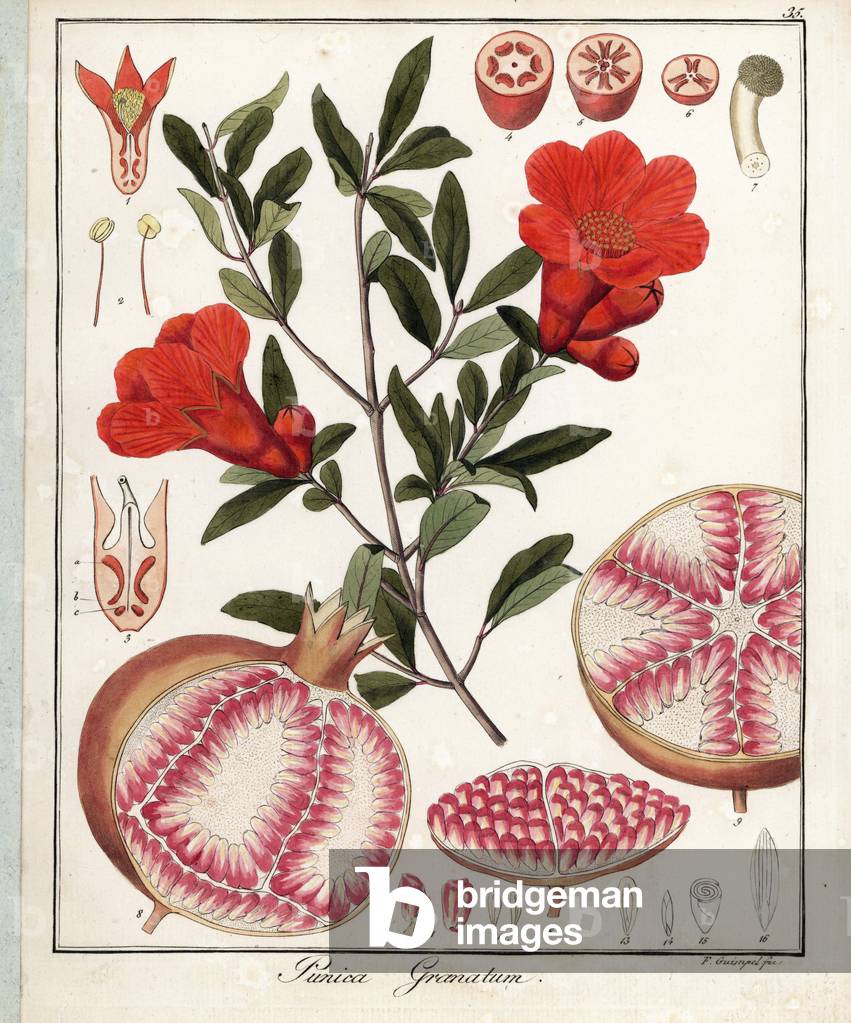
FLO4642719: Common Grenadier - Lithograph by F. Guimpel, extracted from botanical medicine by Friedrich Gottlob Haynes (1763-1832), Berlin, 1822 - Pomegranate, Punica granatum - Handcoloured copperplate by F. Guimpel from Dr. F. G. Hayne's Medical Botany, Berlin, 1822 / Bridgeman Images

FLO4642497: Ferruginous rhododendron or pink laurel of the Alps - Lithography by F. Guimpel, extracted from medical botanical by Friedrich Gottlob Haynes (1763-1832), Berlin, 1822 - Alpenrose or snow-rose, Rhododendron ferrugineum - Handcoloured copperplate by F. Guimpel from Dr. F. G. Hayne's Medical Botany, Berlin, Berlin, 1822 / Bridgeman Images

FLO4643612: Tapestry around 1380-1430, with a couple riding in front of a castle, another couple courting and characters serving food in dishes - Chromolithography, drawing by Jakob Heinrich von Hefner-Alteneck (1811-1903), for his book “Costumes, crafts and instruments of the Middle Ages at the end of the 18th century”, published by Heinrich Keller, Frankfurt, 1883 / Bridgeman Images

FLO4640697: Jamaican woodpecker, Melanerpes radiolatus. Handcoloured copperplate engraving after an original illustration by George Edwards from “The Naturalist's Pocket Magazine,”” Harrison, London, 1799. / Bridgeman Images

FLO4644352: Noble women of Senez, Provence, one riding sidesaddle with a page, and another walking with a boy (top) and German women of the same era from Jost Amman's playing cards. 1560-1600. Chromolithograph from Hefner-Alteneck's Costumes, Artworks and Appliances from the Middle Ages to the 17th Century, Frankfurt, 1889. Illustration by Dr. Jakob Heinrich von Hefner-Alteneck, lithographed by C. Regnier. Dr. Hefner-Alteneck (1811-1903) was a German museum curator, archaeologist, art historian, illustrator and etcher., Amman, Jost (1539-91) / Bridgeman Images

FLO4642832: Common lysimac. Coloured copper engraving, in Botanique Medicinale (published in Berlin, Germany, 1822) by Doctor Friedrich Gottlob Haynes (1763-1832), German botanist and pharmacist. Garden loosestrife, Lysimachia vulgaris. Handcoloured copperplate engraving from Dr. Friedrich Gottlob Hayne's “” Getreue Darstellung und Beschreibung der in der Arzneykunde Gebrauchilchen Gewachse”” (Medical Botany), Berlin, 1822. Hayne (1763-1832) was a German botanist, apothecary and, from 1814, professor of pharmaceutical botany at Berlin University. / Bridgeman Images

FLO4642685: Common myrth or lagoon grass - Lithography by F. Guimpel, extracted from medical botany by Friedrich Gottlob Haynes (1763-1832), Berlin, 1822 - Common or true myrtle, Myrtus communis - Handcoloured copperplate by F. Guimpel from Dr. F. G. Hayne's Medical Botany, Berlin, 1822 / Bridgeman Images

FLO4642069: Petite cigue ou cigue des jardins - Lithograph by F. Guimpel, extracted from botanique medicale by Friedrich Gottlob Haynes (1763-1832), Berlin, 1822 - Fool's cicely or poison parsley, Aethusa cynapium - Handcoloured copperplate by F. Guimpel from Dr. F. G. Hayne's Medical Botany, Berlin, 1822 / Bridgeman Images

FLO4640704: Elephant beetle, Megasoma elephas. Illustration based on a specimen in the Leverian Museum. Handcoloured copperplate engraving from “” The Naturalist's Pocket Magazine,”” Harrison, London, 1798. / Bridgeman Images

FLO4643828: Costume of a noble lady from the beginning of the 15th century, she wears a wide beaded headdress and a dress with long embroidered sleeves - From a playing card from the Royal Library of Stuttgart (Germany) - Chromolithography, drawing by Jakob Heinrich von Hefner-Alteneck (1811-1903), for her book “Costumes, crafts and instruments of the Middle Ages the end of the 18th century””, published by Heinrich Keller, Frankfurt, 1883 / Bridgeman Images

FLO4643212: Secretarybird, Sagittarius serpentarius. Vulnerable. (Falco serpentarius) Handcoloured copperplate engraving of an illustration by William Hayes from Portraits of Rare and Curious Birds from the Menagery of Osterly Park., Hayes, William (1735-1802) / Bridgeman Images
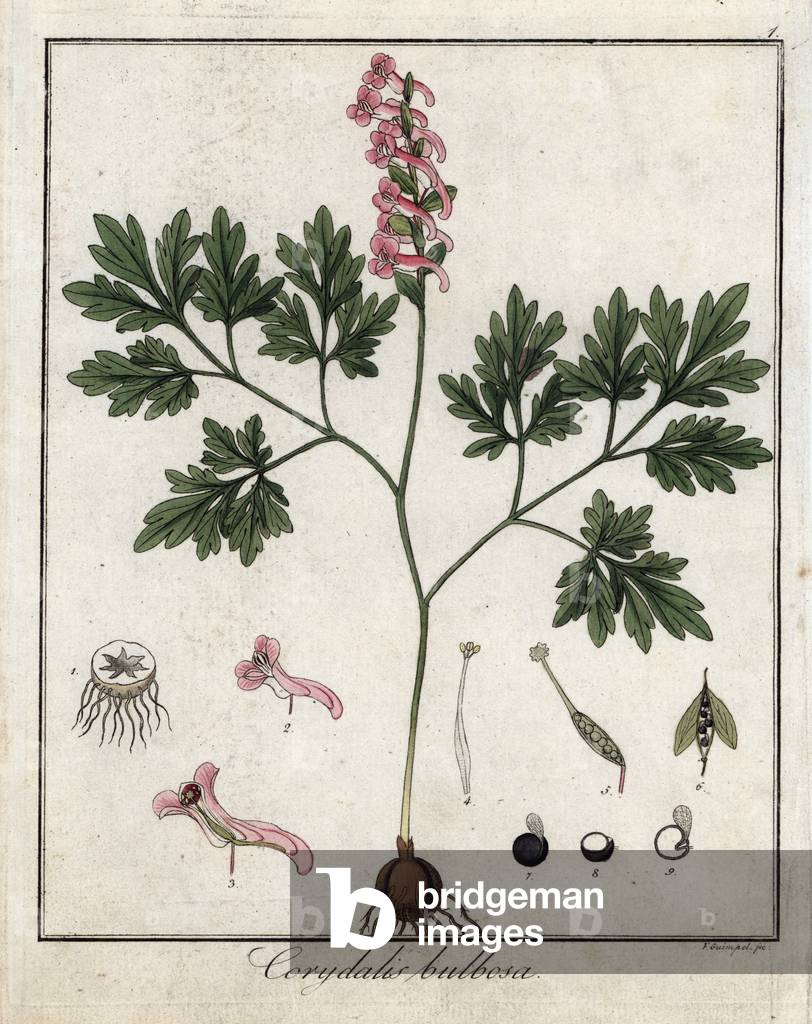
FLO4641660: Full bulb corydale - Lithograph by F. Guimpel, extracted from medical botanical by Friedrich Gottlob Haynes (1763-1832), Berlin, 1822 - Fumewort, Corydalis solida - Handcoloured copperplate by F. Guimpel from Dr. F. G. Hayne's Medical Botany, Berlin, 1822 / Bridgeman Images

FLO4640554: Banded cotinga, Cotinga maculata, male. (Purple-breasted blue manakin) Endangered. Copied from George Edwards “Natural History of Birds,” 1749. Handcoloured copperplate engraving from “” The Naturalist's Pocket Magazine,”” Harrison, London, 1799. / Bridgeman Images
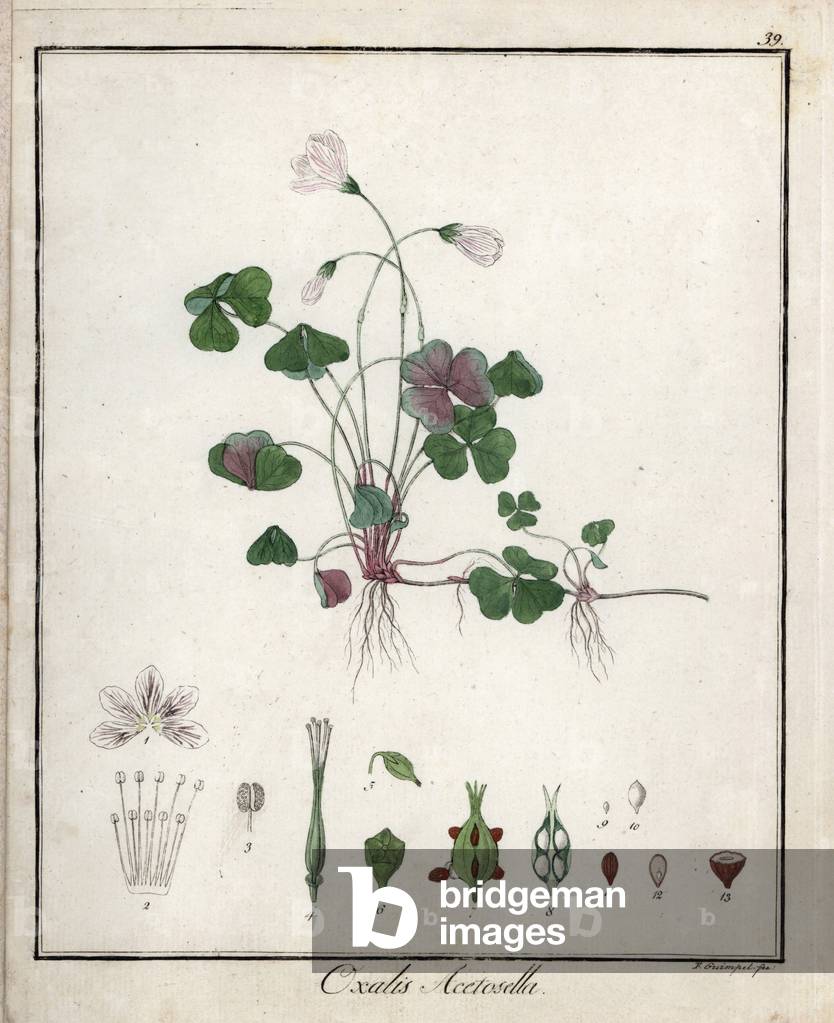
FLO4641950: Wood Sorrel or Wood Oxalide - Lithography by F. Guimpel, extracted from medical botanical by Friedrich Gottlob Haynes (1763-1832), Berlin, 1822 - Wood sorrel, Oxalis acetosella - Handcoloured copperplate by F. Guimpel from Dr. F. G. Hayne's Medical Botany, Berlin, 1822 / Bridgeman Images

FLO4644059: German cup made out of a nautilus shell decorated with gilded silver nautical ornaments, mid 16th century. Chromolithograph from Hefner-Alteneck's Costumes, Artworks and Appliances from the Middle Ages to the 17th Century, Frankfurt, 1889. Illustration by Dr. Jakob Heinrich von Hefner-Alteneck, lithographed by Heinrich Keller. Dr. Hefner-Alteneck (1811-1903) was a German museum curator, archaeologist, art historian, illustrator and etcher. / Bridgeman Images

FLO4644854: Shark, Selachimorpha, shark. Handcoloured copperplate stipple engraving from Jussieu's “” Dictionary of Natural Sciences”” 1816-1830. The volumes on fish and reptiles were edited by Hippolyte Cloquet, natural historian and doctor of medicine. Illustration by J.G. Pretre, engraved by Joyau, directed by Turpin, and published by F. G. Lévrault. / Bridgeman Images

FLO4640462: Yak, Bos grunniens and Bos mutus. (Grunting ox, Bos gruniens). Vulnerable. Handcoloured copperplate engraving from “” The Naturalist's Pocket Magazine,”” Harrison, London, 1799. / Bridgeman Images

FLO4641069: Purple Indian creeper, Cinnyris asiaticus. Illustration copied from George Edwards. Handcoloured copperplate engraving from “” The Naturalist's Pocket Magazine,”” Harrison, London, 1802. / Bridgeman Images
