Search options

Orientation
Colour

Display options

View

Print

To print search results, use print friendly version of this page.

2501809 Search Results

High technology in 1928 was the NY Stock Exchange's new quotation system. Photo shows men with headphones and mouthpieces working in the new quotation room

EVB2934460: High technology in 1928 was the NY Stock Exchange's new quotation system. Photo shows men with headphones and mouthpieces working in the new quotation room / Bridgeman Images

Homeless poor in Donovan Lane, near the Five Points slum neighborhood in New York City. 1872

EVB2934487: Homeless poor in Donovan Lane, near the Five Points slum neighborhood in New York City. 1872 / Bridgeman Images

New York City's Municipal Lodging House for the homeless had a new formaldehyde and steam disinfecting plant. While tenants showered, their clothes were treated to prevent the spread of pests and disease. 1910

EVB2934490: New York City's Municipal Lodging House for the homeless had a new formaldehyde and steam disinfecting plant. While tenants showered, their clothes were treated to prevent the spread of pests and disease. 1910, Bain, George Grantham - Bain News Service (1865-1944) / Bridgeman Images

The Exchange and Girards bank in Philadelphia, 1839. In 1831, architect William Strickland designed the new Philadelphia Merchant's Exchange (center). At far right is Girards bank, in the building that formerly housed the First Bank of the United States

EVB2934520: The Exchange and Girards bank in Philadelphia, 1839. In 1831, architect William Strickland designed the new Philadelphia Merchant's Exchange (center). At far right is Girards bank, in the building that formerly housed the First Bank of the United States / Bridgeman Images

Jay Gould (1835-1892), American financier, and the most ruthless of the 'robber barons.' He used stock purchases to take control of existing companies, and eventually selling out at great profit. c. 1875

EVB2934529: Jay Gould (1835-1892), American financier, and the most ruthless of the 'robber barons.' He used stock purchases to take control of existing companies, and eventually selling out at great profit. c. 1875 / Bridgeman Images

THE EMPIRE'S STRENGTH, DO YOU KNOW THAT THE COLONIES..., 1939 (poster)

EVB2934586: THE EMPIRE'S STRENGTH, DO YOU KNOW THAT THE COLONIES..., 1939 (poster) / Bridgeman Images

Future First Lady Betty Ford, then a 23-year old Calla Travis Dance School instructor, takes a sensuous pose in a benefit performance of 'Fantasy.' She is wearing a costume she designed consisting of a grey satin skirt and leotard with magenta sash and gloves

EVB2934677: Future First Lady Betty Ford, then a 23-year old Calla Travis Dance School instructor, takes a sensuous pose in a benefit performance of 'Fantasy.' She is wearing a costume she designed consisting of a grey satin skirt and leotard with magenta sash and gloves / Bridgeman Images

Paris at the height of the 'Mississippi Bubble,' in 1720. John Law promoted shares in his Mississippi Land Company, causing a 400% price increase from January to May. The stock price declined to its original price in Dec. 1720, leaving many impoverished. Engraving by Eugene Guenin after painting by Edward Matthew Ward

EVB2934513: Paris at the height of the 'Mississippi Bubble,' in 1720. John Law promoted shares in his Mississippi Land Company, causing a 400% price increase from January to May. The stock price declined to its original price in Dec. 1720, leaving many impoverished. Engraving by Eugene Guenin after painting by Edward Matthew Ward / Bridgeman Images

Henry C. Frick (1849-1919), American steel maker and partner of Andrew Carnegie. He built a private collections of European paintings, now housed in his former mansion in New York

EVB2934528: Henry C. Frick (1849-1919), American steel maker and partner of Andrew Carnegie. He built a private collections of European paintings, now housed in his former mansion in New York, Sarony, Napoleon (1821-96) / Bridgeman Images

Senator Clarence C. Dill of Washington state, holding one of the wooden dollars used by town of Tenino, Washington. It' citizens made their own local money to compensate for the drastic decrease in U.S. money supply during the Great Depression. 1932

EVB2934537: Senator Clarence C. Dill of Washington state, holding one of the wooden dollars used by town of Tenino, Washington. It' citizens made their own local money to compensate for the drastic decrease in U.S. money supply during the Great Depression. 1932 / Bridgeman Images

Small tanks are positioned along Pennsylvania Avenue allowing mounted police to hold their ground against Bonus Marchers. The Capitol building stands a short distance behind them. Washington, D.C. July 1932

EVB2934594: Small tanks are positioned along Pennsylvania Avenue allowing mounted police to hold their ground against Bonus Marchers. The Capitol building stands a short distance behind them. Washington, D.C. July 1932 / Bridgeman Images

German street sweepers taking lunchtime nap. Wartime and defeat took a terrible economic toll on Germany. c. 1919

EVB2934615: German street sweepers taking lunchtime nap. Wartime and defeat took a terrible economic toll on Germany. c. 1919 / Bridgeman Images

Great Depression Hooverville in lower Manhattan. 1932

EVB2934618: Great Depression Hooverville in lower Manhattan. 1932 / Bridgeman Images

Ford Motor Company's luxury car, the Lincoln, in front of the Capitol, Washington D.C., c.1925 (b/w photo)

EVB2934633: Ford Motor Company's luxury car, the Lincoln, in front of the Capitol, Washington D.C., c.1925 (b/w photo) / Bridgeman Images

The slender 950 foot tower of 70 Pine Street (right mid-ground) was the last of the Jazz Age skyscrapers in Manhattan's Financial District. After the destruction of the World Trade Center, it became the third highest building in New York City. Photo c. 1930

EVB2934648: The slender 950 foot tower of 70 Pine Street (right mid-ground) was the last of the Jazz Age skyscrapers in Manhattan's Financial District. After the destruction of the World Trade Center, it became the third highest building in New York City. Photo c. 1930 / Bridgeman Images

First Lady Betty Ford and the family's pet golden retriever, Liberty, watch over her eight puppies on the South Lawn of the White House. October 5, 1975. Photo by David Hume Kennerly

EVB2934666: First Lady Betty Ford and the family's pet golden retriever, Liberty, watch over her eight puppies on the South Lawn of the White House. October 5, 1975. Photo by David Hume Kennerly, Kennerly, David Hume (b.1947) / Bridgeman Images

Official Portrait of First Lady Nancy Reagan. February 1, 1983

EVB2934684: Official Portrait of First Lady Nancy Reagan. February 1, 1983 / Bridgeman Images

African American children learning about Thanksgiving, with model log cabin on table, Whittier Primary School, Hampton, Virginia. The Whittier School was established during Reconstruction to provide primary education for black and Indian children. c. 1899

EVB2934699: African American children learning about Thanksgiving, with model log cabin on table, Whittier Primary School, Hampton, Virginia. The Whittier School was established during Reconstruction to provide primary education for black and Indian children. c. 1899 / Bridgeman Images

George Washington Carver (1864-1943) an agricultural chemist developed new products of peanuts, sweet potatoes, and soybeans to encourage crop diversity in the American South. Cotton mono-culture exhausted the land, was often ruined by boll weevils, and left farmers at the mercy of flucturatin prices. 1937

EVB2934742: George Washington Carver (1864-1943) an agricultural chemist developed new products of peanuts, sweet potatoes, and soybeans to encourage crop diversity in the American South. Cotton mono-culture exhausted the land, was often ruined by boll weevils, and left farmers at the mercy of flucturatin prices. 1937 / Bridgeman Images

Booker T. Washington (1856-1915), African American educator and leader. c. 1900

EVB2934751: Booker T. Washington (1856-1915), African American educator and leader. c. 1900, American Photographer, (20th century) / Bridgeman Images

Sign of an experimentation station in Louisiana reads 'University of Louisiana and the Department of Agriculture, Cooperating.' New Deal farm programs continued under different names, with modified programs, throughout the 20th century, often in alliances with public universities. October 1938 photo by Russell Lee

EVB2934862: Sign of an experimentation station in Louisiana reads 'University of Louisiana and the Department of Agriculture, Cooperating.' New Deal farm programs continued under different names, with modified programs, throughout the 20th century, often in alliances with public universities. October 1938 photo by Russell Lee, Russell, Lee (1903-86) / Bridgeman Images

Ford Motor Company's luxury car, the Lincoln, at Capitol in Washington, D.C. This hard top coupe had seats for four to five passengers. c. 1925

EVB2934634: Ford Motor Company's luxury car, the Lincoln, at Capitol in Washington, D.C. This hard top coupe had seats for four to five passengers. c. 1925 / Bridgeman Images

President Ford and First Lady Betty Ford pause on the dance floor, during White House state dinner in honor of Egyptian President and Mrs. Anwar Sadat. October 27, 1975. Photo by Karl Schumacher

EVB2934667: President Ford and First Lady Betty Ford pause on the dance floor, during White House state dinner in honor of Egyptian President and Mrs. Anwar Sadat. October 27, 1975. Photo by Karl Schumacher / Bridgeman Images

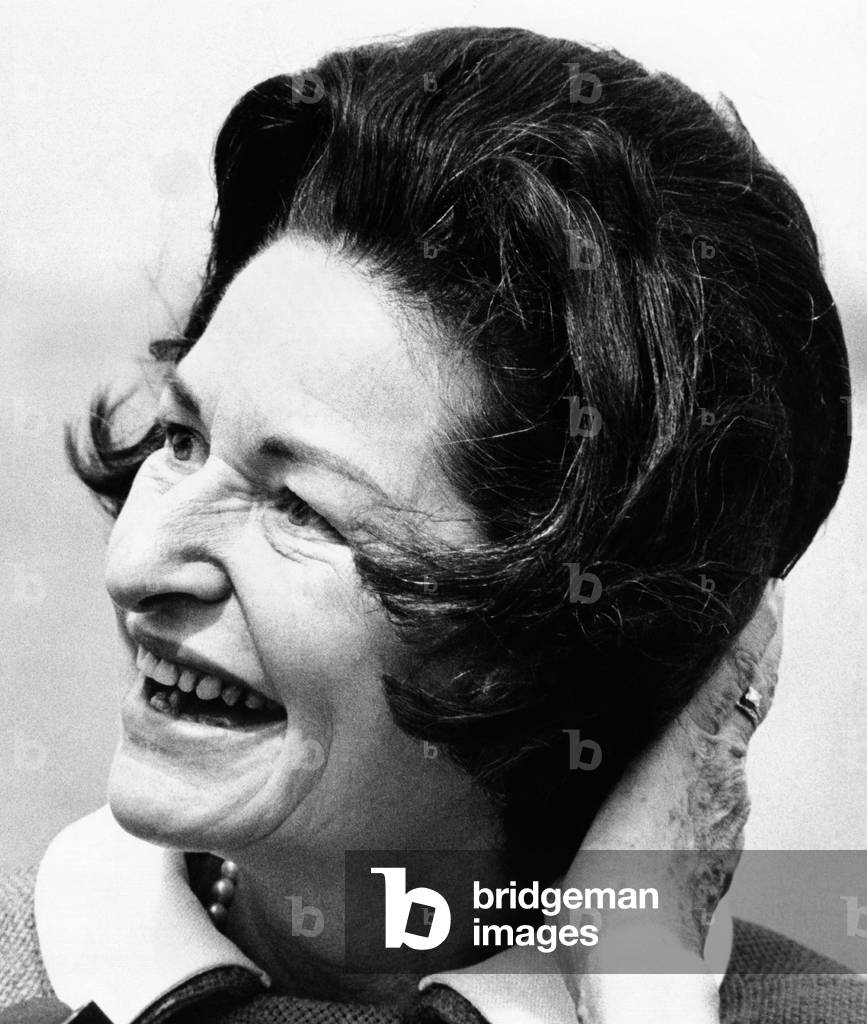
First Lady, Lady Bird Johnson, rafting down the Snake River with Morris Udall during her visit to Grand Teton National Park. Mrs. Johnson was an early environmentalist. 1964

EVB2934679: First Lady, Lady Bird Johnson, rafting down the Snake River with Morris Udall during her visit to Grand Teton National Park. Mrs. Johnson was an early environmentalist. 1964 / Bridgeman Images

New and faster stock tickers were available in the 1920's, but not fully introduced until after the 1929 Crash, when the old, glass covered tickers failed to keep up with trading volume. Photo shows a 1926 ticker made by Morkrum Kleinschmidt Corporation, Chicago, Ill

EVB2934558: New and faster stock tickers were available in the 1920's, but not fully introduced until after the 1929 Crash, when the old, glass covered tickers failed to keep up with trading volume. Photo shows a 1926 ticker made by Morkrum Kleinschmidt Corporation, Chicago, Ill / Bridgeman Images

Aerial view of Greenbelt, Maryland, the first model community planned by New Deal's work and relief programs authorized by the Federal Emergency Relief Act, signed on May 12. 1933, during Roosevelt's First Hundred Days. Photo of the completed housing taken in March 1937

EVB2934803: Aerial view of Greenbelt, Maryland, the first model community planned by New Deal's work and relief programs authorized by the Federal Emergency Relief Act, signed on May 12. 1933, during Roosevelt's First Hundred Days. Photo of the completed housing taken in March 1937 / Bridgeman Images

African American worker at an electric phosphate smelting furnace used to make elemental phosphorus for the World War II munitions. 1930's Tennessee Valley public works development provided needed industrial capacity for the 1940's war effort. Photo taken in TVA chemical plant near Muscle Shoals, Alabama in 1942

EVB2934821: African American worker at an electric phosphate smelting furnace used to make elemental phosphorus for the World War II munitions. 1930's Tennessee Valley public works development provided needed industrial capacity for the 1940's war effort. Photo taken in TVA chemical plant near Muscle Shoals, Alabama in 1942, Palmer, Alfred T. (1906-93) / Bridgeman Images

Idealized view of a plantation in the 'Sunny South', with African Americans picking cotton. The plantation has a cotton gin and packing building, owners mansion, workers' cabins, and a dock for loading cotton on river boats. 1883

EVB2935001: Idealized view of a plantation in the 'Sunny South', with African Americans picking cotton. The plantation has a cotton gin and packing building, owners mansion, workers' cabins, and a dock for loading cotton on river boats. 1883 / Bridgeman Images

James Weldon Johnson (right) and Robert R. Morton (left) at the funeral of Progressive mayor Seth Low in 1916. Johnson (1871-1938), was a Harlem Renaissance poet, author, educator, and civil rights activist. Robert R. Morton was the principal of Tuskegee Institute

EVB2934756: James Weldon Johnson (right) and Robert R. Morton (left) at the funeral of Progressive mayor Seth Low in 1916. Johnson (1871-1938), was a Harlem Renaissance poet, author, educator, and civil rights activist. Robert R. Morton was the principal of Tuskegee Institute / Bridgeman Images

Relief Families Aided by loans & grants from the Resettlement Administration, for livestock, for farm equipment, for home repairs - , 1936 (poster)

EVB2934864: Relief Families Aided by loans & grants from the Resettlement Administration, for livestock, for farm equipment, for home repairs - , 1936 (poster) / Bridgeman Images

For badly housed city workers & farmers the Resettlement Administration is Building Homes, 1933 (poster)

EVB2934867: For badly housed city workers & farmers the Resettlement Administration is Building Homes, 1933 (poster) / Bridgeman Images

Pickwick Dam's first turbine generators were the largest in the country when installed in the late 1930s. Pickwick was among the first TVA dams, begun in 1934

EVB2935011: Pickwick Dam's first turbine generators were the largest in the country when installed in the late 1930s. Pickwick was among the first TVA dams, begun in 1934 / Bridgeman Images

Abraham Lincoln portrait taken on February 9, during the election year of 1864. At this time, his re-election was far from certain. Many Northerners, derisively called 'Copperheads,' supported a negotiated peace with the Confederacy

EVB2935032: Abraham Lincoln portrait taken on February 9, during the election year of 1864. At this time, his re-election was far from certain. Many Northerners, derisively called 'Copperheads,' supported a negotiated peace with the Confederacy / Bridgeman Images

Abraham Lincoln portrait etching made in the early 20th century from Lincoln's classic Alexander Hesler portraits of 1860, by artist Otto J. Schneider (1875-1946)

EVB2935035: Abraham Lincoln portrait etching made in the early 20th century from Lincoln's classic Alexander Hesler portraits of 1860, by artist Otto J. Schneider (1875-1946) / Bridgeman Images

A long line of men and women line up in a run on the German American Bank of New York City. c. 1905-1915

EVB2934440: A long line of men and women line up in a run on the German American Bank of New York City. c. 1905-1915 / Bridgeman Images

Stock brokers working on the trading floor of the Stock Exchange. 1963

EVB2934461: Stock brokers working on the trading floor of the Stock Exchange. 1963 / Bridgeman Images


Back to top