2491546 Search Results

FLO4576194: Les metamorphoses du ver a soie - Metamorphosis of a silkworm, from young caterpillar, shedding skin, spinning silk cocoon, chrysalis stage, and emergence as moth. Handcoloured copperplate engraving from Bertuch's “” Bilderbuch fur Kinder”” (Picture Book for Children), Weimar, 1792. Friedrich Johann Bertuch (1747-1822) was a German publisher and man of arts most famous for his 12-volume encyclopedia for children illustrated with 1,200 engraved plates on natural history, science, costume, mythology, etc., published from 1790-1830. / Bridgeman Images

LRI4576341: Glass manufacturing workshops. (Painting, 1570-1572), Butteri, Giovanni Maria (c.1540-1606) / Bridgeman Images

LRI4576350: The Forge of Vulcan (Painting, 1570-1572), Casini, Vittorio (fl.c.1570-72) / Bridgeman Images
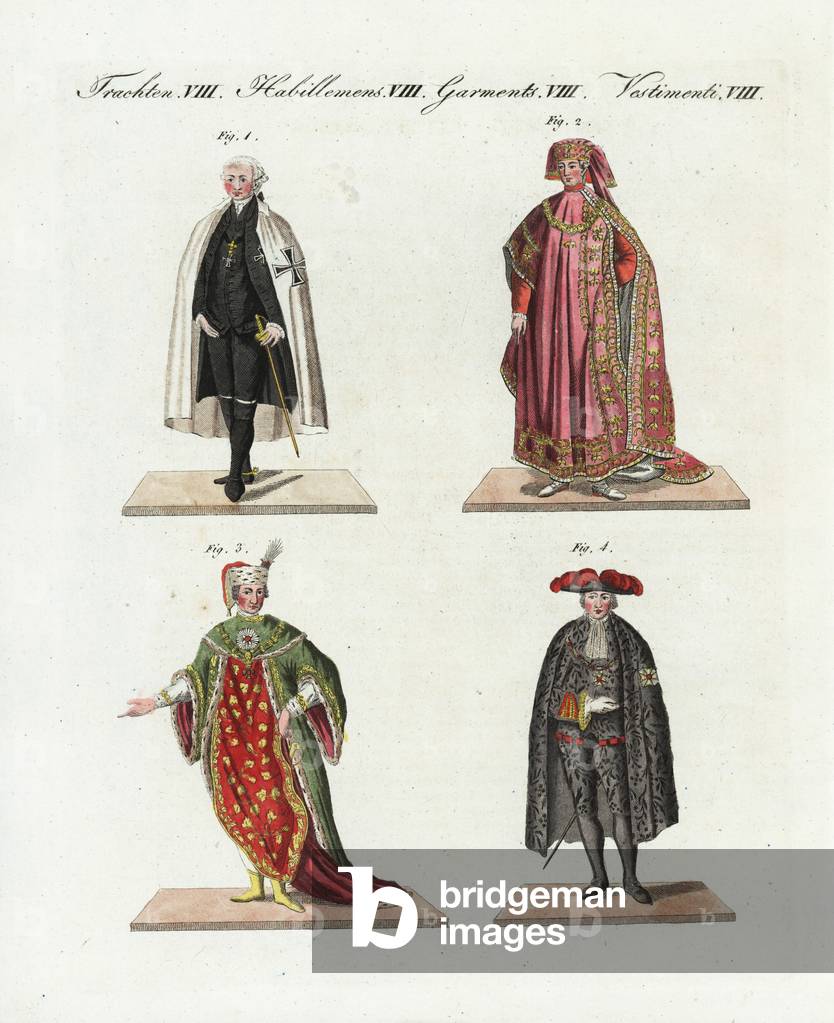
FLO4575927: Orders of Chivalry: Teutonic Knight 1, Order of the Golden Fleece 2, Royal Hungarian Order of St. Stephen 3, Bavarian Order of St. Hubert 4. Handcoloured copperplate engraving from Bertuch's “” Bilderbuch fur Kinder”” (Picture Book for Children), Weimar, 1805. Friedrich Johann Bertuch (1747-1822) was a German publisher and man of arts most famous for his 12-volume encyclopedia for children illustrated with 1,200 engraved plates on natural history, science, costume, mythology, etc., published from 1790-1830. / Bridgeman Images

TEC4576035: The Pantheon has Rome, Italy. Religious edifice of ancient Rome which was originally the temple of all the deities of ancient religion, transformed into a Christian church in the 7th century. The Pantheon has the largest dome built in Antiquity that survived. Photography 10/01/00. / Bridgeman Images

FLO4576053: Redcurrant - gooseiller a bunches - Ribes rubrum, and gooseberry - gooseiller a mackerel - Ribes grossularia. Handcoloured copperplate engraving by Goetz from Bertuch's “” Bilderbuch fur Kinder”” (Picture Book for Children), Weimar, 1805. Friedrich Johann Bertuch (1747-1822) was a German publisher and man of arts most famous for his 12-volume encyclopedia for children illustrated with 1,200 engraved plates on natural history, science, costume, mythology, etc., published from 1790-1830. / Bridgeman Images

FLO4576213: Swiss peasant house in stone and wood and Swiss chalet interior with the inhabitants making cheese, circa 1800. Handcoloured copperplate engraving from Bertuch's “” Bilderbuch fur Kinder”” (Picture Book for Children), Weimar, 1807. Friedrich Johann Bertuch (1747-1822) was a German publisher and man of arts most famous for his 12-volume encyclopedia for children illustrated with 1,200 engraved plates on natural history, science, costume, mythology, etc., published from 1790-1830. / Bridgeman Images

LRI4576411: Recolt of amber grey (Painting, 1570-1572), Naldini, Giovanni Battista (1537-91) / Bridgeman Images

LRI4576438: Neptune and Amphitrite (Painting, 1570-1572), Portelli, Carlo (fl.1545-74) / Bridgeman Images

FLO4576527: Rambutan - Ramboutan or scalp lychee - Nephelium lappaceum, with branch, leaf, flower, fruit, and peeled fruit. Handcoloured copperplate engraving from Bertuch's “” Bilderbuch fur Kinder”” (Picture Book for Children), Weimar, 1807. Friedrich Johann Bertuch (1747-1822) was a German publisher and man of arts most famous for his 12-volume encyclopedia for children illustrated with 1,200 engraved plates on natural history, science, costume, mythology, etc., published from 1790-1830. / Bridgeman Images
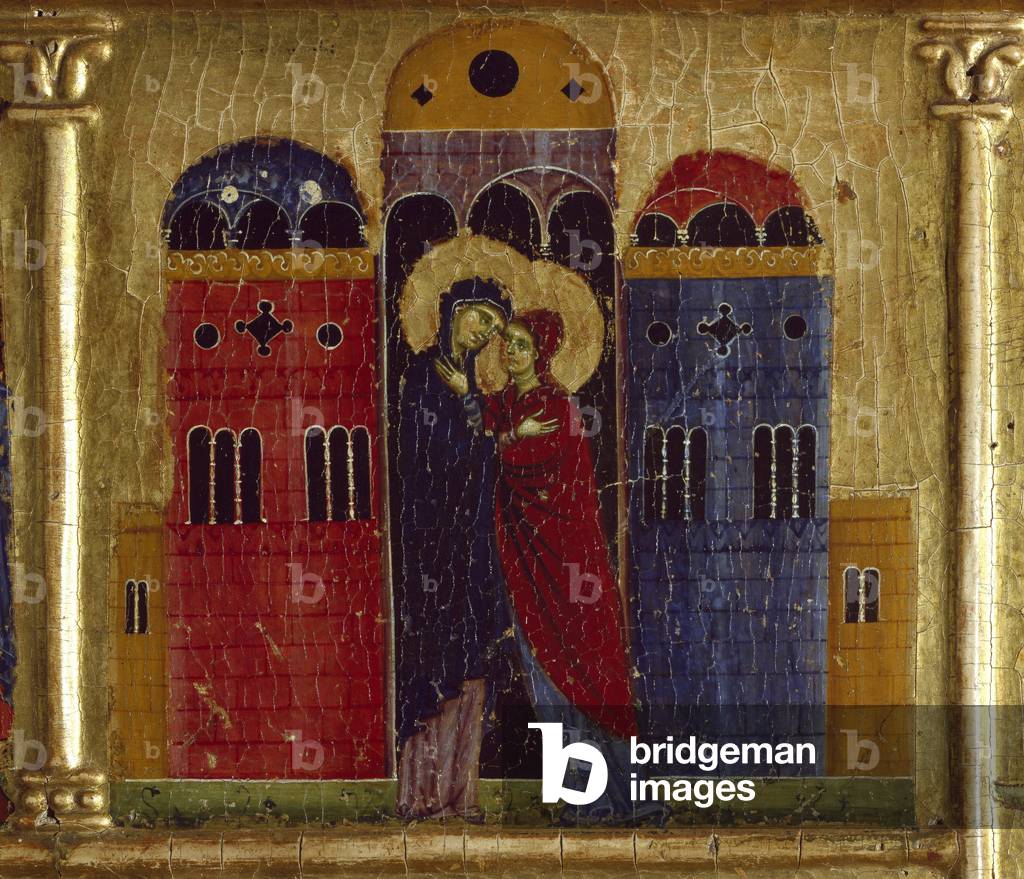
LRI4576684: History of Saint John the Baptist: detail representing the Visitation. (wood painting), Sienese School / Bridgeman Images

FLO4576379: the Tree has bread with its fruits - Breadfruit, Artocarpus altilis, with ripe fruit and sections. Handcoloured copperplate engraving after a botanical illustration by Christiane Henriette Dorothea Westermayr from Friedrich Johann Bertuch's Bilderbuch fur Kinder (Picture Book for Children), Weimar, 1792. / Bridgeman Images

FLO4576423: Breeds of horses, 18th century. Turkish breed descended from Arab, Persian and Tartar blood 1, and Russian 2. Handcoloured copperplate engraving from Bertuch's “” Bilderbuch fur Kinder”” (Picture Book for Children), Weimar, 1807. Friedrich Johann Bertuch (1747-1822) was a German publisher and man of arts most famous for his 12-volume encyclopedia for children illustrated with 1,200 engraved plates on natural history, science, costume, mythology, etc., published from 1790-1830. / Bridgeman Images

FLO4576550: Mount Teide, volcano on Tenerife, Canary Islands, with the town of Santa Cruz and ships in the foreground, circa 1800. Engraved by C. Ermer. Handcoloured copperplate engraving from Bertuch's “” Bilderbuch fur Kinder”” (Picture Book for Children), Weimar, 1807. Friedrich Johann Bertuch (1747-1822) was a German publisher and man of arts most famous for his 12-volume encyclopedia for children illustrated with 1,200 engraved plates on natural history, science, costume, mythology, etc., published from 1790-1830. / Bridgeman Images

LRI4576734: John the Baptist and his mother Elizabeth in front of Mary with Jesus as a child (Painting on wood, c.1270-1280), Sienese School / Bridgeman Images

LRI4576763: Salome With the Head of John the Baptist (Painting on wood, c.1270-1280), Sienese School / Bridgeman Images
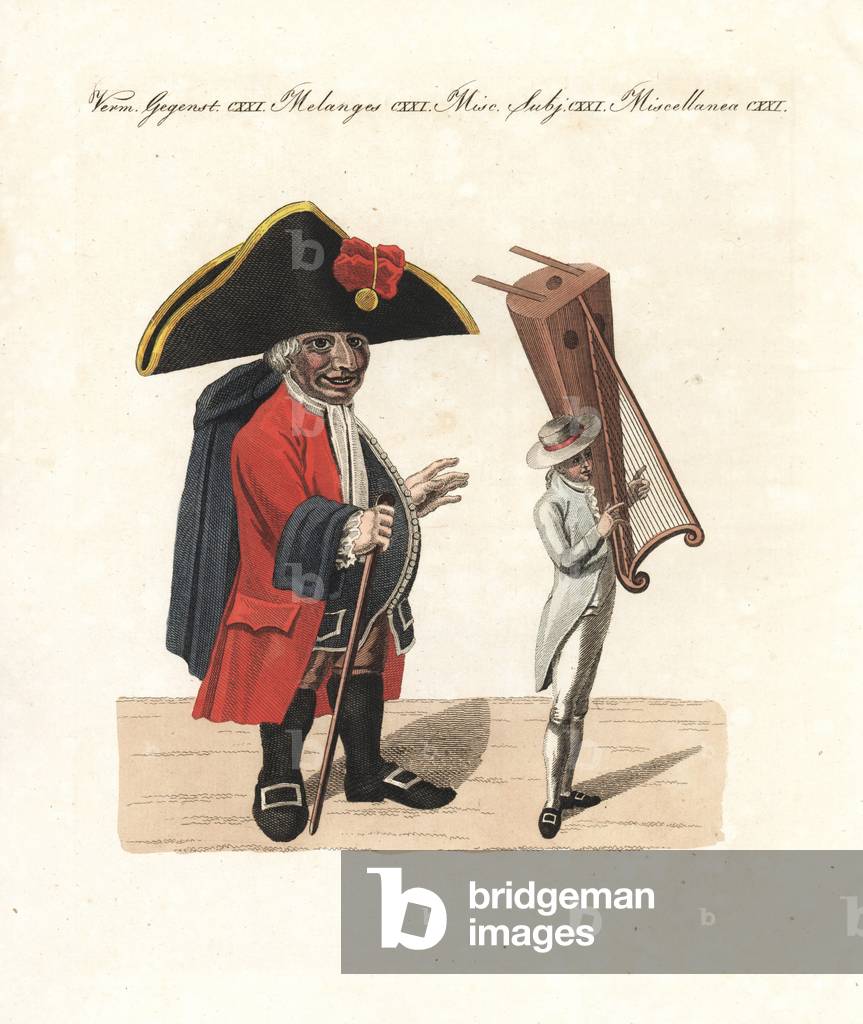
FLO4576818: Peruvian giant Basilio Huaylas, 7 ft at age 24. A native American from Ica in the south, he was exhibited in the capital Lima in 1792. Contrasted with an ordinary man holding a musical instrument, the arpa indigena, or indigenous harp. From Richard Phillips' “” Present State of Peru,”” 1805. Handcoloured copperplate engraving from Bertuch's “” Bilderbuch fur Kinder”” (Picture Book for Children), Weimar, 1807. Friedrich Johann Bertuch (1747-1822) was a German publisher and man of arts most famous for his 12-volume encyclopedia for children illustrated with 1,200 engraved plates on natural history, science, costume, mythology, etc., published from 1790-1830. / Bridgeman Images
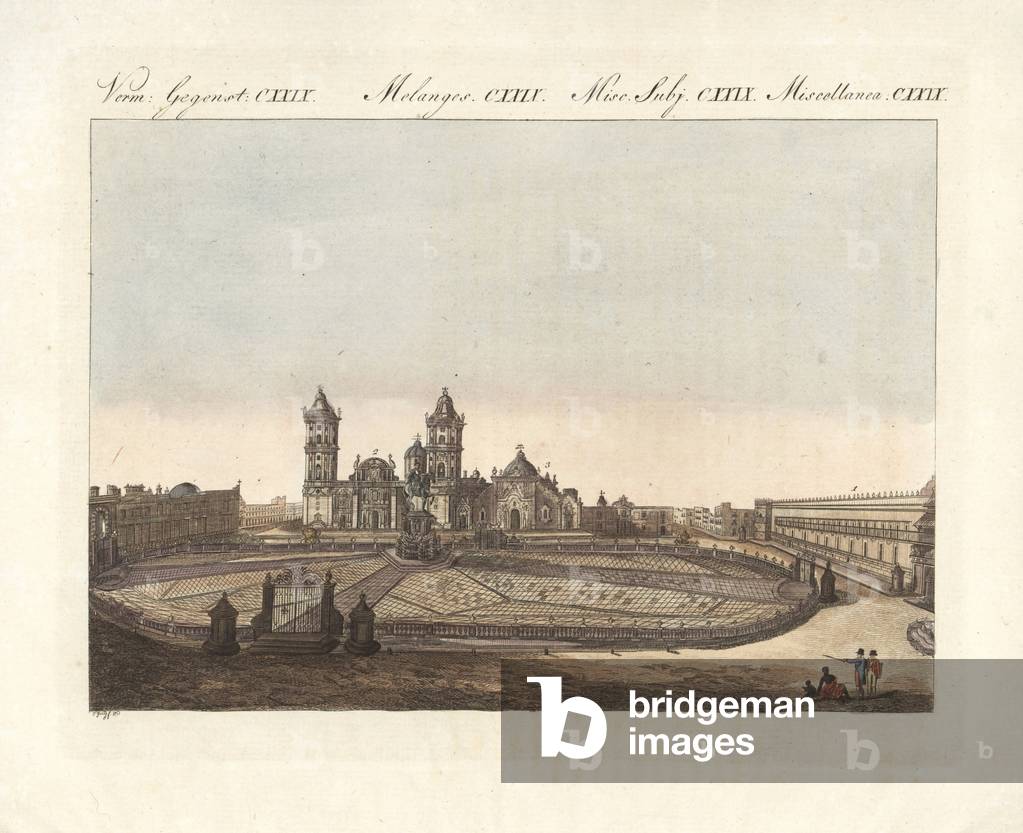
FLO4576925: Main plaza or Zocalo in Mexico City, circa 1800 (Zocalo or Constitution Square, in Mexico around 1800, with the equestrian statue of King Charles VI of Spain, the porphyry square and the vice king's palace, the cathedral and the construction site without the Moorish style). With equestrian statue of King Charles VI of Spain, gated square paved with porphyry stones, vice-roy's palace 1, cathedral 2 and part under construction in the Moorish style 3. Handcoloured copperplate engraving from Bertuch's “” Bilderbuch fur Kinder”” (Picture Book for Children), Weimar, 1807. Friedrich Johann Bertuch (1747-1822) was a German publisher and man of arts most famous for his 12-volume encyclopedia for children illustrated with 1,200 engraved plates on natural history, science, costume, mythology, etc., published from 1790-1830. / Bridgeman Images

JLJ4576943: Still Life in the, 1957 (painting), Sarthou, Maurice (1911-99) / Bridgeman Images

RCT4571847: The Georges Pompidou center in Paris. Architects Renzo Piano and Ricard Rogers, construction 1977. Photography 25/08/07., Rogers, Richard (b.1933) and Piano, Renzo (b.1937) / Bridgeman Images

LRI4572251: Virgin with child and saint John Baptist (painting, 16th century), Franciabigio, Francesco di Cristofano (1482-1525) / Bridgeman Images

FLO4572292: Louise Marie Adelaide de Bourbon, Duchess of Orleans 1753-1821. Handcoloured lithograph from Le Bibliophile Jacob aka Paul Lacroix's Costumes Historique de la France (Historical Costumes of France), Administration de Librairie, Paris, 1852. / Bridgeman Images

PIX4572573: Artist's view of a nova recurrente - Recurrent nova. Artwork - Artist's view of a nova, a white dwarf star that attracts the material of a companion star at the end of life, a red giant, and compresses these gases and then releases a nuclear fusion reaction releasing a huge amount of energy in the form of a brief, extremely bright light. A nova recurrente is a star with at least two nova-type explosions / Bridgeman Images

PIX4572650: Artist's view of Algol, a binary star has eclipse - Binary system Algol - Artist vie, Dixon, Don (b.1951) / Bridgeman Images

FLO4572564: Paul Francois Jean Nicolas, Viscount de Barras (1755-1829), leader of the Directory. In the uniform of a member of the Executive Board. Handcoloured lithograph from Le Bibliophile Jacob aka Paul Lacroix's Costumes Historique de la France (Historical Costumes of France), Administration de Librairie, Paris, 1852. / Bridgeman Images
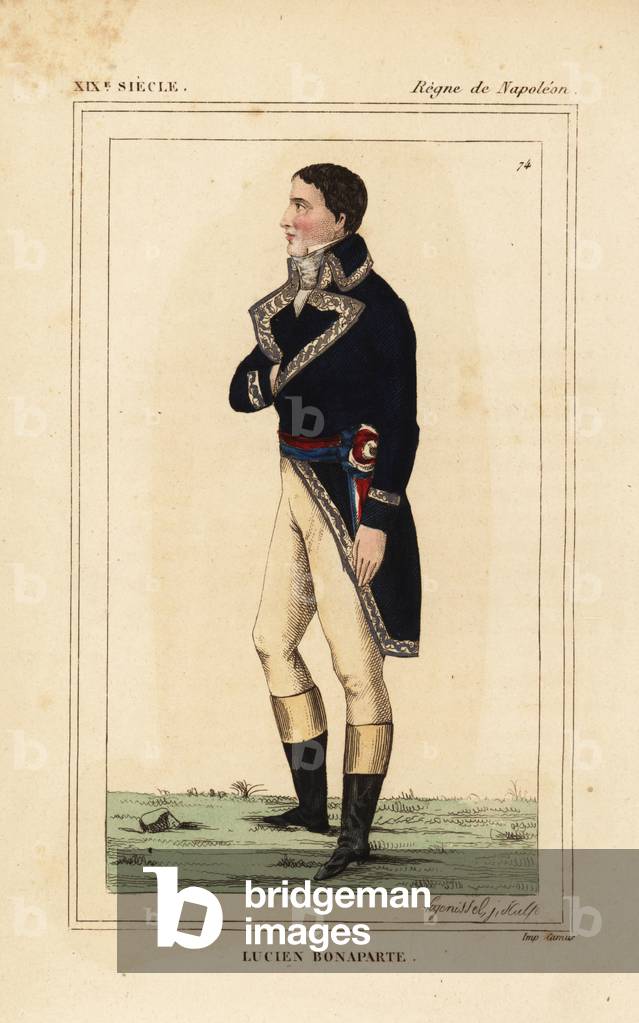
FLO4572766: Lucien Bonaparte, Prince of Canino and Musignano, younger brother of Napoleon 1775-1840. Handcoloured lithograph by Legenissel from Le Bibliophile Jacob aka Paul Lacroix's Costumes Historique de la France (Historical Costumes of France), Administration de Librairie, Paris, 1852. / Bridgeman Images

FLO4572793: Pauline Bonaparte, Duchess of Guastalla, sister of Napoleon 1780-1825. Handcoloured lithograph from Le Bibliophile Jacob aka Paul Lacroix's Costumes Historique de la France (Historical Costumes of France), Administration de Librairie, Paris, 1852. / Bridgeman Images

FLO4572951: Mace bearer or massier, Napoleonic era. Handcoloured lithograph by Leopold Massard from Le Bibliophile Jacob aka Paul Lacroix's Costumes Historique de la France (Historical Costumes of France), Administration de Librairie, Paris, 1852., Massard, Leopold (1812-1889) / Bridgeman Images

FLO4572964: Costume of a English member of an Institute, Napoleonic era. Handcoloured lithograph by Leopold Massard from Le Bibliophile Jacob aka Paul Lacroix's Costumes Historique de la France (Historical Costumes of France), Administration de Librairie, Paris, 1852., Massard, Leopold (1812-1889) / Bridgeman Images

PIX4573659: Ruins on an extrasolar planet - Artist's view, Dixon, Don (b.1951) / Bridgeman Images

FLO4573635: Belladonna and black nightshade - Deadly nightshade, Atropa belladonna, and black nightshade, Solanum nigrum (Solanum hortense). Handcoloured copperplate engraving from Friedrich Johann Bertuch's Bilderbuch fur Kinder (Picture Book for Children), Weimar, 1795. / Bridgeman Images

PIX4573351: Artist's View of a Hot Jupiter - Artist's View of a Giant Gas Exoplanet Very Close to its Star, Dixon, Don (b.1951) / Bridgeman Images

FLO4573439: Whole russule, milky toisonne, alanite kills fly and beetle - Mushrooms: Russula integra 1,2,3, Lactarius torminosus 4,5, Amanita muscaria 6, / Bridgeman Images

PIX4573448: Artist's view of a planet near a globular cluster - Artist's view of a planet near a globulair cluster, Dixon, Don (b.1951) / Bridgeman Images
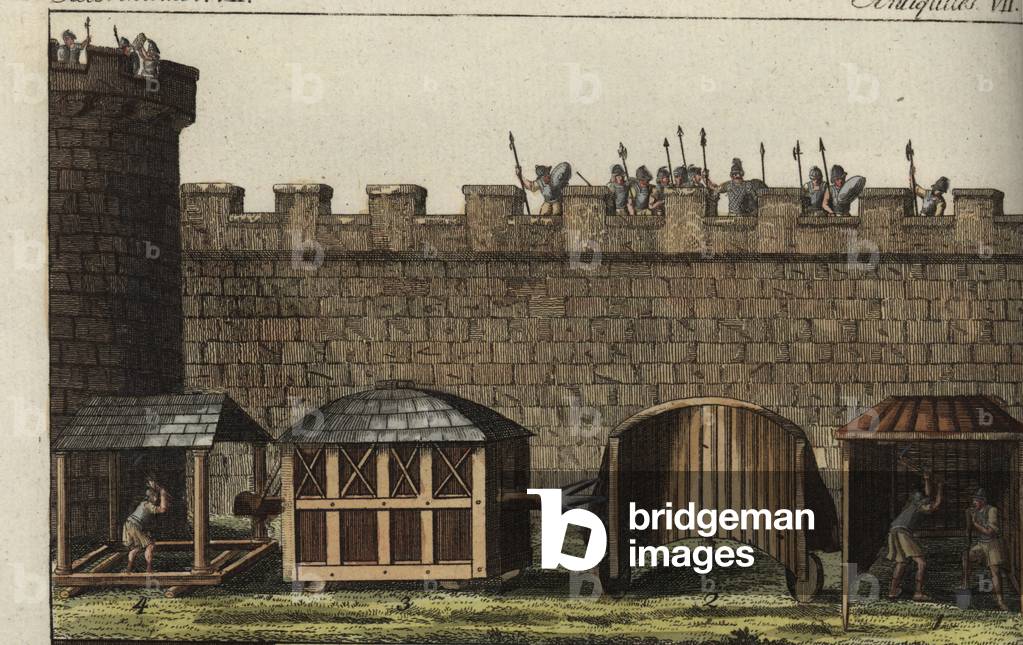
FLO4573628: Roman antiquite: seat machines, shelter for digging a tunnel 1, semi-circular shelter 2, shelter with belier 3, shelter on rolling cylinder 4 - Roman siege engines: shelter for sappers digging a tunnel, Vineae 1, semi-circular shelter Pluteus 2, shelter Testudo with battering ram Aries 3, shelter on rolling cylinders Musculus 4. Handcoloured copperplate engraving from Friedrich Johann Bertuch's Bilderbuch fur Kinder (Picture Book for Children), Weimar, 1795. / Bridgeman Images

FLO4573758: Harbour porpoise, short-beaked common dolphin, and epaulard killer whale - Harbour porpoise, Phocoena phocoena 1, short-beaked common dolphin, Delphinus delphis 2, and orca or killer whale, Orcinus orca 3. Handcoloured copperplate engraving from Friedrich Johann Bertuch's Bilderbuch fur Kinder (Picture Book for Children), Weimar, 1795. / Bridgeman Images
