Search options

Orientation
Colour

Display options

View

Print

To print search results, use print friendly version of this page.

2491726 Search Results

Krater representing the abduction of Thetis, 360-340 BC (painted terracotta)

LRI4589582: Krater representing the abduction of Thetis, 360-340 BC (painted terracotta), Etruscan, (4th century BC) / Bridgeman Images

Cassiopee Constellation - The constellation of Cassiopeia - Cassiopee Constellation with near the horizon, part of the constellation Persee. Cassiopeia constellation; near the horizon, Perseus constellation

PIX4589608: Cassiopee Constellation - The constellation of Cassiopeia - Cassiopee Constellation with near the horizon, part of the constellation Persee. Cassiopeia constellation; near the horizon, Perseus constellation / Bridgeman Images

Constellations of Cassiopee, Persee - Cassiopeia, Perseus, Cepheus constellations - On the top right the constellation of Cephee, in the center of Cassiopee, below the left of the constellation Persee, on the bottom right, part of Andromede. Top right Cepheus constellation, in the middle Cassiopeia constellation, bottom right part of Andromeda, bottom left Perseus

PIX4589673: Constellations of Cassiopee, Persee - Cassiopeia, Perseus, Cepheus constellations - On the top right the constellation of Cephee, in the center of Cassiopee, below the left of the constellation Persee, on the bottom right, part of Andromede. Top right Cepheus constellation, in the middle Cassiopeia constellation, bottom right part of Andromeda, bottom left Perseus / Bridgeman Images
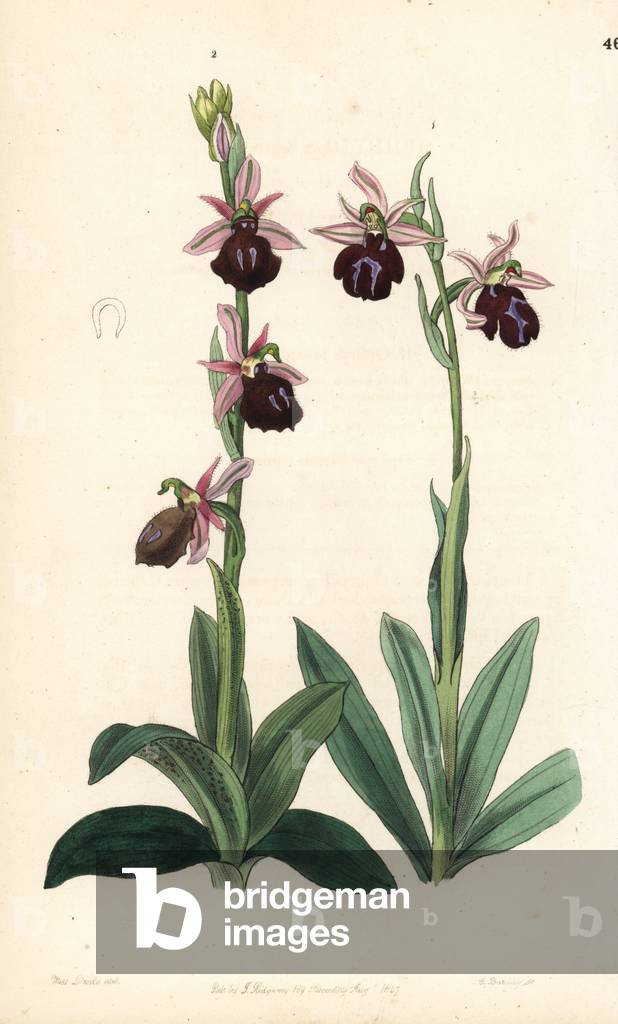
Greek orchids: bumblebee orchid, Ophrys bombyliflora (Ophrys tabanifera) and horseshoe bee-orchid, Ophrys ferrum-equinum. Handcoloured copperplate engraving by George Barclay after an illustration by Miss Sarah Drake from Edwards' Botanical Register, edited by John Lindley, London: Ridgeway, 1847.

FLO4589727: Greek orchids: bumblebee orchid, Ophrys bombyliflora (Ophrys tabanifera) and horseshoe bee-orchid, Ophrys ferrum-equinum. Handcoloured copperplate engraving by George Barclay after an illustration by Miss Sarah Drake from Edwards' Botanical Register, edited by John Lindley, London: Ridgeway, 1847. / Bridgeman Images

Female musician playing chimes and gongs, Qing Dynasty. Handcoloured copperplate engraving by Andrea Freschi after Antoine Cardon from Henri-Leonard-Jean-Baptiste Bertin and Jean Baptiste Joseph Breton's China, Its Costumes, Arts, Manufactures, etc., Howlett and Brimmer, London, 1824.

FLO4590318: Female musician playing chimes and gongs, Qing Dynasty. Handcoloured copperplate engraving by Andrea Freschi after Antoine Cardon from Henri-Leonard-Jean-Baptiste Bertin and Jean Baptiste Joseph Breton's China, Its Costumes, Arts, Manufactures, etc., Howlett and Brimmer, London, 1824. / Bridgeman Images

Itinerant Chinese barber ringing finger bells to find customers, Qing Dynasty. He carries a stool and bucket on a bamboo yoke, along with razor, scissors, strop, etc. Handcoloured copperplate engraving by Andrea Freschi after Antoine Cardon from Henri-Leonard-Jean-Baptiste Bertin and Jean Baptiste Joseph Breton's China, Its Costumes, Arts, Manufactures, etc., Howlett and Brimmer, London, 1824.

FLO4590497: Itinerant Chinese barber ringing finger bells to find customers, Qing Dynasty. He carries a stool and bucket on a bamboo yoke, along with razor, scissors, strop, etc. Handcoloured copperplate engraving by Andrea Freschi after Antoine Cardon from Henri-Leonard-Jean-Baptiste Bertin and Jean Baptiste Joseph Breton's China, Its Costumes, Arts, Manufactures, etc., Howlett and Brimmer, London, 1824. / Bridgeman Images

Chinese lamp on a chair stand and wax candles made of tallow from the tallow tree, Triadica sebifera, Qing Dynasty. Handcoloured copperplate engraving by Andrea Freschi after Antoine Cardon from Henri-Leonard-Jean-Baptiste Bertin and Jean Baptiste Joseph Breton's China, Its Costumes, Arts, Manufactures, etc., Howlett and Brimmer, London, 1824.

FLO4590583: Chinese lamp on a chair stand and wax candles made of tallow from the tallow tree, Triadica sebifera, Qing Dynasty. Handcoloured copperplate engraving by Andrea Freschi after Antoine Cardon from Henri-Leonard-Jean-Baptiste Bertin and Jean Baptiste Joseph Breton's China, Its Costumes, Arts, Manufactures, etc., Howlett and Brimmer, London, 1824. / Bridgeman Images

Chinese juggler keeping a 100-foot long ribbon floating in the air, Qing Dynasty. Handcoloured copperplate engraving by Andrea Freschi after Antoine Cardon from Henri-Leonard-Jean-Baptiste Bertin and Jean Baptiste Joseph Breton's China, Its Costumes, Arts, Manufactures, etc., Howlett and Brimmer, London, 1824.

FLO4590457: Chinese juggler keeping a 100-foot long ribbon floating in the air, Qing Dynasty. Handcoloured copperplate engraving by Andrea Freschi after Antoine Cardon from Henri-Leonard-Jean-Baptiste Bertin and Jean Baptiste Joseph Breton's China, Its Costumes, Arts, Manufactures, etc., Howlett and Brimmer, London, 1824. / Bridgeman Images

Chinese wrestler and automaton and a tom-tom player, Qing Dynasty. Street performer wrestling with a human-size pasteboard puppet. Handcoloured copperplate engraving by Andrea Freschi after Antoine Cardon from Henri-Leonard-Jean-Baptiste Bertin and Jean Baptiste Joseph Breton's China, Its Costumes, Arts, Manufactures, etc., Howlett and Brimmer, London, 1824.

FLO4590466: Chinese wrestler and automaton and a tom-tom player, Qing Dynasty. Street performer wrestling with a human-size pasteboard puppet. Handcoloured copperplate engraving by Andrea Freschi after Antoine Cardon from Henri-Leonard-Jean-Baptiste Bertin and Jean Baptiste Joseph Breton's China, Its Costumes, Arts, Manufactures, etc., Howlett and Brimmer, London, 1824. / Bridgeman Images

Chinese woman reeling silk thread from wild silkworms, Bombyx mori, Qing Dynasty. Handcoloured copperplate engraving by Andrea Freschi after Antoine Cardon from Henri-Leonard-Jean-Baptiste Bertin and Jean Baptiste Joseph Breton's China, Its Costumes, Arts, Manufactures, etc., Howlett and Brimmer, London, 1824.

FLO4590547: Chinese woman reeling silk thread from wild silkworms, Bombyx mori, Qing Dynasty. Handcoloured copperplate engraving by Andrea Freschi after Antoine Cardon from Henri-Leonard-Jean-Baptiste Bertin and Jean Baptiste Joseph Breton's China, Its Costumes, Arts, Manufactures, etc., Howlett and Brimmer, London, 1824. / Bridgeman Images
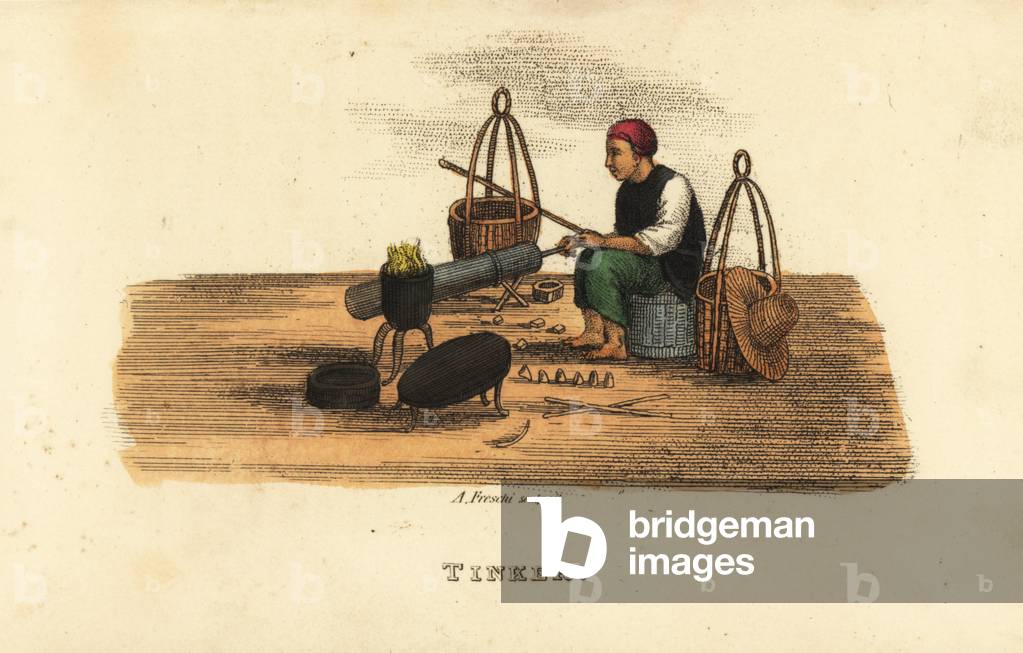
English tinker with portable forge, bellows and tools, Qing Dynasty. Handcoloured copperplate engraving by Andrea Freschi after Antoine Cardon from Henri-Leonard-Jean-Baptiste Bertin and Jean Baptiste Joseph Breton's China, Its Costumes, Arts, Manufactures, etc., Howlett and Brimmer, London, 1824.

FLO4590367: English tinker with portable forge, bellows and tools, Qing Dynasty. Handcoloured copperplate engraving by Andrea Freschi after Antoine Cardon from Henri-Leonard-Jean-Baptiste Bertin and Jean Baptiste Joseph Breton's China, Its Costumes, Arts, Manufactures, etc., Howlett and Brimmer, London, 1824. / Bridgeman Images

Carriage of the Kong Tchou, the Qing Emperor's eldest daughter. Handcoloured copperplate engraving by Andrea Freschi after Antoine Cardon from Henri-Leonard-Jean-Baptiste Bertin and Jean Baptiste Joseph Breton's China, Its Costumes, Arts, Manufactures, etc., Howlett and Brimmer, London, 1824.

FLO4590372: Carriage of the Kong Tchou, the Qing Emperor's eldest daughter. Handcoloured copperplate engraving by Andrea Freschi after Antoine Cardon from Henri-Leonard-Jean-Baptiste Bertin and Jean Baptiste Joseph Breton's China, Its Costumes, Arts, Manufactures, etc., Howlett and Brimmer, London, 1824. / Bridgeman Images

Dipping needle compassed made by Edward Nairne for the Board of Longitude based on plans for the Reverend John Mitchell, Rector of Thornhill, 1772. Copperplate engraving by Wilson Lowry from Abraham Rees' Cyclopedia or Universal Dictionary of Arts, Sciences and Literature, Longman, Hurst, Rees, Orme and Brown, London, 1810.

FLO4591577: Dipping needle compassed made by Edward Nairne for the Board of Longitude based on plans for the Reverend John Mitchell, Rector of Thornhill, 1772. Copperplate engraving by Wilson Lowry from Abraham Rees' Cyclopedia or Universal Dictionary of Arts, Sciences and Literature, Longman, Hurst, Rees, Orme and Brown, London, 1810. / Bridgeman Images
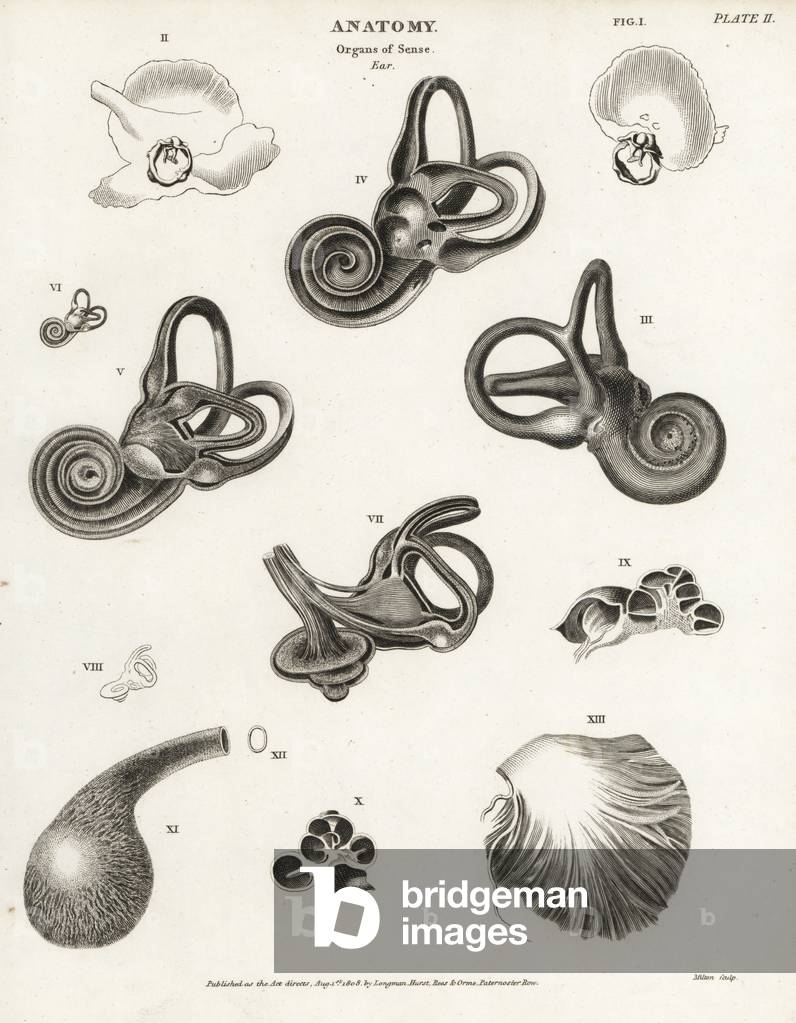
Anatomy of the human ear showing cochlea and internal parts. Copperplate engraving by Milton from Abraham Rees' Cyclopedia or Universal Dictionary of Arts, Sciences and Literature, Longman, Hurst, Rees, Orme and Brown, London, 1820.

FLO4591625: Anatomy of the human ear showing cochlea and internal parts. Copperplate engraving by Milton from Abraham Rees' Cyclopedia or Universal Dictionary of Arts, Sciences and Literature, Longman, Hurst, Rees, Orme and Brown, London, 1820. / Bridgeman Images

Hydraulic pumps including Captain Jekyll's improved ship pump and Benjamin Martin's pump. Copperplate engraving by Wilson Lowry from Abraham Rees' Cyclopedia or Universal Dictionary of Arts, Sciences and Literature, Longman, Hurst, Rees, Orme and Brown, London, 1815

FLO4591675: Hydraulic pumps including Captain Jekyll's improved ship pump and Benjamin Martin's pump. Copperplate engraving by Wilson Lowry from Abraham Rees' Cyclopedia or Universal Dictionary of Arts, Sciences and Literature, Longman, Hurst, Rees, Orme and Brown, London, 1815 / Bridgeman Images

Cannon-boring machinery, 18th century. Copperplate engraving by Wilson Lowry after a drawing by John Farey Jr. from Abraham Rees' Cyclopedia or Universal Dictionary of Arts, Sciences and Literature, Longman, Hurst, Rees, Orme and Brown, London, 1808.

FLO4591794: Cannon-boring machinery, 18th century. Copperplate engraving by Wilson Lowry after a drawing by John Farey Jr. from Abraham Rees' Cyclopedia or Universal Dictionary of Arts, Sciences and Literature, Longman, Hurst, Rees, Orme and Brown, London, 1808. / Bridgeman Images

Metal casting equipment: open sand casting 1, trowel 2, ramming tool 4, lifting screw 5, sand casting between flasks 6, cog wheel casting 7-10, and moulds for loam casting 11-13. Copperplate engraving by Wilson Lowry after a drawing by John Farey from Abraham Rees' Cyclopedia or Universal Dictionary of Arts, Sciences and Literature, Longman, Hurst, Rees, Orme and Brown, London, 1809.

FLO4591842: Metal casting equipment: open sand casting 1, trowel 2, ramming tool 4, lifting screw 5, sand casting between flasks 6, cog wheel casting 7-10, and moulds for loam casting 11-13. Copperplate engraving by Wilson Lowry after a drawing by John Farey from Abraham Rees' Cyclopedia or Universal Dictionary of Arts, Sciences and Literature, Longman, Hurst, Rees, Orme and Brown, London, 1809. / Bridgeman Images

Plan, elevation and section of the Kelvin Aqueduct, built by Robert Whitworth, over the Forth River, Scotland, 1790. Copperplate engraving by Wilson Lowry after a drawing by John Farey from Abraham Rees' Cyclopedia or Universal Dictionary of Arts, Sciences and Literature, Longman, Hurst, Rees, Orme and Brown, London, 1819.

FLO4591870: Plan, elevation and section of the Kelvin Aqueduct, built by Robert Whitworth, over the Forth River, Scotland, 1790. Copperplate engraving by Wilson Lowry after a drawing by John Farey from Abraham Rees' Cyclopedia or Universal Dictionary of Arts, Sciences and Literature, Longman, Hurst, Rees, Orme and Brown, London, 1819. / Bridgeman Images

Sections and elevations of balling furnace and finery used in iron manufacture, along with tools and pump. Copperplate engraving by Wilson Lowry after a drawing by John Farey from Abraham Rees' Cyclopedia or Universal Dictionary of Arts, Sciences and Literature, Longman, Hurst, Rees, Orme and Brown, London, 1810.

FLO4591606: Sections and elevations of balling furnace and finery used in iron manufacture, along with tools and pump. Copperplate engraving by Wilson Lowry after a drawing by John Farey from Abraham Rees' Cyclopedia or Universal Dictionary of Arts, Sciences and Literature, Longman, Hurst, Rees, Orme and Brown, London, 1810. / Bridgeman Images

Henry Hindley (1701-1771)'s cutting engine, 18th century. Copperplate engraving by Wilson Lowry after a drawing by John Farey from Abraham Rees' Cyclopedia or Universal Dictionary of Arts, Sciences and Literature, Longman, Hurst, Rees, Orme and Brown, London, 1813.

FLO4592248: Henry Hindley (1701-1771)'s cutting engine, 18th century. Copperplate engraving by Wilson Lowry after a drawing by John Farey from Abraham Rees' Cyclopedia or Universal Dictionary of Arts, Sciences and Literature, Longman, Hurst, Rees, Orme and Brown, London, 1813. / Bridgeman Images

The centaur attends the wedding of Pirithous and Hippodamia. 1st century (fresco)

LRI4592418: The centaur attends the wedding of Pirithous and Hippodamia. 1st century (fresco), Roman, (1st century AD) / Bridgeman Images

Statue of Emperor Claude I (scul:pture)

LRI4592605: Statue of Emperor Claude I (scul:pture), Roman, (1st century AD) / Bridgeman Images

Surveying equipment from the 19th century: dendrometers and Mr. Broad's machine for measuring timber. Copperplate engraving by Wilson Lowry after an Illustration by J. Farey from Abraham Rees' “” Cyclopedia or Universal Dictionary,” London, 1811.

FLO4593000: Surveying equipment from the 19th century: dendrometers and Mr. Broad's machine for measuring timber. Copperplate engraving by Wilson Lowry after an Illustration by J. Farey from Abraham Rees' “” Cyclopedia or Universal Dictionary,” London, 1811. / Bridgeman Images

Steam engines by Thomas Savery, William Blakey, Mr Kier, and Denis Papin, 17th and 18th centuries. Copperplate engraving by Wilson Lowry after an Illustration by J. Britton from Abraham Rees' “” Cyclopedia or Universal Dictionary,” London, 1818.

FLO4593330: Steam engines by Thomas Savery, William Blakey, Mr Kier, and Denis Papin, 17th and 18th centuries. Copperplate engraving by Wilson Lowry after an Illustration by J. Britton from Abraham Rees' “” Cyclopedia or Universal Dictionary,” London, 1818. / Bridgeman Images

Drawing frames used to straighten fibres in cotton manufacture, 18th century. Copperplate engraving by Wilson Lowry from Abraham Rees' Cyclopedia or Universal Dictionary of Arts, Sciences and Literature, Longman, Hurst, Rees, Orme and Brown, London, 1808.

FLO4592105: Drawing frames used to straighten fibres in cotton manufacture, 18th century. Copperplate engraving by Wilson Lowry from Abraham Rees' Cyclopedia or Universal Dictionary of Arts, Sciences and Literature, Longman, Hurst, Rees, Orme and Brown, London, 1808. / Bridgeman Images

Anglo-Norman Lady from the reign of King William I, the Conqueror, 1066-1087. She wears a long green full Dress (Dress) with long flared sleeves, a veil and gold diadem. Cotton MS (Nero C.4) in the British Museum. Handcoloured lithograph from “” Costumes of British Ladies from the Time of William the First to the Reign of Queen Victoria”, London, Dickinson and Son, 1840.

FLO4594492: Anglo-Norman Lady from the reign of King William I, the Conqueror, 1066-1087. She wears a long green full Dress (Dress) with long flared sleeves, a veil and gold diadem. Cotton MS (Nero C.4) in the British Museum. Handcoloured lithograph from “” Costumes of British Ladies from the Time of William the First to the Reign of Queen Victoria”, London, Dickinson and Son, 1840. / Bridgeman Images

Dress (Dress) of the reign of King Edward IV, 1461-1470. She wears a tall conical headdress with long falling veil, and a fur-trimmed striped dress with open collar. Based on a Royal manuscript, Cotton Collection, Paradin, Froissart, Monstrelet. Handcoloured lithograph from “” Costumes of British Ladies from the Time of William the First to the Reign of Queen Victoria”, London, Dickinson and Son, 1840.

FLO4594566: Dress (Dress) of the reign of King Edward IV, 1461-1470. She wears a tall conical headdress with long falling veil, and a fur-trimmed striped dress with open collar. Based on a Royal manuscript, Cotton Collection, Paradin, Froissart, Monstrelet. Handcoloured lithograph from “” Costumes of British Ladies from the Time of William the First to the Reign of Queen Victoria”, London, Dickinson and Son, 1840. / Bridgeman Images

Horned HeAddress (Robe) of the 15th century, reign of Edward IV 1461-1483. She wears a blue dress with voluminous sleeves, lined with ermine. Based on a Royal manuscript, effigy of Beatrice, Countess of Arundel, satirical writings of John de Meum, Strutt's Habits. Handcoloured lithograph from “” Costumes of British Ladies from the Time of William the First to the Reign of Queen Victoria”, London, Dickinson and Son, 1840.

FLO4594612: Horned HeAddress (Robe) of the 15th century, reign of Edward IV 1461-1483. She wears a blue dress with voluminous sleeves, lined with ermine. Based on a Royal manuscript, effigy of Beatrice, Countess of Arundel, satirical writings of John de Meum, Strutt's Habits. Handcoloured lithograph from “” Costumes of British Ladies from the Time of William the First to the Reign of Queen Victoria”, London, Dickinson and Son, 1840. / Bridgeman Images

Dress (Robe) of the reign of Edward V and Richard III, 1483-1485. She wears a tall headdress with long veil, a furtrimmed mantle with wide collar over a striped dress. Seated in a medieval carved chair with lions on the arms. Based on portraits of Elizabeth Woodville, queen of Edward IV, description of the dress of Anne Neville, queen of Richard III, illuminated Royal manuscript 16F2, and effigy of Lady Peyton, Isleham Church, Cambridgeshire. Handcoloured lithograph from “” Costumes of British Ladies from the Time of William the First to the Reign of Queen Victoria”, London, Dickinson and Son, 1840.

FLO4594617: Dress (Robe) of the reign of Edward V and Richard III, 1483-1485. She wears a tall headdress with long veil, a furtrimmed mantle with wide collar over a striped dress. Seated in a medieval carved chair with lions on the arms. Based on portraits of Elizabeth Woodville, queen of Edward IV, description of the dress of Anne Neville, queen of Richard III, illuminated Royal manuscript 16F2, and effigy of Lady Peyton, Isleham Church, Cambridgeshire. Handcoloured lithograph from “” Costumes of British Ladies from the Time of William the First to the Reign of Queen Victoria”, London, Dickinson and Son, 1840. / Bridgeman Images
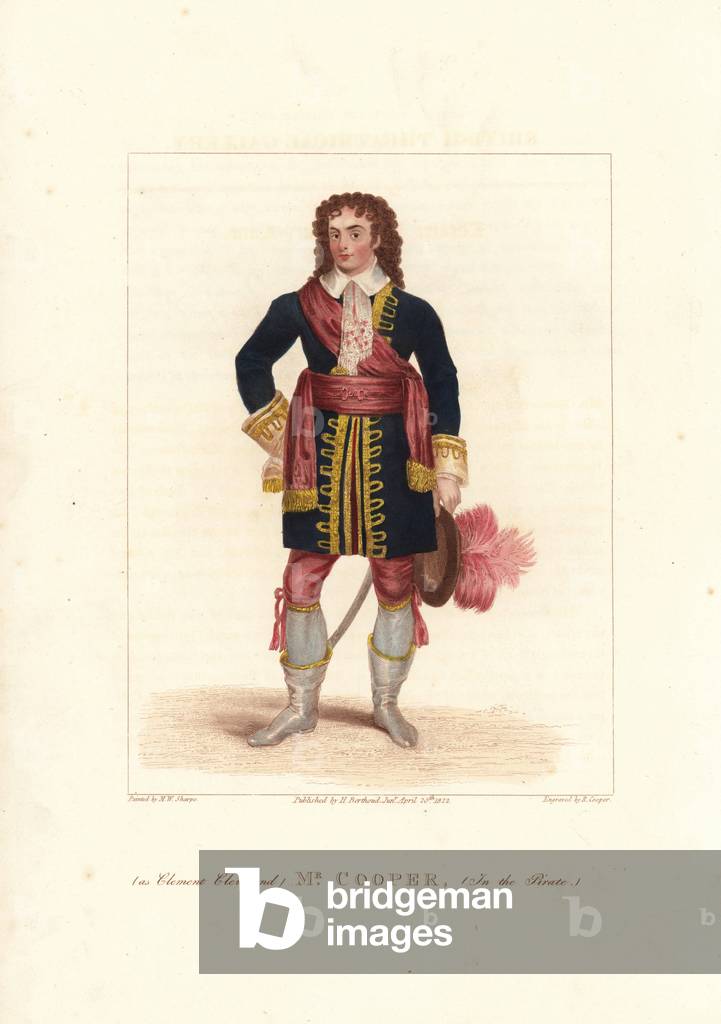
Mr. John Cooper as Clement Cleveland in “The Pirate” at the Theatre Royal Drury Lane. Handcoloured stipple copperplate engraving by Robert Cooper after a painting by Michael William Sharp. From D. Terry's “” British Theatrical Gallery,” London, Henry Berthoud Jr., 1825.

FLO4594898: Mr. John Cooper as Clement Cleveland in “The Pirate” at the Theatre Royal Drury Lane. Handcoloured stipple copperplate engraving by Robert Cooper after a painting by Michael William Sharp. From D. Terry's “” British Theatrical Gallery,” London, Henry Berthoud Jr., 1825. / Bridgeman Images
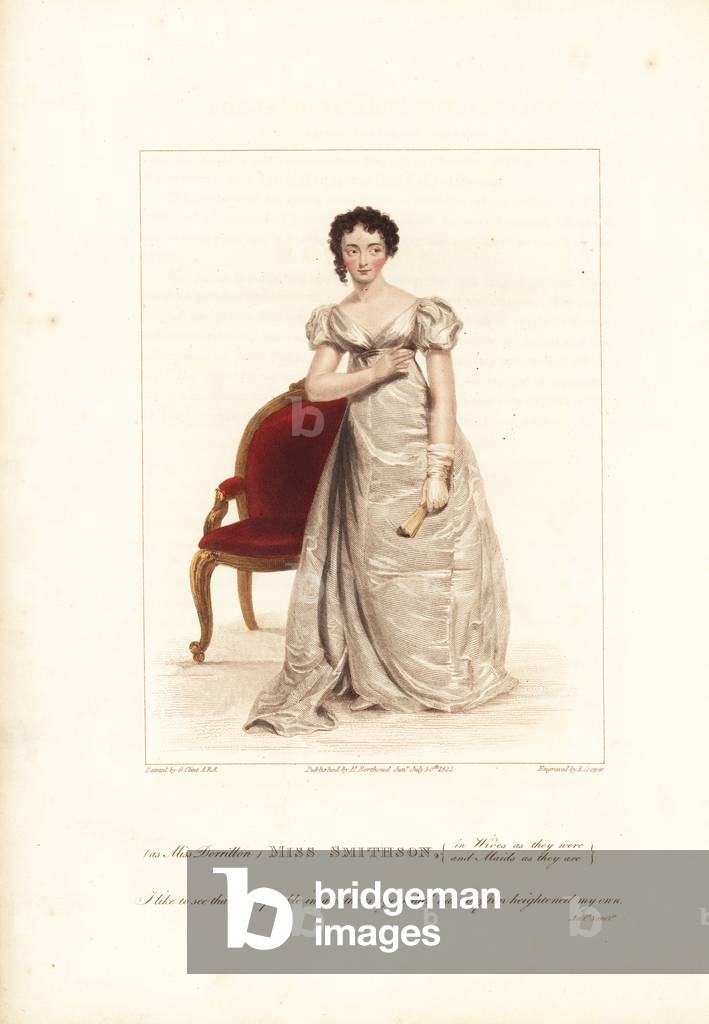
Miss Harriet Constance Smithson as Miss Dorrillon in “Wives as They Were and Maids as They Are” the Theatre Royal Drury Lane. Handcoloured stipple copperplate engraving by Robert Cooper after a painting by George Clint. From D. Terry's “” British Theatrical Gallery,” London, Henry Berthoud Jr., 1825.

FLO4594957: Miss Harriet Constance Smithson as Miss Dorrillon in “Wives as They Were and Maids as They Are” the Theatre Royal Drury Lane. Handcoloured stipple copperplate engraving by Robert Cooper after a painting by George Clint. From D. Terry's “” British Theatrical Gallery,” London, Henry Berthoud Jr., 1825. / Bridgeman Images

Sacrifice of Isaac Bas relief of gilded bronze by Lorenzo Ghiberti (1378-1455) 1401. Dim. 45 cm Museo Nazionale del Bargello, Florence

LRI4594472: Sacrifice of Isaac Bas relief of gilded bronze by Lorenzo Ghiberti (1378-1455) 1401. Dim. 45 cm Museo Nazionale del Bargello, Florence, Ghiberti, Lorenzo (1378-1455) / Bridgeman Images

Francis I of Medicis (Francesco I de Medici, 1541-1587) Grand Duke of Tuscany listening to the reading of a decree Wax sculpture of Giambologna (Giovanni da Bologna or Jean de Bologna or Boulogne, 1529-1608) Museo Nazionale del Bargello Florence

LRI4594649: Francis I of Medicis (Francesco I de Medici, 1541-1587) Grand Duke of Tuscany listening to the reading of a decree Wax sculpture of Giambologna (Giovanni da Bologna or Jean de Bologna or Boulogne, 1529-1608) Museo Nazionale del Bargello Florence, Giambologna (Giovanni da Bologna), (1529-1608) / Bridgeman Images

Dress (Robe) of the reign of George I, 1714-1727, copied from one preserved from the era. She wear a flat hat decorated with ribbons, a dress with long train in floral stripes, tied at the bust with a ribbon. Based on The World, Addison's “Spectator,””” Watteau's pictures. Handcoloured lithograph from “” Costumes of British Ladies from the Time of William the First to the Reign of Queen Victoria”, London, Dickinson and Son, 1840.

FLO4594727: Dress (Robe) of the reign of George I, 1714-1727, copied from one preserved from the era. She wear a flat hat decorated with ribbons, a dress with long train in floral stripes, tied at the bust with a ribbon. Based on The World, Addison's “Spectator,””” Watteau's pictures. Handcoloured lithograph from “” Costumes of British Ladies from the Time of William the First to the Reign of Queen Victoria”, London, Dickinson and Son, 1840. / Bridgeman Images

Dress (Dress) of the reign of King Richard II, 1377-1399. She carries the king's badge or cognizance, a white hart with a crown of gold on its neck. Her fur-trimmed dress is sky blue with white embroidered lilies, part of the king's crest. Based on Caxton, Froissart, Gower, Confessio Amantis, Chaucer. Handcoloured lithograph from “” Costumes of British Ladies from the Time of William the First to the Reign of Queen Victoria”, London, Dickinson and Son, 1840.

FLO4594571: Dress (Dress) of the reign of King Richard II, 1377-1399. She carries the king's badge or cognizance, a white hart with a crown of gold on its neck. Her fur-trimmed dress is sky blue with white embroidered lilies, part of the king's crest. Based on Caxton, Froissart, Gower, Confessio Amantis, Chaucer. Handcoloured lithograph from “” Costumes of British Ladies from the Time of William the First to the Reign of Queen Victoria”, London, Dickinson and Son, 1840. / Bridgeman Images

Dress (Robe) of the reign of King George II, 1727-1760. She wear a pink hat with plumes and ribbons, a tight bodice with lace cuffs, and a full crinoline petticoat. Based on Thomas Jeffery's Collection of Dresses, Gray's Inn Journal, Spectator, Rose Bradwardine's dress in Sir Walter Scott's Waverley. Handcoloured lithograph from “” Costumes of British Ladies from the Time of William the First to the Reign of Queen Victoria”, London, Dickinson and Son, 1840.

FLO4594765: Dress (Robe) of the reign of King George II, 1727-1760. She wear a pink hat with plumes and ribbons, a tight bodice with lace cuffs, and a full crinoline petticoat. Based on Thomas Jeffery's Collection of Dresses, Gray's Inn Journal, Spectator, Rose Bradwardine's dress in Sir Walter Scott's Waverley. Handcoloured lithograph from “” Costumes of British Ladies from the Time of William the First to the Reign of Queen Victoria”, London, Dickinson and Son, 1840. / Bridgeman Images


Back to top