Search options

Orientation
Colour

Display options

View

Print

To print search results, use print friendly version of this page.

2491380 Search Results
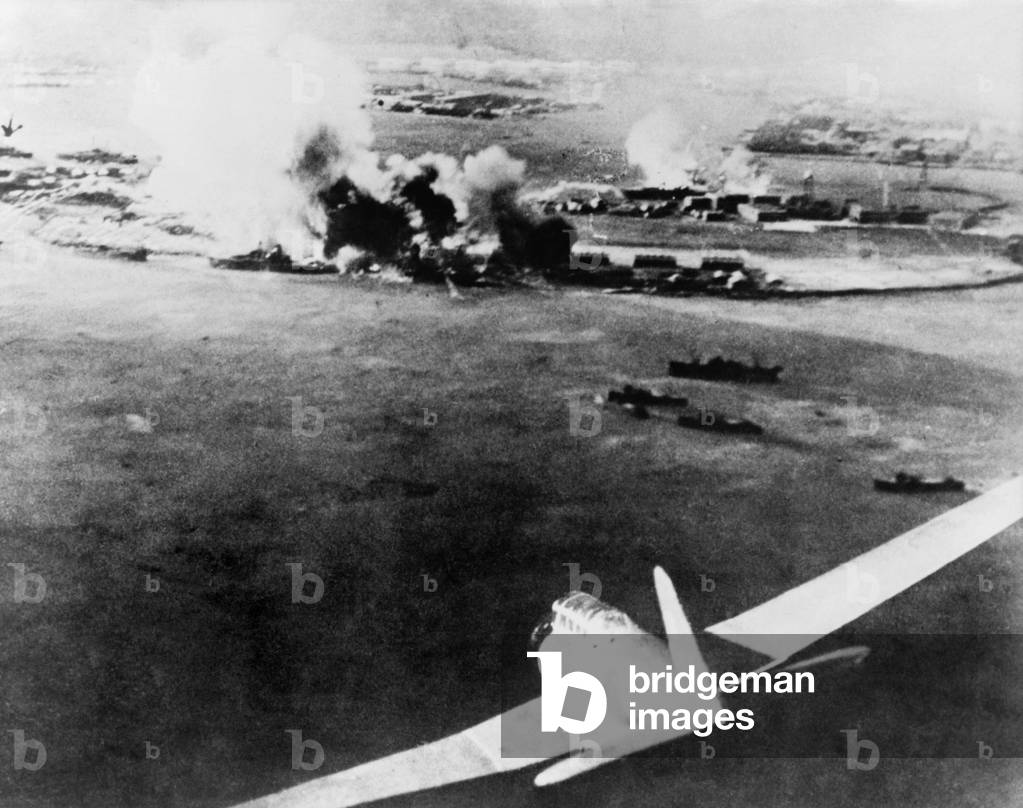
Photograph taken by a Japanese pilot, of the destruction of Pearl Harbor. At lower right is a Japanese bomber. Dec. 7, 1941

EVB2944383: Photograph taken by a Japanese pilot, of the destruction of Pearl Harbor. At lower right is a Japanese bomber. Dec. 7, 1941 / Bridgeman Images
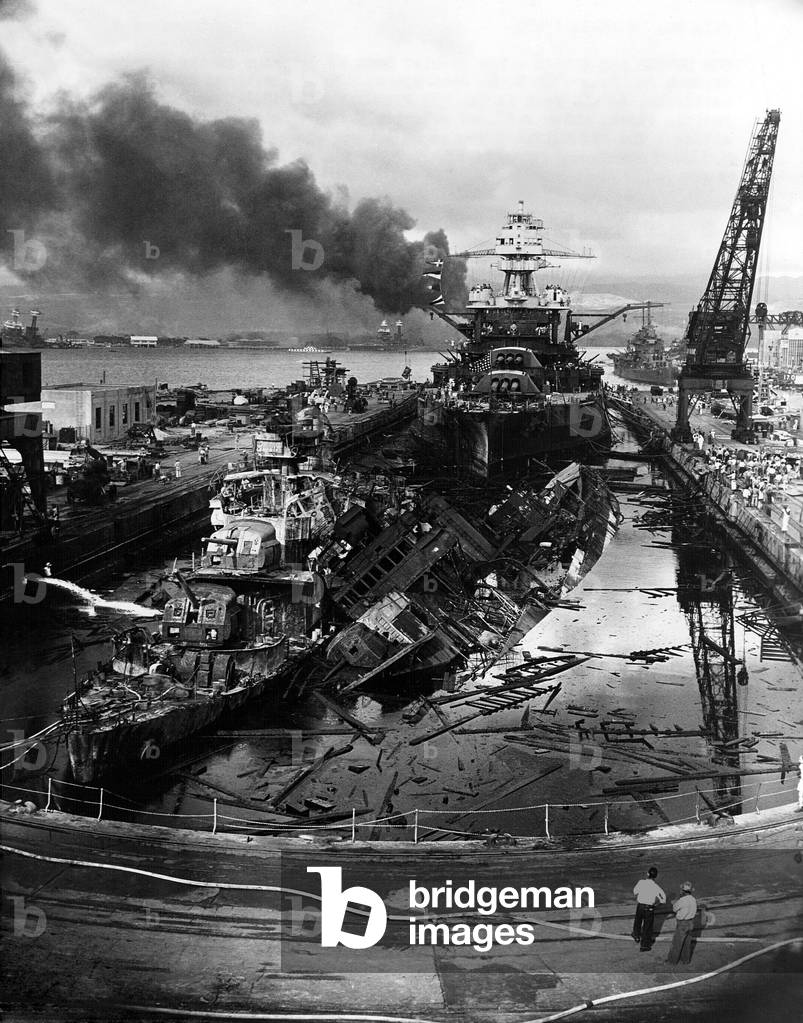
The wreckage of the destroyers USS Downes (left) and USS Cassin at Pearl Harbor dry dock. Both ship's hulls were damaged beyond repair in the Japanese attack of Dec. 7, 1941 New hulls were built around the ships' salvaged cores and given the wrecked ship's names and hull numbers

EVB2944395: The wreckage of the destroyers USS Downes (left) and USS Cassin at Pearl Harbor dry dock. Both ship's hulls were damaged beyond repair in the Japanese attack of Dec. 7, 1941 New hulls were built around the ships' salvaged cores and given the wrecked ship's names and hull numbers / Bridgeman Images
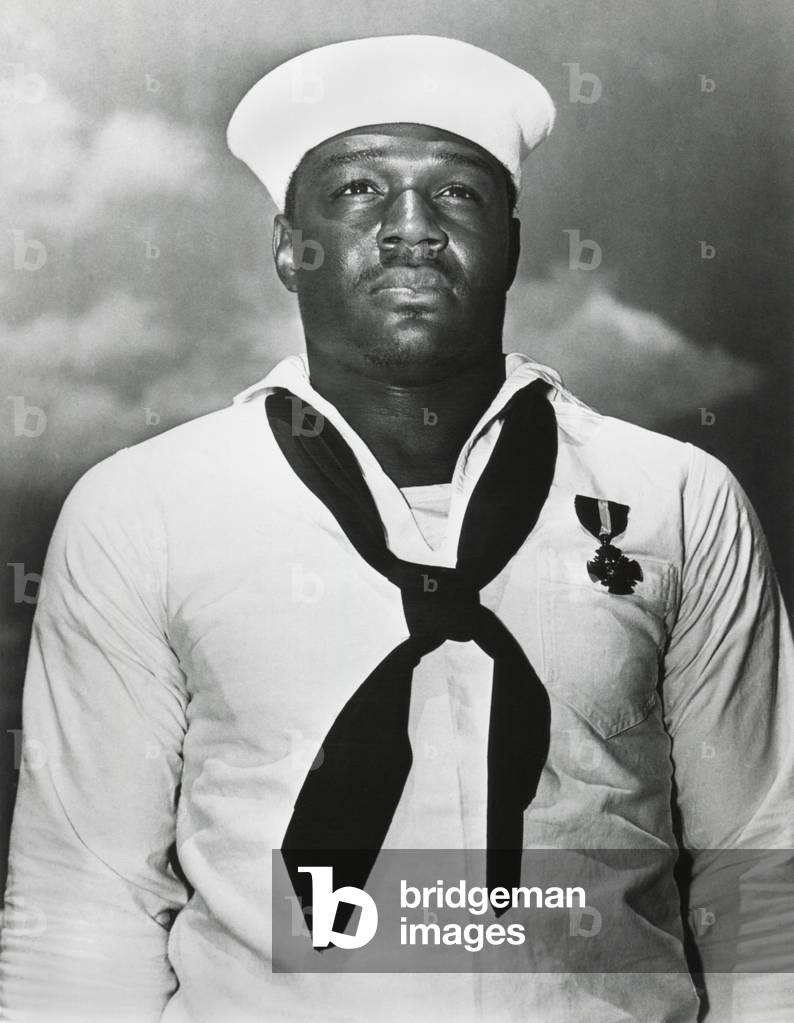
Doris 'Dorie' Miller was awarded the Navy Cross for heroism during attack on Pearl Harbor. He was one of the first heroes of World War 2 for saving the lives of fellow sailors on the USS West Virginia and defending the ship with anti-aircraft guns. May 27, 1942

EVB2944398: Doris 'Dorie' Miller was awarded the Navy Cross for heroism during attack on Pearl Harbor. He was one of the first heroes of World War 2 for saving the lives of fellow sailors on the USS West Virginia and defending the ship with anti-aircraft guns. May 27, 1942 / Bridgeman Images

Dust storm at Manzanar internment camp for Japanese Americans for during WWII, California, July 3rd 1942 (b/w photo)

EVB2944419: Dust storm at Manzanar internment camp for Japanese Americans for during WWII, California, July 3rd 1942 (b/w photo), Lange, Dorothea (1895-1965) / Bridgeman Images
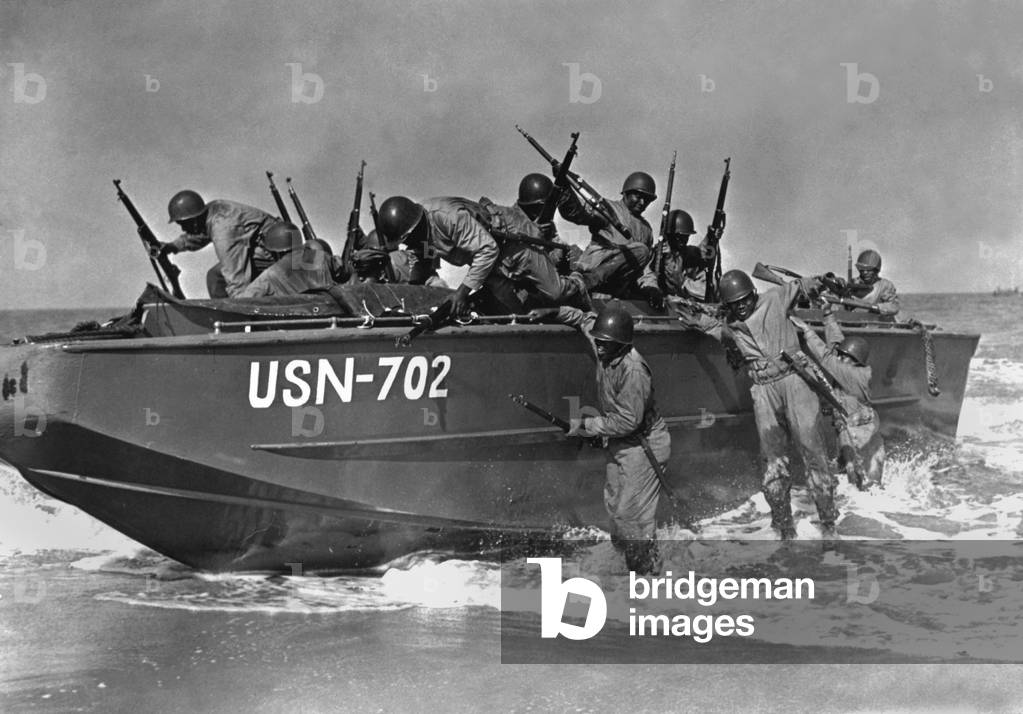
African American sailors training for amphibious landings at near Norfolk, Virginia, c. 1942. They are Navy Seabees, members of Naval Construction Battalions during World War 2

EVB2944437: African American sailors training for amphibious landings at near Norfolk, Virginia, c. 1942. They are Navy Seabees, members of Naval Construction Battalions during World War 2 / Bridgeman Images
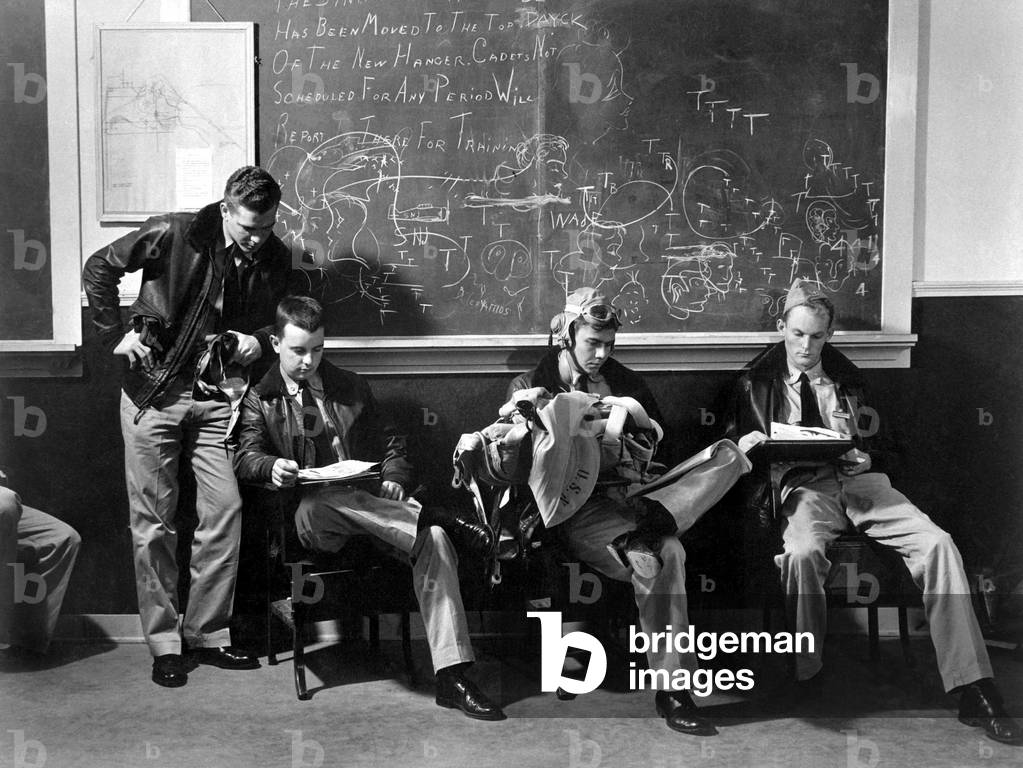
Aviation cadets the ready room at Kingsville Field, Corpus Christi, Texas. World War 2, Nov. 1942

EVB2944443: Aviation cadets the ready room at Kingsville Field, Corpus Christi, Texas. World War 2, Nov. 1942 / Bridgeman Images
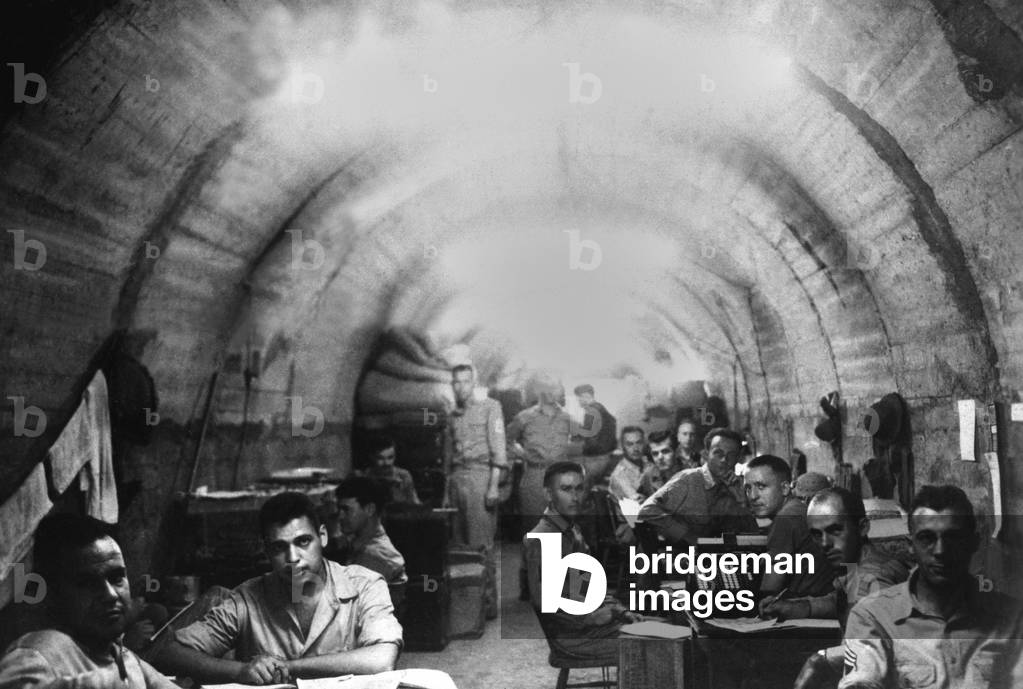
American Army headquarters in a fortified tunnel on Corregidor, Philippine Islands, c. March/April 1942.

EVB2944455: American Army headquarters in a fortified tunnel on Corregidor, Philippine Islands, c. March/April 1942. / Bridgeman Images
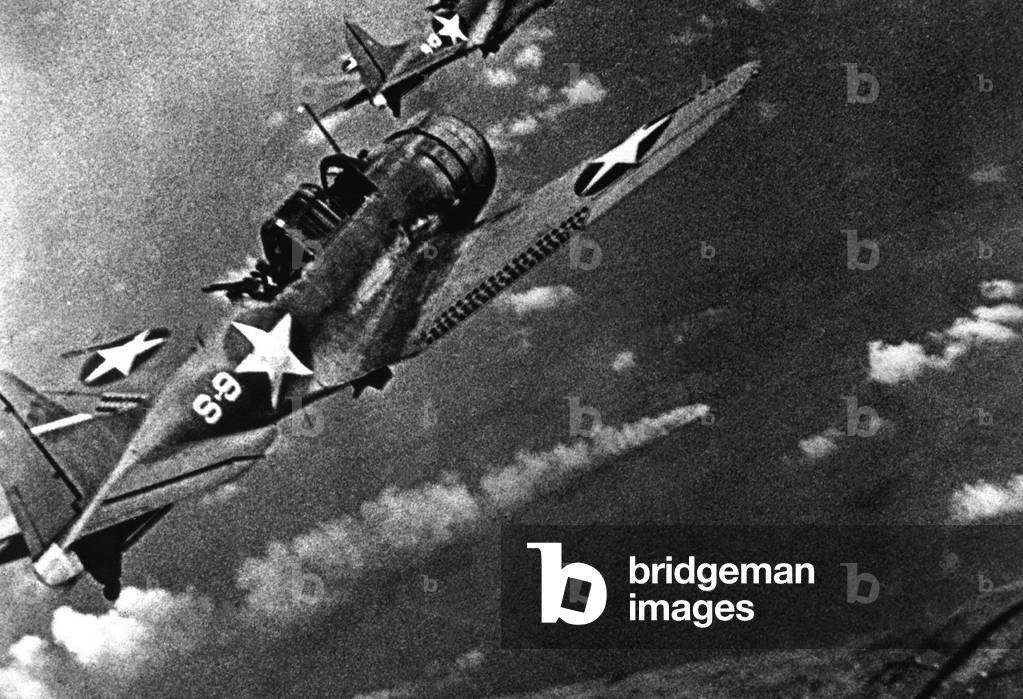
Battle of Midway, June 4-6, 1942. U.S. Douglas SBD-3 Dauntless dive bomber from the USS Hornet continues the attack on the burning Japanese cruiser Mikuma, June 6, 1942. The World War 2 battle stopped the Japanese Pacific expansion and sank four Japanese aircraft carriers

EVB2944464: Battle of Midway, June 4-6, 1942. U.S. Douglas SBD-3 Dauntless dive bomber from the USS Hornet continues the attack on the burning Japanese cruiser Mikuma, June 6, 1942. The World War 2 battle stopped the Japanese Pacific expansion and sank four Japanese aircraft carriers / Bridgeman Images
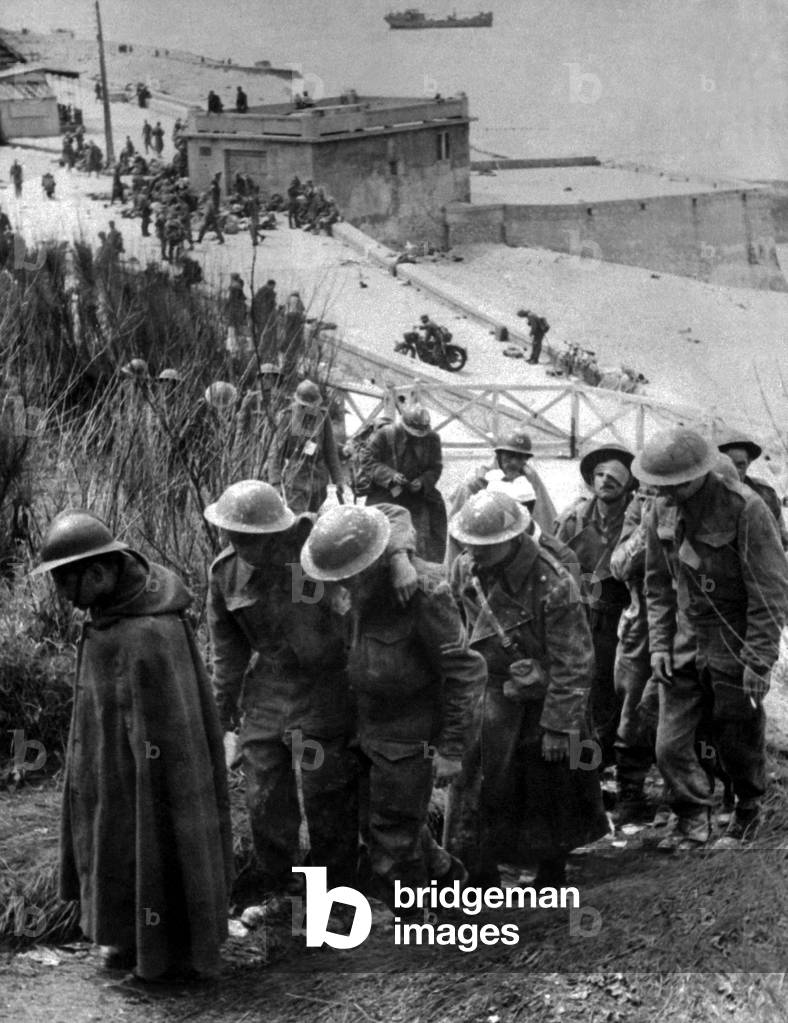
British prisoners at Dunkirk, France, June 1940.

EVB2944530: British prisoners at Dunkirk, France, June 1940. / Bridgeman Images
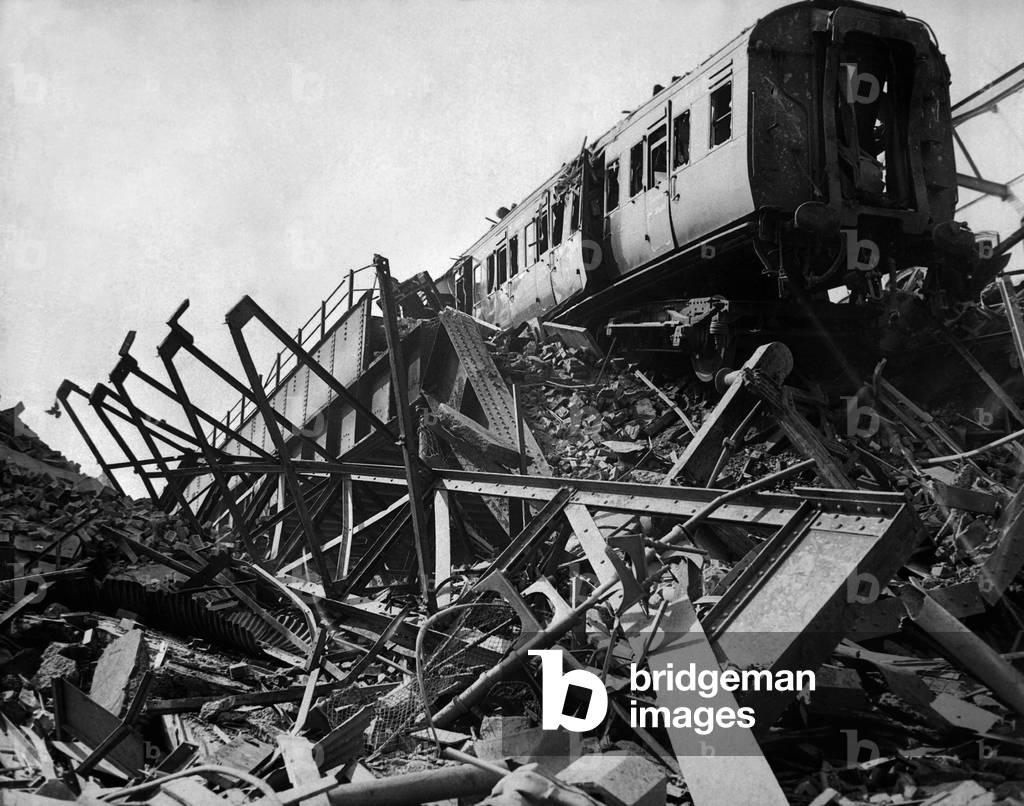
World War 2, Battle of Britain. Destroyed London railway station in Westminster Bridge Road, after London's biggest night raid of the war. April 16, 1941

EVB2944542: World War 2, Battle of Britain. Destroyed London railway station in Westminster Bridge Road, after London's biggest night raid of the war. April 16, 1941 / Bridgeman Images
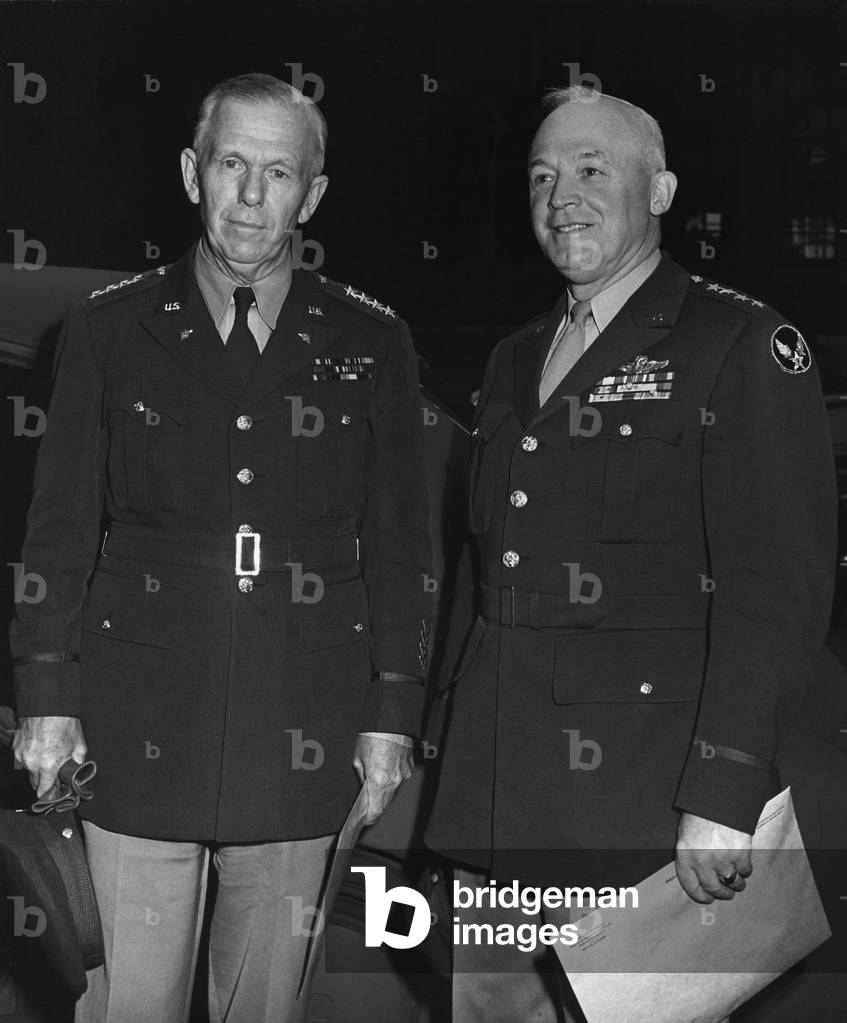
Gen. George Marshall and Army-Air Force Gen. Hap Arnold during World War 2. Chief of Staff Marshall was a mentor and friend to Arnold, and a promoter of the Air Force's growth and independence during the war. c. 1942-45

EVB2944560: Gen. George Marshall and Army-Air Force Gen. Hap Arnold during World War 2. Chief of Staff Marshall was a mentor and friend to Arnold, and a promoter of the Air Force's growth and independence during the war. c. 1942-45 / Bridgeman Images
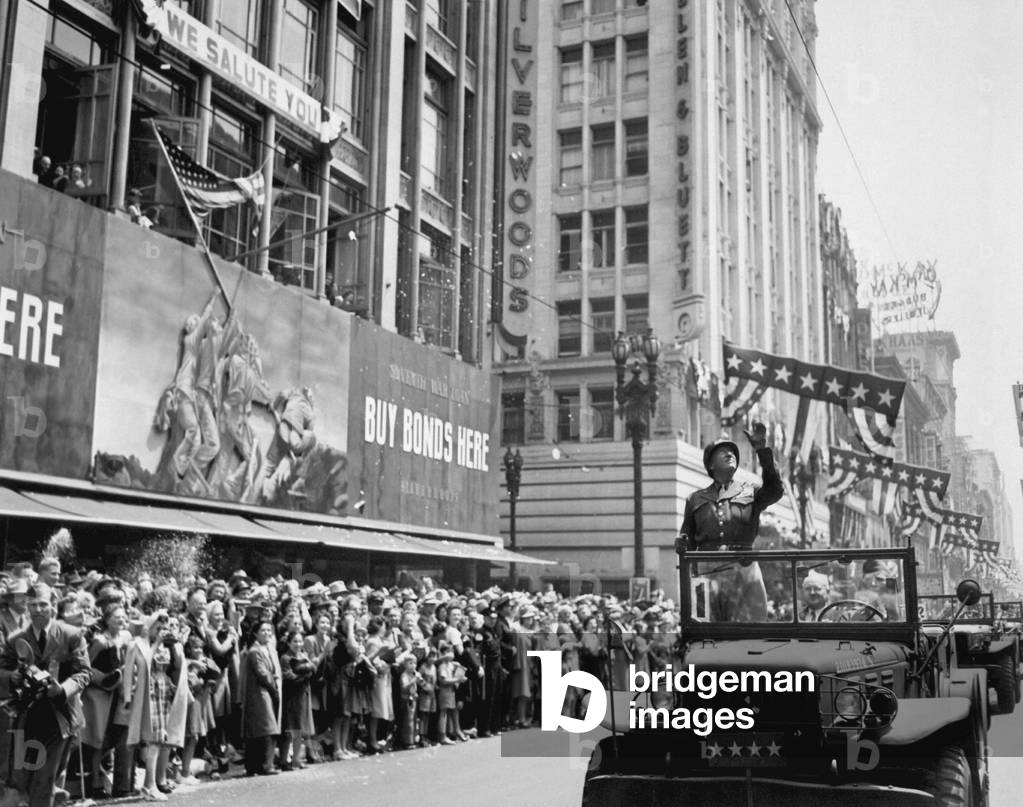
General George Patton receives the crowd's cheers in Los Angeles, June 9, 1945

EVB2944563: General George Patton receives the crowd's cheers in Los Angeles, June 9, 1945 / Bridgeman Images
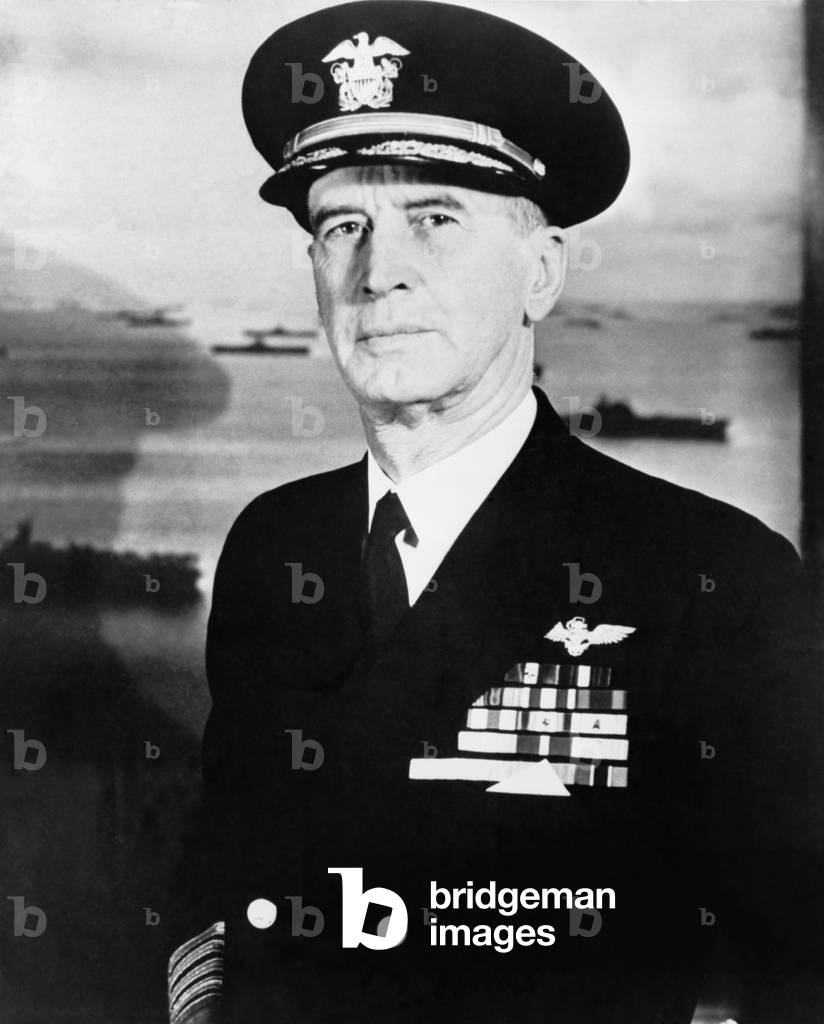
Admiral Ernest King in full naval uniform, against a backdrop of the fleet. 1956

EVB2944566: Admiral Ernest King in full naval uniform, against a backdrop of the fleet. 1956 / Bridgeman Images
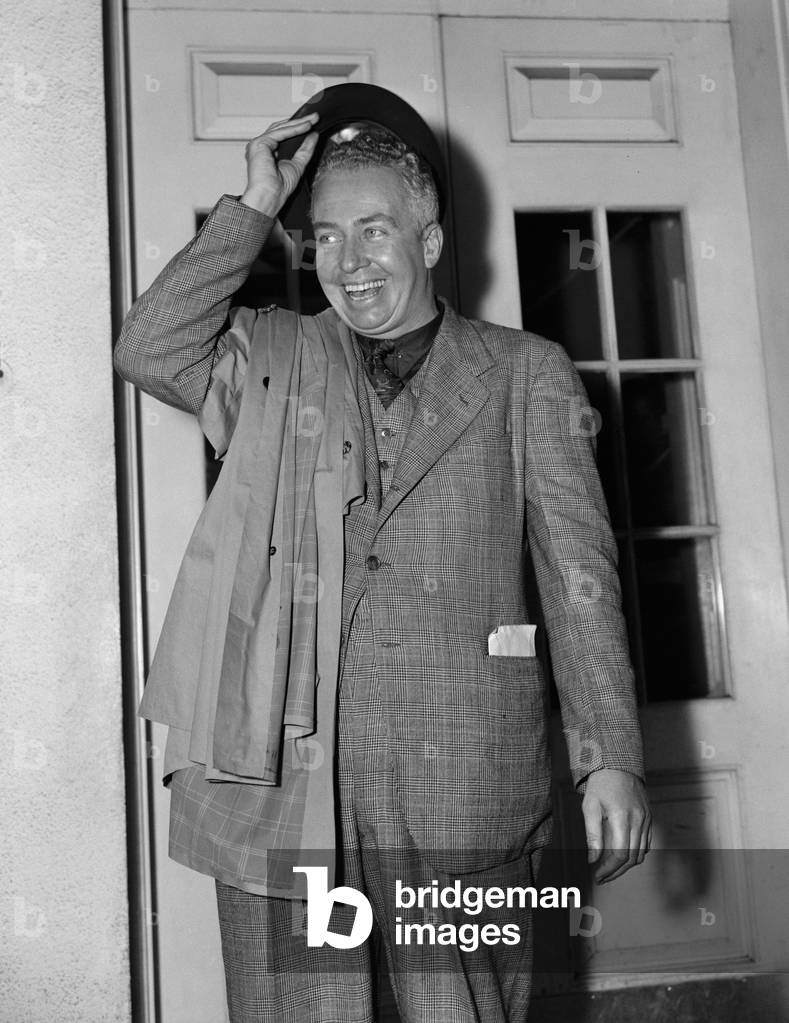
Cornelius Vanderbilt III, leaving the White House, Sept 1, 1939. The former publisher and author had recently returned from Europe on the verge of WW2

EVB2944324: Cornelius Vanderbilt III, leaving the White House, Sept 1, 1939. The former publisher and author had recently returned from Europe on the verge of WW2 / Bridgeman Images
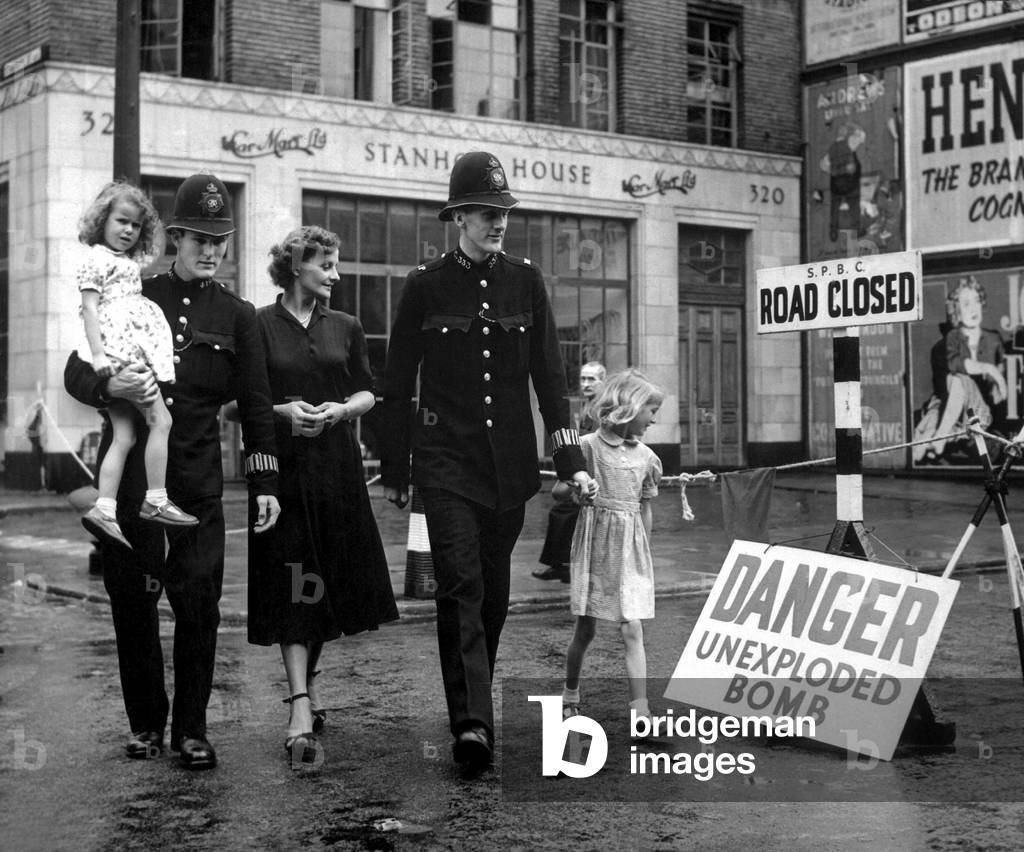
A family is escorted away from the site of an unexploded German bomb in 1948. A 2,500 pound German bomb, buried opposite University College Hospital, London, fell in 1941. After it was defused and removed, residents returned to their homes

EVB2944345: A family is escorted away from the site of an unexploded German bomb in 1948. A 2,500 pound German bomb, buried opposite University College Hospital, London, fell in 1941. After it was defused and removed, residents returned to their homes / Bridgeman Images
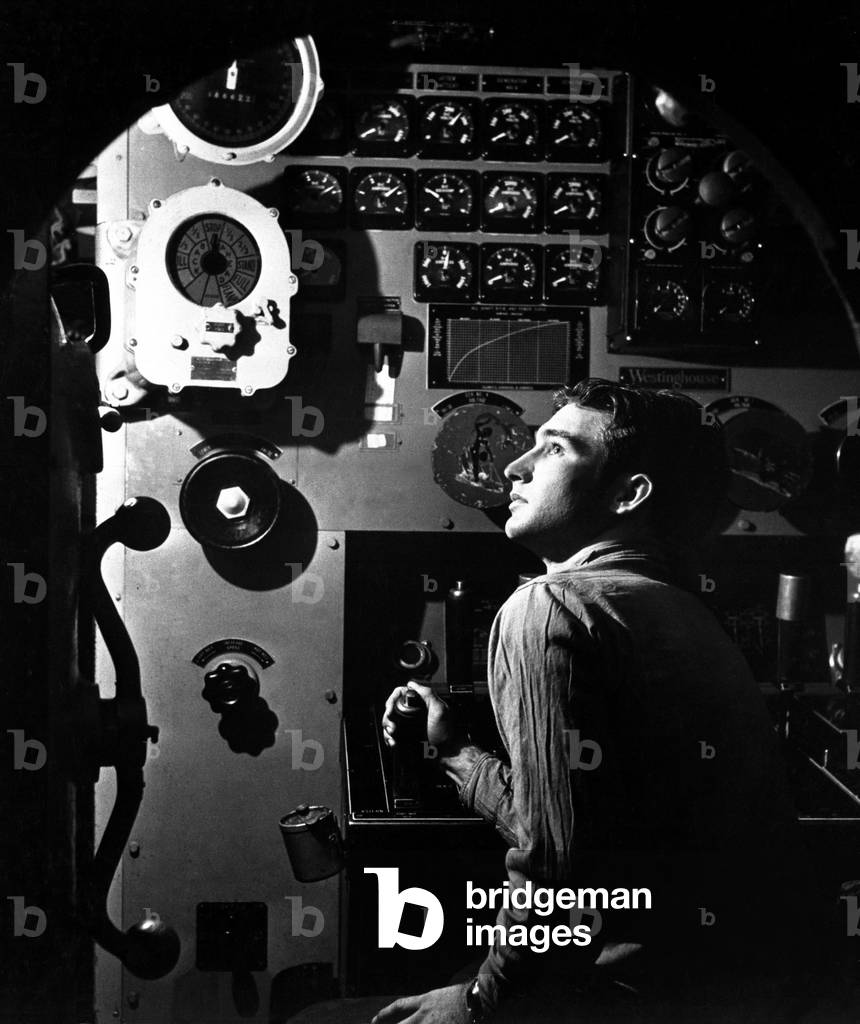
Sailor at work in the electric engine control room of USS BATFISH on submarine war patrol, World War 2, May 1945

EVB2944363: Sailor at work in the electric engine control room of USS BATFISH on submarine war patrol, World War 2, May 1945 / Bridgeman Images
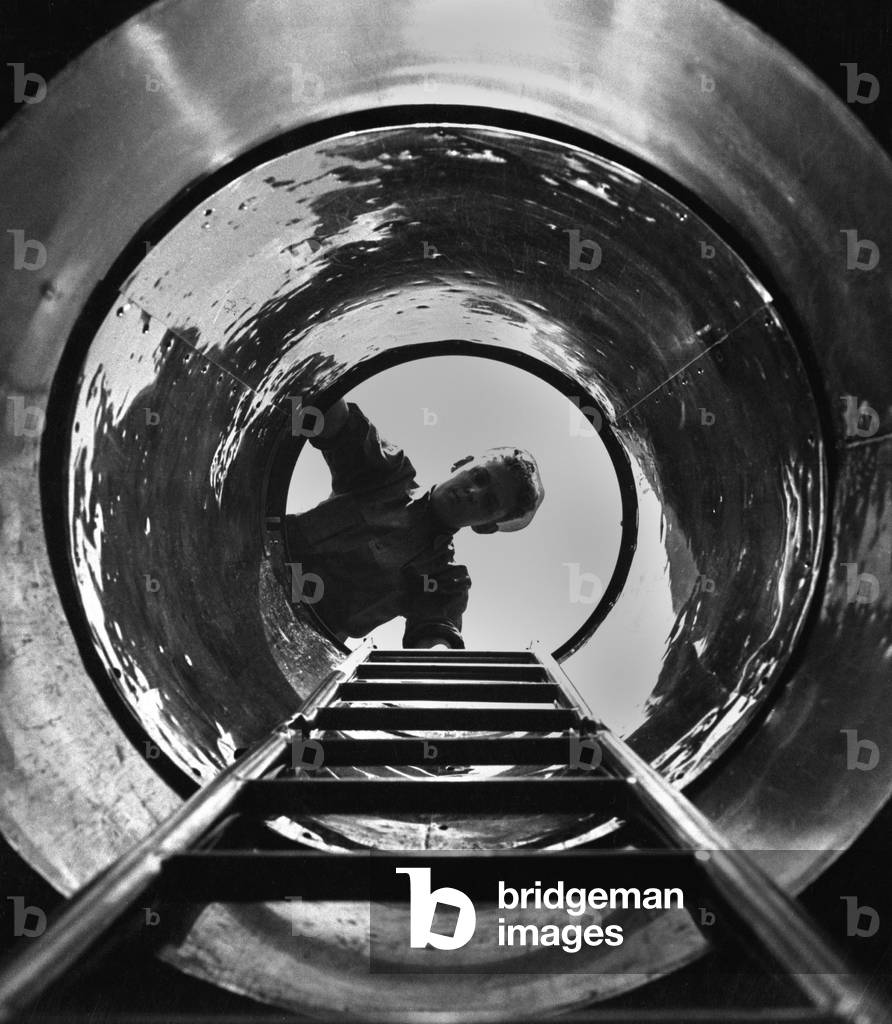
U.S. sailor looks down the hatch the submarine, USS MARLIN at New London, Conn. World War 2, August 1943

EVB2944366: U.S. sailor looks down the hatch the submarine, USS MARLIN at New London, Conn. World War 2, August 1943 / Bridgeman Images
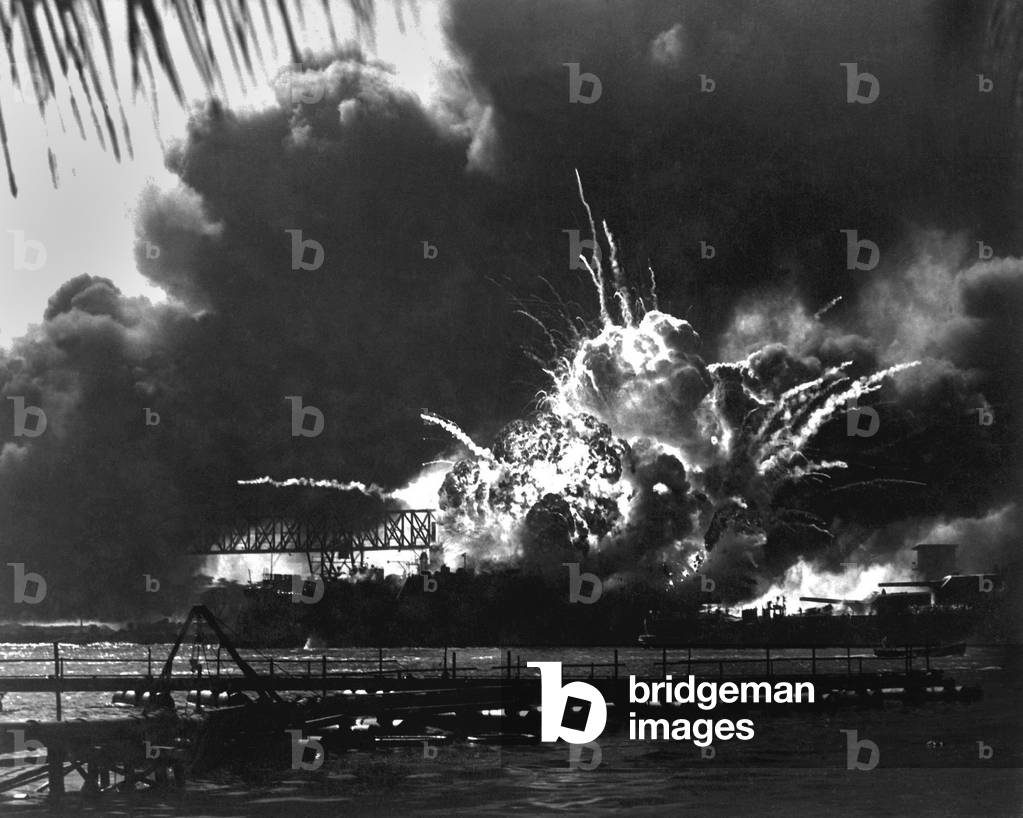
Explosion of the USS Shaw's forward magazine during the Japanese attack on Pearl Harbor, Dec. 7, 1941. The Shaw was repaired within a few months of the attack, and served in the Pacific through World War 2

EVB2944393: Explosion of the USS Shaw's forward magazine during the Japanese attack on Pearl Harbor, Dec. 7, 1941. The Shaw was repaired within a few months of the attack, and served in the Pacific through World War 2 / Bridgeman Images
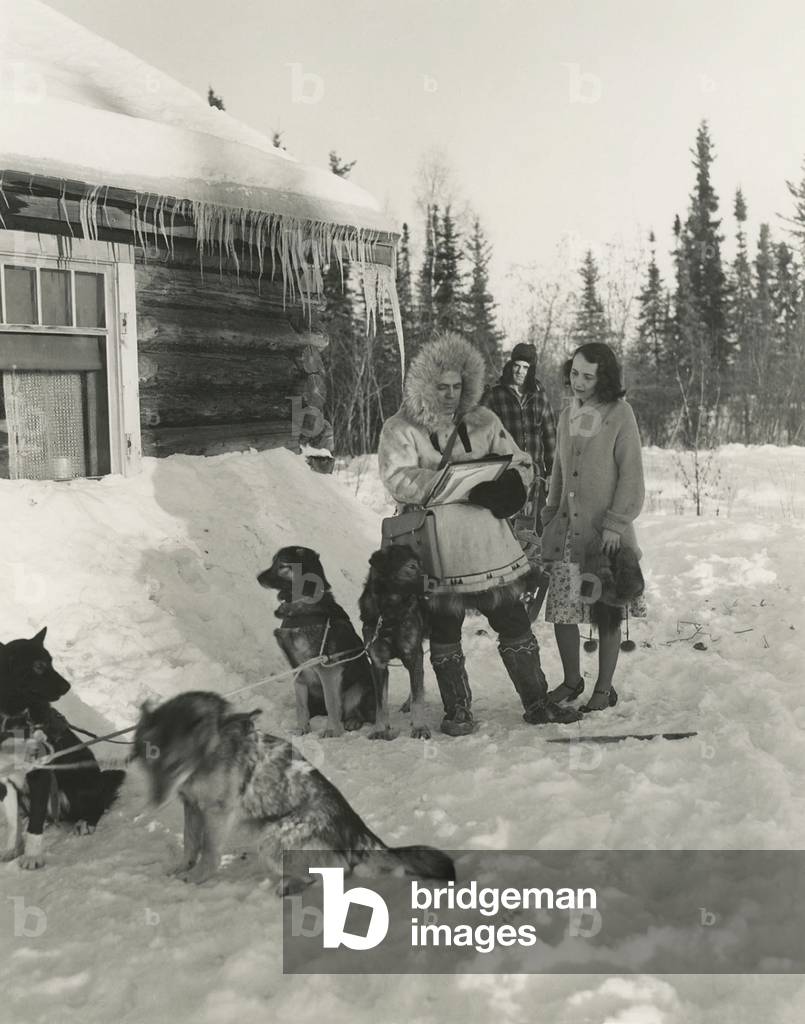
1940s Census taker in Fairbanks, Alaska. He traveled by dog sled to reach this woman's home. The dog musher stands in the background, so he does not overhear the confidential census information

EVB2944298: 1940s Census taker in Fairbanks, Alaska. He traveled by dog sled to reach this woman's home. The dog musher stands in the background, so he does not overhear the confidential census information / Bridgeman Images
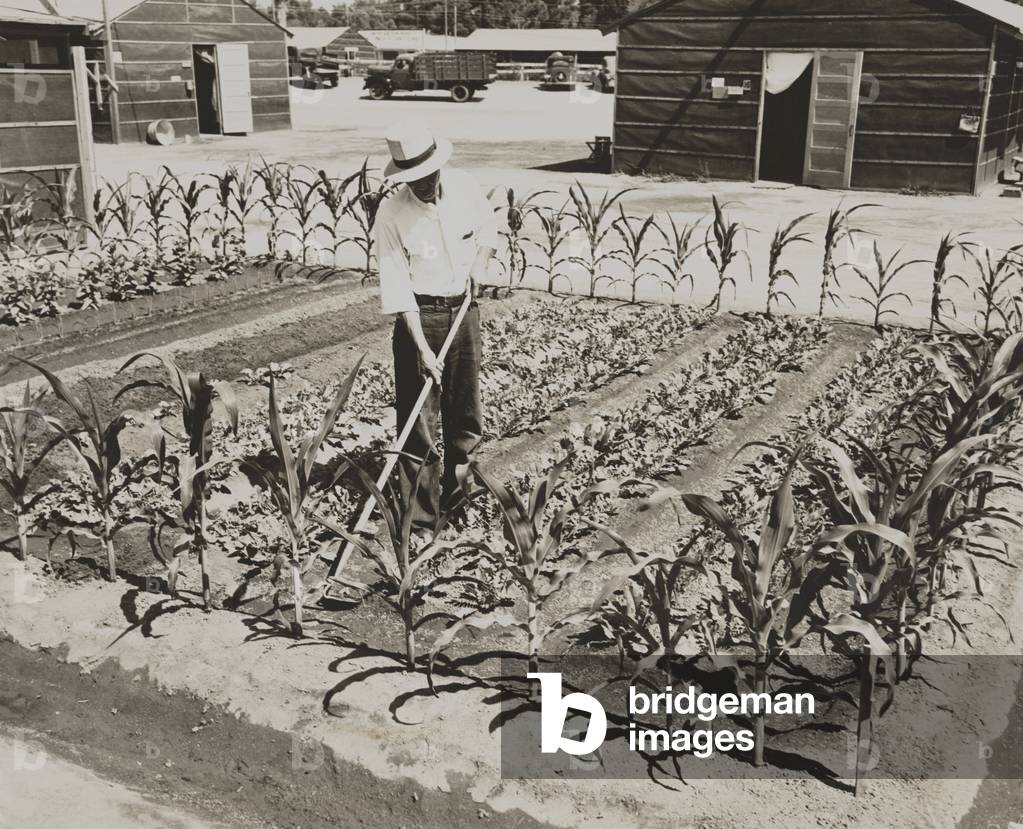
Garden at the Fresno Assembly Center, a detention center for Japanese-Americans in 1942. The facility was populated from May 6 to October 30, allowing time to see a garden bear fruit before their removal to a World War 2 internment in Jerome, Arkansas

EVB2944423: Garden at the Fresno Assembly Center, a detention center for Japanese-Americans in 1942. The facility was populated from May 6 to October 30, allowing time to see a garden bear fruit before their removal to a World War 2 internment in Jerome, Arkansas / Bridgeman Images
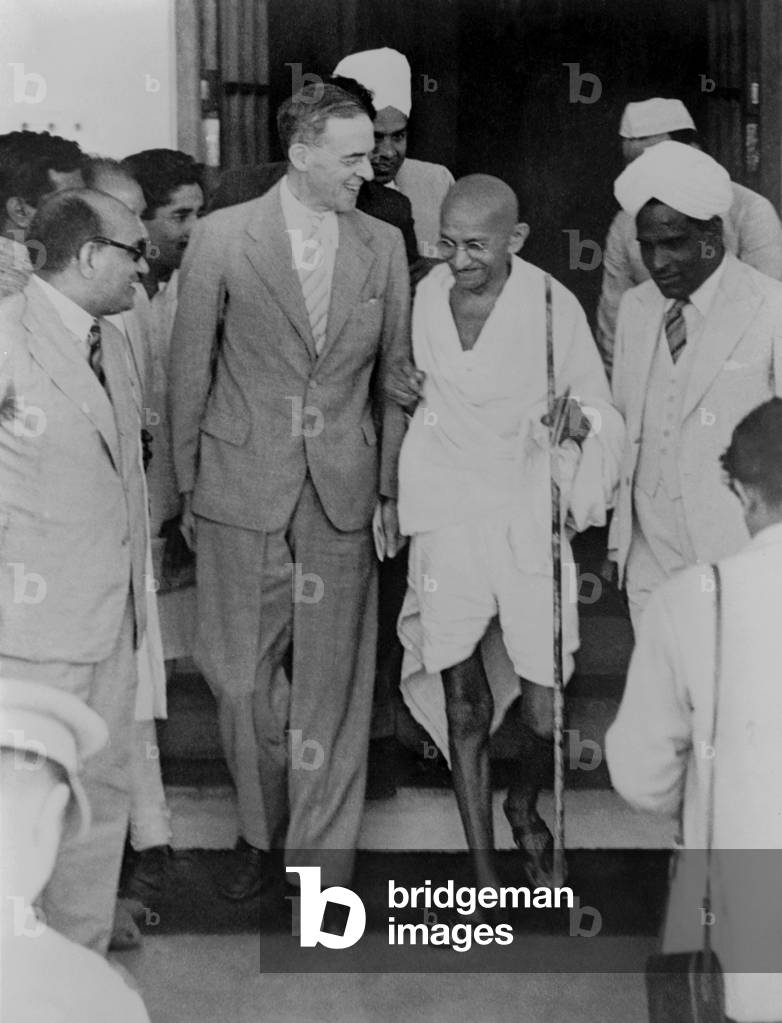
Cripps Mission fails, April 1941. Mahatma Gandhi with Sir Stafford Cripps, in New Delhi, India. Gandhi's Congress Party demanded immediate self-government in return for support of British in World War 2. Cripps offered less and within a few months, Gandhi and the Congress Party leadership were jailed

EVB2944340: Cripps Mission fails, April 1941. Mahatma Gandhi with Sir Stafford Cripps, in New Delhi, India. Gandhi's Congress Party demanded immediate self-government in return for support of British in World War 2. Cripps offered less and within a few months, Gandhi and the Congress Party leadership were jailed / Bridgeman Images
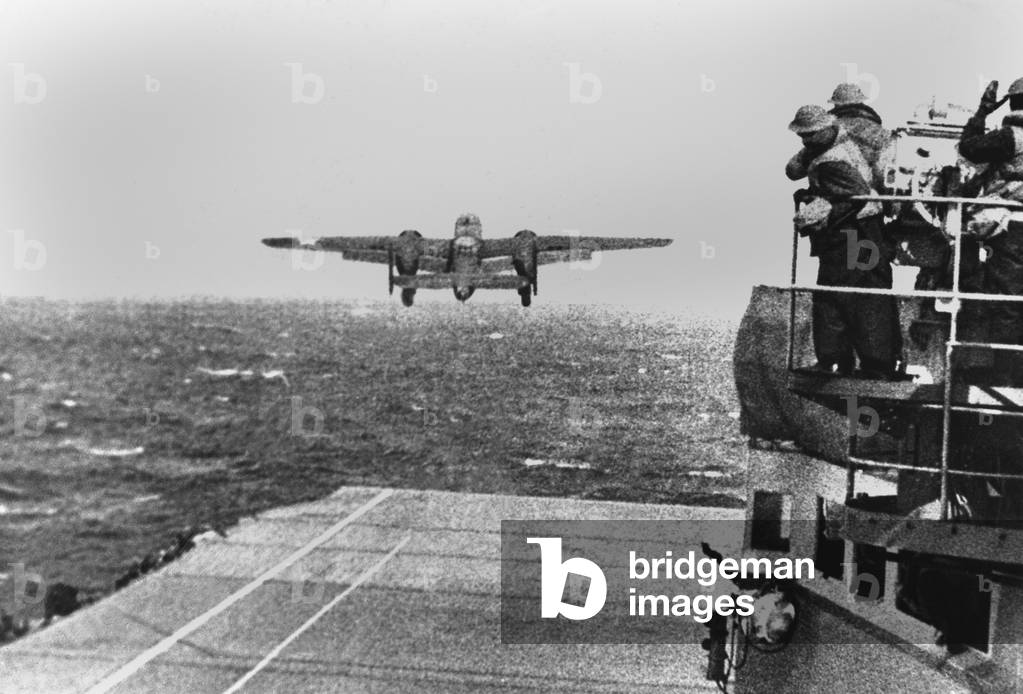
Doolittle Raid, April 18, 1942. An Army B-25 bomber takes off from the USS HORNET in first U.S. air raid on Japan lead by General James Doolittle during World War 2

EVB2944462: Doolittle Raid, April 18, 1942. An Army B-25 bomber takes off from the USS HORNET in first U.S. air raid on Japan lead by General James Doolittle during World War 2 / Bridgeman Images
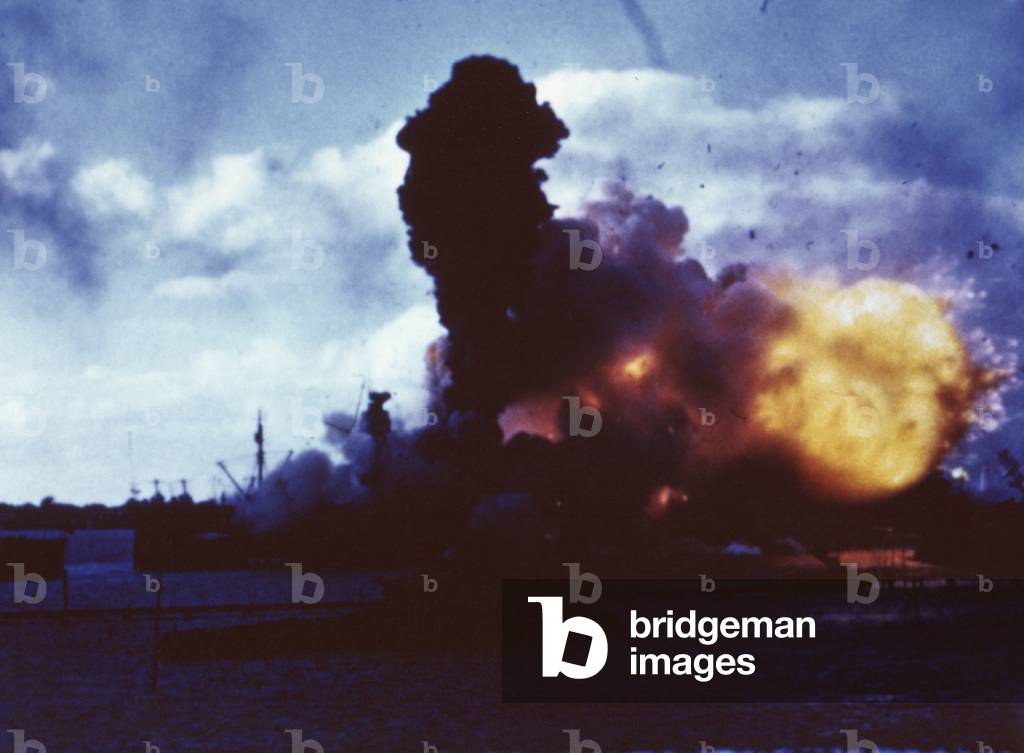
USS Arizona burns at Pearl Harbor after Japanese attack, Dec. 7, 1941

EVB2944388: USS Arizona burns at Pearl Harbor after Japanese attack, Dec. 7, 1941 / Bridgeman Images
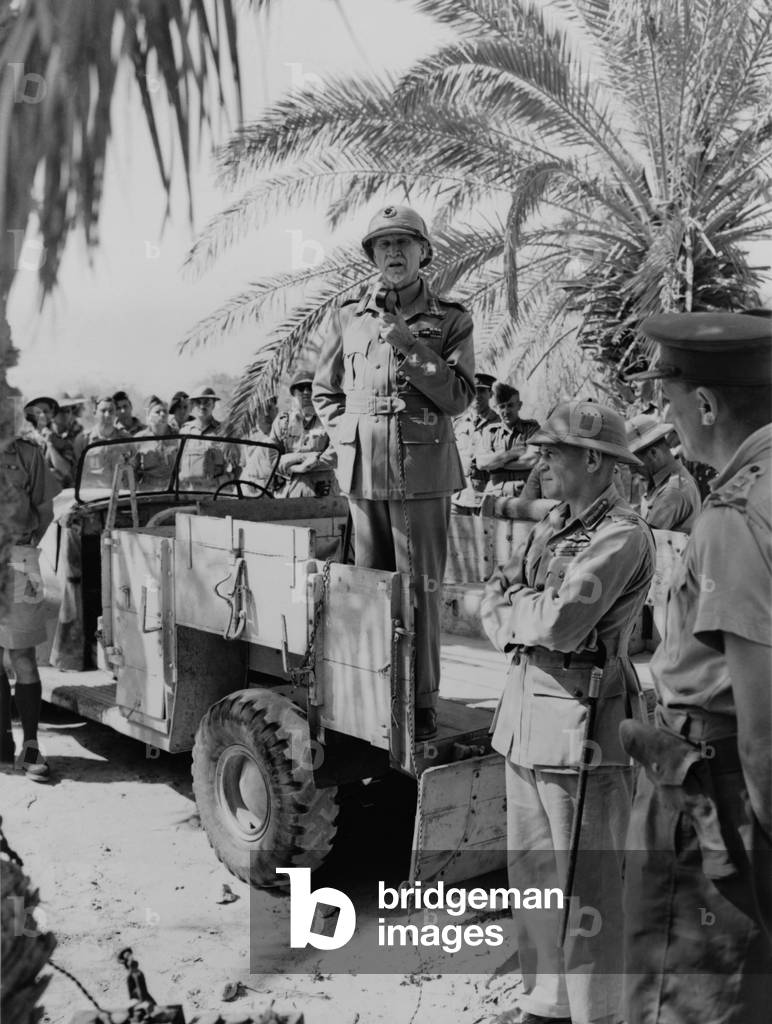
Prime Minister Jan Christiaan Smuts, speaks to South African troops from the back of truck. c.1941-43 (b/w photo)

EVB2944573: Prime Minister Jan Christiaan Smuts, speaks to South African troops from the back of truck. c.1941-43 (b/w photo), Unknown photographer, (20th century) / Bridgeman Images
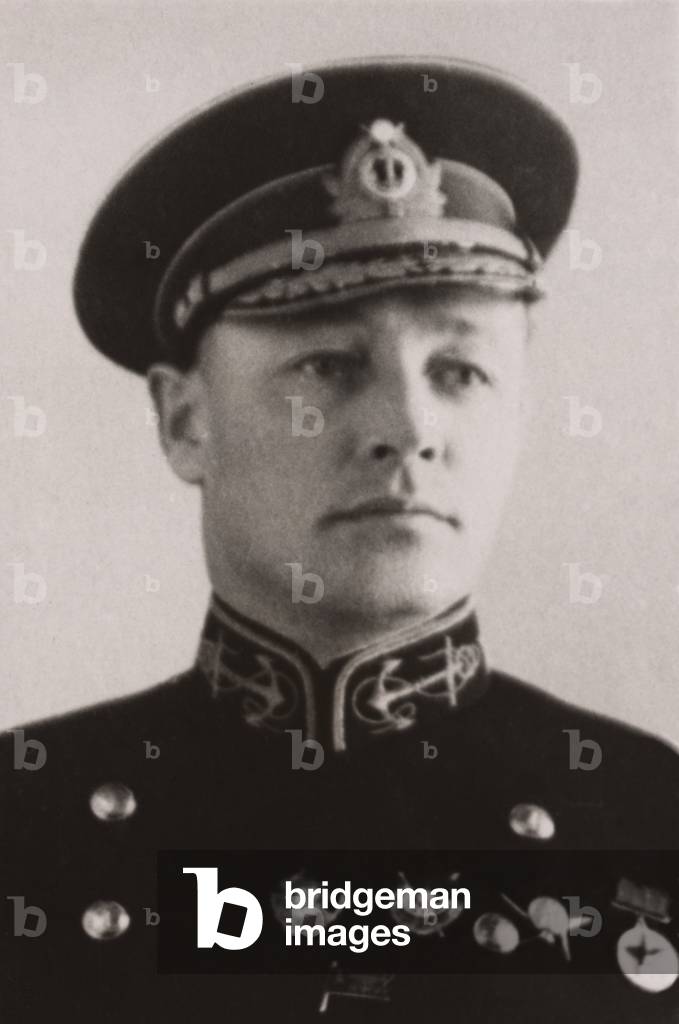
Admiral Nikolaji Kuznetsov served as People's Commissar of the Navy during World War 2. The main role of Soviet navy was the protection of the Caucasus with Black Sea operations. 1942

EVB2944579: Admiral Nikolaji Kuznetsov served as People's Commissar of the Navy during World War 2. The main role of Soviet navy was the protection of the Caucasus with Black Sea operations. 1942 / Bridgeman Images
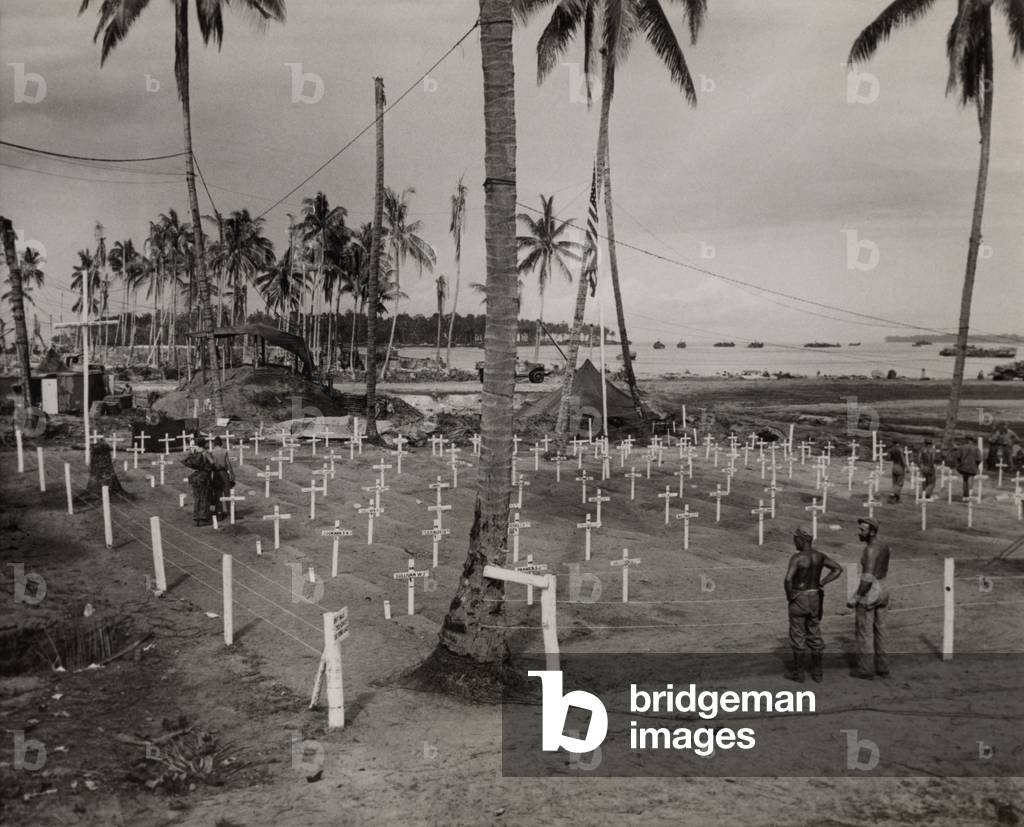
Torokina Cemetery for Marines killed Bougainville Island, in combat against the Japanese. Jan. 13, 1944. Several Marines are among the white crosses bearing names of the fallen

EVB2944635: Torokina Cemetery for Marines killed Bougainville Island, in combat against the Japanese. Jan. 13, 1944. Several Marines are among the white crosses bearing names of the fallen / Bridgeman Images
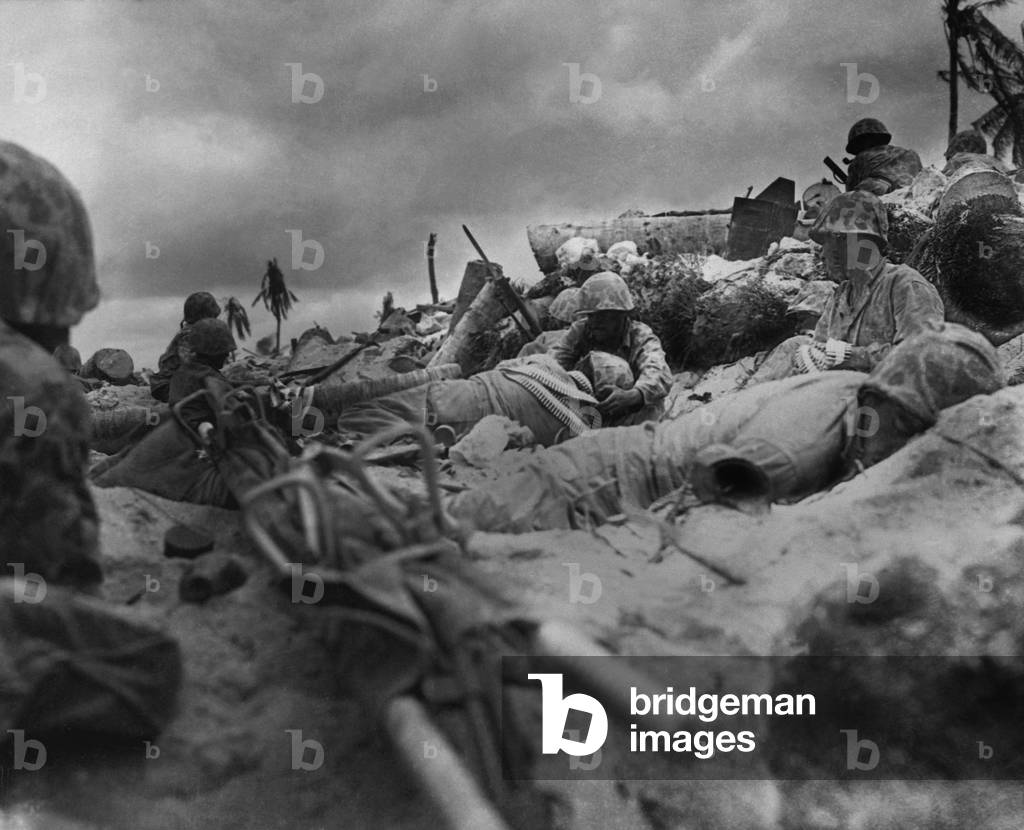
U.S. Marines take cover from Japanese fire behind a sea wall on Red Beach #3, Tarawa Island. Nov. 20, 1943

EVB2944651: U.S. Marines take cover from Japanese fire behind a sea wall on Red Beach #3, Tarawa Island. Nov. 20, 1943 / Bridgeman Images
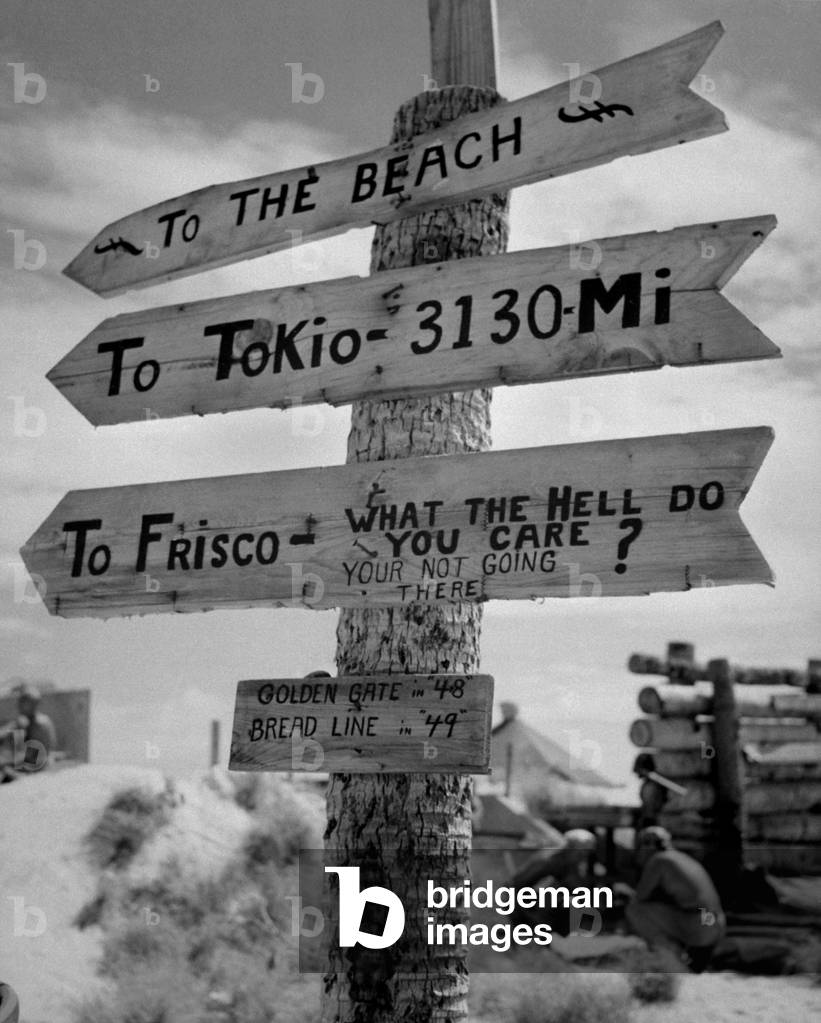
Sign on Tarawa Island illustrates Marine Corps humor and lack of optimism as to duration of war against Japan. Gilbert Islands, June 1944

EVB2944659: Sign on Tarawa Island illustrates Marine Corps humor and lack of optimism as to duration of war against Japan. Gilbert Islands, June 1944 / Bridgeman Images
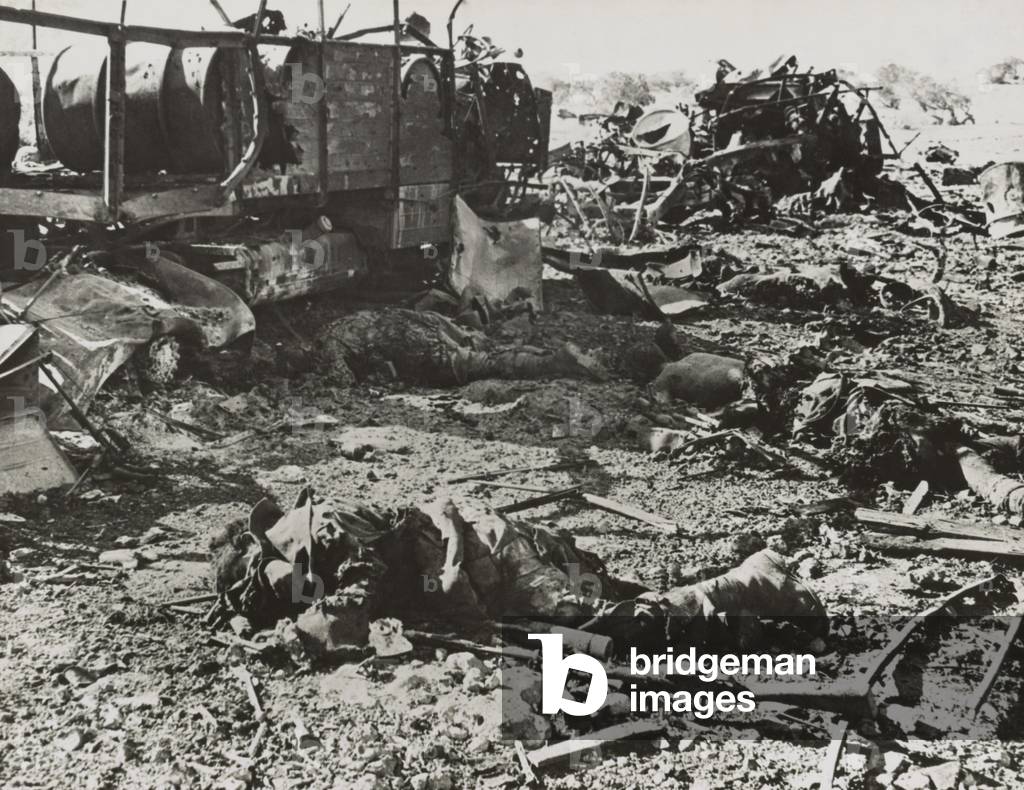
Dead Italian troops were transporting ammunition when struck by British artillery. Near Derna, Cyrenaica, during World War 2, c. 1940-42

EVB2944723: Dead Italian troops were transporting ammunition when struck by British artillery. Near Derna, Cyrenaica, during World War 2, c. 1940-42 / Bridgeman Images
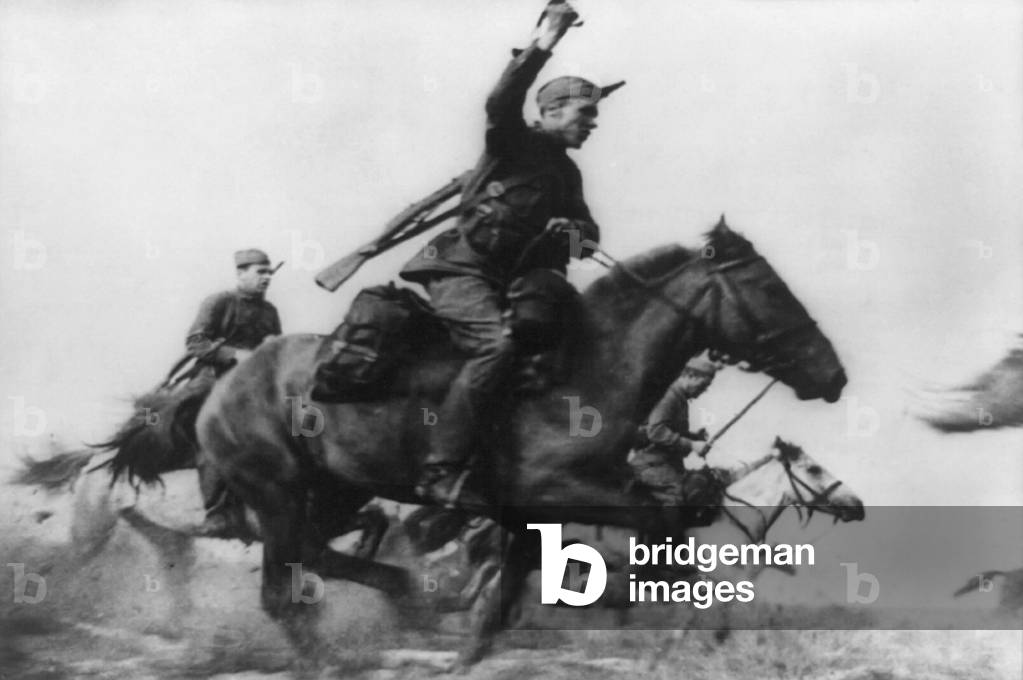
A Cavalry troop of the Red Army attacking the German infantry at the Soviet war front, c. 1941. After Russia lost most of its motorized equipment in the German invasion, mounted infantry were used in the Battle of Moscow

EVB2944740: A Cavalry troop of the Red Army attacking the German infantry at the Soviet war front, c. 1941. After Russia lost most of its motorized equipment in the German invasion, mounted infantry were used in the Battle of Moscow / Bridgeman Images
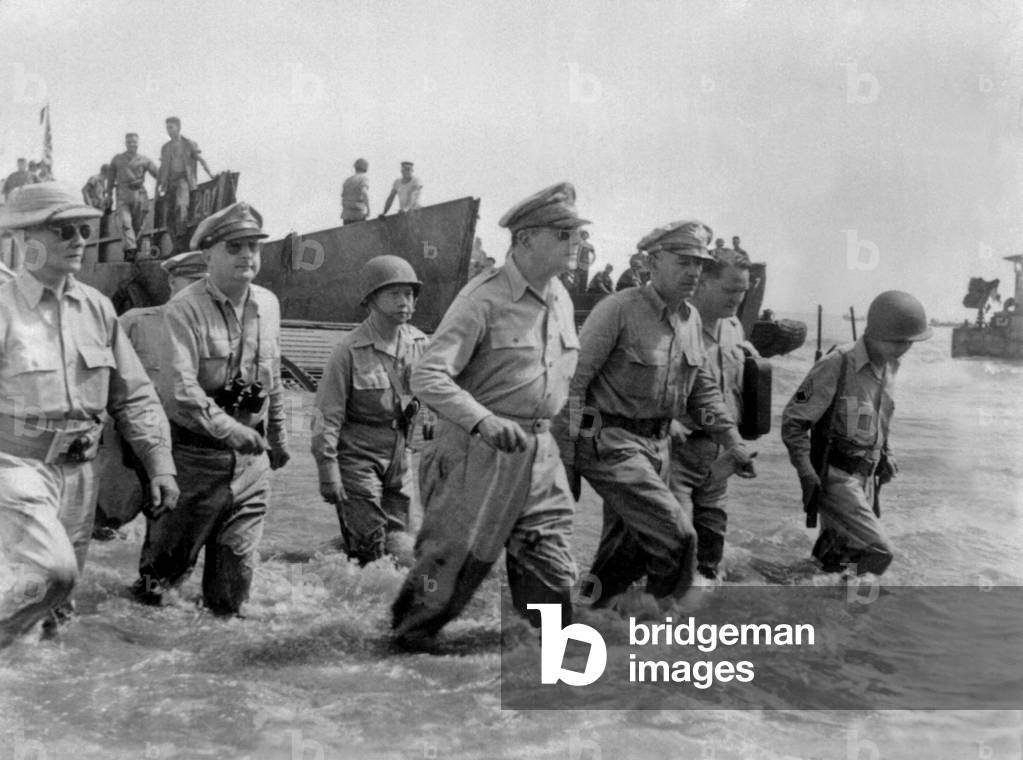
Gen. Douglas MacArthur wades ashore during initial landings at Leyte Island, Philippines. Oct. 20, 1944

EVB2944761: Gen. Douglas MacArthur wades ashore during initial landings at Leyte Island, Philippines. Oct. 20, 1944 / Bridgeman Images
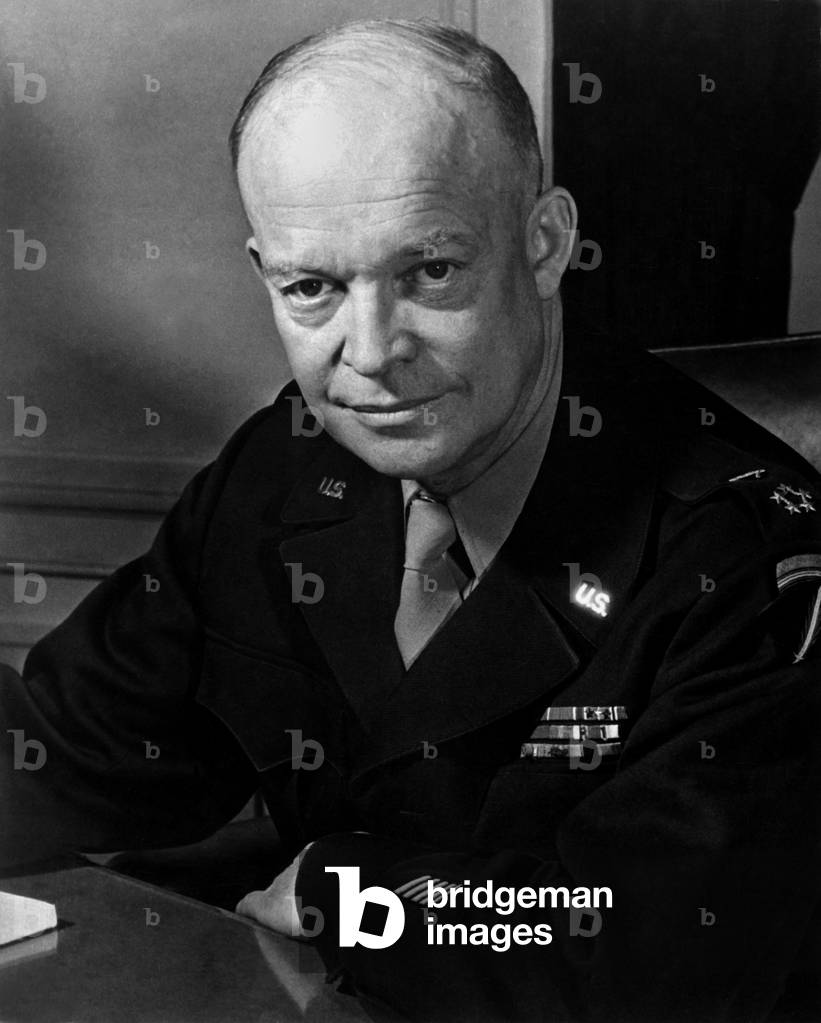
General Dwight Eisenhower, Supreme Allied Commander, at European headquarters. Feb. 1, 1945

EVB2944764: General Dwight Eisenhower, Supreme Allied Commander, at European headquarters. Feb. 1, 1945 / Bridgeman Images
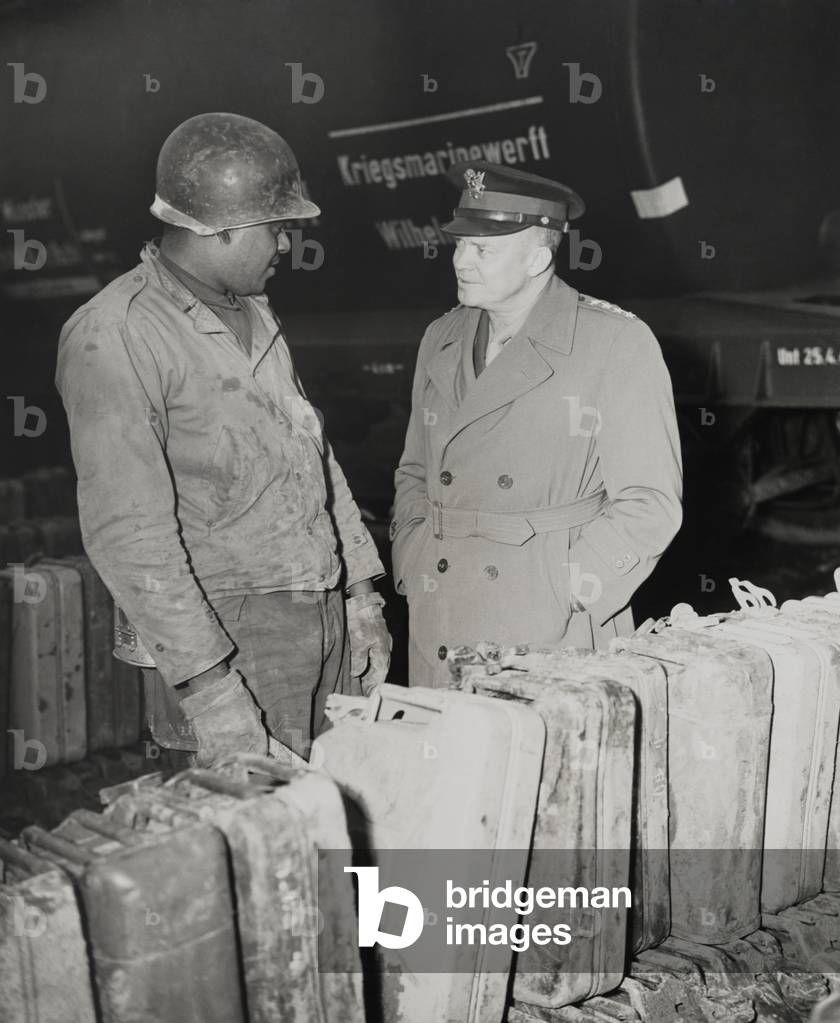
General Dwight Eisenhower talks with African American Private Edward Clay. Clay is stationed at a gas dump on the Western Front. The sign in background, 'Kriegsmarinewerft Wilhelmshaven', indicates the location is the coastal town in northwest Germany. c. 1945

EVB2944768: General Dwight Eisenhower talks with African American Private Edward Clay. Clay is stationed at a gas dump on the Western Front. The sign in background, 'Kriegsmarinewerft Wilhelmshaven', indicates the location is the coastal town in northwest Germany. c. 1945 / Bridgeman Images
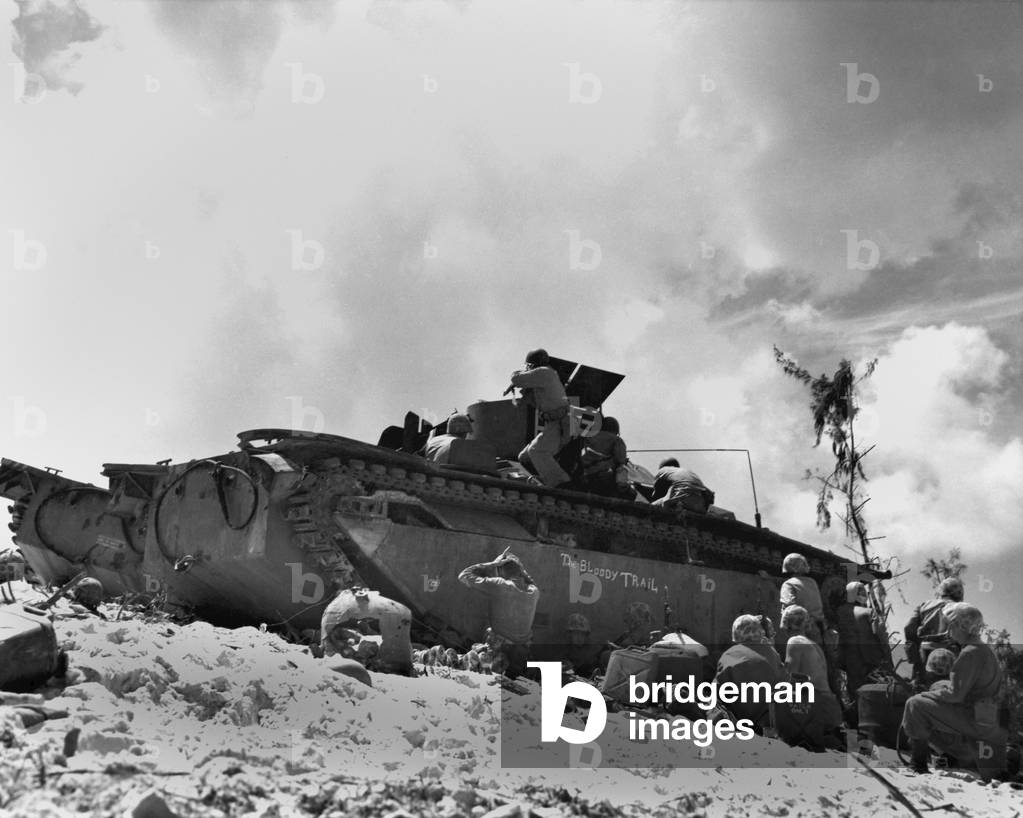
Marines fight from the shelter of an amphibious tractor on the beach at Peleliu, Sept. 14, 1944. Riflemen atop the vehicle fire at Japanese while their comrades get a breather. The AMTRAC is named 'The Bloody Trail'. World War 2, Pacific Ocean

EVB2944798: Marines fight from the shelter of an amphibious tractor on the beach at Peleliu, Sept. 14, 1944. Riflemen atop the vehicle fire at Japanese while their comrades get a breather. The AMTRAC is named 'The Bloody Trail'. World War 2, Pacific Ocean / Bridgeman Images
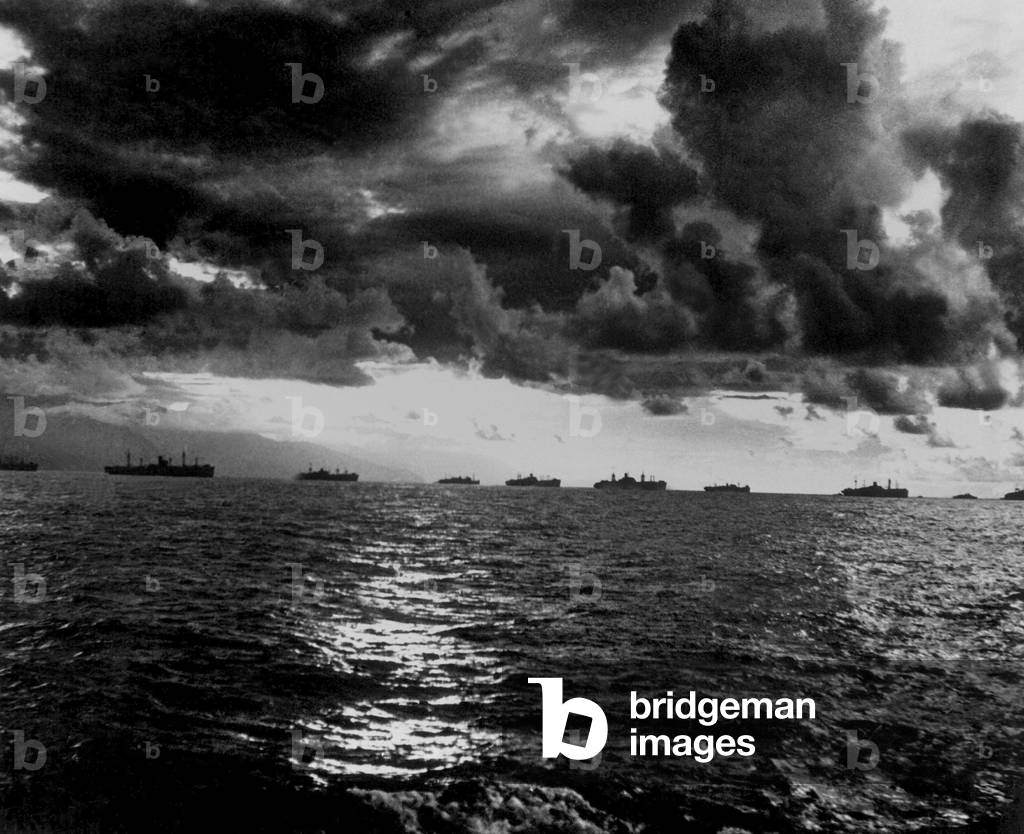
U.S. invasion Fleet along the coast of Leyte Island in the Philippines on D-Day, Oct. 20, 1944. World War 2, Pacific Ocean

EVB2944809: U.S. invasion Fleet along the coast of Leyte Island in the Philippines on D-Day, Oct. 20, 1944. World War 2, Pacific Ocean / Bridgeman Images
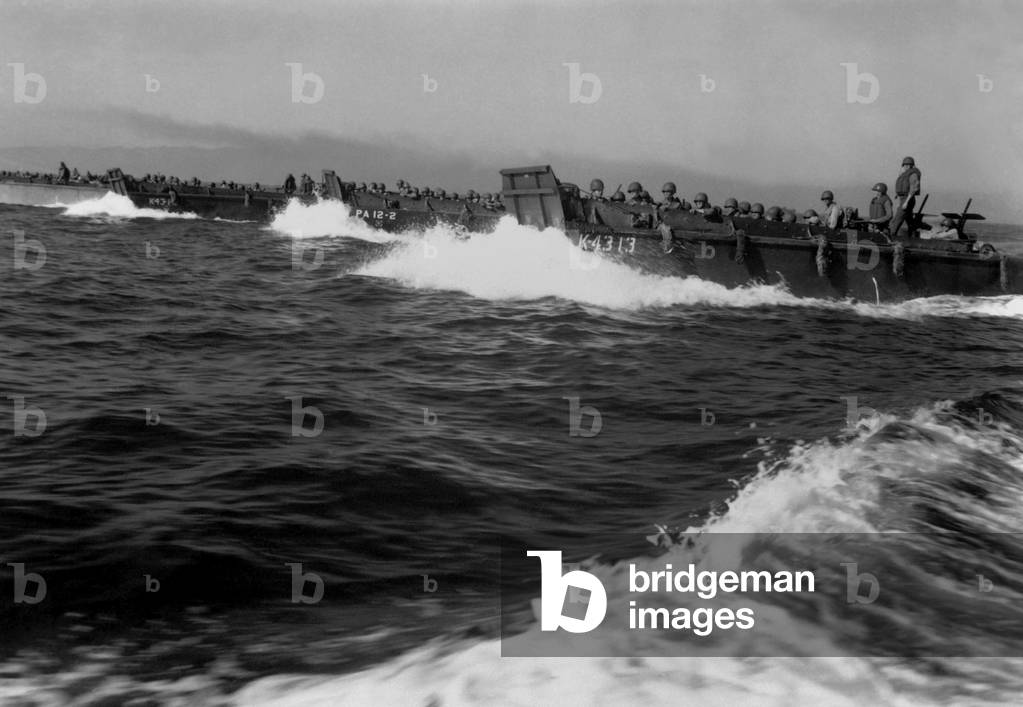
Landing barges, in Lingayen Gulf, carry the first wave of U.S. invaders to the beaches of Luzon. Jan 9. 1945. Japanese forces had already retreated inland and offered no resistance. Philippine Invasion, World War 2

EVB2944818: Landing barges, in Lingayen Gulf, carry the first wave of U.S. invaders to the beaches of Luzon. Jan 9. 1945. Japanese forces had already retreated inland and offered no resistance. Philippine Invasion, World War 2 / Bridgeman Images


Back to top