Search options

Orientation
Colour

Display options

View

Print

To print search results, use print friendly version of this page.

2490903 Search Results

Decorations, Christmas market, Bolzano, Trentino Alto Adige, Italy

CUB4509810: Decorations, Christmas market, Bolzano, Trentino Alto Adige, Italy / Bridgeman Images
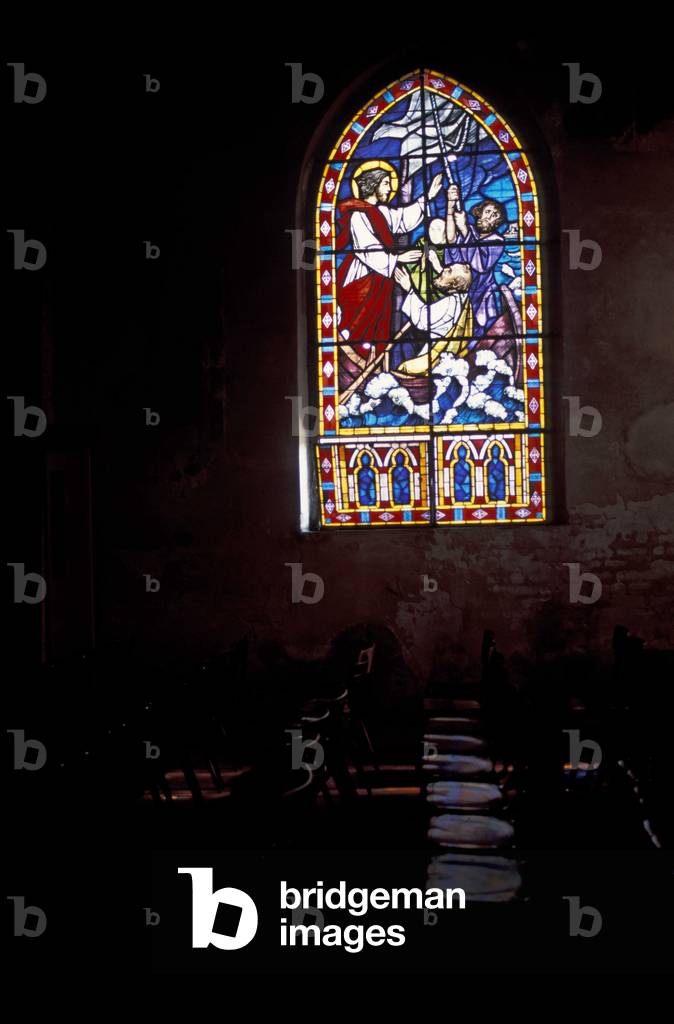
Glass window, San Cristoforo church, Naviglio Grande, Milan, Lombardy, Italy.

CUB4509820: Glass window, San Cristoforo church, Naviglio Grande, Milan, Lombardy, Italy. / Bridgeman Images
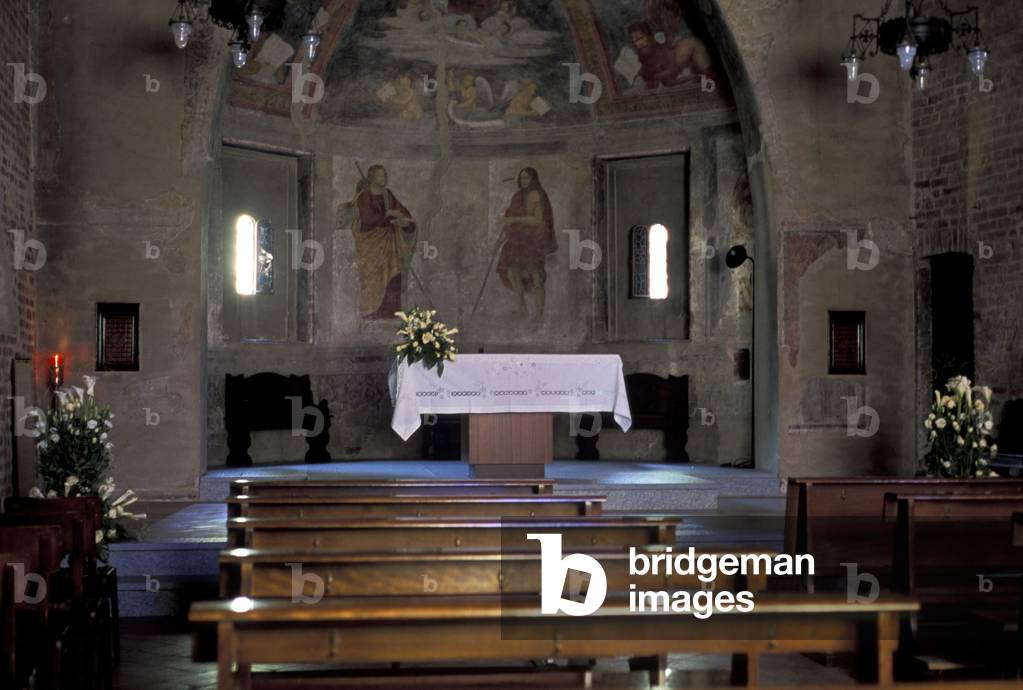
San Cristoforo church, Naviglio Grande, Milan, Lombardy, Italy.

CUB4509831: San Cristoforo church, Naviglio Grande, Milan, Lombardy, Italy. / Bridgeman Images

Coach and pair, Bolzano, Trentino Alto Adige, Italy

CUB4509834: Coach and pair, Bolzano, Trentino Alto Adige, Italy / Bridgeman Images

Witch, Christmas market, Bolzano, Trentino Alto Adige, Italy

CUB4509852: Witch, Christmas market, Bolzano, Trentino Alto Adige, Italy / Bridgeman Images

Amanita muscaria mushroom, Italy

CUB4509936: Amanita muscaria mushroom, Italy / Bridgeman Images

Typical building (Maso), Val di Rabbi, Trento, Trentino Alto Adige, Italy

CUB4509944: Typical building (Maso), Val di Rabbi, Trento, Trentino Alto Adige, Italy / Bridgeman Images

NGC 206 star cluster in the spiral galaxy M31 - Star cluster NGC 206 in the M31 spiral galaxy - The NGC 206 cluster, in the center of the image, is located in one of the arms south of the Andromede galaxy. It is one of the largest star-forming regions of our local group. This star cluster (blue, center of the image) is located in a southern arm of the Andromeda galaxy. It is great area of star formation

PIX4567618: NGC 206 star cluster in the spiral galaxy M31 - Star cluster NGC 206 in the M31 spiral galaxy - The NGC 206 cluster, in the center of the image, is located in one of the arms south of the Andromede galaxy. It is one of the largest star-forming regions of our local group. This star cluster (blue, center of the image) is located in a southern arm of the Andromeda galaxy. It is great area of star formation / Bridgeman Images

Star cluster M46 and planetary nebula NGC 2438 in the stern Open cluster M46 with Planetary Nebula NGC 2438 in Puppis - M46 (NGC 2437) is a cluster of stars aged 5400 years - light. It contains about 500 stars, 150 of which are brilliant. It is about 300 million years old. The planetary nebula NGC 2438 does not appear to belong to this cluster, and must be closer although its distance is unknown. M46 (NGC 2437) is at a distance of about 5,400 light - years away from Earth with an estimated age of about 300 million years. It contains about 500 stars of which 150 are bright. Planetary nebula NGC 2438 (middle bottom) doesn't seem to belong to the cluster

PIX4568034: Star cluster M46 and planetary nebula NGC 2438 in the stern Open cluster M46 with Planetary Nebula NGC 2438 in Puppis - M46 (NGC 2437) is a cluster of stars aged 5400 years - light. It contains about 500 stars, 150 of which are brilliant. It is about 300 million years old. The planetary nebula NGC 2438 does not appear to belong to this cluster, and must be closer although its distance is unknown. M46 (NGC 2437) is at a distance of about 5,400 light - years away from Earth with an estimated age of about 300 million years. It contains about 500 stars of which 150 are bright. Planetary nebula NGC 2438 (middle bottom) doesn't seem to belong to the cluster / Bridgeman Images
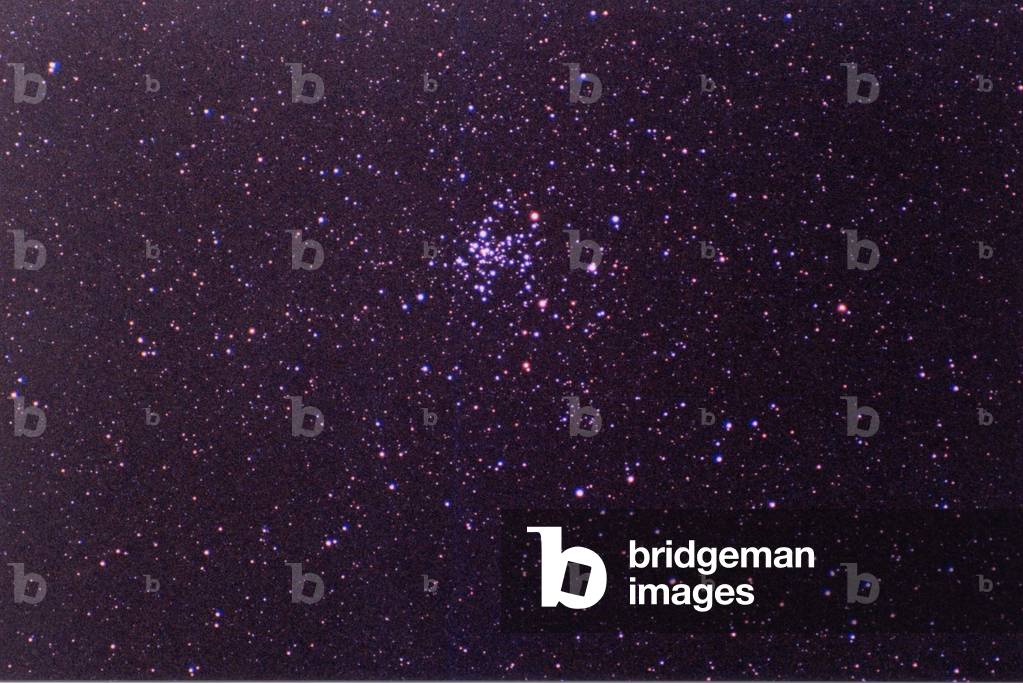
Open cluster NGC 2516 (C96) in the Carene - Open cluster NGC 2516 (C96) in Carin

PIX4568082: Open cluster NGC 2516 (C96) in the Carene - Open cluster NGC 2516 (C96) in Carin / Bridgeman Images

Portrait of Charles de Conde and his son John in 1592 Painting of the Flemish School of the 17th century (oil on canvas)

JLJ4568096: Portrait of Charles de Conde and his son John in 1592 Painting of the Flemish School of the 17th century (oil on canvas), Flemish School, (17th century) / Bridgeman Images

Frontispiece for musical scores of Opere teatrale serie e buffe by Gioacchino Rossini, 19th century

LRI4568134: Frontispiece for musical scores of Opere teatrale serie e buffe by Gioacchino Rossini, 19th century, Unknown Artist, (19th century) / Bridgeman Images

Title page of musical score of symphony for piano in Semiramide by Gioacchino Rossini

LRI4568181: Title page of musical score of symphony for piano in Semiramide by Gioacchino Rossini / Bridgeman Images

Open cluster NGC 3293 in Carene - Open star cluster NGC 3293 in Carina - Star cluster located in the constellation Carene about 8500 years ago - light from Earth. Unlike the Sun, many stars are found in brilliant clusters such as NGC 3293 where they spend their lives. At birth, which should have been at much the same time for all the stars in NGC 3293, the most massive stars are hot and very luminous and therefore appear as the brightest blue stars. With time they deplete their supplies of nuclear fuel, hydrogen. This evolutionary process involves cooling, so that the stars become redder, and would ordinarily disappear from view, but they also swell to gigantic proportions and so remain visible. The bright orange star in NGC 3293 is the member of the cluster which has aged fastest. This cluster is in the constellation of Carina at a distance of about 8500 light years

PIX4568196: Open cluster NGC 3293 in Carene - Open star cluster NGC 3293 in Carina - Star cluster located in the constellation Carene about 8500 years ago - light from Earth. Unlike the Sun, many stars are found in brilliant clusters such as NGC 3293 where they spend their lives. At birth, which should have been at much the same time for all the stars in NGC 3293, the most massive stars are hot and very luminous and therefore appear as the brightest blue stars. With time they deplete their supplies of nuclear fuel, hydrogen. This evolutionary process involves cooling, so that the stars become redder, and would ordinarily disappear from view, but they also swell to gigantic proportions and so remain visible. The bright orange star in NGC 3293 is the member of the cluster which has aged fastest. This cluster is in the constellation of Carina at a distance of about 8500 light years / Bridgeman Images
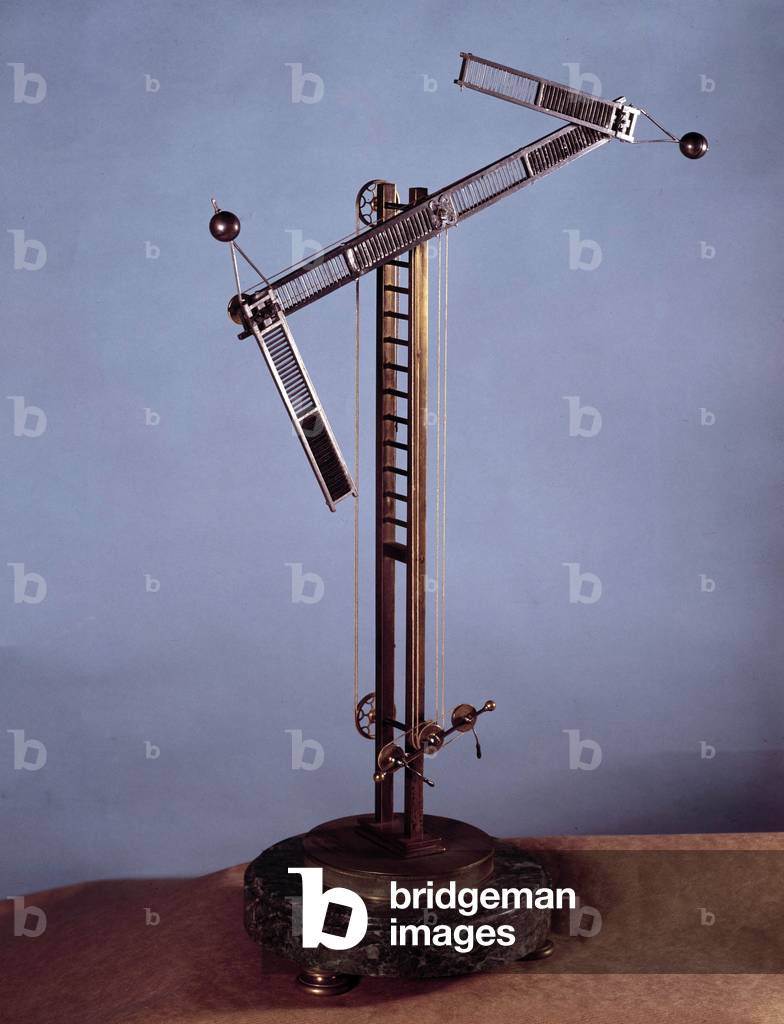
The telegraph of Claude Chappe, French engineer (object)

JLJ4568203: The telegraph of Claude Chappe, French engineer (object), Chappe, Claude (1763-1805) / Bridgeman Images

Portrait of Paul Doumer on January 22, 1905, then President of the House of Deputes. One of the supplement to 'Le petit journal', 22/01/1905 (litho)

JLJ4568213: Portrait of Paul Doumer on January 22, 1905, then President of the House of Deputes. One of the supplement to 'Le petit journal', 22/01/1905 (litho), Anonymous / Bridgeman Images

Huygens probe en route to Titan. - Artist's view of the Cassini probe during the separation of the European module Huygens on 25 December 2004. Huygens landed on the Titan satellite on 14 January 2005. The Cassini-Huygens probe was launched on 15 October 1997 and has been placed in orbit around Saturn since 1 July 200

PIX4605992: Huygens probe en route to Titan. - Artist's view of the Cassini probe during the separation of the European module Huygens on 25 December 2004. Huygens landed on the Titan satellite on 14 January 2005. The Cassini-Huygens probe was launched on 15 October 1997 and has been placed in orbit around Saturn since 1 July 200 / Bridgeman Images

Huygens probe en route to Titan. - Artist's view of the Cassini probe during the separation of the European module Huygens on 25 December 2004. Huygens landed on the Titan satellite on 14 January 2005. The Cassini-Huygens probe was launched on 15 October 1997 and has been placed in orbit around Saturn since 1 July 200

PIX4606002: Huygens probe en route to Titan. - Artist's view of the Cassini probe during the separation of the European module Huygens on 25 December 2004. Huygens landed on the Titan satellite on 14 January 2005. The Cassini-Huygens probe was launched on 15 October 1997 and has been placed in orbit around Saturn since 1 July 200 / Bridgeman Images

Huygens probe en route to Titan - The Huygens probe entering Titan's atmosphere - Artist's view of the European Huygens probe above Titan. Huygens landed on the Titan satellite on 14 January 2005. The Cassini-Huygens probe was launched on 15 October 1997 and has been placed in orbit around Saturn since 1 July 2004. This artist's conception of the Cassini orbiter shows the Huygens probe separating to enter Titan's atmosphere. After separation, the probe drifts for about three weeks until reaching its destination. Huygens landed on Titan surface on January 14, 2005

PIX4606082: Huygens probe en route to Titan - The Huygens probe entering Titan's atmosphere - Artist's view of the European Huygens probe above Titan. Huygens landed on the Titan satellite on 14 January 2005. The Cassini-Huygens probe was launched on 15 October 1997 and has been placed in orbit around Saturn since 1 July 2004. This artist's conception of the Cassini orbiter shows the Huygens probe separating to enter Titan's atmosphere. After separation, the probe drifts for about three weeks until reaching its destination. Huygens landed on Titan surface on January 14, 2005 / Bridgeman Images

SMART Probe - 1 - Artist View - SMART Probe - 1 - Artist View - SMART - 1 (Small Missions for Advanced Research in Technology) is a European probe that maps the Moon and tests new technologies such as ion propulsion. The mission took place from 27 September 2003 to 3 September 2006

PIX4606133: SMART Probe - 1 - Artist View - SMART Probe - 1 - Artist View - SMART - 1 (Small Missions for Advanced Research in Technology) is a European probe that maps the Moon and tests new technologies such as ion propulsion. The mission took place from 27 September 2003 to 3 September 2006 / Bridgeman Images

LRO Probe - Artist View - LRO - Artist view - Lunar Reconnaissance Orbiter (LRO) is a space probe of NASA that will be put into orbit around the Moon in order to map it and identify potential landing sites for sending a human crew around 2020. LRO is expected to be launched in June 2009 with LCROSS (Lunar Crater Observation and Sensing Satellite). Lunar Reconnaissance Orbiter (LRO) in Moon orbit. LRO objectives are to find safe landing sites, locate potential resources, characterize the radiation environment, and demonstrate new technology to prepare future human exploration of the Moon. It should be launched in June 2009 with LCROSS (Lunar Crater Observation and Sensing Satellite) payload aboard an Atlas V rocket from Cape Canaveral Air Force Station in Florida

PIX4606140: LRO Probe - Artist View - LRO - Artist view - Lunar Reconnaissance Orbiter (LRO) is a space probe of NASA that will be put into orbit around the Moon in order to map it and identify potential landing sites for sending a human crew around 2020. LRO is expected to be launched in June 2009 with LCROSS (Lunar Crater Observation and Sensing Satellite). Lunar Reconnaissance Orbiter (LRO) in Moon orbit. LRO objectives are to find safe landing sites, locate potential resources, characterize the radiation environment, and demonstrate new technology to prepare future human exploration of the Moon. It should be launched in June 2009 with LCROSS (Lunar Crater Observation and Sensing Satellite) payload aboard an Atlas V rocket from Cape Canaveral Air Force Station in Florida / Bridgeman Images

Venus Express Probe - Artist's View - Venus Express spacecraft - Artwork - The European Venus Express probe was launched on 9 November 2005 and has been placed in orbit around Venus since 11 April 2006. The european spacecraft Venus Express has been launched from Baikonur in november 2005 and orbits the planet Venus since april 11 2006

PIX4606234: Venus Express Probe - Artist's View - Venus Express spacecraft - Artwork - The European Venus Express probe was launched on 9 November 2005 and has been placed in orbit around Venus since 11 April 2006. The european spacecraft Venus Express has been launched from Baikonur in november 2005 and orbits the planet Venus since april 11 2006 / Bridgeman Images

Messenger and Mercury Probe - Artist's view of the Messenger probe (Mercury Surface, Space Environment, Geochemistry and Ranging), a probe designed to study the planet Mercury. The Messenger probe was launched on 3 August 2004 and should arrive around Mercury in 2008.

PIX4606265: Messenger and Mercury Probe - Artist's view of the Messenger probe (Mercury Surface, Space Environment, Geochemistry and Ranging), a probe designed to study the planet Mercury. The Messenger probe was launched on 3 August 2004 and should arrive around Mercury in 2008. / Bridgeman Images

The Viking probe - The Viking spaceprobe - The Viking 1 and Viking 2 probes, both composed of an orbiter and a lander, explored the planet Mars in 1976. Model of one of the Viking spacecraft, which were made of two parts: an orbiter and a lander. Both Viking 1 and Viking 2 explored March in 1976

PIX4606329: The Viking probe - The Viking spaceprobe - The Viking 1 and Viking 2 probes, both composed of an orbiter and a lander, explored the planet Mars in 1976. Model of one of the Viking spacecraft, which were made of two parts: an orbiter and a lander. Both Viking 1 and Viking 2 explored March in 1976 / Bridgeman Images
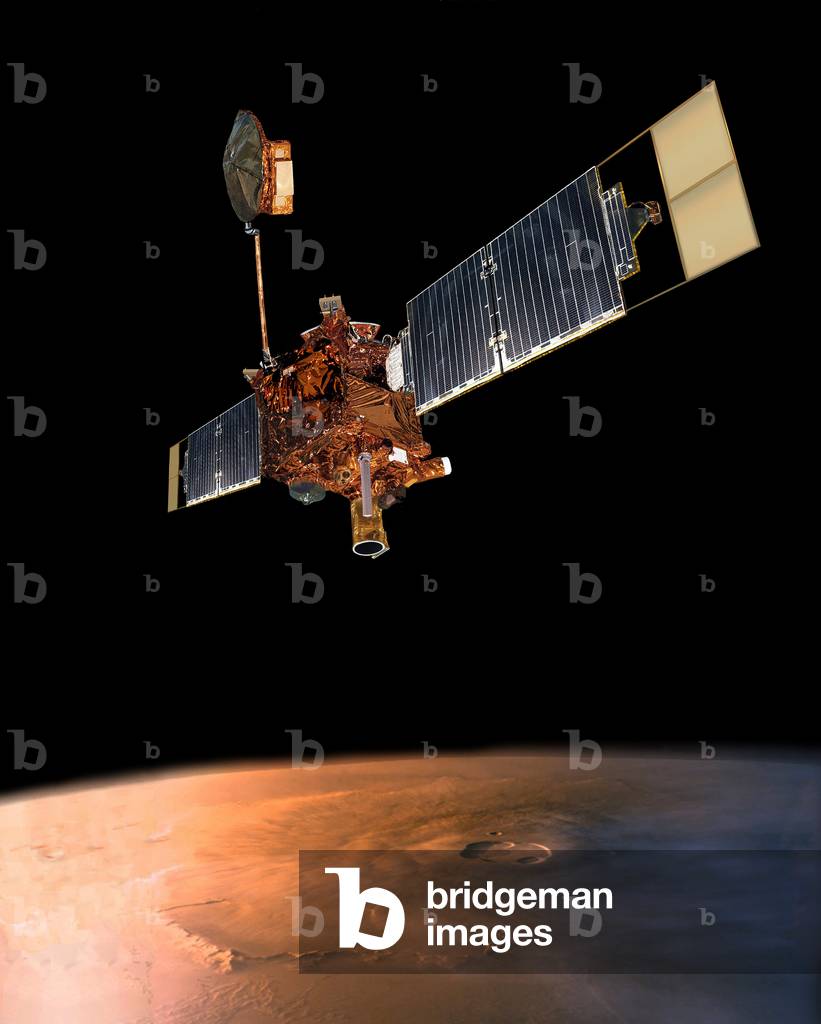
Mars Global Surveyor - The probe was launched on November 7, 1996 and put into orbit around March in September 1997. Predicted to observe Mars for two years, it was not until November 2006 that the probe stopped working

PIX4606491: Mars Global Surveyor - The probe was launched on November 7, 1996 and put into orbit around March in September 1997. Predicted to observe Mars for two years, it was not until November 2006 that the probe stopped working / Bridgeman Images

Mars Pathfinder Probe - View of the Mars Pathfinder probe and its small Sojourner rover at the Kennedy space center in October 1996. The probe was launched on 4 December 1996 and landed on March 4 July 1997 in Ares Vallis. Teleguide from Earth, the Sojourner rover was the first robot to survey Martian soil. He explored about 250 m2 of the surface of Mars and returned 550 photographs. Contact was definitively lost with the Mars Pathfinder probe on 27 September 1997

PIX4606522: Mars Pathfinder Probe - View of the Mars Pathfinder probe and its small Sojourner rover at the Kennedy space center in October 1996. The probe was launched on 4 December 1996 and landed on March 4 July 1997 in Ares Vallis. Teleguide from Earth, the Sojourner rover was the first robot to survey Martian soil. He explored about 250 m2 of the surface of Mars and returned 550 photographs. Contact was definitively lost with the Mars Pathfinder probe on 27 September 1997 / Bridgeman Images

Mars Express - Artist's View - Mars Express artist's view - The European Mars Express probe was launched on June 2, 2003 and began its observations in March early 2004. Mars Express left Earth for Mars on 2 June 2003 when the positions of the two planets made for the shortest possible route, a condition that occurs once every twenty - six months. The european spaceprobe began its March observations in 2004

PIX4606614: Mars Express - Artist's View - Mars Express artist's view - The European Mars Express probe was launched on June 2, 2003 and began its observations in March early 2004. Mars Express left Earth for Mars on 2 June 2003 when the positions of the two planets made for the shortest possible route, a condition that occurs once every twenty - six months. The european spaceprobe began its March observations in 2004 / Bridgeman Images

Christmas balls, Italy

CUB4509978: Christmas balls, Italy / Bridgeman Images

Sicilian fruit of marzipan on Christmas stalls, Mercanti square, Milan, Lombardy, Italy

CUB4509992: Sicilian fruit of marzipan on Christmas stalls, Mercanti square, Milan, Lombardy, Italy / Bridgeman Images

Sicilian fruit of marzipan on Christmas stalls, Mercanti square, Milan, Lombardy, Italy

CUB4510002: Sicilian fruit of marzipan on Christmas stalls, Mercanti square, Milan, Lombardy, Italy / Bridgeman Images

Cliff, Vernazza, Ligury, Italy

CUB4510008: Cliff, Vernazza, Ligury, Italy / Bridgeman Images

Ski run, Folgarida, Trentino Alto Adige, Italy

CUB4510019: Ski run, Folgarida, Trentino Alto Adige, Italy / Bridgeman Images

Sicilian sweets on Christmas stalls, Mercanti square, Milan, Lombardy, Italy

CUB4510036: Sicilian sweets on Christmas stalls, Mercanti square, Milan, Lombardy, Italy / Bridgeman Images

Tevere, Rome, Lazio, Italy

CUB4510083: Tevere, Rome, Lazio, Italy / Bridgeman Images

Rum Martini cocktail, Italy

CUB4510139: Rum Martini cocktail, Italy / Bridgeman Images

Avena Fatua, Oats, Italy

CUB4510186: Avena Fatua, Oats, Italy / Bridgeman Images


Back to top