2490880 Search Results

GIA4697761: Pope Leo I meets Attila and stops him - Engraving from “Leben der Heiligen - sommerteil” (The book of the saint) by Jacobus (James) of Voragine (1228-1298). Lubeck 1488., Unknown Artist, (15th century) / Bridgeman Images

GIA4697778: Portrait of Attila from the work of Bernardino Corio “” Elogia Virorum Illustris””, Milan 16th century., Italian School, (16th century) / Bridgeman Images

GIA4697823: Moscow, the Muscova and the Church of St. Savior, 1914., Unknown photographer, (20th century) / Bridgeman Images

LRI4697919: Virgin and Child with Saint John the Baptist and Saint James the apostle, detail (Fresco, 1416), Salimbeni, Lorenzo (1374-c.1420) / Bridgeman Images

GIA4697983: A 16th century Chinese crossbow, instrument for measuring latitude and height. Amsterdam Naval Museum., Chinese School, (16th century) / Bridgeman Images

JLJ4697990: Cathedral of Chartres: detail of the life of Saint Julian the Hospitaller, 13th century (stained glass), French School, (13th century) / Bridgeman Images

LRI4698085: Jesus and the Virgin Mary (oil on canvas, 17th century), Procaccini, Giulio Cesare (1574-1625) / Bridgeman Images

PIX4655756: Star sky and 1 m telescope of the observatory of the Pic du Midi - Starry sky above Pic du Midi observatory - Star sky and dome of the telescope of the observatory of the Pic du Midi. January 2012. Starry sky above the 1 meter telescope dome at Pic du Midi observatory. January 2012 / Bridgeman Images

PIX4655800: Lactee route from the Pic du Midi observatory - Milky way from Pic du Midi observatory - Lactee route seen from the Pic du Midi observatory. 27 June 2014 Milky way from Pic du Midi observatory. June 27 2014 / Bridgeman Images

PIX4655810: Observatory of the Pic du Midi - control room - Pic du Midi observatory - Control room - Coronographers and sunglasses at the Pic du Midi (CLIMSO). Control room for Coronographs and solar telescopes CLIMSO / Bridgeman Images

LRI4655941: Aerial view of Amsterdam Airport Schiphol, 1990 ca - Photography / Bridgeman Images

LRI4655975: Aerial view of the polder, 1990 ca - Photography / Bridgeman Images

LRI4656042: Aerial view with windmills, 1990 ca - Photography / Bridgeman Images

LRI4656063: Aerial view of Loosdrecht, 1990 ca - Photography / Bridgeman Images

JLJ4656187: Renaissance architecture: the large staircase of the castle of Fontainebleau., 16th century (photo), Unknown Artist, (16th century) / Bridgeman Images

LRI4692626: View of a side of villa del Principe or palazzo di Andrea Doria a Genes, Italy (View of a side of villa del principe Doria, Genoa) Painting by Domenico Cambiaso (1811-1894), 1864 Dim 54,5x40 cm Genes, Galleria d'Arte Moderna, inv 114, Cambiaso, Domenico (1811-1894) / Bridgeman Images

LRI4692678: The fugitive Young woman in a neoclassical decor, a small bird escapes from his cage is perch on his arm. Painting by Guido Gonin (1833-1906) Dim. 57x47 cm Genes Nervi, Galleria by Arte Moderna, inv. 102, Gonin, Guido (1833-1906) / Bridgeman Images

GIA4692708: Rome, St. Peter's Square at the beginning of the 18th century., Unknown artist, (18th century) / Bridgeman Images

GIA4692993: Forge - in “Pirotechnia”” of Biringuccio, 1558., Unknown Artist, (16th century) / Bridgeman Images

GIA4693011: Manufacture of black powder - in “Manuale di pirotechnia, armeria e fortificazioni”” of the 16th century., Unknown Artist, (16th century) / Bridgeman Images

GIA4693030: Laurence of Arabia (or Lawrence of Arabia) dressed as Bedouin in Akaba, 1917., Unknown photographer, (20th century) / Bridgeman Images

LRI4693099: Portrait of the painter Francesco Gandolfi (1824-1873) Painting by Sante Bertelli (1840-1892). 19th century Genes, Accademia Ligustica di Belle Arti, Bertelli, Sante (1840-1892) / Bridgeman Images

GIA4693137: Baths of Baden (Austria), engraving 16th century., Unknown Artist, (16th century) / Bridgeman Images

GIA4693144: Chinese vase in cloisonne enamel, Manchou period, 19th century., Manchu-Chinese, Empress Cixi (1835-1908) / Bridgeman Images

JLJ4625092: "Joan of Arc", November 1430 Jean de Luxembourg sells Joan of Arc to the King of England for 10 (lithograph), Semant, Paul de (1855-1915) / Bridgeman Images

JLJ4625152: Illustration from the book "Histoire du chevalier Bayard " by Theodore Cahu (engraving), Semant, Paul de (1855-1915) / Bridgeman Images

JLJ4625241: Illustration from the book "Histoire du chevalier Bayard" by Theodore Cahu (engraving), Semant, Paul de (1855-1915) / Bridgeman Images

JLJ4625299: Illustration from the book "Le bon roy Henri": Birth of Henri IV, his grandfather (litho), Job, pseudonym for Onfray de Breville, Jacques (1858-1931) / Bridgeman Images

JLJ4625323: Illustration from the book " Le bon roy Henri" (litho), Job, pseudonym for Onfray de Breville, Jacques (1858-1931) / Bridgeman Images

JLJ4625391: Illustration from the book " Le bon roy Henri" : In 1575 (litho), Job, pseudonym for Onfray de Breville, Jacques (1858-1931) / Bridgeman Images
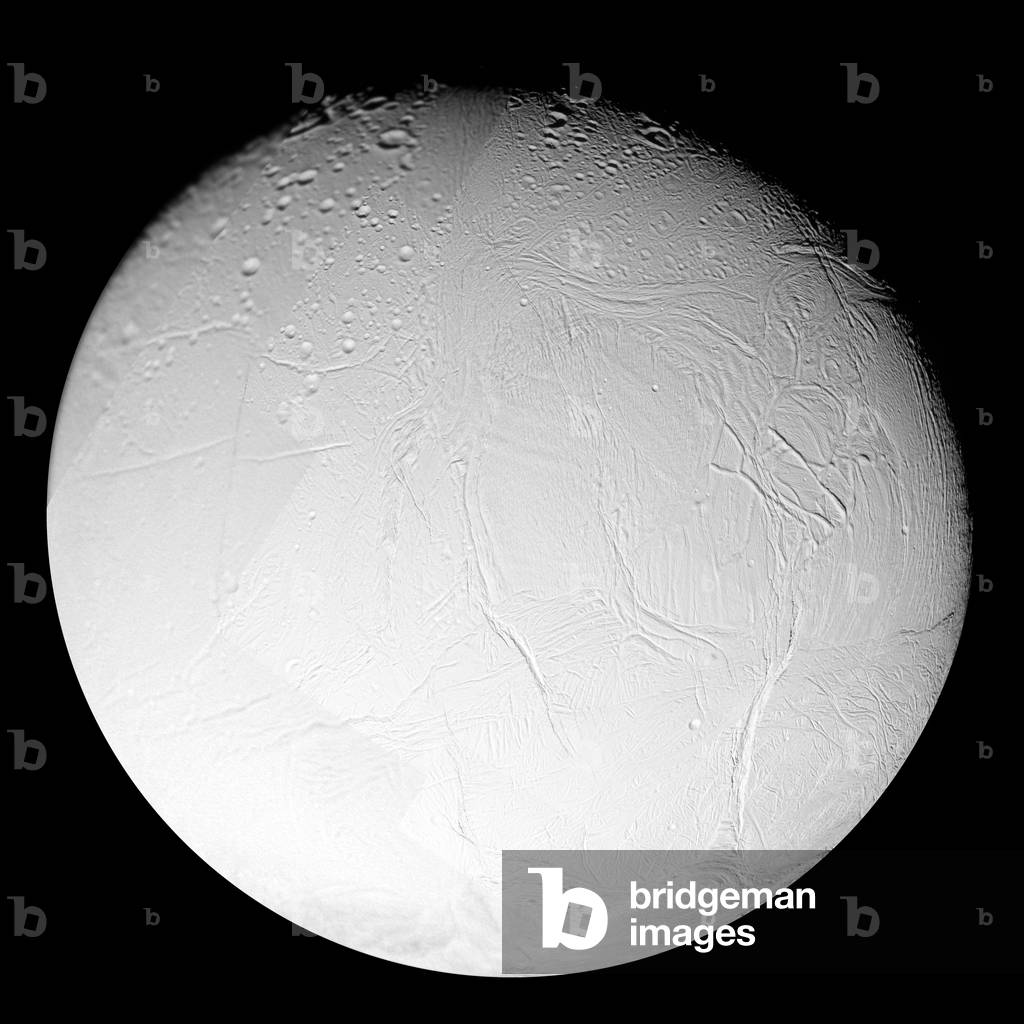
PIX4625492: Enceladus, satellite of Saturn, seen by Cassini - Enceladus, satellite of Saturn, seen by Cassini - Mosaic of 16 images obtained by the Cassini probe during the flight over this satellite on 17 February 2005. The image shows the hemisphere of Enceladus center on Sarandib Planitia / Bridgeman Images

JLJ4625576: Illustration from the book " Le bon roy Henri" (litho), Job, pseudonym for Onfray de Breville, Jacques (1858-1931) / Bridgeman Images

JLJ4625590: Illustration from the book "Le bon roy Henri" (litho), Job, pseudonym for Onfray de Breville, Jacques (1858-1931) / Bridgeman Images

PIX4625632: Saturn view of the surroundings of Dione - Illustration - Saturn from the vicinity of Dione - The planet Saturn seen from the surroundings of its satellite Dione. Dione, visible in the foreground, has a diameter of about 1100 km and is mainly composed of ice. In the background, another Saturn ice satellite is visible, Tethys. This is how Saturn might appear from near Dione, one of Saturn's inner icy satellites. Dione is about 700 miles in diameter and is believed to be composed primarily of water ice along with lesser amounts of silicate rocks. In this image, Dione is in the foreground orbiting about 197 thousand miles above Saturn's cloud tops. Further towards Saturn at a distance of 50 thousand miles from Dione is Tethys, another icy moon, slightly smaller than Dione. Tethys is silhouetted against the “” ring shine”” on Saturn's night side - - reflected sunlight on the cloud tops from Saturn's rings / Bridgeman Images

LRI4625770: Head of a woman (fragment), from the palace of Tirynthe, 1300 BC (fresco), Mycenaean, (14th century BC) / Bridgeman Images

PIX4656300: La Silla Observatory - Leonard Euler Telescope - La Silla Observatory - Leonard Euler Telescope 04/05/200 / Bridgeman Images
