Search options

Orientation
Colour

Display options

View

Print

To print search results, use print friendly version of this page.

2497338 Search Results

Black or frank poplar, liard or piboule (Populus nigra) - Botanical Plate by Isaac Russell, engraved by Charles Matthews, taken from “English Botanical Phenomenes” by William Baxter (1788-1871), 1837

FLO4567973: Black or frank poplar, liard or piboule (Populus nigra) - Botanical Plate by Isaac Russell, engraved by Charles Matthews, taken from “English Botanical Phenomenes” by William Baxter (1788-1871), 1837 / Bridgeman Images

Valerian red or Valerian gardeners. Coloured copper engraving from a drawing by C. Mathews from William Baxter's book “English Botanical Phenomenes””, 1834. William Baxter (1788-1871) was the curator of the Oxford Botanical Garden from 1813 to 1854. Red valerian, Valeriana rubra. Handcoloured copperplate engraving by Charles Mathews of a drawing by W.A. Delamotte from William Baxter's “” British Phaenogamous Botany”” 1834. Scotsman William Baxter (1788-1871) was the curator of the Oxford Botanic Garden from 1813 to 1854.

FLO4568194: Valerian red or Valerian gardeners. Coloured copper engraving from a drawing by C. Mathews from William Baxter's book “English Botanical Phenomenes””, 1834. William Baxter (1788-1871) was the curator of the Oxford Botanical Garden from 1813 to 1854. Red valerian, Valeriana rubra. Handcoloured copperplate engraving by Charles Mathews of a drawing by W.A. Delamotte from William Baxter's “” British Phaenogamous Botany”” 1834. Scotsman William Baxter (1788-1871) was the curator of the Oxford Botanic Garden from 1813 to 1854. / Bridgeman Images

Victorian people posting letters near Christmas Day at the Post Office. Chromolithograph after an illustration by Francis Donkin Bedford from Edward Verrall Lucas' The Book of Shops, 1899.

FLO4568318: Victorian people posting letters near Christmas Day at the Post Office. Chromolithograph after an illustration by Francis Donkin Bedford from Edward Verrall Lucas' The Book of Shops, 1899., Bedford, Francis Donkin (1864-1954) / Bridgeman Images

Cardere (Dipsacus sylvastris) - Botanical Plate by Isaac Russell, engraved by Charles Matthews, from “English Botanical Phenomenes” by William Baxter (1788-1871), 1837

FLO4567907: Cardere (Dipsacus sylvastris) - Botanical Plate by Isaac Russell, engraved by Charles Matthews, from “English Botanical Phenomenes” by William Baxter (1788-1871), 1837 / Bridgeman Images

Branches of knowledge represented by  Aristotle (top left) represents Natural Philosophy, with Seneca representing Moral Philosophy on the right, the Emperor Justinian (top centre). The woman in the centre has a sword and a flowering branch issuing from her mouth (woodcut, 1508)

LRI4567953: Branches of knowledge represented by Aristotle (top left) represents Natural Philosophy, with Seneca representing Moral Philosophy on the right, the Emperor Justinian (top centre). The woman in the centre has a sword and a flowering branch issuing from her mouth (woodcut, 1508), Unknown Artist, (16th century) / Bridgeman Images

Primevere officinale. Coloured copper engraving from a drawing by C. Mathews from William Baxter's book “English Botanical Phenomenes””, 1834. William Baxter (1788-1871) was the curator of the Oxford Botanical Garden from 1813 to 1854. Common cowslip, Primula veris. Handcoloured copperplate engraving by Charles Mathews of a drawing by William Delamotte from William Baxter's “” British Phaenogamous Botany”” 1834. Scotsman William Baxter (1788-1871) was the curator of the Oxford Botanic Garden from 1813 to 1854.

FLO4568178: Primevere officinale. Coloured copper engraving from a drawing by C. Mathews from William Baxter's book “English Botanical Phenomenes””, 1834. William Baxter (1788-1871) was the curator of the Oxford Botanical Garden from 1813 to 1854. Common cowslip, Primula veris. Handcoloured copperplate engraving by Charles Mathews of a drawing by William Delamotte from William Baxter's “” British Phaenogamous Botany”” 1834. Scotsman William Baxter (1788-1871) was the curator of the Oxford Botanic Garden from 1813 to 1854. / Bridgeman Images

Handwritten letter of Richard Wagner to Luigi Mancinelli, December 10th, 1883

LRI4567807: Handwritten letter of Richard Wagner to Luigi Mancinelli, December 10th, 1883, Wagner, Richard (1813-83) / Bridgeman Images

Victorian children playing with parrots and cockatoos at the bird fancier's shop or pet shop. Chromolithograph after an illustration by Francis Donkin Bedford from Edward Verrall Lucas' The Book of Shops, 1899.

FLO4568301: Victorian children playing with parrots and cockatoos at the bird fancier's shop or pet shop. Chromolithograph after an illustration by Francis Donkin Bedford from Edward Verrall Lucas' The Book of Shops, 1899., Bedford, Francis Donkin (1864-1954) / Bridgeman Images

Milan Cathedral or Duomo di Milano, exterior and interior views, circa 1820. Handcoloured copperplate engraving from Friedrich Johann Bertuch's Bilderbuch fur Kinder (Picture Book for Children), Weimar, 1823.

FLO4569003: Milan Cathedral or Duomo di Milano, exterior and interior views, circa 1820. Handcoloured copperplate engraving from Friedrich Johann Bertuch's Bilderbuch fur Kinder (Picture Book for Children), Weimar, 1823. / Bridgeman Images

View of the River Thames and the Tower of London, 1820. Handcoloured copperplate engraving from Friedrich Johann Bertuch's Bilderbuch fur Kinder (Picture Book for Children), Weimar, 1823.

FLO4569185: View of the River Thames and the Tower of London, 1820. Handcoloured copperplate engraving from Friedrich Johann Bertuch's Bilderbuch fur Kinder (Picture Book for Children), Weimar, 1823. / Bridgeman Images

Frontispiece from  Amfiparnaso madrigal comedy by Orazio Vecchi, 1597

LRI4569007: Frontispiece from Amfiparnaso madrigal comedy by Orazio Vecchi, 1597, Unknown Artist, (16th century) / Bridgeman Images

Pink German centifolia rose, Rosa centifolia germanica, and white unique rose, Rosa unica. Handcoloured copperplate engraving from an illustration drawn from nature by Stark from Bertuch's “” Bilderbuch fur Kinder”” (Picture Book for Children), Weimar, 1790-1830. Friedrich Johann Bertuch (1747-1822) was a German publisher and man of arts most famous for his 12-volume encyclopedia for children illustrated with 1,200 engraved plates on natural history, science, costume, mythology, etc.

FLO4569301: Pink German centifolia rose, Rosa centifolia germanica, and white unique rose, Rosa unica. Handcoloured copperplate engraving from an illustration drawn from nature by Stark from Bertuch's “” Bilderbuch fur Kinder”” (Picture Book for Children), Weimar, 1790-1830. Friedrich Johann Bertuch (1747-1822) was a German publisher and man of arts most famous for his 12-volume encyclopedia for children illustrated with 1,200 engraved plates on natural history, science, costume, mythology, etc. / Bridgeman Images

Modern Athens built from the ruins of ancient Athens, 1800. View from the south-east showing the Temple of Olympian Zeus and its three columns in the foreground, the Arch of Hadrian, and the Acropolis and Parthenon on the hill. Handcoloured copperplate engraving from Friedrich Johann Bertuch's Bilderbuch fur Kinder (Picture Book for Children), Weimar, 1823.

FLO4569109: Modern Athens built from the ruins of ancient Athens, 1800. View from the south-east showing the Temple of Olympian Zeus and its three columns in the foreground, the Arch of Hadrian, and the Acropolis and Parthenon on the hill. Handcoloured copperplate engraving from Friedrich Johann Bertuch's Bilderbuch fur Kinder (Picture Book for Children), Weimar, 1823. / Bridgeman Images

Virginia rose, Rosa lucida, and Rosa truncata major. Handcoloured copperplate engraving from Bertuch's “” Bilderbuch fur Kinder”” (Picture Book for Children), Weimar, 1790-1830. Friedrich Johann Bertuch (1747-1822) was a German publisher and man of arts most famous for his 12-volume encyclopedia for children illustrated with 1,200 engraved plates on natural history, science, costume, mythology, etc.

FLO4569373: Virginia rose, Rosa lucida, and Rosa truncata major. Handcoloured copperplate engraving from Bertuch's “” Bilderbuch fur Kinder”” (Picture Book for Children), Weimar, 1790-1830. Friedrich Johann Bertuch (1747-1822) was a German publisher and man of arts most famous for his 12-volume encyclopedia for children illustrated with 1,200 engraved plates on natural history, science, costume, mythology, etc. / Bridgeman Images

View of the town of Tiberias on the Sea of Galilee, and view of the town of Nazareth, 1820. Handcoloured copperplate engraving from Friedrich Johann Bertuch's Bilderbuch fur Kinder (Picture Book for Children), Weimar, 1823.

FLO4569263: View of the town of Tiberias on the Sea of Galilee, and view of the town of Nazareth, 1820. Handcoloured copperplate engraving from Friedrich Johann Bertuch's Bilderbuch fur Kinder (Picture Book for Children), Weimar, 1823. / Bridgeman Images

Handwritten letter of Giuseppe Verdi to Bologna mayor when he became honorary citizen, June 20, 1868

LRI4569279: Handwritten letter of Giuseppe Verdi to Bologna mayor when he became honorary citizen, June 20, 1868, Verdi, Giuseppe (1813-1901) / Bridgeman Images

Small Provence rose, Rosa provincialis minima, and Dijon rose, Rosa damascena dijonensis. Handcoloured copperplate engraving from an illustration drawn from nature by Stark from Bertuch's “” Bilderbuch fur Kinder”” (Picture Book for Children), Weimar, 1790-1830. Friedrich Johann Bertuch (1747-1822) was a German publisher and man of arts most famous for his 12-volume encyclopedia for children illustrated with 1,200 engraved plates on natural history, science, costume, mythology, etc.

FLO4569340: Small Provence rose, Rosa provincialis minima, and Dijon rose, Rosa damascena dijonensis. Handcoloured copperplate engraving from an illustration drawn from nature by Stark from Bertuch's “” Bilderbuch fur Kinder”” (Picture Book for Children), Weimar, 1790-1830. Friedrich Johann Bertuch (1747-1822) was a German publisher and man of arts most famous for his 12-volume encyclopedia for children illustrated with 1,200 engraved plates on natural history, science, costume, mythology, etc. / Bridgeman Images

Belladonna lily or naked lady, Amaryllis belladonna, native to South Africa. Handcoloured stipple engraving on copper by Barrois from a botanical illustration by Pancrace Bessa from Mordant de Launay's “Herbier General de l'Amateur,” Audot, Paris, 1820. The Herbier was published from 1810 to 1827 and edited by Mordant de Launay and Loiseleur-Deslongchamps. Bessa (1772-1830s), along with Redoute and Turpin, is considered one of the greatest English botanical artists of the 19th century.

FLO4569434: Belladonna lily or naked lady, Amaryllis belladonna, native to South Africa. Handcoloured stipple engraving on copper by Barrois from a botanical illustration by Pancrace Bessa from Mordant de Launay's “Herbier General de l'Amateur,” Audot, Paris, 1820. The Herbier was published from 1810 to 1827 and edited by Mordant de Launay and Loiseleur-Deslongchamps. Bessa (1772-1830s), along with Redoute and Turpin, is considered one of the greatest English botanical artists of the 19th century. / Bridgeman Images

Costume of the incredible, Ange Pitou (1767-1846) (character from the novel by Alexandre Dumas). Coat with long tails, Robespierre waistcoat silk tie, cashmere panties and hat with tricolor cockade. Handcoloured lithograph after a design by Leon Sault from “” L'Art du Travestissement” (The Art of Fancy Dress), Paris, c.1880. Sault was a theatre and opera designer and luxury fashion magazine publisher.

FLO4565117: Costume of the incredible, Ange Pitou (1767-1846) (character from the novel by Alexandre Dumas). Coat with long tails, Robespierre waistcoat silk tie, cashmere panties and hat with tricolor cockade. Handcoloured lithograph after a design by Leon Sault from “” L'Art du Travestissement” (The Art of Fancy Dress), Paris, c.1880. Sault was a theatre and opera designer and luxury fashion magazine publisher. / Bridgeman Images

Dauk wala or Indian postman, in uniform, turban, and slippers, carrying letters. Handcoloured copperplate engraving by an unknown artist from “” Asiatic Costumes,”” Ackermann, London, 1828.

FLO4565321: Dauk wala or Indian postman, in uniform, turban, and slippers, carrying letters. Handcoloured copperplate engraving by an unknown artist from “” Asiatic Costumes,”” Ackermann, London, 1828. / Bridgeman Images

Costume of a Muscadin, French Revolutionary era, 18th century. Handcoloured lithograph after a design by Leon Sault from “” L'Art du Travestissement” (The Art of Fancy Dress), Paris, c.1880. Sault was a theatre and opera designer and luxury fashion magazine publisher.

FLO4565273: Costume of a Muscadin, French Revolutionary era, 18th century. Handcoloured lithograph after a design by Leon Sault from “” L'Art du Travestissement” (The Art of Fancy Dress), Paris, c.1880. Sault was a theatre and opera designer and luxury fashion magazine publisher. / Bridgeman Images

Bihishtee or water carrier, with mushk of panee (goatskin water bag), wearing loincloth and turban. Handcoloured copperplate engraving by an unknown artist from “” Asiatic Costumes,”” Ackermann, London, 1828.

FLO4565394: Bihishtee or water carrier, with mushk of panee (goatskin water bag), wearing loincloth and turban. Handcoloured copperplate engraving by an unknown artist from “” Asiatic Costumes,”” Ackermann, London, 1828. / Bridgeman Images

American variete of rodhodendron with pink flowers, Rhododendron maximum. Illustration by Clarissa Badger (nee Munger, 1806-1889), lithography published in “Wildflowers, dessinees et mises en couleur par la nature”, New York (USA), 1859.

FLO4565617: American variete of rodhodendron with pink flowers, Rhododendron maximum. Illustration by Clarissa Badger (nee Munger, 1806-1889), lithography published in “Wildflowers, dessinees et mises en couleur par la nature”, New York (USA), 1859. / Bridgeman Images

Portrait of Nicola Antonio Zingarelli (engraving, 19th century)

LRI4565823: Portrait of Nicola Antonio Zingarelli (engraving, 19th century), Unknown Artist, (19th century) / Bridgeman Images
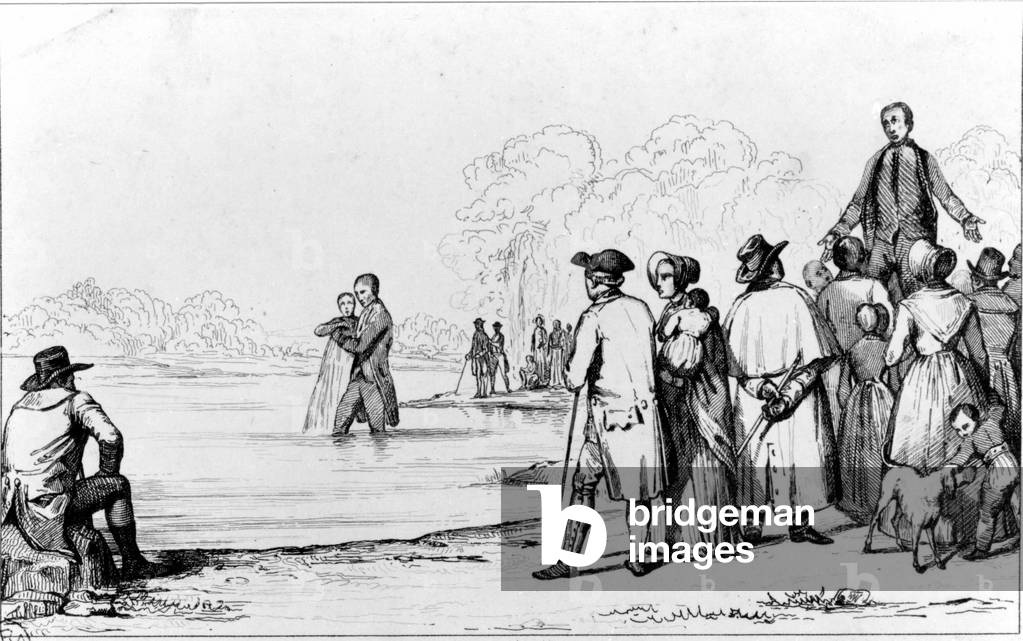
Doctors, vetus in the fashion of the English Regence (1811-1820), wearing wigs and redingotes, together with a nurse, consult each other in an elegant corridor, decorated with a landscape painting (Bath, England) - Eau forte by Francis Eginton (1737-1805), extracted from Le nouveau guide de Bath or Memoires de la famille Blunderhead, published in 1807 - Regency doctors in wigs and frock coats consult with a nurse in an elegant corridor decorated with landscape painting - Handcoloured copperplate engraving by Francis Eginton from Christopher Anstey's “” The New Bath Guide,”” John Browne, 1807)

FLO4565837: Doctors, vetus in the fashion of the English Regence (1811-1820), wearing wigs and redingotes, together with a nurse, consult each other in an elegant corridor, decorated with a landscape painting (Bath, England) - Eau forte by Francis Eginton (1737-1805), extracted from Le nouveau guide de Bath or Memoires de la famille Blunderhead, published in 1807 - Regency doctors in wigs and frock coats consult with a nurse in an elegant corridor decorated with landscape painting - Handcoloured copperplate engraving by Francis Eginton from Christopher Anstey's “” The New Bath Guide,”” John Browne, 1807) / Bridgeman Images

Fetal skeleton at the time of birth. Copperplate engraving by Edward Mitchell after an anatomical illustration by Jean-Joseph Sue from John Barclay's A Series of Engravings of the Human Skeleton, MacLachlan and Stewart, Edinburgh, 1824.

FLO4565750: Fetal skeleton at the time of birth. Copperplate engraving by Edward Mitchell after an anatomical illustration by Jean-Joseph Sue from John Barclay's A Series of Engravings of the Human Skeleton, MacLachlan and Stewart, Edinburgh, 1824. / Bridgeman Images

Skeleton of a European robin, Erithacus rubecula (Motacilla rubecula) and common snipe, Gallinago gallinago (Scollopax gallinago) from Dr. Barclay's Museum, Edinburgh. Copperplate engraving by Edward Mitchell after an anatomical illustration by Robert Kaye Greville from John Barclay's A Series of Engravings of the Human Skeleton, MacLachlan and Stewart, Edinburgh, 1824.

FLO4565794: Skeleton of a European robin, Erithacus rubecula (Motacilla rubecula) and common snipe, Gallinago gallinago (Scollopax gallinago) from Dr. Barclay's Museum, Edinburgh. Copperplate engraving by Edward Mitchell after an anatomical illustration by Robert Kaye Greville from John Barclay's A Series of Engravings of the Human Skeleton, MacLachlan and Stewart, Edinburgh, 1824. / Bridgeman Images

Barberry spines. Coloured copper engraving from a drawing by Isaac Russell from William Baxter's book “English Botanical Phenomenes””, 1834. William Baxter (1788-1871) was the curator of the Oxford Botanical Garden from 1813 to 1854. Common barberry, Berberis vulgaris. Handcoloured copperplate engraving by Charles Mathews of a drawing by Isaac Russell from William Baxter's “” British Phaenogamous Botany”” 1834. Scotsman William Baxter (1788-1871) was the curator of the Oxford Botanic Garden from 1813 to 1854.

FLO4565995: Barberry spines. Coloured copper engraving from a drawing by Isaac Russell from William Baxter's book “English Botanical Phenomenes””, 1834. William Baxter (1788-1871) was the curator of the Oxford Botanical Garden from 1813 to 1854. Common barberry, Berberis vulgaris. Handcoloured copperplate engraving by Charles Mathews of a drawing by Isaac Russell from William Baxter's “” British Phaenogamous Botany”” 1834. Scotsman William Baxter (1788-1871) was the curator of the Oxford Botanic Garden from 1813 to 1854. / Bridgeman Images

Frontispiece of Lilii Graegorii Ziraldi Ferrariensis Syntagma De Mvsis by Giglio Gregorio Giraldi, 1511

LRI4565834: Frontispiece of Lilii Graegorii Ziraldi Ferrariensis Syntagma De Mvsis by Giglio Gregorio Giraldi, 1511, Italian School, (16th century) / Bridgeman Images

Perennial peas. Coloured copper engraving from a drawing by C. Mathews from William Baxter's book “English Botanical Phenomenes””, 1834. William Baxter (1788-1871) was the curator of the Oxford Botanical Garden from 1813 to 1854. Everlasting pea, Lathyrus latifolius. Handcoloured copperplate engraving by Charles Mathews from William Baxter's “” British Phaenogamous Botany”” 1834. Scotsman William Baxter (1788-1871) was the curator of the Oxford Botanic Garden from 1813 to 1854.

FLO4566009: Perennial peas. Coloured copper engraving from a drawing by C. Mathews from William Baxter's book “English Botanical Phenomenes””, 1834. William Baxter (1788-1871) was the curator of the Oxford Botanical Garden from 1813 to 1854. Everlasting pea, Lathyrus latifolius. Handcoloured copperplate engraving by Charles Mathews from William Baxter's “” British Phaenogamous Botany”” 1834. Scotsman William Baxter (1788-1871) was the curator of the Oxford Botanic Garden from 1813 to 1854. / Bridgeman Images

Black salsify, Scorzonera hispanica 1, mountain houseleek, Sempervivum montanum 2, snakeroot, Sagittaria sagittifolia 3, cornflower, Centaurea cyanus 4, Judas tree, Cercis siliquastrum 5, African iris species 6-8. (Sedum, Sesamoides, Scorzonera, Serpentaria, Siligua seu Arbor Judae, Sisyrinchium) Handcoloured copperplate engraving after Mario Cammerari from Professor Filippo Arena's La natura e cultura dei fiori fisicamente esposta (The nature and culture of flowers physically displayed), Palermo, Italy, 1771.

FLO4563329: Black salsify, Scorzonera hispanica 1, mountain houseleek, Sempervivum montanum 2, snakeroot, Sagittaria sagittifolia 3, cornflower, Centaurea cyanus 4, Judas tree, Cercis siliquastrum 5, African iris species 6-8. (Sedum, Sesamoides, Scorzonera, Serpentaria, Siligua seu Arbor Judae, Sisyrinchium) Handcoloured copperplate engraving after Mario Cammerari from Professor Filippo Arena's La natura e cultura dei fiori fisicamente esposta (The nature and culture of flowers physically displayed), Palermo, Italy, 1771. / Bridgeman Images

Maize or corn, Zea mays. Handcoloured copperplate engraving from Dr. Willibald Artus' Hand-Atlas sammtlicher mediinisch-pharmaceutischer Gewachse, (Handbook of all medical-pharmaceutical plants), Jena, 1876.

FLO4563340: Maize or corn, Zea mays. Handcoloured copperplate engraving from Dr. Willibald Artus' Hand-Atlas sammtlicher mediinisch-pharmaceutischer Gewachse, (Handbook of all medical-pharmaceutical plants), Jena, 1876. / Bridgeman Images

Greater celandine, Chelidonium majus. Handcoloured copperplate engraving from Dr. Willibald Artus' Hand-Atlas sammtlicher mediinisch-pharmaceutischer Gewachse, (Handbook of all medical-pharmaceutical plants), Jena, 1876.

FLO4564192: Greater celandine, Chelidonium majus. Handcoloured copperplate engraving from Dr. Willibald Artus' Hand-Atlas sammtlicher mediinisch-pharmaceutischer Gewachse, (Handbook of all medical-pharmaceutical plants), Jena, 1876. / Bridgeman Images

Fly agaric, Amanita muscaria (Agaricus muscarius). Handcoloured copperplate engraving from Dr. Willibald Artus' Hand-Atlas sammtlicher mediinisch-pharmaceutischer Gewachse, (Handbook of all medical-pharmaceutical plants), Jena, 1876.

FLO4564254: Fly agaric, Amanita muscaria (Agaricus muscarius). Handcoloured copperplate engraving from Dr. Willibald Artus' Hand-Atlas sammtlicher mediinisch-pharmaceutischer Gewachse, (Handbook of all medical-pharmaceutical plants), Jena, 1876. / Bridgeman Images

White sassafras, Sassafras albidum (Laurus sassafras). Handcoloured copperplate engraving from Dr. Willibald Artus' Hand-Atlas sammtlicher mediinisch-pharmaceutischer Gewachse, (Handbook of all medical-pharmaceutical plants), Jena, 1876.

FLO4564423: White sassafras, Sassafras albidum (Laurus sassafras). Handcoloured copperplate engraving from Dr. Willibald Artus' Hand-Atlas sammtlicher mediinisch-pharmaceutischer Gewachse, (Handbook of all medical-pharmaceutical plants), Jena, 1876. / Bridgeman Images

Sonet at the beginning of Spring (La primavera) concerto in Il cimento dell'armonia e dell'inventione byAntonio Vivaldi, 1725

LRI4569421: Sonet at the beginning of Spring (La primavera) concerto in Il cimento dell'armonia e dell'inventione byAntonio Vivaldi, 1725, Unknown artist, (18th century) / Bridgeman Images


Back to top