Search options

Orientation
Colour

Display options

View

Print

To print search results, use print friendly version of this page.

2491632 Search Results
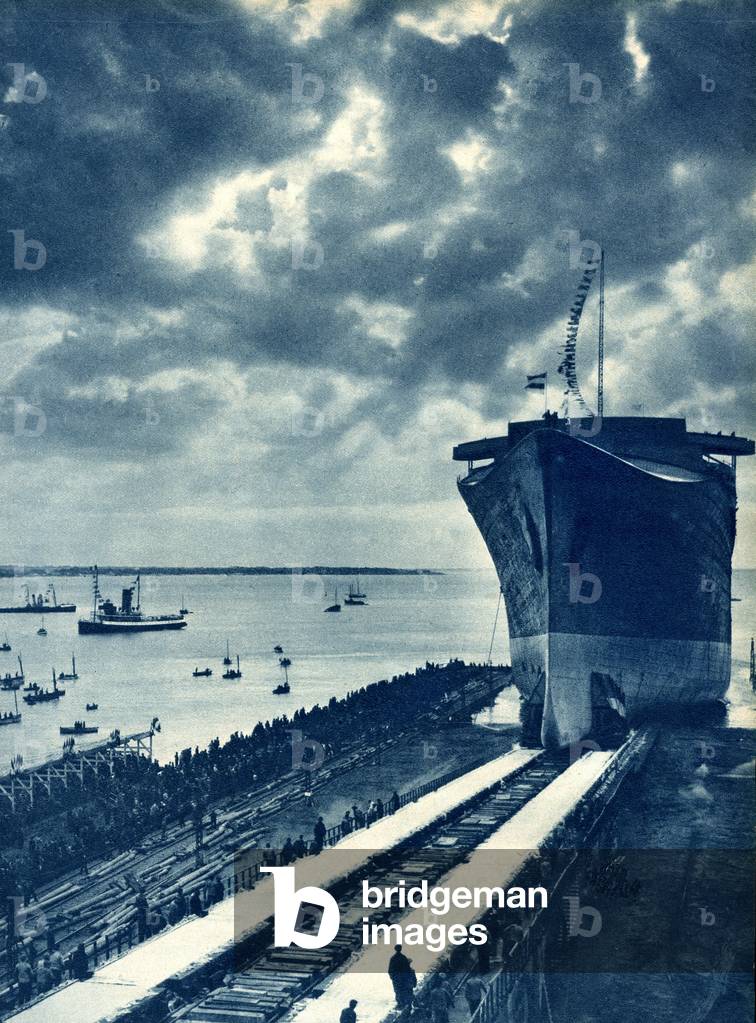
The launch of the liner Normandy, at the Penhoet shipyard (Saint Nazaire) on October 29, 1932. Photo Kollar published in the Mirror of the World, n°313 of February 29, 1936.

PCT4270795: The launch of the liner Normandy, at the Penhoet shipyard (Saint Nazaire) on October 29, 1932. Photo Kollar published in the Mirror of the World, n°313 of February 29, 1936., Unknown photographer, (20th century) / Bridgeman Images

Fancy postcard early 20th century: couple of lovers. The young man (a soldier on leave) presses a bunch of grapes into a champagne cup. “Love in this cup on your arm will consecrate the idyll between us!”

PCT4270910: Fancy postcard early 20th century: couple of lovers. The young man (a soldier on leave) presses a bunch of grapes into a champagne cup. “Love in this cup on your arm will consecrate the idyll between us!” / Bridgeman Images

card guessing (hidden image) beginning 20th century: Robinson Crusoe seeks Friday. To find it, you have to return the map, Friday's face appears in the cliff.

PCT4271049: card guessing (hidden image) beginning 20th century: Robinson Crusoe seeks Friday. To find it, you have to return the map, Friday's face appears in the cliff., Unknown Artist, (20th century) / Bridgeman Images

Portrait of American actor Marlon Brando (1924-2004). 20th Century Fox photography.

PCT4271307: Portrait of American actor Marlon Brando (1924-2004). 20th Century Fox photography., Unknown photographer, (20th century) / Bridgeman Images

The Roman bridge (via domitia) of Saint Thibery (Saint-Thibery, Herault, Languedoc-Roussillon) on the Herault River, mid-May 1999. Photo Patrice Cartier (see same site during a flood).

PCT4271480: The Roman bridge (via domitia) of Saint Thibery (Saint-Thibery, Herault, Languedoc-Roussillon) on the Herault River, mid-May 1999. Photo Patrice Cartier (see same site during a flood)., Cartier, Patrice / Bridgeman Images

Before the last page of Charles Dickens's “” Christmas Song” (Christmas Tales - A Christmas Carol), in a short version, early 20th century, illustration by G.W. Irwin. “” Scrooge did not only what he had promised, but much more. When Tiny Tim, who did not die, Scrooge was his second father.”

PCT4271632: Before the last page of Charles Dickens's “” Christmas Song” (Christmas Tales - A Christmas Carol), in a short version, early 20th century, illustration by G.W. Irwin. “” Scrooge did not only what he had promised, but much more. When Tiny Tim, who did not die, Scrooge was his second father.” / Bridgeman Images
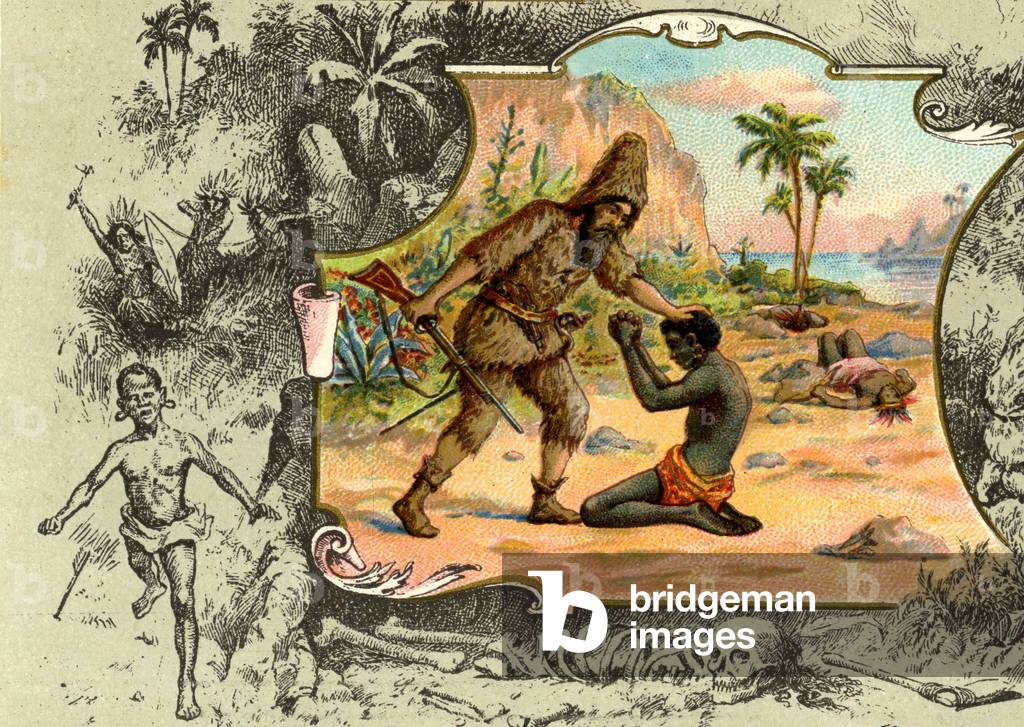
Adventures of Robinson Crusoe. Detail of a chromolithography (chromo) advertising for Liebig meat extract, part of a series of six, early 20th century, after the story imagined by Daniel Defoe (De Foe). Robinson adopts Friday slides to save him from cannibals.

PCT4271653: Adventures of Robinson Crusoe. Detail of a chromolithography (chromo) advertising for Liebig meat extract, part of a series of six, early 20th century, after the story imagined by Daniel Defoe (De Foe). Robinson adopts Friday slides to save him from cannibals. / Bridgeman Images
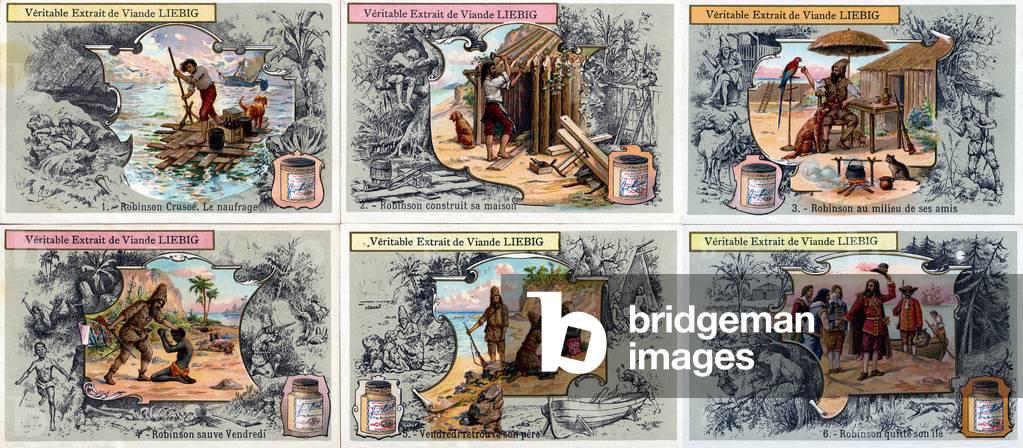
Adventures of Robinson Crusoe. Series of 6 chromolithographs (chromos) advertising for Liebig meat extract, early 20th century, after the story imagined by Daniel Defoe (De Foe).

PCT4271679: Adventures of Robinson Crusoe. Series of 6 chromolithographs (chromos) advertising for Liebig meat extract, early 20th century, after the story imagined by Daniel Defoe (De Foe). / Bridgeman Images
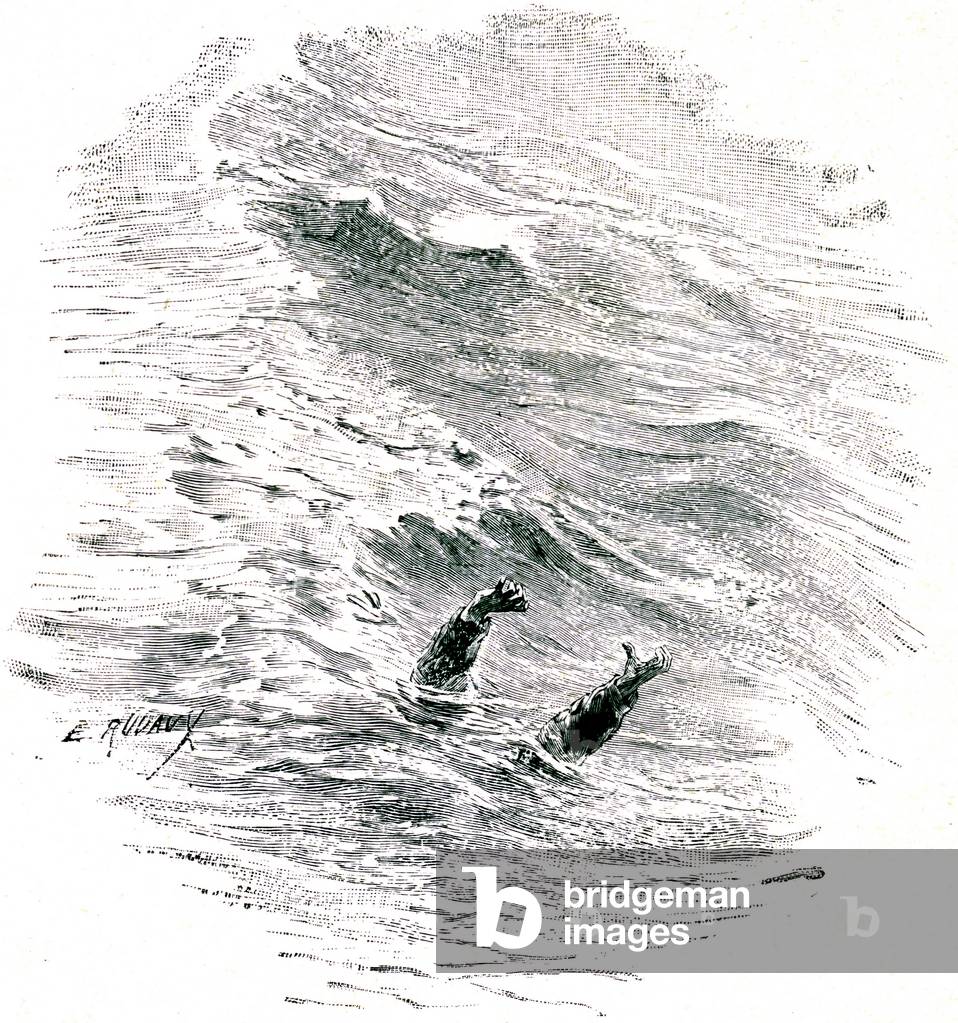
Icelandic fisherman, novel by Pierre Loti. “” Nouvelle Collection Illustree”, Calmann-Levy, 1924 edition. Illustration by Henri Edmond Rudaux (1865-1927): drowning of a fisherman takes to the sea during a storm.

PCT4271693: Icelandic fisherman, novel by Pierre Loti. “” Nouvelle Collection Illustree”, Calmann-Levy, 1924 edition. Illustration by Henri Edmond Rudaux (1865-1927): drowning of a fisherman takes to the sea during a storm., Cartier, Patrice / Bridgeman Images
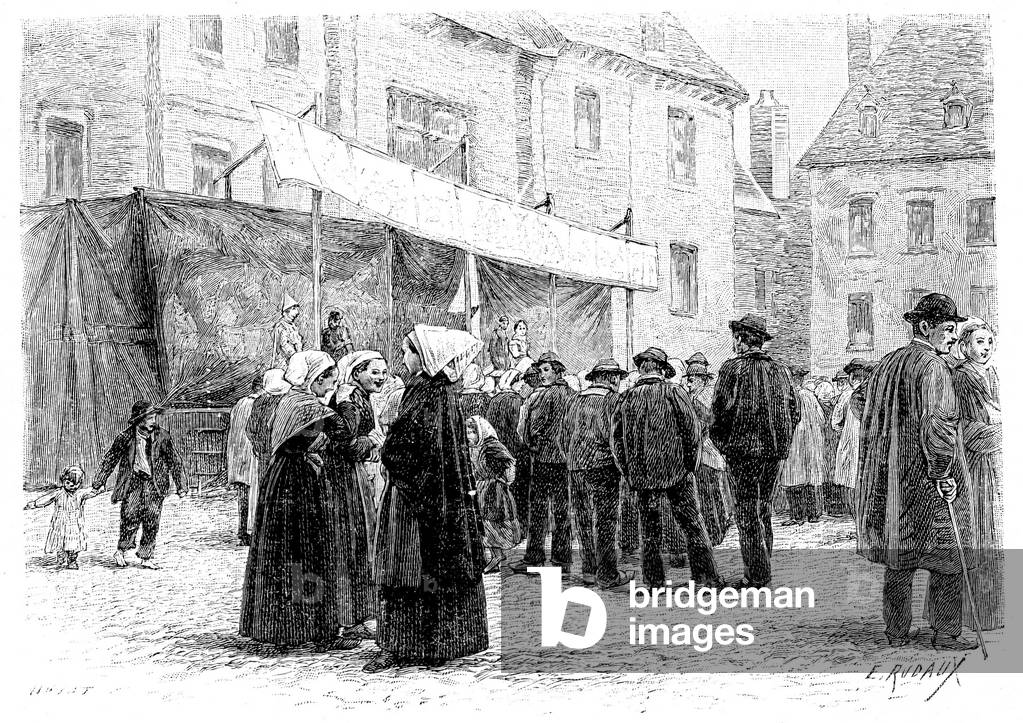
Icelandic fisherman, novel by Pierre Loti. “” Nouvelle Collection Illustree”, Calmann-Levy, 1924 edition. Illustration by Henri Edmond Rudaux (1865-1927) A party is preparing in Paimpol. Paimpolais and Paimpolais have gone out to the main square where the ball will take place. A stage was set up for musicians

PCT4271725: Icelandic fisherman, novel by Pierre Loti. “” Nouvelle Collection Illustree”, Calmann-Levy, 1924 edition. Illustration by Henri Edmond Rudaux (1865-1927) A party is preparing in Paimpol. Paimpolais and Paimpolais have gone out to the main square where the ball will take place. A stage was set up for musicians, Cartier, Patrice / Bridgeman Images

Icelandic fisherman, novel by Pierre Loti. “” Nouvelle Collection Illustree”, Calmann-Levy, 1924 edition. Illustration by Henri Edmond Rudaux (1865-1927). Evocation of the two main metiers of the sea: fisherman (Newfoundland, Newfoundland) and marine (national navy). Between the two, a reminder of the land of Brittany: chapel and cemetery...

PCT4271746: Icelandic fisherman, novel by Pierre Loti. “” Nouvelle Collection Illustree”, Calmann-Levy, 1924 edition. Illustration by Henri Edmond Rudaux (1865-1927). Evocation of the two main metiers of the sea: fisherman (Newfoundland, Newfoundland) and marine (national navy). Between the two, a reminder of the land of Brittany: chapel and cemetery..., Cartier, Patrice / Bridgeman Images
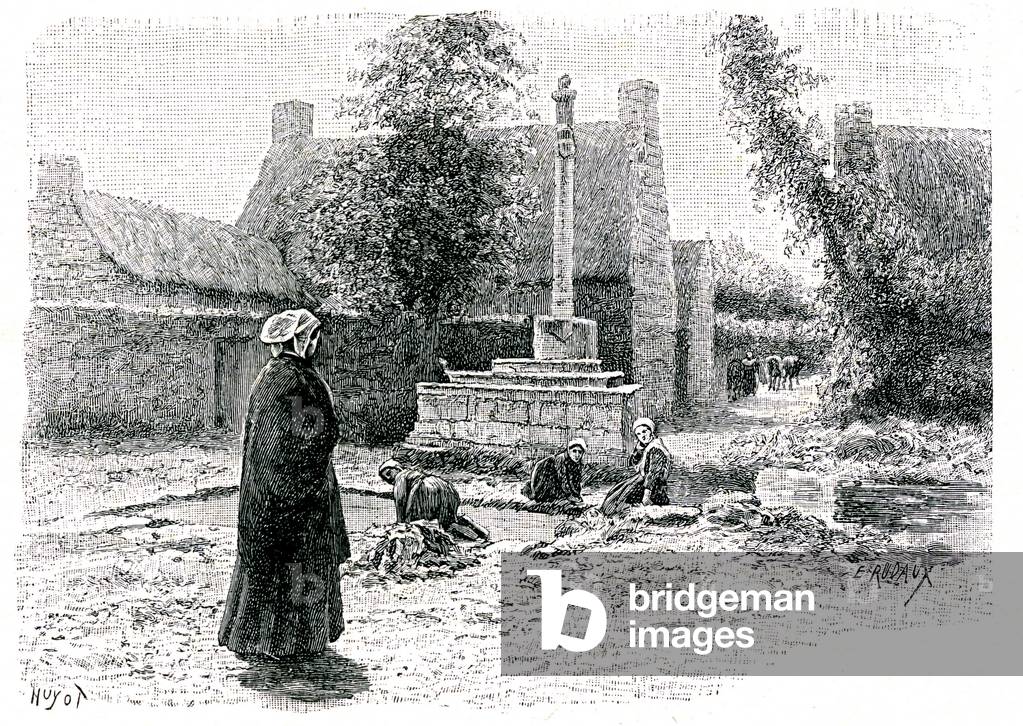
Icelandic fisherman, novel by Pierre Loti. “” Nouvelle Collection Illustree”, Calmann-Levy, 1924 edition. Illustration by Henri Edmond Rudaux (1865-1927). Typical scene of Brittany: laundry. The villagers wash their clothes in the pool, near the calvary.

PCT4271752: Icelandic fisherman, novel by Pierre Loti. “” Nouvelle Collection Illustree”, Calmann-Levy, 1924 edition. Illustration by Henri Edmond Rudaux (1865-1927). Typical scene of Brittany: laundry. The villagers wash their clothes in the pool, near the calvary., Cartier, Patrice / Bridgeman Images

Illustration of the adventures of Don Quixote written by Cervantes, 1848 (engraving)

PCT4271784: Illustration of the adventures of Don Quixote written by Cervantes, 1848 (engraving), Grandville (Jean Ignace Isidore Gerard) (1803-47) / Bridgeman Images

Portrait of writer Daniel Defoe (De Foe) surrounds scenes from illustrations of his masterpiece: the adventures of Robinson Crusoe. Engraving from “” Literary and Historical Talks” by Jules Janin, Delagrave 1885.

PCT4271814: Portrait of writer Daniel Defoe (De Foe) surrounds scenes from illustrations of his masterpiece: the adventures of Robinson Crusoe. Engraving from “” Literary and Historical Talks” by Jules Janin, Delagrave 1885. / Bridgeman Images

Geneva: Willow trail and Rhone banks. Mr. Peche has the line while Madame reads a book on the bank. The photograph of this bucolic scene was published as a postcard at the beginning of the 20th century.

PCT4272079: Geneva: Willow trail and Rhone banks. Mr. Peche has the line while Madame reads a book on the bank. The photograph of this bucolic scene was published as a postcard at the beginning of the 20th century., Unknown photographer, (20th century) / Bridgeman Images

Photograph taken from the magazine 'Le nu ideal' 1905 (print)

PCT4272230: Photograph taken from the magazine 'Le nu ideal' 1905 (print) / Bridgeman Images
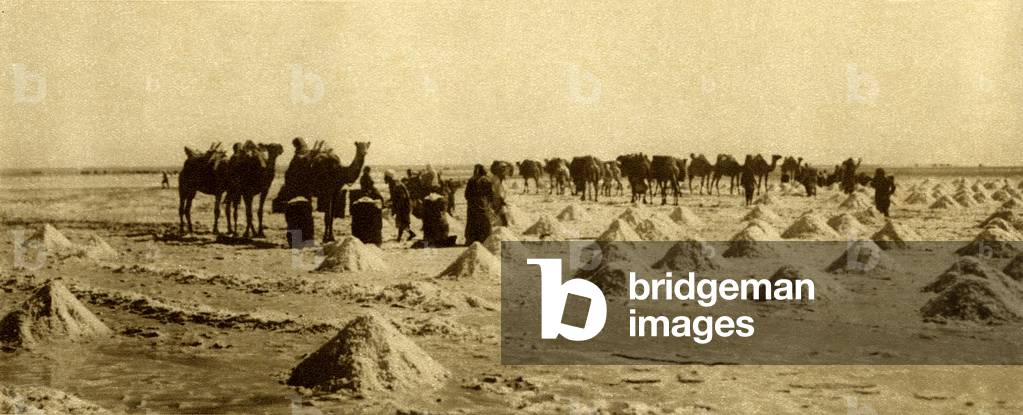
Collect rock salt on Lake Djebboul, 45 km south east of Aleppo (Syria) around 1925. The salt is collected in small piles and then load on camels (camels). The annual production of this farm was 15 million kilograms.

PCT4272319: Collect rock salt on Lake Djebboul, 45 km south east of Aleppo (Syria) around 1925. The salt is collected in small piles and then load on camels (camels). The annual production of this farm was 15 million kilograms., Unknown photographer, (20th century) / Bridgeman Images
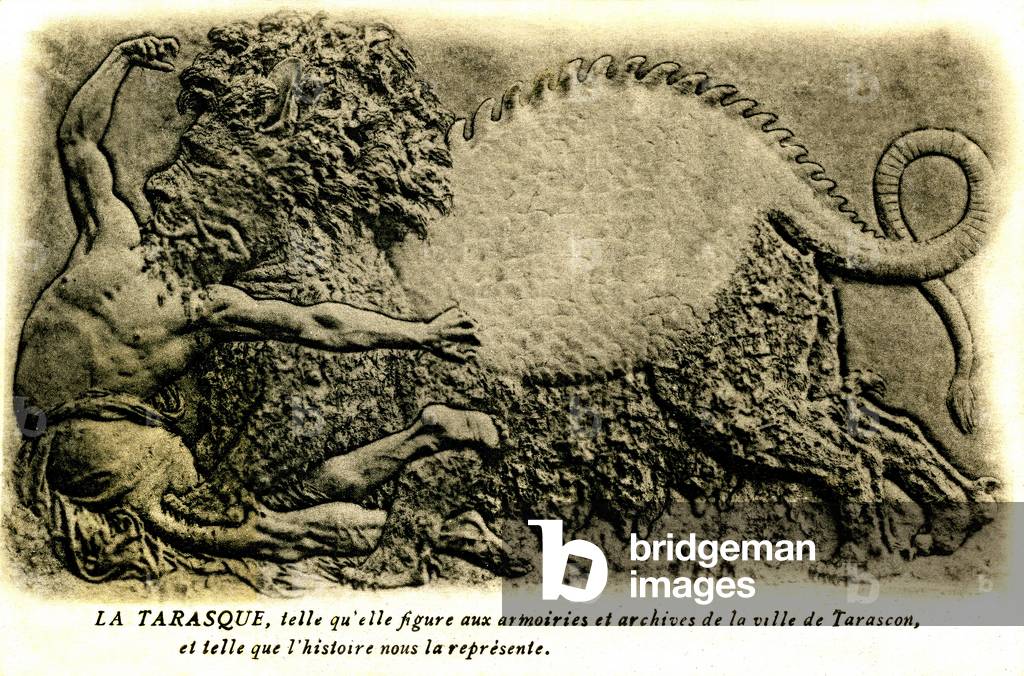
Tarascon, the Tarasque. Dragon who, according to tradition, ravaged the banks of the Rhone and was tame by Saint Martha. Here is the monster as it appears in the coat of arms and archives of the city and as history (the legende) represents it. Postcard beginning 20th century.

PCT4272413: Tarascon, the Tarasque. Dragon who, according to tradition, ravaged the banks of the Rhone and was tame by Saint Martha. Here is the monster as it appears in the coat of arms and archives of the city and as history (the legende) represents it. Postcard beginning 20th century., Unknown Artist, (20th century) / Bridgeman Images

Ulysses and his companions are buried in the hands of the Cyclops Polypheme who holds them in his cave. They're gonna make him run away, after Ulysses scratched his eye with a stake. The frieze shows all this sequence, taken from the Odyssee of Homere, with the escape of Ulysses and his companions, clinging to the fleece of the beliers of the Cyclops. Original gouache by Marie Joly 2010. Private collection, rights artist OK.

PCT4272430: Ulysses and his companions are buried in the hands of the Cyclops Polypheme who holds them in his cave. They're gonna make him run away, after Ulysses scratched his eye with a stake. The frieze shows all this sequence, taken from the Odyssee of Homere, with the escape of Ulysses and his companions, clinging to the fleece of the beliers of the Cyclops. Original gouache by Marie Joly 2010. Private collection, rights artist OK., Joly, Marie (20th century) / Bridgeman Images
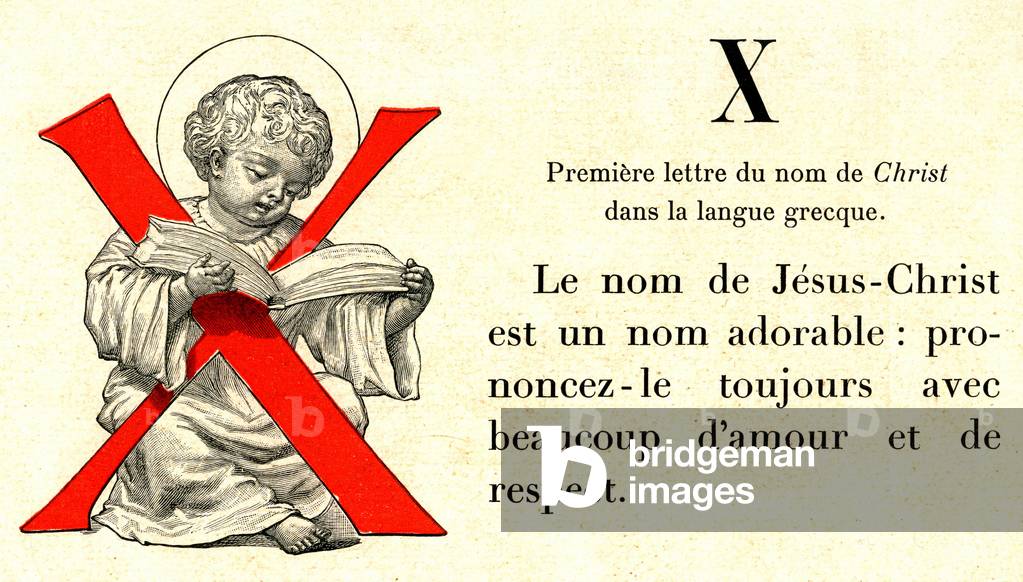
Excerpt from the Alphabet of the Child Jesus, edition Alfred Mame a Tours, 1929. Each page offers two large decorative lettrines, with their Christian entry (letter A as love, B as goodness... up to Z as zele). X: first letter of the name of Christ in the Greek language (cf. Xmas in English).

PCT4272482: Excerpt from the Alphabet of the Child Jesus, edition Alfred Mame a Tours, 1929. Each page offers two large decorative lettrines, with their Christian entry (letter A as love, B as goodness... up to Z as zele). X: first letter of the name of Christ in the Greek language (cf. Xmas in English). / Bridgeman Images
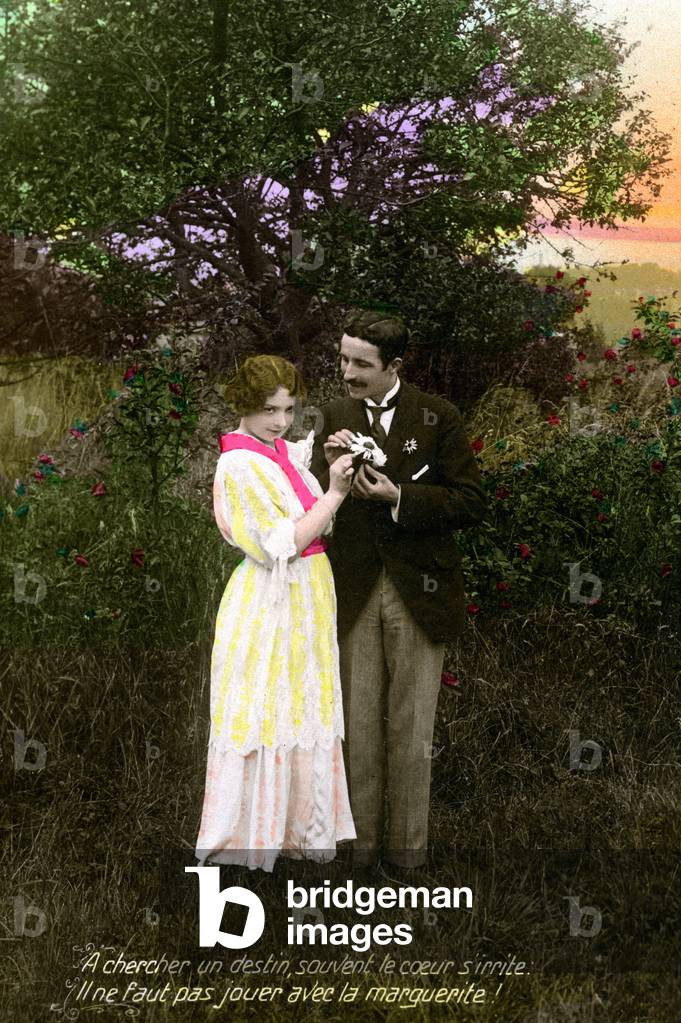
Couple of lovers efoliating the daisy in the countryside (nature). Legend in Alexandrins: “” Seeking a destiny, often the heart gets irritated - Do not play with the daisy””. Postcard beginning 20th century

PCT4270661: Couple of lovers efoliating the daisy in the countryside (nature). Legend in Alexandrins: “” Seeking a destiny, often the heart gets irritated - Do not play with the daisy””. Postcard beginning 20th century, Unknown photographer, (20th century) / Bridgeman Images

Chateau de Montsegur, on his Pog, in autumn (Ariege, Pays Cathare) Photo Patrice Cartier

PCT4270791: Chateau de Montsegur, on his Pog, in autumn (Ariege, Pays Cathare) Photo Patrice Cartier, Cartier, Patrice / Bridgeman Images
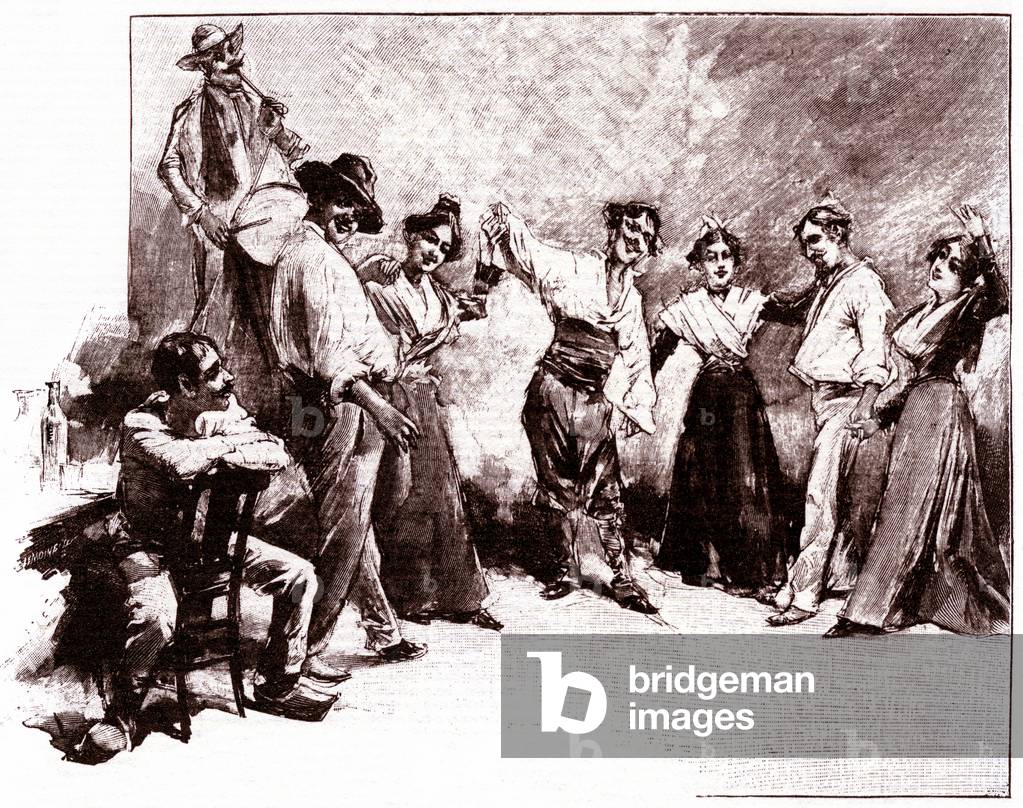
Fete de Saint Eloi, patron of the menagers, near Arles in Provence. The villagers dance farandole to the sound of the fife and the drum, cheeks by the drummer. Illustration for a Flammarion 1904 edition. of the “Lettres de mon moulin” by Alphonse Daudet (L'Arlesienne).

PCT4271122: Fete de Saint Eloi, patron of the menagers, near Arles in Provence. The villagers dance farandole to the sound of the fife and the drum, cheeks by the drummer. Illustration for a Flammarion 1904 edition. of the “Lettres de mon moulin” by Alphonse Daudet (L'Arlesienne). / Bridgeman Images

Adventures and adventures of the Baron de Munchhausen (Munchausen). Cover of the Hachette 1879 edition illustrated by E.Bichard.

PCT4271299: Adventures and adventures of the Baron de Munchhausen (Munchausen). Cover of the Hachette 1879 edition illustrated by E.Bichard., Cartier, Patrice / Bridgeman Images

Go to Orleans and make the king sacred to Reims: Joan of Arc heard Celestial voices, 1915 (engraving)

PCT4271413: Go to Orleans and make the king sacred to Reims: Joan of Arc heard Celestial voices, 1915 (engraving) / Bridgeman Images

Frontispice of Victor Hugo's novel “Notre Dame de Paris”” (Notre-Dame) by Aime de Lemud (1817-1887) edition Perrotin 1844, reproduced in the complete works illustrees, edition Ollendorff beginning 20th century.

PCT4271613: Frontispice of Victor Hugo's novel “Notre Dame de Paris”” (Notre-Dame) by Aime de Lemud (1817-1887) edition Perrotin 1844, reproduced in the complete works illustrees, edition Ollendorff beginning 20th century., Unknown Artist, (20th century) / Bridgeman Images

Excerpt from one of the last pages of Charles Dickens's “Christmas Song” beg of 20th century

PCT4271636: Excerpt from one of the last pages of Charles Dickens's “Christmas Song” beg of 20th century / Bridgeman Images

Adventures of Robinson Crusoe. Two chromolithographs (chromos) advertising for Liebig meat extract, part of a series of six, early 20th century, after the story imagined by Daniel Defoe (De Foe). Robinson in front of his house, with his friends tamed animals: dog, goat, cats, parrot. He teases his clothes in bete skin and grows wheat. Robinson saves a savage from cannibals and calls him Friday.

PCT4271674: Adventures of Robinson Crusoe. Two chromolithographs (chromos) advertising for Liebig meat extract, part of a series of six, early 20th century, after the story imagined by Daniel Defoe (De Foe). Robinson in front of his house, with his friends tamed animals: dog, goat, cats, parrot. He teases his clothes in bete skin and grows wheat. Robinson saves a savage from cannibals and calls him Friday. / Bridgeman Images
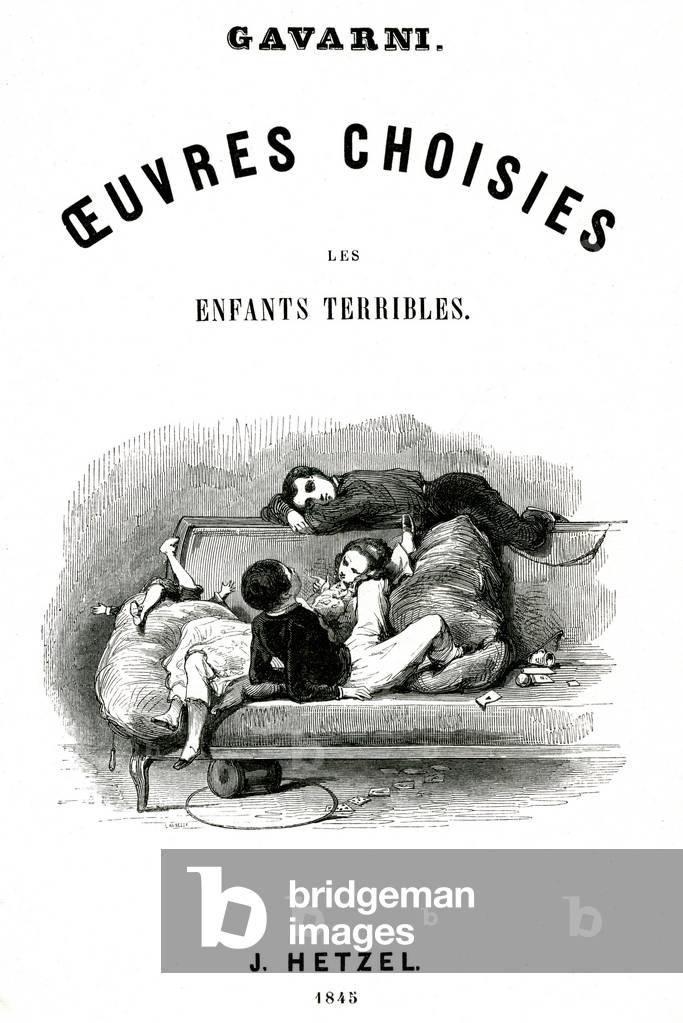
Title page of the collection “Les enfants terribles”” by satirical cartoonist Paul Gavarni (1804-1866), Hetzel 1845 edition. Three children affales on a sofa (canape).

PCT4271763: Title page of the collection “Les enfants terribles”” by satirical cartoonist Paul Gavarni (1804-1866), Hetzel 1845 edition. Three children affales on a sofa (canape)., Cartier, Patrice / Bridgeman Images

But where are these Alsatian villagers running into the main street at the beginning of the 20th century? Buy an umbrella from the peddler who has just settled in its usual location in the center of the village! Photos on glass plate.

PCT4271933: But where are these Alsatian villagers running into the main street at the beginning of the 20th century? Buy an umbrella from the peddler who has just settled in its usual location in the center of the village! Photos on glass plate., Unknown photographer, (20th century) / Bridgeman Images

Fragment of text with illustration from the Bibliotheque edition Rose Illustree Hachette beginning 20th century of the novel by Daniel Defoe (De Foe) Robinson Crusoe. This adaptation of the text (abbrege for the use of children) differs significantly from the same passage in Petrus Borel's translation in 1836: “After eating, I tried to walk; but I found myself so weakened that I could barely carry my musket - for I never went out without him.” As I was there, it came to mind these thoughts: What is the land and the sea, of which I have seen so many regions? where did it come from? what am i myself? what are all creatures, wild or police? human or raw? where do we get from? Surely we were all made by some secret power, which formed the earth and the ocean, the air and the heavens; but what is it?”

PCT4271945: Fragment of text with illustration from the Bibliotheque edition Rose Illustree Hachette beginning 20th century of the novel by Daniel Defoe (De Foe) Robinson Crusoe. This adaptation of the text (abbrege for the use of children) differs significantly from the same passage in Petrus Borel's translation in 1836: “After eating, I tried to walk; but I found myself so weakened that I could barely carry my musket - for I never went out without him.” As I was there, it came to mind these thoughts: What is the land and the sea, of which I have seen so many regions? where did it come from? what am i myself? what are all creatures, wild or police? human or raw? where do we get from? Surely we were all made by some secret power, which formed the earth and the ocean, the air and the heavens; but what is it?” / Bridgeman Images

American painter and illustrator Joseph Pennell (1860-1926) tricycle France and Italy with his wife Elisabeth Robins Pennell (1855-1936) at the end of the 19th century. This couple of artists brought back from these travels as a curious crew the material of many books. The best known is “An italian pilgrimage” (Italy a velocipede), published in 1887, a classic of travel literature. In his works, Joseph Pennell often drew himself with his wife, as he published in “The adventures of an illustrator”, Little Brown 1925.

PCT4271967: American painter and illustrator Joseph Pennell (1860-1926) tricycle France and Italy with his wife Elisabeth Robins Pennell (1855-1936) at the end of the 19th century. This couple of artists brought back from these travels as a curious crew the material of many books. The best known is “An italian pilgrimage” (Italy a velocipede), published in 1887, a classic of travel literature. In his works, Joseph Pennell often drew himself with his wife, as he published in “The adventures of an illustrator”, Little Brown 1925., Pennell, Joseph (1858-1926) / Bridgeman Images

French boxing: board extracted from a work from the beginning of the 20th century

PCT4272006: French boxing: board extracted from a work from the beginning of the 20th century / Bridgeman Images

Little elves (gnomes, garden dwarves) carrying victuals and gifts for a party. Fantasy card beginning 20th century signed Hedvig Rosendahl.

PCT4272080: Little elves (gnomes, garden dwarves) carrying victuals and gifts for a party. Fantasy card beginning 20th century signed Hedvig Rosendahl., Unknown Artist, (20th century) / Bridgeman Images
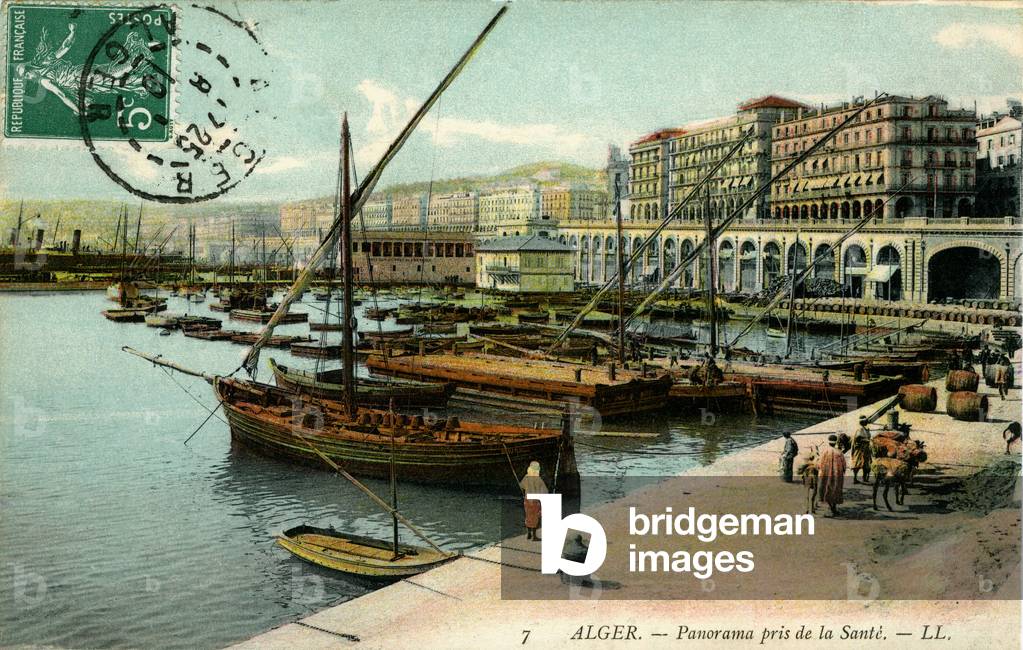
Algiers, the port. Panorama taken from La Sante. View of the docks. Postcard dispatched in 1910.

PCT4272142: Algiers, the port. Panorama taken from La Sante. View of the docks. Postcard dispatched in 1910., Unknown photographer, (20th century) / Bridgeman Images

Captured by pirates, taken to Turkey and employed in the kitchens of a Turkish Pasha, Panurge revolts and kills the Pasha by piercing it with a pin. Illustration of Robida for the Gargantua de Rabelais - Librairie Armand Colin debut 20th century.

PCT4272151: Captured by pirates, taken to Turkey and employed in the kitchens of a Turkish Pasha, Panurge revolts and kills the Pasha by piercing it with a pin. Illustration of Robida for the Gargantua de Rabelais - Librairie Armand Colin debut 20th century., Robida, Albert (1848-1926) / Bridgeman Images


Back to top