2491557 Search Results

GIA4756448: Pink ibiscus. Botanical board. Engraving., Unknown Artist, (19th century) / Bridgeman Images

GIA4756478: Advertising for the circus in 1800 depicting a tamer putting his hand in the mouth of a lion., Unknown Artist, (19th century) / Bridgeman Images

GIA4756486: Talthybios and Eurybates take the virgin Briseis before Achilles, who stands in the tent of the Myrmidones. Iliad Chant I, v 345. Engraving from the end of the 18th century., Unknown artist, (18th century) / Bridgeman Images

FLO4661806: Hydne sinuous (Hydnum repandum) and edible hydna (Hydnum imbricatum). Chromolithography of C.Krause, based on an illustration by Fritz Leuba (1848-1910), in Les champignons edibles et les especes veneneuses with which they could be confused, published by Delachaux and Niestle, in Neuchatel, Switzerland, in 1890. / Bridgeman Images

FLO4661852: Conical morel (Morchella conica), edible. Chromolithography of C.Krause, based on an illustration by Fritz Leuba (1848-1910), in Les champignons edibles et les especes veneneuses with which they could be confused, published by Delachaux and Niestle, in Neuchatel, Switzerland, in 1890. / Bridgeman Images

LRI4661931: Ottoman Empire: Portrait of Sultan Murad V (1840-1904)” Photography. 1876 Ankara, Turkish Historical Society Turkey, Unknown photographer, (19th century) / Bridgeman Images

JLJ4661993: Diligence, Louveciennes, 1870 (oil on canvas), Pissarro, Camille (1830-1903) / Bridgeman Images

PIX4662112: Dorygnathus - Dorygnathus at altitude - Flight of dorygnathus over a forest at the beginning of the Jurassic 180 million years ago. This pterosaur had a wingspan of about 1 metre. Like all pterosaurs, dorygnathus is a flying reptile, not a dinosaur. A flock of Dorygnathus soars high over a rugged, Early Jurassic European landscape of Wollemi Pine approximately 180 million years ago. Dorygnathus had a wing span of about 3 feet and its large, curved fangs suggests that it dined primarily on fish. Like all pterosaurs, Dorygnathus was a flying reptile, not a dinosaur (the flying descendents of the dinosaurs live on today as birds) / Bridgeman Images

FLO4662153: English dandies and ladies boarding a stagecoach in London, 1820. White Horse Cellar, Piccadilly. Tom and Logic bidding Jerry goodbye upon his going into training and his return to Hawthorn Hall. Handcoloured copperplate engraving by Isaac Robert Cruikshank and George Cruikshank from Pierce EGAN's Life in London, Sherwood, Jones, London, 1823. / Bridgeman Images

JLJ4662201: Donkey bearing relics. Illustration for the fable by Jean de La Fontaine, 1736 (lithograph), Jeaurat, Etienne (1699-1789) / Bridgeman Images

FLO4662214: Camellia hybrid, Don Carlos Ferdinando, Camellia japonica. Chromolithograph by L. Stroobant after an illustration from life by P. de Pannemaeker from Jean Linden's l'Illustration Horticole, Brussels, 1873. / Bridgeman Images

JLJ4662231: Indians of America. The Mandans: Chief San Ja Ka Ko Kah (San-Ja-Ka-Ko-Kah) surrounds with his family, 19th century (litho), Catlin, George (1796-1872) / Bridgeman Images

PIX4662250: Diplodocus et pterodactyles - Diplodocus and pterodactyls - Diplodocus (Diplodocus longus) is a herbivorous dinosaur living in North America around the end of Jurassic about 150 million years ago. It was up to 35 metres long. In the sky, pterodactyls, a kind of pterosaur, flying reptile of the Jurassic. Vegetarian Diplodocus leisurely graze while several pterodactyls pass overhead 150 million years ago in what is today North America. 115 feet long and weighing over 10 tons, from the tip of tail to its diminutive head Diplodocus is the longest known dinosaur / Bridgeman Images

LUX4758998: France, Centre, Indre-et-Loire (37), Tours: Cathedrale Saint Gatien, Gothic facade with Renaissance style towers, 1920 / Bridgeman Images

TEC4759047: The Garabit viaduct (rail bridge) in the Cantal in Auvergne (France) crosses the waters of the dam's reservoir lake. Architecture by Gustave Eiffel, 1881-1884., Eiffel, Gustave (1832-1923) / Bridgeman Images

LBY4759082: Stadelhofen station in Zurich, Switzerland. Realisation 1991, architect Santiago Calatrava. Photography 1991., Calatrava Valls, Santiago (b.1951) / Bridgeman Images

MME4759118: Sanremo Music Festival 1990. Italian pop singer Toto Cutugno, finished in second place with the song “” Gli amori””, holding his prize/Festival di Sanremo 1990. Il cantante Toto Cutugno, classificato al secondo posto con la canzone “” Gli amori”””, con il premio vinto -, Mencarini, Marcello / Bridgeman Images
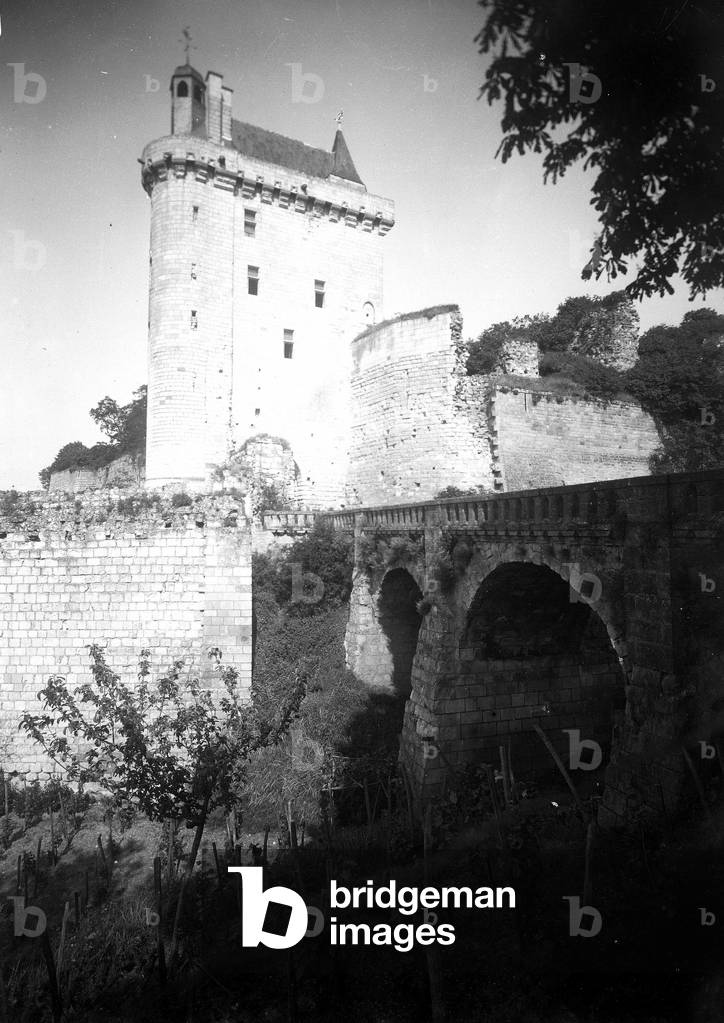
LUX4759193: France, Centre, Indre-et-Loire (37), Chinon: the Chateau with dungeon, clock tower, stone bridge and moat, 1920 / Bridgeman Images

GIA4759234: Scientist and astronomer Jean Mascart observing Halley's comet on May 17, 1910 at 3 a.m. from the peak of Guajara., Unknown Artist, (20th century) / Bridgeman Images

TEC4664187: Parc Guell, Montana Pelada in Barcelona (Spain). Realisation 1900-1914, architect Antoni Gaudi i Cornet (1852-1926). Photography 10/09/08. / Bridgeman Images

FLO4664198: Variete Jaspideum de Dendrobium nobile - Chromolithography by S. de Leeuw, after a drawing by C. de Bruyne, published in Lindenia, Iconographie des orchides, by Lucien Linden, Brussels (Belgium), 1902 / Bridgeman Images

FLO4664233: Laelia grandis var. Tenebrosa sub-var. Superbiens - Chromolithography by S. de Leeuw, based on a drawing by C. de Bruyne, published in Lindenia, Iconographie des orchides, by Lucien Linden, Brussels (Belgium), 1902 / Bridgeman Images
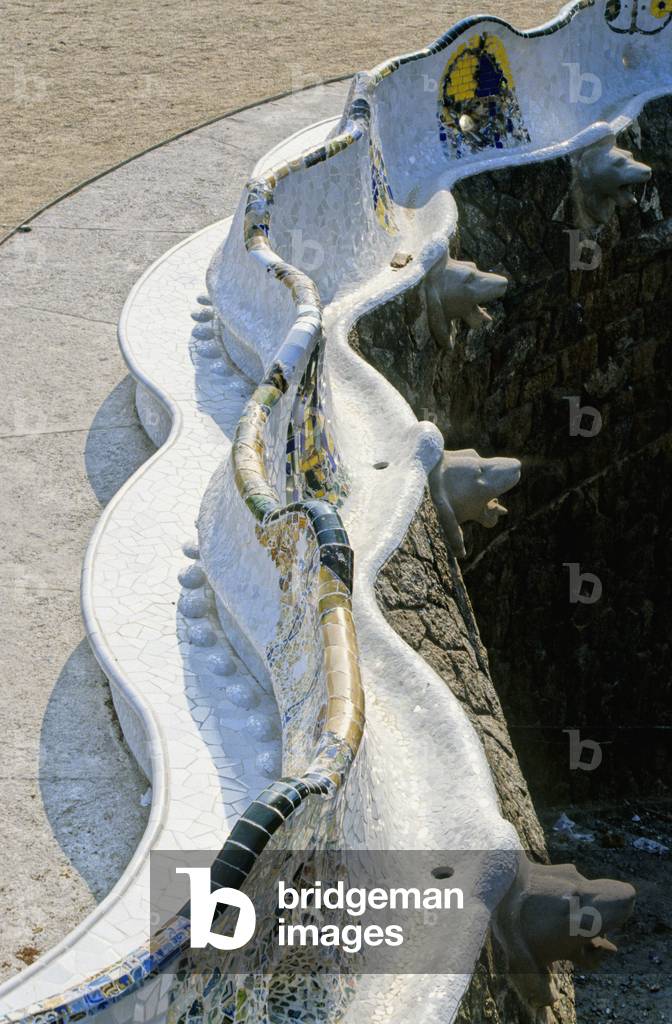
LBY4664274: Fountain ddu Parc Guell, Montana Pelada in Barcelona (Spain). Realisation 1903, architect Antoni Gaudi i Cornet (1852-1926)., Boegly, Luc / Bridgeman Images

FLO4664289: Cypripedium by Miss Louisa Fowler - Chromolithography by S. de Leeuw, based on a drawing by C. de Bruyne, published in Lindenia, Iconographie des orchides, by Lucien Linden, Brussels (Belgium), 1902 / Bridgeman Images
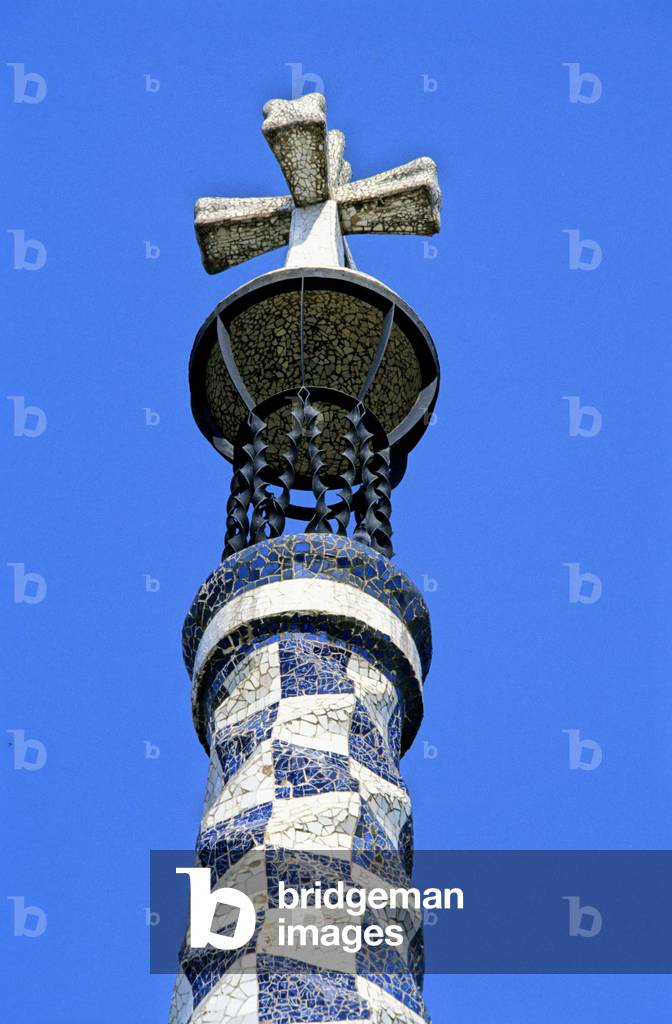
LBY4664302: Detail of a trancadis checkered entrance pavilion of Parc Guell, Montana Pelada in Barcelona (Spain). Realisation 1903, architect Antoni Gaudi i Cornet (1852-1926)., Boegly, Luc / Bridgeman Images

PIX4664346: Doedicurus and Eremotherium - Doedicurus clavicaudatus is a glyptodon, a giant tattoo, that lived during pleistocene until 11,000 years ago. It was three metres long and weighed two tons. Behind it is an eremotherium. Prehistoric glyptodonts of the genus Doedicurus graze on grassy plains 25,000 years ago in what is today South America. In the background is a giant ground sloth of the genus Eremotherium. With a turtle-like shell five feet tall and weighing over two tons, Doedicurus was the largest known glyptodontid, an extinct family of heavy-armored herbivores related to modern armadillos. Doedicurus carried a large spiked tail that could have helped protect it from large predators and other Doedicurus. Eremotherium was a Megatheriid that grew to 20 feet long and weighed up to three tons / Bridgeman Images

PIX4664384: Brontotheres and birds - Brontotherium with birds - Artist's view of Brontotheres (Brontotherium) in a landscape of South Dakota 35 million years ago. Brontotherium wander the lush Late Eocene landscape of South Dakota 35 million years ago. Modern rhinoceroses have a symbiotic relationship with birds (variously known as oxpeckers or tick birds) that eat parasites they find on the rhino's skin and noisily warn of danger. No doubt similar symbiotic relationships existed between birds and the megafauna of the Eocene / Bridgeman Images
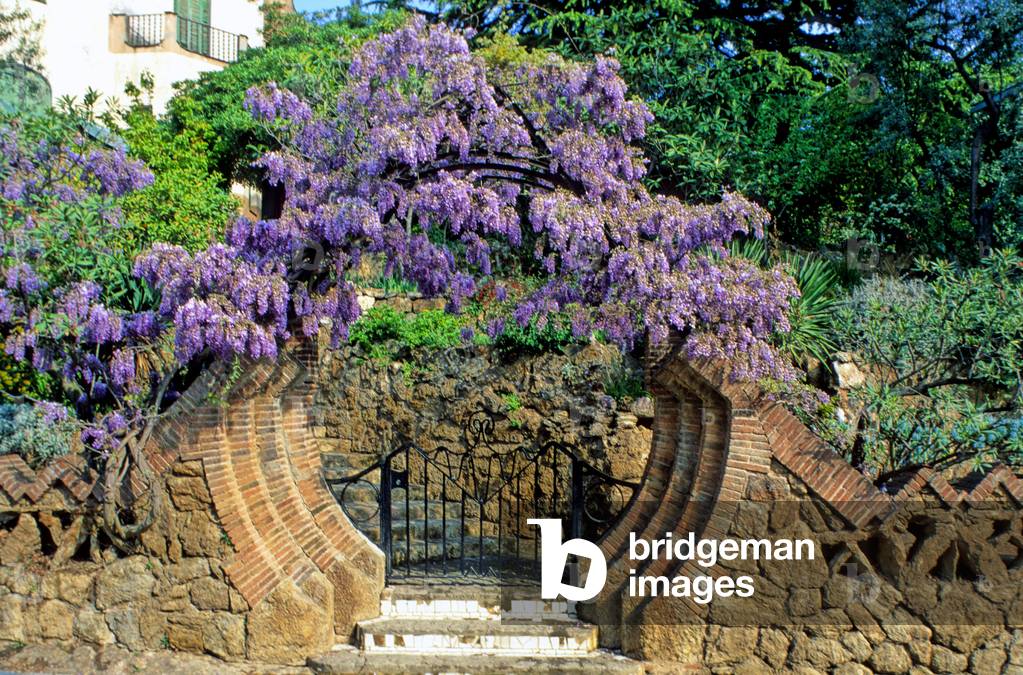
LBY4664416: Parc Guell, Montana Pelada in Barcelona (Spain). Realisation 1903, architect Antoni Gaudi i Cornet (1852-1926)., Boegly, Luc / Bridgeman Images

MME4759288: Festival of Literatures, Rome 2012. Italian writer Carolina Cutolo/“” Festival Letterature””, Roma 2012. The creator Carolina Cutolo-, Mencarini, Marcello / Bridgeman Images

LBY4759322: TGV station at Lyon Saint Exupery airport. Architecture of Santiago Calatrava, 1989-1994. Photography 1994, Calatrava Valls, Santiago (b.1951) / Bridgeman Images

GIA4759361: Diploma for the hospital of Mantua dated 10 July 1158. The document is signed by the German Emperor Frederick I Barberossa (1122 - 1190). National Archive of Milan., German School, (12th century) / Bridgeman Images

LBY4759384: TGV station at Lyon Saint Exupery airport. Architecture of Santiago Calatrava, 1989-1994. Photography 1994, Calatrava Valls, Santiago (b.1951) / Bridgeman Images

GIA4759398: Native Maori of New Zealand. 19th century engraving., Unknown Artist, (19th century) / Bridgeman Images

MME4759418: Milan, 1988. Italian fashion designer Raffaella Curiel/Milano, 1988. La stilista Raffaella Curiel -, Mencarini, Marcello / Bridgeman Images

MME4759435: Rome, Basilica of Santa Maria degli Angeli (Saint Mary of the Angels), 1999. Argentinian tenor opera singer Jose Cura performing a rehearsal/Il tenore Jose Cura durante una prova -, Mencarini, Marcello / Bridgeman Images

LUX4759477: France, Centre, Loir-et-Cher (41), Blois: overview from the beach on the south shore with the Jean Gabriel bridge and the cathedrale Saint-Louis, 1910 - advertisements: Michelin stock, large central garage, cycles and automobiles, grand hotel d'Angleterre / Bridgeman Images
