2491505 Search Results

MPX5124449: The circular Godiva Cafe in the Lower Precinct, Coventry city centre - a popular place for a quick snack and to meet friends and family, 25th April 1962 (b/w photo) / Bridgeman Images
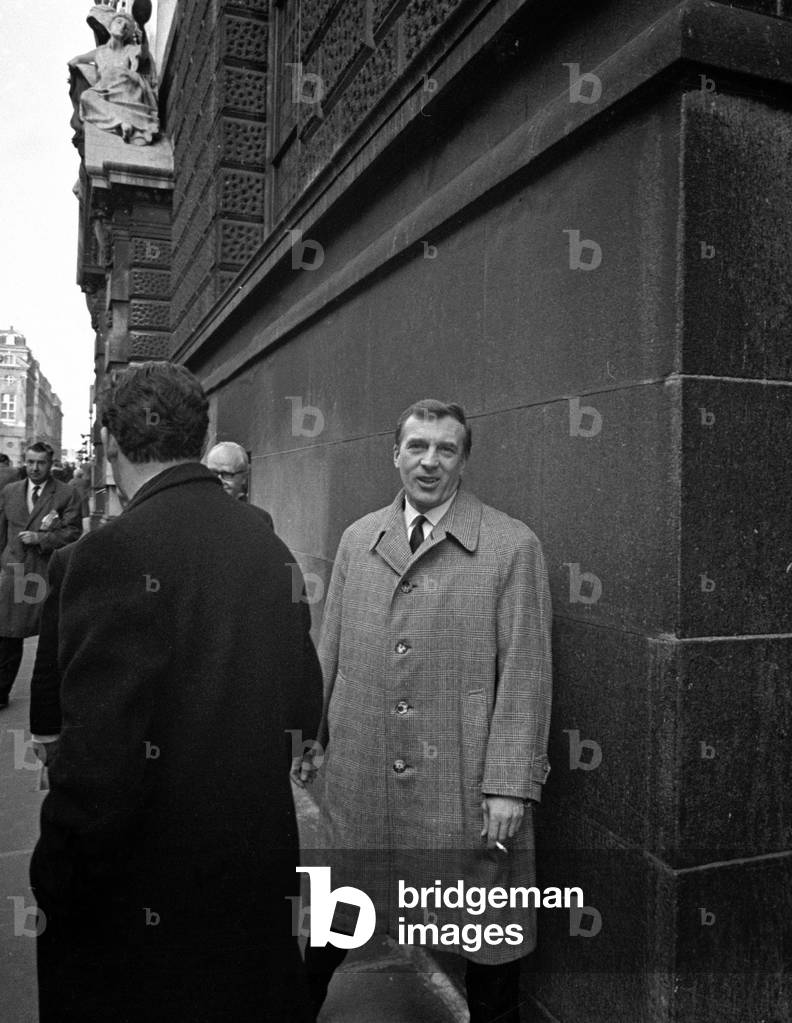
MPX5124592: The Krays trial at The Old Bailey. Charlie Kray. 15th April 1965 (b/w photo) / Bridgeman Images

MPX5124533: Yorkshire cricketer A. Mitchell leads selected young players from the County to the winter sheds at Headingly for the first practice of the season. April 1947 (b/w photo) / Bridgeman Images

MPX5124542: The Bonzo Dog Band performing at The Isle of Wight Pop Festival, 30th August 1969 (b/w photo) / Bridgeman Images
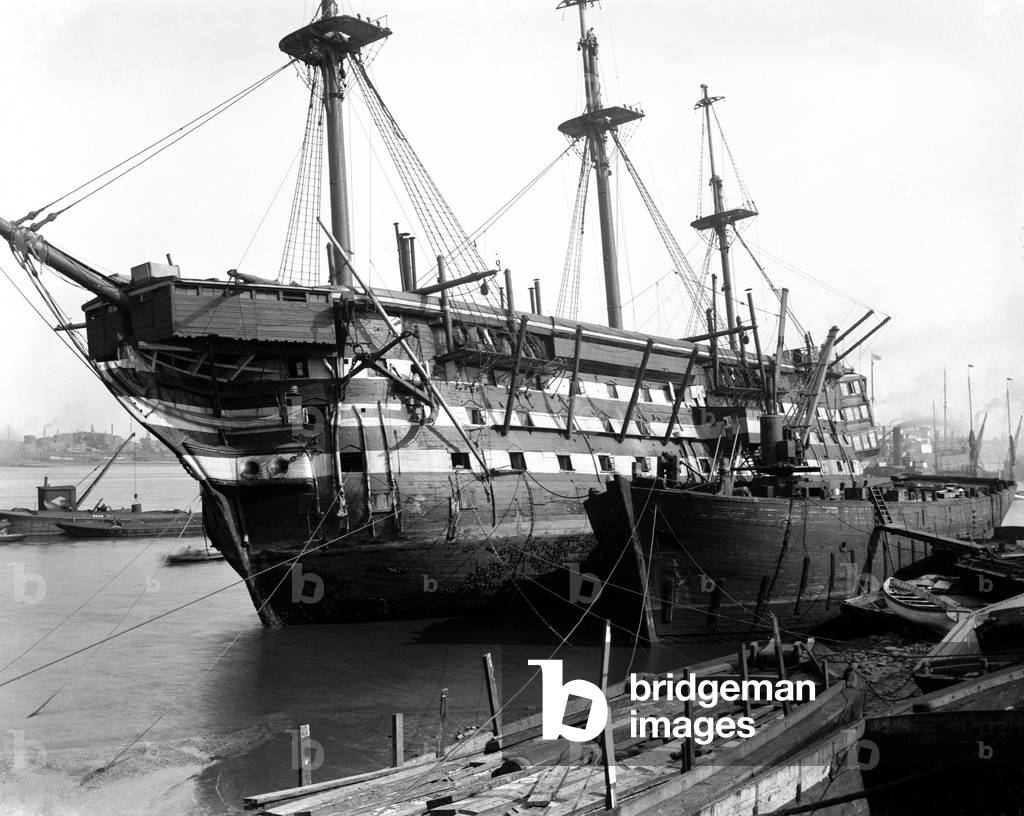
MPX5124590: The Foudroyant one of Nelson's ships seen here being broken up at Woolwich, c. 1925 (b/w photo) / Bridgeman Images
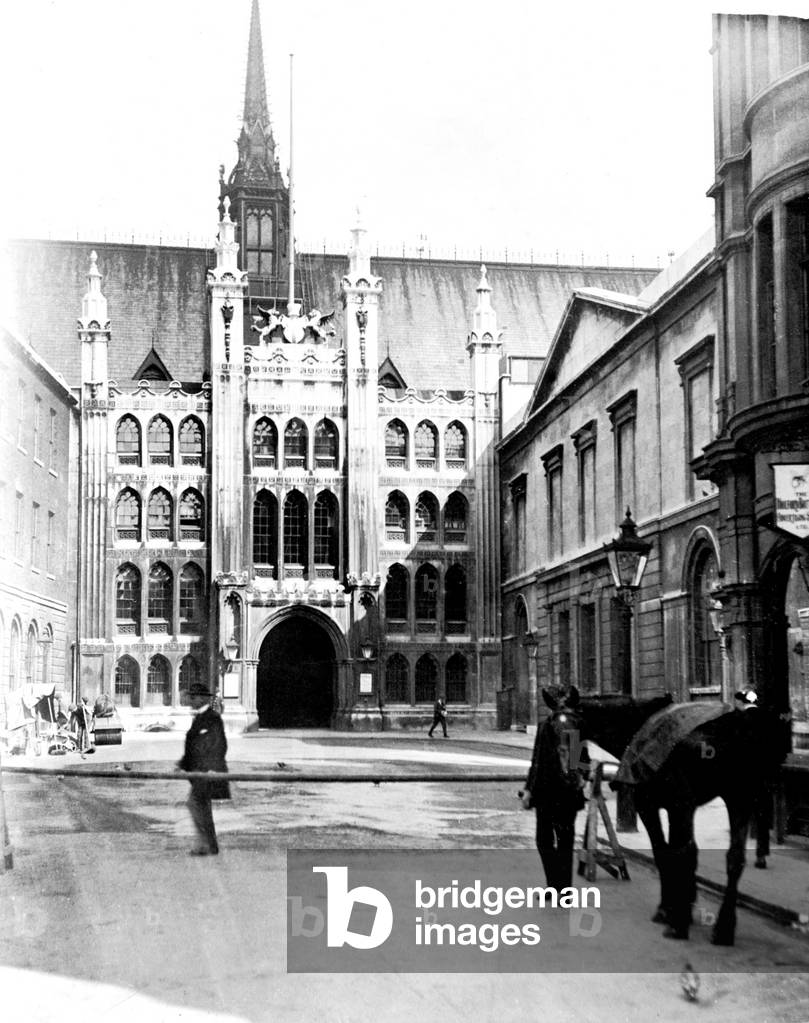
MPX5124622: The Guildhall in the City of London seen here in the late 1930s (b/w photo) / Bridgeman Images
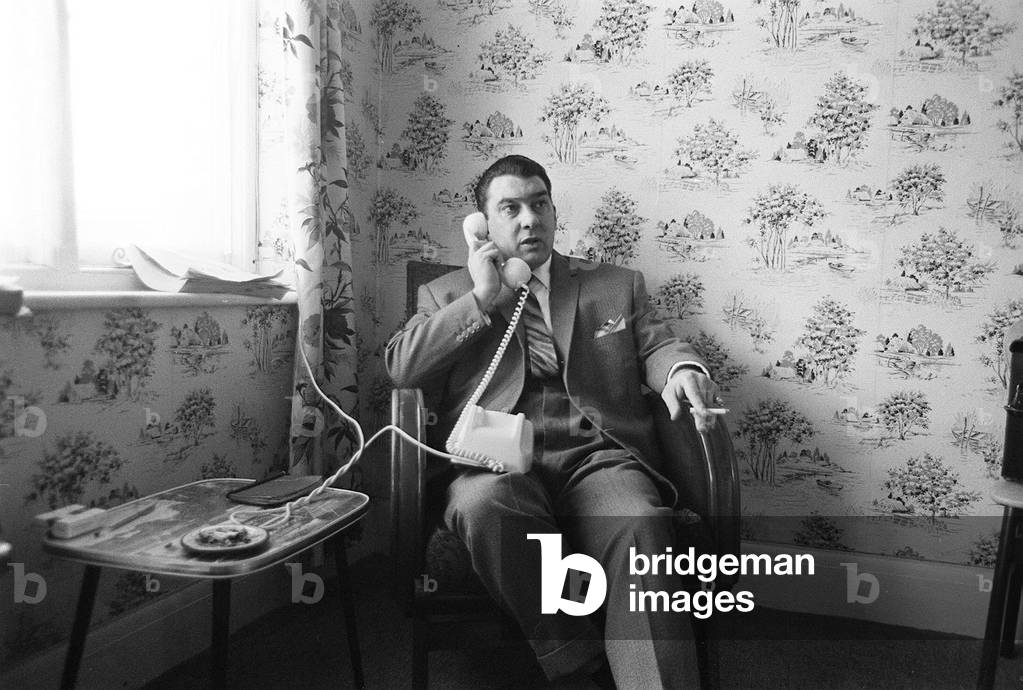
MPX5124614: Ronnie Kray one of the Kray twins, pictured sitting at home after helping police inquiries into the Blind Beggar Pub shooting, London, 6th August 1966 (b/w photo) / Bridgeman Images
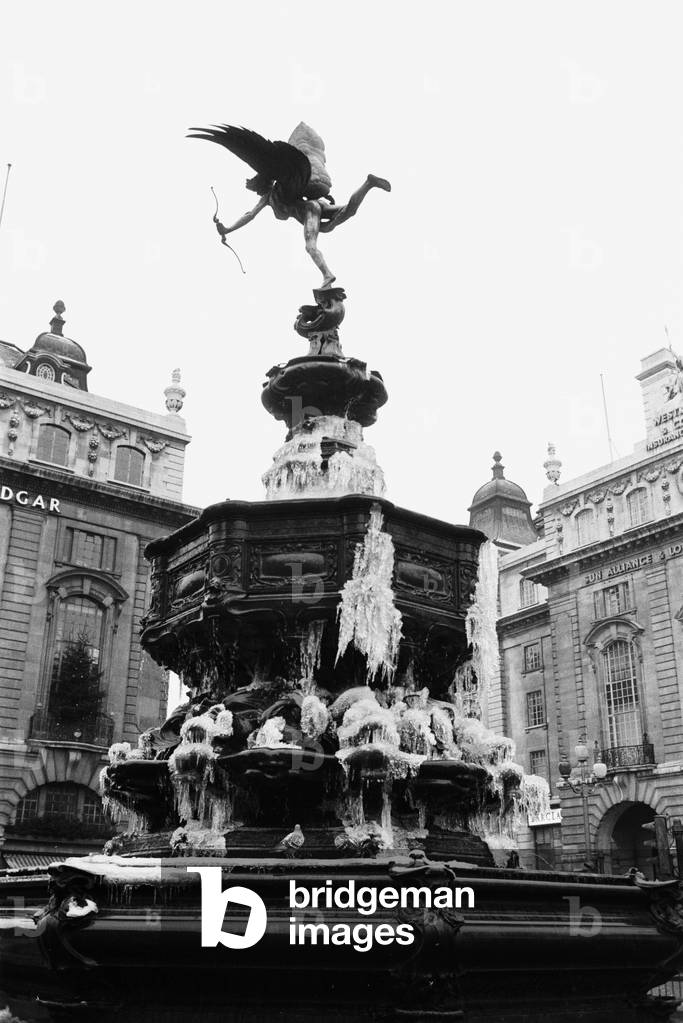
MPX5124662: The statue of Eros in Piccadilly Circus covered in ice after a chilly Christmas, 28th December 1970 (b/w photo) / Bridgeman Images
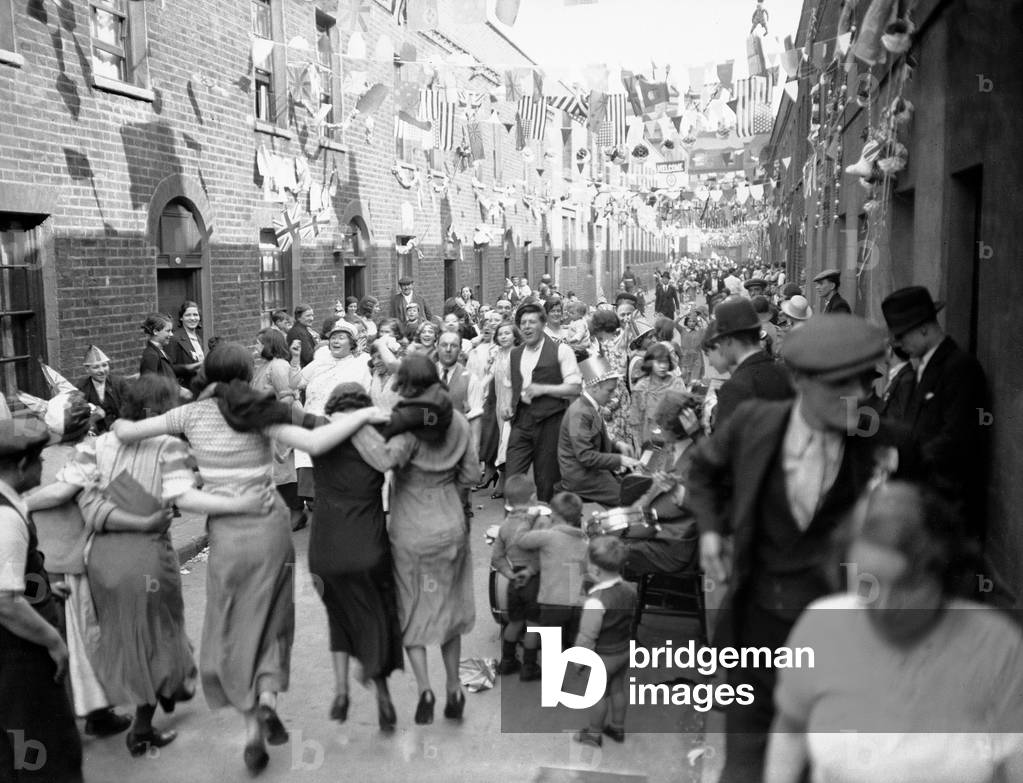
MPX5124634: Street Party in London's East End in celebration of King George V Silver Jubilee, 3rd May 1935 (b/w photo) / Bridgeman Images
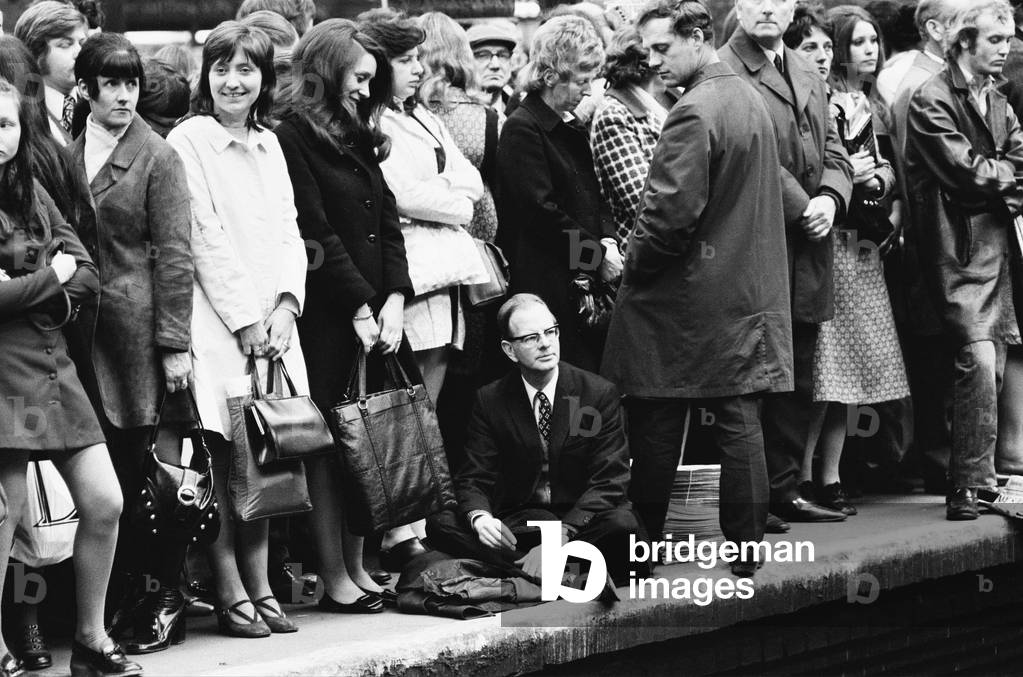
MPX5124640: One man decides to sit down on the platform as homeward bound crowds await their train during rush hour at Liverpool Street Station, London. 18th April 1972 (b/w photo) / Bridgeman Images
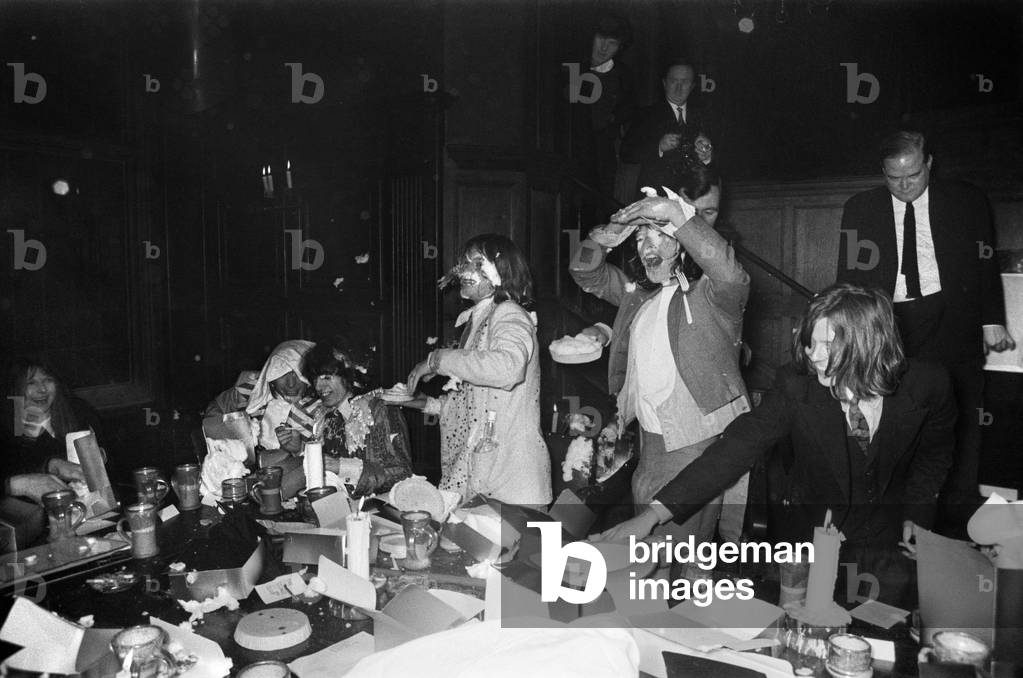
MPX5124652: The Rolling Stones launch their Beggars Banquet album at the Elizabethan Room, Gore Hotel, 190 Queensgate on 5 December 1968 (b/w photo) / Bridgeman Images
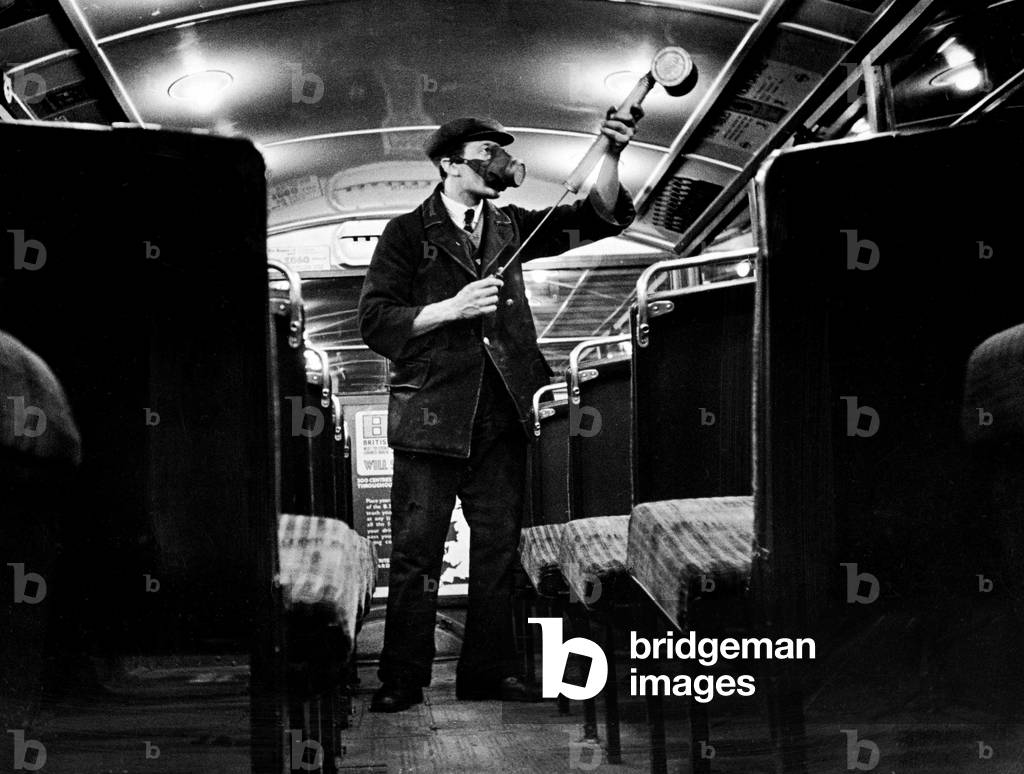
MPX5124661: A cleaner seen here spraying a pesticide to kill germs during a routine cleansing of the bus at a London Transport garage, 30th May 1935 (b/w photo) / Bridgeman Images
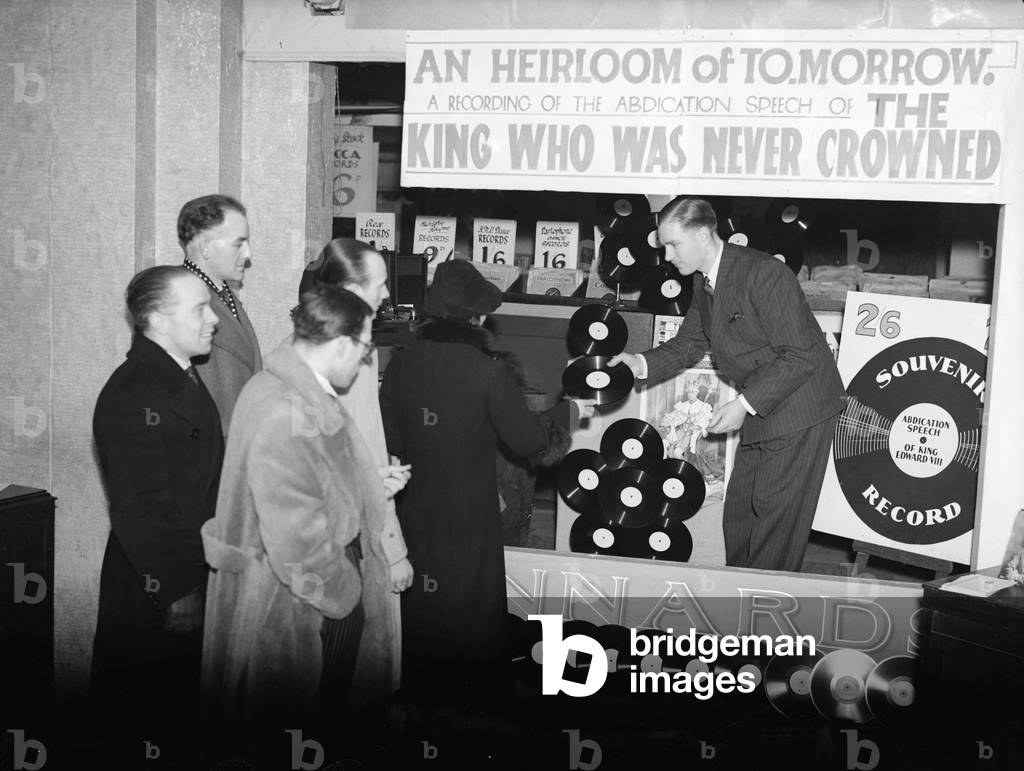
MPX5124664: King Edward VIII Abdication Crisis, December 1936 (b/w photo) / Bridgeman Images
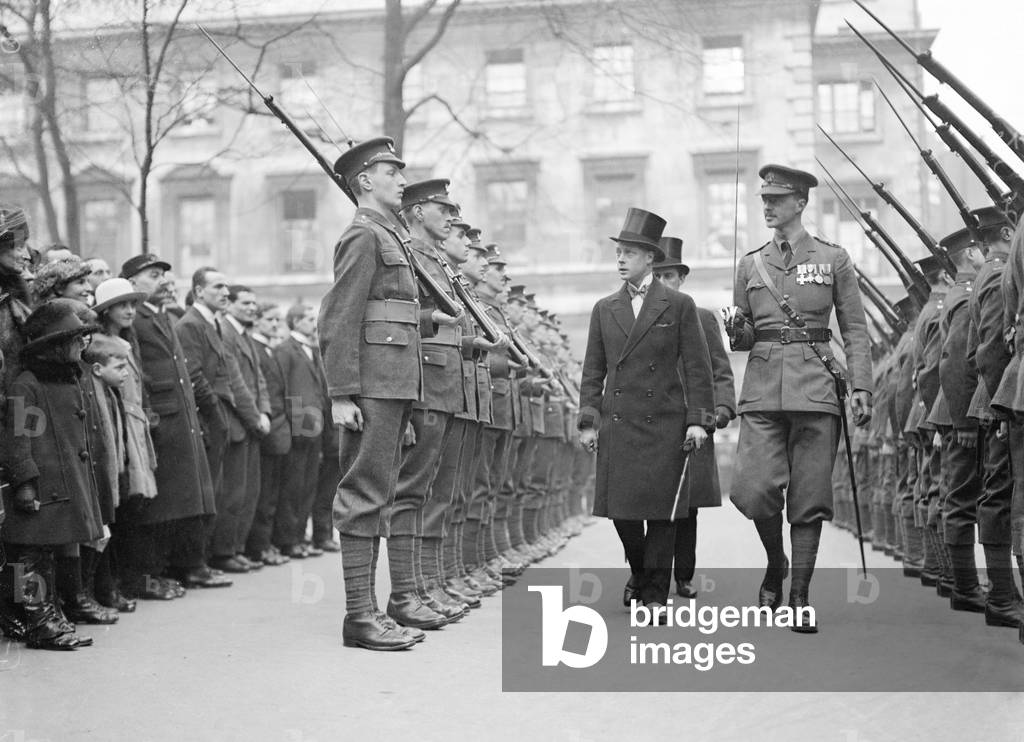
MPX5124673: Prince of Wales (later King Edward VIII) inspecting Honourable Artillery Company Guard of Honour. 18th February 1921 (b/w photo) / Bridgeman Images

MPX5124393: Queen Elizabeth II and Prince Philip on the North East Leg of The Jubilee Tour to celebrate the Silver Jubilee, 1977 (b/w photo) / Bridgeman Images

MPX5124396: Queen Elizabeth II and Prince Philip on the North East Leg of The Jubilee Tour to celebrate the Silver Jubilee, 1977 (b/w photo) / Bridgeman Images

MPX5124399: Chuck Berry pictured at Pye recording studios, Cumberland Place, 25th May 1964 (b/w photo) / Bridgeman Images

MPX5124408: Voluteers manning the lost property tent and canteen in Hyde Park on the 9th day of the General Strike. Hyde Park was closed for the duration of the dispute and rapidly transformed into great milk and petrol dump. The General Strike came about after negotiations between the miners and mine owners failed over wages and the strike began on 3 May 1926. Millions obeyed the strike call, bringing transport systems to a halt while newspapers were not printed. The government responding by using volunteers to run trains and buses and sent in troops to move supplies from the London docks. There were clashes between police and crowds in many areas and at least 4000 strikers were arrested. There were attacks on buses and trains, including the derailing of the Flying Scotsman. The strike was called off unilaterally by the TUC on 12 May with no guarantees of fair treatment for the miners who fought on to bitter defeat in October, 11th May 1926 (b/w photo) / Bridgeman Images

MPX5124423: Actor Kenneth More as King Arthur and John Le Mesurier as Sir Gawain at Alnwick Castle in Northumberland with director Russ Mayberry in 1978 (b/w photo) / Bridgeman Images

MPX5124426: Pop Group Spandau Ballet, November 1982 (b/w photo) / Bridgeman Images

MPX5124435: Queen Elizabeth II visits Tynemouth, the crowds used Evening Chronicle and The Journal posters to welcome the Queen, 1950 (b/w photo) / Bridgeman Images

MPX5124450: Soldiers parade on Horseguards Parade in London before patrolling the streets on the 10th day of the General Strike. The national dispute came about after negotiations between the miners and mine owners failed over wages and the strike began on 3 May 1926. Millions obeyed the strike call, bringing transport systems to a halt while newspapers were not printed. The government responding by using volunteers to run trains and buses and sent in troops to move supplies from the London docks. There were clashes between police and crowds in many areas and at least 4000 strikers were arrested. There were attacks on buses and trains, including the derailing of the Flying Scotsman. The strike was called off unilaterally by the TUC on 12 May with no guarantees of fair treatment for the miners who fought on to bitter defeat in October. 12th May 1926 (b/w photo) / Bridgeman Images

MPX5124453: Scene at Hammersmith Broadway on the 10th day of the General Strike; showing a man being escorted to the police station after making a disturbance. The national dispute came about after negotiations between the miners and mine owners failed over wages and the strike began on 3 May 1926. Millions obeyed the strike call, bringing transport systems to a halt while newspapers were not printed. The government responding by using volunteers to run trains and buses and sent in troops to move supplies from the London docks. There were clashes between police and crowds in many areas and at least 4000 strikers were arrested. There were attacks on buses and trains, including the derailing of the Flying Scotsman. The strike was called off unilaterally by the TUC on 12 May with no guarantees of fair treatment for the miners who fought on to bitter defeat in October. 12th May 1926 (b/w photo) / Bridgeman Images

MPX5124456: Naked girl dancing at The Isle of Wight Festival, 30th August 1969 (b/w photo) / Bridgeman Images

MPX5124459: Music fan with telescope at The Isle of Wight Festival, 30th August 1970 (b/w photo) / Bridgeman Images

MPX5124465: Car park behind Bush House, London two days after the end of the General Strike. The national dispute came about after negotiations between the miners and mine owners failed over wages and the strike began on 3 May 1926. Millions obeyed the strike call, bringing transport systems to a halt while newspapers were not printed. The government responding by using volunteers to run trains and buses and sent in troops to move supplies from the London docks. There were clashes between police and crowds in many areas and at least 4000 strikers were arrested. There were attacks on buses and trains, including the derailing of the Flying Scotsman. The strike was called off unilaterally by the TUC on 12 May with no guarantees of fair treatment for the miners who fought on to bitter defeat in October. 14th May 1926 (b/w photo) / Bridgeman Images

MPX5124483: Two hippy girls arriving at The Isle of Wight Festival, 28th August 1969 (b/w photo) / Bridgeman Images

MPX5124516: Crowds watching the West Indies match against Norfolk at Norwich during their tour of England, 4th August 1933 (b/w photo) / Bridgeman Images

MPX5124531: The Ashes - 1st Test Australia v England won by 10 wickets, 2nd December 1932 (b/w photo) / Bridgeman Images

MPX5124576: Film Premiere of "Thoroughly Modern Millie". Lord and Lady Boothby arrive at the premiere. 12th October 1967 (b/w photo) / Bridgeman Images

MPX5124585: Jack London v Bruce Woodcock at Tottenhams White Hart Lane football ground, Woodcock won by a knockout. 17th July 1945 (photo) / Bridgeman Images
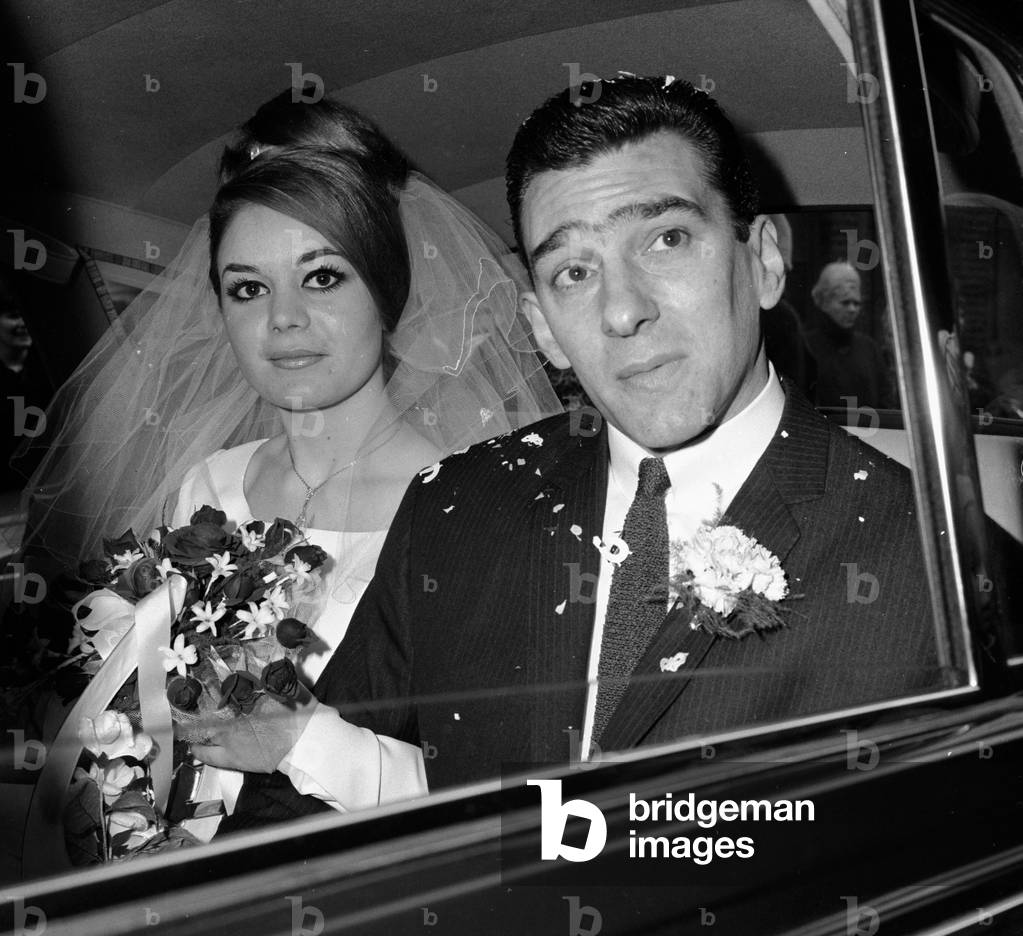
MPX5124597: London gangster Reggie Kray marries Francis Shea. 19th April 1965 (b/w photo) / Bridgeman Images
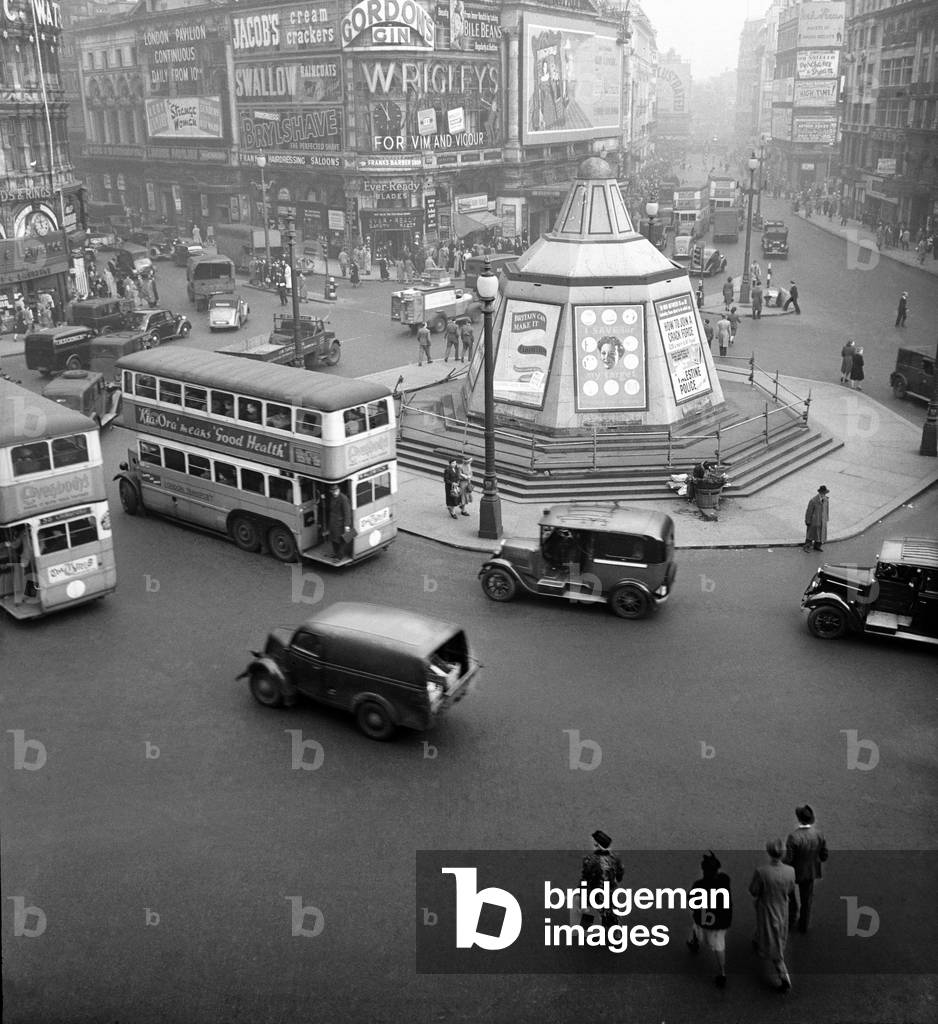
MPX5124609: Piccadilly Circus 1946 (b/w photo) / Bridgeman Images

MPX5124627: Tip for all anglers... the ponies are biting really well. This wasn't exactly the bite that angler Ian Prytherch hoped for when he set out for a day's sport on Dartmoor Devon. But it was the only sort he got all day. Ian who is 15 had hardly cast his line when he caught this pony...nosing in his lunch bag. Lured by the smell of a freshly baked Cornish Pasty. Later Ian tried eating an apple. He ended up sharing it with the persistent pony and swiftly departed for a new fishing ground, 24th October 1968 (b/w photo) / Bridgeman Images

MPX5124639: For A Few Dollars More directed by Sergio Leone, 1965 / Bridgeman Images
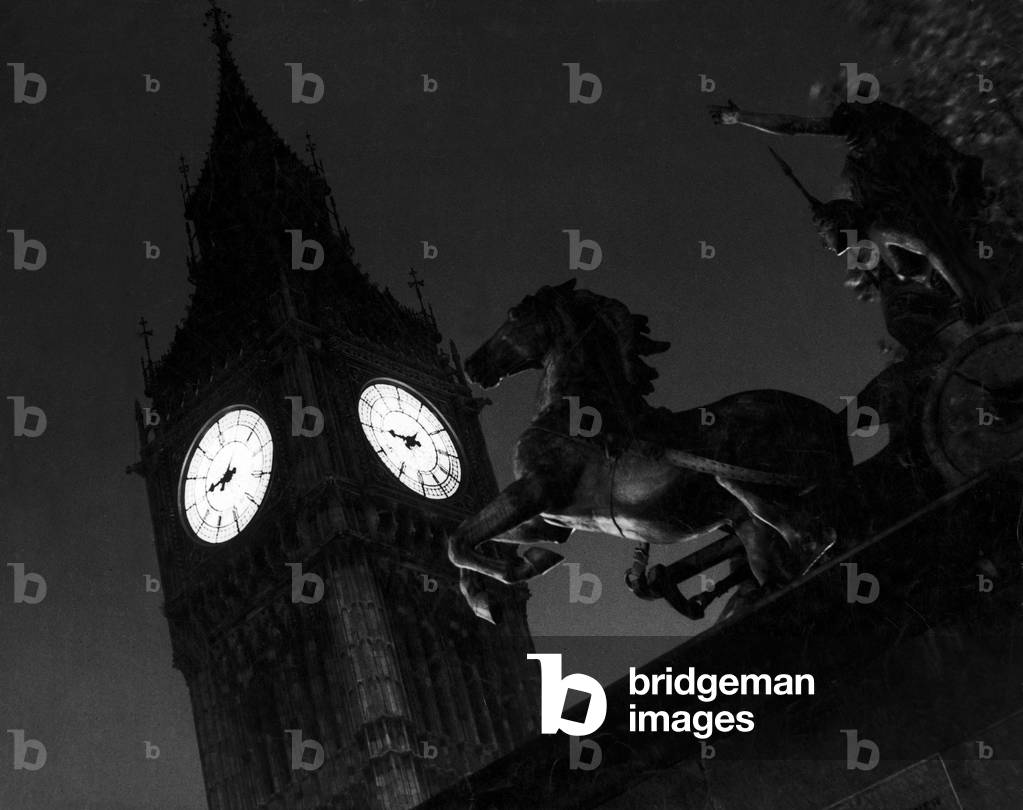
MPX5124657: The statue of Boudicca (Boadicea) Queen of the Iceni, driving a chariot by Thomas Thorneycroft and positioned at the end of the Victoria Embankment in 1902. Boudicca led a revolt against the Romans in 61 AD. In the background is the clock tower of the Houses of Parliament which houses the clock and 13-ton bell known as Big Ben. The clock, designed by Sir Edmund Beckett, and bell is named after Sir Benjamin Hall, who was Commissioner of Works at the time of their installation in 1859. 16th November 1938 (b/w photo) / Bridgeman Images
