Search options

Orientation
Colour

Display options

View

Print

To print search results, use print friendly version of this page.

2491514 Search Results

Critically endangered gharial, Gavialis gangeticus, and Nile crocodile, Crocodylus niloticus. Fossil skeletons of an ichthyosaurus and Plesiosaurus dolichodeirus. Lithograph from Lorenz Oken's Universal Natural History, Allgemeine Naturgeschichte fur alle Stande, Stuttgart, 1841.

FLO4685006: Critically endangered gharial, Gavialis gangeticus, and Nile crocodile, Crocodylus niloticus. Fossil skeletons of an ichthyosaurus and Plesiosaurus dolichodeirus. Lithograph from Lorenz Oken's Universal Natural History, Allgemeine Naturgeschichte fur alle Stande, Stuttgart, 1841. / Bridgeman Images

Philippa de Hainaut - Philippine - Philippa of Hainault, consort of King Edward III of England. Steel engraving by W.H. Egleton after a portrait by Edward Corbould from Mary Howitt's Biographical Sketches of The Queens of England, Virtue, London, 1868.

FLO4688788: Philippa de Hainaut - Philippine - Philippa of Hainault, consort of King Edward III of England. Steel engraving by W.H. Egleton after a portrait by Edward Corbould from Mary Howitt's Biographical Sketches of The Queens of England, Virtue, London, 1868. / Bridgeman Images

Candelabra (left) from the Casa del Panettiere or House of the Baker, VII.III.30, candelabra (right) and frieze (top) from House of Caecilius Iucundus, V.I.26, arabesques with griffins from Casa dei Dioscuri or House of Castor and Pollux, VI.IX.6, and ornament from the House of Apollo, VI.VII 23. Chromolithograph by Victor Steeger after an illustration by Geremia Discanno from Emile Presuhn (1844-1878) The Most Beautiful Paintings of Pompeii, Leipzig, 1881.

FLO4686972: Candelabra (left) from the Casa del Panettiere or House of the Baker, VII.III.30, candelabra (right) and frieze (top) from House of Caecilius Iucundus, V.I.26, arabesques with griffins from Casa dei Dioscuri or House of Castor and Pollux, VI.IX.6, and ornament from the House of Apollo, VI.VII 23. Chromolithograph by Victor Steeger after an illustration by Geremia Discanno from Emile Presuhn (1844-1878) The Most Beautiful Paintings of Pompeii, Leipzig, 1881., Discanno, Geremia (1839-1907) / Bridgeman Images

Chalice of brown paste from the tomb of the bronze tank, 680-670 BC

LRI4689830: Chalice of brown paste from the tomb of the bronze tank, 680-670 BC, Etruscan, (7th century BC) / Bridgeman Images

Suicide of Ajax (bronze)

LRI4688977: Suicide of Ajax (bronze), Etruscan, (5th century BC) / Bridgeman Images
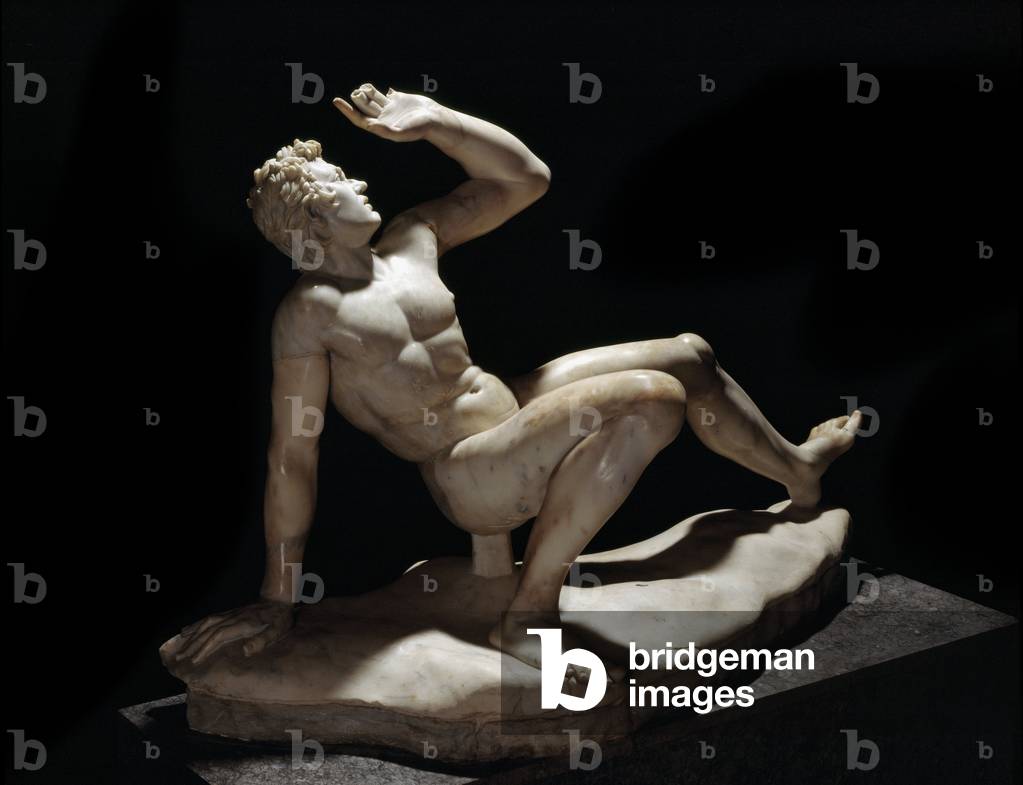
Galatia hurts about to fall, end of the 3rd century (marble sculpture)

LRI4685572: Galatia hurts about to fall, end of the 3rd century (marble sculpture), Greek school, (3rd century BC) / Bridgeman Images

Etruscan civilization: “” bronze and wood”” From Populonia, Porcareccia, Tomb of the Flabelli - 600-550 BC (Etruscan art: bronze and wooden grater 600-550 BC) Florence Museo Archeologico, inv 89300

LRI4689273: Etruscan civilization: “” bronze and wood”” From Populonia, Porcareccia, Tomb of the Flabelli - 600-550 BC (Etruscan art: bronze and wooden grater 600-550 BC) Florence Museo Archeologico, inv 89300, Etruscan, (6th century BC) / Bridgeman Images

Portrait of bearded old man called the philosopher of Porticello, 460-440 BC (Bronze sculpture)

LRI4686762: Portrait of bearded old man called the philosopher of Porticello, 460-440 BC (Bronze sculpture), Greek school, (5th century BC) / Bridgeman Images

Etruscan civilization: female bronze statuette from Brolio. 550 BC. Dim. 36 cm Florence, Museo Archeologico, inv. 561

LRI4689650: Etruscan civilization: female bronze statuette from Brolio. 550 BC. Dim. 36 cm Florence, Museo Archeologico, inv. 561, Etruscan, (6th century BC) / Bridgeman Images

Conical-shaped tip of a plough, 6th century BC

LRI4688791: Conical-shaped tip of a plough, 6th century BC, Etruscan, (6th century BC) / Bridgeman Images

The Puddy, 18th century (oil on canvas)

JLJ4686876: The Puddy, 18th century (oil on canvas), Watteau, Jean Antoine (1684-1721) / Bridgeman Images

Portrait Of A Woman On A Terrace By The Sea, 1882 (oil on canvas)

JLJ4685541: Portrait Of A Woman On A Terrace By The Sea, 1882 (oil on canvas), Stevens, Alfred Emile (1823-1906) / Bridgeman Images
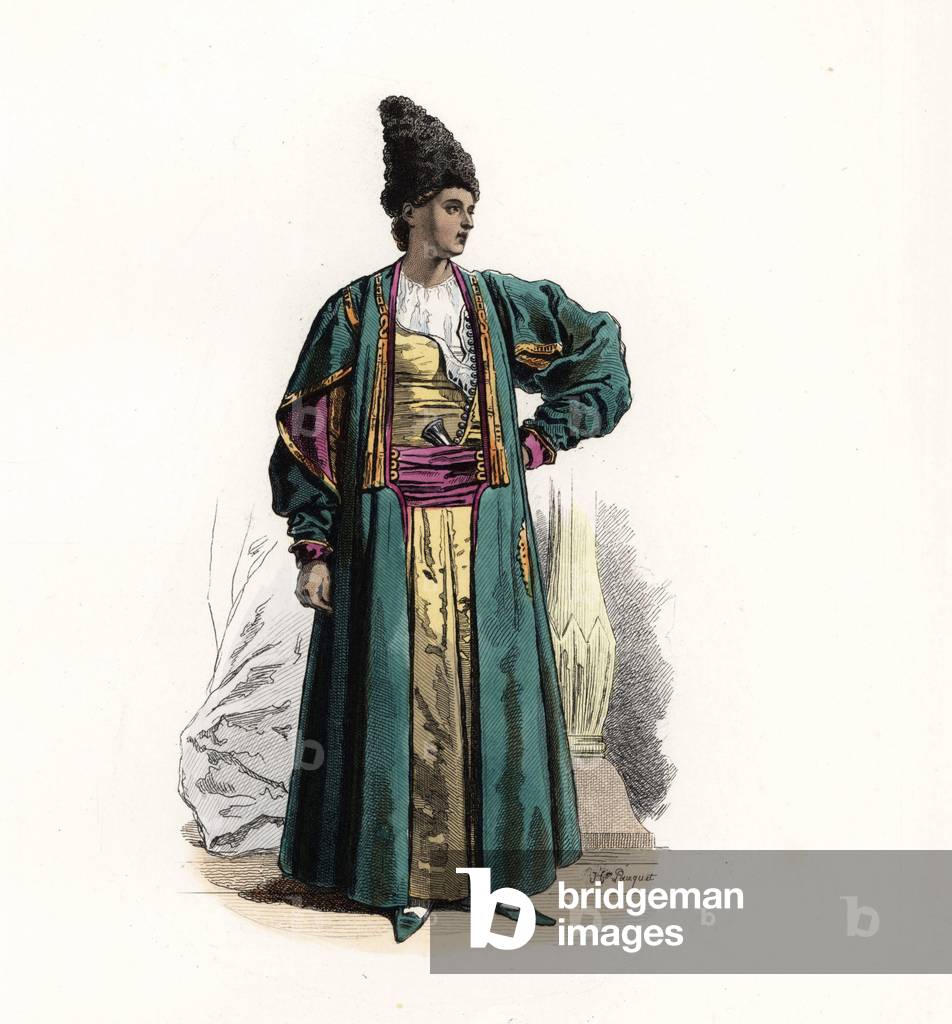
Khatchadour D'hohannes, officer of the Prince Royal of Persia, 1816, after de Lecluse. Handcoloured steel engraving by Hippolyte Pauquet from the Pauquet Brothers' “” Modes et Costumes Etrangers Anciens et Modernes” (Foreign Fashions and Costumes Ancient and Modern), Paris, 1865. Hippolyte (b. 1797) and Polydor Pauquet (b. 1799) ran a successful publishing house in Paris in the 19th century, specializing in illustrated books on costume, birds, butterflies, anatomy and natural history.

FLO4686604: Khatchadour D'hohannes, officer of the Prince Royal of Persia, 1816, after de Lecluse. Handcoloured steel engraving by Hippolyte Pauquet from the Pauquet Brothers' “” Modes et Costumes Etrangers Anciens et Modernes” (Foreign Fashions and Costumes Ancient and Modern), Paris, 1865. Hippolyte (b. 1797) and Polydor Pauquet (b. 1799) ran a successful publishing house in Paris in the 19th century, specializing in illustrated books on costume, birds, butterflies, anatomy and natural history. / Bridgeman Images
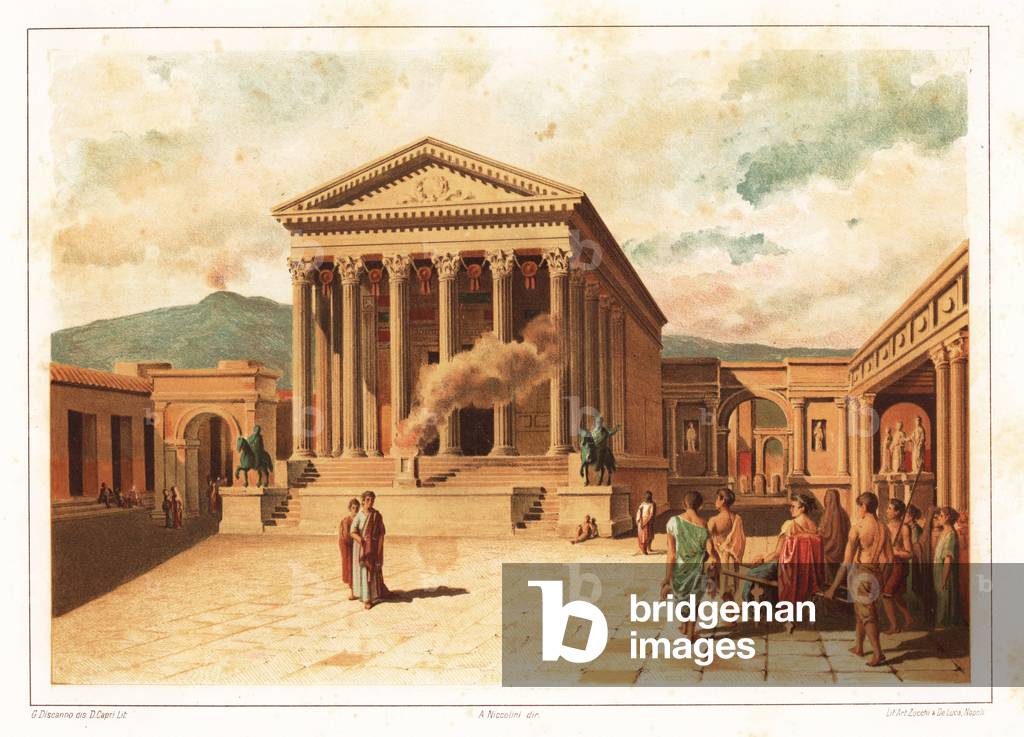
View of the Forum, Pompeii. A nobleman is carried in a sedan chair to the steps of the Forum. Chromolithograph by D. Capri after an illustration by G. Discanno from Antonio Niccoliniõs Pompeii: Views and Restorations (Pompeii: Essaies et Restorations), published by Zucchi & De Luca, Naples, 1898. Antonio was grandson of the architect Antonio Niccolini Sr.

FLO4688132: View of the Forum, Pompeii. A nobleman is carried in a sedan chair to the steps of the Forum. Chromolithograph by D. Capri after an illustration by G. Discanno from Antonio Niccoliniõs Pompeii: Views and Restorations (Pompeii: Essaies et Restorations), published by Zucchi & De Luca, Naples, 1898. Antonio was grandson of the architect Antonio Niccolini Sr. / Bridgeman Images

Knight of St. Louis. The Royal and Military Order of Saint Louis was founded in 1693 by Louis XIV. Handcoloured steel engraving by Hippolyte Pauquet after J. Bau from the Pauquet Brothers' “” Modes et Costumes Historique” (Historical Fashions and Costumes), Paris, 1865. Hippolyte (b. 1797) and Polydor Pauquet (b. 1799) ran a successful publishing house in Paris in the 19th century, specializing in illustrated books on costume, birds, butterflies, anatomy and natural history.

FLO4686059: Knight of St. Louis. The Royal and Military Order of Saint Louis was founded in 1693 by Louis XIV. Handcoloured steel engraving by Hippolyte Pauquet after J. Bau from the Pauquet Brothers' “” Modes et Costumes Historique” (Historical Fashions and Costumes), Paris, 1865. Hippolyte (b. 1797) and Polydor Pauquet (b. 1799) ran a successful publishing house in Paris in the 19th century, specializing in illustrated books on costume, birds, butterflies, anatomy and natural history. / Bridgeman Images
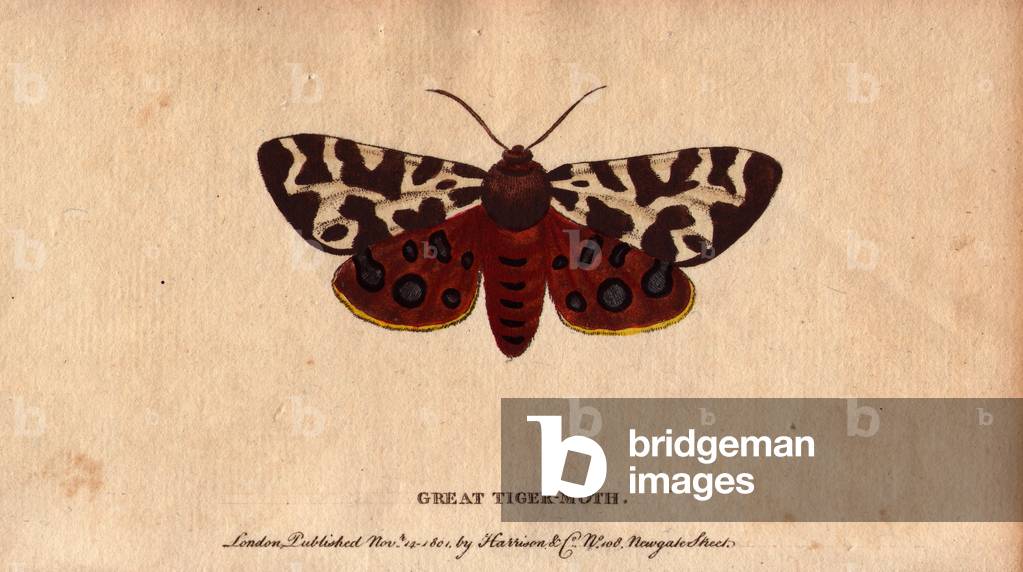
The marten or herissonne scale (Arctia caja), a lepidoptere insect of the northern hemisphere. Lithographie in The Naturalist Pocket Magazine or Cabinet complete des Curiosites et Beautes de la Nature, published between 1798 and 1802, by Harrison, London, England.

FLO4687737: The marten or herissonne scale (Arctia caja), a lepidoptere insect of the northern hemisphere. Lithographie in The Naturalist Pocket Magazine or Cabinet complete des Curiosites et Beautes de la Nature, published between 1798 and 1802, by Harrison, London, England. / Bridgeman Images
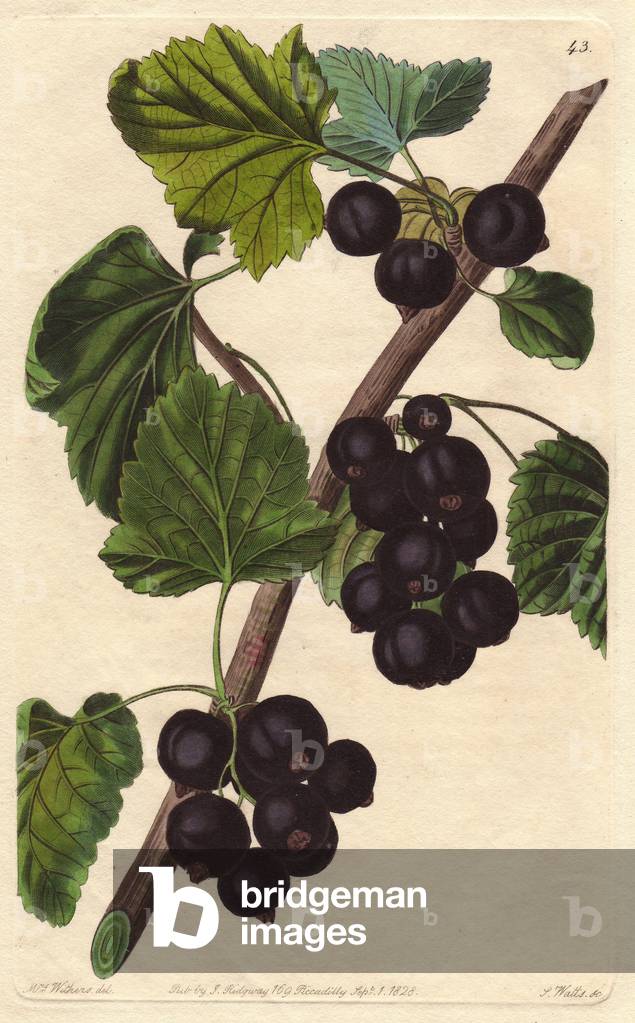
Blackcurrant (black currant or black currant). Lithograph after the illustration of Augusta Withers (1793-1877), published in the “Pomology Magazine” (1828-1830) by John Lindley (1795-1865). Black Naples currant, Ribes nigrum, raised in the north of England and Scotland. Illustration by Mrs. Withers. Handcoloured copperplate engraved by S. Watts from J. Lindley's “” Pomological Magazine,” London, 1828-1930.

FLO4688004: Blackcurrant (black currant or black currant). Lithograph after the illustration of Augusta Withers (1793-1877), published in the “Pomology Magazine” (1828-1830) by John Lindley (1795-1865). Black Naples currant, Ribes nigrum, raised in the north of England and Scotland. Illustration by Mrs. Withers. Handcoloured copperplate engraved by S. Watts from J. Lindley's “” Pomological Magazine,” London, 1828-1930. / Bridgeman Images

Hee-doh-gee-ats, a Chinook boy of 15 or 18 years of age whose head had never been flattened. Handcoloured lithograph by J. Harris after a painting by George Catlin from James Cowles Prichard's Natural History of Man, Balliere, London, 1855.

FLO4688617: Hee-doh-gee-ats, a Chinook boy of 15 or 18 years of age whose head had never been flattened. Handcoloured lithograph by J. Harris after a painting by George Catlin from James Cowles Prichard's Natural History of Man, Balliere, London, 1855., Catlin, George (1796-1872) / Bridgeman Images

Pompe a beer - Views and elevations of an 18th century beer pump with levers, taps and pipes contained in a cabinet. Copperplate engraving by Mutlow after an illustration by J. Farey Jr. from John Mason Good's Pantologia, a New Encyclopedia, G. Kearsley, London, 1813.

FLO4685686: Pompe a beer - Views and elevations of an 18th century beer pump with levers, taps and pipes contained in a cabinet. Copperplate engraving by Mutlow after an illustration by J. Farey Jr. from John Mason Good's Pantologia, a New Encyclopedia, G. Kearsley, London, 1813. / Bridgeman Images
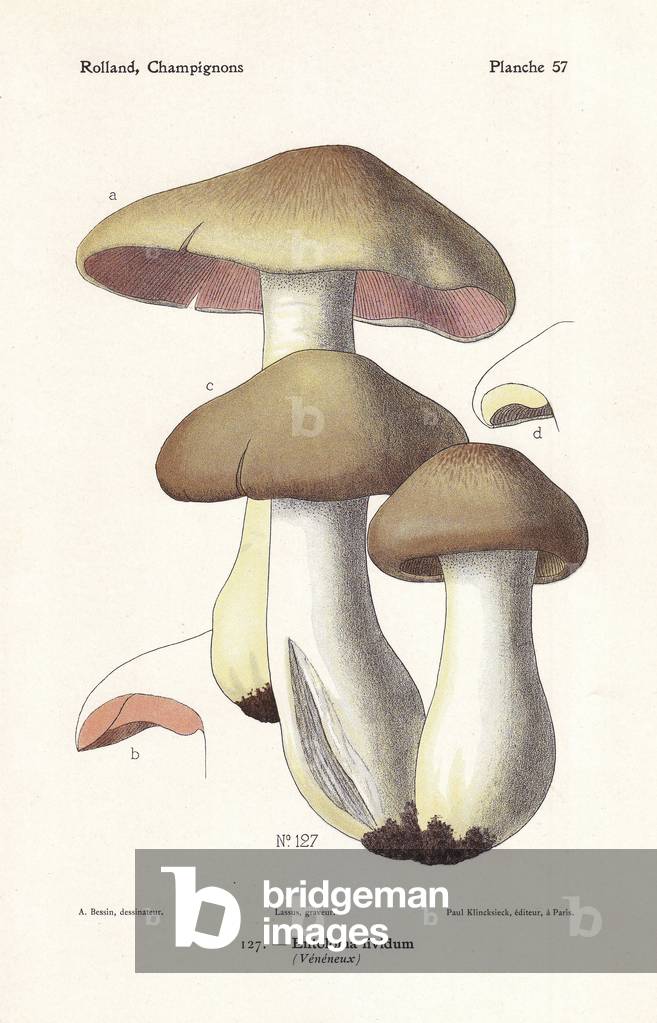
Livid entoloma or livid agaric, Entoloma sinuatum (Entoloma lividum). Chromolithograph by Lassus after an illustration by A. Bessin from Leon Rolland's Guide to Mushrooms from France, Switzerland and Belgium, Atlas des Mushrooms, Paul Klincksieck, Paris, 1910.

FLO4689906: Livid entoloma or livid agaric, Entoloma sinuatum (Entoloma lividum). Chromolithograph by Lassus after an illustration by A. Bessin from Leon Rolland's Guide to Mushrooms from France, Switzerland and Belgium, Atlas des Mushrooms, Paul Klincksieck, Paris, 1910. / Bridgeman Images

Poisonous mushrooms: milkcap, Lactarius scrobiculatus, and birch milkcap, L. theiogalus, L. tabidus. Chromolithograph drawn by Bessin for Leon Rolland's “Atlas of Mushrooms”” 1911.

FLO4689747: Poisonous mushrooms: milkcap, Lactarius scrobiculatus, and birch milkcap, L. theiogalus, L. tabidus. Chromolithograph drawn by Bessin for Leon Rolland's “Atlas of Mushrooms”” 1911. / Bridgeman Images

Hawfinch, Coccothraustes coccothraustes, and bullfinch, Pyrrhula pyrrhula. Handcoloured engraving by Fournier after an illustration by Edouard Travies from Charles d'Orbigny's Dictionnaire Universale d'Histoire Naturelle (Dictionary of Natural History), Paris, 1849.

FLO4685062: Hawfinch, Coccothraustes coccothraustes, and bullfinch, Pyrrhula pyrrhula. Handcoloured engraving by Fournier after an illustration by Edouard Travies from Charles d'Orbigny's Dictionnaire Universale d'Histoire Naturelle (Dictionary of Natural History), Paris, 1849. / Bridgeman Images
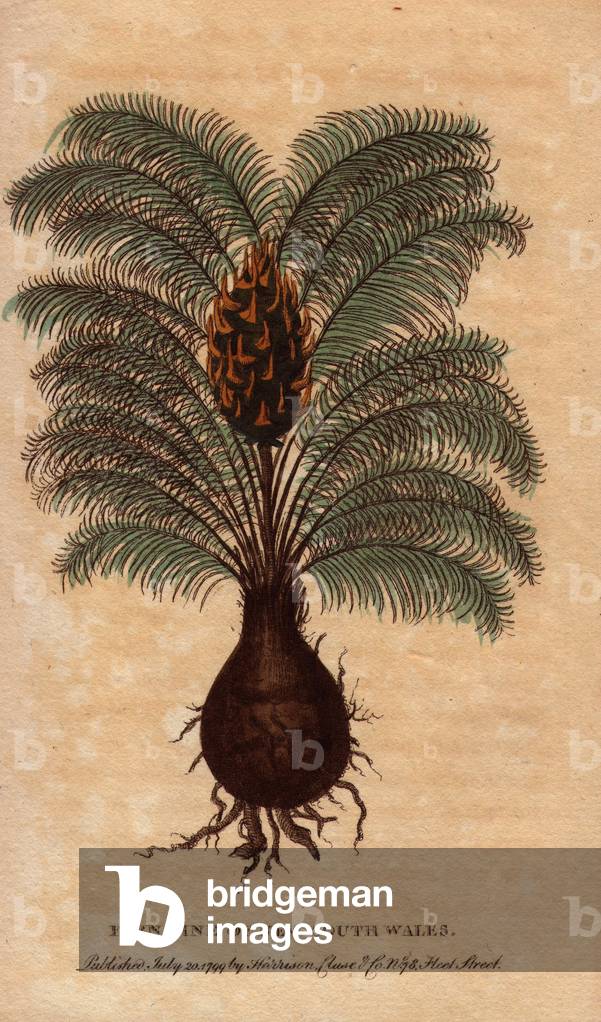
Australian Podocarpus or New South Wales Fern Pine.

FLO4687253: Australian Podocarpus or New South Wales Fern Pine. / Bridgeman Images
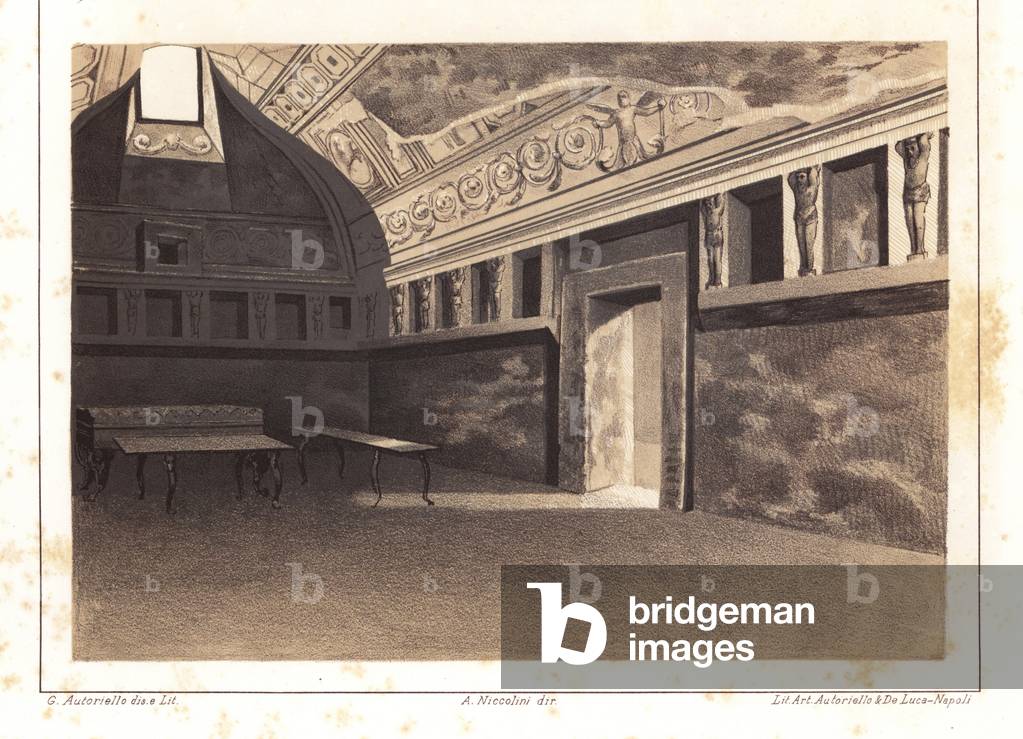
Tepidarium or warm bath, near the gate to Stabiae. Chromolithograph and illustration by G. Autoriello from Antonio Niccoliniõs Pompeii: Views and Restorations (Pompeii: Essaies et Restorations), published by Autoriello & De Luca, Naples, 1898. Antonio was grandson of the architect Antonio Niccolini Sr.

FLO4688285: Tepidarium or warm bath, near the gate to Stabiae. Chromolithograph and illustration by G. Autoriello from Antonio Niccoliniõs Pompeii: Views and Restorations (Pompeii: Essaies et Restorations), published by Autoriello & De Luca, Naples, 1898. Antonio was grandson of the architect Antonio Niccolini Sr. / Bridgeman Images

Edible mushrooms: Dryad's saddle, Polyporus squamosus, Polyporus pes caprae. Chromolithograph drawn by Bessin for Leon Rolland's “Atlas of Mushrooms”” 1911.

FLO4689999: Edible mushrooms: Dryad's saddle, Polyporus squamosus, Polyporus pes caprae. Chromolithograph drawn by Bessin for Leon Rolland's “Atlas of Mushrooms”” 1911. / Bridgeman Images

Plaque depicting Diana visiting Endymion. Chromolithograph by W. Griggs from Frederick Rathone's Old Wedgwood, the Decorative or Artistic Ceramic Work Produced by Josiah Wedgwood, Quaritch, London, 1898.

FLO4689142: Plaque depicting Diana visiting Endymion. Chromolithograph by W. Griggs from Frederick Rathone's Old Wedgwood, the Decorative or Artistic Ceramic Work Produced by Josiah Wedgwood, Quaritch, London, 1898. / Bridgeman Images

Lord, reign of Louis XIII, 1633. Handcoloured steel engraving by Hippolyte Pauquet after “” Le Bal”” by Abraham Bosse (1604-1676) from the Pauquet Brothers' “” Modes et Costumes Historique” (Historical Fashions and Costumes), Paris, 1865. Hippolyte (b. 1797) and Polydor Pauquet (b. 1799) ran a successful publishing house in Paris in the 19th century, specializing in illustrated books on costume, birds, butterflies, anatomy and natural history.

FLO4685977: Lord, reign of Louis XIII, 1633. Handcoloured steel engraving by Hippolyte Pauquet after “” Le Bal”” by Abraham Bosse (1604-1676) from the Pauquet Brothers' “” Modes et Costumes Historique” (Historical Fashions and Costumes), Paris, 1865. Hippolyte (b. 1797) and Polydor Pauquet (b. 1799) ran a successful publishing house in Paris in the 19th century, specializing in illustrated books on costume, birds, butterflies, anatomy and natural history. / Bridgeman Images

Young girl from the Canton of Thurgau, Switzerland, 18th century, after Franz Hegi. Handcoloured steel engraving by Hippolyte Pauquet from the Pauquet Brothers' “” Modes et Costumes Etrangers Anciens et Modernes” (Foreign Fashions and Costumes Ancient and Modern), Paris, 1865. Hippolyte (b. 1797) and Polydor Pauquet (b. 1799) ran a successful publishing house in Paris in the 19th century, specializing in illustrated books on costume, birds, butterflies, anatomy and natural history.

FLO4686563: Young girl from the Canton of Thurgau, Switzerland, 18th century, after Franz Hegi. Handcoloured steel engraving by Hippolyte Pauquet from the Pauquet Brothers' “” Modes et Costumes Etrangers Anciens et Modernes” (Foreign Fashions and Costumes Ancient and Modern), Paris, 1865. Hippolyte (b. 1797) and Polydor Pauquet (b. 1799) ran a successful publishing house in Paris in the 19th century, specializing in illustrated books on costume, birds, butterflies, anatomy and natural history. / Bridgeman Images

Native of Madagascar, in tie, collar and fringed cloak. From a portrait of a Malagasy man in London on a mission from Queen Ramavo of Merina. Handcoloured lithograph by J. Bull from James Cowles Prichard's Natural History of Man, Balliere, London, 1855.

FLO4688459: Native of Madagascar, in tie, collar and fringed cloak. From a portrait of a Malagasy man in London on a mission from Queen Ramavo of Merina. Handcoloured lithograph by J. Bull from James Cowles Prichard's Natural History of Man, Balliere, London, 1855. / Bridgeman Images

Title page with vignette showing a medieval page blowing a horn. Handcoloured steel engraving by Polidor Pauquet after Willemin from the Pauquet Brothers' “” Modes et Costumes Historique”” (Historical Fashions and Costumes), Paris, 1865. Hippolyte (b. 1797) and Polydor Pauquet (b. 1799) ran a successful publishing house in Paris in the 19th century, specializing in illustrated books on costume and natural history.

FLO4686291: Title page with vignette showing a medieval page blowing a horn. Handcoloured steel engraving by Polidor Pauquet after Willemin from the Pauquet Brothers' “” Modes et Costumes Historique”” (Historical Fashions and Costumes), Paris, 1865. Hippolyte (b. 1797) and Polydor Pauquet (b. 1799) ran a successful publishing house in Paris in the 19th century, specializing in illustrated books on costume and natural history. / Bridgeman Images

Eastern imperial eagle, Aquila heliaca. Vulnerable. Handcoloured engraving by Fournier after an illustration by Edouard Travies from Charles d'Orbigny's Dictionnaire Universale d'Histoire Naturelle (Dictionary of Natural History), Paris, 1849.

FLO4685273: Eastern imperial eagle, Aquila heliaca. Vulnerable. Handcoloured engraving by Fournier after an illustration by Edouard Travies from Charles d'Orbigny's Dictionnaire Universale d'Histoire Naturelle (Dictionary of Natural History), Paris, 1849. / Bridgeman Images

Woman of quality, reign of Charles VII, 1460. Handcoloured steel engraving by Hippolyte Pauquet after Gaignieres from the Pauquet Brothers' “” Modes et Costumes Historique” (Historical Fashions and Costumes), Paris, 1865. Hippolyte (b. 1797) and Polydor Pauquet (b. 1799) ran a successful publishing house in Paris in the 19th century, specializing in illustrated books on costume, birds, butterflies, anatomy and natural history.

FLO4685797: Woman of quality, reign of Charles VII, 1460. Handcoloured steel engraving by Hippolyte Pauquet after Gaignieres from the Pauquet Brothers' “” Modes et Costumes Historique” (Historical Fashions and Costumes), Paris, 1865. Hippolyte (b. 1797) and Polydor Pauquet (b. 1799) ran a successful publishing house in Paris in the 19th century, specializing in illustrated books on costume, birds, butterflies, anatomy and natural history. / Bridgeman Images

Michael Sutzos (1784-1864), Prince of Moldova - Michael Sutzos, Prince of Moldova, 1820, after L. Dupre. Handcoloured steel engraving by Polydor Pauquet from the Pauquet Brothers' “” Modes et Costumes Etrangers Anciens et Modernes” (Foreign Fashions and Costumes Ancient and Modern), Paris, 1865. Hippolyte (b. 1797) and Polydor Pauquet (b. 1799) ran a successful publishing house in Paris in the 19th century, specializing in illustrated books on costume, birds, butterflies, anatomy and natural history.

FLO4686618: Michael Sutzos (1784-1864), Prince of Moldova - Michael Sutzos, Prince of Moldova, 1820, after L. Dupre. Handcoloured steel engraving by Polydor Pauquet from the Pauquet Brothers' “” Modes et Costumes Etrangers Anciens et Modernes” (Foreign Fashions and Costumes Ancient and Modern), Paris, 1865. Hippolyte (b. 1797) and Polydor Pauquet (b. 1799) ran a successful publishing house in Paris in the 19th century, specializing in illustrated books on costume, birds, butterflies, anatomy and natural history. / Bridgeman Images

Etruscan civilization: “” Bronze artifacts from etruscan site, sword blade, axes) 750-700 BC From the site of Populonia, Italy - Florence, Museo Archeologico

LRI4689612: Etruscan civilization: “” Bronze artifacts from etruscan site, sword blade, axes) 750-700 BC From the site of Populonia, Italy - Florence, Museo Archeologico, Etruscan, (8th century BC) / Bridgeman Images

Sconces used for decoration of burial boxes. 2nd half of the 4th century BC (gilded clay)

LRI4686527: Sconces used for decoration of burial boxes. 2nd half of the 4th century BC (gilded clay), Greek school, (4th century BC) / Bridgeman Images

Silver coin (thaler) from Saxonia: reign of Frederick Augustus I of Saxony (Frederic Auguste I of Saxony) (1750-1827). Diam. 3.9 cm Naples, museo archeologico

LRI4685054: Silver coin (thaler) from Saxonia: reign of Frederick Augustus I of Saxony (Frederic Auguste I of Saxony) (1750-1827). Diam. 3.9 cm Naples, museo archeologico, German School, (18th-19th century) / Bridgeman Images


Back to top