Search options

Orientation
Colour

Display options

View

Print

To print search results, use print friendly version of this page.

2490880 Search Results

Title page of volume 2 Book 1 of the series. Title in German, with a vignette: two naked boys decorating a bust with a laurel wreath. Hand-coloured copper engraving, in “Images historiques des costumes des principaux peuples de l'Antiquite et du Middle Ages” by Robert Von Spalart, published in 1796.

FLO4707247: Title page of volume 2 Book 1 of the series. Title in German, with a vignette: two naked boys decorating a bust with a laurel wreath. Hand-coloured copper engraving, in “Images historiques des costumes des principaux peuples de l'Antiquite et du Middle Ages” by Robert Von Spalart, published in 1796. / Bridgeman Images

A Saxon king in ceremonial costume. The great mantle is worn only by members of the realm or aristocracy and seems to have and reserve for divine or Celestial beings. Her hair and beard seem to have been dyed blue, as can be seen in paintings from the 8th century onwards. The saxons introduced the royal diademe, a circle of gold carries like a crown. Hand-coloured copper engraving, in “Images historiques des costumes des principaux peuples de l'Antiquite et du Middle Ages” by Robert Von Spalart, published in 1796.

FLO4707290: A Saxon king in ceremonial costume. The great mantle is worn only by members of the realm or aristocracy and seems to have and reserve for divine or Celestial beings. Her hair and beard seem to have been dyed blue, as can be seen in paintings from the 8th century onwards. The saxons introduced the royal diademe, a circle of gold carries like a crown. Hand-coloured copper engraving, in “Images historiques des costumes des principaux peuples de l'Antiquite et du Middle Ages” by Robert Von Spalart, published in 1796. / Bridgeman Images

Portrait of Argentine writer Jorge Luis Borges in Rome, 1981.

MME4707303: Portrait of Argentine writer Jorge Luis Borges in Rome, 1981., Mencarini, Marcello / Bridgeman Images

Anglo-Saxon women: wearing tunic, veil, coat and shoe with open toe (36), wearing tunic and veil (37) and wearing a veil of a different colour from that of her coat. The sails were dyed in various colours and woven in more or less precious materials. Hand-coloured copper engraving, in “Images historiques des costumes des principaux peuples de l'Antiquite et du Middle Ages” by Robert Von Spalart, published in 1796.

FLO4707314: Anglo-Saxon women: wearing tunic, veil, coat and shoe with open toe (36), wearing tunic and veil (37) and wearing a veil of a different colour from that of her coat. The sails were dyed in various colours and woven in more or less precious materials. Hand-coloured copper engraving, in “Images historiques des costumes des principaux peuples de l'Antiquite et du Middle Ages” by Robert Von Spalart, published in 1796. / Bridgeman Images

Portuguese man and woman, 1660. Handcolored copperplate engraving from Robert von Spalart's “” Historical Picture of the Costumes of the Peoples of Antiquity, the Middle Ages and the New Era,”” written by Leopold Ziegelhauser, Vienna, 1837

FLO4706378: Portuguese man and woman, 1660. Handcolored copperplate engraving from Robert von Spalart's “” Historical Picture of the Costumes of the Peoples of Antiquity, the Middle Ages and the New Era,”” written by Leopold Ziegelhauser, Vienna, 1837 / Bridgeman Images

Portrait of the Russian writer Sergei Zalygin in 1990.

MME4706533: Portrait of the Russian writer Sergei Zalygin in 1990., Mencarini, Marcello / Bridgeman Images

Czech realizer Jiri Weiss in 1990.

MME4706122: Czech realizer Jiri Weiss in 1990., Mencarini, Marcello / Bridgeman Images

Czech realizer Jiri Weiss in 1990.

MME4706139: Czech realizer Jiri Weiss in 1990., Mencarini, Marcello / Bridgeman Images

Portrait of writer Elie Wiesel in 1995.

MME4706213: Portrait of writer Elie Wiesel in 1995., Mencarini, Marcello / Bridgeman Images

Portrait of French chief operator Henri Alekan in 1989.

MME4706916: Portrait of French chief operator Henri Alekan in 1989., Mencarini, Marcello / Bridgeman Images

Portrait of rock musician Frank Zappa in 1982.

MME4706621: Portrait of rock musician Frank Zappa in 1982., Mencarini, Marcello / Bridgeman Images

Portrait of the writer and painter Cesare Zavattini in his studio in 1979.

MME4706823: Portrait of the writer and painter Cesare Zavattini in his studio in 1979., Mencarini, Marcello / Bridgeman Images

Portrait of the Dutch conductor and harpsichord player Gustav Leonhardt in 2008

MME4706856: Portrait of the Dutch conductor and harpsichord player Gustav Leonhardt in 2008, Mencarini, Marcello / Bridgeman Images

Portrait of the Dutch conductor and harpsichord player Gustav Leonhardt in 2008

MME4706862: Portrait of the Dutch conductor and harpsichord player Gustav Leonhardt in 2008, Mencarini, Marcello / Bridgeman Images

Portrait of jazz saxophonist Anthony Braxton on stage in 1981.

MME4707800: Portrait of jazz saxophonist Anthony Braxton on stage in 1981., Mencarini, Marcello / Bridgeman Images

Portrait of Argentine writer Jorge Luis Borges with his wife Maria Kodama in Rome, 1981.

MME4707063: Portrait of Argentine writer Jorge Luis Borges with his wife Maria Kodama in Rome, 1981., Mencarini, Marcello / Bridgeman Images

Portrait of Argentine writer Jorge Luis Borges in Rome, 1981.

MME4707141: Portrait of Argentine writer Jorge Luis Borges in Rome, 1981., Mencarini, Marcello / Bridgeman Images

Noble anglo high rank saxon with a coat fastened with a buckle (31). This type of coat is worn only by the kingdoms and nobility. Hand-coloured copper engraving, in “Images historiques des costumes des principaux peuples de l'Antiquite et du Middle Ages” by Robert Von Spalart, published in 1796.

FLO4707281: Noble anglo high rank saxon with a coat fastened with a buckle (31). This type of coat is worn only by the kingdoms and nobility. Hand-coloured copper engraving, in “Images historiques des costumes des principaux peuples de l'Antiquite et du Middle Ages” by Robert Von Spalart, published in 1796. / Bridgeman Images

Anglo-Saxon women wearing a tunic, a coat and a large veil covering the hair and shoulder, falling to the knees (33), a floating veil (14) and wearing veil and belt (35). Hand-coloured copper engraving, in “Images historiques des costumes des principaux peuples de l'Antiquite et du Middle Ages” by Robert Von Spalart, published in 1796.

FLO4707301: Anglo-Saxon women wearing a tunic, a coat and a large veil covering the hair and shoulder, falling to the knees (33), a floating veil (14) and wearing veil and belt (35). Hand-coloured copper engraving, in “Images historiques des costumes des principaux peuples de l'Antiquite et du Middle Ages” by Robert Von Spalart, published in 1796. / Bridgeman Images

Portrait of Argentine writer Jorge Luis Borges in Rome, 1981.

MME4707121: Portrait of Argentine writer Jorge Luis Borges in Rome, 1981., Mencarini, Marcello / Bridgeman Images

First officer of the Royal Guard (41), rider with a spear (42) and Anglo-Saxon infantryman with a spear and a shield (43). Hand-coloured copper engraving, in “Images historiques des costumes des principaux peuples de l'Antiquite et du Middle Ages” by Robert Von Spalart, published in 1796.

FLO4707340: First officer of the Royal Guard (41), rider with a spear (42) and Anglo-Saxon infantryman with a spear and a shield (43). Hand-coloured copper engraving, in “Images historiques des costumes des principaux peuples de l'Antiquite et du Middle Ages” by Robert Von Spalart, published in 1796. / Bridgeman Images

Anglo Saxon king of the 9th century, in a tunic with embroidered edges and hem, with a jete coat on the shoulder and fastener with a clasp. Clothing close to those of Charlemagne (742 or 748-814) and the kings of France. Hand-coloured copper engraving, in “Images historiques des costumes des principaux peuples de l'Antiquite et du Middle Ages” by Robert Von Spalart, published in 1796.

FLO4707463: Anglo Saxon king of the 9th century, in a tunic with embroidered edges and hem, with a jete coat on the shoulder and fastener with a clasp. Clothing close to those of Charlemagne (742 or 748-814) and the kings of France. Hand-coloured copper engraving, in “Images historiques des costumes des principaux peuples de l'Antiquite et du Middle Ages” by Robert Von Spalart, published in 1796. / Bridgeman Images

Portrait of writer William Burroughs around 1980

MME4707939: Portrait of writer William Burroughs around 1980, Mencarini, Marcello / Bridgeman Images
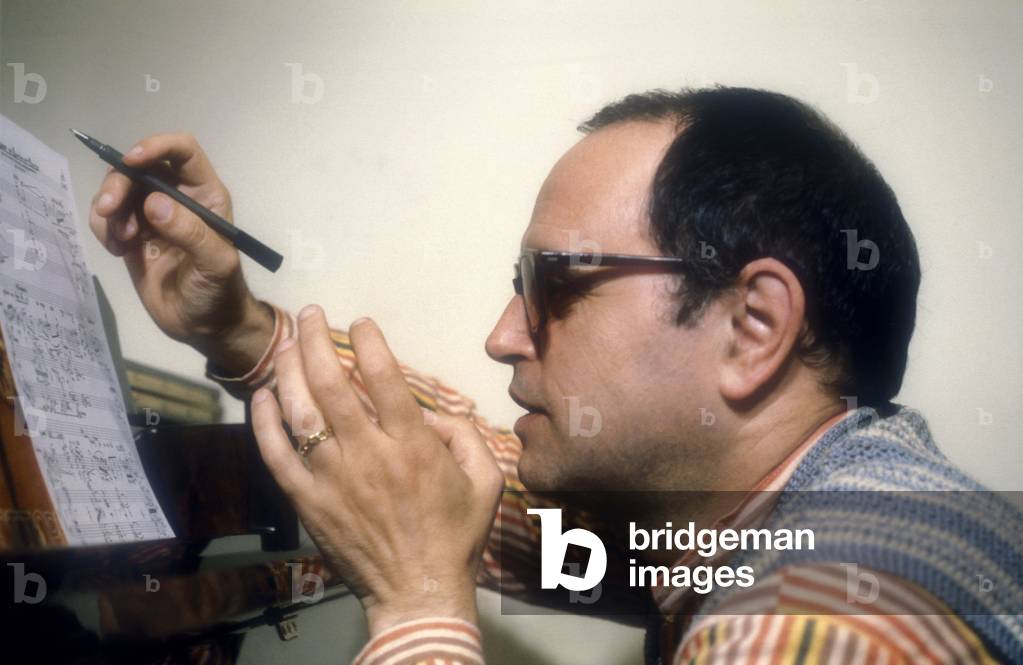
Portrait of the Italian composer Sylvano Bussotti, circa 1980

MME4707961: Portrait of the Italian composer Sylvano Bussotti, circa 1980, Mencarini, Marcello / Bridgeman Images

Costumes of Norman women in the 12th century. The sleeves are always very wide and end in a kind of pocket, on two of the figures represented. The figure on the right, has sleeves of different colors, which seem to be separate parts of his dress. The cuff of the middle one falls very low, on the left of his head, while on the right it is thrown on the shoulder. The head of the left figure is wrapped around his neck on one side and falls back on his right breast on the other side. The figure on the left presents a headdress, one end of which is thrown on the chest and the other on the left shoulder, both completely covering, the folds are gathered at the top of the head and held by a diademe or a circle of gold. Hand-coloured copper engraving, in “Images historiques des costumes des principaux peuples de l'Antiquite et du Middle Ages” by Robert Von Spalart, published in 1796.

FLO4707975: Costumes of Norman women in the 12th century. The sleeves are always very wide and end in a kind of pocket, on two of the figures represented. The figure on the right, has sleeves of different colors, which seem to be separate parts of his dress. The cuff of the middle one falls very low, on the left of his head, while on the right it is thrown on the shoulder. The head of the left figure is wrapped around his neck on one side and falls back on his right breast on the other side. The figure on the left presents a headdress, one end of which is thrown on the chest and the other on the left shoulder, both completely covering, the folds are gathered at the top of the head and held by a diademe or a circle of gold. Hand-coloured copper engraving, in “Images historiques des costumes des principaux peuples de l'Antiquite et du Middle Ages” by Robert Von Spalart, published in 1796. / Bridgeman Images
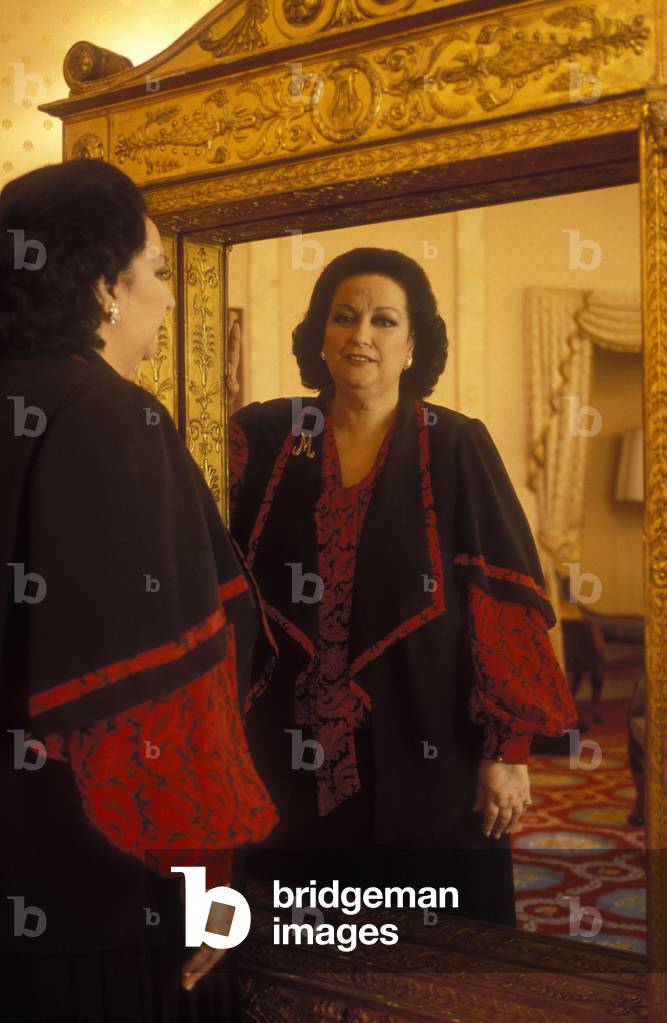
Portrait of the Spanish singer Montserrat Caballe in Rome in 1992.

MME4708090: Portrait of the Spanish singer Montserrat Caballe in Rome in 1992., Mencarini, Marcello / Bridgeman Images

Norman soldiers: archer with chest, bow and arrow, infantryman with spear, shield and armor and infantryman in mesh armor, helm and especially military. Hand-coloured copper engraving, in “Images historiques des costumes des principaux peuples de l'Antiquite et du Middle Ages” by Robert Von Spalart, published in 1796.

FLO4708158: Norman soldiers: archer with chest, bow and arrow, infantryman with spear, shield and armor and infantryman in mesh armor, helm and especially military. Hand-coloured copper engraving, in “Images historiques des costumes des principaux peuples de l'Antiquite et du Middle Ages” by Robert Von Spalart, published in 1796. / Bridgeman Images

Knights fighting on horseback, sword duel during a tournament. Both are armed with their sword and shield, but without a helm, the most dangerous battle in a tournament. Hand-coloured copper engraving, in “Images historiques des costumes des principaux peuples de l'Antiquite et du Middle Ages” by Robert Von Spalart, published in 1796.

FLO4708268: Knights fighting on horseback, sword duel during a tournament. Both are armed with their sword and shield, but without a helm, the most dangerous battle in a tournament. Hand-coloured copper engraving, in “Images historiques des costumes des principaux peuples de l'Antiquite et du Middle Ages” by Robert Von Spalart, published in 1796. / Bridgeman Images

Costume of an anglo saxon eveque (67) with a flat mitre and a butt used in the 10th and 11th century, and of two monks (66 and 68) wearing decorative clothing on the edges of the sleeves and on the back. Hand-coloured copper engraving, in “Images historiques des costumes des principaux peuples de l'Antiquite et du Middle Ages” by Robert Von Spalart, published in 1796.

FLO4707530: Costume of an anglo saxon eveque (67) with a flat mitre and a butt used in the 10th and 11th century, and of two monks (66 and 68) wearing decorative clothing on the edges of the sleeves and on the back. Hand-coloured copper engraving, in “Images historiques des costumes des principaux peuples de l'Antiquite et du Middle Ages” by Robert Von Spalart, published in 1796. / Bridgeman Images

Musee Picasso a Paris Musee Picasso, 5 rue de Thorigny, Paris 75003. Architecture by Roland Simounet, 1976-1985. Photography 1986.

TEC4707545: Musee Picasso a Paris Musee Picasso, 5 rue de Thorigny, Paris 75003. Architecture by Roland Simounet, 1976-1985. Photography 1986., Picasso, Pablo (1881-1973) / Bridgeman Images

David Bowie, c.1999-93 (photo)

MME4707678: David Bowie, c.1999-93 (photo), Mencarini, Marcello / Bridgeman Images

Knight of the Order of Constantine. The Order was first founded in 343 BC by the Roman Emperor Constantine, but received its official rules and statutes in 1190 by Isaac Ange Comnene (1155-1204), Emperor of Constantinople, the Order was also known as the Order of the Angelics, the Order of the Dory Knights or the Constantine militia of Saint George. It consisted of three rows for its members: Grand Cross, knight and brother serving; The insignia of the order is a red cross made of four flowers of lilies, surrounded by a golden border. Hand-coloured copper engraving, in “Images historiques des costumes des principaux peuples de l'Antiquite et du Middle Ages” by Robert Von Spalart, published in 1796.

FLO4708525: Knight of the Order of Constantine. The Order was first founded in 343 BC by the Roman Emperor Constantine, but received its official rules and statutes in 1190 by Isaac Ange Comnene (1155-1204), Emperor of Constantinople, the Order was also known as the Order of the Angelics, the Order of the Dory Knights or the Constantine militia of Saint George. It consisted of three rows for its members: Grand Cross, knight and brother serving; The insignia of the order is a red cross made of four flowers of lilies, surrounded by a golden border. Hand-coloured copper engraving, in “Images historiques des costumes des principaux peuples de l'Antiquite et du Middle Ages” by Robert Von Spalart, published in 1796. / Bridgeman Images

Portrait of the French realizer Claude Chabrol in 1988.

MME4708656: Portrait of the French realizer Claude Chabrol in 1988., Mencarini, Marcello / Bridgeman Images

Cape yellow diamond crystal (South Africa). Chromolithography, in Precious Stones and Gems by Edwin Streeter, published in London, England, by George Bell and Sons, 1892.

FLO4709467: Cape yellow diamond crystal (South Africa). Chromolithography, in Precious Stones and Gems by Edwin Streeter, published in London, England, by George Bell and Sons, 1892. / Bridgeman Images

Portrait of American comedian Matt Dillon, 1984

MME4709654: Portrait of American comedian Matt Dillon, 1984, Mencarini, Marcello / Bridgeman Images

Sapphires in their gangue. Chromolithography, in Precious Stones and Gems by Edwin Streeter, published in London, England, by George Bell and Sons, 1892.

FLO4709707: Sapphires in their gangue. Chromolithography, in Precious Stones and Gems by Edwin Streeter, published in London, England, by George Bell and Sons, 1892. / Bridgeman Images


Back to top