Search options

Orientation
Colour

Display options

View

Print

To print search results, use print friendly version of this page.

2491516 Search Results
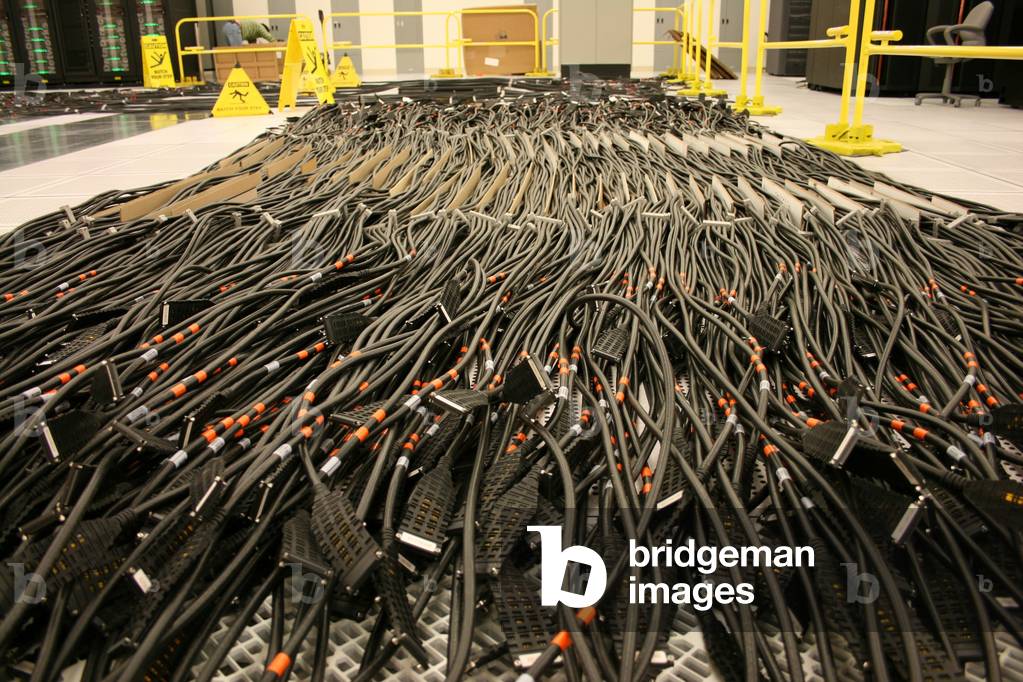
Rivers of cables for the Dawn supercomputer at the Lawrence Livermore National Laboratory. 2009

EVB2937609: Rivers of cables for the Dawn supercomputer at the Lawrence Livermore National Laboratory. 2009 / Bridgeman Images
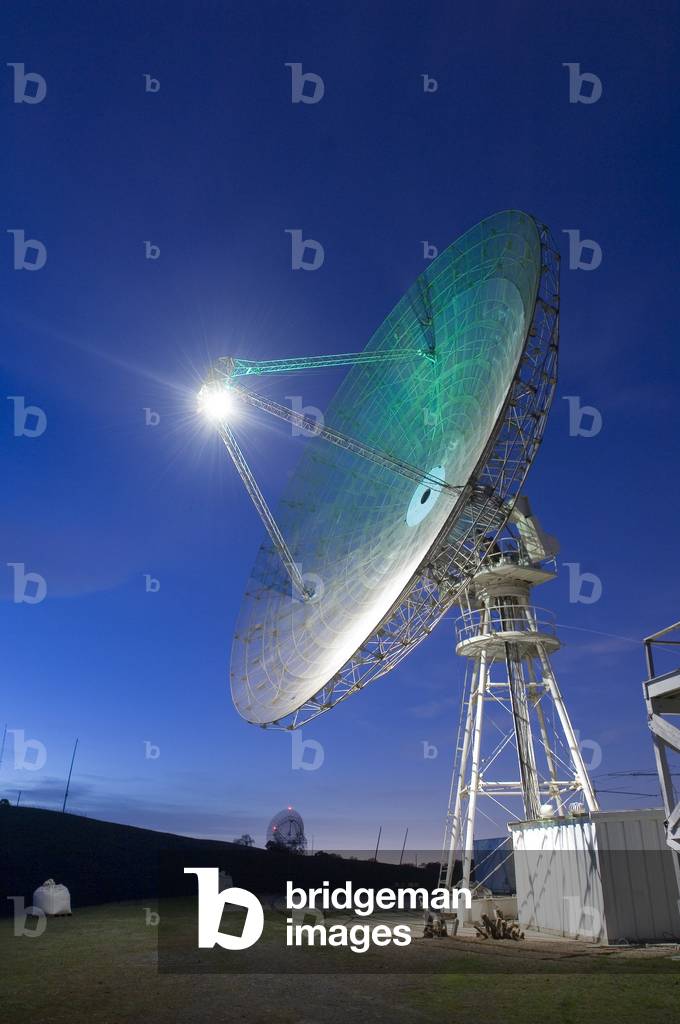
Satellite tracking antenna dish at Stanford University in Northern California, 2007

EVB2937621: Satellite tracking antenna dish at Stanford University in Northern California, 2007 / Bridgeman Images
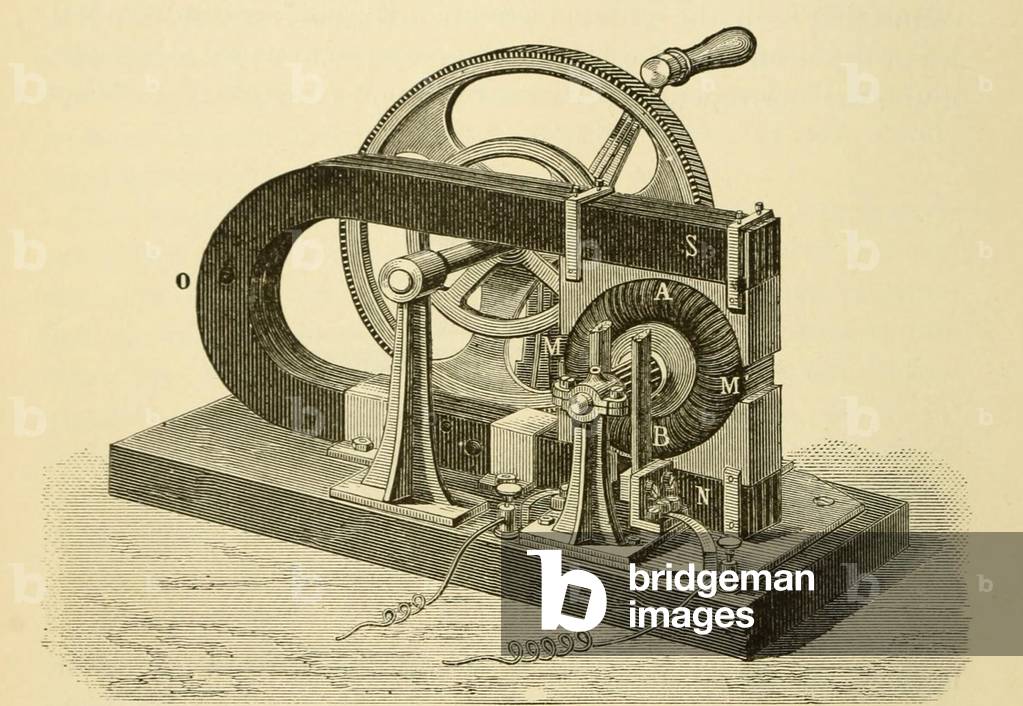
A hand cranked device onsisting of coiled metal wire and a magnet, demonstrates the principle elements of 19th and 20th century electrical generators, also called dynamos. Illustration from DYNAMO-ELECTRICITY, 1884 by George B. Prescott

EVB2937627: A hand cranked device onsisting of coiled metal wire and a magnet, demonstrates the principle elements of 19th and 20th century electrical generators, also called dynamos. Illustration from DYNAMO-ELECTRICITY, 1884 by George B. Prescott / Bridgeman Images
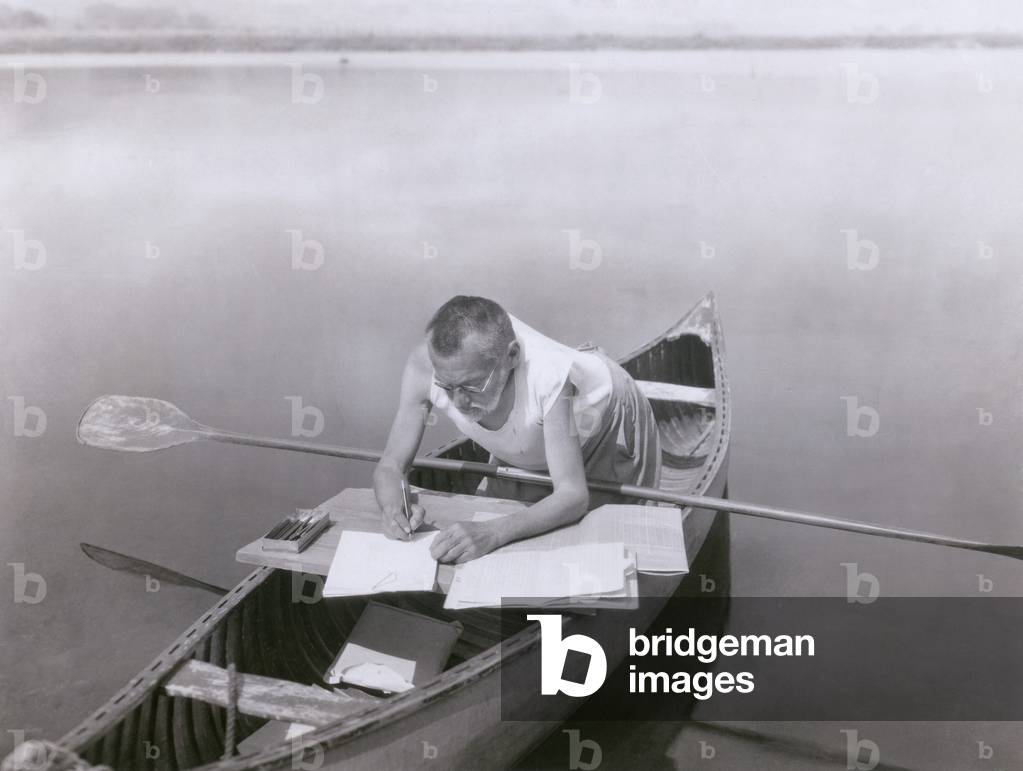
Charles P. Steinmetz (1865-1923), German-American mathematician and electrical engineer often worked in his canoe while boating in the upstate New York's Mohawk River

EVB2937642: Charles P. Steinmetz (1865-1923), German-American mathematician and electrical engineer often worked in his canoe while boating in the upstate New York's Mohawk River / Bridgeman Images
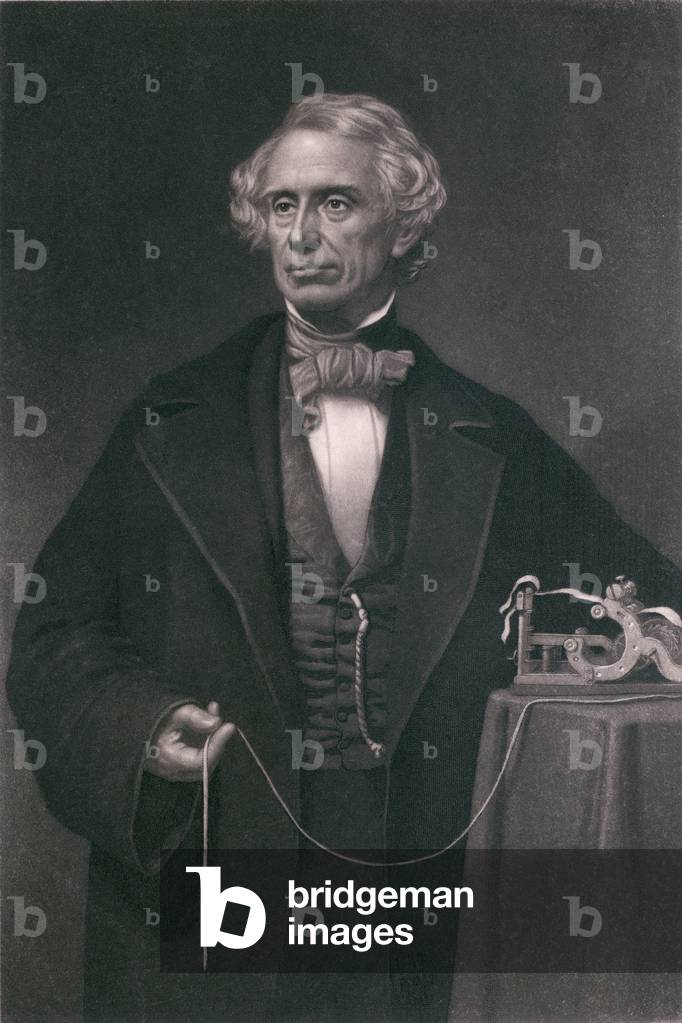
Samuel F. B. Morse (1791-1872), inventor of the magnetic telegraph. Steel engraving by John Sartan

EVB2937651: Samuel F. B. Morse (1791-1872), inventor of the magnetic telegraph. Steel engraving by John Sartan / Bridgeman Images
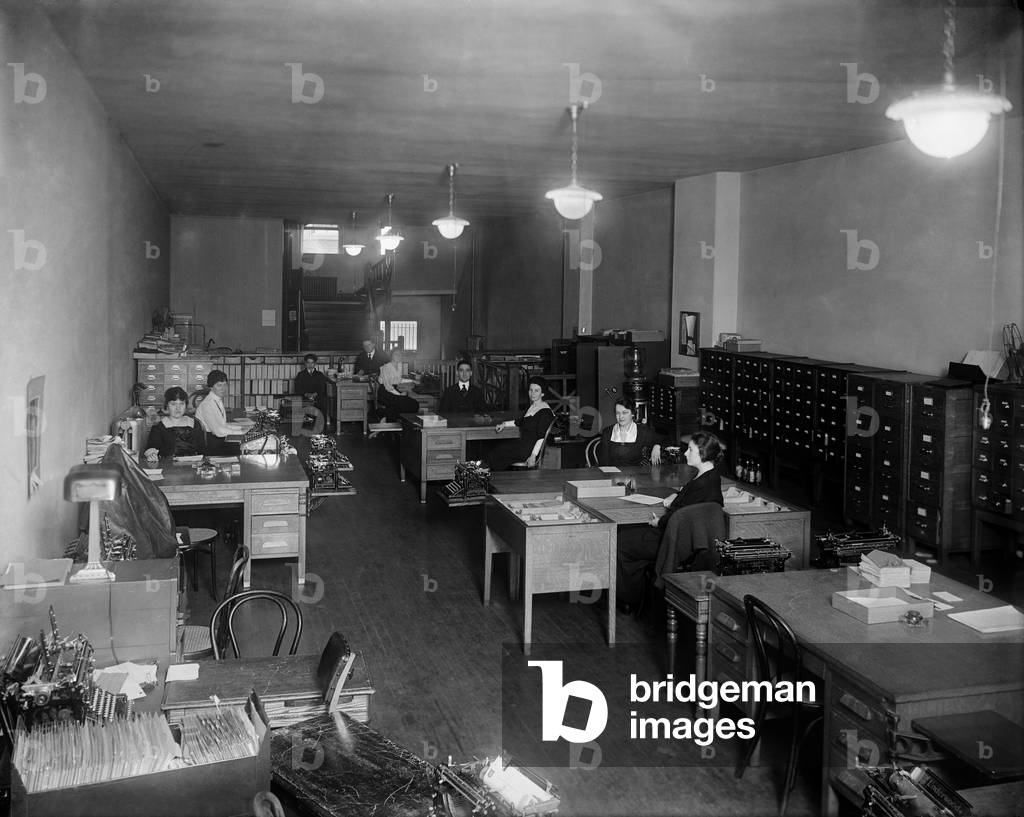
Office of the Underwood Typewriter Company in Washington, D.C., c. 1910

EVB2937660: Office of the Underwood Typewriter Company in Washington, D.C., c. 1910 / Bridgeman Images
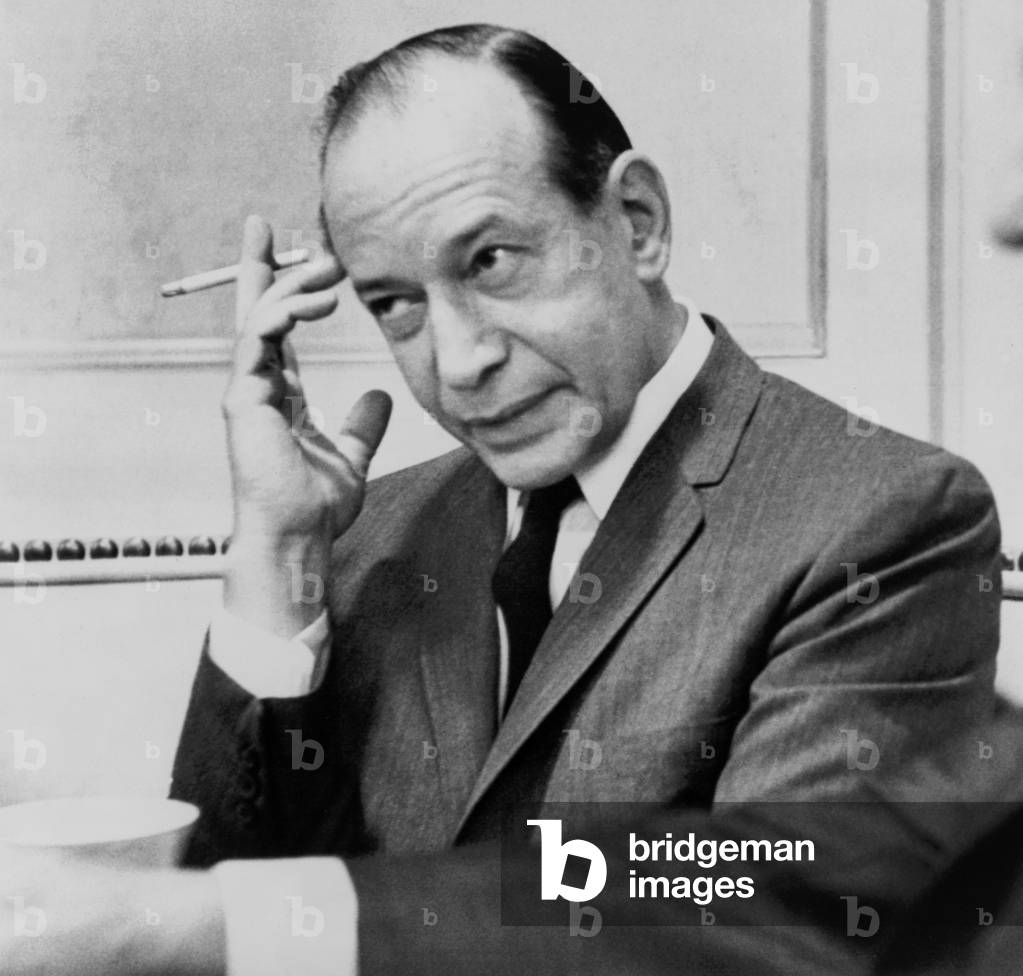
Abe Fortas, President Lyndon Johnson's nominee to the Supreme Court at the Senate Judiciary Committee in 1965. He was confirmed but failed conformation as LBJ's 1968 nominee for Chief Justice and was forced to resign in 1969 for accepted fees while serving on the high court

EVB2937472: Abe Fortas, President Lyndon Johnson's nominee to the Supreme Court at the Senate Judiciary Committee in 1965. He was confirmed but failed conformation as LBJ's 1968 nominee for Chief Justice and was forced to resign in 1969 for accepted fees while serving on the high court / Bridgeman Images
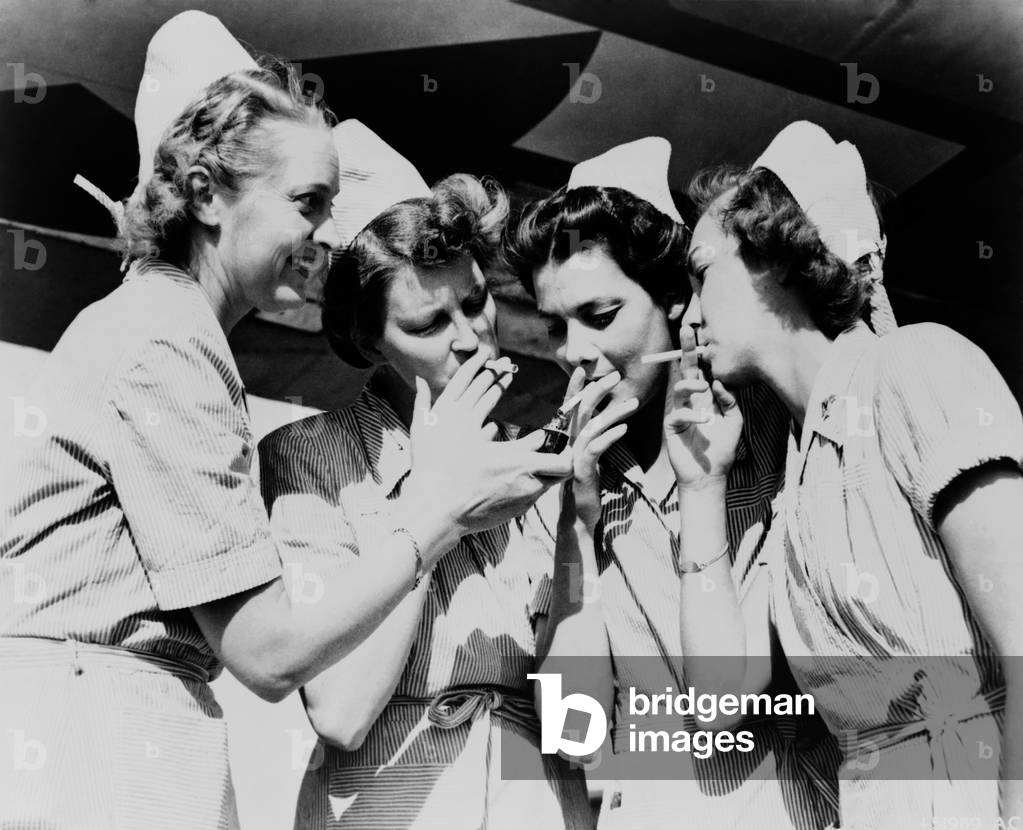
Army nurses lighting up their cigarettes in 1947, when smoking was seen as a simple pleasure rather than a health hazard

EVB2937696: Army nurses lighting up their cigarettes in 1947, when smoking was seen as a simple pleasure rather than a health hazard / Bridgeman Images
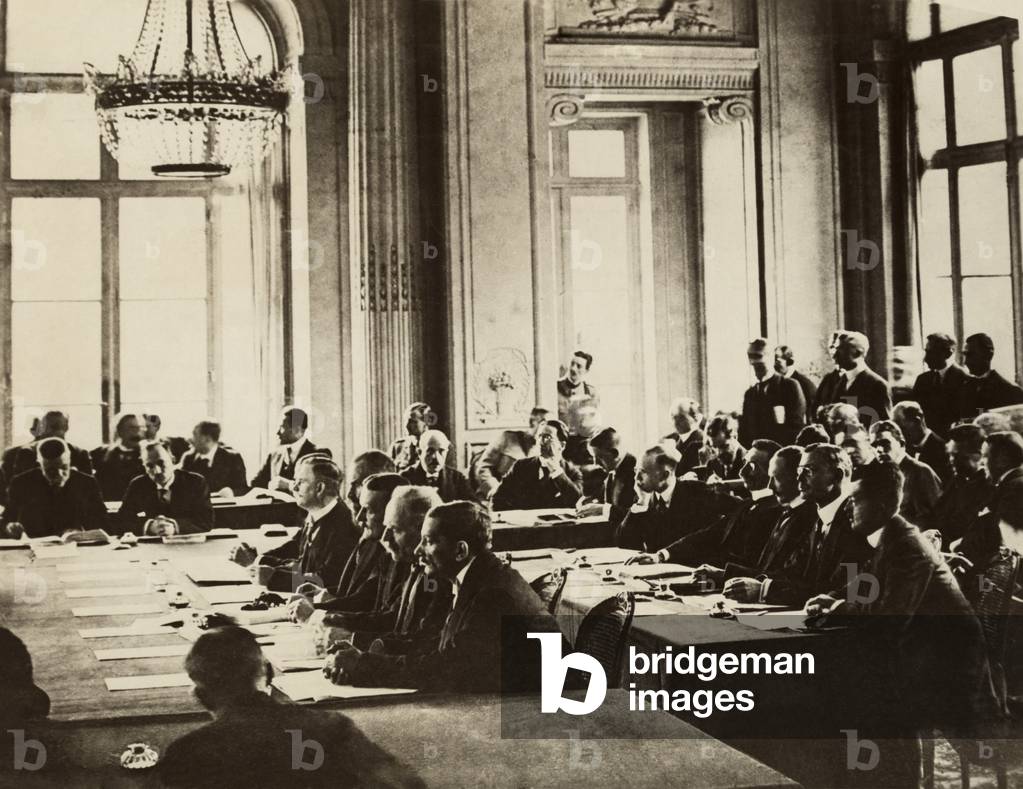
German delegates at Versailles listening to speech by French Prime Minister Clemenceau in 1919 (photo)

EVB2937708: German delegates at Versailles listening to speech by French Prime Minister Clemenceau in 1919 (photo) / Bridgeman Images
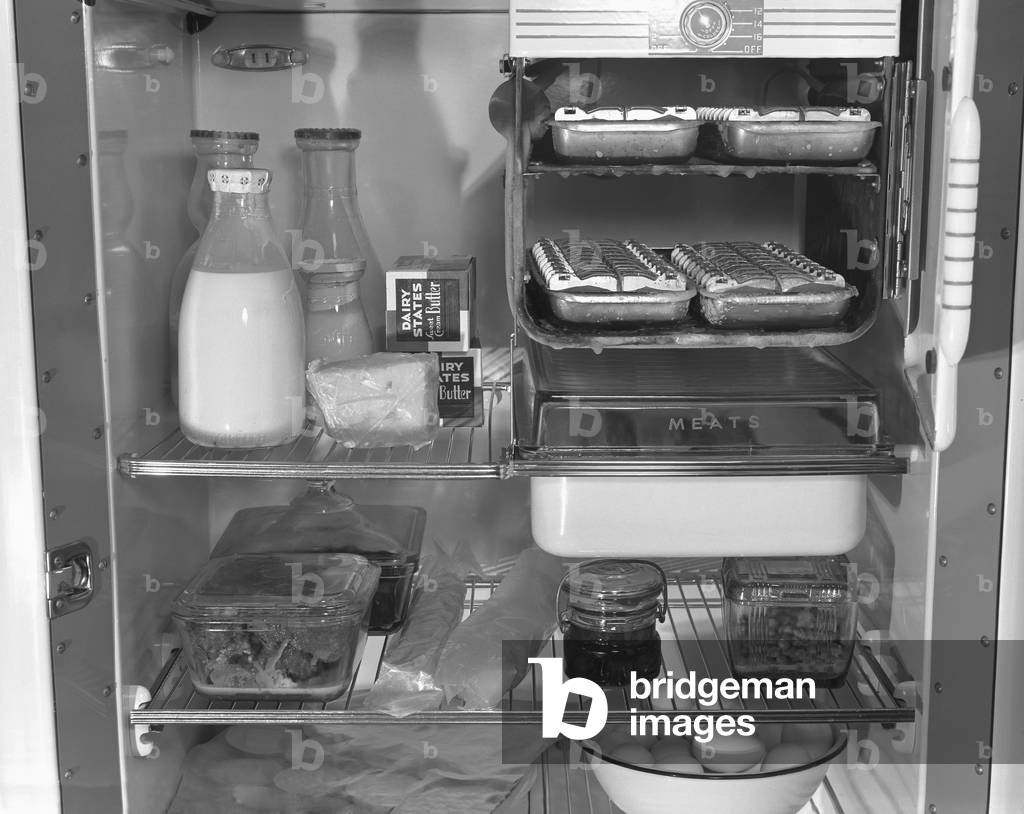
Interior of a 1940's refrigerator

EVB2937529: Interior of a 1940's refrigerator, Rosener, Ann (1914-2012) / Bridgeman Images
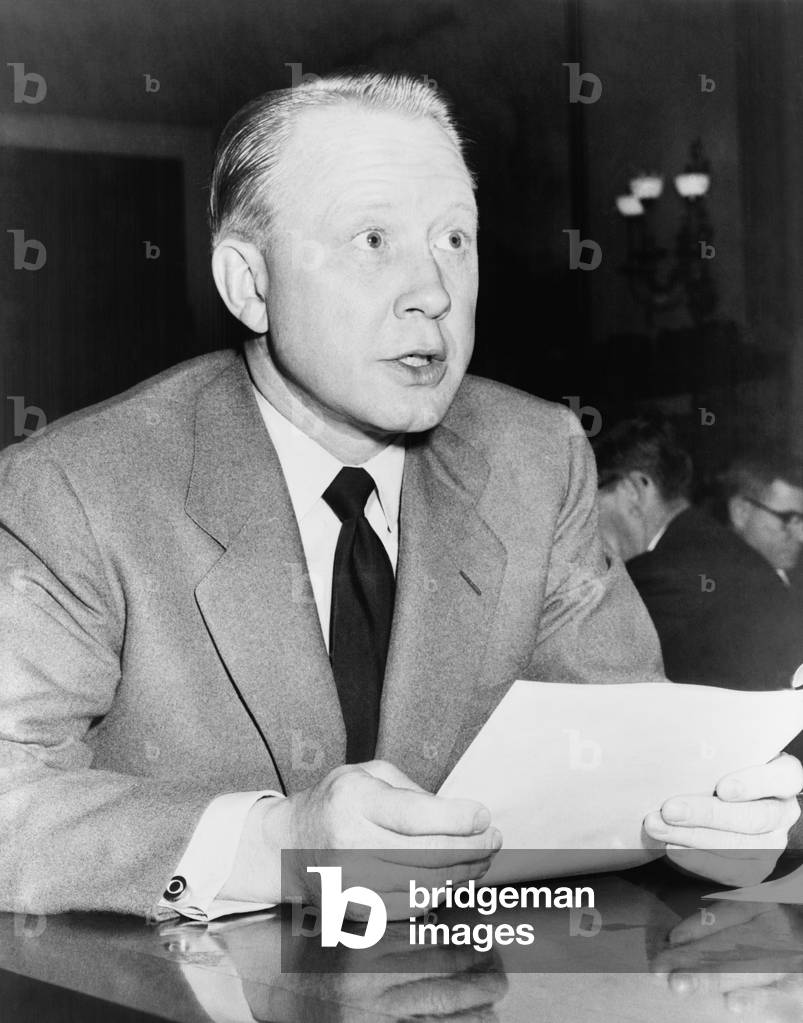
Frank Stanton (1908-2006), President of CBS, speaking at a meeting of radio and television news directing in New York. October 16, 1959

EVB2937762: Frank Stanton (1908-2006), President of CBS, speaking at a meeting of radio and television news directing in New York. October 16, 1959 / Bridgeman Images

Oil rig workers, called roughnecks, at work, loosening sections of pipe on an drilling platform, Kilgore, Texas. 1939 Photo by Russell Lee

EVB2937559: Oil rig workers, called roughnecks, at work, loosening sections of pipe on an drilling platform, Kilgore, Texas. 1939 Photo by Russell Lee, Russell, Lee (1903-86) / Bridgeman Images

Four newly designed solar power collection dishes at Sandia National Laboratory in 2009. The new dishes are designed for high-volume production, ease of maintenance, and could be in commercial service by 2010

EVB2937577: Four newly designed solar power collection dishes at Sandia National Laboratory in 2009. The new dishes are designed for high-volume production, ease of maintenance, and could be in commercial service by 2010 / Bridgeman Images

Recreation of a gentile colonial American house with two women in colonial costume. 1913 photo by Wallace Nutting

EVB2937589: Recreation of a gentile colonial American house with two women in colonial costume. 1913 photo by Wallace Nutting, Unknown photographer, (20th century) / Bridgeman Images
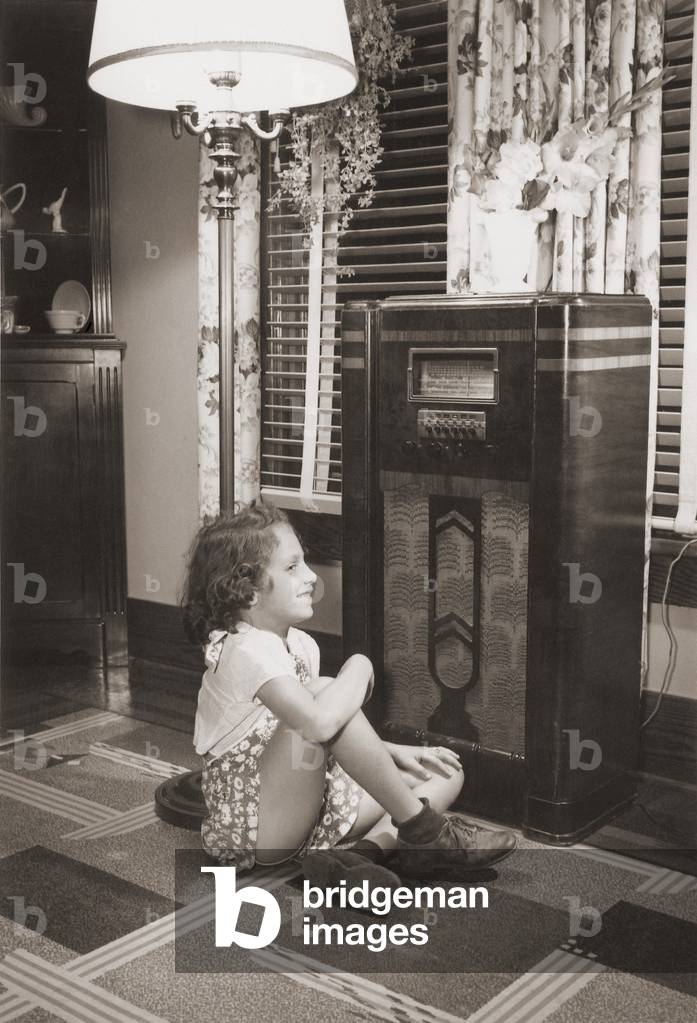
Little girl smiles as she enjoys a radio program in the 1930s

EVB2937670: Little girl smiles as she enjoys a radio program in the 1930s / Bridgeman Images
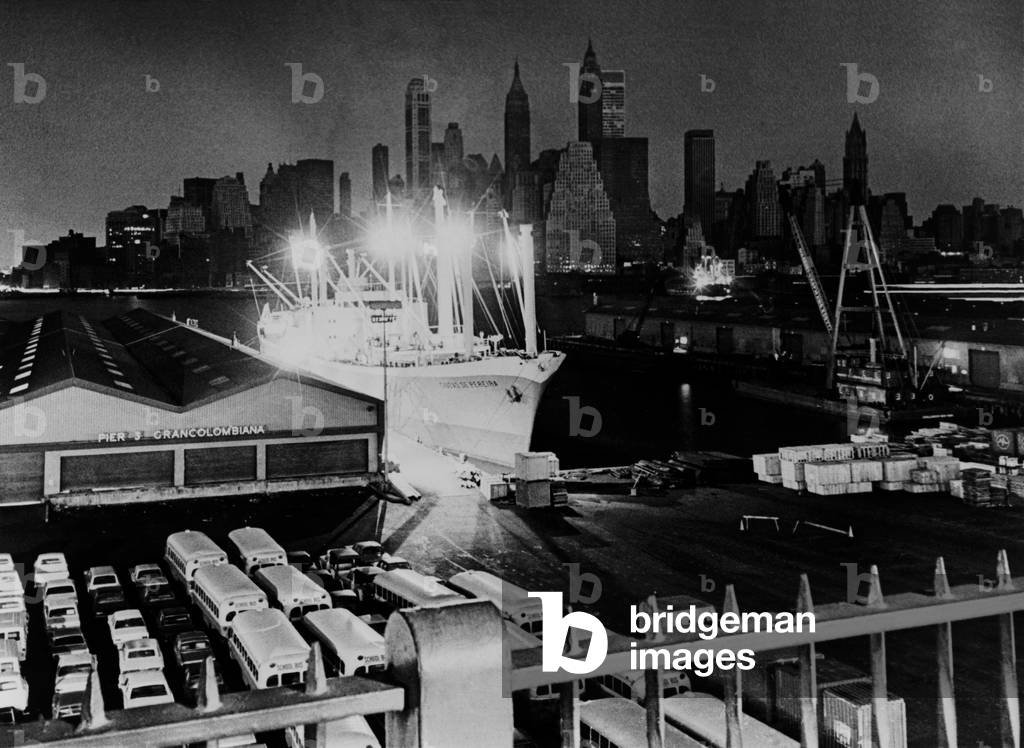
New York City's Manhattan's skyline shrouded in darkness, is offset by the lights of a freighter at a Brooklyn pier. On November 9, 1965, the lights went out for 12 hours in the Northeast States and Canada

EVB2937530: New York City's Manhattan's skyline shrouded in darkness, is offset by the lights of a freighter at a Brooklyn pier. On November 9, 1965, the lights went out for 12 hours in the Northeast States and Canada / Bridgeman Images
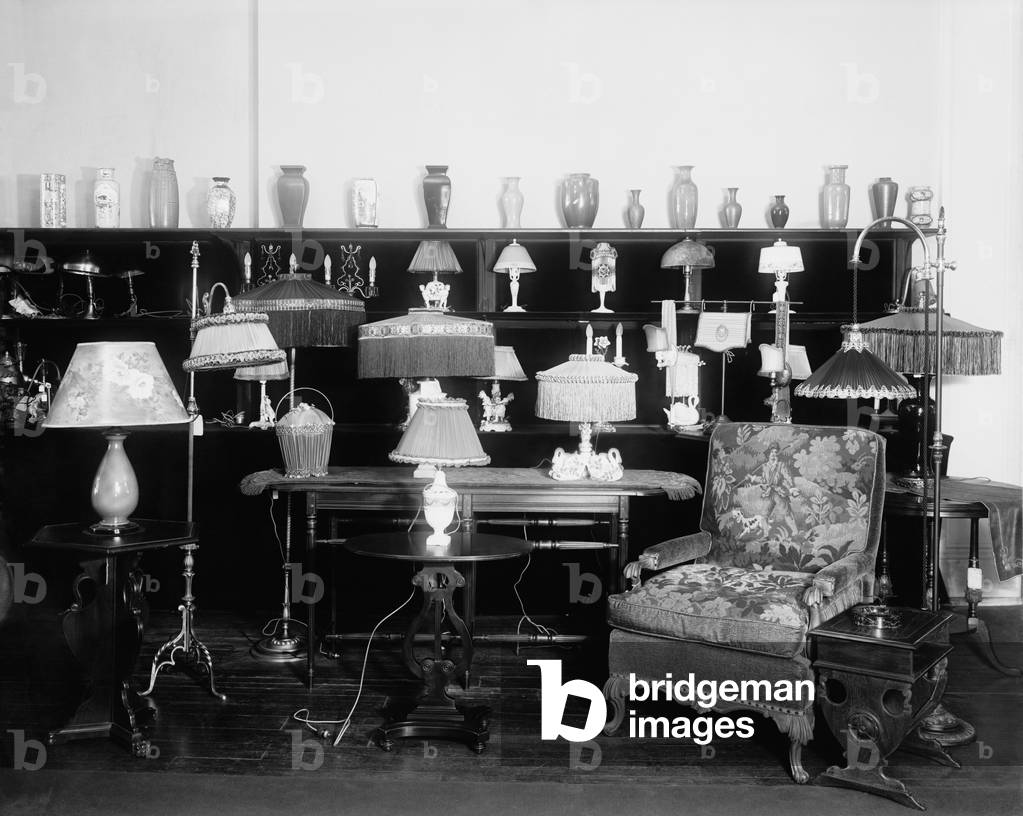
Electric lamps on display in a store in the Washington, D.C. area. c. 1920

EVB2937536: Electric lamps on display in a store in the Washington, D.C. area. c. 1920 / Bridgeman Images
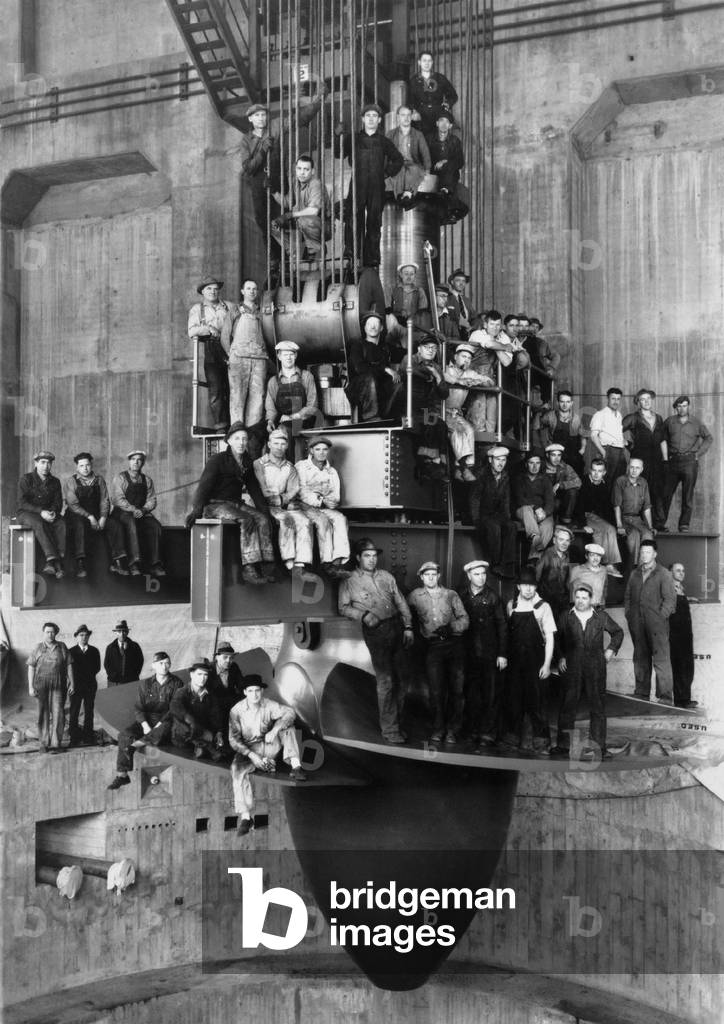
Workmen pose for a group portrait on the giant turbine in the powerhouse of the Bonneville Dam. c. 1937

EVB2937542: Workmen pose for a group portrait on the giant turbine in the powerhouse of the Bonneville Dam. c. 1937 / Bridgeman Images
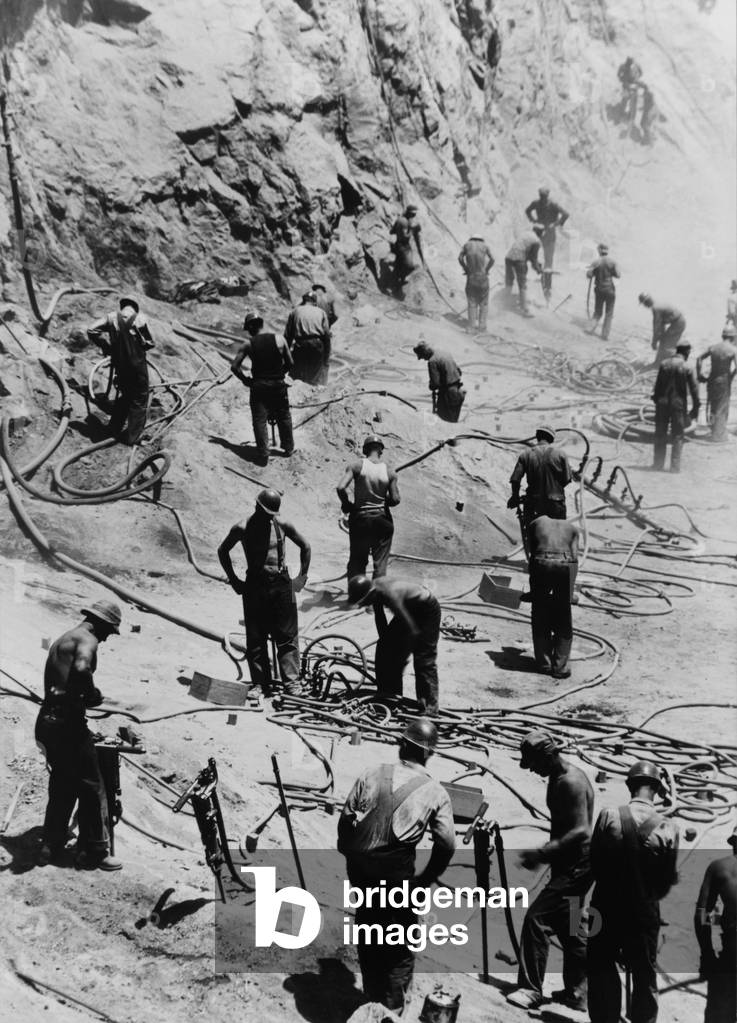
Drillers excavating the dam foundation on the Nevada site of Boulder dam, excavating the dam foundation. 1933

EVB2937697: Drillers excavating the dam foundation on the Nevada site of Boulder dam, excavating the dam foundation. 1933 / Bridgeman Images
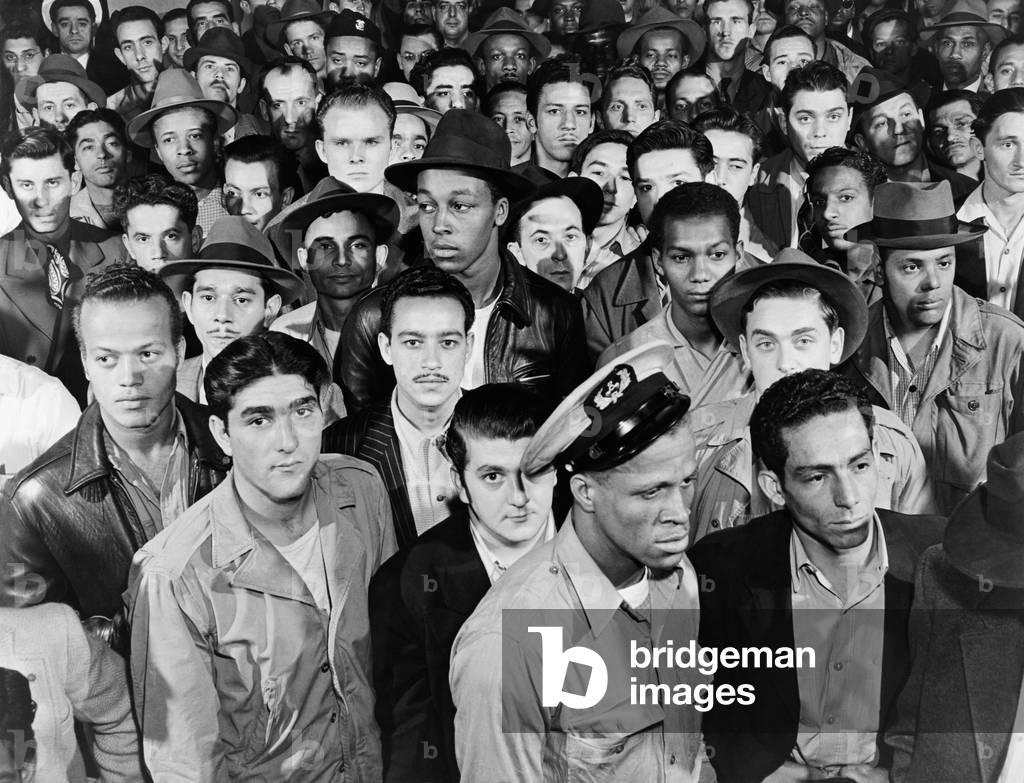
Sailors in the National Maritime Union hiring hall for deck and engine hands, watching the board where the jobs are posted. New York, c. 1955

EVB2937700: Sailors in the National Maritime Union hiring hall for deck and engine hands, watching the board where the jobs are posted. New York, c. 1955 / Bridgeman Images
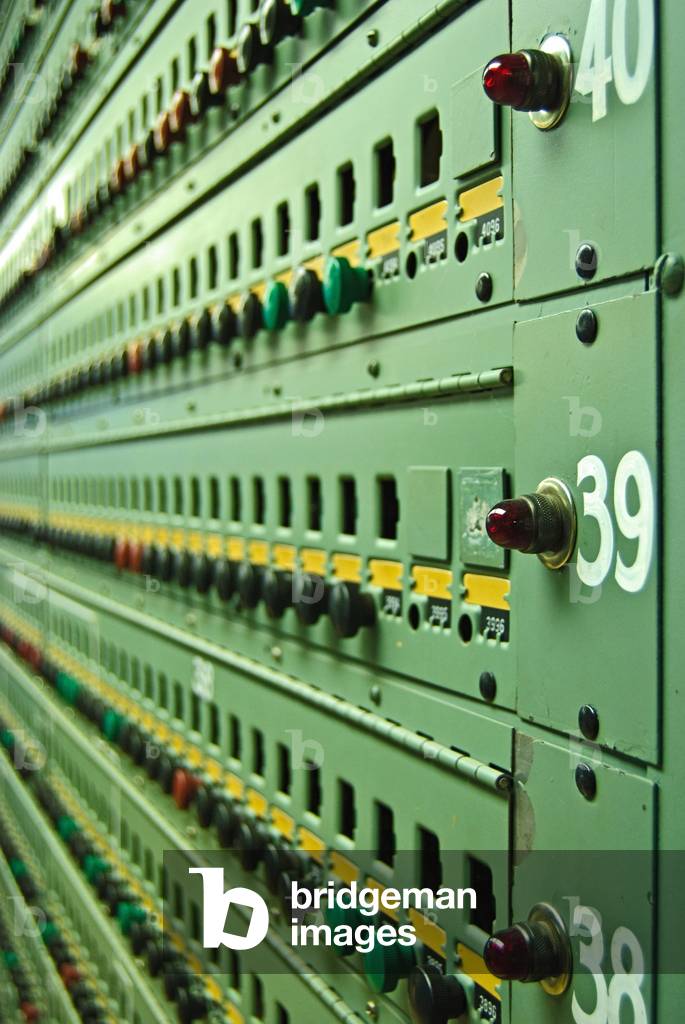
Close-up of switches in the control room of Reactor B, the first large scale nuclear reactor ever built. Photo from the Hanford Site of the Manhattan Project, c. 1942-44

EVB2937599: Close-up of switches in the control room of Reactor B, the first large scale nuclear reactor ever built. Photo from the Hanford Site of the Manhattan Project, c. 1942-44 / Bridgeman Images
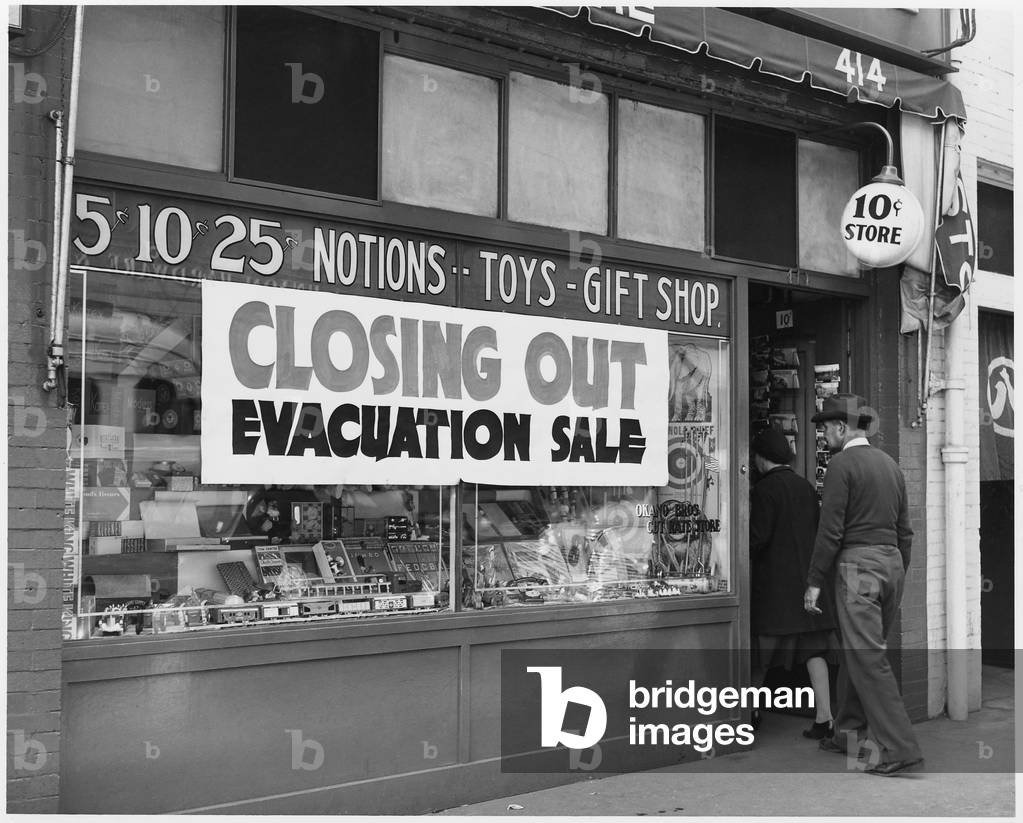
'Evacuation Sale' sign on a Japanese-American store in preparation for World War II relocation. Internees were given little notice and forced to abandon or sell their businesses at heavy losses

EVB2937733: 'Evacuation Sale' sign on a Japanese-American store in preparation for World War II relocation. Internees were given little notice and forced to abandon or sell their businesses at heavy losses / Bridgeman Images
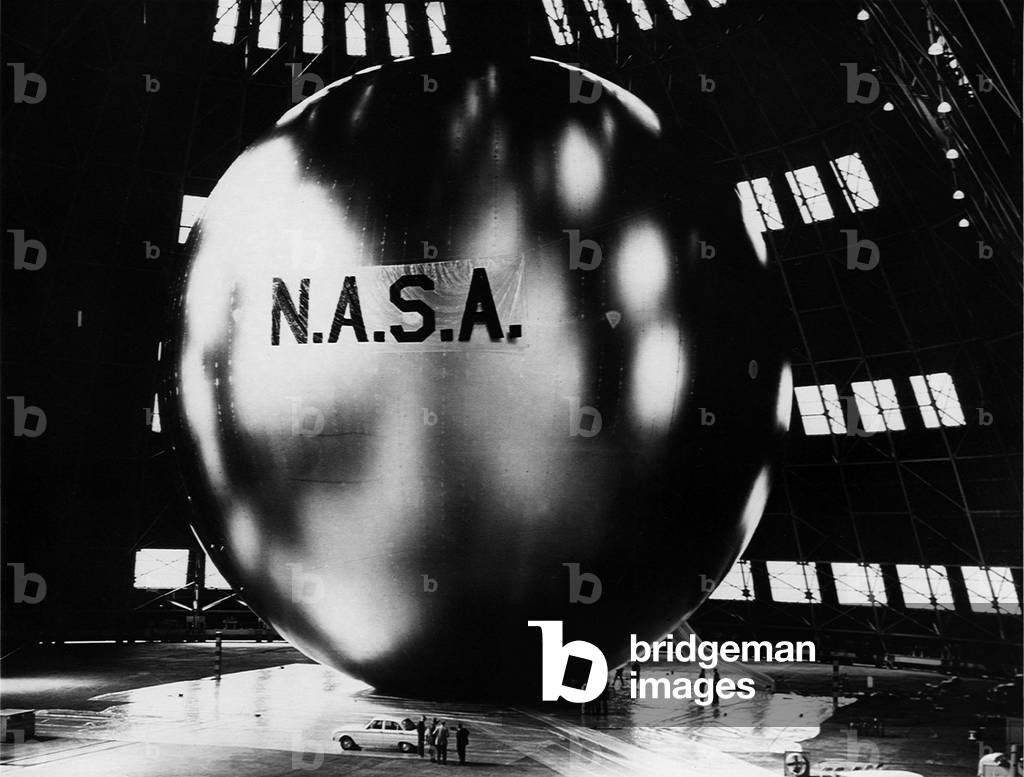
ECHO I, NASA's first communications satellite, was a passive spacecraft based on a Mylar balloon design. Launched in 1960, ECHO I expanded to a balloon with a 100 foot diameter that reflected radio transmissions from one ground station back to another

EVB2937614: ECHO I, NASA's first communications satellite, was a passive spacecraft based on a Mylar balloon design. Launched in 1960, ECHO I expanded to a balloon with a 100 foot diameter that reflected radio transmissions from one ground station back to another / Bridgeman Images
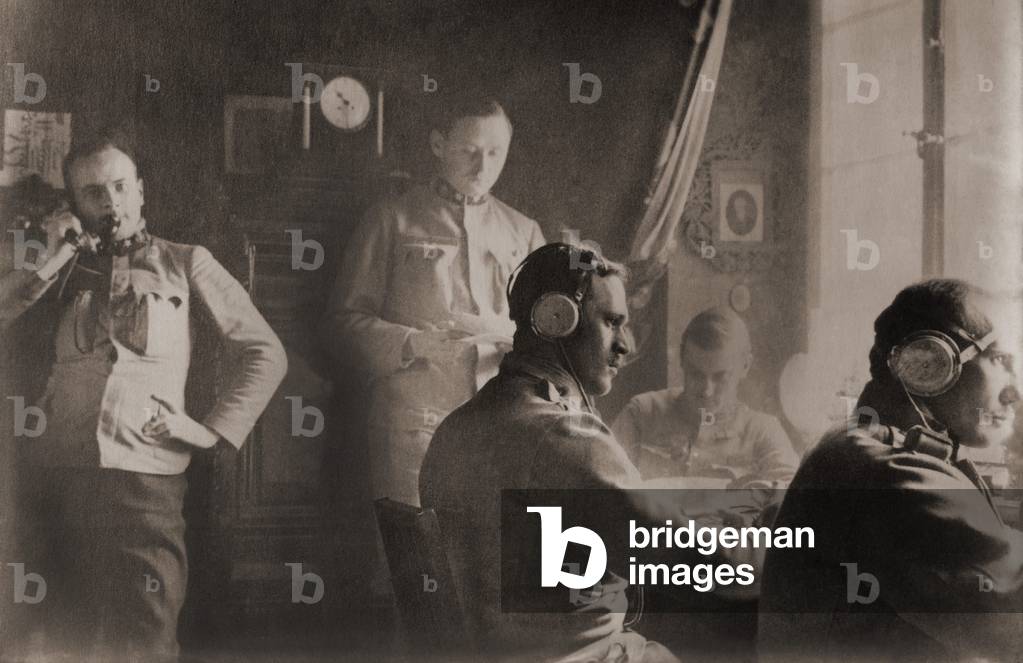
Austrian field telegraph station in Poland during World War I. c. 1915

EVB2937745: Austrian field telegraph station in Poland during World War I. c. 1915 / Bridgeman Images
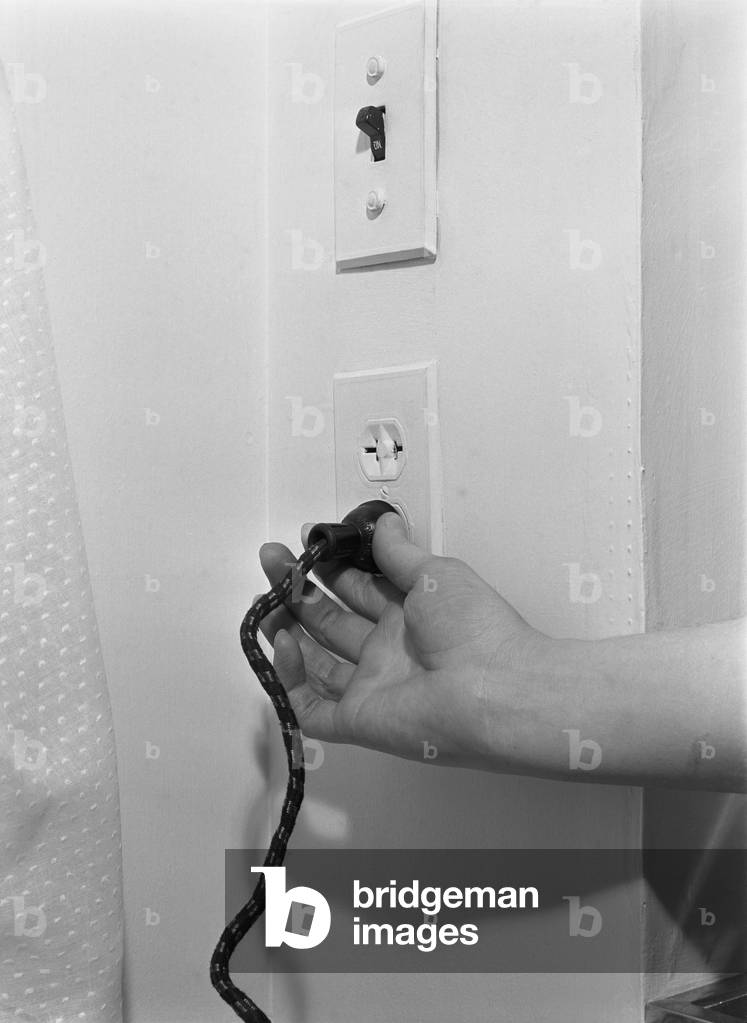
Electrical outlets in an American home during World War II. The photo was released with the following conservation instructions: 'How to add years to the life of your electric cords: remove them gently but firmly from wall sockets. Don't pull or tug. When not in use, coil cord loosely around a hook.' 1943

EVB2937638: Electrical outlets in an American home during World War II. The photo was released with the following conservation instructions: 'How to add years to the life of your electric cords: remove them gently but firmly from wall sockets. Don't pull or tug. When not in use, coil cord loosely around a hook.' 1943 / Bridgeman Images
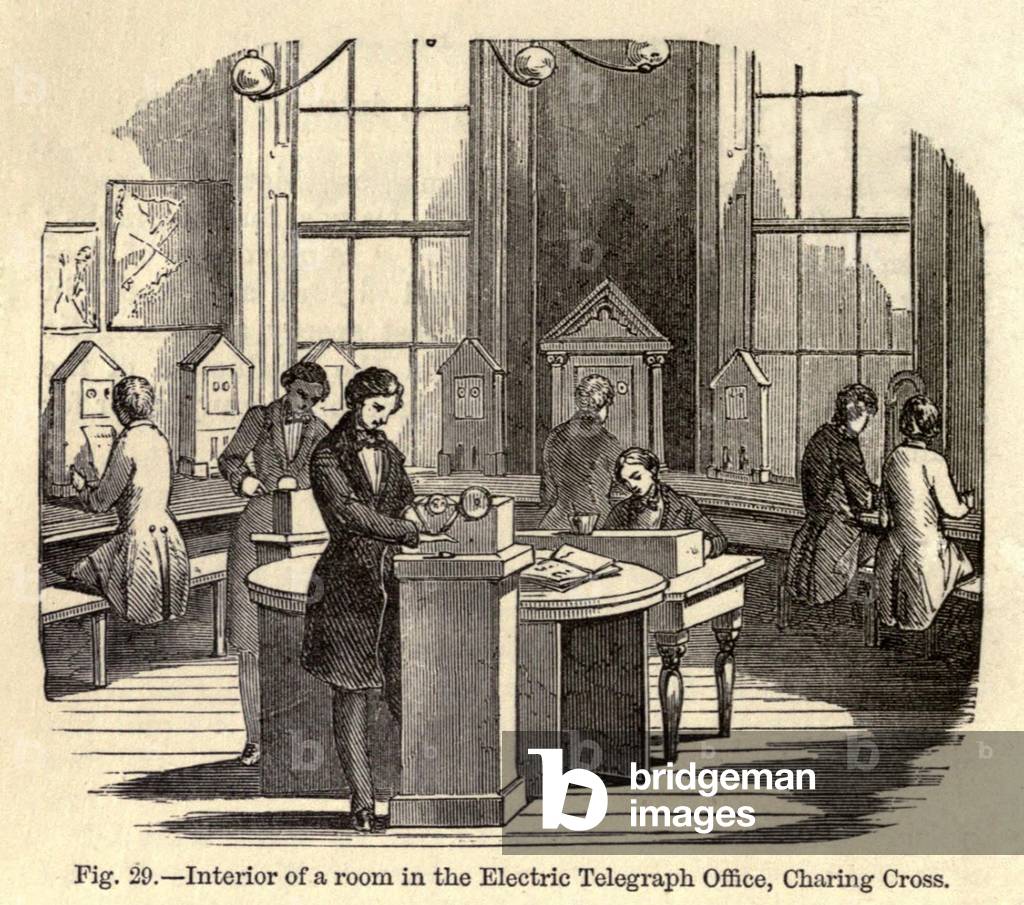
Interior room of the Electric Telegraph Office at Charing Cross, London. British telegraph equipment was based on the Cooke-Wheatstone patent, the clock-like devices along the walls, in which the receiver pointed to the letters on a dial, which spared operators the task of translating code

EVB2937772: Interior room of the Electric Telegraph Office at Charing Cross, London. British telegraph equipment was based on the Cooke-Wheatstone patent, the clock-like devices along the walls, in which the receiver pointed to the letters on a dial, which spared operators the task of translating code / Bridgeman Images
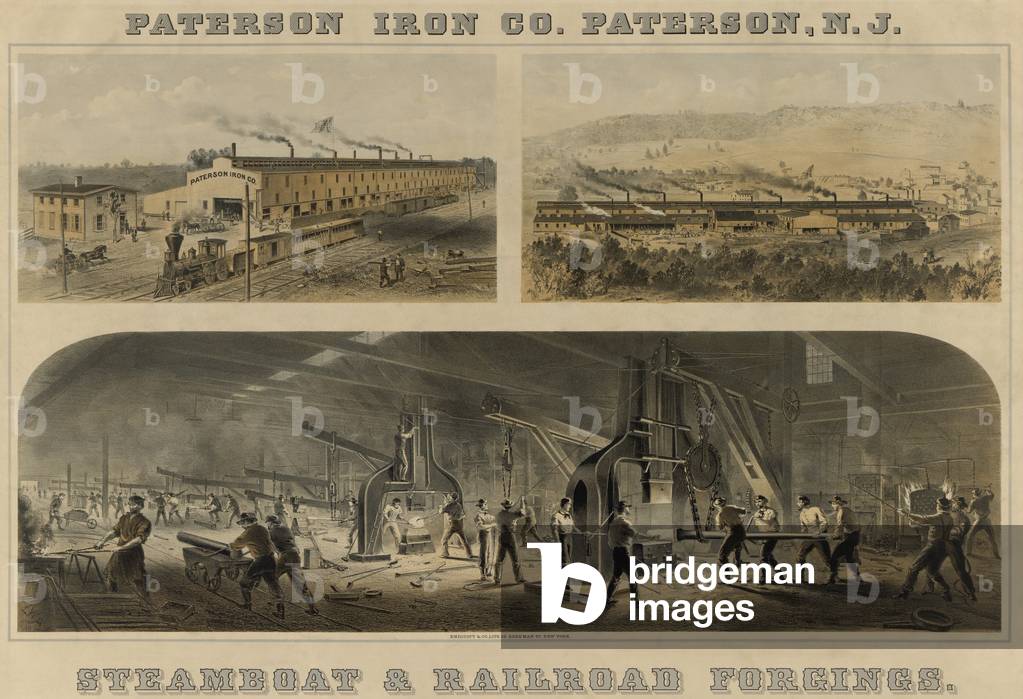
Paterson Iron Company in New Jersey were manufacturers of forgings for steamboats and railroads. c. 1866

EVB2937855: Paterson Iron Company in New Jersey were manufacturers of forgings for steamboats and railroads. c. 1866 / Bridgeman Images
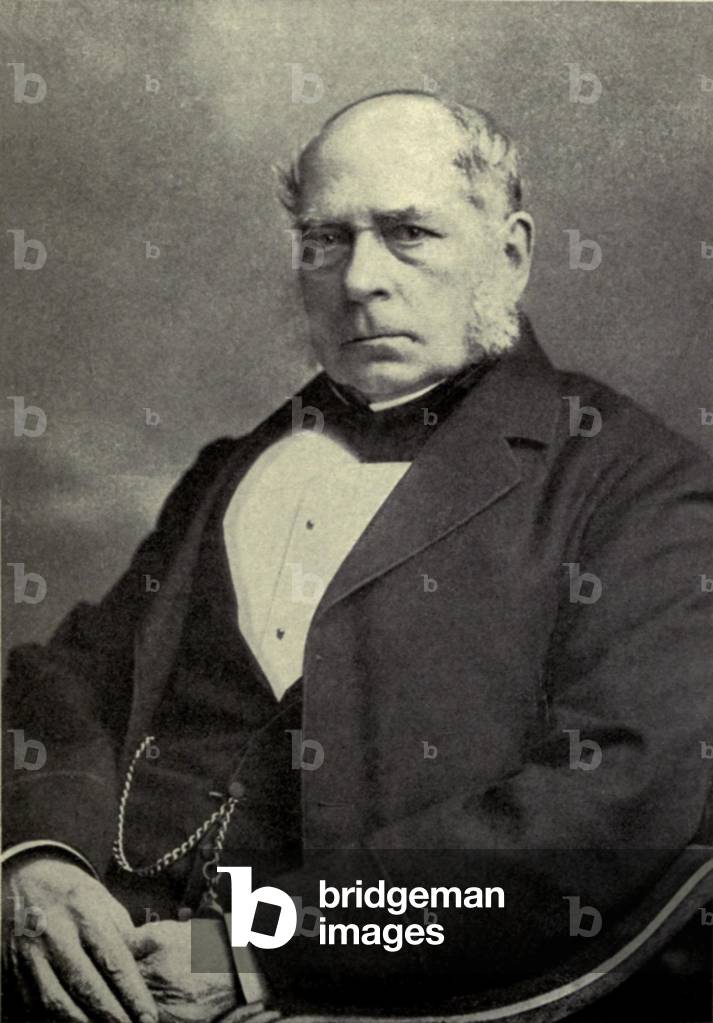
Sir Henry Bessemer (1813-1898), a British engineer and inventor, patented the first inexpensive industrial process for the mass-production of steel from molten pig iron in 1855

EVB2937864: Sir Henry Bessemer (1813-1898), a British engineer and inventor, patented the first inexpensive industrial process for the mass-production of steel from molten pig iron in 1855 / Bridgeman Images
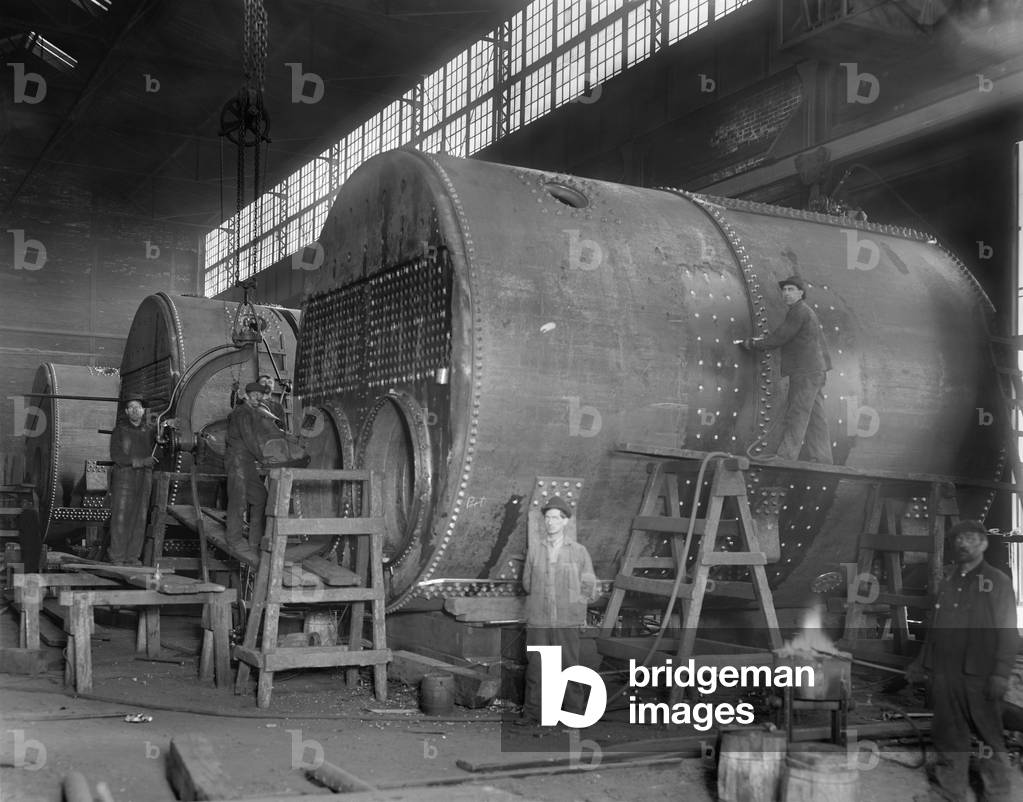
Steam ship boilers under construction in Wyandotte, Michigan in 1912. The massive coal fired boilers were 14' in diameter

EVB2937832: Steam ship boilers under construction in Wyandotte, Michigan in 1912. The massive coal fired boilers were 14' in diameter, Unknown photographer, (20th century) / Bridgeman Images
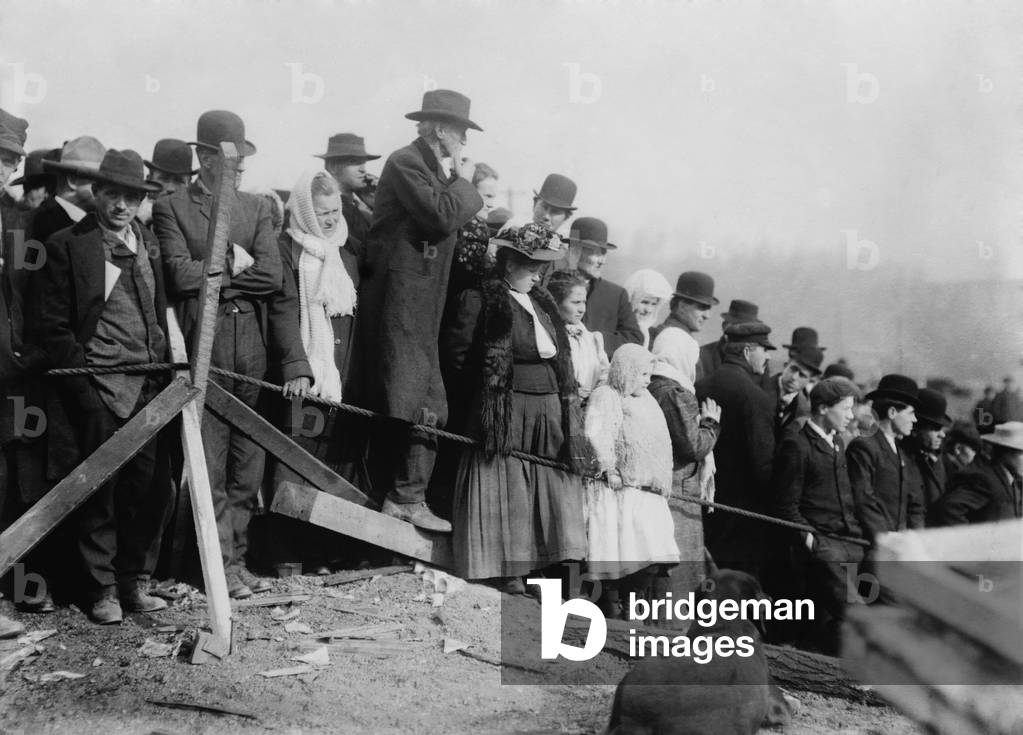
Families and friends waiting at the mouth of the Marianna Coal Mine after the explosion of November 30, 1908. 154 miners were killed in one the deadliest mining accidents of the 20th century

EVB2937896: Families and friends waiting at the mouth of the Marianna Coal Mine after the explosion of November 30, 1908. 154 miners were killed in one the deadliest mining accidents of the 20th century, Unknown photographer, (20th century) / Bridgeman Images
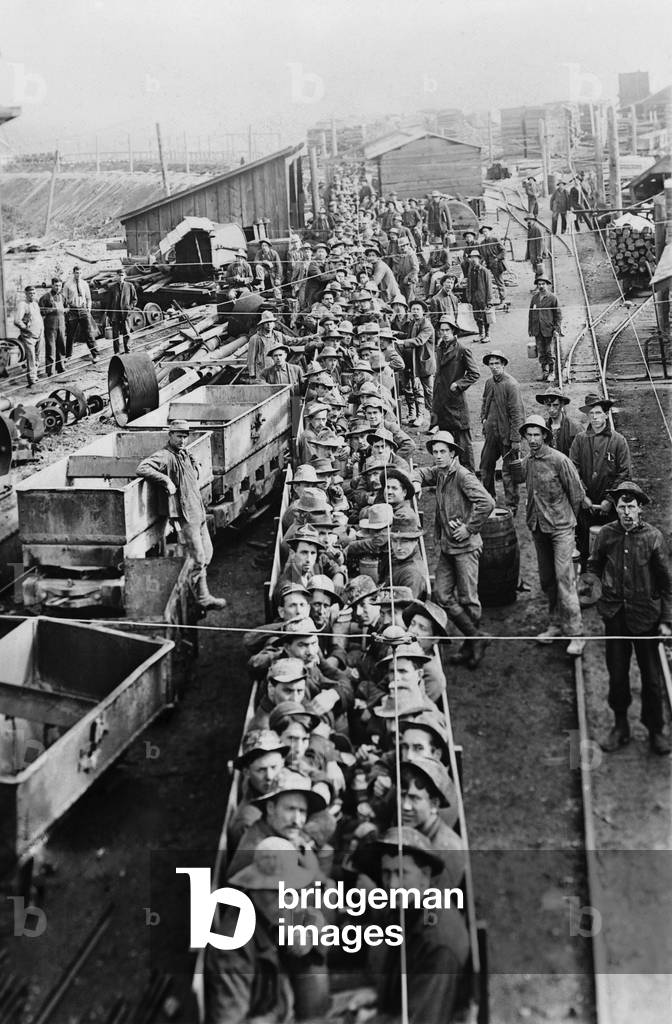
Dozens of men in open railroad cars on their way into the underground mines in Idaho in 1909

EVB2937909: Dozens of men in open railroad cars on their way into the underground mines in Idaho in 1909, Unknown photographer, (20th century) / Bridgeman Images
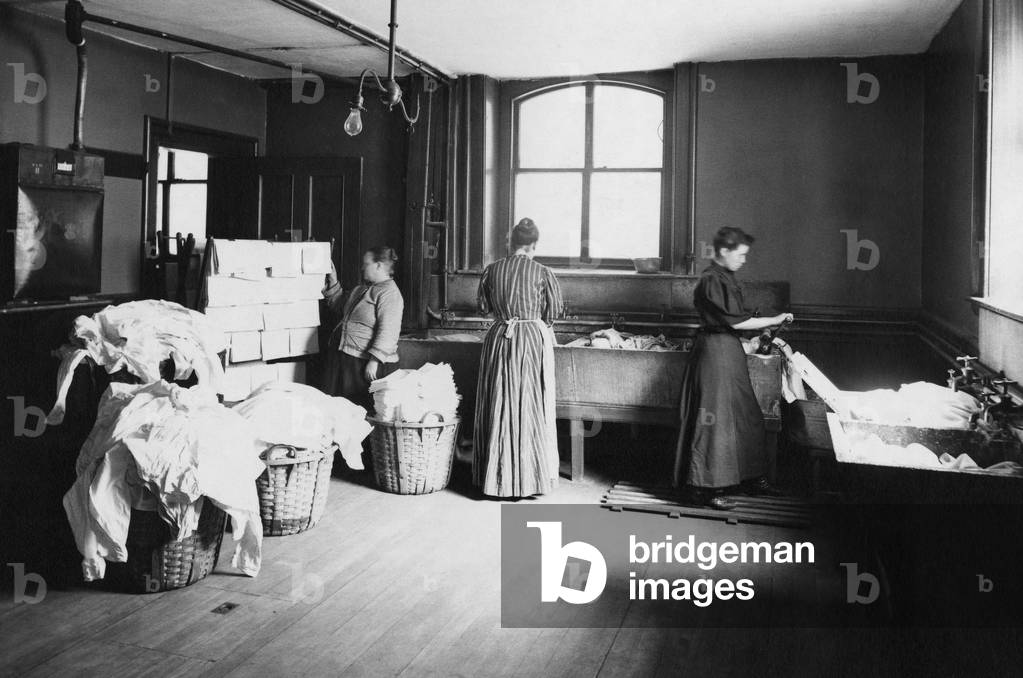
Laundry with women working at large sinks, one operating a hand cranked wringer, and another at a drying rack placed near a stove. Boston, Massachusetts, 1905

EVB2937955: Laundry with women working at large sinks, one operating a hand cranked wringer, and another at a drying rack placed near a stove. Boston, Massachusetts, 1905, Unknown photographer, (20th century) / Bridgeman Images
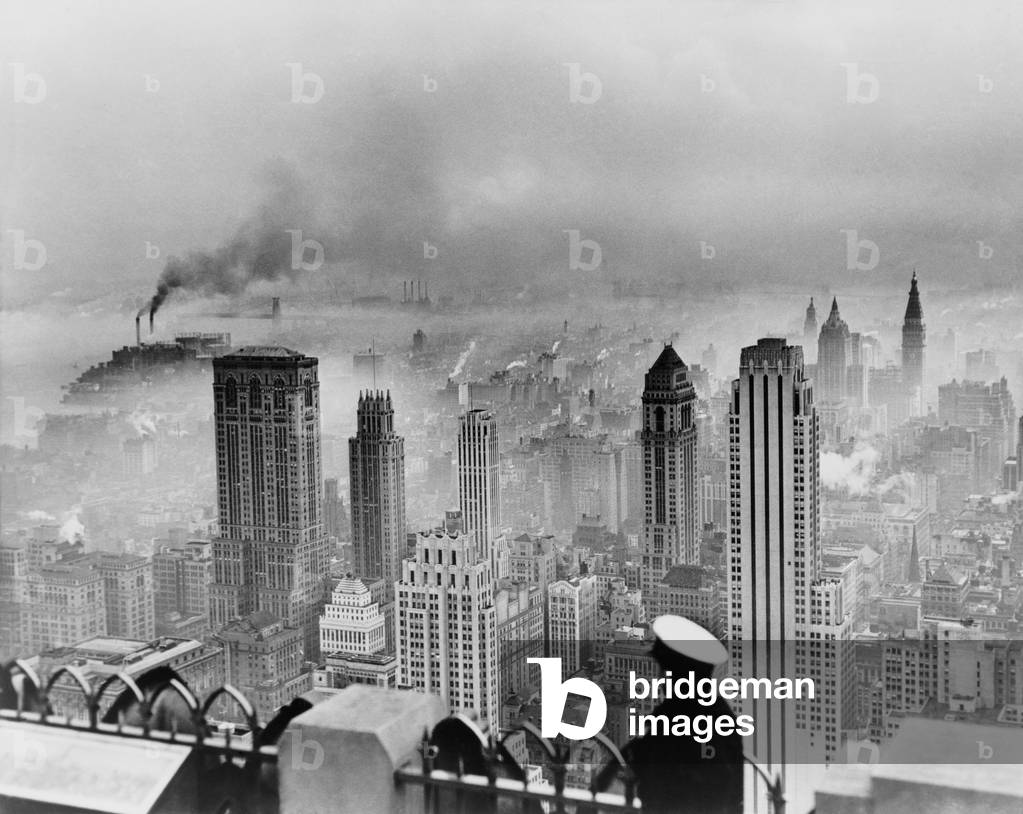
New York City under smog when weather conditions prevented smoke from dispersing. Southeast view from the Empire State Building includes the Lincoln Building at far left and the RCA Building at 500 Fifth Avenue on the far right. 1949 photo by Edward Ratcliffe

EVB2937961: New York City under smog when weather conditions prevented smoke from dispersing. Southeast view from the Empire State Building includes the Lincoln Building at far left and the RCA Building at 500 Fifth Avenue on the far right. 1949 photo by Edward Ratcliffe / Bridgeman Images
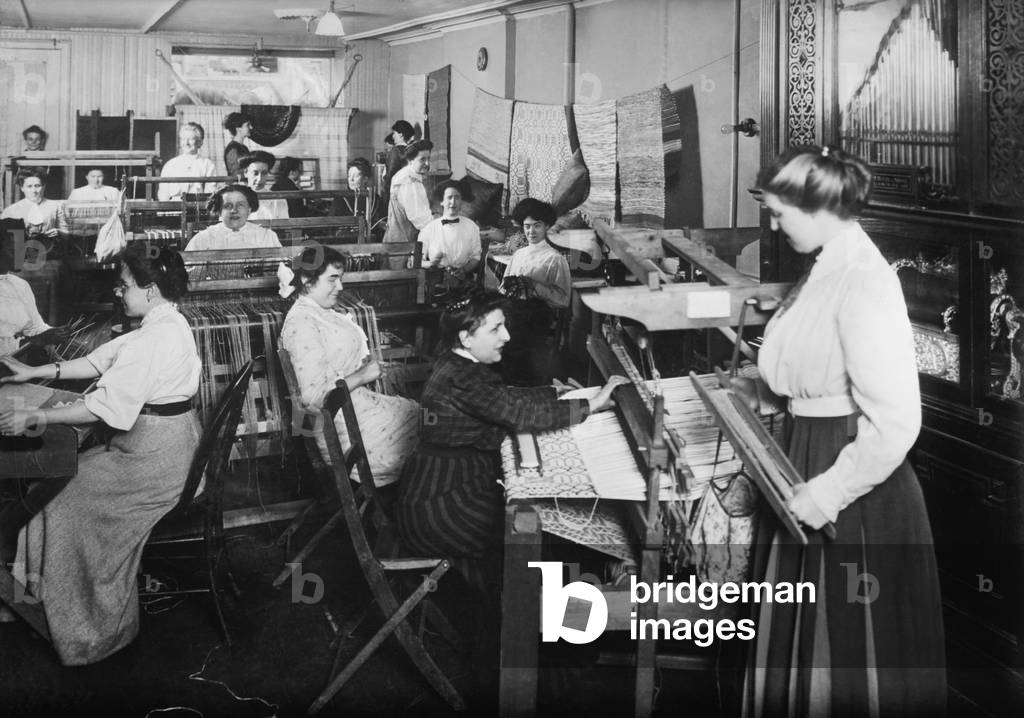
Blind women weaving at looms accompanied by an orchestrion, a self playing musical instrument, at right. Photo taken by Byron Company for the New York Association for the Blind

EVB2937950: Blind women weaving at looms accompanied by an orchestrion, a self playing musical instrument, at right. Photo taken by Byron Company for the New York Association for the Blind / Bridgeman Images
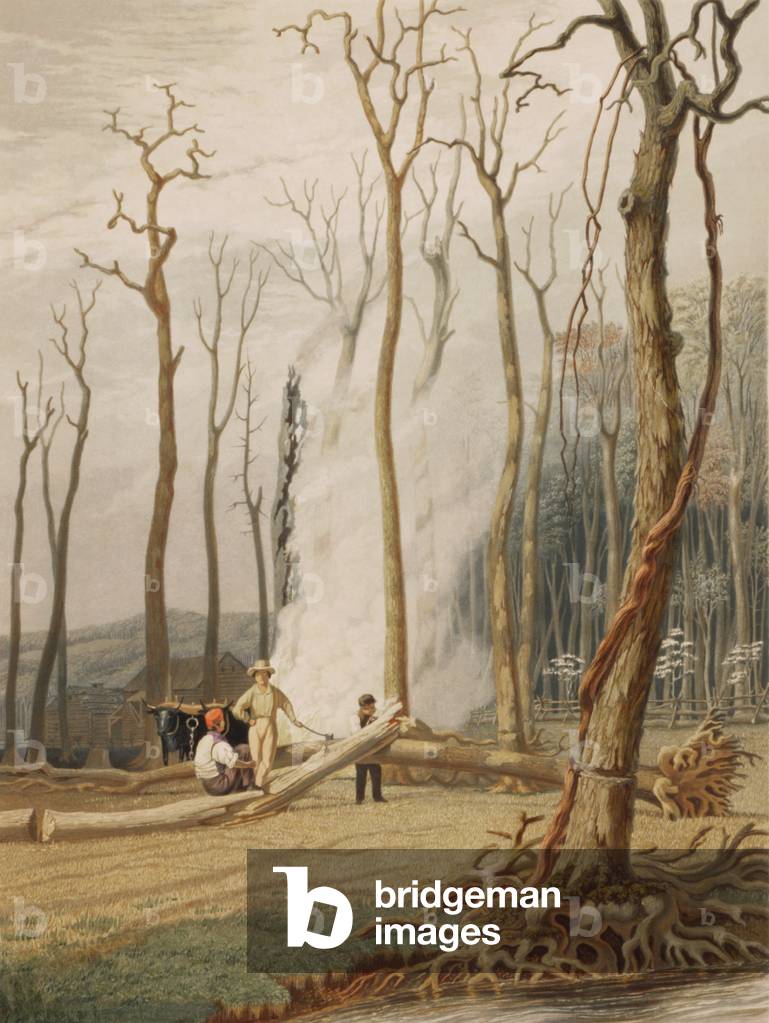
Men cutting and burning 'girdled' tree to clear land on the American frontier in 1841. Girdling, cutting through the bark starves the tree which dies after a few years, when it is removed

EVB2937969: Men cutting and burning 'girdled' tree to clear land on the American frontier in 1841. Girdling, cutting through the bark starves the tree which dies after a few years, when it is removed / Bridgeman Images

William 'Big Bill' Haywood (1869-1928), leading a crowd of during the six month long Paterson silk strike in 1913. Adolph Lessig (1869-1935), business agent of the Industrial Workers of the World, is second from right in front row

EVB2938015: William 'Big Bill' Haywood (1869-1928), leading a crowd of during the six month long Paterson silk strike in 1913. Adolph Lessig (1869-1935), business agent of the Industrial Workers of the World, is second from right in front row, Unknown photographer, (20th century) / Bridgeman Images


Back to top