Search options

Orientation
Colour

Display options

View

Print

To print search results, use print friendly version of this page.

2491517 Search Results

Fire engine by the ruins of the South Tower on Sept 16, 2001. World Trade Center, New York City, after September 11, 2001 terrorist attacks. U.S. Navy Photo by Eric J. Tilford

EVB2948112: Fire engine by the ruins of the South Tower on Sept 16, 2001. World Trade Center, New York City, after September 11, 2001 terrorist attacks. U.S. Navy Photo by Eric J. Tilford / Bridgeman Images

Moscow's subway stations were built for their possible use as air raid shelters. Civilians sleep in a underground station during the Battle of Moscow from Oct. 1941 to Jan. 1942. World War 2

EVB2948136: Moscow's subway stations were built for their possible use as air raid shelters. Civilians sleep in a underground station during the Battle of Moscow from Oct. 1941 to Jan. 1942. World War 2 / Bridgeman Images

Fire fighters amid debris following September 11th terrorist attack on World Trade Center. In the background are damaged buildings of the World Financial Center, New York City, Sept. 11, 2001

EVB2948066: Fire fighters amid debris following September 11th terrorist attack on World Trade Center. In the background are damaged buildings of the World Financial Center, New York City, Sept. 11, 2001 / Bridgeman Images

HMX-1 'Nighthawks' helicopter squadron practice landing on the South Lawn of the White House. March 30, 2012

EVB2948163: HMX-1 'Nighthawks' helicopter squadron practice landing on the South Lawn of the White House. March 30, 2012 / Bridgeman Images

President Barack Obama has a beer with patrons at the Pump Haus Pub and Grill in Waterloo, Iowa. Aug. 14, 2012

EVB2948184: President Barack Obama has a beer with patrons at the Pump Haus Pub and Grill in Waterloo, Iowa. Aug. 14, 2012 / Bridgeman Images

Army reinforcements wade ashore on Saipan without enemy opposition. They will relieve Marines in the battle of attrition raging in the island's interior. The ships of Task Force 58 are behind them in the Pacific ocean

EVB2944673: Army reinforcements wade ashore on Saipan without enemy opposition. They will relieve Marines in the battle of attrition raging in the island's interior. The ships of Task Force 58 are behind them in the Pacific ocean / Bridgeman Images

Fire and destruction after a mid-day Japanese air raid on U.S. Army Air Force base at Saipan Island. The first U.S. bombing raid on Japan's home islands flew from the Marianas on Nov. 24, 1944. This attack followed a few days later

EVB2944682: Fire and destruction after a mid-day Japanese air raid on U.S. Army Air Force base at Saipan Island. The first U.S. bombing raid on Japan's home islands flew from the Marianas on Nov. 24, 1944. This attack followed a few days later / Bridgeman Images

Marines advancing on a road toward the northern end of Peleliu Island. Sept.-Nov. 1944. World War 2, Pacific Ocean

EVB2944801: Marines advancing on a road toward the northern end of Peleliu Island. Sept.-Nov. 1944. World War 2, Pacific Ocean / Bridgeman Images

Second Battalion, Twenty-Seventh Marines pinned down on Iwo Jima beach. In the distance is Mount Suribachi. Feb. 19, 1945. World War 2

EVB2944831: Second Battalion, Twenty-Seventh Marines pinned down on Iwo Jima beach. In the distance is Mount Suribachi. Feb. 19, 1945. World War 2 / Bridgeman Images

Two US soldiers to throw grenades into Japanese held caves on Okinawa Island, May 16, 1945

EVB2944867: Two US soldiers to throw grenades into Japanese held caves on Okinawa Island, May 16, 1945 / Bridgeman Images

South African Women's Auxiliary Services sergeant is fitted with a gas mask. Unknown location during World War 2. April 1942

EVB2944736: South African Women's Auxiliary Services sergeant is fitted with a gas mask. Unknown location during World War 2. April 1942 / Bridgeman Images

American Women's Voluntary Services, posed on steps, wearing various AWVS uniforms, 1942. AWVS was founded in January 1940 by Alice Throckmorton McLean and other wealthy internationalist women in New York City. World War 2

EVB2944888: American Women's Voluntary Services, posed on steps, wearing various AWVS uniforms, 1942. AWVS was founded in January 1940 by Alice Throckmorton McLean and other wealthy internationalist women in New York City. World War 2 / Bridgeman Images

Marine riflemen moving up behind flame-throwing tank on Okinawa. c. May 1945. World War 2

EVB2944781: Marine riflemen moving up behind flame-throwing tank on Okinawa. c. May 1945. World War 2 / Bridgeman Images

Muscular woman lathe operator machining aircraft parts during World War 2. Consolidated Aircraft Corporation plant, Fort Worth, Texas. Oct. 1942

EVB2944930: Muscular woman lathe operator machining aircraft parts during World War 2. Consolidated Aircraft Corporation plant, Fort Worth, Texas. Oct. 1942, Palmer, Alfred T. (1906-93) / Bridgeman Images

Armored amphibious tractors in the first waves of the Marine invasion of Okinawa. April 1, 1945. World War 2

EVB2944859: Armored amphibious tractors in the first waves of the Marine invasion of Okinawa. April 1, 1945. World War 2 / Bridgeman Images

A bombed out London women carrying a few belongings talks with an Air Raids Precautions worker. 1940 during the Battle of Britain in World War 2

EVB2944960: A bombed out London women carrying a few belongings talks with an Air Raids Precautions worker. 1940 during the Battle of Britain in World War 2 / Bridgeman Images

Japanese bomber explodes after direct hit by 5 inch shell from USS Yorktown, Dec. 4, 1943. Off Kwajalein Atoll. World War 2, Pacific Ocean

EVB2944871: Japanese bomber explodes after direct hit by 5 inch shell from USS Yorktown, Dec. 4, 1943. Off Kwajalein Atoll. World War 2, Pacific Ocean / Bridgeman Images

Woman war workers assembling oxygen masks at American Anode Company, in Akron, Ohio. During World War 2, c. 1942-45

EVB2944910: Woman war workers assembling oxygen masks at American Anode Company, in Akron, Ohio. During World War 2, c. 1942-45 / Bridgeman Images

Dead Japanese soldier in Tanapag Harbor on Saipan. He was among a group attempting to escape the island by boat. July 5, 1944

EVB2944674: Dead Japanese soldier in Tanapag Harbor on Saipan. He was among a group attempting to escape the island by boat. July 5, 1944 / Bridgeman Images

Marine patrol on Saipan found a Japanese family sheltering in a hillside cave, June 21,1944. 1,000 of the 25,000 civilians on Saipan committed suicide in the last days of the battle

EVB2944680: Marine patrol on Saipan found a Japanese family sheltering in a hillside cave, June 21,1944. 1,000 of the 25,000 civilians on Saipan committed suicide in the last days of the battle / Bridgeman Images

British soldier in the Western showers in a mobile bath unit. The mobile unit carried its own water supply as it traveled to soldiers locations in the Libyan desert during World War 2. c. 1940-42

EVB2944731: British soldier in the Western showers in a mobile bath unit. The mobile unit carried its own water supply as it traveled to soldiers locations in the Libyan desert during World War 2. c. 1940-42 / Bridgeman Images

Libyan Arab assistant in the Royal Air Force carries ammunition for a 'Kittyhawk' fighter. c. 1940-42, during World War 2

EVB2944734: Libyan Arab assistant in the Royal Air Force carries ammunition for a 'Kittyhawk' fighter. c. 1940-42, during World War 2 / Bridgeman Images

American Air Transport Command plane flies over the pyramids of Egypt. Flights from the U.S. supplied strategic battle zones of North Africa during World War 2. 1943

EVB2944737: American Air Transport Command plane flies over the pyramids of Egypt. Flights from the U.S. supplied strategic battle zones of North Africa during World War 2. 1943 / Bridgeman Images

U.S. Military leaders meet with Secretary of War Woodring, Dec. 1, 1939

EVB2944755: U.S. Military leaders meet with Secretary of War Woodring, Dec. 1, 1939 / Bridgeman Images

H.M.S. Ark Royal was hit by torpedoes from German submarine, U-81. She was ferrying supplies to Malta in the Mediterranean when attacked on November 13, 1941. After 14 hours the listing aircraft carrier sunk. World War 2

EVB2944773: H.M.S. Ark Royal was hit by torpedoes from German submarine, U-81. She was ferrying supplies to Malta in the Mediterranean when attacked on November 13, 1941. After 14 hours the listing aircraft carrier sunk. World War 2 / Bridgeman Images

USS Franklin aircraft carrier on fire and listing after a strike by a Japanese dive bomber. USS Santa Fe (at left) assists the crippled carrier, that suffered 800 crewmen killed. March 19, 1945. World War 2, Pacific Ocean

EVB2944785: USS Franklin aircraft carrier on fire and listing after a strike by a Japanese dive bomber. USS Santa Fe (at left) assists the crippled carrier, that suffered 800 crewmen killed. March 19, 1945. World War 2, Pacific Ocean / Bridgeman Images

Marines crossing the beach and on the initial landing Ngedbus Island, just north of Peleliu. c. Sept. 29 - Oct. 1, 1944. World War 2, Pacific Ocean

EVB2944797: Marines crossing the beach and on the initial landing Ngedbus Island, just north of Peleliu. c. Sept. 29 - Oct. 1, 1944. World War 2, Pacific Ocean / Bridgeman Images

U.S. airplane drop bombs on the enemy area in the hills of Peleliu Island. Sept.-Nov. 1944. World War 2, Pacific Ocean

EVB2944803: U.S. airplane drop bombs on the enemy area in the hills of Peleliu Island. Sept.-Nov. 1944. World War 2, Pacific Ocean / Bridgeman Images

A wounded U.S. Marine takes is given water while waiting for stretcher-bearers to come for him. Peleliu Island. Sept.-Nov. 1944. World War 2, Pacific Ocean

EVB2944806: A wounded U.S. Marine takes is given water while waiting for stretcher-bearers to come for him. Peleliu Island. Sept.-Nov. 1944. World War 2, Pacific Ocean / Bridgeman Images

Lt. General Holland Smith, Commander of the Invasion, and Col. Dudley Brown on Iwo Jima. They had not planned for the soft volcanic sands of the beach to trap Marine vehicles for easy destruction by Japanese guns. c. Feb. 19-March 16, 1945. World War 2

EVB2944836: Lt. General Holland Smith, Commander of the Invasion, and Col. Dudley Brown on Iwo Jima. They had not planned for the soft volcanic sands of the beach to trap Marine vehicles for easy destruction by Japanese guns. c. Feb. 19-March 16, 1945. World War 2 / Bridgeman Images

Marines moving near Iwo Jima's airport on Feb. 22, 1945. They are with the 5th Division, 1st Battalion, 26th Marines. Photo taken between air strip #2 and purple beach. World War 2

EVB2944839: Marines moving near Iwo Jima's airport on Feb. 22, 1945. They are with the 5th Division, 1st Battalion, 26th Marines. Photo taken between air strip #2 and purple beach. World War 2 / Bridgeman Images

Marines advancing to inland Iwo Jima, on Feb. 20, 1945, the day after the first landings. World War 2

EVB2944848: Marines advancing to inland Iwo Jima, on Feb. 20, 1945, the day after the first landings. World War 2 / Bridgeman Images

U.S. Marine firing a bazooka at Japanese held ridge on Okinawa, May 4, 1945. The action took place two miles north of Naha, the capital of Okinawa. World War 2

EVB2944866: U.S. Marine firing a bazooka at Japanese held ridge on Okinawa, May 4, 1945. The action took place two miles north of Naha, the capital of Okinawa. World War 2 / Bridgeman Images

North American Aviation employees go to work in Inglewood, California, during World War 2. Employees must display their badges and identification cards before admittance. c. 1941-45

EVB2944988: North American Aviation employees go to work in Inglewood, California, during World War 2. Employees must display their badges and identification cards before admittance. c. 1941-45 / Bridgeman Images
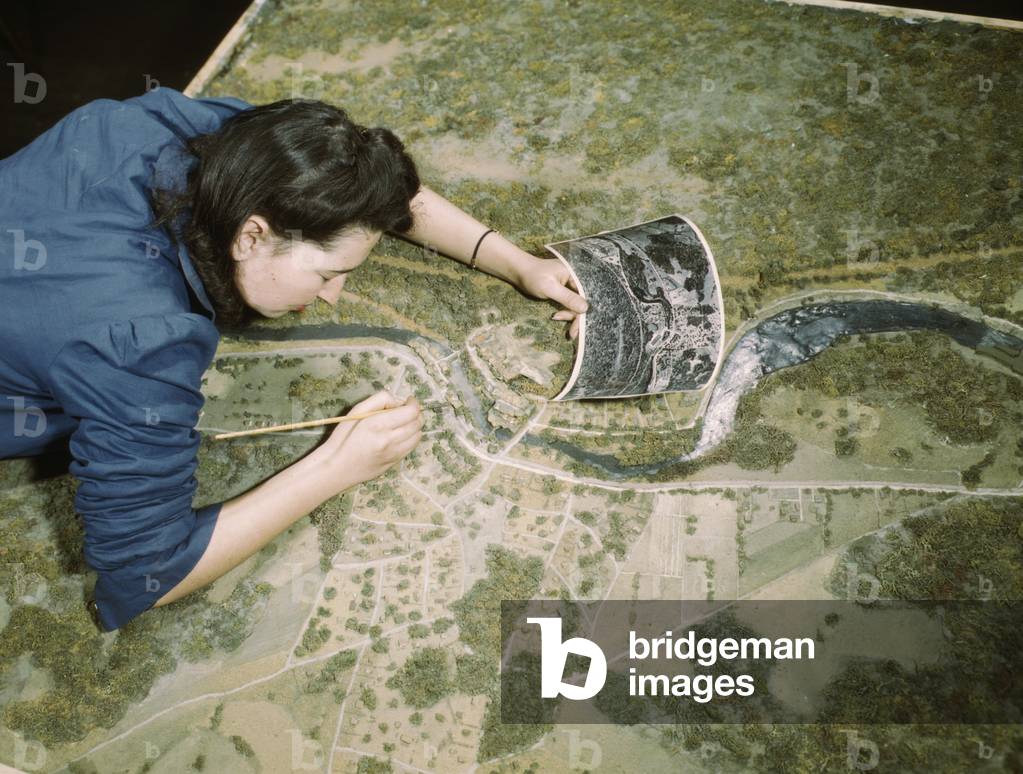
Young women in camouflage class at New York University during World War 2. She is disguising a model defense plant in preparation for jobs in the Army or in industry. March 1943

EVB2944991: Young women in camouflage class at New York University during World War 2. She is disguising a model defense plant in preparation for jobs in the Army or in industry. March 1943 / Bridgeman Images

German displaced persons wait in Berlin's Anhalter Station in 1945. Refugees are carrying their few belongings, as the stand behind a rope and double strand of barbed wire. World War 2

EVB2945027: German displaced persons wait in Berlin's Anhalter Station in 1945. Refugees are carrying their few belongings, as the stand behind a rope and double strand of barbed wire. World War 2 / Bridgeman Images


Back to top