Search options

Orientation
Colour

Display options

View

Print

To print search results, use print friendly version of this page.

2491064 Search Results

A Saxon king in ceremonial costume. The great mantle is worn only by members of the realm or aristocracy and seems to have and reserve for divine or Celestial beings. Her hair and beard seem to have been dyed blue, as can be seen in paintings from the 8th century onwards. The saxons introduced the royal diademe, a circle of gold carries like a crown. Hand-coloured copper engraving, in “Images historiques des costumes des principaux peuples de l'Antiquite et du Middle Ages” by Robert Von Spalart, published in 1796.

FLO4707290: A Saxon king in ceremonial costume. The great mantle is worn only by members of the realm or aristocracy and seems to have and reserve for divine or Celestial beings. Her hair and beard seem to have been dyed blue, as can be seen in paintings from the 8th century onwards. The saxons introduced the royal diademe, a circle of gold carries like a crown. Hand-coloured copper engraving, in “Images historiques des costumes des principaux peuples de l'Antiquite et du Middle Ages” by Robert Von Spalart, published in 1796. / Bridgeman Images

Anglo-Saxon women: wearing tunic, veil, coat and shoe with open toe (36), wearing tunic and veil (37) and wearing a veil of a different colour from that of her coat. The sails were dyed in various colours and woven in more or less precious materials. Hand-coloured copper engraving, in “Images historiques des costumes des principaux peuples de l'Antiquite et du Middle Ages” by Robert Von Spalart, published in 1796.

FLO4707314: Anglo-Saxon women: wearing tunic, veil, coat and shoe with open toe (36), wearing tunic and veil (37) and wearing a veil of a different colour from that of her coat. The sails were dyed in various colours and woven in more or less precious materials. Hand-coloured copper engraving, in “Images historiques des costumes des principaux peuples de l'Antiquite et du Middle Ages” by Robert Von Spalart, published in 1796. / Bridgeman Images

Anglo Saxon king of the 9th century, in a tunic with embroidered edges and hem, with a jete coat on the shoulder and fastener with a clasp. Clothing close to those of Charlemagne (742 or 748-814) and the kings of France. Hand-coloured copper engraving, in “Images historiques des costumes des principaux peuples de l'Antiquite et du Middle Ages” by Robert Von Spalart, published in 1796.

FLO4707463: Anglo Saxon king of the 9th century, in a tunic with embroidered edges and hem, with a jete coat on the shoulder and fastener with a clasp. Clothing close to those of Charlemagne (742 or 748-814) and the kings of France. Hand-coloured copper engraving, in “Images historiques des costumes des principaux peuples de l'Antiquite et du Middle Ages” by Robert Von Spalart, published in 1796. / Bridgeman Images

Harold II (Godwinson, King of England 1022-1066) offering his sword to the winner Guy I, Count of Ponthew (died 1010). The Franks, living in the cities, wore a longer tunic, covered in a coat, like Guy I (88). The defeated bearing his guard pointed to the ground, as Harold II executed him (87). The ordinary soldier due Guy I was wearing a shirt with short panties and shoes wearing a sword on the belt and a hat (89). Hand-coloured copper engraving, in “Images historiques des costumes des principaux peuples de l'Antiquite et du Middle Ages” by Robert Von Spalart, published in 1796.

FLO4707693: Harold II (Godwinson, King of England 1022-1066) offering his sword to the winner Guy I, Count of Ponthew (died 1010). The Franks, living in the cities, wore a longer tunic, covered in a coat, like Guy I (88). The defeated bearing his guard pointed to the ground, as Harold II executed him (87). The ordinary soldier due Guy I was wearing a shirt with short panties and shoes wearing a sword on the belt and a hat (89). Hand-coloured copper engraving, in “Images historiques des costumes des principaux peuples de l'Antiquite et du Middle Ages” by Robert Von Spalart, published in 1796. / Bridgeman Images

A Norman queen, dressed in a purple coat on green and carmine dresses, with her head covered with an orange veil and a golden crown. Copper engraving hand-coloured, in “Images historique des costumes des principaux peuples de l'Antiquite et du Middle Ages” by Robert Von Spalart, published in 1796. A Norman queen wearing purple mantle over green and crimson robes, orange veil and golden crown.Handcolored copperplate engraving from Robert von Spalart's “” Historical Picture of the Costumes of the Principal People of Antiquity and of the Middle Ages”” (1796).

FLO4707951: A Norman queen, dressed in a purple coat on green and carmine dresses, with her head covered with an orange veil and a golden crown. Copper engraving hand-coloured, in “Images historique des costumes des principaux peuples de l'Antiquite et du Middle Ages” by Robert Von Spalart, published in 1796. A Norman queen wearing purple mantle over green and crimson robes, orange veil and golden crown.Handcolored copperplate engraving from Robert von Spalart's “” Historical Picture of the Costumes of the Principal People of Antiquity and of the Middle Ages”” (1796). / Bridgeman Images

David Bowie, c.1999-93 (photo)

MME4707678: David Bowie, c.1999-93 (photo), Mencarini, Marcello / Bridgeman Images

Three Norman cavalry soldiers, wearing armor of stitches and their helm, with spear and sword. Copper engraving hand-coloured, in “Images historique des costumes des principaux peuples de l'Antiquite et du Middle Ages” by Robert Von Spalart, published in 1796. Three Norman cavalry in chainmail suits of armor and helmets, carrying lances and swords.Handcolored copperplate engraving from Robert von Spalart's “” Historical Picture of the Costumes of the Principal People of Antiquity and of the Middle Ages”” (1796).

FLO4707931: Three Norman cavalry soldiers, wearing armor of stitches and their helm, with spear and sword. Copper engraving hand-coloured, in “Images historique des costumes des principaux peuples de l'Antiquite et du Middle Ages” by Robert Von Spalart, published in 1796. Three Norman cavalry in chainmail suits of armor and helmets, carrying lances and swords.Handcolored copperplate engraving from Robert von Spalart's “” Historical Picture of the Costumes of the Principal People of Antiquity and of the Middle Ages”” (1796). / Bridgeman Images
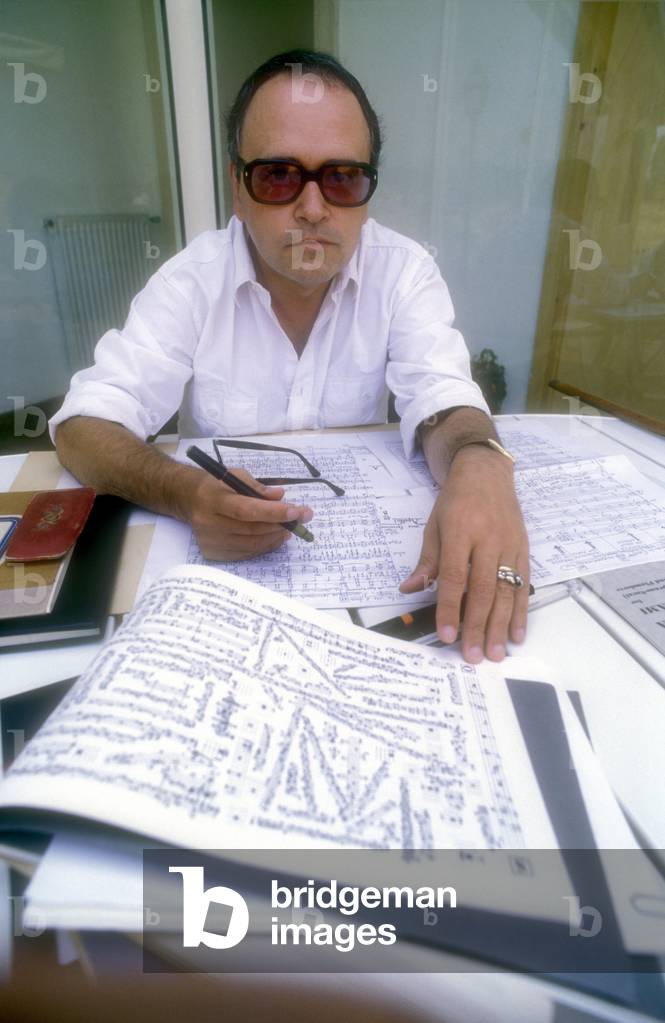
Portrait of the Italian composer Sylvano Bussotti, circa 1980

MME4707998: Portrait of the Italian composer Sylvano Bussotti, circa 1980, Mencarini, Marcello / Bridgeman Images
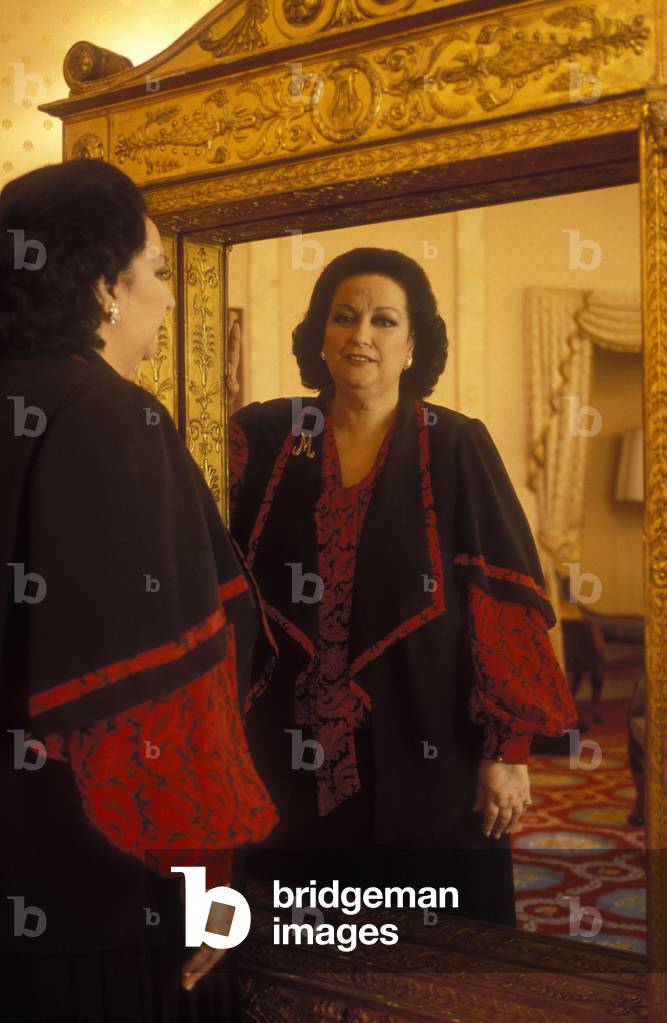
Portrait of the Spanish singer Montserrat Caballe in Rome in 1992.

MME4708090: Portrait of the Spanish singer Montserrat Caballe in Rome in 1992., Mencarini, Marcello / Bridgeman Images

Norman soldiers: archer with chest, bow and arrow, infantryman with spear, shield and armor and infantryman in mesh armor, helm and especially military. Hand-coloured copper engraving, in “Images historiques des costumes des principaux peuples de l'Antiquite et du Middle Ages” by Robert Von Spalart, published in 1796.

FLO4708158: Norman soldiers: archer with chest, bow and arrow, infantryman with spear, shield and armor and infantryman in mesh armor, helm and especially military. Hand-coloured copper engraving, in “Images historiques des costumes des principaux peuples de l'Antiquite et du Middle Ages” by Robert Von Spalart, published in 1796. / Bridgeman Images

Knights fighting on horseback, sword duel during a tournament. Both are armed with their sword and shield, but without a helm, the most dangerous battle in a tournament. Hand-coloured copper engraving, in “Images historiques des costumes des principaux peuples de l'Antiquite et du Middle Ages” by Robert Von Spalart, published in 1796.

FLO4708268: Knights fighting on horseback, sword duel during a tournament. Both are armed with their sword and shield, but without a helm, the most dangerous battle in a tournament. Hand-coloured copper engraving, in “Images historiques des costumes des principaux peuples de l'Antiquite et du Middle Ages” by Robert Von Spalart, published in 1796. / Bridgeman Images

Knight of the Order of Aviz, in ceremonial dress. A Portuguese military religious order, after the conquest of Aviz (Portugal), a military fortress was built and became the mother house of the order, who first called themselves the Knights of St. Benedict d'Aviz until they adopted the Benedictine rule in 1162. They were subject to the rules and the Cistercian costume, wearing a white coat and a green lysee flower cross, although this illustration clearly shows a red Cistercian cross on the chest of his coat. Hand-coloured copper engraving, in “Images historiques des costumes des principaux peuples de l'Antiquite et du Middle Ages” by Robert Von Spalart, published in 1796.

FLO4708503: Knight of the Order of Aviz, in ceremonial dress. A Portuguese military religious order, after the conquest of Aviz (Portugal), a military fortress was built and became the mother house of the order, who first called themselves the Knights of St. Benedict d'Aviz until they adopted the Benedictine rule in 1162. They were subject to the rules and the Cistercian costume, wearing a white coat and a green lysee flower cross, although this illustration clearly shows a red Cistercian cross on the chest of his coat. Hand-coloured copper engraving, in “Images historiques des costumes des principaux peuples de l'Antiquite et du Middle Ages” by Robert Von Spalart, published in 1796. / Bridgeman Images

Knight of the Order of St. Catherine and Knight of the Order of the Sword. The Order of St. Catherine was founded by the Christian princes to protect the pelerins of Mount Sinai, who came to venerate the relics of St. Catherine, but also to protect them from desecration from the 11th to the 15th centuries. However, according to the Catholic encyclopedia, the knights of St. Catherine were not an order, nor secular, nor regal. The order of the Sword, or the sword-bearers, was a military order in order to prepare the crusade against the Prussian peers in the 13th century (uncarried out crusade).

FLO4708528: Knight of the Order of St. Catherine and Knight of the Order of the Sword. The Order of St. Catherine was founded by the Christian princes to protect the pelerins of Mount Sinai, who came to venerate the relics of St. Catherine, but also to protect them from desecration from the 11th to the 15th centuries. However, according to the Catholic encyclopedia, the knights of St. Catherine were not an order, nor secular, nor regal. The order of the Sword, or the sword-bearers, was a military order in order to prepare the crusade against the Prussian peers in the 13th century (uncarried out crusade). / Bridgeman Images

Portrait of composer and poet John Cage, hiding his eyes, in 1982.

MME4708113: Portrait of composer and poet John Cage, hiding his eyes, in 1982., Mencarini, Marcello / Bridgeman Images
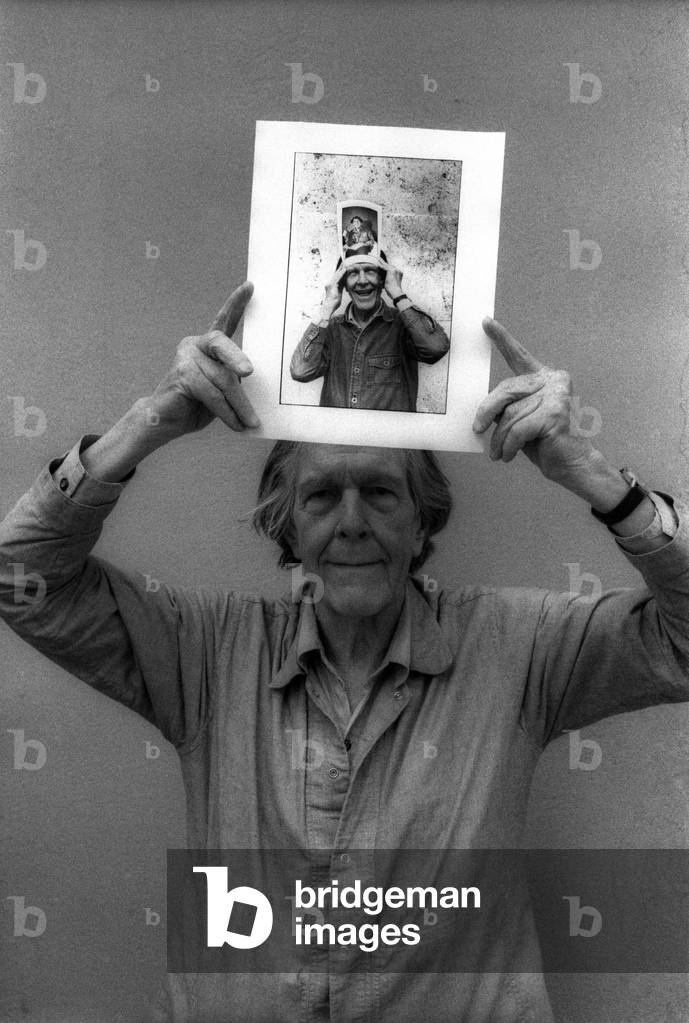
Portrait of composer and poet John Cage, holding a photo of him from 1983 representing him holding a photo of him in 1982, by abime, Perugia, Italy. 1992.

MME4708159: Portrait of composer and poet John Cage, holding a photo of him from 1983 representing him holding a photo of him in 1982, by abime, Perugia, Italy. 1992., Mencarini, Marcello / Bridgeman Images

Knight of the Order of Constantine. The Order was first founded in 343 BC by the Roman Emperor Constantine, but received its official rules and statutes in 1190 by Isaac Ange Comnene (1155-1204), Emperor of Constantinople, the Order was also known as the Order of the Angelics, the Order of the Dory Knights or the Constantine militia of Saint George. It consisted of three rows for its members: Grand Cross, knight and brother serving; The insignia of the order is a red cross made of four flowers of lilies, surrounded by a golden border. Hand-coloured copper engraving, in “Images historiques des costumes des principaux peuples de l'Antiquite et du Middle Ages” by Robert Von Spalart, published in 1796.

FLO4708525: Knight of the Order of Constantine. The Order was first founded in 343 BC by the Roman Emperor Constantine, but received its official rules and statutes in 1190 by Isaac Ange Comnene (1155-1204), Emperor of Constantinople, the Order was also known as the Order of the Angelics, the Order of the Dory Knights or the Constantine militia of Saint George. It consisted of three rows for its members: Grand Cross, knight and brother serving; The insignia of the order is a red cross made of four flowers of lilies, surrounded by a golden border. Hand-coloured copper engraving, in “Images historiques des costumes des principaux peuples de l'Antiquite et du Middle Ages” by Robert Von Spalart, published in 1796. / Bridgeman Images

Norman infantry: infantry with spear and shield, saddler and two crossbaletriers carrying armor or chest. Hand-coloured copper engraving, in “Images historiques des costumes des principaux peuples de l'Antiquite et du Middle Ages” by Robert Von Spalart, published in 1796.

FLO4708168: Norman infantry: infantry with spear and shield, saddler and two crossbaletriers carrying armor or chest. Hand-coloured copper engraving, in “Images historiques des costumes des principaux peuples de l'Antiquite et du Middle Ages” by Robert Von Spalart, published in 1796. / Bridgeman Images

Portrait of composer and poet John Cage, 1982.

MME4708195: Portrait of composer and poet John Cage, 1982., Mencarini, Marcello / Bridgeman Images

Cannes Film Festival, panoramic view of the Carlton Hotel. 1991

MME4708509: Cannes Film Festival, panoramic view of the Carlton Hotel. 1991, Mencarini, Marcello / Bridgeman Images

Portrait of American comedian and director John Cassavetes in 1984.

MME4708564: Portrait of American comedian and director John Cassavetes in 1984., Mencarini, Marcello / Bridgeman Images

Portrait of the writer Carlo Cassola in 1979.

MME4708591: Portrait of the writer Carlo Cassola in 1979., Mencarini, Marcello / Bridgeman Images

Portrait of American comedian and director John Cassavetes in 1984.

MME4708586: Portrait of American comedian and director John Cassavetes in 1984., Mencarini, Marcello / Bridgeman Images

Panoramic view of the forum of Trajan (foro traiano), Rome Italy

MME4708899: Panoramic view of the forum of Trajan (foro traiano), Rome Italy, Mencarini, Marcello / Bridgeman Images

Portrait of the French realizer Claude Chabrol in 1988.

MME4708656: Portrait of the French realizer Claude Chabrol in 1988., Mencarini, Marcello / Bridgeman Images

Panoramic view of the column of Marc Aurele (Marc-Aurele or Marco Aurelio) on Piazza Colonna, Rome

MME4709052: Panoramic view of the column of Marc Aurele (Marc-Aurele or Marco Aurelio) on Piazza Colonna, Rome, Mencarini, Marcello / Bridgeman Images

Diamond combs and head ornaments, wings, sword hilts, etc. Chromolithograph from Edwin Street's Gems Catalog, Bond Street, London, circa 1895.

FLO4709279: Diamond combs and head ornaments, wings, sword hilts, etc. Chromolithograph from Edwin Street's Gems Catalog, Bond Street, London, circa 1895. / Bridgeman Images

Fashionable men in three-piece suits with wide lapels exchanging business cards. Color printed fashion plate by W. A. Richards from the winter catalogue of Superchic, London, 1929.

FLO4709749: Fashionable men in three-piece suits with wide lapels exchanging business cards. Color printed fashion plate by W. A. Richards from the winter catalogue of Superchic, London, 1929. / Bridgeman Images
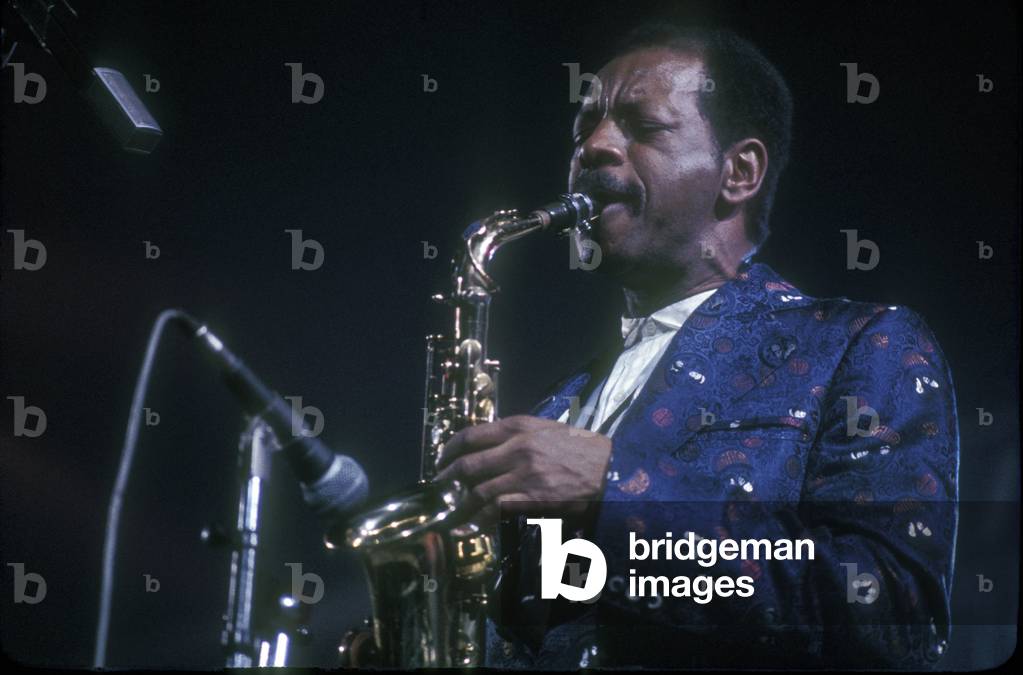
Jazz saxophonist Ornette Coleman on stage in 1980.

MME4709268: Jazz saxophonist Ornette Coleman on stage in 1980., Mencarini, Marcello / Bridgeman Images
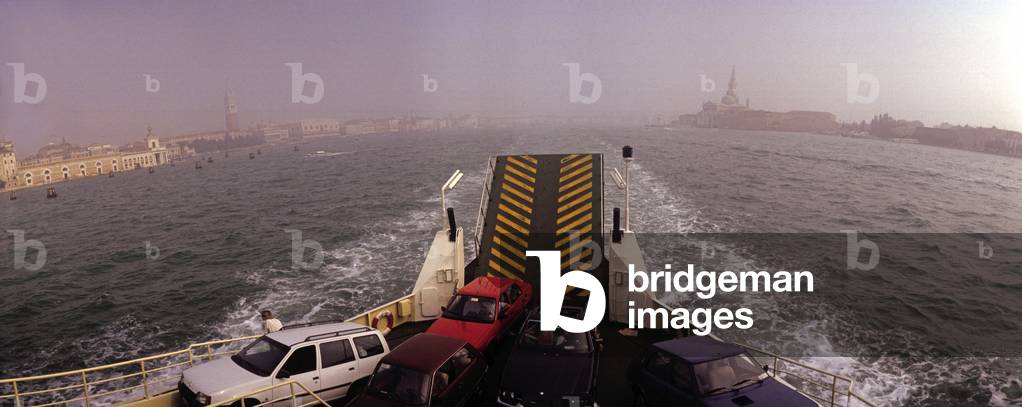
View of the basin of St. Mark (San Marco) from the traghetto (ferry), Venice. Italy Panoramic Photo

MME4709186: View of the basin of St. Mark (San Marco) from the traghetto (ferry), Venice. Italy Panoramic Photo, Mencarini, Marcello / Bridgeman Images

Gentlemen's watch in 18-carat gold case. Chromolithograph from Edwin Street's Gems Catalog, Bond Street, London, circa 1895.

FLO4709374: Gentlemen's watch in 18-carat gold case. Chromolithograph from Edwin Street's Gems Catalog, Bond Street, London, circa 1895. / Bridgeman Images

Thirty guinea jewels: brooch, pendant, ring, and bracelet in diamond, opal, pearl and sapphire. Chromolithograph from Edwin Street's Gems Catalog, Bond Street, London, circa 1895.

FLO4709560: Thirty guinea jewels: brooch, pendant, ring, and bracelet in diamond, opal, pearl and sapphire. Chromolithograph from Edwin Street's Gems Catalog, Bond Street, London, circa 1895. / Bridgeman Images

Portrait of American comedian Matt Dillon, 1984

MME4709654: Portrait of American comedian Matt Dillon, 1984, Mencarini, Marcello / Bridgeman Images

Panoramic view of the archeological site of Ostia antica (Ostia), ancient port of ancient Rome. Italy

MME4708744: Panoramic view of the archeological site of Ostia antica (Ostia), ancient port of ancient Rome. Italy, Mencarini, Marcello / Bridgeman Images

Ehsan Abdollahi, Edinburgh International book festival, 2018 (photo)

KEI4428787: Ehsan Abdollahi, Edinburgh International book festival, 2018 (photo), Keightley, Pauline / Bridgeman Images

Andrew Wilson, Edinburgh International book festival, 2018 (photo)

KEI4428779: Andrew Wilson, Edinburgh International book festival, 2018 (photo), Keightley, Pauline / Bridgeman Images

Ehsan Abdollahi, Edinburgh International book festival, 2018 (photo)

KEI4428788: Ehsan Abdollahi, Edinburgh International book festival, 2018 (photo), Keightley, Pauline / Bridgeman Images


Back to top