2491557 Search Results

FLO4644101: Basrelief gravestone of Susannna Albert, died 1565, wife of Adam Albert, counsel and town clerk. Chromolithograph from Hefner-Alteneck's Costumes, Artworks and Appliances from the Middle Ages to the 17th Century, Frankfurt, 1889. Illustration by Dr. Jakob Heinrich von Hefner-Alteneck, lithographed by C. Regnier. Dr. Hefner-Alteneck (1811-1903) was a German museum curator, archaeologist, art historian, illustrator and etcher. / Bridgeman Images

LRI4644219: Old Neapolitan metiers: a pizza seller - 19th century watercolour - Naples Museo Nazionale di San Martino, Italian School, (19th century) / Bridgeman Images

LRI4644319: Petity Metier Neapolitan: a travelling seller of tablecloth and linen - (Old trade: tablecloth and linen seller) Painting by Pelliccia 19th century Museo Nazionale di San Martino Naples, Pelliccia, (19th century) / Bridgeman Images

FLO4644359: Three women in Venetian dress from the Harlequinade, or Italian comic theatre. From a mural in the Fool's Staircase in Klaussnitz Castle, 1570-1580. Chromolithograph from Hefner-Alteneck's Costumes, Artworks and Appliances from the Middle Ages to the 17th Century, Frankfurt, 1889. Illustration by Dr. Jakob Heinrich von Hefner-Alteneck, lithographed by C. Regnier. Dr. Hefner-Alteneck (1811-1903) was a German museum curator, archaeologist, art historian, illustrator and etcher. / Bridgeman Images

FLO4644472: Champaca (Michelia champaca), a variety of magnolia with orange fruit clusters, native to Southeast Asia. Cultivates for its white and yellow flowers with a subtle fragrance, uses in perfumery. Appoints after the Florentine botanist (Italy) Pietro Antonio Michele (1679-1737). Eau forte en couleurs, drawing by P.Maioli (or Majoli), engraving by Giuseppe Bianchi, published in 1786, in Decade of Curious and Elegant Trees and Plants (new edition), by John Hill. / Bridgeman Images

FLO4644541: Pink moss, Rosa muscosa. Handcoloured engraving by James Andrews for John Stevens Henslow's “Bouquet des Souvenirs,” London, 1840. Henslow (1796 ~ 1861) was educated at Cambridge University, and returned to teach there, becoming Chair of Mineralogy in 1822 and Chair of Botany in 1825. His lectures were attended by a young Charles Darwin. James Andrews was a talented botanical artist who squandered his talents on gift books. / Bridgeman Images

FLO4644611: Ocean sunfish, Moon fish or Mole, Mola mola. Handcoloured copperplate stipple engraving from Jussieu's “” Dictionary of Natural Sciences”” 1816-1830. The volumes on fish and reptiles were edited by Hippolyte Cloquet, natural historian and doctor of medicine. Illustration by J.G. Pretre, engraved by Lemaire, directed by Turpin, and published by F. G. Levrault. / Bridgeman Images

FLO4644719: Eastern diamondback rattlesnake, rattlesnake, Crotalus adamanteus. Poisonous snake. Handcoloured copperplate stipple engraving from Jussieu's “” Dictionary of Natural Sciences”” 1816-1830. The volumes on fish and reptiles were edited by Hippolyte Cloquet, natural historian and doctor of medicine. Illustration by J.G. Pretre, engraved by Turcaty, directed by Turpin, and published by F. G. Levrault. / Bridgeman Images

FLO4644947: Longnose butterflyfish, Chetodon vagabond, Chaetodon vagabundus. Handcoloured copperplate stipple engraving from Jussieu's “” Dictionary of Natural Sciences”” 1816-1830. The volumes on fish and reptiles were edited by Hippolyte Cloquet, natural historian and doctor of medicine. Illustration by J.G. Pretre, engraved by Prudhon, directed by Turpin, and published by F. G. Levrault. / Bridgeman Images

FLO4644953: Caribbean moonfish, Brown's Vomer, Selene brownii, and doctorfish, Acanthurus surgical, Acanthur surgeon. Handcoloured copperplate stipple engraving from Jussieu's “” Dictionary of Natural Sciences”” 1816-1830. The volumes on fish and reptiles were edited by Hippolyte Cloquet, natural historian and doctor of medicine. Illustration by J.G. Pretre, engraved by Boquet, directed by Turpin, and published by F. G. Levrault. / Bridgeman Images

FLO4645001: Squirrelfish, Holocentre sogo, Holocentrus adscensionis, and ruffe, Gremille, perch goujonniere, Gymnocephalus cernuus. Handcoloured copperplate stipple engraving from Jussieu's “” Dictionary of Natural Sciences”” 1816-1830. The volumes on fish and reptiles were edited by Hippolyte Cloquet, natural historian and doctor of medicine. Illustration by J.G. Pretre, engraved by Joyeau, directed by Turpin, and published by F. G. Lévrault. / Bridgeman Images

FLO4576662: Electric eel, Electrophorus electricus 1, eyed electric ray, Torpedo torpedo 2, Brazilian batfish, Ogcocephalus vespertilio 3, longhorn cowfish, Lactoria cornuta 4, and sargassum fish Histrio histrio 5. Handcoloured copperplate engraving from Friedrich Johann Bertuch's Bilderbuch fur Kinder (Picture Book for Children), Weimar, 1792. / Bridgeman Images

FLO4576707: Thistle pulp cells magnified under a microscope, 18th century. Normal size A, and enlarged B to show a ring of sexagonal cells, surrounded by fibres to bring sap and nutrients. Handcoloured copperplate engraving from Bertuch's “” Bilderbuch fur Kinder”” (Picture Book for Children), Weimar, 1807. Friedrich Johann Bertuch (1747-1822) was a German publisher and man of arts most famous for his 12-volume encyclopedia for children illustrated with 1,200 engraved plates on natural history, science, costume, mythology, etc., published from 1790-1830. / Bridgeman Images

LRI4576750: Altarolo del Bargello: adoration of the Magi - (diptych of Bargello, Adoration of the Magi) Anonymous painting of the French school of the 14th century (French school, XIV century) Florence, Museo Nazionale del Bargello, French School, (14th century) / Bridgeman Images

FLO4576758: Fynbos aloe, Aloe succotrina, native to South Africa. Taken from Candolle and Redoute, “Plantarum Historia Succulentarum.”” Handcoloured copperplate engraving from Bertuch's “” Bilderbuch fur Kinder”” (Picture Book for Children), Weimar, 1807. Friedrich Johann Bertuch (1747-1822) was a German publisher and man of arts most famous for his 12-volume encyclopedia for children illustrated with 1,200 engraved plates on natural history, science, costume, mythology, etc., published from 1790-1830. / Bridgeman Images

FLO4576780: Shepherd of ancient Morea or Peloponnese, playing a pipe near his goats 1, and troubadour of modern Greece playing a fight-like instrument near a fountain for a pipe-smoking audience. Handcoloured copperplate engraving from Bertuch's “” Bilderbuch fur Kinder”” (Picture Book for Children), Weimar, 1807. Friedrich Johann Bertuch (1747-1822) was a German publisher and man of arts most famous for his 12-volume encyclopedia for children illustrated with 1,200 engraved plates on natural history, science, costume, mythology, etc., published from 1790-1830. / Bridgeman Images

LRI4576998: Saint John the Baptist (Painting, 16th century), Sarto, Andrea del (1486-1530) / Bridgeman Images

FLO4577045: Cork oak tree (chene liege), Quercus suber 1, and terebinth or turpentine tree (pistachier terebinthe), Pistacia terebinthus 2. Handcoloured copperplate engraving from Friedrich Johann Bertuch's Bilderbuch fur Kinder (Picture Book for Children), Weimar, 1792. / Bridgeman Images

PIX4573686: Artist's view of the exoplanet Gliese 581c. - Artist's view of the exoplanet Gliese 581c. Gliese 581c, with a radius of 1.5 times that of the Earth, is the first exoplanet gathering the necessary elements to imagine the existence of a possible extra-terrestrial life. With a mass of 5 times that of the Earth, an average temperature between 0 and 40* C, this exoplanet rotates around its star in just thirteen days and is located 14 times closer to its star than the Earth is to the Sun. But this star, Gliese 581, is a red dwarf, a star much smaller and less luminous than the Sun, so the position of this exoplanet is ideal for allowing the presence of water in liquid form on its surface, Dixon, Don (b.1951) / Bridgeman Images

PIX4573765: Planets and galaxies - Artist's view / Bridgeman Images

LRI4573925: Portrait of a lady - oil on panel, 1471, Pollaiuolo, Antonio (1432/3-98) / Bridgeman Images

PIX4574018: A supergeant red star will swallow a planet - Vue d'artist / Bridgeman Images

LRI4574043: Portrait of a young man probably Alessandro de Medicis - oil on panel, 1525-152, Pontormo, Jacopo (1494-1557) / Bridgeman Images

FLO4574049: American sweetgum tree, Liquidambar styraciflua 1, and putty tree, Pistacia lentiscus 2. Handcoloured copperplate engraving from Friedrich Johann Bertuch's Bilderbuch fur Kinder (Picture Book for Children), Weimar, 1795. / Bridgeman Images

FLO4576644: Nightblooming cereus - vanilla cactus or night queen - Selenicereus grandiflorus (Cactus grandiflora). Engraved by C. Ermer after Candolle and Redoute, “Plantarum Historia Succulentarum.” Handcoloured copperplate engraving from Bertuch's “” Bilderbuch fur Kinder”” (Picture Book for Children), Weimar, 1807. Friedrich Johann Bertuch (1747-1822) was a German publisher and man of arts most famous for his 12-volume encyclopedia for children illustrated with 1,200 engraved plates on natural history, science, costume, mythology, etc., published from 1790-1830. / Bridgeman Images

FLO4576743: View of a street with canal, horse-drawn carriages, Europeans and natives in Batavia (Jakarta), on the island of Java, Indonesia, circa 1800, when it was a Dutch colony. (View of a street along a canal in Java, under Dutch colonial rule). Handcoloured copperplate engraving from Bertuch's “” Bilderbuch fur Kinder”” (Picture Book for Children), Weimar, 1807. Friedrich Johann Bertuch (1747-1822) was a German publisher and man of arts most famous for his 12-volume encyclopedia for children illustrated with 1,200 engraved plates on natural history, science, costume, mythology, etc., published from 1790-1830. / Bridgeman Images

FLO4576969: Equestrian statue of Peter the Great in St. Petersburg (celebration of the inauguration of the equestrian statue of Peter the Great in Saint Petersburg, 1782 and technique of transporting the huge granite rock on a carpet of metal beads). The unveiling ceremony in front of the Empress Catherine II in 1782, and the method of hauling the huge granite stone on a belt of metal balls. Handcoloured copperplate engraving from Bertuch's “” Bilderbuch fur Kinder”” (Picture Book for Children), Weimar, 1807. Friedrich Johann Bertuch (1747-1822) was a German publisher and man of arts most famous for his 12-volume encyclopedia for children illustrated with 1,200 engraved plates on natural history, science, costume, mythology, etc., published from 1790-1830. / Bridgeman Images

FLO4577120: Anil or wild indigo (Indigo sauvage), Indigofera suffruticosa 1, and dyer's madder (garance des dyers), Rubia tinctorum 2. Handcoloured copperplate engraving from Friedrich Johann Bertuch's Bilderbuch fur Kinder (Picture Book for Children), Weimar, 1792. / Bridgeman Images

FLO4577450: Tamarind (Tamarinier), Tamarindus indica, and pistachio nut (Pistachier), Pistacia vera. Handcoloured copperplate engraving from Friedrich Johann Bertuch's Bilderbuch fur Kinder (Picture Book for Children), Weimar, 1792. / Bridgeman Images

FLO4577490: Rosa persica (Rosa simplicifolia). Handcoloured lithograph by Lecouturier after a botanical illustration by Borromee from Pierre Boitard's Rose-Lover's Complete Manual, Roret, Paris 1836. / Bridgeman Images

FLO4577526: Pink bracteate, Rose bracteolee, Rosa bracteata. Handcoloured lithograph by Lecouturier after a botanical illustration by Borromee from Pierre Boitard's Rose-Lover's Complete Manual, Roret, Paris 1836. / Bridgeman Images
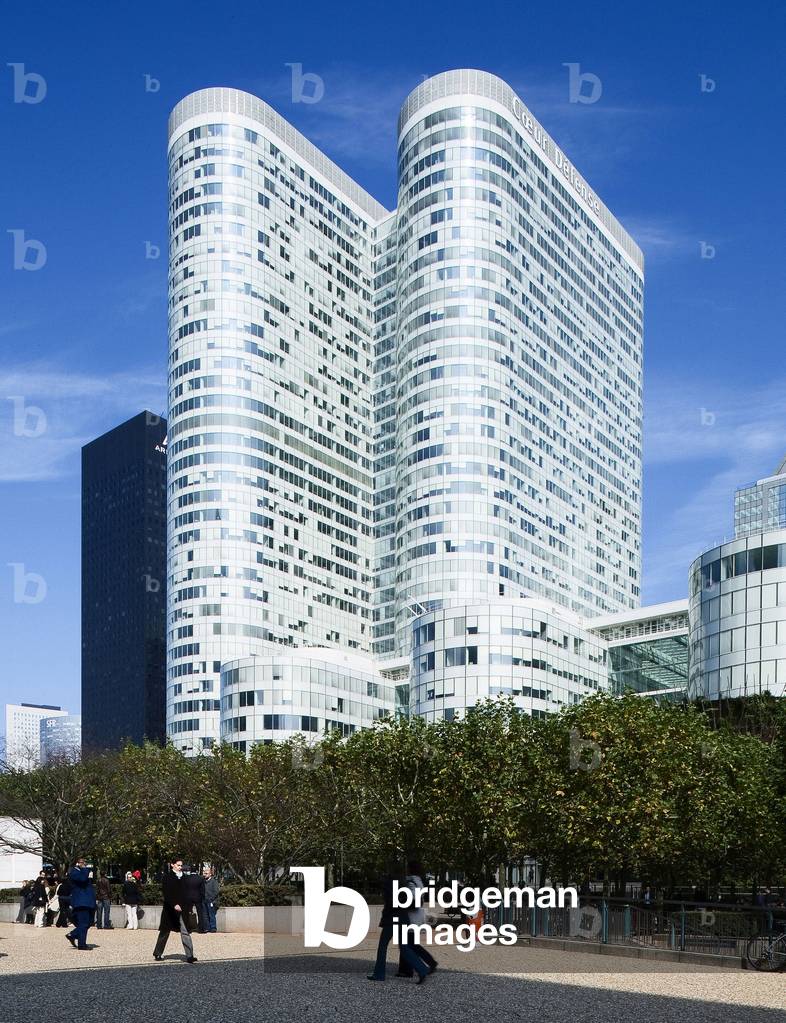
LBY4574165: the Towers in la Defense, photo taken in 2008 in Paris (photo), Viguier, Jean-Paul (b.1946) / Bridgeman Images

FLO4574232: Lion-tailed macaque, Macaca silenus endangered 1, greater spot-nosed monkey, Cercopithecus nictitans 2, red-shanked douc, Pythathrix nemaeus endangered 3, white-faced saki, Pithecia pithecia 4, and roloway monkey, Cercopithecus roloway endangered 5. Handcoloured copperplate engraving from Bertuch's “” Bilderbuch fur Kinder”” (Picture Book for Children), Weimar, 1798. Friedrich Johann Bertuch (1747-1822) was a German publisher and man of arts most famous for his 12-volume encyclopedia for children illustrated with 1,200 engraved plates on natural history, science, costume, mythology, etc., published from 1790-1830. / Bridgeman Images

OSN4574284: Geometric tile design, 2016 (digital), Osborne, Neale / Bridgeman Images

FLO4574479: Wolfhound 1, Siberian dog 2, Icelandic sheepdog 3, dalmatian 4, water dog 5, and greyhound 6. Handcoloured copperplate engraving from Bertuch's “” Bilderbuch fur Kinder”” (Picture Book for Children), Weimar, 1798. Friedrich Johann Bertuch (1747-1822) was a German publisher and man of arts most famous for his 12-volume encyclopedia for children illustrated with 1,200 engraved plates on natural history, science, costume, mythology, etc., published from 1790-1830. / Bridgeman Images

FLO4574500: Zedoary or white turmeric, Turmeric zedoaria 1, flower a, leaf b, and grains of paradise, Aframomum melegueta 2. Handcoloured copperplate engraving from Bertuch's “” Bilderbuch fur Kinder”” (Picture Book for Children), Weimar, 1798. Friedrich Johann Bertuch (1747-1822) was a German publisher and man of arts most famous for his 12-volume encyclopedia for children illustrated with 1,200 engraved plates on natural history, science, costume, mythology, etc., published from 1790-1830. / Bridgeman Images
