2491557 Search Results

FLO4641633: Hepatic or three-lobed hepatic anemone - Lithography by F. Guimpel, extracted from medical botany by Friedrich Gottlob Haynes (1763-1832), Berlin, 1822 - Common liverwort, Anemone hepatica - Handcoloured copperplate by F. Guimpel from Dr. F. G. Hayne's Medical Botany, Berlin, 1822 / Bridgeman Images

PIX4641653: JF Kennedy congratulates A.Shepard, 1961 (b/w photo) / Bridgeman Images

FLO4641725: Anemone sylvie ou anemone des bois - Lithograph by F. Guimpel, extracted from botanique medicale by Friedrich Gottlob Haynes (1763-1832), Berlin, 1822 - Wood anemone, Anemone nemorosa - Handcoloured copperplate by F. Guimpel from Dr. F. G. Hayne's Medical Botany, Berlin, 1822 / Bridgeman Images

FLO4641776: Plantain pucier - Lithograph by F. Guimpel, extracted from botanical medicine by Friedrich Gottlob Haynes (1763-1832), Berlin, 1822 - Black psyllium, Plantago afra - Handcoloured copperplate by F. Guimpel from Dr. F. G. Hayne's Medical Botany, Berlin, 1822 / Bridgeman Images

FLO4641795: Water Pepper Renee - Lithograph by F. Guimpel, extracted from medical botanical by Friedrich Gottlob Haynes (1763-1832), Berlin, 1822 - Water pepper, Persicaria hydropiper - Handcoloured copperplate by F. Guimpel from Dr. F. G. Hayne's Medical Botany, Berlin, 1822 / Bridgeman Images

FLO4642067: Lithography by F. Guimpel, extracted from medical botany by Friedrich Gottlob Haynes (1763-1832), Berlin, 1822 - Rough chervil, Chaemophyllum temulum - Handcoloured copperplate by F. Guimpel from Dr. F. G. Hayne's Medical Botany, Berlin, 1822 / Bridgeman Images

FLO4642088: Aquatic Hail or Northern Hemlock - Lithography by F. Guimpel, extracted from medical botany by Friedrich Gottlob Haynes (1763-1832), Berlin, 1822 - Cowbane or northern water hemlock, Cicuta virosa - Handcoloured copperplate by F. Guimpel from Dr. F. G. Hayne's Medical Botany, Berlin, 1822 / Bridgeman Images

FLO4642157: Purgative flax - Lithograph by F. Guimpel, extracted from medical botany by Friedrich Gottlob Haynes (1763-1832), Berlin, 1822 - Fairy flax, Linum cathartium - Handcoloured copperplate by F. Guimpel from Dr. F. G. Hayne's Medical Botany, Berlin, 1822 / Bridgeman Images

FLO4642371: Dairy maraicher - Lithography by F. Guimpel, extracted from medical botany by Friedrich Gottlob Haynes (1763-1832), Berlin, 1822 - Sonchus oleraceus - Handcoloured copperplate by F. Guimpel from Dr. F. G. Hayne's Medical Botany, Berlin, 1822 / Bridgeman Images

FLO4642790: Jujubier - Lithograph by F. Guimpel, extracted from botanical medicine by Friedrich Gottlob Haynes (1763-1832), Berlin, 1822 - Jujube or Chinese date, Zizyphus vulgaris - Handcoloured copperplate by F. Guimpel from Dr. F. G. Hayne's Medical Botany, Berlin, 1822 / Bridgeman Images
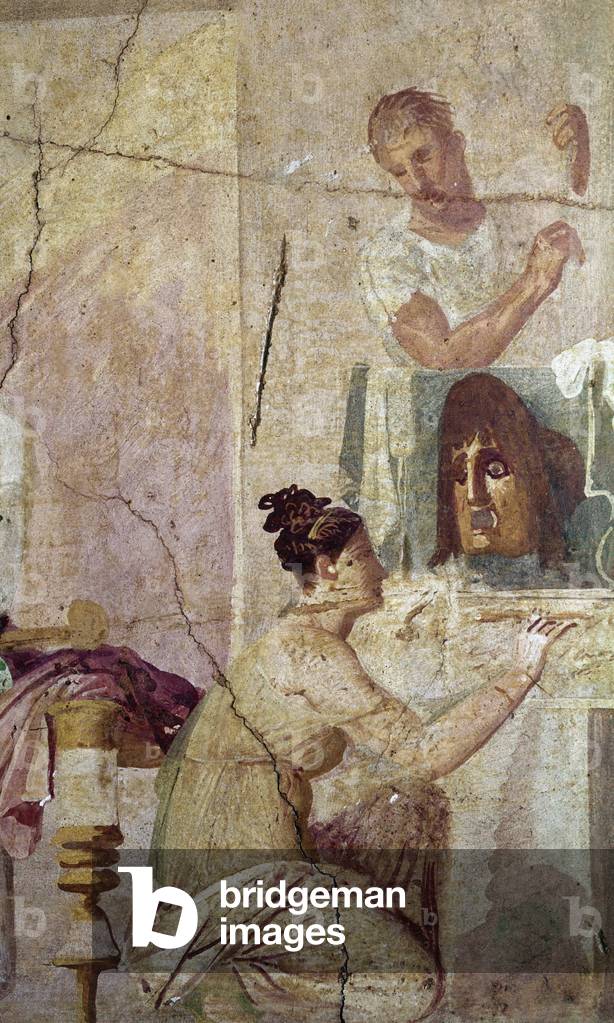
LRI4642850: Victory of a tragic poet, detail of an actress (fresco, 1st century AD), Roman, (1st century AD) / Bridgeman Images

FLO4642855: Flax grows. Coloured copper engraving, in Botanique Medicinale (published in Berlin, Germany, 1822) by Doctor Friedrich Gottlob Haynes (1763-1832), German botanist and pharmacist. Common flax or linseed, Linum usitatissimum. Handcoloured copperplate engraving from Dr. Friedrich Gottlob Hayne's “” Getreue Darstellung und Beschreibung der in der Arzneykunde Gebrauchilchen Gewachse”” (Medical Botany), Berlin, 1822. Hayne (1763-1832) was a German botanist, apothecary and, from 1814, professor of pharmaceutical botany at Berlin University. / Bridgeman Images

LRI4642906: Cupids playing with a rope (fresco, 1st century AD), Roman, (1st century AD) / Bridgeman Images

FLO4642988: Hemp plant grows. Coloured copper engraving, in Botanique Medicinale (published in Berlin, Germany, 1822) by Doctor Friedrich Gottlob Haynes (1763-1832), German botanist and pharmacist. Cannabis plant, Cannabis sativa. Handcoloured copperplate engraving from Dr. Friedrich Gottlob Hayne's “” Getreue Darstellung und Beschreibung der in der Arzneykunde Gebrauchilchen Gewachse”” (Medical Botany), Berlin, 1822. Hayne (1763-1832) was a German botanist, apothecary and, from 1814, professor of pharmaceutical botany at Berlin University. / Bridgeman Images

FLO4643003: Donkey cucumber. Coloured copper engraving, in Botanique Medicinale (published in Berlin, Germany, 1822) by Doctor Friedrich Gottlob Haynes (1763-1832), German botanist and pharmacist. Squirting cucumber, Mormodica elaterium, Ecballium elaterium. Handcoloured copperplate engraving from Dr. Friedrich Gottlob Hayne's “” Getreue Darstellung und Beschreibung der in der Arzneykunde Gebrauchilchen Gewachse”” (Medical Botany), Berlin, 1822. Hayne (1763-1832) was a German botanist, apothecary and, from 1814, professor of pharmaceutical botany at Berlin University. / Bridgeman Images

FLO4643085: Golden or Chinese pheasant, Chrysolophus pictus, male. (Painted pheasant, Phasianus pictus) Handcoloured copperplate engraving of an illustration by William Hayes from Portraits of Rare and Curious Birds from the Menagery of Osterly Park, London: Bulmer, 1794., Hayes, William (1735-1802) / Bridgeman Images

FLO4643223: Common crane, Grus grus. (Ardea grus) Handcoloured copperplate engraving of an illustration by William Hayes from Portraits of Rare and Curious Birds from the Menagery of Osterly Park., Hayes, William (1735-1802) / Bridgeman Images

FLO4638252: Sea squill, Drimia maritima (Scilla maritima). Handcoloured lithograph by Charlotte Caroline Sowerby from Edward Hamilton's Flora Homeopathica, Bailliere, London, 1852. / Bridgeman Images

FLO4638257: Seneca snakeroot, senega snakeroot, rattlesnake root or mountain flax, Polygala senega. Handcoloured lithograph by Charlotte Caroline Sowerby from Edward Hamilton's Flora Homeopathica, Bailliere, London, 1852. / Bridgeman Images

FLO4638282: Lie-bane or stavesacre, Delphinium staphisagria (Delphinium staphysagria). Handcoloured lithograph by Charlotte Caroline Sowerby from Edward Hamilton's Flora Homeopathica, Bailliere, London, 1852. / Bridgeman Images

FLO4638294: Northern white-cedar or eastern arborvitae, Thuja occidentalis. Handcoloured lithograph by Charlotte Caroline Sowerby from Edward Hamilton's Flora Homeopathica, Bailliere, London, 1852. / Bridgeman Images

FLO4638484: Simon George of Quocoute, Cornwall. Married Thomasine Lanyon. Handcoloured copperplate engraving by Francis Bartolozzi after Hans Holbein from Facsimiles of Original Drawings by Hans Holbein, Hamilton, Adams, London, 1884. / Bridgeman Images

LRI4638662: Fat and thin (1899, oil on canvas), Lionne, Enrico della (1865-1921) / Bridgeman Images

FLO4638725: Lime-speck pug, Eupithecia centaureata, on a French marigold, Tagetes patula, and light crimson underwing, Catocala promissa, on an oak branch, Quercus robur. Handcoloured lithograph after an illustration by Moses Harris from “The Aurelian; a Natural History of English Moths and Butterflies,””” new edition edited by J. O. Westwood, published by Henry Bohn, London, 1840. / Bridgeman Images

PIX4638804: Exploration of the Moon-Artist's View - Lunar exploration - Illustratio / Bridgeman Images

FLO4638853: Meadow brown butterfly, Maniola jurtina, wood lady or orange tip, Anthocharis cardamines, and grizzled skipper, Pyrgus alveolus. Handcoloured lithograph after an illustration by Moses Harris from “The Aurelian; a Natural History of English Moths and Butterflies,””” new edition edited by J. O. Westwood, published by Henry Bohn, London, 1840. / Bridgeman Images

FLO4638945: Elephant hawk moth, Deilephila elpenor, white china mark moth, Cataclysta lemnata. An Ichneumon lentorius wasp (i) lays its eggs in the hawkmoth larva which hatches from the chrysalis (k). Handcoloured lithograph after an illustration by Moses Harris from “The Aurelian; a Natural History of English Moths and Butterflies,””” new edition edited by J. O. Westwood, published by Henry Bohn, London, 1840. / Bridgeman Images

FLO4639077: Stegosaur (Stegosaurus armatus), a herbivorous type of dinosaur from the late Jurassic, with its tail herissee of spades and its double row of distinctive bone plates. Colour illustration by Heinrich Harder (1858-1935), in “” Tiere der Urwelt”” (Animals of Prehistory), texts by Wilhelm Bolsche (1861-1939), 1916, Hamburg (Germany). Image from a series of maps published by the Reichardt Cocoa company in 1908. / Bridgeman Images

FLO4639208: Diplodocus is an endless genus of late Jurassic diplodocide sauropod. Colour illustration by Heinrich Harder (1858-1935), in “” Tiere der Urwelt”” (Animals of Prehistory), texts by Wilhelm Bolsche (1861-1939), 1916, Hamburg (Germany). Image from a series of maps published by the Reichardt Cocoa company in 1908. / Bridgeman Images

LRI4639312: Etruscan civilization: decorated column capitals from the tomb Campanari a Vulci, Italy. End 4th, beginning 3rd century BC. Florence, Museo Archeologico, Etruscan, (4th century BC) / Bridgeman Images

FLO4639402: Prortoceras, genus of artiodactyles, endemic to North America, during the periods from Oligocene to Miocene. Chromolithography by Heinrich Garden (1858-1935) (series prehistoric animals of the Reichardt Cocoa Company), originally published in “Animals of the Prehistoric World”, 1916, Hamburg (Germany), text by Wilhelm Bolsche. / Bridgeman Images

FLO4639434: Aepycamelus, kind of camelide, from the Miocene era. Chromolithography by Heinrich Guardian (1858-1935) (series prehistoric animals of the Reichardt Cocoa Company), originally published in “Animals of the Prehistoric World”, 1916, Hamburg (Germany), text by Wilhelm Bolsche. / Bridgeman Images

PIX4639447: Travel lives to Mars -Illustration - Manned mission to Mars - Artist vie / Bridgeman Images

FLO4639498: Palaeotherium, perissodactyl ointment, resembling a primitive horse. Chromolithography by Heinrich Garderer (1858-1935) (series prehistoric animals of the Reichardt Cocoa Company), originally published in “Animals of the Prehistoric World”, 1916, Hamburg (Germany), text by Wilhelm Bolsche. / Bridgeman Images

TEC4639669: The Atomium of Brussels (Belgium) after renovation. Engineer: Andre Waterkeyn, 1958. Photography 17/03/06., Waterkeyn, Andre (1917-2005) / Bridgeman Images

TEC4639710: The Atomium of Brussels (Belgium) after renovation. Engineer: Andre Waterkeyn, 1958. Photography 17/03/06., Waterkeyn, Andre (1917-2005) / Bridgeman Images
