2491551 Search Results

FLO4707060: Young heraut in official dress, described from front and back, wearing a crimson tunic on a skirt and tights of the same colour. The herald played an important role in tournaments and battles, where his knowledge of coats of arms helped identify knights. Hand-coloured copper engraving, in “Images historiques des costumes des principaux peuples de l'Antiquite et du Middle Ages” by Robert Von Spalart, published in 1796. / Bridgeman Images

MME4707147: Portrait of Argentine writer Jorge Luis Borges in Rome, 1981., Mencarini, Marcello / Bridgeman Images

FLO4707247: Title page of volume 2 Book 1 of the series. Title in German, with a vignette: two naked boys decorating a bust with a laurel wreath. Hand-coloured copper engraving, in “Images historiques des costumes des principaux peuples de l'Antiquite et du Middle Ages” by Robert Von Spalart, published in 1796. / Bridgeman Images

FLO4707290: A Saxon king in ceremonial costume. The great mantle is worn only by members of the realm or aristocracy and seems to have and reserve for divine or Celestial beings. Her hair and beard seem to have been dyed blue, as can be seen in paintings from the 8th century onwards. The saxons introduced the royal diademe, a circle of gold carries like a crown. Hand-coloured copper engraving, in “Images historiques des costumes des principaux peuples de l'Antiquite et du Middle Ages” by Robert Von Spalart, published in 1796. / Bridgeman Images

MME4707303: Portrait of Argentine writer Jorge Luis Borges in Rome, 1981., Mencarini, Marcello / Bridgeman Images

FLO4707314: Anglo-Saxon women: wearing tunic, veil, coat and shoe with open toe (36), wearing tunic and veil (37) and wearing a veil of a different colour from that of her coat. The sails were dyed in various colours and woven in more or less precious materials. Hand-coloured copper engraving, in “Images historiques des costumes des principaux peuples de l'Antiquite et du Middle Ages” by Robert Von Spalart, published in 1796. / Bridgeman Images

FLO4707340: First officer of the Royal Guard (41), rider with a spear (42) and Anglo-Saxon infantryman with a spear and a shield (43). Hand-coloured copper engraving, in “Images historiques des costumes des principaux peuples de l'Antiquite et du Middle Ages” by Robert Von Spalart, published in 1796. / Bridgeman Images

FLO4707463: Anglo Saxon king of the 9th century, in a tunic with embroidered edges and hem, with a jete coat on the shoulder and fastener with a clasp. Clothing close to those of Charlemagne (742 or 748-814) and the kings of France. Hand-coloured copper engraving, in “Images historiques des costumes des principaux peuples de l'Antiquite et du Middle Ages” by Robert Von Spalart, published in 1796. / Bridgeman Images

MME4707800: Portrait of jazz saxophonist Anthony Braxton on stage in 1981., Mencarini, Marcello / Bridgeman Images

MME4707939: Portrait of writer William Burroughs around 1980, Mencarini, Marcello / Bridgeman Images
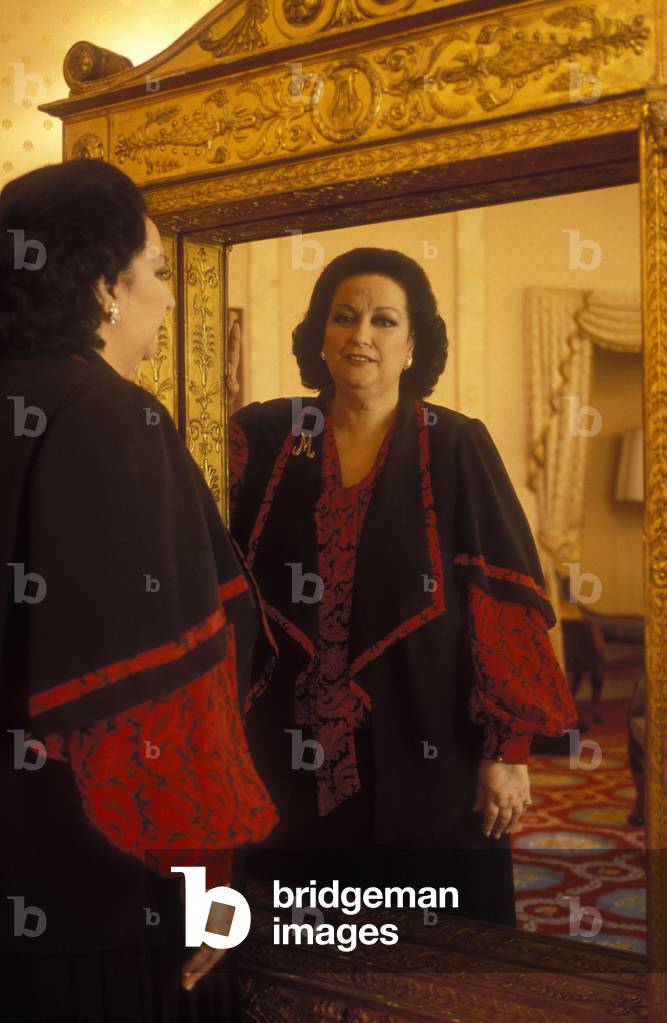
MME4708090: Portrait of the Spanish singer Montserrat Caballe in Rome in 1992., Mencarini, Marcello / Bridgeman Images
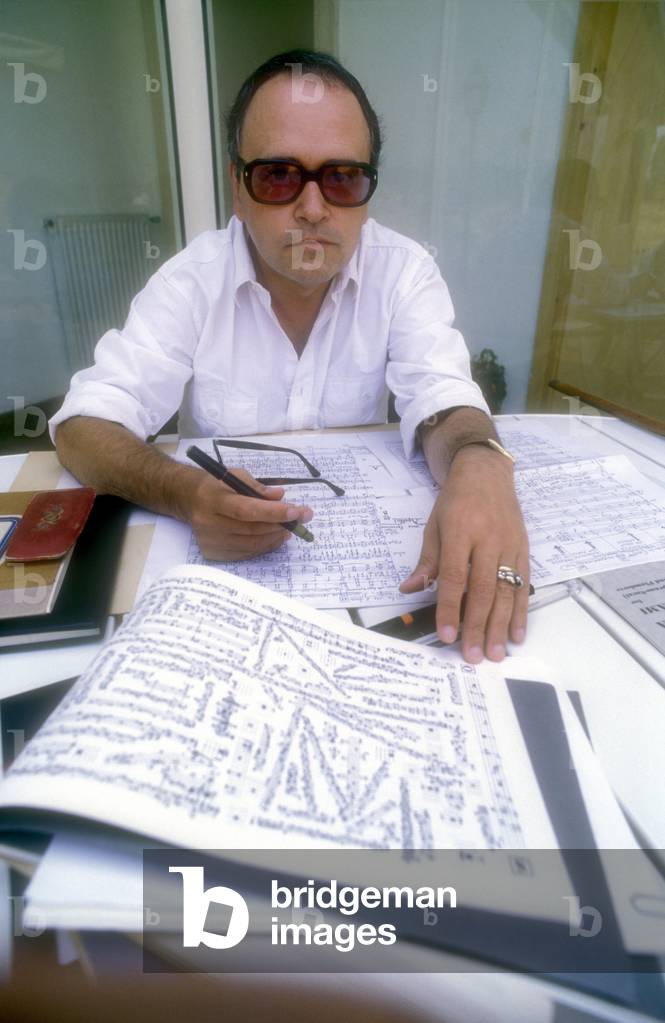
MME4707998: Portrait of the Italian composer Sylvano Bussotti, circa 1980, Mencarini, Marcello / Bridgeman Images

FLO4707951: A Norman queen, dressed in a purple coat on green and carmine dresses, with her head covered with an orange veil and a golden crown. Copper engraving hand-coloured, in “Images historique des costumes des principaux peuples de l'Antiquite et du Middle Ages” by Robert Von Spalart, published in 1796. A Norman queen wearing purple mantle over green and crimson robes, orange veil and golden crown.Handcolored copperplate engraving from Robert von Spalart's “” Historical Picture of the Costumes of the Principal People of Antiquity and of the Middle Ages”” (1796). / Bridgeman Images

MME4708113: Portrait of composer and poet John Cage, hiding his eyes, in 1982., Mencarini, Marcello / Bridgeman Images
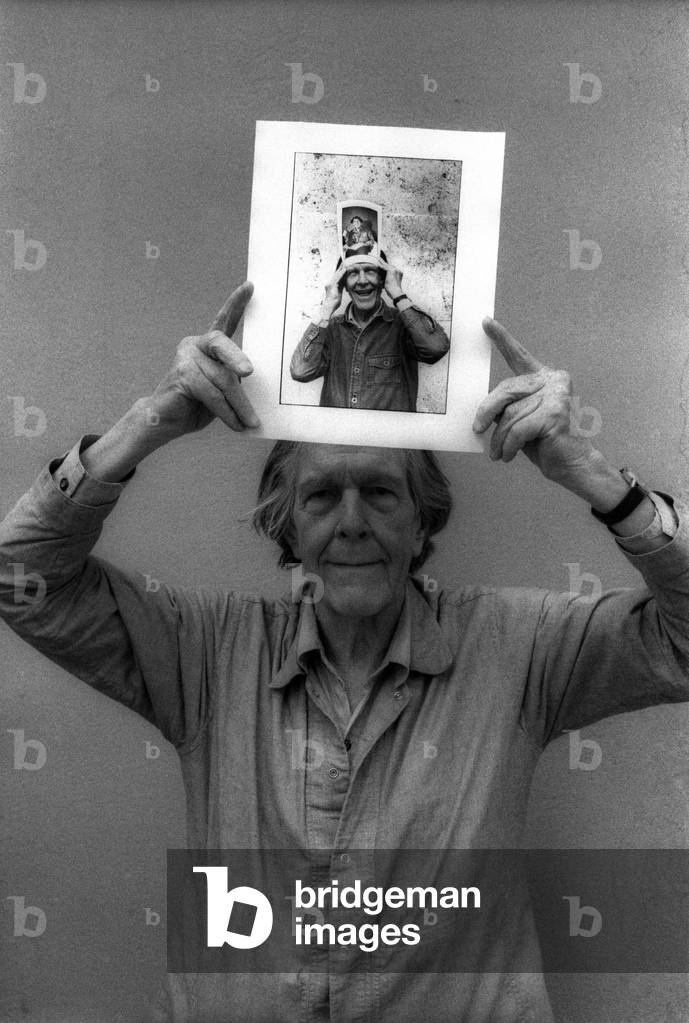
MME4708159: Portrait of composer and poet John Cage, holding a photo of him from 1983 representing him holding a photo of him in 1982, by abime, Perugia, Italy. 1992., Mencarini, Marcello / Bridgeman Images

FLO4708168: Norman infantry: infantry with spear and shield, saddler and two crossbaletriers carrying armor or chest. Hand-coloured copper engraving, in “Images historiques des costumes des principaux peuples de l'Antiquite et du Middle Ages” by Robert Von Spalart, published in 1796. / Bridgeman Images
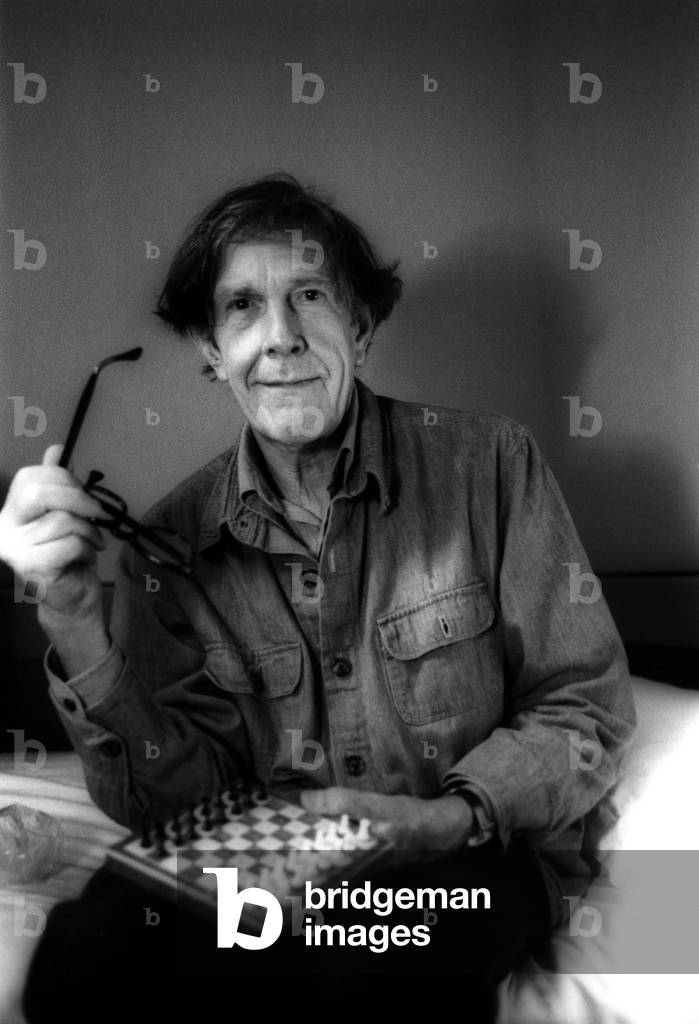
MME4708195: Portrait of composer and poet John Cage, 1982., Mencarini, Marcello / Bridgeman Images

FLO4708525: Knight of the Order of Constantine. The Order was first founded in 343 BC by the Roman Emperor Constantine, but received its official rules and statutes in 1190 by Isaac Ange Comnene (1155-1204), Emperor of Constantinople, the Order was also known as the Order of the Angelics, the Order of the Dory Knights or the Constantine militia of Saint George. It consisted of three rows for its members: Grand Cross, knight and brother serving; The insignia of the order is a red cross made of four flowers of lilies, surrounded by a golden border. Hand-coloured copper engraving, in “Images historiques des costumes des principaux peuples de l'Antiquite et du Middle Ages” by Robert Von Spalart, published in 1796. / Bridgeman Images

MME4708591: Portrait of the writer Carlo Cassola in 1979., Mencarini, Marcello / Bridgeman Images

MME4708656: Portrait of the French realizer Claude Chabrol in 1988., Mencarini, Marcello / Bridgeman Images

MME4708899: Panoramic view of the forum of Trajan (foro traiano), Rome Italy, Mencarini, Marcello / Bridgeman Images

MME4705880: Portrait of American composer David Tudor around 1980., Mencarini, Marcello / Bridgeman Images

FLO4706073: Man of fashion in Venice and other Italian towns, 16th century. He wears a copper balzo headdress. Handcolored copperplate engraving from Robert von Spalart's “” Historical Picture of the Costumes of the Principal People of Antiquity and of the Middle Ages,”” Vienna, 1811. Illustration based on Cesare Vecellio's Habiti Antichi e moderni, Venice, 1590 / Bridgeman Images

FLO4706036: Nobleman of Bohemia, 1500s and 1600s. Handcolored copperplate engraving from Robert von Spalart's “” Historical Picture of the Costumes of the Principal People of Antiquity and of the Middle Ages,”” Vienna, 1811. Illustration based on Cesare Vecellio's Habiti Antichi e moderni, Venice, 1590 / Bridgeman Images

MME4706175: French pianist of Bulgarian origin Alexis Weissenberg in concert., Mencarini, Marcello / Bridgeman Images

FLO4706436: Nobleman of England, 1577. He wears a black velvet coat lined with fur, and a velvet or felt hat. Handcolored copperplate engraving from Robert von Spalart's “” Historical Picture of the Costumes of the Peoples of Antiquity, the Middle Ages and the New Era,”” written by Leopold Ziegelhauser, Vienna, 1837. Illustration from Cesare Vecellio's Habiti antichi e moderni, Venice, 1590. / Bridgeman Images

MME4706823: Portrait of the writer and painter Cesare Zavattini in his studio in 1979., Mencarini, Marcello / Bridgeman Images

MME4706008: Portrait of psychologist Armando Verdiglione in 1980., Mencarini, Marcello / Bridgeman Images

FLO4706013: Woman of Alsace, with her purse hanging from her belt. Handcolored copperplate engraving from Robert von Spalart's “” Historical Picture of the Costumes of the Principal People of Antiquity and of the Middle Ages,”” Vienna, 1811. Illustration based on Cesare Vecellio's Habiti Antichi e moderni, Venice, 1590 / Bridgeman Images

FLO4706051: Married couple of Venice in the early middle ages. Handcolored copperplate engraving from Robert von Spalart's “” Historical Picture of the Costumes of the Principal People of Antiquity and of the Middle Ages,”” Vienna, 1811. Illustration based on Cesare Vecellio's Habiti Antichi e moderni, Venice, 1590 / Bridgeman Images

FLO4707301: Anglo-Saxon women wearing a tunic, a coat and a large veil covering the hair and shoulder, falling to the knees (33), a floating veil (14) and wearing veil and belt (35). Hand-coloured copper engraving, in “Images historiques des costumes des principaux peuples de l'Antiquite et du Middle Ages” by Robert Von Spalart, published in 1796. / Bridgeman Images

FLO4707543: Danish soldiers in mesh armor. The oldest Danish armor consists of a helm, a chest and a shield. Then after the conquest of Great Britain, they changed to a complete armor (69,70 and 71), and changed their armor (sword and spear). Hand-coloured copper engraving, in “Images historiques des costumes des principaux peuples de l'Antiquite et du Middle Ages” by Robert Von Spalart, published in 1796. / Bridgeman Images
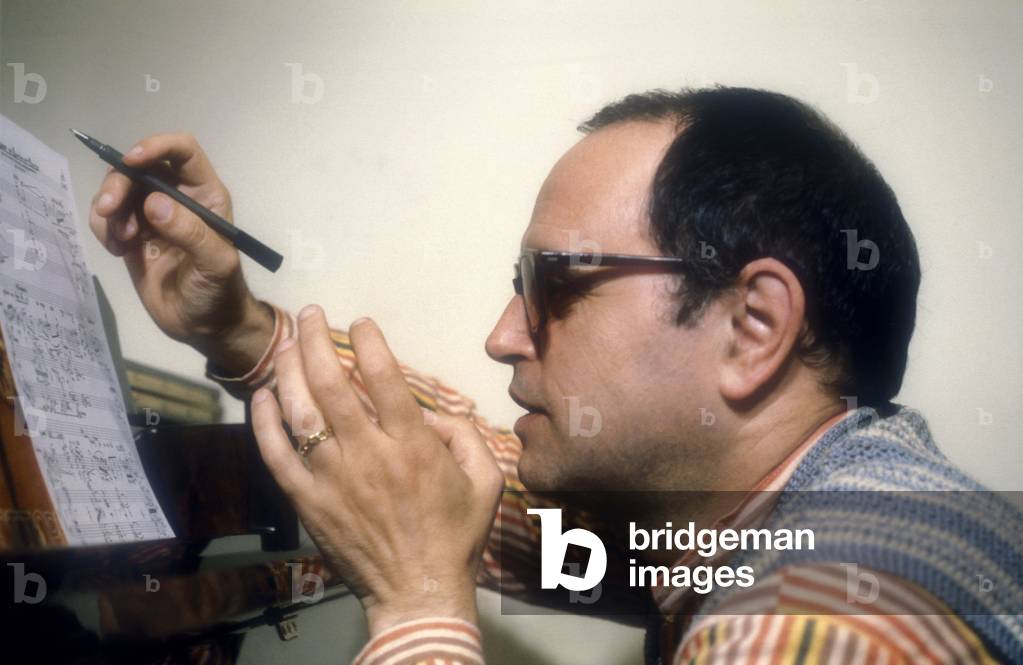
MME4707961: Portrait of the Italian composer Sylvano Bussotti, circa 1980, Mencarini, Marcello / Bridgeman Images

FLO4705483: Swiss army officer, 1588. Handcolored copperplate engraving from Robert von Spalart's “” Historical Picture of the Costumes of the Principal People of Antiquity and of the Middle Ages,”” Vienna, 1811. Illustration based on Thomas Jefferys Collection of Dresses of Different Nations, Antient and Modern. After the Designs of Holbein, Van Dyke, Hollar, and others, London, 1757. / Bridgeman Images

FLO4705539: Young French woman, 1581. Handcolored copperplate engraving from Robert von Spalart's “” Historical Picture of the Costumes of the Principal People of Antiquity and of the Middle Ages,”” Vienna, 1811. Illustration based on Thomas Jefferys Collection of Dresses of Different Nations, Antient and Modern. After the Designs of Holbein, Van Dyke, Hollar, and others, London, 1757. / Bridgeman Images

FLO4705622: Woman of Bayern, 1581, and a German army captain, 1588. Handcolored copperplate engraving from Robert von Spalart's “” Historical Picture of the Costumes of the Principal People of Antiquity and of the Middle Ages,”” Vienna, 1811. Illustration based on Thomas Jefferys Collection of Dresses of Different Nations, Antient and Modern. After the Designs of Holbein, Van Dyke, Hollar, and others, London, 1757. / Bridgeman Images
