Search options

Orientation
Colour

Display options

View

Print

To print search results, use print friendly version of this page.

2491514 Search Results

The Stanhope or iron printing press, invented by Earl Charles Stanhope, 18th century. Copperplate engraving by Wilson Lowry after an illustration by J. Farey from Abraham Rees' “” Cyclopedia or Universal Dictionary,” London, 1815.

FLO4593427: The Stanhope or iron printing press, invented by Earl Charles Stanhope, 18th century. Copperplate engraving by Wilson Lowry after an illustration by J. Farey from Abraham Rees' “” Cyclopedia or Universal Dictionary,” London, 1815. / Bridgeman Images

Roof of the theatre of the Rond point des Champs Elysees, Paris 8th arrondissement.

TEC4594653: Roof of the theatre of the Rond point des Champs Elysees, Paris 8th arrondissement. / Bridgeman Images

Focsa building in the Vedado in Havana (Cuba).

TEC4592312: Focsa building in the Vedado in Havana (Cuba). / Bridgeman Images

Jason facing his uncle Pelias, 1st century (fresco)

LRI4592335: Jason facing his uncle Pelias, 1st century (fresco), Roman, (1st century AD) / Bridgeman Images

Architectural drawings of the Arch of Adrian at Athens and the Arch of Septimius Severus at Rome. Copperplate engraving by Wilson Lowry from Abraham Rees' Cyclopedia or Universal Dictionary of Arts, Sciences and Literature, Longman, Hurst, Rees, Orme and Brown, London, 1820.

FLO4593591: Architectural drawings of the Arch of Adrian at Athens and the Arch of Septimius Severus at Rome. Copperplate engraving by Wilson Lowry from Abraham Rees' Cyclopedia or Universal Dictionary of Arts, Sciences and Literature, Longman, Hurst, Rees, Orme and Brown, London, 1820. / Bridgeman Images
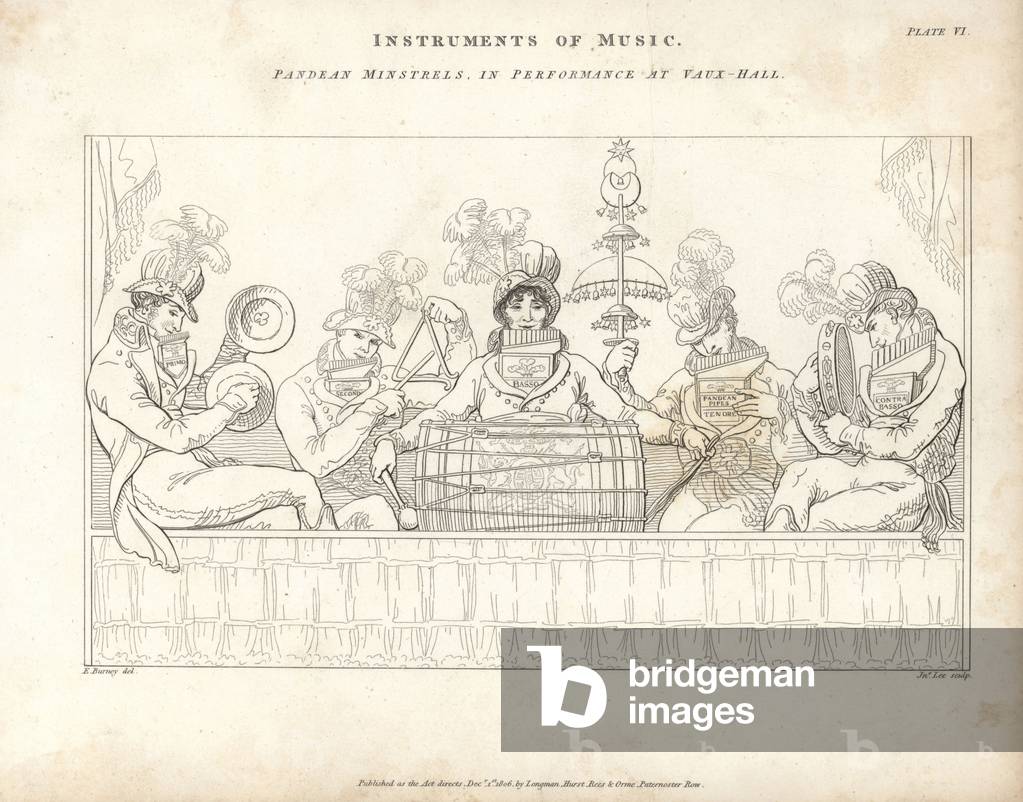
The Pandean Minstrels in performance at Vauxhall pleasure gardens circa 1800. This popular band all played pan pipes and percussion instruments such as drum, triangle, tambourine and cymbals. Copperplate engraving by John Lee after a drawing by Edward Burney from Abraham Rees' Cyclopedia or Universal Dictionary of Arts, Sciences and Literature, Longman, Hurst, Rees, Orme and Brown, London, 1820.

FLO4593919: The Pandean Minstrels in performance at Vauxhall pleasure gardens circa 1800. This popular band all played pan pipes and percussion instruments such as drum, triangle, tambourine and cymbals. Copperplate engraving by John Lee after a drawing by Edward Burney from Abraham Rees' Cyclopedia or Universal Dictionary of Arts, Sciences and Literature, Longman, Hurst, Rees, Orme and Brown, London, 1820. / Bridgeman Images

Cross-sections and plans of blast furnaces, early 19th century. Copperplate engraving by Wilson Lowry from Abraham Rees' Cyclopedia or Universal Dictionary of Arts, Sciences and Literature, Longman, Hurst, Rees, Orme and Brown, London, 1804.

FLO4590774: Cross-sections and plans of blast furnaces, early 19th century. Copperplate engraving by Wilson Lowry from Abraham Rees' Cyclopedia or Universal Dictionary of Arts, Sciences and Literature, Longman, Hurst, Rees, Orme and Brown, London, 1804. / Bridgeman Images

Diagrams of magnets, magnetic fields, iron filings, etc. Copperplate engraving by Wilson Lowry from Abraham Rees' Cyclopedia or Universal Dictionary of Arts, Sciences and Literature, Longman, Hurst, Rees, Orme and Brown, London, 1812.

FLO4591585: Diagrams of magnets, magnetic fields, iron filings, etc. Copperplate engraving by Wilson Lowry from Abraham Rees' Cyclopedia or Universal Dictionary of Arts, Sciences and Literature, Longman, Hurst, Rees, Orme and Brown, London, 1812. / Bridgeman Images

Roman musicians performing an Epithalamium (1-3), long trumpet or tuba (4), Cupid playing a double flute or Tibiae pares (5) and Egyptian musicians playing harps and a struggle-like instrument (6-10). Copperplate engraving by John Lee from Abraham Rees' Cyclopedia or Universal Dictionary of Arts, Sciences and Literature, Longman, Hurst, Rees, Orme and Brown, London, 1820.

FLO4593664: Roman musicians performing an Epithalamium (1-3), long trumpet or tuba (4), Cupid playing a double flute or Tibiae pares (5) and Egyptian musicians playing harps and a struggle-like instrument (6-10). Copperplate engraving by John Lee from Abraham Rees' Cyclopedia or Universal Dictionary of Arts, Sciences and Literature, Longman, Hurst, Rees, Orme and Brown, London, 1820. / Bridgeman Images

Emperor Napoleon III hunted, 19th century (oil on canvas)

JLJ4590840: Emperor Napoleon III hunted, 19th century (oil on canvas), Unknown Artist, (19th century) / Bridgeman Images

Open cluster M37 in the coach - Open star cluster M37 in Auriga - The open cluster M37 (NGC 2099) is located about 4600 years - light from Earth in the constellation of Coach. It contains about 200 stars. The open cluster M37 (NGC 2099) is at approximately 4,600 light - years away from Earth in the Auriga constellation. It contains about 200 stars

PIX4567922: Open cluster M37 in the coach - Open star cluster M37 in Auriga - The open cluster M37 (NGC 2099) is located about 4600 years - light from Earth in the constellation of Coach. It contains about 200 stars. The open cluster M37 (NGC 2099) is at approximately 4,600 light - years away from Earth in the Auriga constellation. It contains about 200 stars / Bridgeman Images

Open cluster M103 in Cassiopee - M103 open cluster in Cassiopeia - M103 (NGC 581) is a cluster of stars located about 8000 years - light from Earth. M103 (NGC 581) is an open cluster at about 8,000 light years away in the constellation Cassiopeia

PIX4567670: Open cluster M103 in Cassiopee - M103 open cluster in Cassiopeia - M103 (NGC 581) is a cluster of stars located about 8000 years - light from Earth. M103 (NGC 581) is an open cluster at about 8,000 light years away in the constellation Cassiopeia / Bridgeman Images

Open cluster M11 in the Sobieski ECU - M11 open cluster in Scutum - M11, NGC6705, is a particularly compact and star-rich open cluster (about 2900), located in the constellation Sobieski ECU. The image is of a young cluster of stars located in the direction of the constellation named Scutum. This tight gathering of stars, known as the Wild Duck Cluster or M11, features about 2,900 individual members - most of them are approximately 250 million years old - the newest stars appear white - blue, the older ones have a yellowed appearance. This group of stars hangs in space about 5,000 light - years from Earth

PIX4568468: Open cluster M11 in the Sobieski ECU - M11 open cluster in Scutum - M11, NGC6705, is a particularly compact and star-rich open cluster (about 2900), located in the constellation Sobieski ECU. The image is of a young cluster of stars located in the direction of the constellation named Scutum. This tight gathering of stars, known as the Wild Duck Cluster or M11, features about 2,900 individual members - most of them are approximately 250 million years old - the newest stars appear white - blue, the older ones have a yellowed appearance. This group of stars hangs in space about 5,000 light - years from Earth / Bridgeman Images

Sundial - Riquewihr - Sundial - Riquewihr - Sundial - 1971 sundial

PIX4569392: Sundial - Riquewihr - Sundial - Riquewihr - Sundial - 1971 sundial / Bridgeman Images

Chateau - Abbadia Observatory - Abbadia Castle - Property of the Academy of Sciences, located in Hendaye, in the Atlantic Pyrenees, this castle was the home of Antoine d'Abbadie (1810 - 1897), a scholar and explorer. It was built between 1864 and 1879 by the architect Eugene Viollet-le-Duc (1814 - 1879), instead of an astronomical observatory dating back to 1858. The castle houses a new observatory, equipped with a Meridian bezel of 2.05 m focal length, with which d'Abbadie participated in the elaboration of the map of the sky “”. Passionate about astronomy, Antoine d'Abbadie made many trips, notably to observe total eclipses of the Sun in Norway (1851), Spain (1860) and Algeria (1867). In 1882 he observed Venus's passage before the Sun from the West Indies. He was president of the Academy of Sciences in 1891 and 1892. Abbadia Castle, owned by the French Academy of Sciences, was built by Eugene Viollet le Duc between 1864 and 1879. It houses a former astronomy observatory.

PIX4566971: Chateau - Abbadia Observatory - Abbadia Castle - Property of the Academy of Sciences, located in Hendaye, in the Atlantic Pyrenees, this castle was the home of Antoine d'Abbadie (1810 - 1897), a scholar and explorer. It was built between 1864 and 1879 by the architect Eugene Viollet-le-Duc (1814 - 1879), instead of an astronomical observatory dating back to 1858. The castle houses a new observatory, equipped with a Meridian bezel of 2.05 m focal length, with which d'Abbadie participated in the elaboration of the map of the sky “”. Passionate about astronomy, Antoine d'Abbadie made many trips, notably to observe total eclipses of the Sun in Norway (1851), Spain (1860) and Algeria (1867). In 1882 he observed Venus's passage before the Sun from the West Indies. He was president of the Academy of Sciences in 1891 and 1892. Abbadia Castle, owned by the French Academy of Sciences, was built by Eugene Viollet le Duc between 1864 and 1879. It houses a former astronomy observatory. / Bridgeman Images

Open cluster Trumpler 5 in Unicorn - Open cluster Trumpler 5 in Monoceros - Trumpler 5 is a cluster of stars aged 125 million years. Image obtained by Siding Spring's 3.9m telescope As they age, open clusters of stars begin to lose their identity. This is partly because the brighter members tend to self - destruct as supernovae, and, though the group members share a common motion through space, they are only loosely bound. Thus stars drift away from the cluster in a process that accelerates with time. However, some clusters are big enough to retain their identity much longer than usual, and Trumpler 5 is one such. Its age is estimated to be 125 million years, and it must have been a spectacular sight in its youth. It seems to be at the edge of the Monoceros molecular cloud, where star formation is continuing new generations of young clusters

PIX4569009: Open cluster Trumpler 5 in Unicorn - Open cluster Trumpler 5 in Monoceros - Trumpler 5 is a cluster of stars aged 125 million years. Image obtained by Siding Spring's 3.9m telescope As they age, open clusters of stars begin to lose their identity. This is partly because the brighter members tend to self - destruct as supernovae, and, though the group members share a common motion through space, they are only loosely bound. Thus stars drift away from the cluster in a process that accelerates with time. However, some clusters are big enough to retain their identity much longer than usual, and Trumpler 5 is one such. Its age is estimated to be 125 million years, and it must have been a spectacular sight in its youth. It seems to be at the edge of the Monoceros molecular cloud, where star formation is continuing new generations of young clusters / Bridgeman Images

Open cluster M44 in cancer - Open star cluster M44 in Cancer - M44 is a cluster of stars located only 600 years - light from Earth, in the constellation Cancer. M44 (NGC 2632), the Beehive Cluster, also known as Praesepe, is an easy naked eye object more than twice the size across of the full moon, and has thus been noted since prehistoric times. It was one of the first objects on which Galileo trained his newly acquired telescope. M44 is one of the nearest open clusters, close to 600 light - years away

PIX4568137: Open cluster M44 in cancer - Open star cluster M44 in Cancer - M44 is a cluster of stars located only 600 years - light from Earth, in the constellation Cancer. M44 (NGC 2632), the Beehive Cluster, also known as Praesepe, is an easy naked eye object more than twice the size across of the full moon, and has thus been noted since prehistoric times. It was one of the first objects on which Galileo trained his newly acquired telescope. M44 is one of the nearest open clusters, close to 600 light - years away / Bridgeman Images

Globular cluster M30 in Capricornus - Globular cluster M30 in Capricornus - The globular cluster M30 (NGC 7099) is located about 28,000 light years away from Earth. Globular clusters are generally peoples of very old stars, but here the Hubble space telescope has identified some young stars, blue stragglers. Messier 30 formed 13 billion years ago and was discovered in 1764 by Charles Messier. Located about 28 000 light - years away from Earth, this globular cluster - - a dense swarm of several hundred thousand stars - - is about 90 light - years across. Although globular clusters such as this one are mainly populated by old stars, the crowded field of stars leads to some old stars apparently reclaiming their youth in the form of blue stragglers. Researchers using data from Hubble's now - retired Wide Field Planetary Camera 2 (WFPC2) have identified two types of blue stragglers in Messier 30: those that form in near head - on collisions with one another and those that are in twin (or binary) systems where the less massive star siphons “” life - giving”” hydrogen from its more massive companion. This image of Messier 30 (M30) was taken by Hubble's Advanced Camera for Surveys (ACS)

PIX4565155: Globular cluster M30 in Capricornus - Globular cluster M30 in Capricornus - The globular cluster M30 (NGC 7099) is located about 28,000 light years away from Earth. Globular clusters are generally peoples of very old stars, but here the Hubble space telescope has identified some young stars, blue stragglers. Messier 30 formed 13 billion years ago and was discovered in 1764 by Charles Messier. Located about 28 000 light - years away from Earth, this globular cluster - - a dense swarm of several hundred thousand stars - - is about 90 light - years across. Although globular clusters such as this one are mainly populated by old stars, the crowded field of stars leads to some old stars apparently reclaiming their youth in the form of blue stragglers. Researchers using data from Hubble's now - retired Wide Field Planetary Camera 2 (WFPC2) have identified two types of blue stragglers in Messier 30: those that form in near head - on collisions with one another and those that are in twin (or binary) systems where the less massive star siphons “” life - giving”” hydrogen from its more massive companion. This image of Messier 30 (M30) was taken by Hubble's Advanced Camera for Surveys (ACS) / Bridgeman Images

Open cluster NGC 6830 in the Little Fox - Open cluster NGC 6830 in Vulpecula - The NGC 6830 cluster is a cluster composed of 20 to 30 very scattered stars; its distance is estimated at 5,500 years - light. This cluster of 20 to 30 stars is located 5 500 light years away

PIX4568519: Open cluster NGC 6830 in the Little Fox - Open cluster NGC 6830 in Vulpecula - The NGC 6830 cluster is a cluster composed of 20 to 30 very scattered stars; its distance is estimated at 5,500 years - light. This cluster of 20 to 30 stars is located 5 500 light years away / Bridgeman Images

Cite de l'espace - Toulouse - Life-size model of the Ariane V rocket and goes from infinity. Full scale model of Ariane V rocket

PIX4567444: Cite de l'espace - Toulouse - Life-size model of the Ariane V rocket and goes from infinity. Full scale model of Ariane V rocket / Bridgeman Images

Clusters of distant galaxies CL0024+1654 - Distant cluster of galaxies CL0024+1654 - False color image of cluster CL0024+1654 obtained with the 12k camera of CFHT (Canada France Hawaii Telescope) in Hawaii. This cluster is 4.5 billion light years away. This is a colour image of the galaxy cluster CL0024+1654 obtained with the CFHT12k camera at the Canada France Hawaii Telescope on Mauna Kea (Hawaii). Distance of 4.5 thousand million light - years (about one third of the look - back time to the Big Bang) from Earth. The cluster clearly appears as a concentration of yellow galaxies in the centre of this image although cluster galaxies actually extend at least to the edge of this image. This image measures 21 x 21 arc - minutes

PIX4565601: Clusters of distant galaxies CL0024+1654 - Distant cluster of galaxies CL0024+1654 - False color image of cluster CL0024+1654 obtained with the 12k camera of CFHT (Canada France Hawaii Telescope) in Hawaii. This cluster is 4.5 billion light years away. This is a colour image of the galaxy cluster CL0024+1654 obtained with the CFHT12k camera at the Canada France Hawaii Telescope on Mauna Kea (Hawaii). Distance of 4.5 thousand million light - years (about one third of the look - back time to the Big Bang) from Earth. The cluster clearly appears as a concentration of yellow galaxies in the centre of this image although cluster galaxies actually extend at least to the edge of this image. This image measures 21 x 21 arc - minutes / Bridgeman Images

Star watching - Night sky observation - Two girls look at the sky sitting in the dunes, with the Big Bear in the background. Two girls watching the starry sky

PIX4566248: Star watching - Night sky observation - Two girls look at the sky sitting in the dunes, with the Big Bear in the background. Two girls watching the starry sky / Bridgeman Images

Club d'astronomes amateurs Lyon Ampere (CALA) - Amateur astronomer with Dobsonian telescope - Club d'astronomes amateurs Lyon Ampere (CALA). Telescope Dobson 02/05/2005 CALA amateur observatory near Lyon. France

PIX4566706: Club d'astronomes amateurs Lyon Ampere (CALA) - Amateur astronomer with Dobsonian telescope - Club d'astronomes amateurs Lyon Ampere (CALA). Telescope Dobson 02/05/2005 CALA amateur observatory near Lyon. France / Bridgeman Images

Club d'astronomers amateurs Lyon Ampere (CALA) - CALA amateur observatory. France - Night observation in an amateur observatory Observing night in amateur observator

PIX4566606: Club d'astronomers amateurs Lyon Ampere (CALA) - CALA amateur observatory. France - Night observation in an amateur observatory Observing night in amateur observator / Bridgeman Images

Open cluster M34 in Persee - Open cluster M34 in Perseus - The cluster M34 (NGC 1039) contains a hundred stars; it is located about 1400 years - light from Earth. The open cluster M34 (NGC 1039) is located 1400 light - years away in the direction of the constellation Perseus; it contains about a hundred stars in a region some dozen light - years across, and is visible to the naked eye under good conditions. Date: 200

PIX4567789: Open cluster M34 in Persee - Open cluster M34 in Perseus - The cluster M34 (NGC 1039) contains a hundred stars; it is located about 1400 years - light from Earth. The open cluster M34 (NGC 1039) is located 1400 light - years away in the direction of the constellation Perseus; it contains about a hundred stars in a region some dozen light - years across, and is visible to the naked eye under good conditions. Date: 200 / Bridgeman Images

Club d'astronomes amateurs Lyon Ampere (CALA) - Amateur astronomer with telescope - Observation of the sky with a telescope. Club d'astronomers amateurs Lyon Ampere (CALA) 02/05/2005 CALA amateur observatory near Lyon. France

PIX4566765: Club d'astronomes amateurs Lyon Ampere (CALA) - Amateur astronomer with telescope - Observation of the sky with a telescope. Club d'astronomers amateurs Lyon Ampere (CALA) 02/05/2005 CALA amateur observatory near Lyon. France / Bridgeman Images

Galaxy cluster Abell 2151 - Hercules cluster - Abell 2151 the Hercules cluster - Galaxy cluster consists of about one hundred galaxies located 365 million light years ago in the constellation Hercules. Abell 2151, the Hercules cluster, is a small, irregular cluster, with a core membership of fewer than 100 galaxies, with none strongly dominant central galaxy. It is more than 360 million light - years away

PIX4565307: Galaxy cluster Abell 2151 - Hercules cluster - Abell 2151 the Hercules cluster - Galaxy cluster consists of about one hundred galaxies located 365 million light years ago in the constellation Hercules. Abell 2151, the Hercules cluster, is a small, irregular cluster, with a core membership of fewer than 100 galaxies, with none strongly dominant central galaxy. It is more than 360 million light - years away / Bridgeman Images

Cite de l'espace - Toulouse - Le Terradome. La Cité de l'espace is a theme park located in Toulouse, inaugurated in June 1997

PIX4567475: Cite de l'espace - Toulouse - Le Terradome. La Cité de l'espace is a theme park located in Toulouse, inaugurated in June 1997 / Bridgeman Images

Occultation of Jupiter by the Moon - Lunar Occultation with Jupiter - Jupiter and its Galilean satellites pass near the Moon. The beginning of the blackout. 15/07/2012. Jupiter and its galilean satellites transiting near the Moon. July 15 2012

PIX4569520: Occultation of Jupiter by the Moon - Lunar Occultation with Jupiter - Jupiter and its Galilean satellites pass near the Moon. The beginning of the blackout. 15/07/2012. Jupiter and its galilean satellites transiting near the Moon. July 15 2012 / Bridgeman Images

Star cluster M46 and planetary nebula NGC 2438 - Open cluster M46 and planetary nebula NGC 2438 - M46 (NGC 2437) is an age cluster located at 5400 years - light. It contains about 500 stars, 150 of which are brilliant. It is about 300 million years old. The planetary nebula NGC 2438 does not appear to belong to this cluster, and must be closer although its distance is unknown. M46 (NGC 2437) is at a distance of about 5,400 light - years away from Earth with an estimated age of about 300 million years. It contains about 500 stars of which 150 are bright. Planetary nebula NGC 2438 (top) doesn't seem to belong to the cluster

PIX4568059: Star cluster M46 and planetary nebula NGC 2438 - Open cluster M46 and planetary nebula NGC 2438 - M46 (NGC 2437) is an age cluster located at 5400 years - light. It contains about 500 stars, 150 of which are brilliant. It is about 300 million years old. The planetary nebula NGC 2438 does not appear to belong to this cluster, and must be closer although its distance is unknown. M46 (NGC 2437) is at a distance of about 5,400 light - years away from Earth with an estimated age of about 300 million years. It contains about 500 stars of which 150 are bright. Planetary nebula NGC 2438 (top) doesn't seem to belong to the cluster / Bridgeman Images

Galaxy cluster Abell 2151 - Hercules cluster - Abell 2151 the Hercules cluster - Galaxy cluster consists of about one hundred galaxies located 365 million light years ago in the constellation Hercules. Abell 2151, the Hercules cluster, is a small, irregular cluster, with a core membership of fewer than 100 galaxies, with none strongly dominant central galaxy. It is more than 360 million light - years away

PIX4565299: Galaxy cluster Abell 2151 - Hercules cluster - Abell 2151 the Hercules cluster - Galaxy cluster consists of about one hundred galaxies located 365 million light years ago in the constellation Hercules. Abell 2151, the Hercules cluster, is a small, irregular cluster, with a core membership of fewer than 100 galaxies, with none strongly dominant central galaxy. It is more than 360 million light - years away / Bridgeman Images

Double cluster of Persee - Double cluster in Perseus - NGC884, on the left and h Persei NGC869 on the right are located about 7000 years - light in the constellation Persee. The double cluster in the constellation Perseus, normally known by its Greek designation transliterated. chi Persei (NGC884, on the left) and h Persei (NGC869) are about 7000 light - years away and less than 100 light - years apart. Although open clusters are quite common, this pair is exceptional due to the large number of young bright O and B stars in each, and their closeness

PIX4567707: Double cluster of Persee - Double cluster in Perseus - NGC884, on the left and h Persei NGC869 on the right are located about 7000 years - light in the constellation Persee. The double cluster in the constellation Perseus, normally known by its Greek designation transliterated. chi Persei (NGC884, on the left) and h Persei (NGC869) are about 7000 light - years away and less than 100 light - years apart. Although open clusters are quite common, this pair is exceptional due to the large number of young bright O and B stars in each, and their closeness / Bridgeman Images
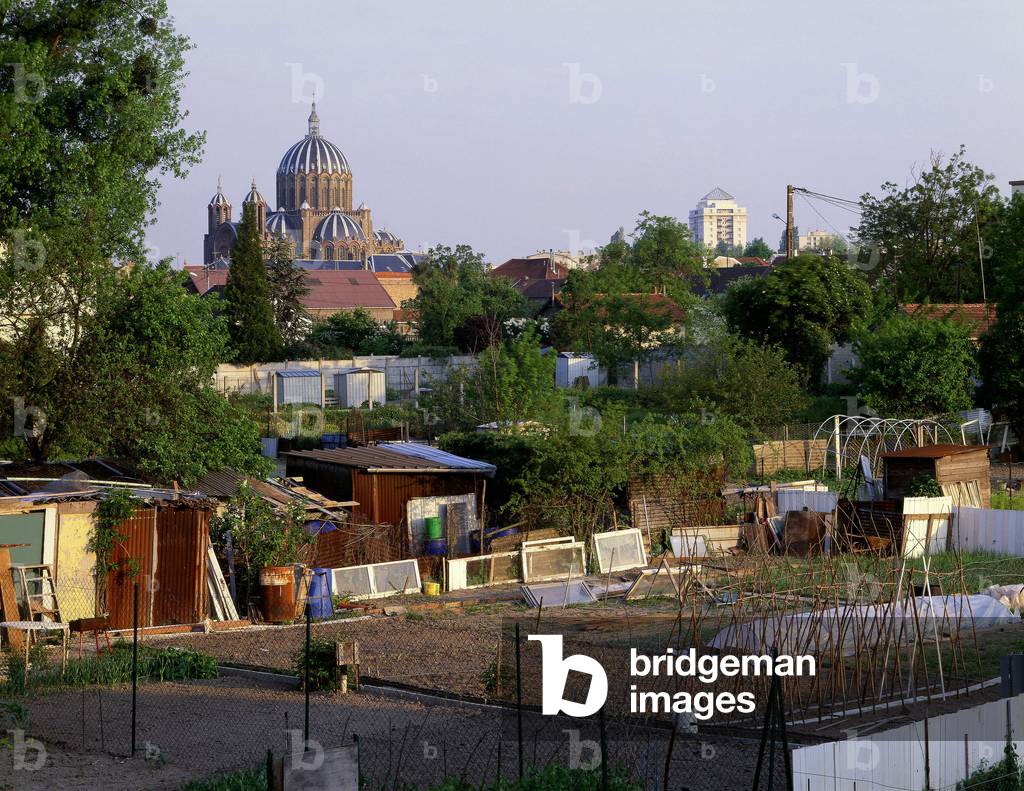
General view of the cathedral of Reims (Marne, Champagne Ardennes region).

MDA4569418: General view of the cathedral of Reims (Marne, Champagne Ardennes region)., Denance, Michel / Bridgeman Images

Doric Temple in Segeste in Sicily (Italy).

OMG4569948: Doric Temple in Segeste in Sicily (Italy). / Bridgeman Images
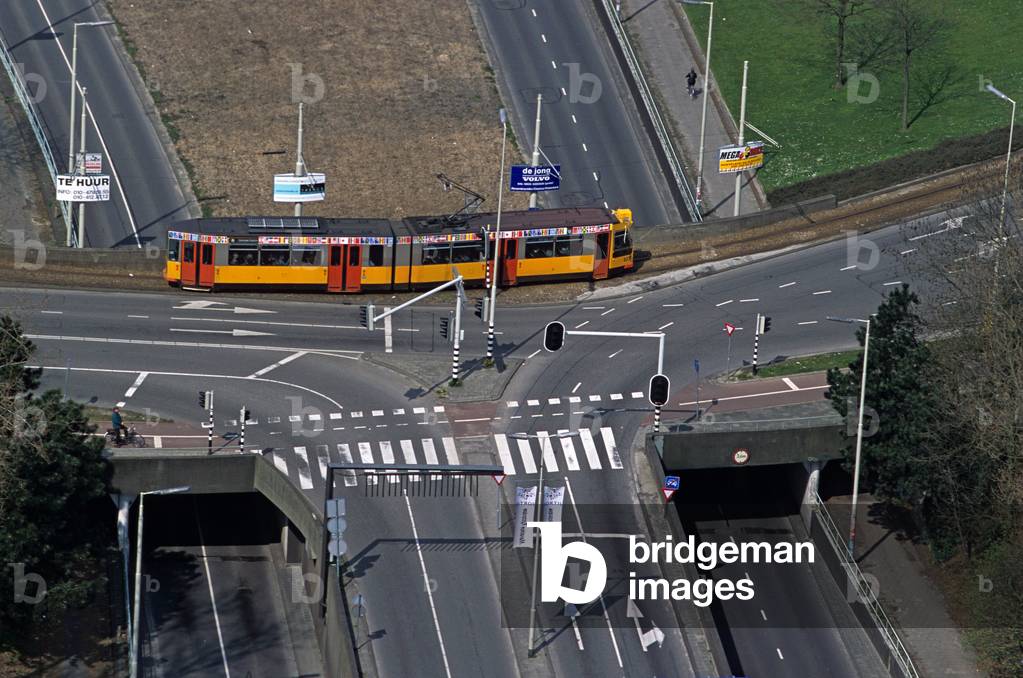
Tram in Rotterdam (Netherlands)

MDA4568531: Tram in Rotterdam (Netherlands), Denance, Michel / Bridgeman Images
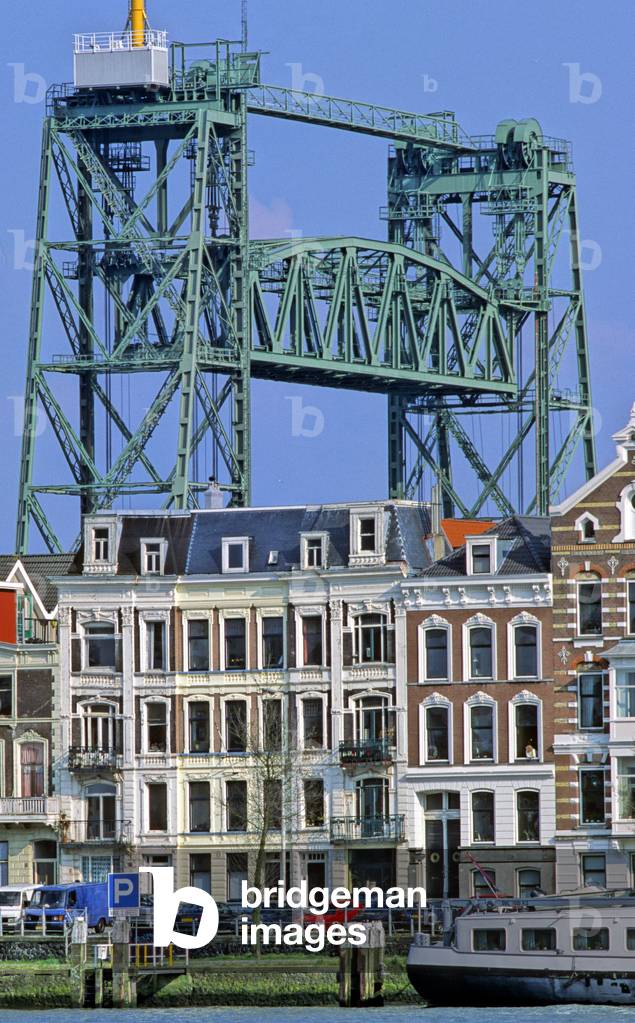
The port of Rotterdam, Netherlands (Netherlands) is the first European port and is located at the mouth of the Meuse and the Rhine.

MDA4568514: The port of Rotterdam, Netherlands (Netherlands) is the first European port and is located at the mouth of the Meuse and the Rhine., Denance, Michel / Bridgeman Images


Back to top