2491383 Search Results

TEC4629911: A green space of a superquadra building in Brasilia (Brazil). / Bridgeman Images

TEC4629923: A superquadra building in Brasilia (Brazil). / Bridgeman Images

PIX4629935: Terre Lune et Soleil - artist view - Earth Moon and Sun - Artwork / Bridgeman Images

LRI4630088: Representation of the partridge (Partridge or Lagopus mutus) (Chromolithography, 1865-1869), Bettoni, Eugenio (1845-98) & Dressler, Oscar (19th century) / Bridgeman Images

LRI4630118: Representation of the Becassine Chevalier guignette (Actitis hypoleuca) (Chromolithography, 1865-1869), Bettoni, Eugenio (1845-98) & Dressler, Oscar (19th century) / Bridgeman Images

LRI4640931: Tank ornament from Ukraine, 5th - 3rd century BC (bronze), Scythian, (5th century BC) / Bridgeman Images

JLJ4641096: Roland at the Battle of Roncesvaux in 778 (litho), Job, pseudonym for Onfray de Breville, Jacques (1858-1931) / Bridgeman Images

LBY4641105: Les Pins building, 2 rue Albin Haller in Nancy (Meurthe and Moselle). Architect Emile Andre (1871-1933), 1912. In Nancy, Art Nouveau takes the name of Ecole de Nancy, or Alliance provincial des industries d'art, thanks in particular to the emblematic figure of Emile Galle. Glassware, furniture, stained glass, ceramics, leather, ironwork, architecture, etc., participate in this vast movement of renovation of decorative arts that still marks the city today., André, Emile (1871-1933) / Bridgeman Images

LBY4641147: The Hotel Bergeret, 24 rue Liennois in Nancy (Meurthe and Moselle). Architect Lucien Weissenburger (1860-1929), 1904. In Nancy, Art Nouveau takes the name of Ecole de Nancy, or Alliance provincial des industries d'art, thanks in particular to the emblematic figure of Emile Galle. Glassware, furniture, stained glass, ceramics, leather, ironwork, architecture, etc., participate in this vast movement of renovation of decorative arts that still marks the city today., Weissenburger, Lucien (1860-1929) / Bridgeman Images

PIX4641159: Thomas Pesquet in weightlessness - Thomas Pesquet in ISS: The French astronaut Thomas Pesquet in the European Colombus module of the International Space Station (ISS). 7 December 2016 - ESA (European Space Agency) astronaut Thomas Pesquet is seen floating inside the Columbus module aboard the International Space Station. Pesquet is on his first flight to space and is a flight engineer for Expeditions 50 and 51 / Bridgeman Images

LBY4641165: Detail of Maison Houot in Nancy, France designed in 1903 (photo), André, Emile (1871-1933) / Bridgeman Images

LRI4635265: Risorgimento: satirical drawing depicting the heros of the Risorgimento Giuseppe Garibalidi (1807-1882) regulating the Roman Question, political controversy concerning the role of Rome, seat of the temporal power of the Pope and capital of the new kingdom of Italy at the time of Italian Unity (1861). The Italian patriot is a representative playing a sheep jump on a cardinal. Print. Private Collection, Italian School, (19th century) / Bridgeman Images

MDA4635268: The city of Algiers Algiers - Algeria -, Denance, Michel / Bridgeman Images
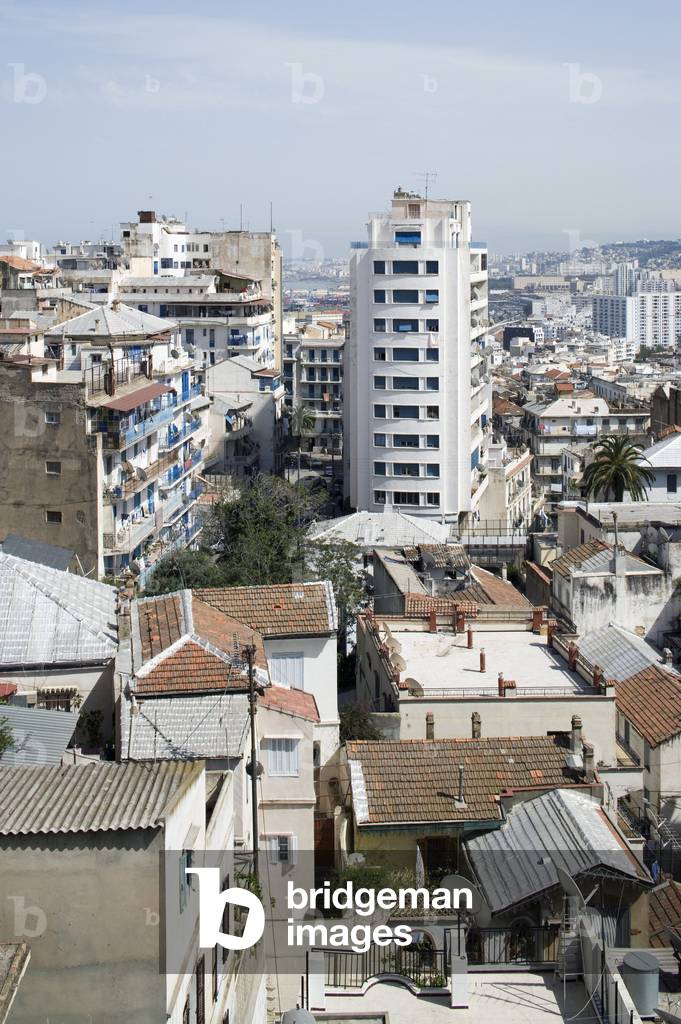
MDA4635310: The city of Algiers Algiers - Algeria -, Denance, Michel / Bridgeman Images

JLJ4635331: Photographic album from the First World War made by an infantry lieutenant in 1914 - 1915 in Lorraine, 1914 (photo) / Bridgeman Images

LRI4635337: Portrait of the Italian politician Giovanni Giolitti (engraving), Unknown Artist, (19th century) / Bridgeman Images
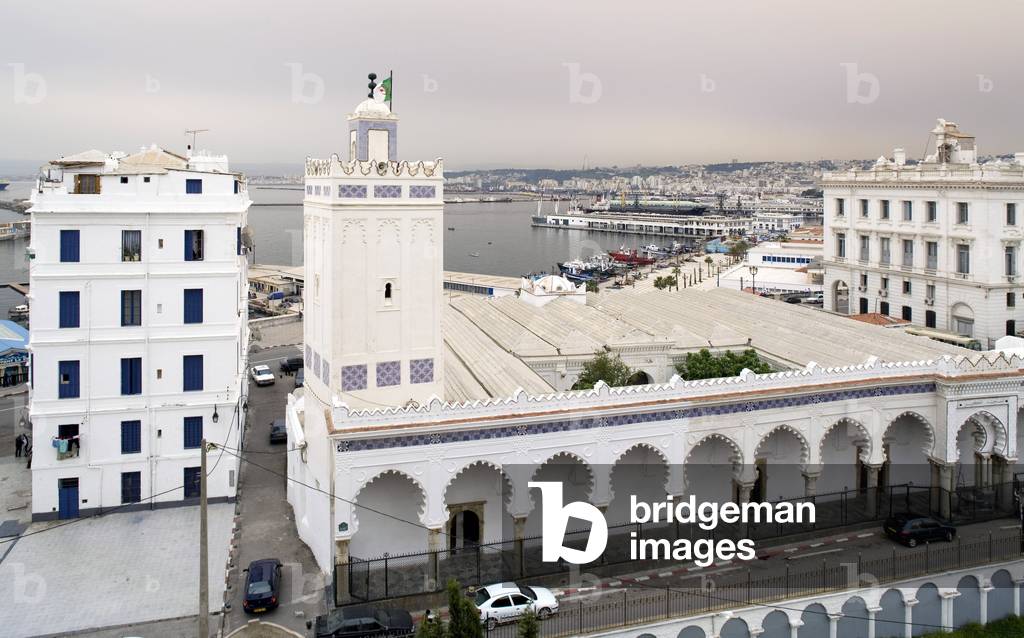
MDA4635364: The city of Algiers Algiers - Algeria -, Denance, Michel / Bridgeman Images

JLJ4635442: French and Germans, Anecdotal History of the War of 1870-1871, 1888 (engraving), Lonlay, Dick de (Hardouin Georges pseud.) (1846-1893) / Bridgeman Images

JLJ4635508: French and Germans, Anecdotal History of the War of 1870-1871, 1888 (engraving), Lonlay, Dick de (Hardouin Georges pseud.) (1846-1893) / Bridgeman Images

JLJ4630139: Vaux, towards the pond, First World War (stereoscopic glass plate), Anonymous / Bridgeman Images

JLJ4630205: A stop in Artois, First World War (stereoscopic glass plate), Anonymous / Bridgeman Images

JLJ4630325: Capture of Courcelles by the Germans (Oise), First World War (stereoscopic glass plate), Anonymous / Bridgeman Images

PIX4630355: La formation du système solaire - Vue d'artiste - Artist's impression of the development of the Solar System - Vue d'artiste de planete en formation dans le disque de gaz et de dusts (disque protoplanetaire) autour de son toile. This artist's impression shows four stages of the development of the inner Solar System over a period of almost five billion years. The top panel shows the earliest stage where the debris disc around the Sun was composed of gas and tiny particles, typically less than one millimetre across. At the second stage the particles have formed large clumps, roughly 100 kilometers across and, similar to the asteroid Lutetia. These bodies in turn formed the rocky planets including the Earth, shown in the third panel down. Over the subsequent four billion years the surface of the Earth developed to what we know now under the influence of meteor bombardment that delivered volatile materials including water, and the evolution of life on its surface / Bridgeman Images

LBY4630391: Dubai Mall Aquarium The Dubai Mall - Dubai, Boegly, Luc / Bridgeman Images

PIX4641225: Thomas Pesquet in the International Space Station (ISS) - Thomas Pesquet in ISS: French astronaut Thomas Pesquet makes his daily sport on board the International Space Station (ISS). January 4, 2017. Thomas Pesquet is exercising in the International Space Station. January 4, 2017. / Bridgeman Images

JLJ4641273: Fanfan la tulip (litho), Job, pseudonym for Onfray de Breville, Jacques (1858-1931) / Bridgeman Images

PIX4641303: ISS and inflatable module - Large habitat and ISS: Artist's view of a large inflatable module (much larger than all existing modules) installed on the International Space Station (ISS). A live module or CEV (Crew Exploration Vehicle) type Orion prepares to moor to the inflatable module. A manned Crew Exploration Vehicle (CEV) prepares to dock with a spacious inflatable habitat attached to the International Space Station (ISS) at an altitude of 250 nautical miles. This inflatable habitat, much larger than any existing ISS module, is a combination of layers of flexible material capped by sturdy docking hardware at either end. The inflatable portion is collapsed and sandwiched between the docking hardware portions for launch from earth and then inflated and pressurized with a breathable atmosphere once in orbit. The habitat features a pair of 42 x 24 inch windows to the outside. The habitat is attached to a pressurized module of the ISS via a Common Berthing Mechanism (CBM) while the other end of the habitat features an International Docking System Standard (IDSS) system for docking with manned spacecraft. The inflatable portion of the habitat is 45 feet long with a maximum diameter of 28 feet. Including docking hardware the total length is 55 feet. The interior of the habit, sans storage and other equipment, provides approximately 17 thousand cubic feet of micro gravity living space. The CEV is 33 feet long with a maximum diameter of 20 feet while the solar voltaic panels have a maximum spread of a little over 60 feet / Bridgeman Images

TEC4641366: Les Grands Moulins de Paris 75013. / Bridgeman Images

TEC4641414: Chapelle de la Salpetriere, 47 boulevard de l'hopital in Paris 75013. / Bridgeman Images

JLJ4641423: The small drum of Wattignies in 1793 fell under the blows of the Austrians during the battle) (litho), Job, pseudonym for Onfray de Breville, Jacques (1858-1931) / Bridgeman Images

PIX4641495: Mercury: Portrait of Astronauts - Mercury program Astronaut group portrait. Front row (from l. to r.): Walter Schirra, Donald Slayton, John Glenn and Scott Carpenter. Back row (from l. to r.) Alan Shepard, Virgil Grissom and Gordon Cooper. Jul 01 1962 / Bridgeman Images

JLJ4641507: Le triumphe du poilu (allegory of the French military paying homage to the hairy) (litho), Job, pseudonym for Onfray de Breville, Jacques (1858-1931) / Bridgeman Images

PIX4635535: The Lactee Way - The Lactee Way - The Lactee Way, seen from the Atacama Desert, Chile. The center of the galaxy in the Scorpio and Sagittarius regions is particularly bright. 200 / Bridgeman Images

JLJ4635571: French and Germans, Anecdotal History of the War of 1870-1871, 1888 (engraving), Lonlay, Dick de (Hardouin Georges pseud.) (1846-1893) / Bridgeman Images

LRI4635616: A peasant mowing the grass, month of June. (miniature, 12th century), Unknown Artist, (12th century) / Bridgeman Images

LRI4635631: Allegoric representation of the month of August (Miniature, 12th century), Unknown Artist, (12th century) / Bridgeman Images
