2491518 Search Results

LIP1047976: The Crown Prince of Denmark at Home (b/w photo), English photographer, (19th century) (after) / Bridgeman Images

LIP1056094: The Late Baroness Bettina de Rothschild (engraving), English School, (19th century) / Bridgeman Images

LLE980397: Blanket rug and medicine tubes (colour litho), American School, (19th century) (after) / Bridgeman Images

LIP1056150: Advertisement, Brooke's Soap (engraving), English School, (19th century) / Bridgeman Images
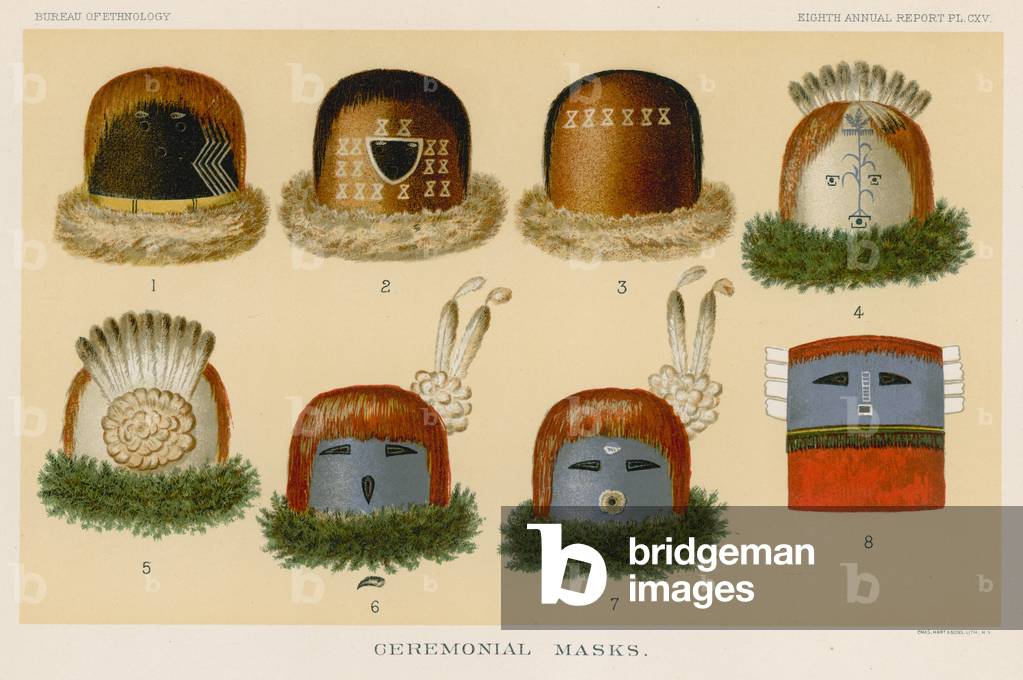
LLE980398: Ceremonial masks (colour litho), American School, (19th century) (after) / Bridgeman Images

LIP1056201: The Presidential Election in Argentina, the Polling-Station at the Church of La Merced, Buenos Ayres (engraving), Durand, Godefroy (1832-96) / Bridgeman Images

LIP1056213: Sir Charles Euan Smith's Mission to the Court of Morocco, the Passage of the River Sebu (engraving), English School, (19th century) / Bridgeman Images

LIP1056223: Mr Robert Craufurd (b/w photo), English photographer, (19th century) (after) / Bridgeman Images

LIP1056232: The Canadian Wonderland, across the Rocky Mountains with a Camera (litho), English School, (19th century) / Bridgeman Images

LIP1056246: The Hurricane in Mauritius, Views of the Ruins in Port Louis (engraving), English School, (19th century) / Bridgeman Images

LIP1056251: Sir Hugo, Winner of the Derby, 1 June 1892 (litho), English School, (19th century) / Bridgeman Images

LIP1056277: Wonders in Botany, the Story of the Growth of some Giant Radishes (engraving), Robley, Horatio Gordon (1840-1930) / Bridgeman Images

LIP1056302: Advertisements (engraving), English School, (19th century) / Bridgeman Images

LIP1056305: Summer Holidays (engraving), Boyd, Alexander Stuart (1854-1930) / Bridgeman Images

LIP1056321: A London Fair, Friday at the Metropolitan Cattle Market (engraving), Green, Charles (1840-98) (after) / Bridgeman Images

LIP1056325: The Rising Generation (engraving), Dollman, John Charles (1851-1934) (after) / Bridgeman Images

LIP1056343: Scene at the Laying the Foundation-Stone by Cardinal Vaughan, reading the "Litanies of the Saints" (b/w photo), English photographer, (19th century) (after) / Bridgeman Images

LIP1056348: Nasrullah Khan at Home (engraving), Small, William (1843-1931) (after) / Bridgeman Images

LIP1056379: The Cricket Season in the West Indies (engraving), English School, (19th century) / Bridgeman Images

LIP1056383: The Visit of the Italian Fleet (engraving), Paget, Henry Marriott (1856-1936) (after) / Bridgeman Images

LIP1056395: Borax Deposits at Monte Blanco, Funeral Mountains, California (b/w photo), English photographer, (19th century) (after) / Bridgeman Images

LIP1056402: The Stalker stalked (engraving), Charlton, John (1849-1917) (after) / Bridgeman Images

LIP1056446: Colonel C Mansell Lewis (engraving), English School, (19th century) / Bridgeman Images

LIP1056461: The Prince of Wales opening the New Graving Dock at Southampton (litho), Boyd, Alexander Stuart (1854-1930) / Bridgeman Images

LIP1056509: Solan Geese on the Bass Rock in the Firth of Forth (b/w photo), English photographer, (19th century) (after) / Bridgeman Images

LIP1056514: The Next Commander-in-Chief (engraving), English School, (19th century) / Bridgeman Images

LIP1048034: Gunnery in the Royal Marines, Practice with a Quick-Firing Gun on a Rolling Motion Platform (engraving), English School, (19th century) / Bridgeman Images

LIP1048042: An Anti-Cholera Specific, washing the Streets round Covent Garden (litho), Lanos, Henri (1859-1929) / Bridgeman Images

LIP1048053: Mr Sydney Grundy's Play, "The New Woman", at the Comedy Theatre (litho), English School, (19th century) / Bridgeman Images

LIP1048063: The King of Spain's Boy Volunteers, a Review in the Bull Ring at San Sebastian of the Newly Formed Battalion (litho), Barnes, Robert (1840-95) / Bridgeman Images

LIP1048078: The Late Comte de Paris, the Lying-in-State in the Marble Saloon at Stowe House (engraving), English School, (19th century) / Bridgeman Images

LIP1048086: Prince Louis Philippe Robert, Duc d'Orleans (engraving), English School, (19th century) / Bridgeman Images

LIP1048106: The War in the East (b/w photo), English photographer, (19th century) (after) / Bridgeman Images

LIP1048118: Advertisement, Elliman's Embrocation (engraving), English School, (19th century) / Bridgeman Images

LIP1048147: Washing Rice for the Troops (engraving), Bigot, Georges Ferdinand (1860-1927) (after) / Bridgeman Images

LIP1048154: The East Gate of the Sacred City of Moukden (litho), Staniland, Charles J. (1838-1916) (after) / Bridgeman Images
