Print Friendly Version Page

2501809 Search Results

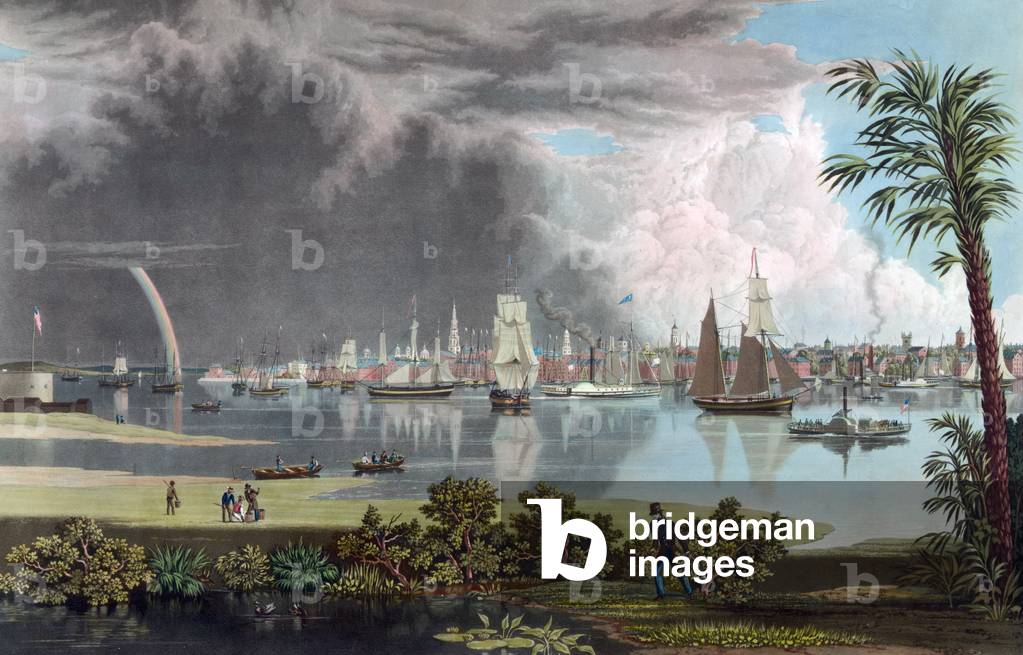
Charleston, South Carolina, looking across Cooper's River 1838

EVB2936365: Charleston, South Carolina, looking across Cooper's River 1838 / Bridgeman Images
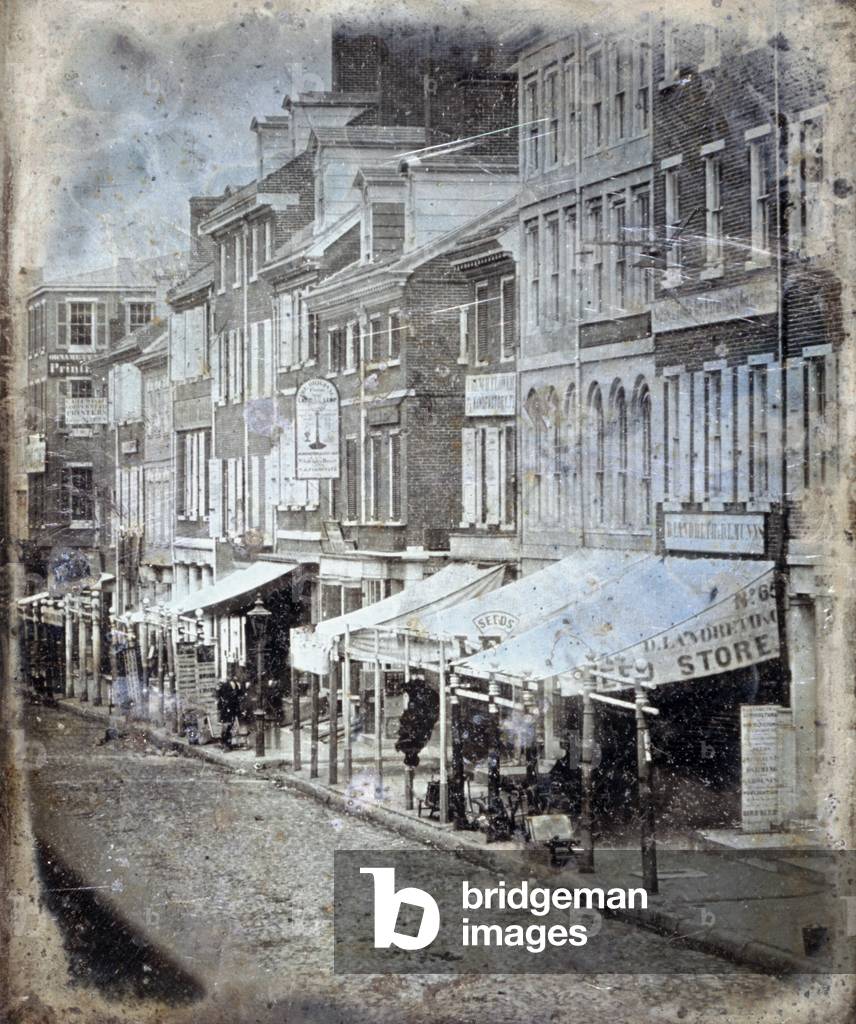
Daguerreotype of the north side of Chestnut Street, between 2nd Street and 3rd Street, Philadelphia, Pennsylvania 1843

EVB2936368: Daguerreotype of the north side of Chestnut Street, between 2nd Street and 3rd Street, Philadelphia, Pennsylvania 1843 / Bridgeman Images

The Surgeon Dentist, pulls a man's tooth while a women picks the patient's pocket. 1523 engraving after a painting by Lucas van Leyden (1494-1533)

EVB2936374: The Surgeon Dentist, pulls a man's tooth while a women picks the patient's pocket. 1523 engraving after a painting by Lucas van Leyden (1494-1533) / Bridgeman Images
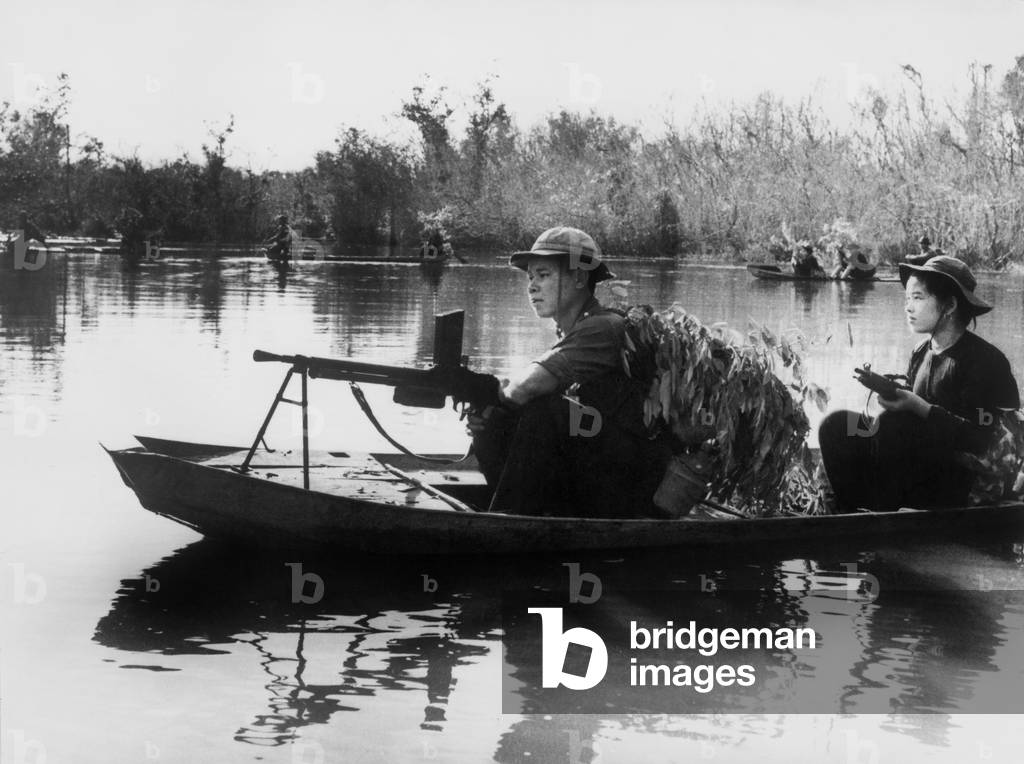
Viet Cong guerrillas in small boats patrol the Saigon River in South Vietnam in photo taken by communist forces

EVB2936246: Viet Cong guerrillas in small boats patrol the Saigon River in South Vietnam in photo taken by communist forces / Bridgeman Images
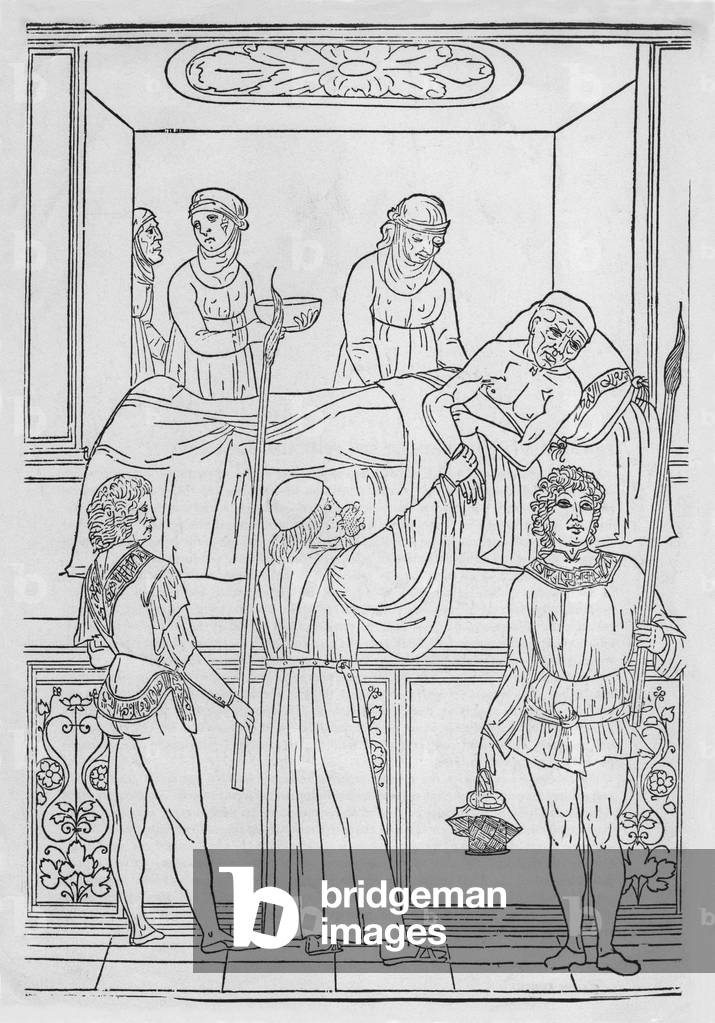
Plague patient. A physician (center front) is taking the pulse of a patient while he breaths through sponge soaked in herbs to protect against evil emanations from the victim. Two men with torches provide light. Three women attend to the patient. From Joannes de Ketham's FASCICULO DE MEDICINA, 1493. Ketham was a German physician living in Italy at the end of the fifteenth century

EVB2936404: Plague patient. A physician (center front) is taking the pulse of a patient while he breaths through sponge soaked in herbs to protect against evil emanations from the victim. Two men with torches provide light. Three women attend to the patient. From Joannes de Ketham's FASCICULO DE MEDICINA, 1493. Ketham was a German physician living in Italy at the end of the fifteenth century / Bridgeman Images

The Out-patient's Room in University College Hospital 1872, in London. Some patients stand in the crowded waiting room. In the background is a dispensary. From THE GRAPHIC, Jan 6, 1872,

EVB2936425: The Out-patient's Room in University College Hospital 1872, in London. Some patients stand in the crowded waiting room. In the background is a dispensary. From THE GRAPHIC, Jan 6, 1872, / Bridgeman Images
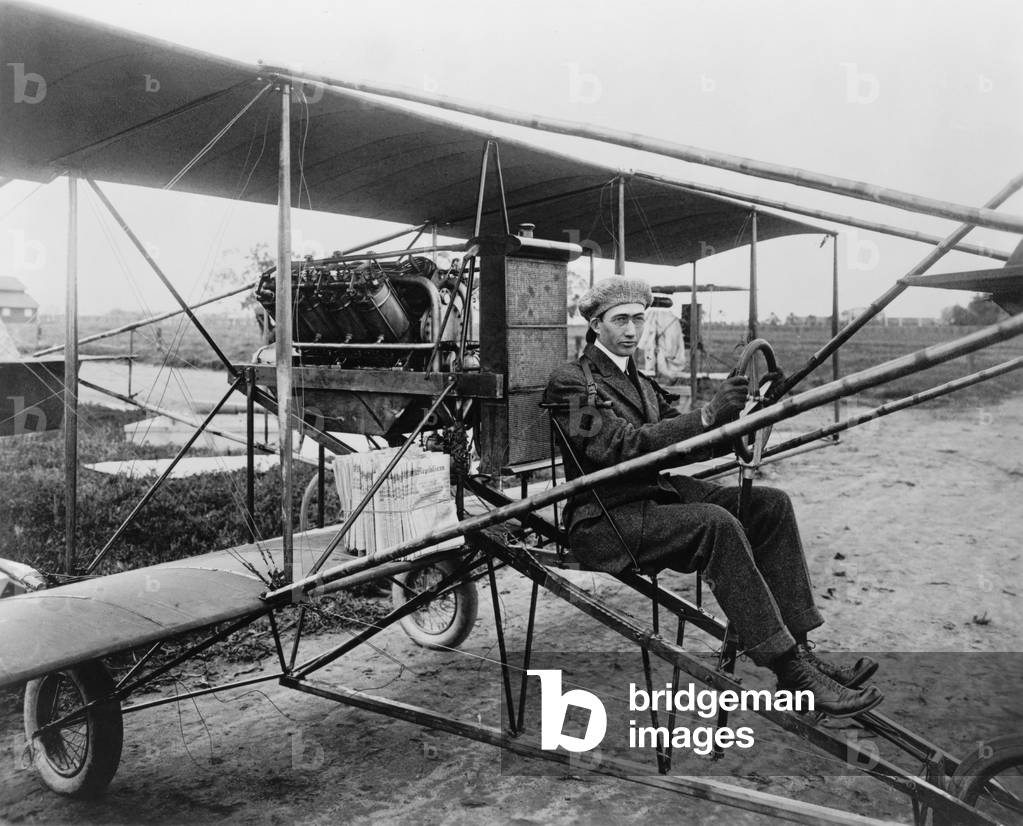
Glenn Martin (1886-1955), delivering newspapers in his airplane. He built his first airplane in 1909, and his first airplane factory in 1912 in Los Angeles, California. He successfully promoted his airplanes by stunt flying, and other attention getting gimmicks. c. 1911

EVB2936324: Glenn Martin (1886-1955), delivering newspapers in his airplane. He built his first airplane in 1909, and his first airplane factory in 1912 in Los Angeles, California. He successfully promoted his airplanes by stunt flying, and other attention getting gimmicks. c. 1911 / Bridgeman Images
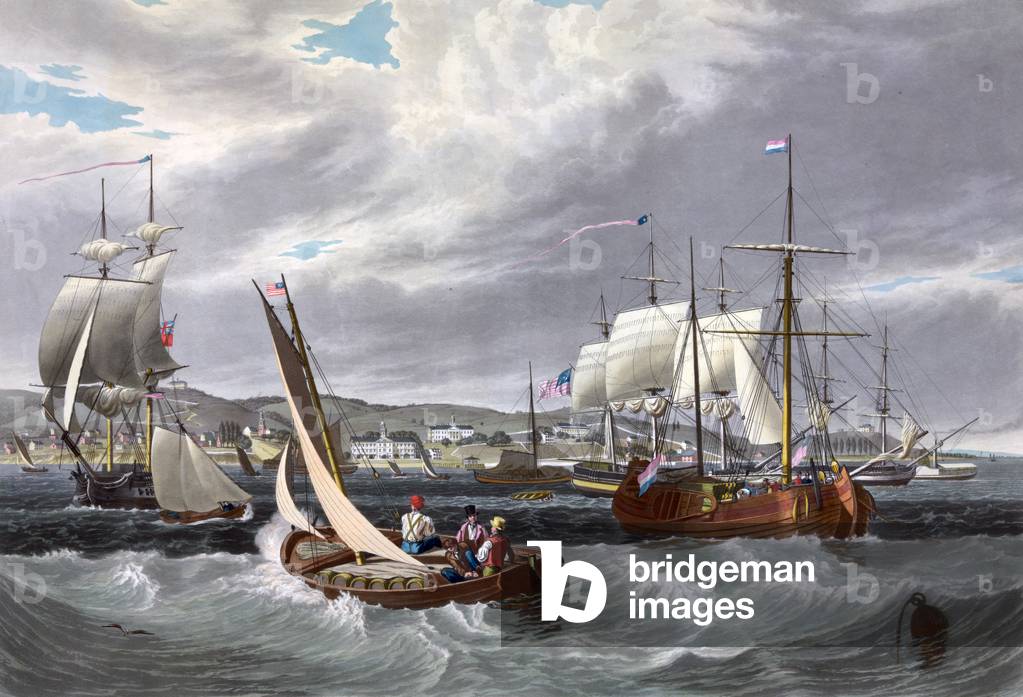
New York City. View of the New York quarantine, Staten Island, 1833

EVB2936366: New York City. View of the New York quarantine, Staten Island, 1833 / Bridgeman Images

European portrait of Abu Bakr Muhammad Ibn Zakariy Razi (known in Europe as Rhazes or Rasis),(865-925). The Persian scholar and physician is considered one of the greatest physicians of the Islamic world. He holds his KITAB AL-HAWI, (Comprehensive Book), which synthesized his the medical knowledge of the Greeks, Syrians, Arabs, and Indians. 1493 German woodcut

EVB2936485: European portrait of Abu Bakr Muhammad Ibn Zakariy Razi (known in Europe as Rhazes or Rasis),(865-925). The Persian scholar and physician is considered one of the greatest physicians of the Islamic world. He holds his KITAB AL-HAWI, (Comprehensive Book), which synthesized his the medical knowledge of the Greeks, Syrians, Arabs, and Indians. 1493 German woodcut / Bridgeman Images

Title page of Avicenna's, LIBER CANONIS TOTIUS MEDICINE (CANON OF MEDICINE), published in Paris in 1522. The systematic encyclopedia was based on Greek and Roman medicine with Avicenna's additions. Hippocrates, Galen and Avicenna art pictured at top

EVB2936524: Title page of Avicenna's, LIBER CANONIS TOTIUS MEDICINE (CANON OF MEDICINE), published in Paris in 1522. The systematic encyclopedia was based on Greek and Roman medicine with Avicenna's additions. Hippocrates, Galen and Avicenna art pictured at top / Bridgeman Images
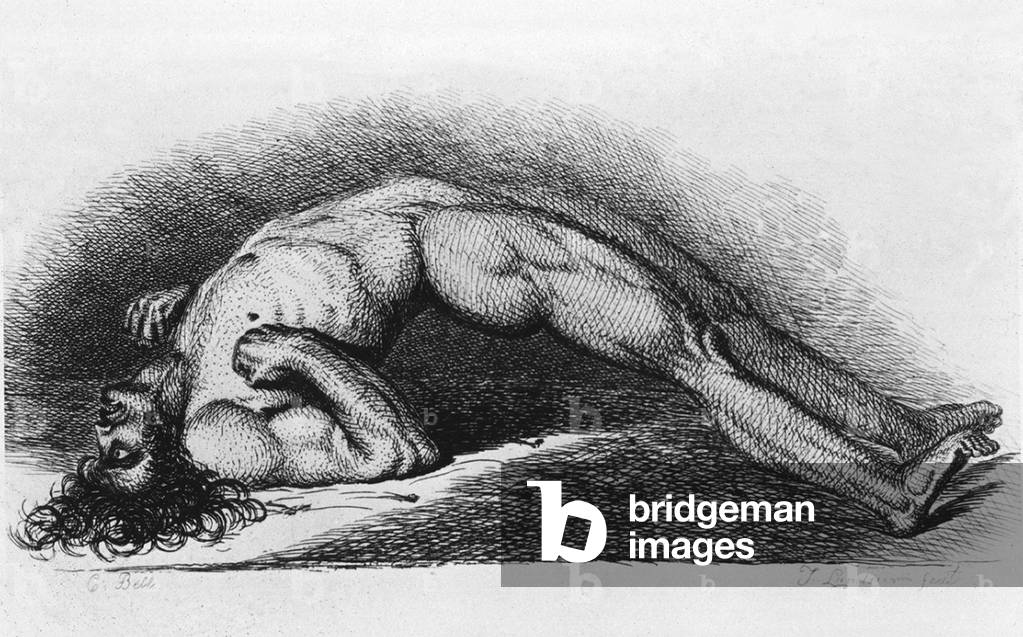
Tetanus (Lockjaw) victim. The contracted body of soldier suffering from tetanus. Engraving from painting by Charles Bell, 1809

EVB2936444: Tetanus (Lockjaw) victim. The contracted body of soldier suffering from tetanus. Engraving from painting by Charles Bell, 1809 / Bridgeman Images

Operating room amphitheater of the Massachusetts General Hospital, Boston. A patient is receiving ether anesthesia as doctors and students observe. 1888

EVB2936471: Operating room amphitheater of the Massachusetts General Hospital, Boston. A patient is receiving ether anesthesia as doctors and students observe. 1888 / Bridgeman Images

Physical therapy patient using finger walker to increase flexibility and range of motion in shoulder. c. 1950

EVB2936480: Physical therapy patient using finger walker to increase flexibility and range of motion in shoulder. c. 1950 / Bridgeman Images
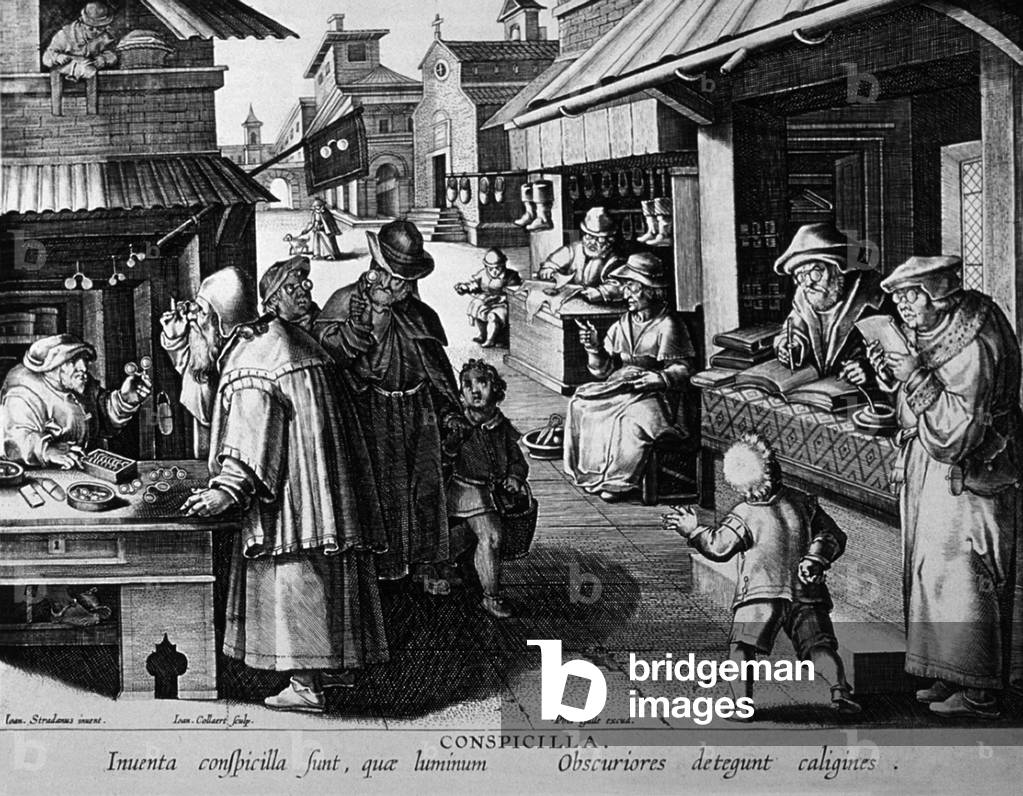
THE SPECTACLE SELLER. A market scene in which most of the adults are wearing spectacles. At left is a man selling spectacles; to the right is a bookseller, and shoe maker. Engraving by Jan Collaert and Joan Galle (engraving), c. 1600

EVB2936483: THE SPECTACLE SELLER. A market scene in which most of the adults are wearing spectacles. At left is a man selling spectacles; to the right is a bookseller, and shoe maker. Engraving by Jan Collaert and Joan Galle (engraving), c. 1600 / Bridgeman Images
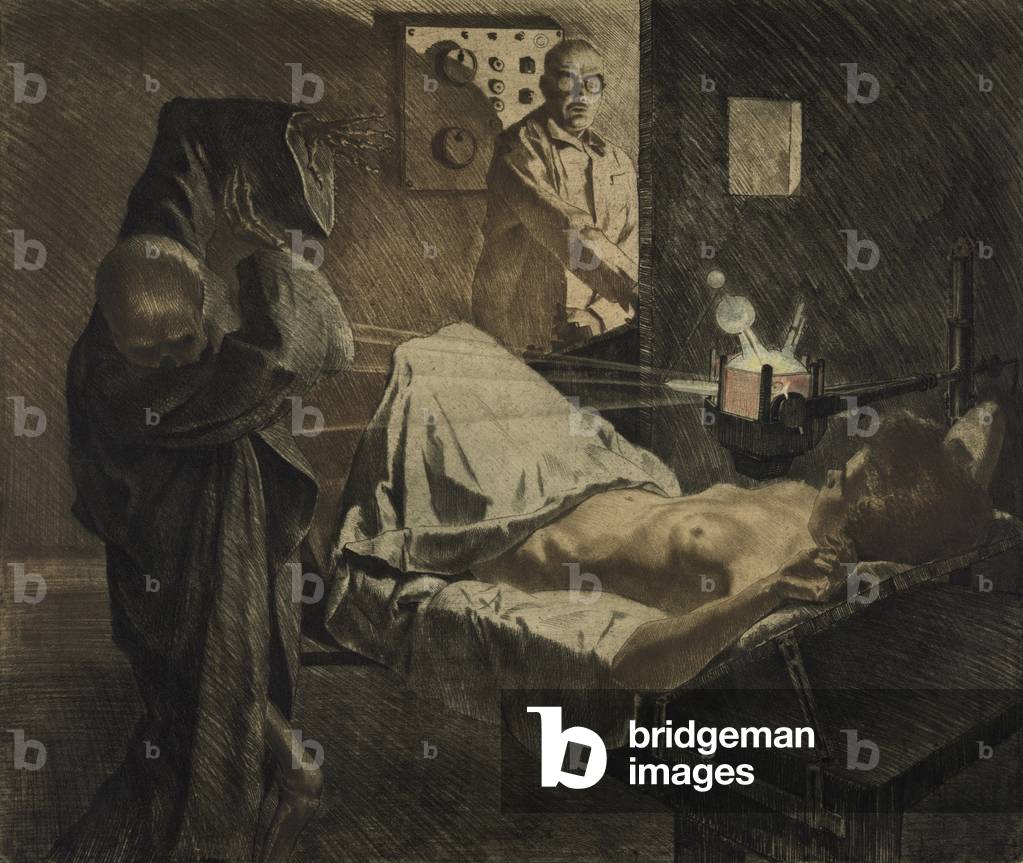
THE PHYSICIAN OF THE X-RAYS, depicts a physician using x-rays to repel Death, a skeleton wearing a shroud, as it approaches a nude young woman on an operating table. c. 1930 print by Austrian artist, Ivo Saliger (1894-1987)

EVB2936489: THE PHYSICIAN OF THE X-RAYS, depicts a physician using x-rays to repel Death, a skeleton wearing a shroud, as it approaches a nude young woman on an operating table. c. 1930 print by Austrian artist, Ivo Saliger (1894-1987) / Bridgeman Images
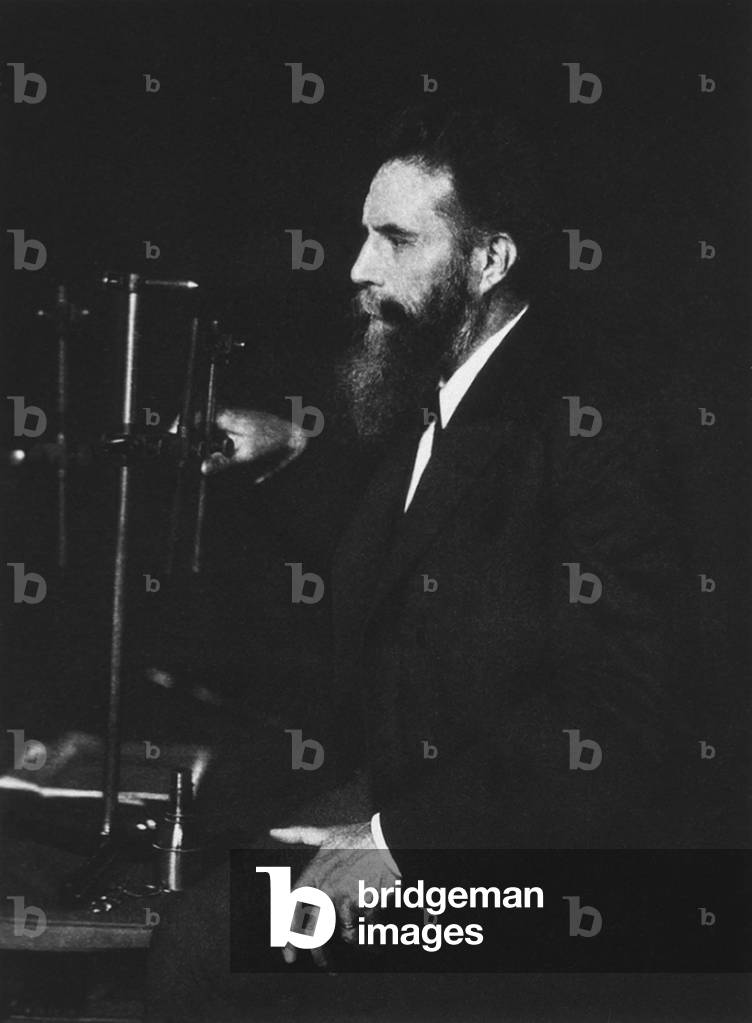
Wilhelm Roentgen (1845-1923), German physicist, discoverer of X-rays, standing beside one of his machines. Photogravure, c. 1895

EVB2936510: Wilhelm Roentgen (1845-1923), German physicist, discoverer of X-rays, standing beside one of his machines. Photogravure, c. 1895 / Bridgeman Images
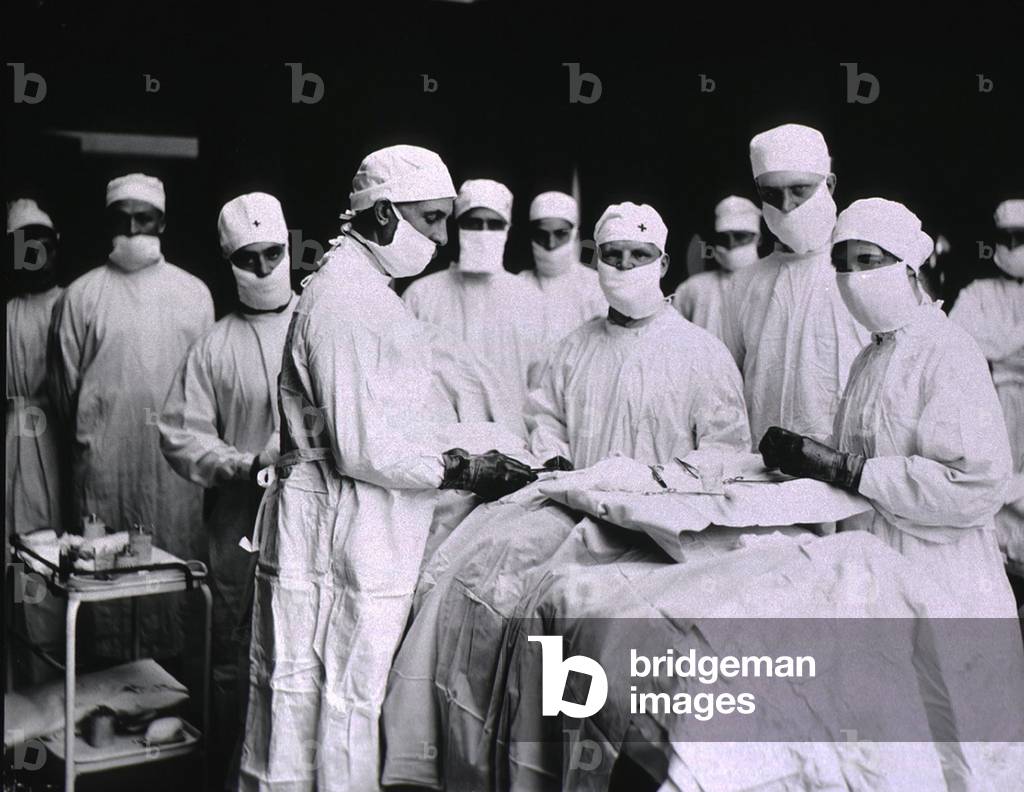
Surgeons and nurses masked in preparation for surgery at U.S. Army General Hospital in Detroit, Michigan. c. 1920

EVB2936558: Surgeons and nurses masked in preparation for surgery at U.S. Army General Hospital in Detroit, Michigan. c. 1920 / Bridgeman Images

Smallpox viruses. A colorized transmission electron micrograph. 1975

EVB2936579: Smallpox viruses. A colorized transmission electron micrograph. 1975 / Bridgeman Images
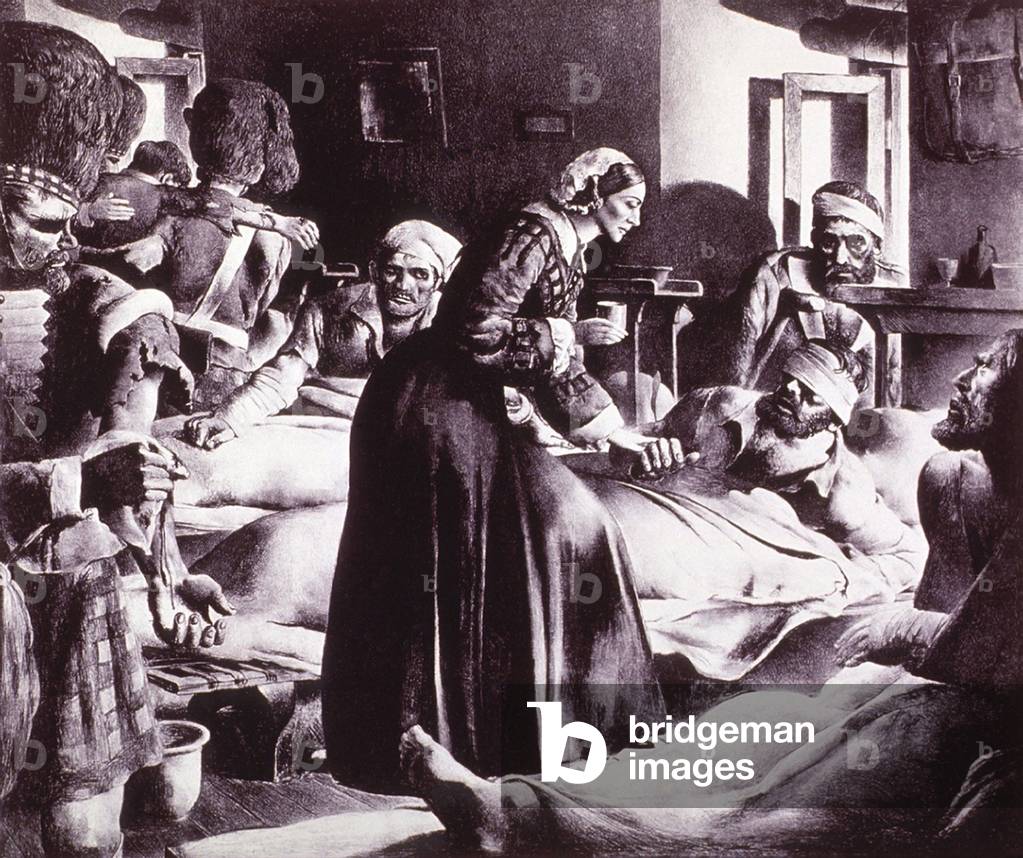
Florence Nightingale (1820-1910), ministering to soldiers at Scutari, a suburb of Istanbul (across the Bosporus from Istanbul) during the Crimean War. She defied her wealthy family by adopting the lower class profession of nursing. With her education and social position, she reformed the profession and British treatment of sick and wounded soldiers. 1854. Lithograph by Robert Riggs, c. 1930 with modern watercolor

EVB2936588: Florence Nightingale (1820-1910), ministering to soldiers at Scutari, a suburb of Istanbul (across the Bosporus from Istanbul) during the Crimean War. She defied her wealthy family by adopting the lower class profession of nursing. With her education and social position, she reformed the profession and British treatment of sick and wounded soldiers. 1854. Lithograph by Robert Riggs, c. 1930 with modern watercolor / Bridgeman Images

The human circulation system, from MANSUR'S ANATOMY, authored by the Persian scholar and physician, Mansur ibn Ilyas (c. 1370-1423). The arteries are shown with the internal organs indicated in opaque watercolors. c. 15th or early 16th-century

EVB2936651: The human circulation system, from MANSUR'S ANATOMY, authored by the Persian scholar and physician, Mansur ibn Ilyas (c. 1370-1423). The arteries are shown with the internal organs indicated in opaque watercolors. c. 15th or early 16th-century / Bridgeman Images

Mexican-American young women working as carrot pullers in Edinburg, Texas. February 1939 photograph by Russell Lee

EVB2936705: Mexican-American young women working as carrot pullers in Edinburg, Texas. February 1939 photograph by Russell Lee, Russell, Lee (1903-86) / Bridgeman Images
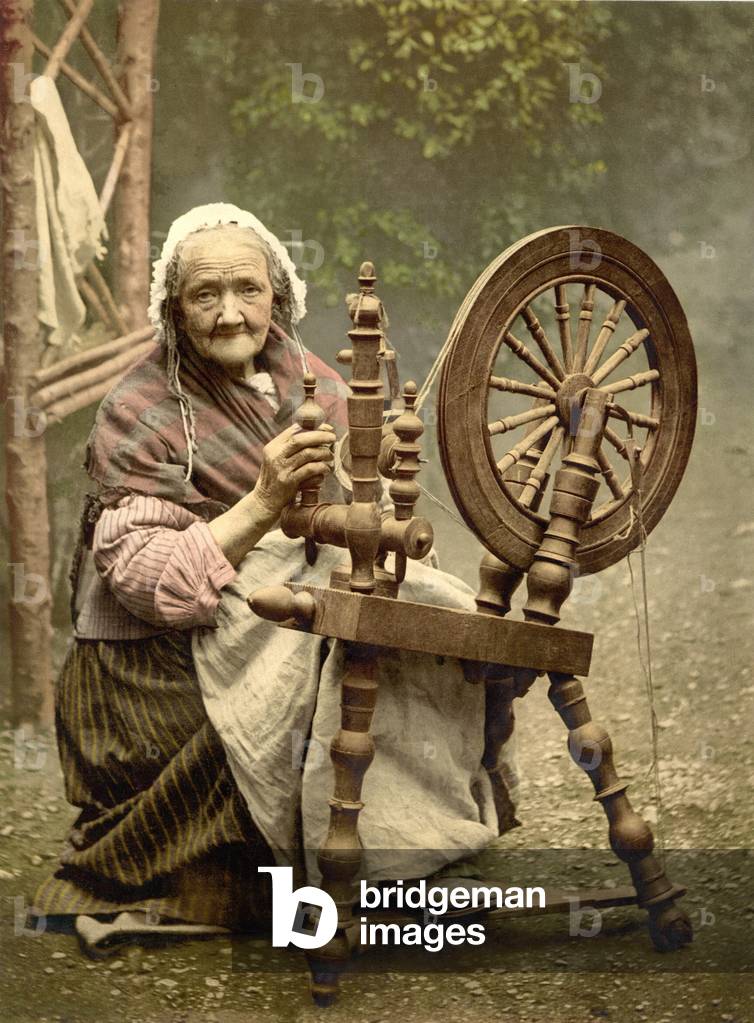
Elderly Irish Spinner working outdoors at her spinning wheel in the late 19th century. While picturesque, home spinning as late as 1900 indicated Ireland's the slow economic development and lack of industrialization. Galway County, c. 1900

EVB2936720: Elderly Irish Spinner working outdoors at her spinning wheel in the late 19th century. While picturesque, home spinning as late as 1900 indicated Ireland's the slow economic development and lack of industrialization. Galway County, c. 1900 / Bridgeman Images

Crowd of Eastern European emigrants, possibly Jewish, with three Russian officials, who are reviewing their travel papers. c. 1912

EVB2936822: Crowd of Eastern European emigrants, possibly Jewish, with three Russian officials, who are reviewing their travel papers. c. 1912, Unknown photographer, (20th century) / Bridgeman Images
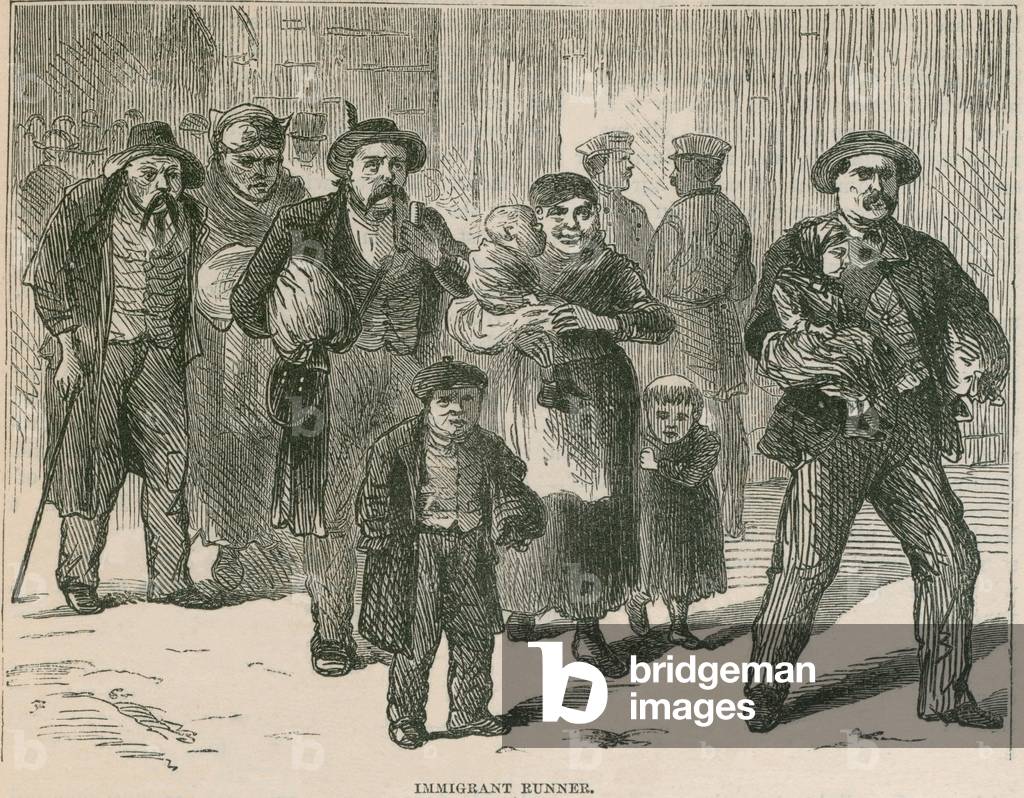
An 'immigrant runner' carrying the child of a newly arrived immigrant family. Runner' met newcomers to promote a specific boarding house, employer, or transportation. Often immigrants themselves, they could be unscrupulous and preyed on new arrivals. c. 1870

EVB2936825: An 'immigrant runner' carrying the child of a newly arrived immigrant family. Runner' met newcomers to promote a specific boarding house, employer, or transportation. Often immigrants themselves, they could be unscrupulous and preyed on new arrivals. c. 1870 / Bridgeman Images
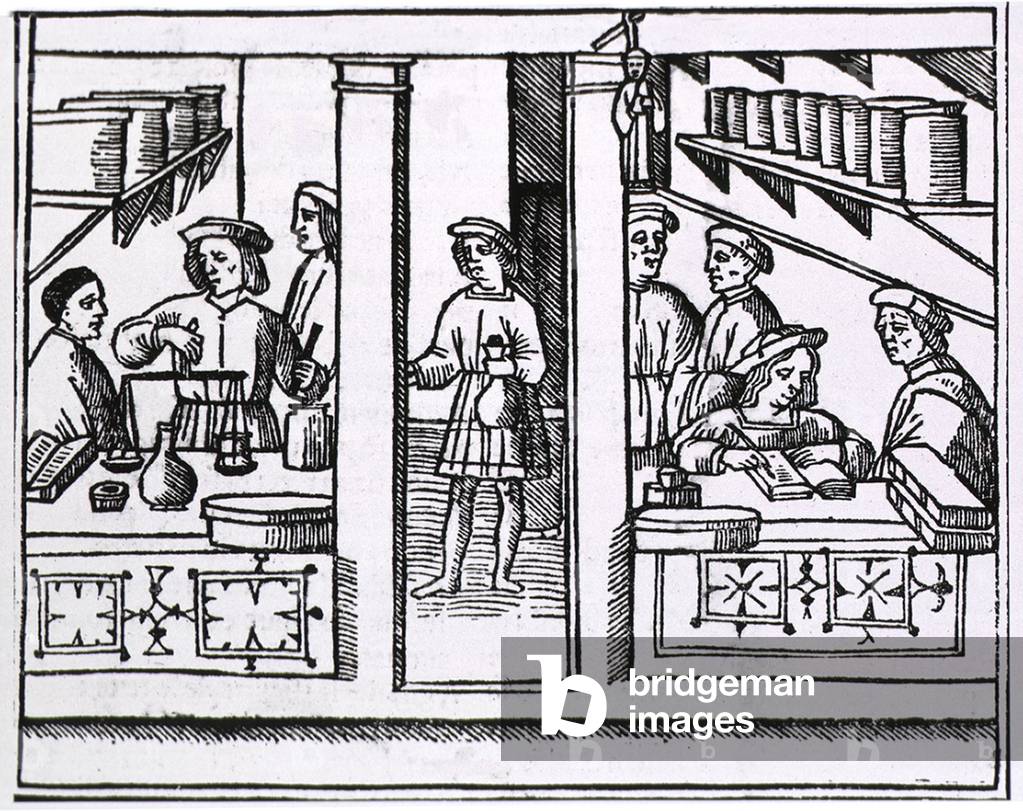
Pharmacy scene from the title page of a Latin version of Galen's RECETARIO DE GALIENO, published in Venice in 1518

EVB2936533: Pharmacy scene from the title page of a Latin version of Galen's RECETARIO DE GALIENO, published in Venice in 1518 / Bridgeman Images

Hospital staff are examining a patient in a tank respirator, iron lung, during a Rhode Island polio epidemic. The iron lung encased the thoracic cavity externally in an air-tight chamber. The chamber was used to create a negative pressure around the thoracic cavity, thereby causing air to rush into the lungs to equalize intrapulmonary pressure. c. 1960

EVB2936572: Hospital staff are examining a patient in a tank respirator, iron lung, during a Rhode Island polio epidemic. The iron lung encased the thoracic cavity externally in an air-tight chamber. The chamber was used to create a negative pressure around the thoracic cavity, thereby causing air to rush into the lungs to equalize intrapulmonary pressure. c. 1960 / Bridgeman Images
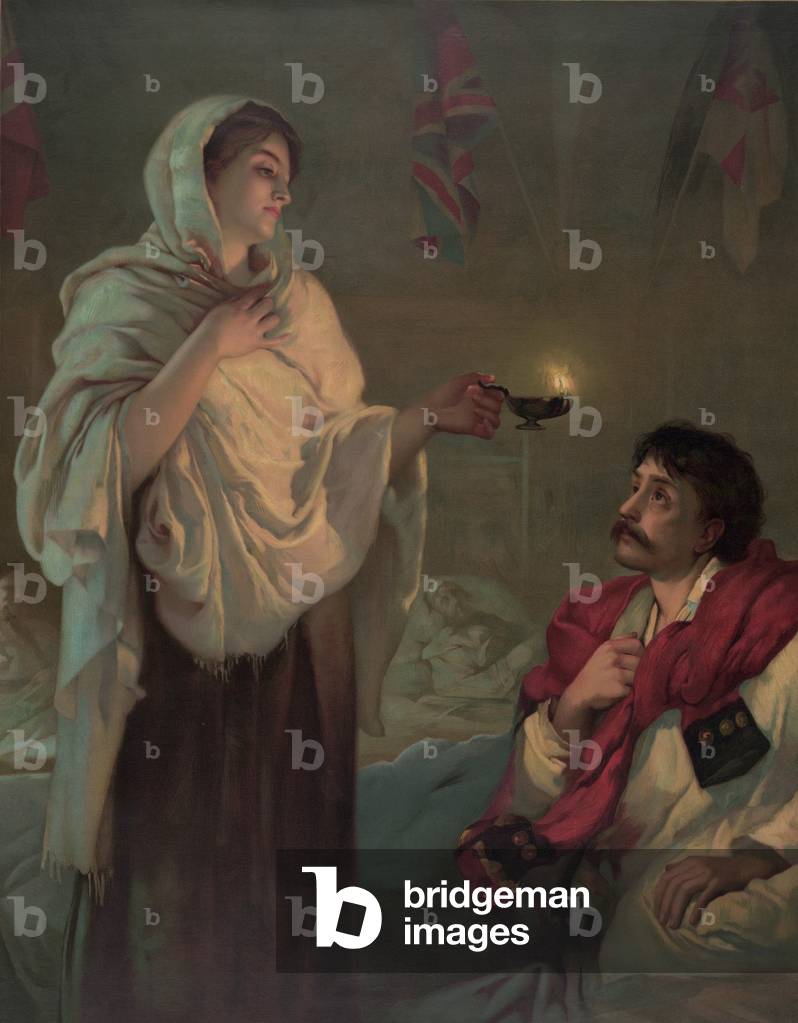
Florence Nightingale (1820-1910), in a romanticized portrait as the LADY WITH THE LAMP, at the Crimean War hospital for British soldiers at Scutari, Turkey, in 1854. British chromolithograph of 1891

EVB2936587: Florence Nightingale (1820-1910), in a romanticized portrait as the LADY WITH THE LAMP, at the Crimean War hospital for British soldiers at Scutari, Turkey, in 1854. British chromolithograph of 1891 / Bridgeman Images
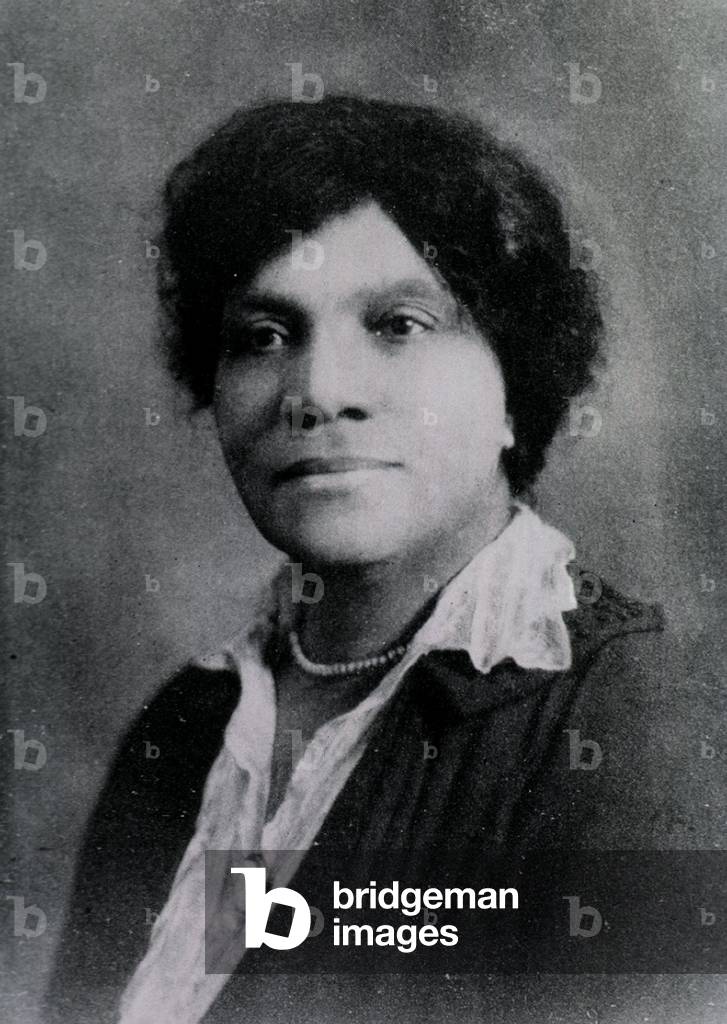
Adah B. Thoms (1870-1943), African American registered nurse who co-founded the National Association of Colored Nurses (with Martha Franklin) in 1912. The organization campaigned for integration of black nurses in hospitals, in nursing education, and in the U.S. military. Print from PATHFINDERS, A HISTORY OF THE PROGRESS OF COLORED GRADUATE NUYRSES, 1927

EVB2936590: Adah B. Thoms (1870-1943), African American registered nurse who co-founded the National Association of Colored Nurses (with Martha Franklin) in 1912. The organization campaigned for integration of black nurses in hospitals, in nursing education, and in the U.S. military. Print from PATHFINDERS, A HISTORY OF THE PROGRESS OF COLORED GRADUATE NUYRSES, 1927 / Bridgeman Images
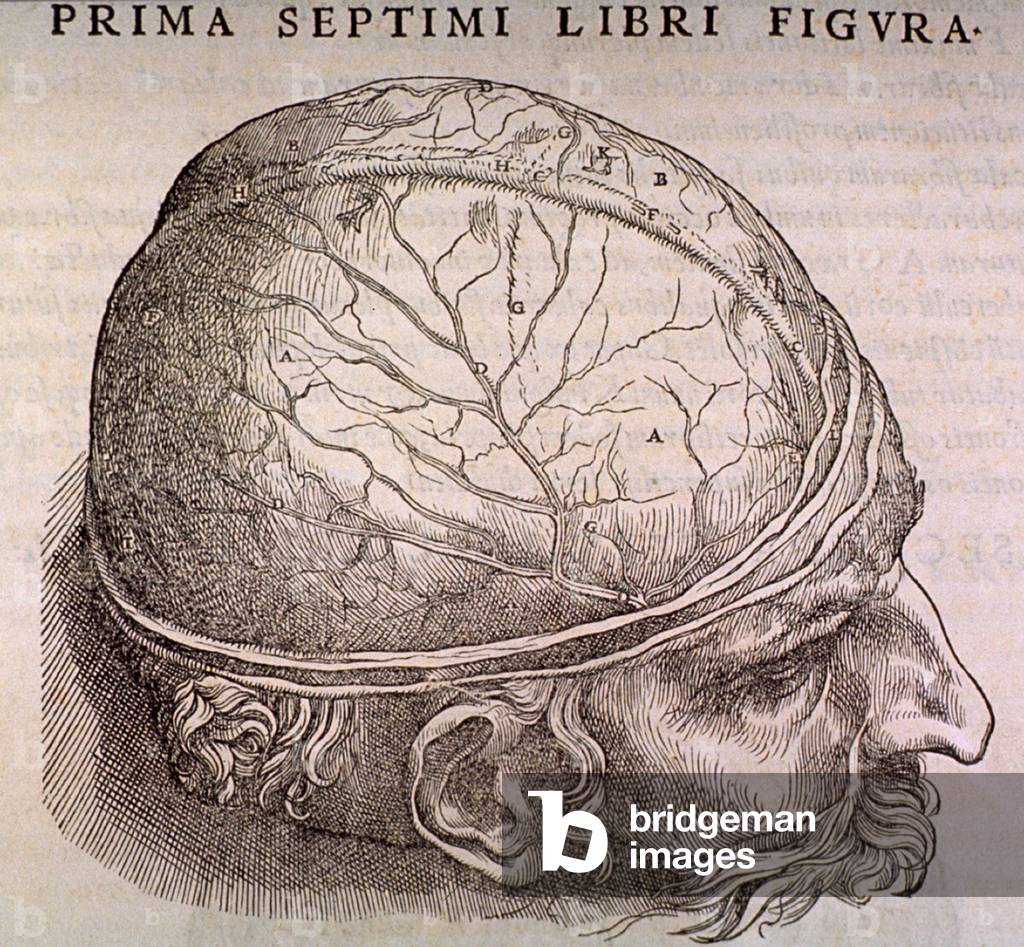
Brain Plate, showing the duramater, the outermost membrane covering the brain, from the classic anatomical treatise, DE CORPORIS HUMANI FABRICA (On the Structure of the Human Body), by Andreas Vesalius (1514-1564), in 1543

EVB2936662: Brain Plate, showing the duramater, the outermost membrane covering the brain, from the classic anatomical treatise, DE CORPORIS HUMANI FABRICA (On the Structure of the Human Body), by Andreas Vesalius (1514-1564), in 1543 / Bridgeman Images
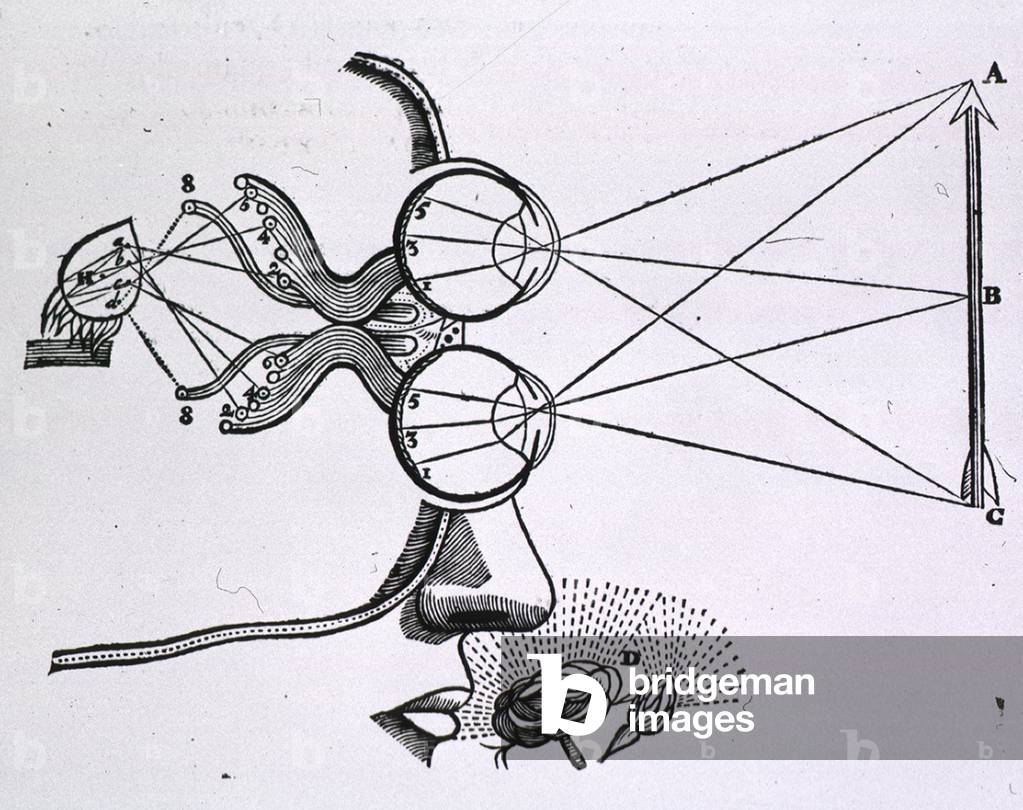
Portion of head with the eyes represented above each other and focused on an arrow; lines extend from the eyes to the mid and terminal points of the arrow; visual receptor portion of the brain is shown, and the sense of smell is indicated by a flower

EVB2936671: Portion of head with the eyes represented above each other and focused on an arrow; lines extend from the eyes to the mid and terminal points of the arrow; visual receptor portion of the brain is shown, and the sense of smell is indicated by a flower / Bridgeman Images
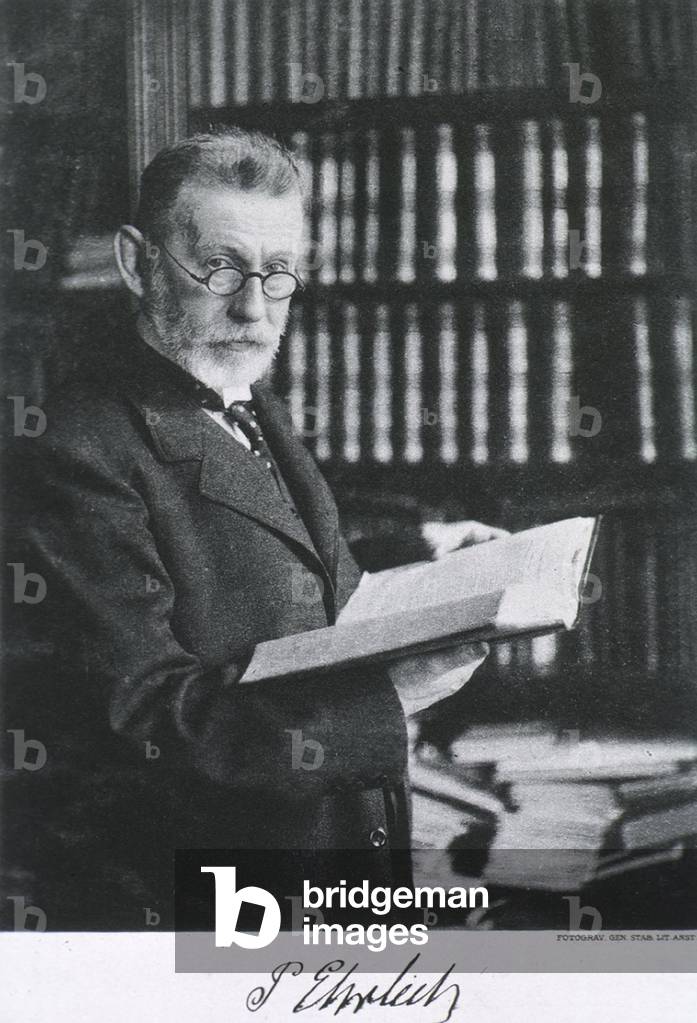
Paul Ehrlich (1854-1918), German medical scientist experimented with chemical treatments to destroy pathogens and their ill effects on humans. His greatest discovery was an arsenic based medicine that was the first effective treatment for syphilis in 1910

EVB2936674: Paul Ehrlich (1854-1918), German medical scientist experimented with chemical treatments to destroy pathogens and their ill effects on humans. His greatest discovery was an arsenic based medicine that was the first effective treatment for syphilis in 1910 / Bridgeman Images
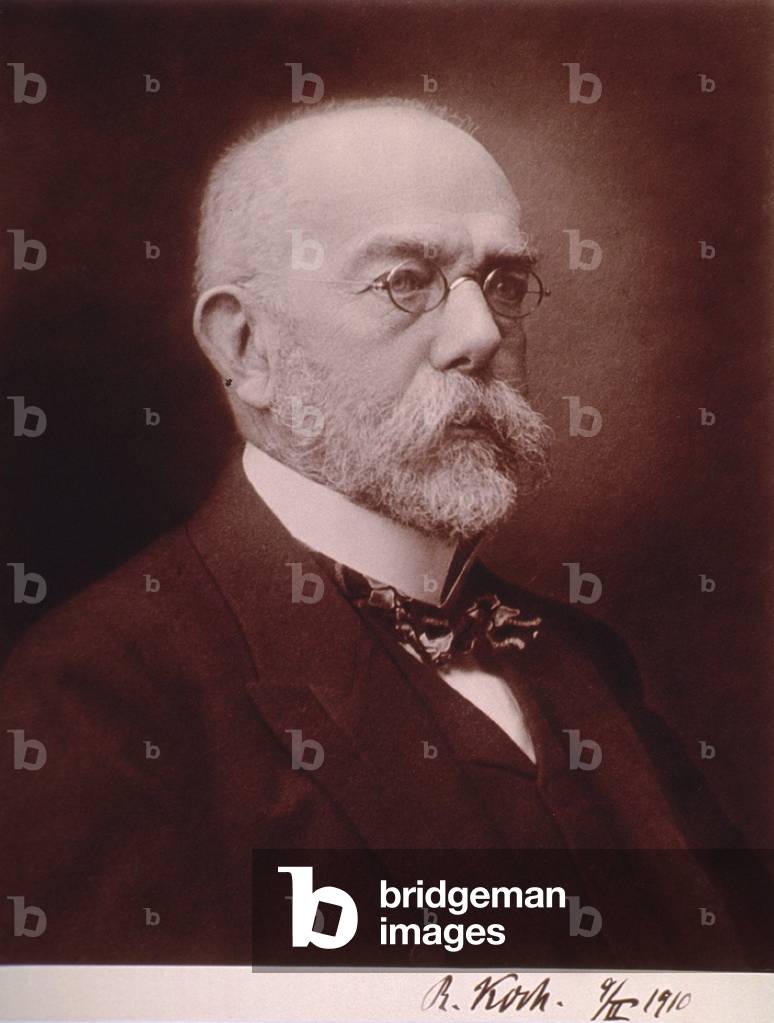
Robert Koch (1843-1910) German physician discovered the anthrax disease cycle, and the bacteria responsible for tuberculosis and cholera. 1899 portrait

EVB2936683: Robert Koch (1843-1910) German physician discovered the anthrax disease cycle, and the bacteria responsible for tuberculosis and cholera. 1899 portrait / Bridgeman Images
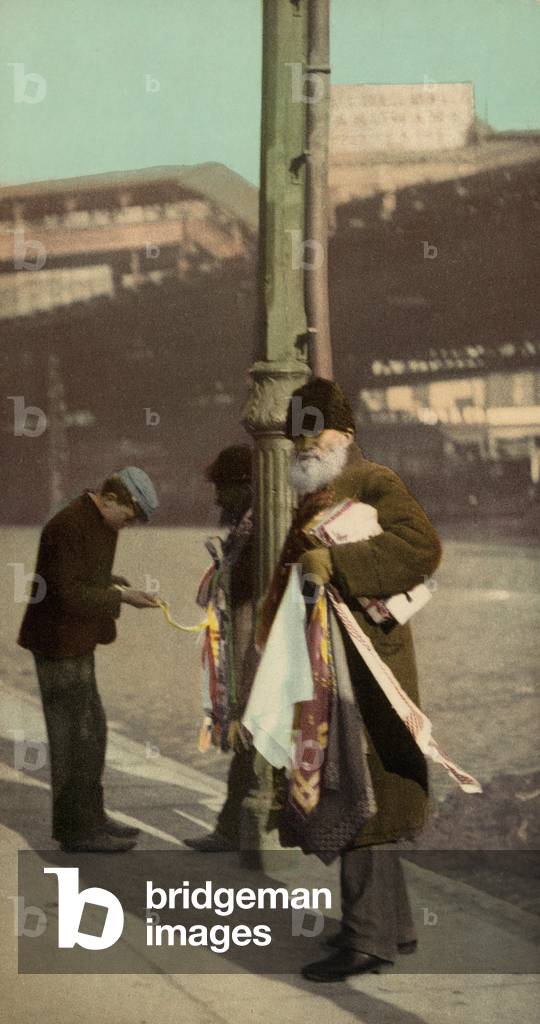
Two Jewish peddlers selling ties on the street, probably New York. c. 1902

EVB2936710: Two Jewish peddlers selling ties on the street, probably New York. c. 1902 / Bridgeman Images
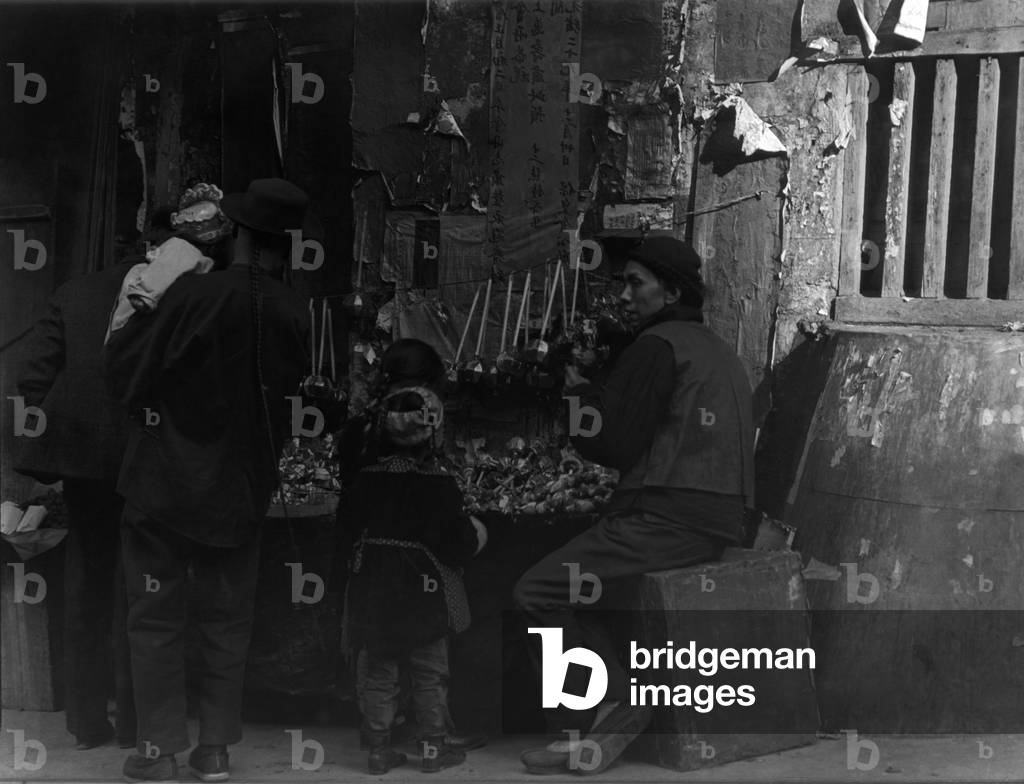
TOY MERCHANTS. Chinese immigrants in San Francisco. From Arnold Genthe's CHINATOWN SERIES. c. 1900

EVB2936764: TOY MERCHANTS. Chinese immigrants in San Francisco. From Arnold Genthe's CHINATOWN SERIES. c. 1900 / Bridgeman Images

Jewish immigrants digging a trench as they establish a communal agricultural settlement, a kibbutz, on land provided by Jewish philanthropic organizations, usually purchased from Palestinians or Arab landlords. c. 1920-36

EVB2936794: Jewish immigrants digging a trench as they establish a communal agricultural settlement, a kibbutz, on land provided by Jewish philanthropic organizations, usually purchased from Palestinians or Arab landlords. c. 1920-36 / Bridgeman Images
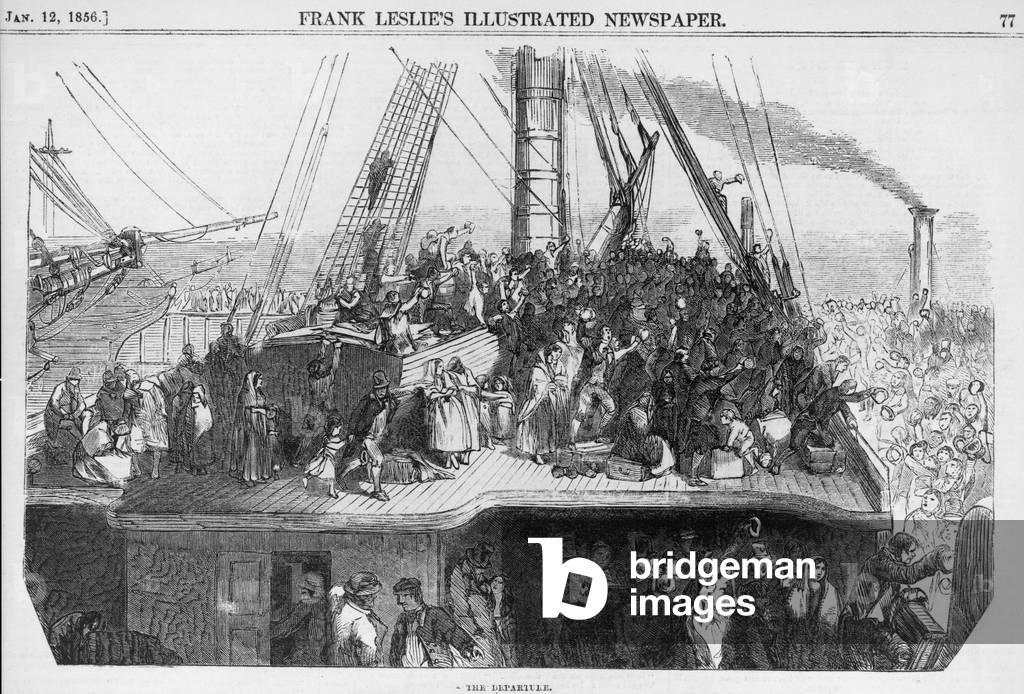
Immigrants waving farewell to crowd on dock, as their ship leaves a Western European port for North Americ. Wood engravings 1850-1860

EVB2936827: Immigrants waving farewell to crowd on dock, as their ship leaves a Western European port for North Americ. Wood engravings 1850-1860 / Bridgeman Images


Back to top