
Print this page or go back to standard view.

JLJ4648779: The village celebration, 17th century (oil on canvas), Claude Lorrain (Claude Gellee) (1600-82) / Bridgeman Images

JLJ4648792: France and England fought at the Battle of Fontenoy in 1745, witnessed by Louis XV and the Dauphin, 18th century (oil on canvas), French School, (18th century) / Bridgeman Images

FLO4657463: Catherine-Henriette de Balzac d'Etragues, Marquise de Verneuil, mistress of King Henry IV of France, 1579-1633. She wears her hair tied up with a ribbon of roses, a velvet dress with corset and English vertugadin or clamshell farthingale, slashed sleeves, high lace collar, skirts decorated with gold bands. After a miniature in oils in the editor's collection., Gatine, Georges Jacques (1773-1831) / Bridgeman Images

LRI4657519: Roman theater, 1st-2nd century, Roman, (2nd century) / Bridgeman Images
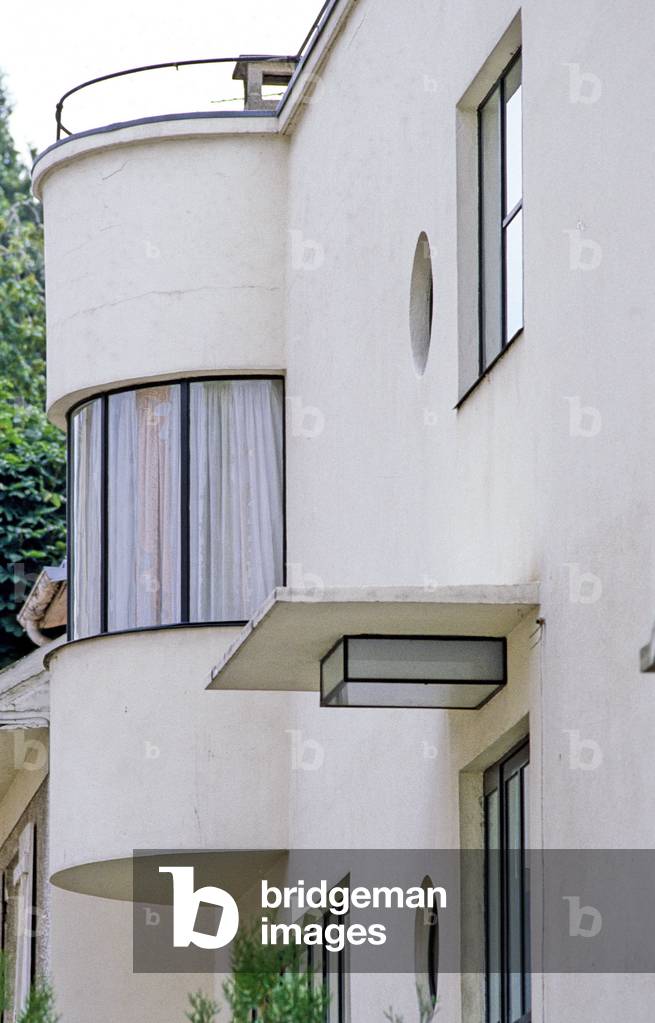
TEC4657612: Villa Bomsel, 12 rue Rene Aubert in Versailles (Les Yvelines). Construction 1924-1925, architect Andre Lurcat (1894-1970). Villa commissioned by art collector Emond Bomsel. In the humid basement of Versailles, the residence is oversized, the ground floor being reserved for the car garage, the services and the rooms of the servants. The construction is made of concrete weapon, the sobriete and the rigor of the proportion of this villa make it a manifesto of the international movement; Photography 30/04/88. / Bridgeman Images
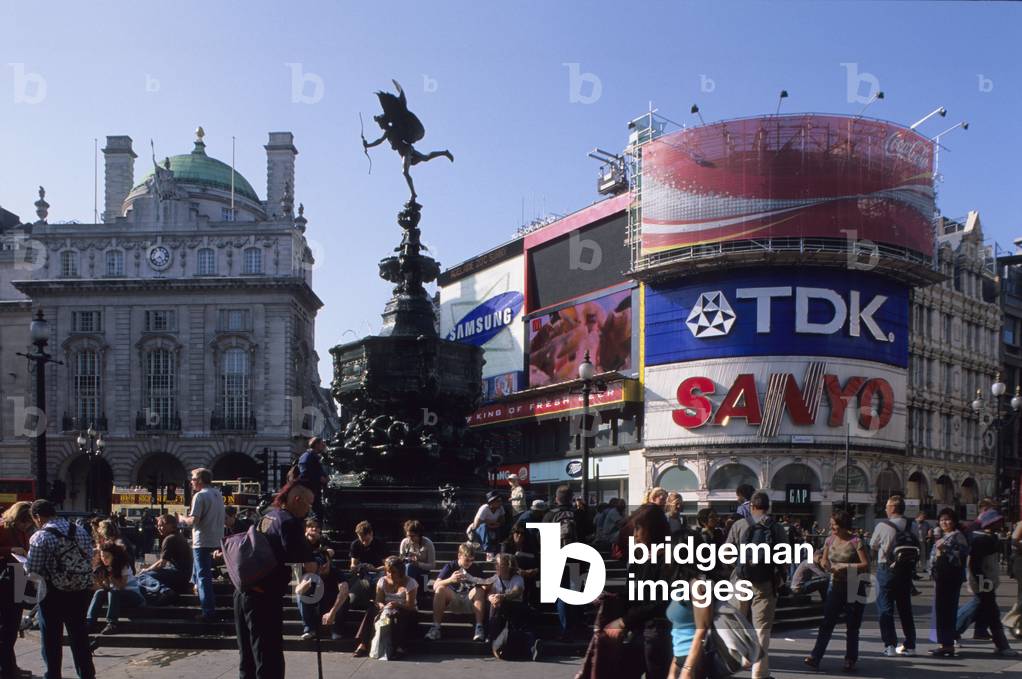
TEC4648941: Picadilly Circus to London (Great Britain). / Bridgeman Images

FLO4657620: Marie Anne Cuppi, Miss La Camargo, famous ballet dancer, 1710-1770. She wears a small cap, ruff collar, dress with laced bodice, lace sleeves tied with ribbons, apron and calf-length skirt and high-heel shoes. After a portrait in oils in the editor's collection. Handcoloured copperplate engraving by Georges Jacques Gatine after an illustration by Louis Marie Lante from Galerie Francaise de Femmes Celebres, Paris, 1827., Gatine, Georges Jacques (1773-1831) / Bridgeman Images

LRI4649019: Steamer British Queen in 1840 (19th century print), Unknown Artist, (19th century) / Bridgeman Images
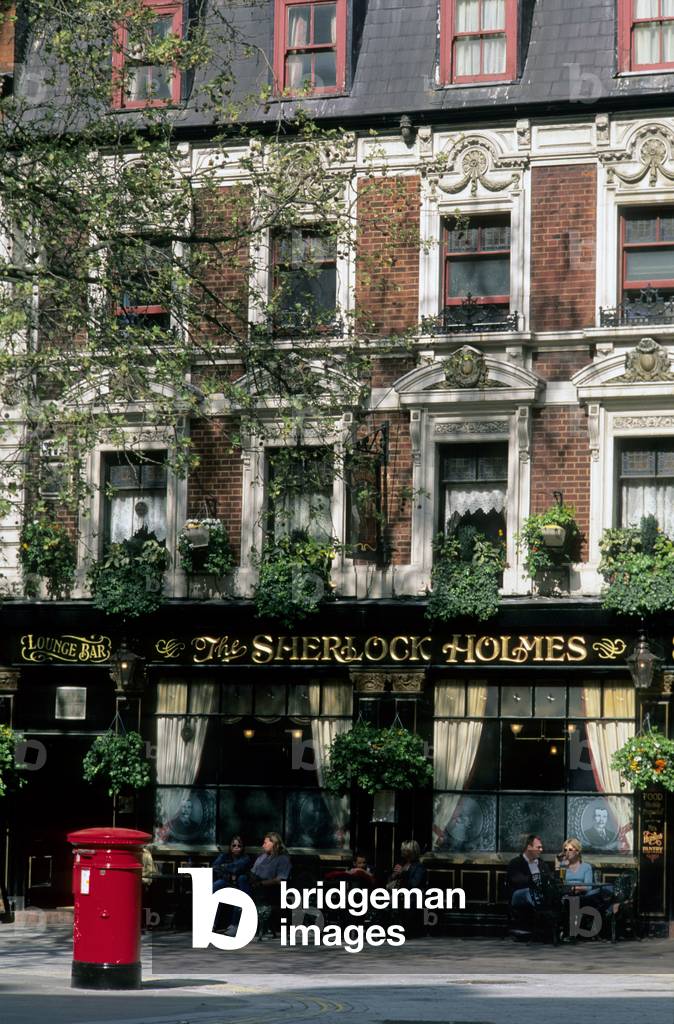
TEC4649047: Pub in London (Great Britain). / Bridgeman Images

TEC4640181: Place Saint Jean in Brussels (Belgium). / Bridgeman Images

LRI4640197: Stele called Amrit: probably Melqart represented on his lion, the solar disk above him. 6th or 5th century BC (limestone), Phoenician, (6th century BC) / Bridgeman Images

JLJ4640200: Hairy play shackles in the trench, First World War (stereoscopic glass plate), Anonymous / Bridgeman Images

FLO4640214: Honeysuckle of New South Wales, Lonicera species. Illustration copied from George Edwards. Handcoloured copperplate engraving from “” The Naturalist's Pocket Magazine,”” Harrison, London, 1800. / Bridgeman Images

FLO4640345: Spotted axis deer, Axis axis. Handcoloured copperplate engraving from “” The Naturalist's Pocket Magazine,”” Harrison, London, 1802. / Bridgeman Images

FLO4640377: Spotted blue fly of New South Wales. Handcoloured copperplate engraving from “” The Naturalist's Pocket Magazine,”” Harrison, London, 1802. / Bridgeman Images

JLJ4640380: A Detail Review, First World War (stereoscopic glass plate), Anonymous / Bridgeman Images

LBY4640445: The Lombard building, 69 Foch Avenue in Nancy (Meurthe and Moselle). Architect Emile Andre (1871-1933), 1903. In Nancy, Art Nouveau takes the name of Ecole de Nancy, or Alliance provincial des industries d'art, thanks in particular to the emblematic figure of Emile Galle. Glassware, furniture, stained glass, ceramics, leather, ironwork, architecture, etc., participate in this vast movement of renovation of decorative arts that still marks the city today., André, Emile (1871-1933) / Bridgeman Images

JLJ4640480: Soldier of the Grande Armee, during the campaign of Russia (1812), 1900 (engraving), Job, pseudonym for Onfray de Breville, Jacques (1858-1931) / Bridgeman Images
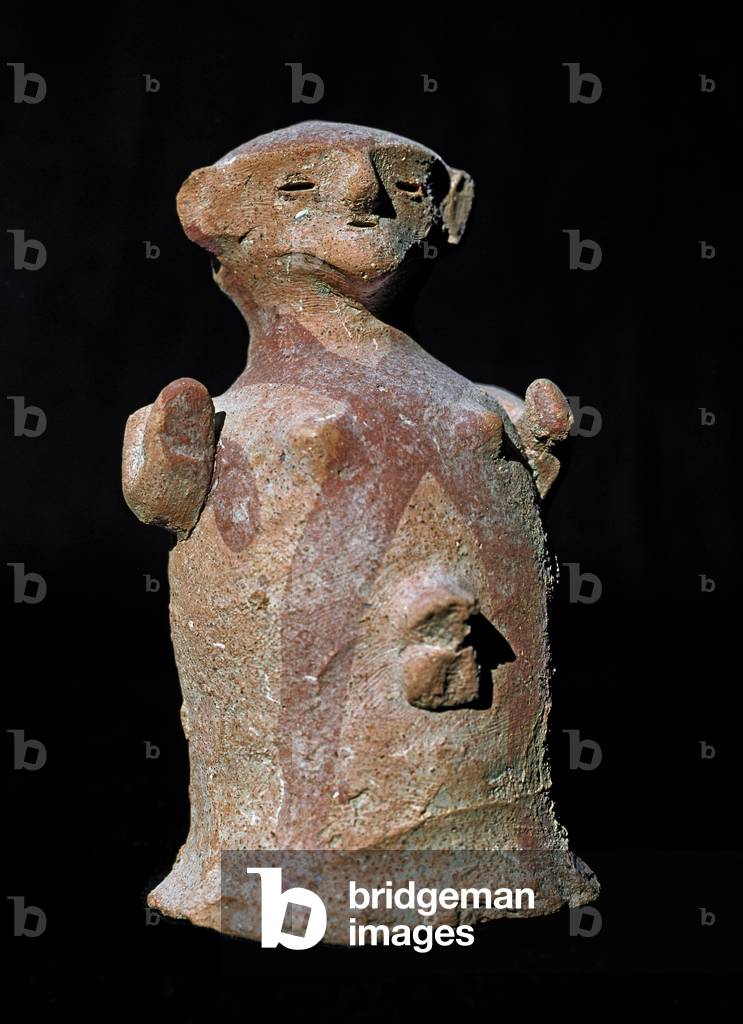
LRI4640489: Statuette of man in the shape of bell, 7th or 6th century BC (terracotta), Carthaginian (7th-3rd century BC) / Bridgeman Images

LBY4640532: Maison Houot, 92 to Quai Le lorrain (architect Emile Andre, 1903) in Nancy (Meurthe et Moselle). In Nancy, Art Nouveau takes the name of Ecole de Nancy, or Alliance provincial des industries d'art, thanks in particular to the emblematic figure of Emile Galle. Glassware, furniture, stained glass, ceramics, leather, ironwork, architecture, etc. participate in this vast movement of renovation of decorative arts that still marks the city today., André, Emile (1871-1933) / Bridgeman Images

LRI4640544: Punic art: ring decorating a Phenician amulet. 7th-5th century BC. Cagliari, Museo Archeologico Nazionale, Carthaginian (7th-3rd century BC) / Bridgeman Images

FLO4640554: Banded cotinga, Cotinga maculata, male. (Purple-breasted blue manakin) Endangered. Copied from George Edwards “Natural History of Birds,” 1749. Handcoloured copperplate engraving from “” The Naturalist's Pocket Magazine,”” Harrison, London, 1799. / Bridgeman Images

LRI4640633: Votive statuette of the sick invoking the healing of his intestines, from the site of Bithia, 3rd or 2nd century BC (terracotta sculpture), Carthaginian (7th-3rd century BC) / Bridgeman Images

LBY4640675: The Chamber of Commerce, 40 Rue Pointcarre in Nancy (Meurthe and Moselle). Architects EmiletousSaint (1872-1914) and Louis Marchal (1879-1954), 1908. In Nancy, Art Nouveau takes the name of Ecole de Nancy, or Alliance provincial des industries d'art, thanks in particular to the emblematic figure of Emile Galle. Glassware, furniture, stained glass, ceramics, leather, ironwork, architecture, etc., participate in this vast movement of renovation of decorative arts that still marks the city today., Marchal, Louis (1879-1954) / Bridgeman Images

FLO4640686: Pig tailed macaque, Macaca nemestrina. Illustration copied from George Edwards. Handcoloured copperplate engraving from “” The Naturalist's Pocket Magazine,”” Harrison, London, 1798. / Bridgeman Images

LBY4640700: The Chamber of Commerce, 40 Rue Pointcarre (Architect Toussaint et Marchal, 1908) in Nancy (Meurthe et Moselle). In Nancy, Art Nouveau takes the name of Ecole de Nancy, or Alliance provincial des industries d'art, thanks in particular to the emblematic figure of Emile Galle. Glassware, furniture, stained glass, ceramics, leather, iron, architecture, etc. are part of this vast movement of renovation of decorative arts that still marks the city today., Marchal, Louis (1879-1954) / Bridgeman Images

FLO4649228: Souvenir d'un ami rose, hybrid tea rose, raised by an amateur in Moulins in 1846. Chromolithograph drawn and lithographed after nature by F. Grobon from Hippolyte Jamain and Eugene Forney's “” Les Roses,” Paris, J. Rothschild, 1873. Jamain was a rose grower and Forney a professor of arboriculture. Francois Frederic GROBON (1815-1901) ran his own atelier and illustrated “” Fleurs” after Redoute with his brother Anthelme as the Grobon freres. / Bridgeman Images

LRI4649293: Prehistory: terracotta head from the necropolis of Cancelli. Civilization of the Apennines (or Italian Bronze Age). 1400-1300 BC. Perugia, Museo Archeologico Nazionale dell'Umbria, Prehistoric / Bridgeman Images

LRI4649413: Bison at rest.Upper Paleoloithic (Magdalenian) (rock painting), Prehistoric / Bridgeman Images

JLJ4649469: Pont Neuf from Place Dauphine, Quai Malaquais, College of Four Nations, Grande Galerie, Louvre, 1665 (oil on canvas), Anonymous / Bridgeman Images

JLJ4649599: Duke of Brittany presents sword to kings of arms, 1460, 1460 (miniature), Unknown Artist, (15th century) / Bridgeman Images

LRI4649627: Axe from the Necropole of Ardea, Lazio. Iron Age. 8th century BC. (metal), Prehistoric / Bridgeman Images
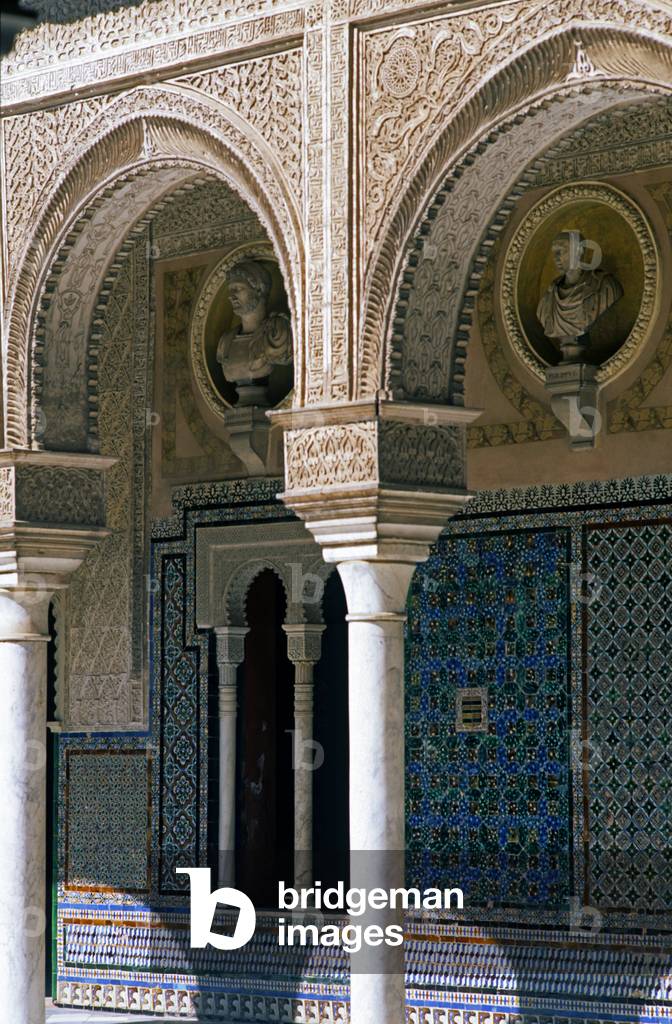
TEC4649634: La Casa de Pilatos (1540), Quartier Santa Cruz in Seville (Spain). Finish in the first third of the 16th century, this palace, owned by the Duke of Medinaceli, combines in an astonishing way mudejar art, flamboyant Gothic and Renaissance art. According to popular belief, this palace is the reproduction of Pontius Pilate's palace in Jerusalem. Photography 10/03/97. / Bridgeman Images
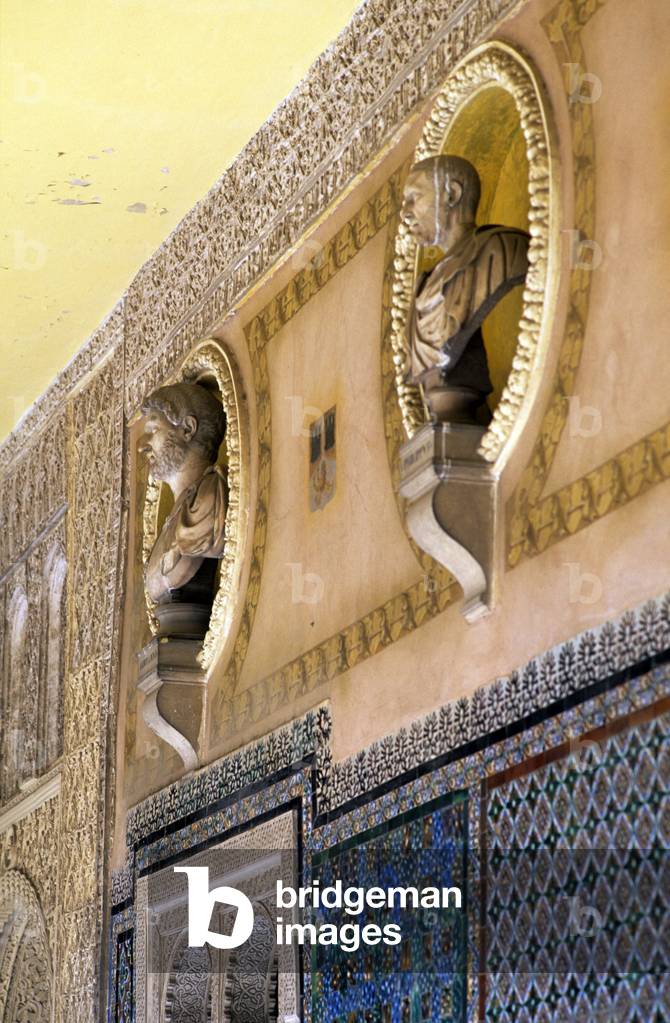
TEC4649640: La Casa de Pilatos (1540), Quartier Santa Cruz in Seville (Spain). Finish in the first third of the 16th century, this palace, owned by the Duke of Medinaceli, combines in an astonishing way mudejar art, flamboyant Gothic and Renaissance art. According to popular belief, this palace is the reproduction of Pontius Pilate's palace in Jerusalem. Photography 10/03/97. / Bridgeman Images

FLO4649653: Crabier fox, Cerdocyon thous guaraxa - Lithograph by Colonel Charles Hamilton Smith to illustrate Naturalist's Library: Dogs by Sir William Jardine, W. H Lizars edition, Edinburgh, Scotland, 1839 / Bridgeman Images

FLO4649673: Falkland Wolf or Falkland Fox or Antarctic Wolf - Lithograph by William Lizars, illustration by Charles Hamilton Smith, from “” Naturalist Library: Canides”, 1839 - Falkland Island Aguara-dog, Dusicyon australis, Extinct around 1870 - Handcoloured engraving by William Lizars from a drawing by Colonel Charles Hamilton Smith from Sir William Jardine's “” Naturalist's Library: Dogs”” Edinburgh, 1839 / Bridgeman Images