Print Friendly Version Page

2501541 Search Results

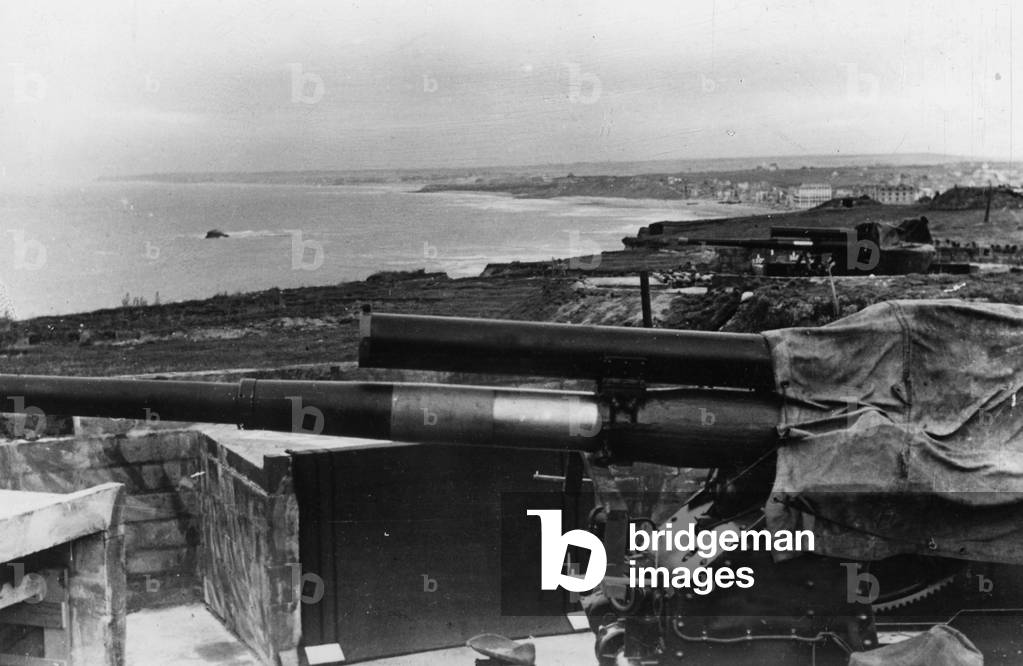
German coastal artillery on the Atlantic Wall (b/w photo)

SZT2981382: German coastal artillery on the Atlantic Wall (b/w photo) / Bridgeman Images
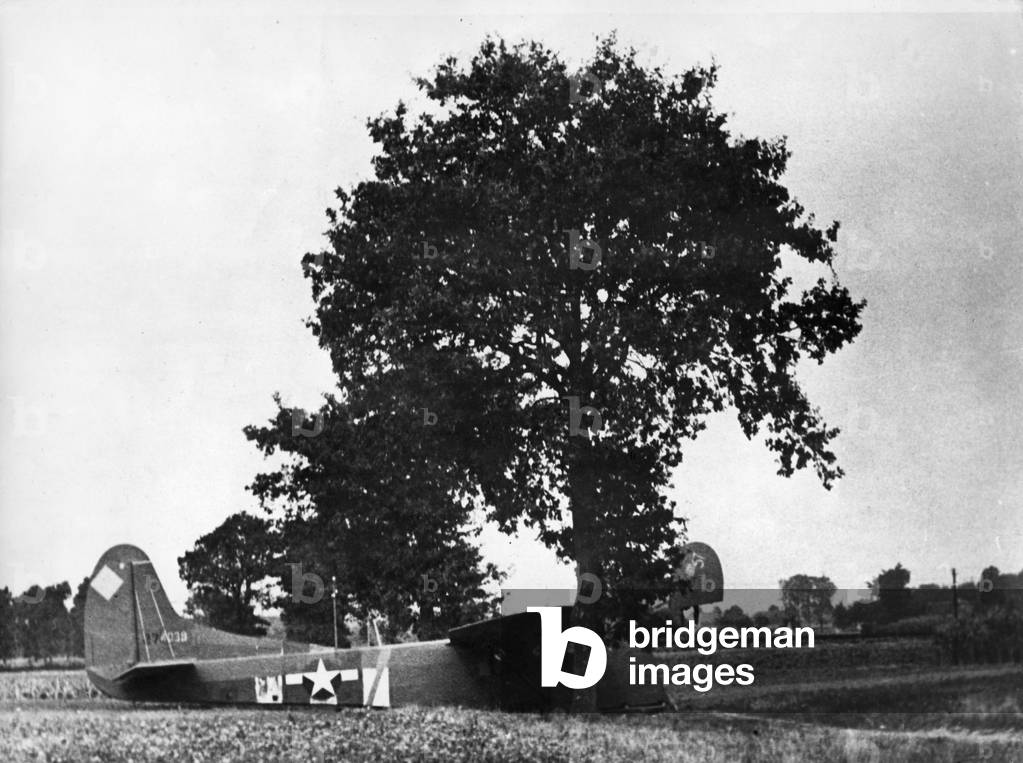
American military glider in Normandy, 1944 (b/w photo)

SZT2981452: American military glider in Normandy, 1944 (b/w photo) / Bridgeman Images

Reconnaissance unit of the Waffen-SS during the retreat fights in France, 1944 (b/w photo)

SZT2981458: Reconnaissance unit of the Waffen-SS during the retreat fights in France, 1944 (b/w photo) / Bridgeman Images

White painted curbs due to the air-raid blackout, 1939 (b/w photo)

SZT2981180: White painted curbs due to the air-raid blackout, 1939 (b/w photo) / Bridgeman Images

Kriegsmarine in infantry operations on the Western Front, 1945 (b/w photo)

SZT2981256: Kriegsmarine in infantry operations on the Western Front, 1945 (b/w photo) / Bridgeman Images

German soldiers during the Battle of Aachen, 1944 (b/w photo)

SZT2981265: German soldiers during the Battle of Aachen, 1944 (b/w photo) / Bridgeman Images

Colonel Gerhard Wilck and his staff in captivity, 1944

SZT2981270: Colonel Gerhard Wilck and his staff in captivity, 1944 / Bridgeman Images

German civilians cup up a dead horse, 1945 (b/w photo)

SZT2981297: German civilians cup up a dead horse, 1945 (b/w photo) / Bridgeman Images
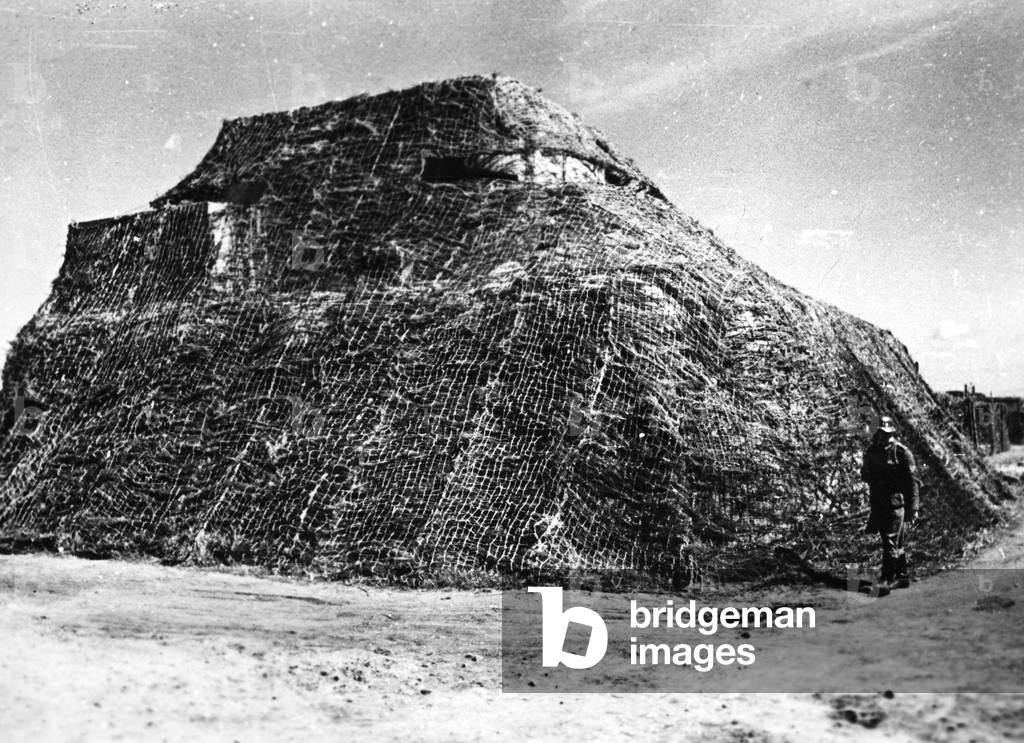
German coastal fortification on the Atlantic Wall, 1943 (b/w photo)

SZT2981377: German coastal fortification on the Atlantic Wall, 1943 (b/w photo) / Bridgeman Images
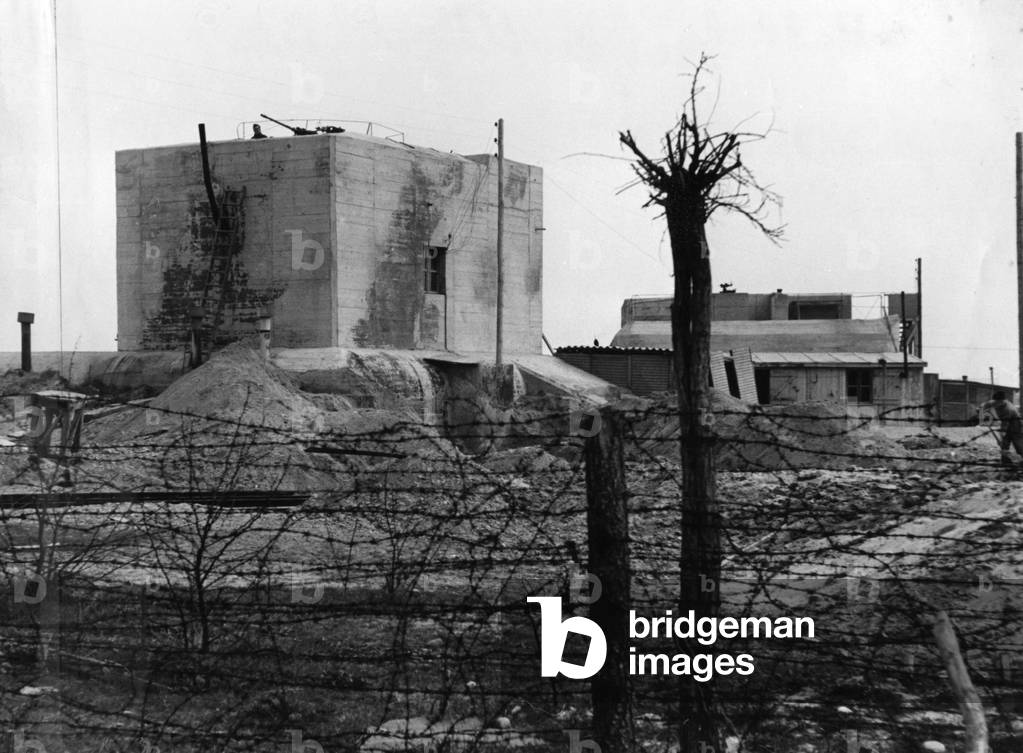
German coastal fortification on the Atlantic Wall (b/w photo)

SZT2981395: German coastal fortification on the Atlantic Wall (b/w photo) / Bridgeman Images
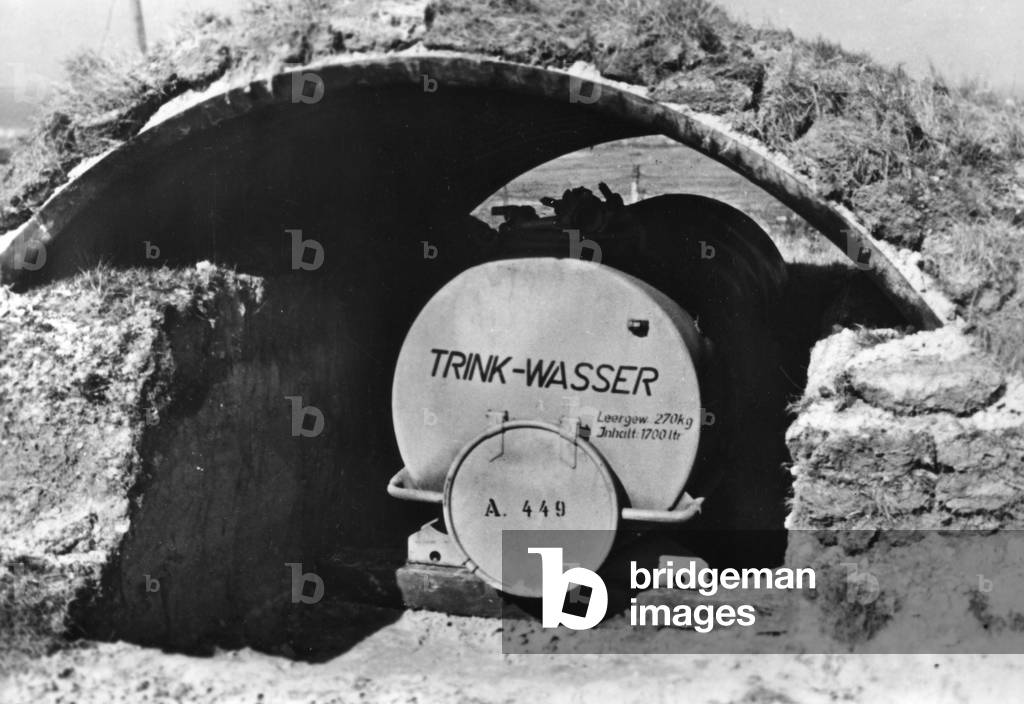
Drinking water reservoir in a coastal fortification on the Atlantic Wall, 1943 (b/w photo)

SZT2981352: Drinking water reservoir in a coastal fortification on the Atlantic Wall, 1943 (b/w photo) / Bridgeman Images
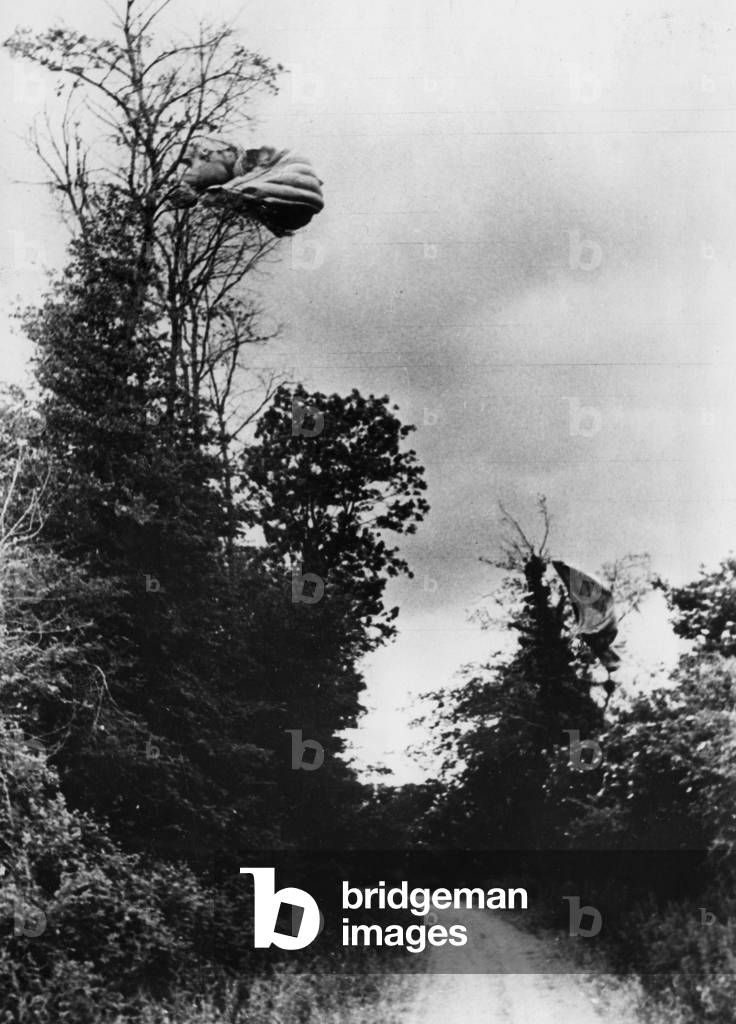
Parachutes of British airborne troops on trees, 1944 (b/w photo)

SZT2981434: Parachutes of British airborne troops on trees, 1944 (b/w photo) / Bridgeman Images
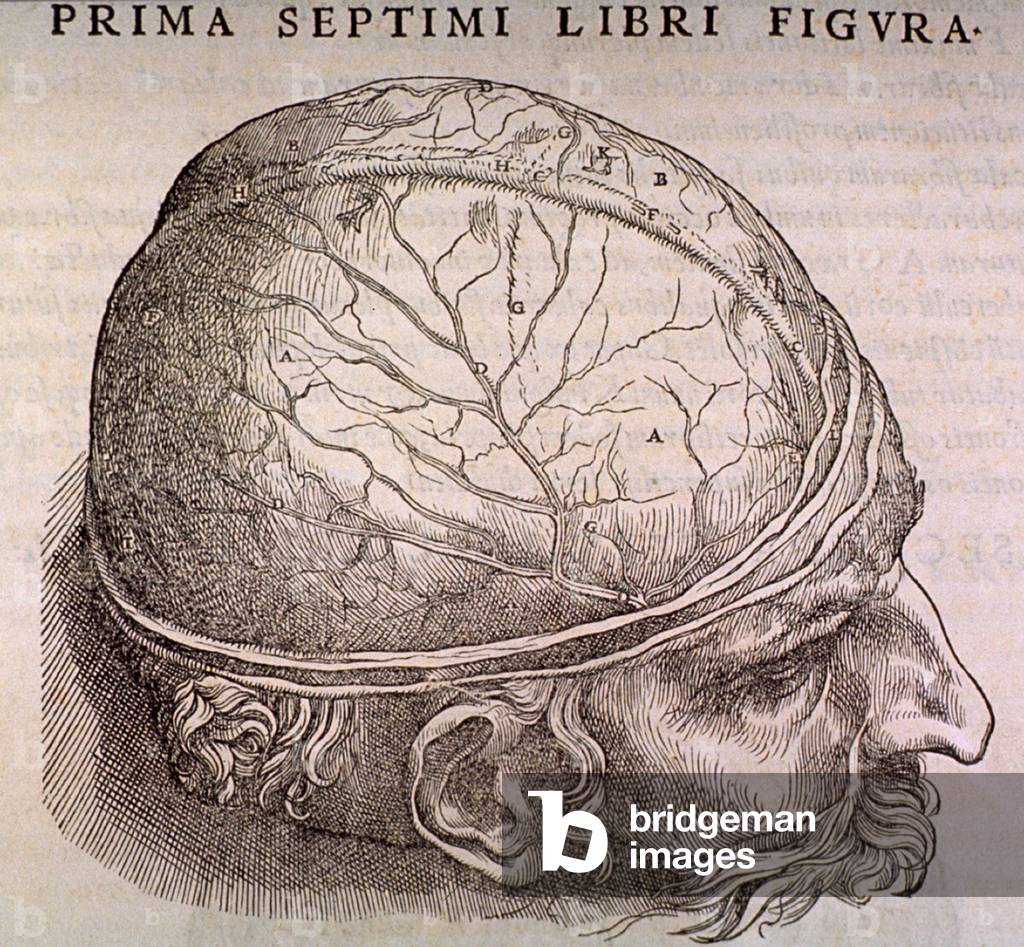
Brain Plate, showing the duramater, the outermost membrane covering the brain, from the classic anatomical treatise, DE CORPORIS HUMANI FABRICA (On the Structure of the Human Body), by Andreas Vesalius (1514-1564), in 1543

EVB2936662: Brain Plate, showing the duramater, the outermost membrane covering the brain, from the classic anatomical treatise, DE CORPORIS HUMANI FABRICA (On the Structure of the Human Body), by Andreas Vesalius (1514-1564), in 1543 / Bridgeman Images
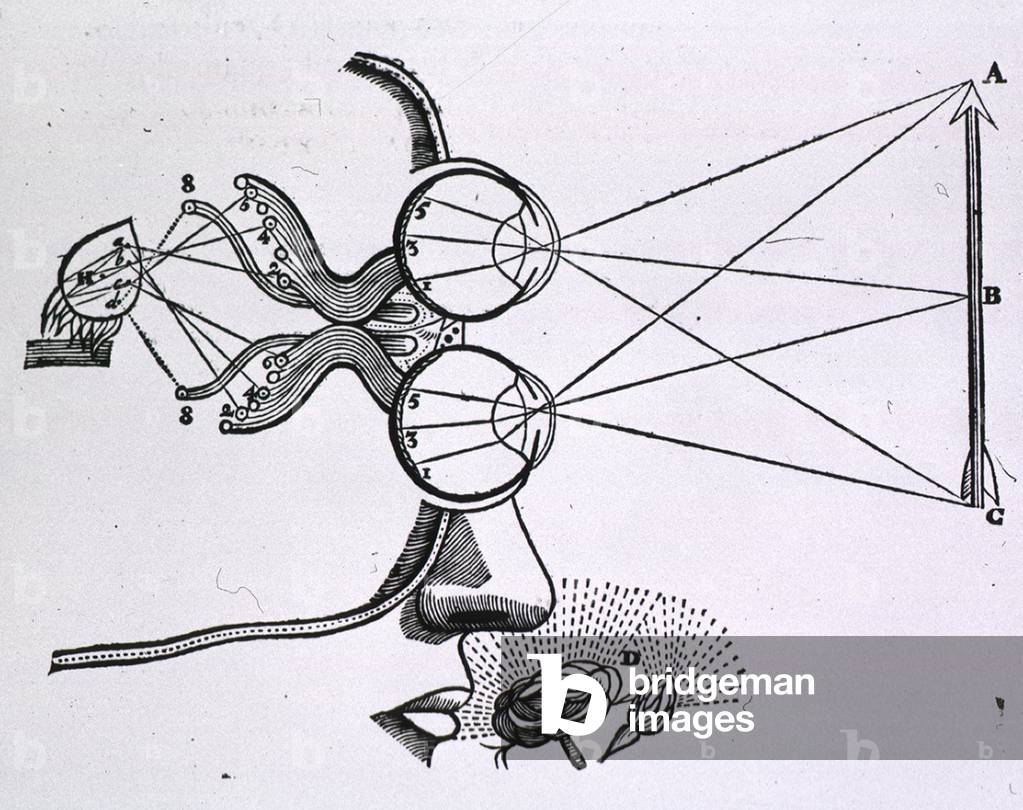
Portion of head with the eyes represented above each other and focused on an arrow; lines extend from the eyes to the mid and terminal points of the arrow; visual receptor portion of the brain is shown, and the sense of smell is indicated by a flower

EVB2936671: Portion of head with the eyes represented above each other and focused on an arrow; lines extend from the eyes to the mid and terminal points of the arrow; visual receptor portion of the brain is shown, and the sense of smell is indicated by a flower / Bridgeman Images
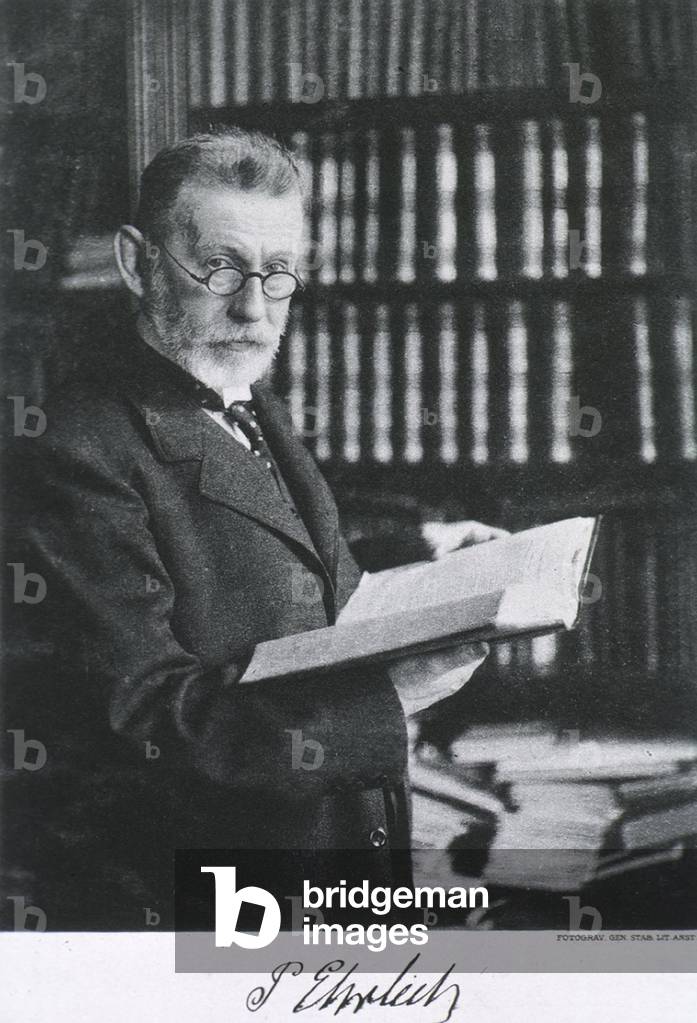
Paul Ehrlich (1854-1918), German medical scientist experimented with chemical treatments to destroy pathogens and their ill effects on humans. His greatest discovery was an arsenic based medicine that was the first effective treatment for syphilis in 1910

EVB2936674: Paul Ehrlich (1854-1918), German medical scientist experimented with chemical treatments to destroy pathogens and their ill effects on humans. His greatest discovery was an arsenic based medicine that was the first effective treatment for syphilis in 1910 / Bridgeman Images
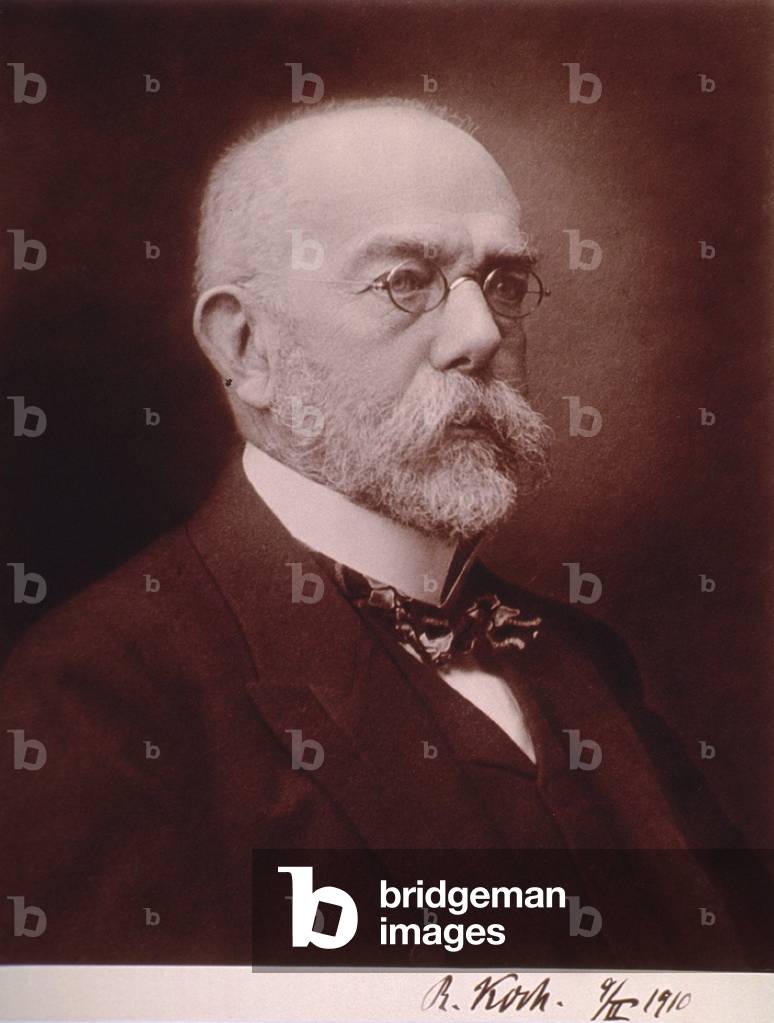
Robert Koch (1843-1910) German physician discovered the anthrax disease cycle, and the bacteria responsible for tuberculosis and cholera. 1899 portrait

EVB2936683: Robert Koch (1843-1910) German physician discovered the anthrax disease cycle, and the bacteria responsible for tuberculosis and cholera. 1899 portrait / Bridgeman Images
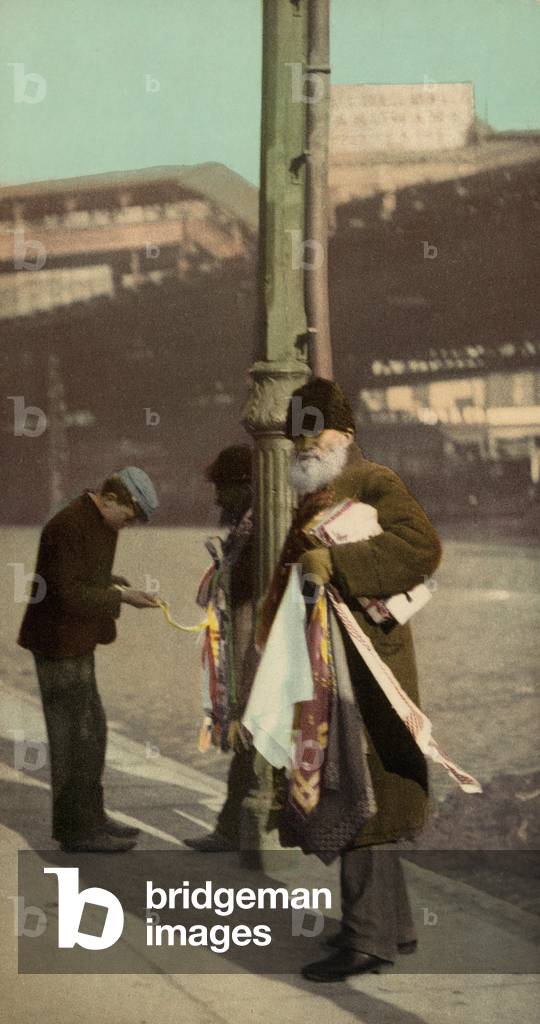
Two Jewish peddlers selling ties on the street, probably New York. c. 1902

EVB2936710: Two Jewish peddlers selling ties on the street, probably New York. c. 1902 / Bridgeman Images
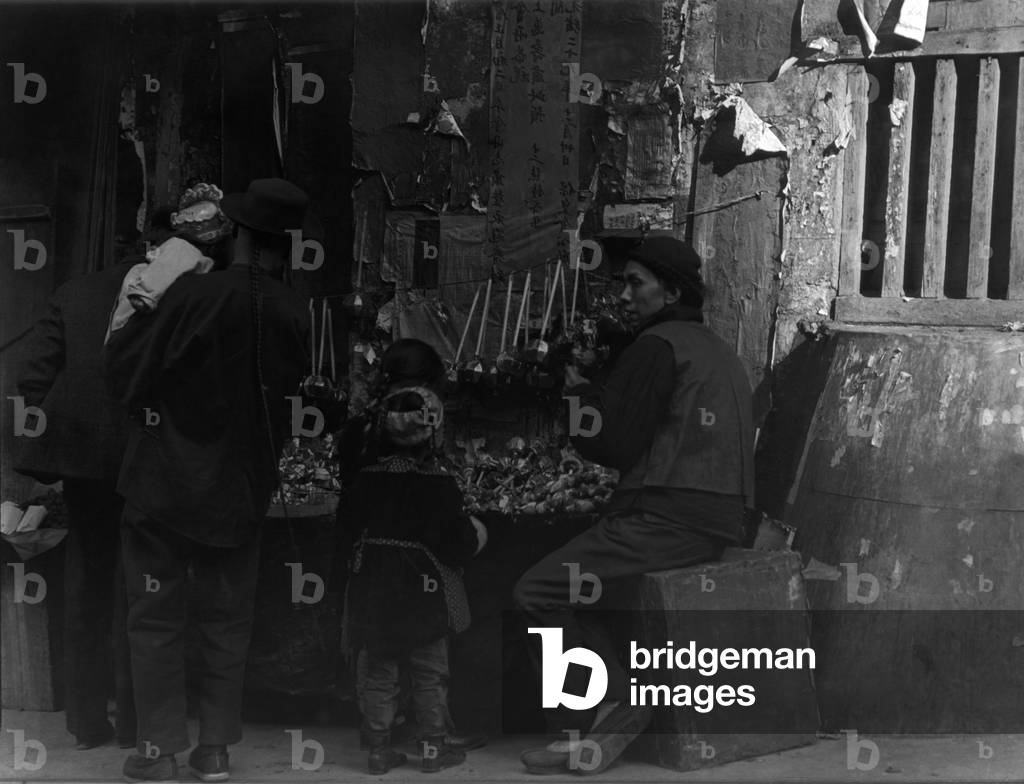
TOY MERCHANTS. Chinese immigrants in San Francisco. From Arnold Genthe's CHINATOWN SERIES. c. 1900

EVB2936764: TOY MERCHANTS. Chinese immigrants in San Francisco. From Arnold Genthe's CHINATOWN SERIES. c. 1900 / Bridgeman Images
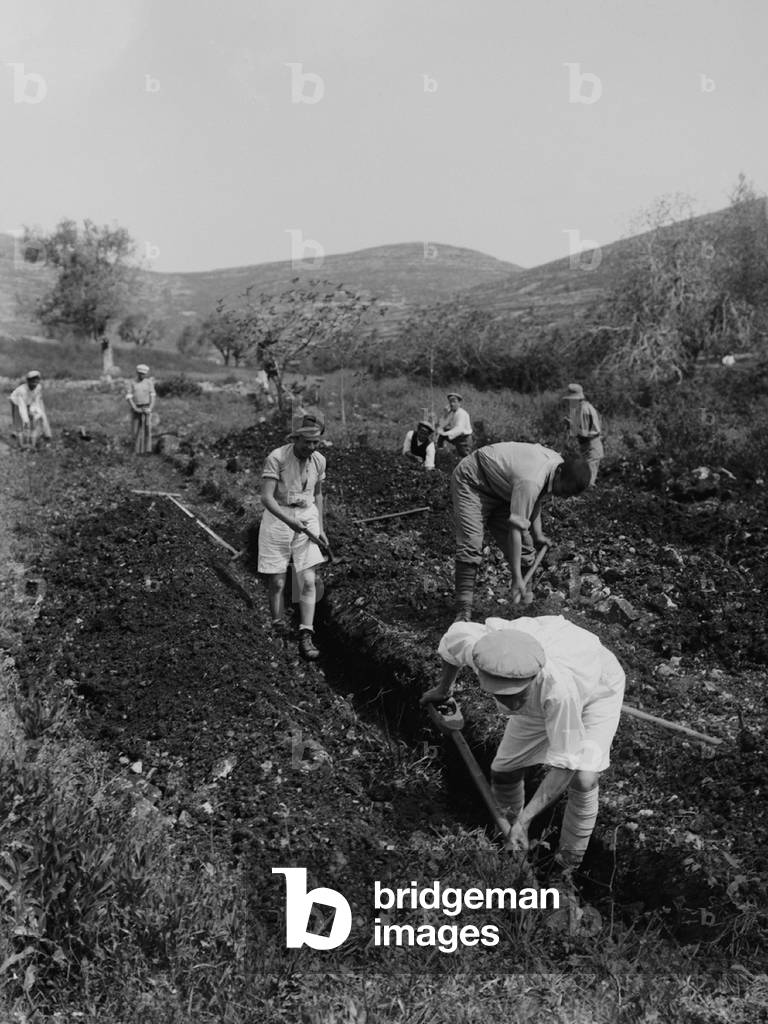
Jewish immigrants digging a trench as they establish a communal agricultural settlement, a kibbutz, on land provided by Jewish philanthropic organizations, usually purchased from Palestinians or Arab landlords. c. 1920-36

EVB2936794: Jewish immigrants digging a trench as they establish a communal agricultural settlement, a kibbutz, on land provided by Jewish philanthropic organizations, usually purchased from Palestinians or Arab landlords. c. 1920-36 / Bridgeman Images
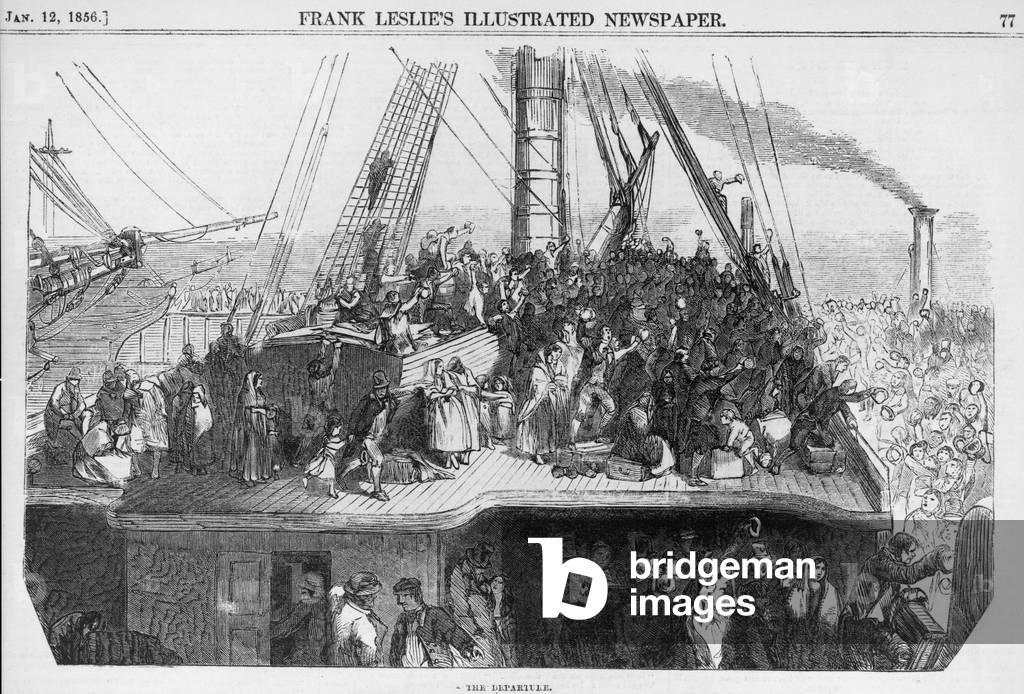
Immigrants waving farewell to crowd on dock, as their ship leaves a Western European port for North Americ. Wood engravings 1850-1860

EVB2936827: Immigrants waving farewell to crowd on dock, as their ship leaves a Western European port for North Americ. Wood engravings 1850-1860 / Bridgeman Images
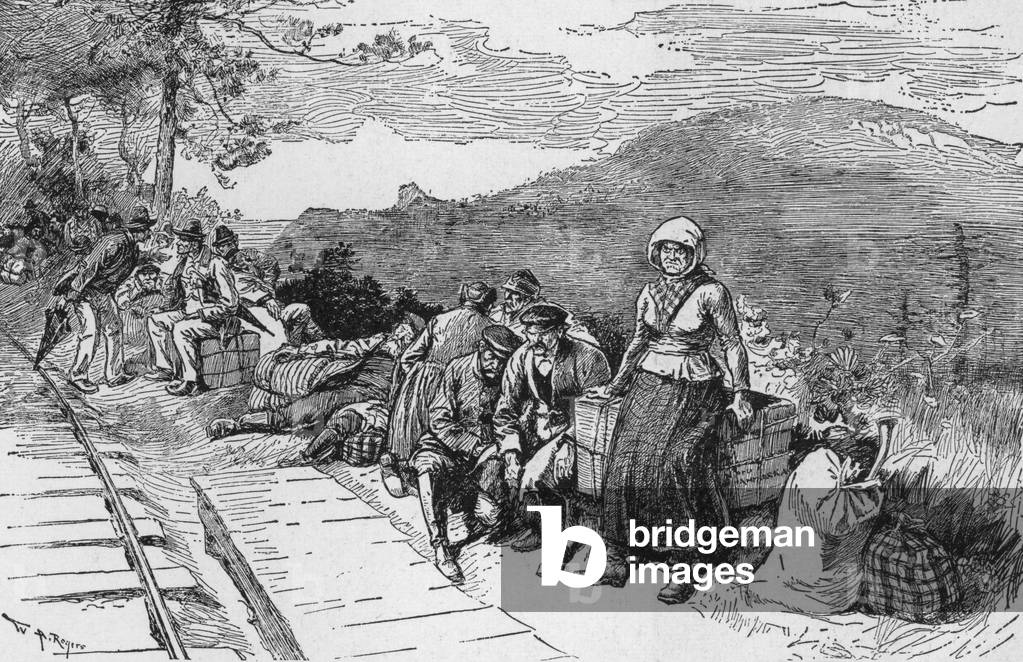
Newly arrived Slavic immigrants recruited to work in Pennsylvania coal mines wait for their train. After the U.S. Civil War, the anthracite mines and steel industry in Pennsylvania attracted Eastern Europeans from Poland, the Austro-Hungarian, and the Russian Empires, building one of the largest concentrations of Slavic Americans in the United States. c. 1880

EVB2936839: Newly arrived Slavic immigrants recruited to work in Pennsylvania coal mines wait for their train. After the U.S. Civil War, the anthracite mines and steel industry in Pennsylvania attracted Eastern Europeans from Poland, the Austro-Hungarian, and the Russian Empires, building one of the largest concentrations of Slavic Americans in the United States. c. 1880 / Bridgeman Images
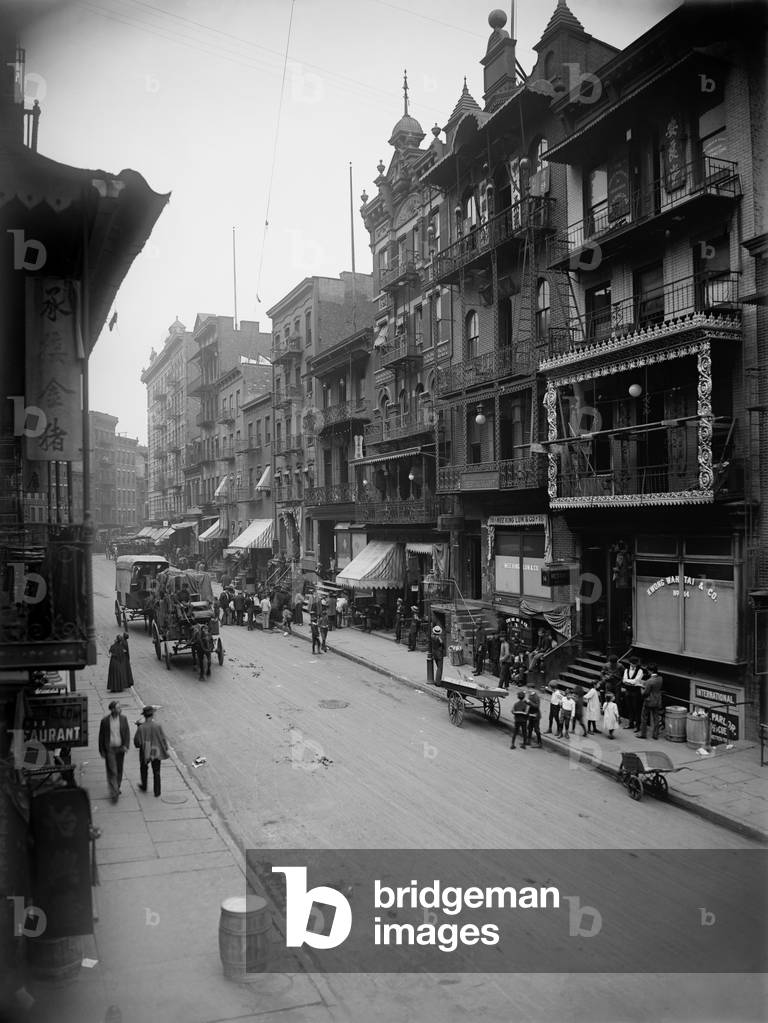
Mott Street in New York City's Chinatown presents a cosmopolitan scene mixing Asian and American-European dress and faces. The street is lined with restaurants, laundries, and pushcarts. c. 1900

EVB2936854: Mott Street in New York City's Chinatown presents a cosmopolitan scene mixing Asian and American-European dress and faces. The street is lined with restaurants, laundries, and pushcarts. c. 1900 / Bridgeman Images

Eight Japanese American women pose for a photograph in front of a camp barber shop of Tule Lake Relocation Center, the largest, most resistant and highly guarded of the ten World War II Internment camps

EVB2936875: Eight Japanese American women pose for a photograph in front of a camp barber shop of Tule Lake Relocation Center, the largest, most resistant and highly guarded of the ten World War II Internment camps, Russell, Lee (1903-86) / Bridgeman Images
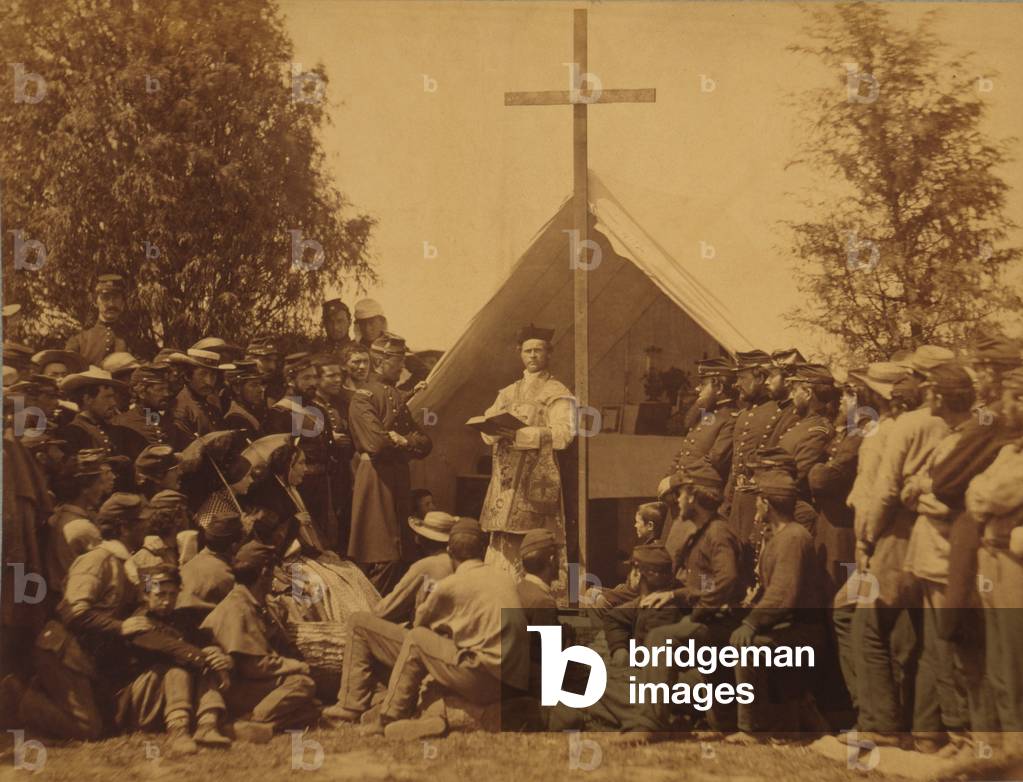
Irish-American soldiers of the 69th New York State Militia, attend Sunday morning mass in camp in Washington, D.C. area, during the first year of the U.S. Civil War. 1861

EVB2936905: Irish-American soldiers of the 69th New York State Militia, attend Sunday morning mass in camp in Washington, D.C. area, during the first year of the U.S. Civil War. 1861, Brady, Mathew (1823-96) / Bridgeman Images
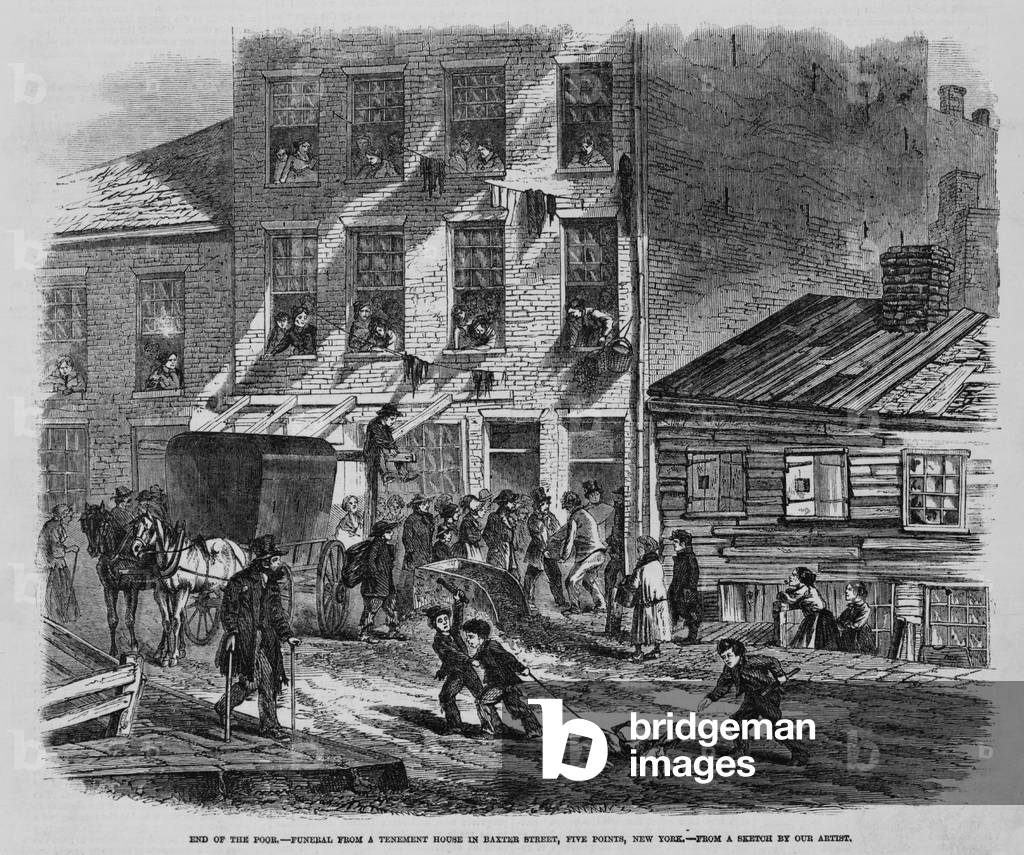
Depressing scene of poverty at Five Points in New York City. People at a tenement house watch men carry out a coffin; in the street, two boys drag a dead dog by one leg. Wood engravings of 1865

EVB2936941: Depressing scene of poverty at Five Points in New York City. People at a tenement house watch men carry out a coffin; in the street, two boys drag a dead dog by one leg. Wood engravings of 1865 / Bridgeman Images

Descartes' idea of vision, showing passage of nervous impulse from the eye to the pineal gland and so to the muscles, 1677 (Woodcut)

EVB2936670: Descartes' idea of vision, showing passage of nervous impulse from the eye to the pineal gland and so to the muscles, 1677 (Woodcut) / Bridgeman Images
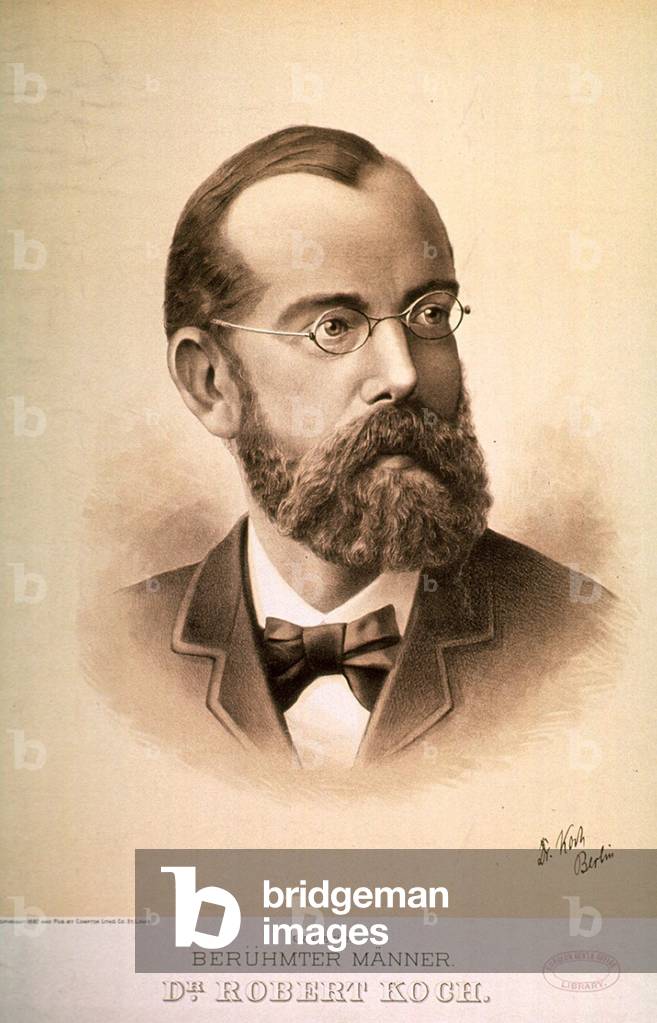
Robert Koch (1843-1910), German physician, who with Louis Pasteur, founded the modern science of bacteriology. He received the Nobel Prize for Physiology or Medicine in 1905 for his work on tuberculosis. 1887 portrait

EVB2936682: Robert Koch (1843-1910), German physician, who with Louis Pasteur, founded the modern science of bacteriology. He received the Nobel Prize for Physiology or Medicine in 1905 for his work on tuberculosis. 1887 portrait / Bridgeman Images
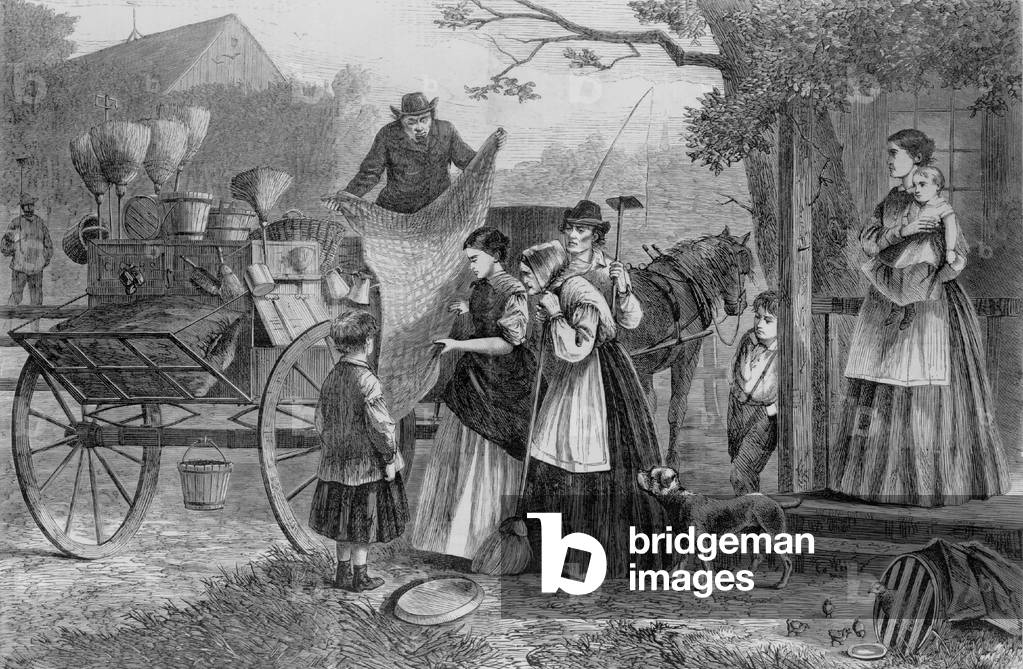
Rural women examining the wares offered by the peddler. Many Jewish immigrants started their retail careers as peddlers throughout rural Americ. c. 1860s

EVB2936709: Rural women examining the wares offered by the peddler. Many Jewish immigrants started their retail careers as peddlers throughout rural Americ. c. 1860s / Bridgeman Images

Proprietress of a Jewish weaving shop on Broom Street in the Lower East Side, the Jewish neighborhood of New York City. August 1942

EVB2936721: Proprietress of a Jewish weaving shop on Broom Street in the Lower East Side, the Jewish neighborhood of New York City. August 1942 / Bridgeman Images
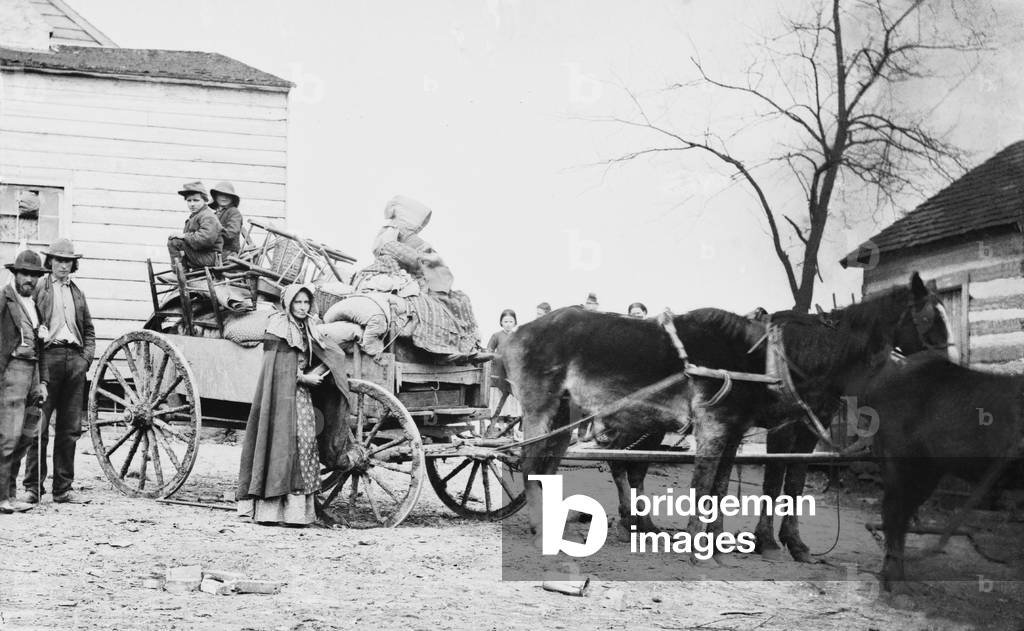
DEPARTURE FROM THE OLD HOMESTEAD, an 1862 photograph by George Barnard shows a American family on the move during the Civil War. The pipe smoking woman may be a descendant of early Scotch-Irish settlers who populated the Appalachians in the 18th century, and whose women smoked pipes into the 20th century

EVB2936772: DEPARTURE FROM THE OLD HOMESTEAD, an 1862 photograph by George Barnard shows a American family on the move during the Civil War. The pipe smoking woman may be a descendant of early Scotch-Irish settlers who populated the Appalachians in the 18th century, and whose women smoked pipes into the 20th century, Barnard, George N. and Gibson, James F. (fl.1860s) / Bridgeman Images
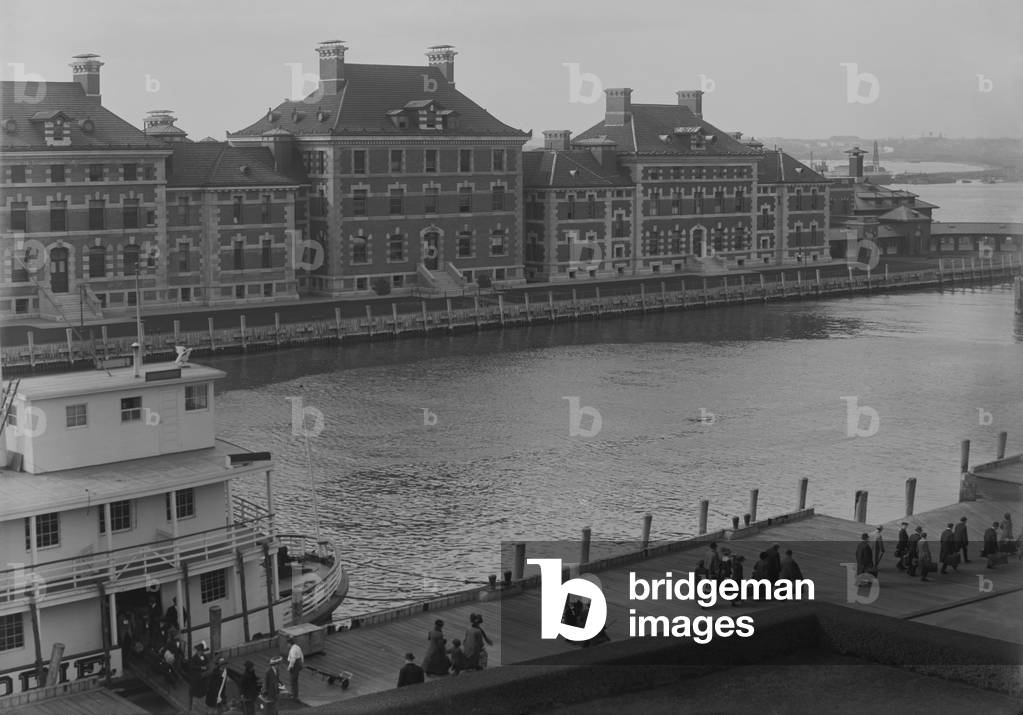
Well dressed immigrants arriving via Ferry at New York's Ellis Island. Ferries transported passengers from their Ocean going ship to the immigrant inspection station. c. 1910

EVB2936775: Well dressed immigrants arriving via Ferry at New York's Ellis Island. Ferries transported passengers from their Ocean going ship to the immigrant inspection station. c. 1910 / Bridgeman Images
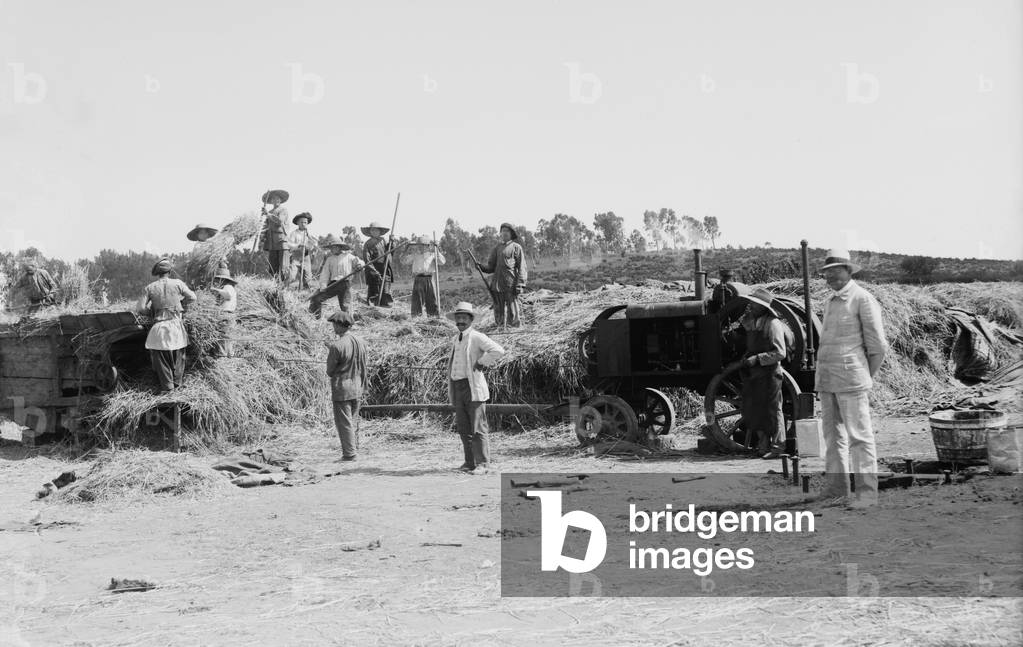
Harvesting grain on a Jewish communal agricultural settlement, a kibbutz, in Palestine. c. 1900-1929

EVB2936814: Harvesting grain on a Jewish communal agricultural settlement, a kibbutz, in Palestine. c. 1900-1929, Unknown photographer, (20th century) / Bridgeman Images
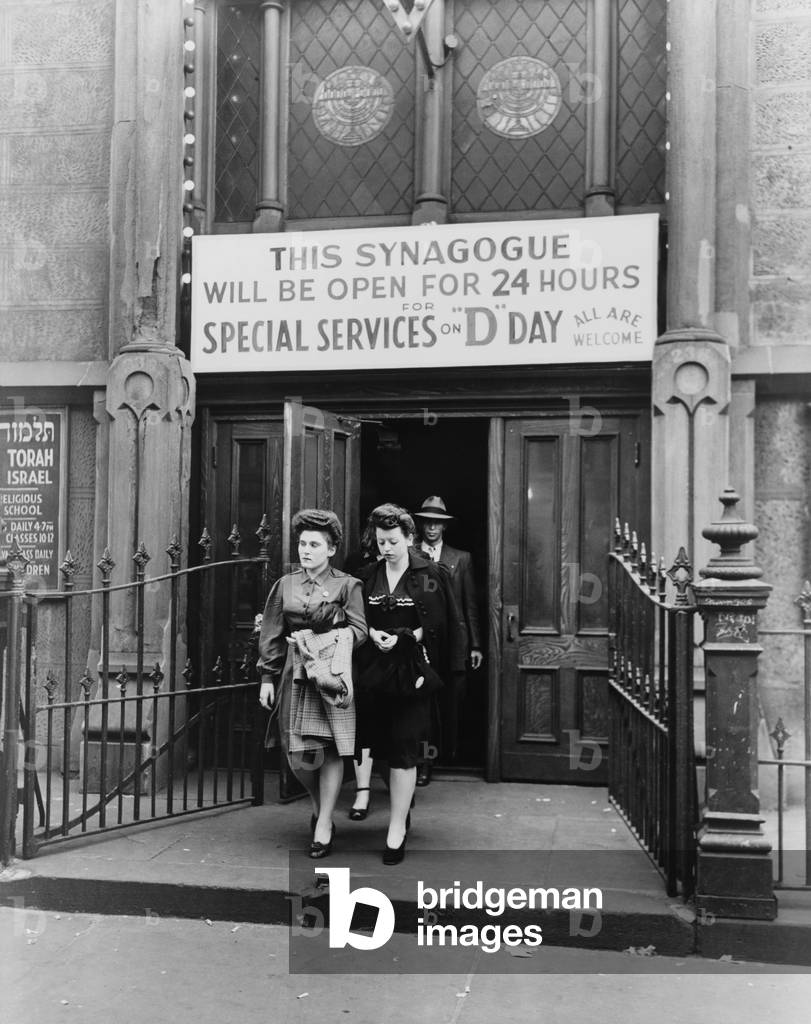
Wives and families of Jewish American GIs leave a New York City synagogue on West Twenty-third Street, which was open all day on D-Day, June 6, 1944. They awoke to the announcement that Allied troops were landing on the beaches of Normandy and prayed for the safety of their loved ones in military service

EVB2936841: Wives and families of Jewish American GIs leave a New York City synagogue on West Twenty-third Street, which was open all day on D-Day, June 6, 1944. They awoke to the announcement that Allied troops were landing on the beaches of Normandy and prayed for the safety of their loved ones in military service / Bridgeman Images

An Immigrant Wagon packed with baggage, is followed by a procession of immigrants heading for the train station and destinations in the US interior. 1870's

EVB2936847: An Immigrant Wagon packed with baggage, is followed by a procession of immigrants heading for the train station and destinations in the US interior. 1870's / Bridgeman Images
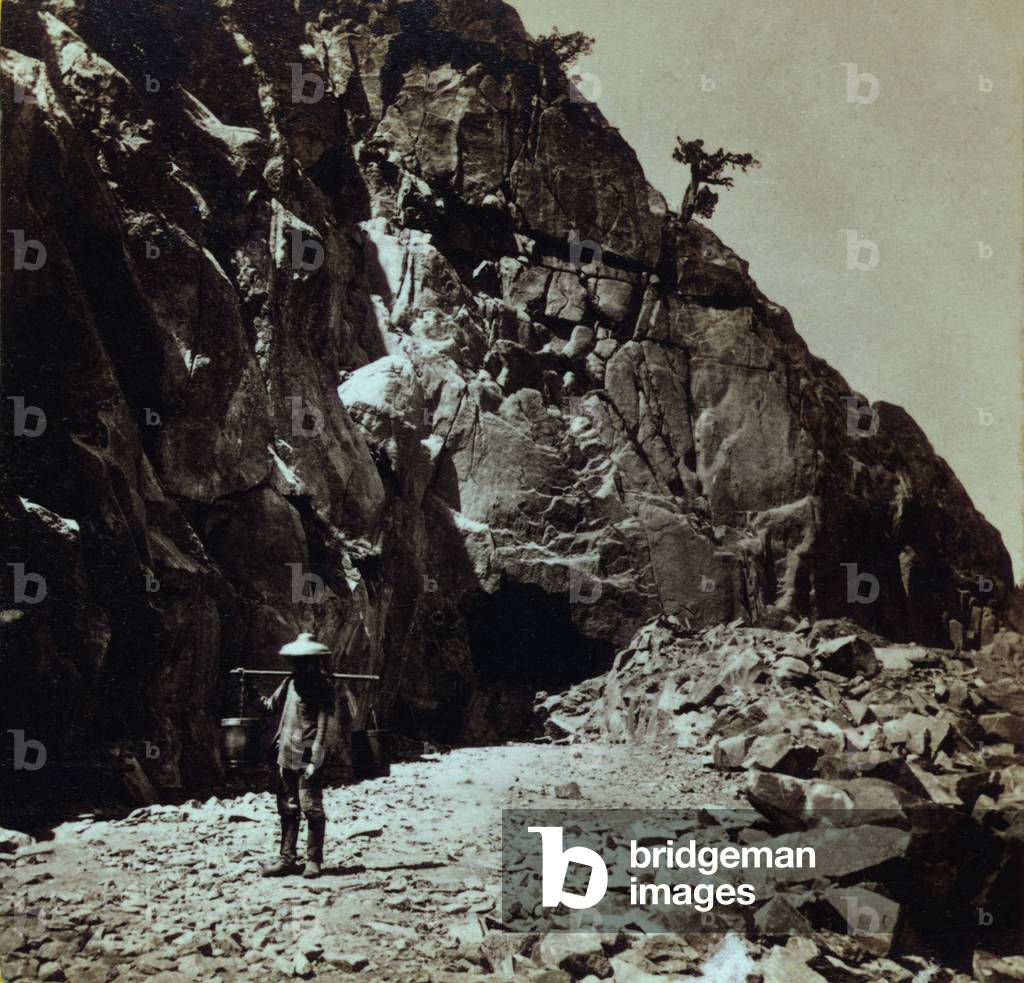
Chinese railroad worker wearing traditional clothing and hats while working on the Central Pacific Railroad, in the Sierra Nevada Mountains of California. The Central Pacific Railroad recruited large labor groups to build its portion of the Transcontinental railroad. c. 1867

EVB2936853: Chinese railroad worker wearing traditional clothing and hats while working on the Central Pacific Railroad, in the Sierra Nevada Mountains of California. The Central Pacific Railroad recruited large labor groups to build its portion of the Transcontinental railroad. c. 1867 / Bridgeman Images

Italian woman carrying heavy bundle of clothing on her head Near Astor Place, New York City. She will sew the garments at home for low wages. February 1912 photograph by Lewis Hine

EVB2936868: Italian woman carrying heavy bundle of clothing on her head Near Astor Place, New York City. She will sew the garments at home for low wages. February 1912 photograph by Lewis Hine, Hine, Lewis Wickes (1874-1940) / Bridgeman Images


Back to top