
Print this page or go back to standard view.

FIA5635190: Portrait of Sarah Louis E Strachan (1818-1881), Principaa di Sant'antimo, 1840-1844 (oil on canvas), Hayez, Francesco (1791-1882) / Bridgeman Images

FIA5635192: The Craft of the Lateran Basilica in Rome, 1850s (oil on canvas), Paris, Carlo de (1800-1861) / Bridgeman Images

LRI5636076: Mercury and Argus (oil on canvas) / Bridgeman Images

LRI5636084: Pan and Syrinx (oil on canvas) / Bridgeman Images

LRI5636105: Hercules and the Cretan Bull,1690 (oil on canvas) / Bridgeman Images

LRI5636101: Hercules and the Lernaean Hydra,1690 (oil on canvas) / Bridgeman Images

TEC4558172: Graphic effect, Real estate, Schlutzen Strasse district, Berlin, Germany. Architecture of Aldo Rossi 1997. Photography 01/10/97, Rossi, Aldo (1931-1997) / Bridgeman Images

TEC4554441: Gilbert Costes at Cafe Marly, Pyramide du Louvre, 1994. / Bridgeman Images

TEC4554450: Tour de Lille-Europe (Lille Europe). Architecture by Claude Vasconi, 1994, Euralille, Lille, Nord, Pas de Calais (Nord-Pas-De-Calais). The new Lillois district, erige between 1991 and 1995, named Euralille presents an architecture designed by urban planner Rem Koolhaas, chosen to design this 70 hectare complex. The extension of the city centre was entrusted to various French and foreign architects. Photography 1994, Koolhaas, Rem (b.1944) / Bridgeman Images

FLO4565533: Barburdar or Indian steward, in turban, muslin kupra or loincloth, cotton vest, and kumerbund or sash, carrying keys. Handcoloured copperplate engraving by an unknown artist from “” Asiatic Costumes,”” Ackermann, London, 1828. / Bridgeman Images
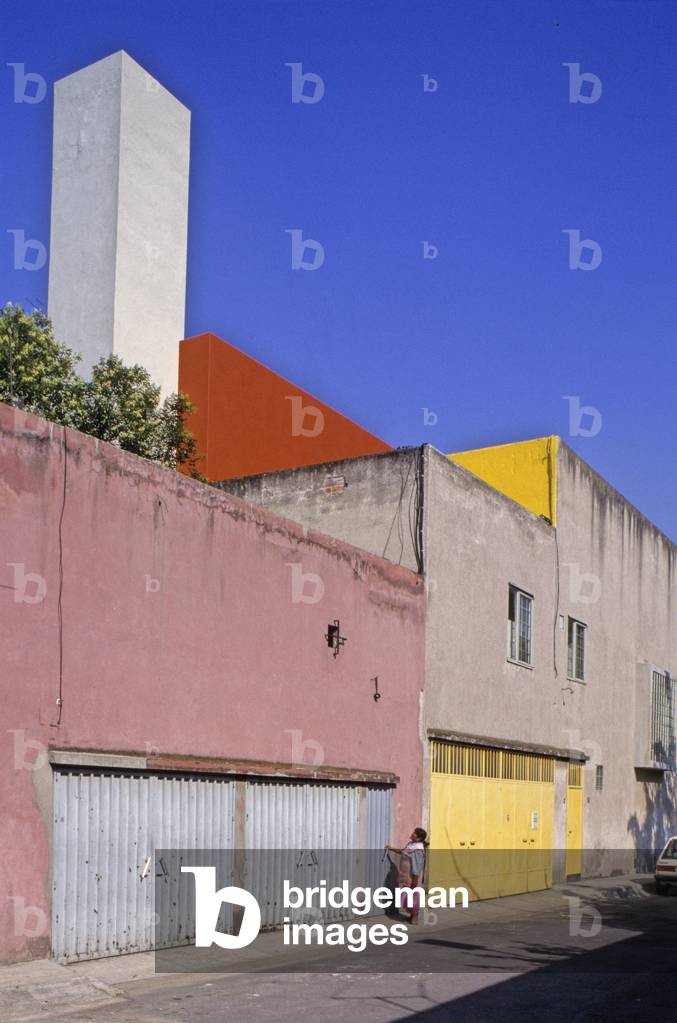
TEC4565592: Casa Barragan (Luis Barragán House and Studio), 1947, Mexico City (Mexico)., Barragan, Luis (1902-1988) / Bridgeman Images

FLO4565602: Fringed gentian with blue, purple and white flowers, Gentiana crinita. Illustration by Clarissa Badger (nee Munger, 1806-1889), lithography published in “Wildflowers, dessinees et mises en couleur par la nature”, New York (USA), 1859. / Bridgeman Images

FLO4565649: Bouquet of wild flowers: yellow tulip flower, pink eglantine, crimson red lobelia, blue campanule, lilies of the woods, etc... Illustration by Clarissa Badger (nee Munger, 1806-1889), lithography published in “Wildflowers, dessinees et mises en couleur par la nature”, New York (USA), 1859. / Bridgeman Images

FLO4565704: Indian musician playing the cymbals, in muslin robes, sash and hat. Handcoloured copperplate engraving by an unknown artist from “” Asiatic Costumes,”” Ackermann, London, 1828. / Bridgeman Images

FLO4565763: Fetal skeleton at six months with scythe 1, at three months 2 and at ten weeks 3. Copperplate engraving by Edward Mitchell after an anatomical illustration by Jean-Joseph Sue from John Barclay's A Series of Engravings of the Human Skeleton, MacLachlan and Stewart, Edinburgh, 1824. / Bridgeman Images

FLO4565801: A woman clothed in the fashion of the English Regence (1811-1820), in a bookstore in Bath (England), asking the bookseller to stick together pages so that her daughter could not read a “” evil Methodist hymn”” - Eau forte by Francis Eginton (1737-1805), extracted from Bath's New Guide or Memories of the Blunderhead family, published in 1807 - ( Fashionable Regency woman at a booksellers in Bath, requesting the bookseller paste some offending pages together so that her daughter may not read a “” vile methodistical hymn”” - Handcoloured copperplate engraving by Francis Eginton from Christopher Anstey's “” The New Bath Guide,”” John Browne, 1807) / Bridgeman Images

FLO4565947: Sagittarius has leaves in arrows. Coloured copper engraving from a drawing by Isaac Russell from William Baxter's book “English Botanical Phenomenes””, 1834. William Baxter (1788-1871) was the curator of the Oxford Botanical Garden from 1813 to 1854. Arrow head, Sagittaria sagittifolia. Handcoloured copperplate engraving by W.E. Albutt of a drawing by Isaac Russell from William Baxter's “” British Phaenogamous Botany”” 1834. Scotsman William Baxter (1788-1871) was the curator of the Oxford Botanic Garden from 1813 to 1854. / Bridgeman Images

LRI4565456: Portrait of Maximilian Stadler (engraving, 19th century), Unknown Artist, (19th century) / Bridgeman Images
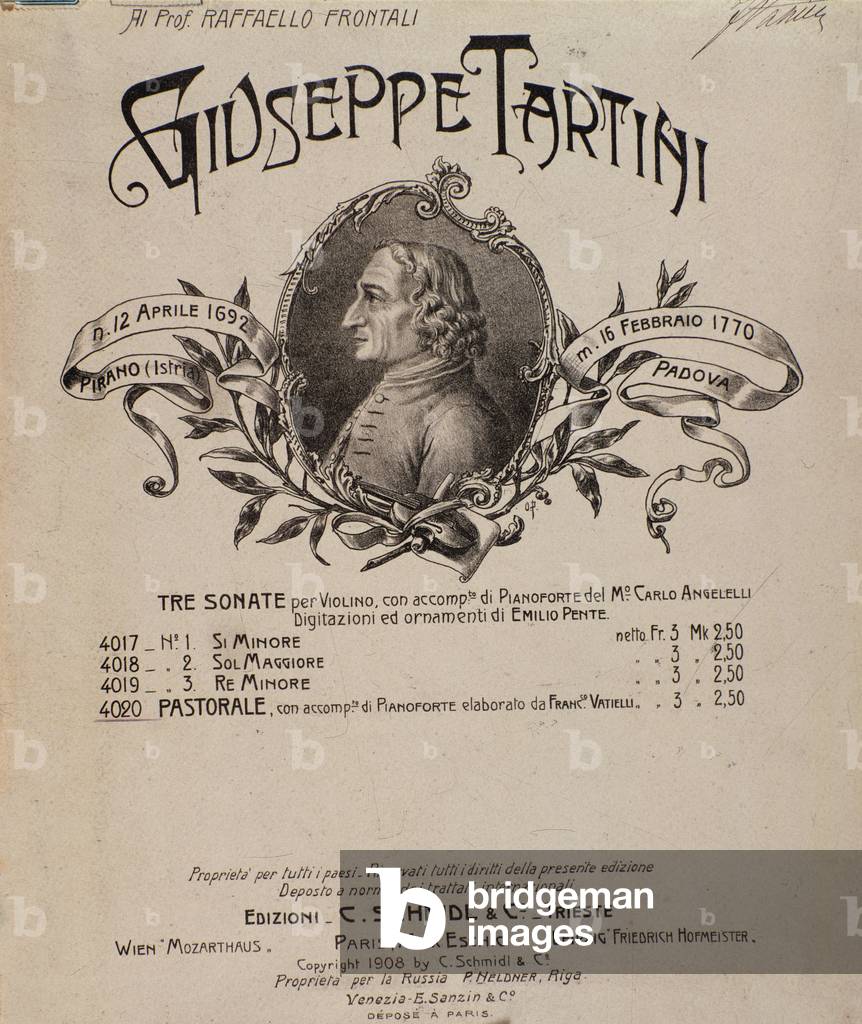
LRI4565517: Portrait of Giuseppe Tartini. Frontispiece of musical score of Sonatas, 1908 / Bridgeman Images

FLO4565576: Nautch girl or singing girl, India, in embroidered silks and muslins with bracelets, necklaces and earrings. Handcoloured copperplate engraving by an unknown artist from “” Asiatic Costumes,”” Ackermann, London, 1828. / Bridgeman Images

FLO4565636: Fringed orchid variete, with pale pink flowers te white, Platanthera psycodes (Orchis psycodes). Illustration by Clarissa Badger (nee Munger, 1806-1889), lithography published in “Wildflowers, dessinees et mises en couleur par la nature”, New York (USA), 1859. / Bridgeman Images

LRI4565650: Portrait of Georg Joseph Vogler (abbe Vogler) (engraving), Unknown Artist, (19th century) / Bridgeman Images

FLO4565666: Tulip flower, Liriodendron tulipifera. Illustration by Clarissa Badger (nee Munger, 1806-1889), lithography published in “Wildflowers, dessinees et mises en couleur par la nature”, New York (USA), 1859. / Bridgeman Images

FLO4565933: Sea cabbage or sea cramp. Coloured copper engraving from a drawing by Isaac Russell from William Baxter's book “English Botanical Phenomenes””, 1834. William Baxter (1788-1871) was the curator of the Oxford Botanical Garden from 1813 to 1854. Sea kale, Crambe maritima. Handcoloured copperplate engraving by WE Albutt of a drawing by Isaac Russell from William Baxter's “” British Phaenogamous Botany”” 1834. Scotsman William Baxter (1788-1871) was the curator of the Oxford Botanic Garden from 1813 to 1854. / Bridgeman Images

FLO4564485: Caper spurge or paper spurge. Euphorbia lathyris. Handcoloured copperplate engraving from Dr. Willibald Artus' Hand-Atlas sammtlicher mediinisch-pharmaceutischer Gewachse, (Handbook of all medical-pharmaceutical plants), Jena, 1876. / Bridgeman Images

JLJ4564575: The Golden Age: a scene of joy depicting John Fitzgerald Kennedy toasting peace with Nikita Khrushchev President of the USSR (oil on canvas), Luka, Madeleine (1900-89) / Bridgeman Images

FLO4564730: Euphrasia or eyebright, Euphrasia officinalis var. grandiflora. Handcoloured copperplate engraving from Dr. Willibald Artus' Hand-Atlas sammtlicher mediinisch-pharmaceutischer Gewachse, (Handbook of all medical-pharmaceutical plants), Jena, 1876. / Bridgeman Images

FLO4564796: Michael Rysbrack (1694-1770), sculptor of Hercules at Stourhead, the equestrian statue of King William, monument to Sir Isaac Newton in Westminster Abbey, etc. / Bridgeman Images

FLO4564801: Couch grass, Elymus repens (Agropyrum repens). Handcoloured copperplate engraving from Dr. Willibald Artus' Hand-Atlas sammtlicher mediinisch-pharmaceutischer Gewachse, (Handbook of all medical-pharmaceutical plants), Jena, 1876. / Bridgeman Images

LRI4564843: Portrait of Giacomo Puccini (b/w photo), Unknown photographer, (19th century) / Bridgeman Images

JLJ4566086: L'olivier Peinture d'Andre Lhote, 20th century, (oil on canvas), Lhote, Andre (1885-1962) / Bridgeman Images

FLO4566105: Yellow glauciere. Coloured copper engraving from a drawing by Isaac Russell from William Baxter's book “English Botanical Phenomenes””, 1834. William Baxter (1788-1871) was the curator of the Oxford Botanical Garden from 1813 to 1854. Yellow horned poppy, Glaucium luteum. Handcoloured copperplate engraving of a drawing by Isaac Russell from William Baxter's “” British Phaenogamous Botany”” 1835. Scotsman William Baxter (1788-1871) was the curator of the Oxford Botanic Garden from 1813 to 1854. / Bridgeman Images

FLO4566154: Hornungia. Coloured copper engraving from a drawing by C. Mathews from William Baxter's book “English Botanical Phenomenes””, 1834. William Baxter (1788-1871) was the curator of the Oxford Botanical Garden from 1813 to 1854. Rock hutchinsia, Hutchinsia petraea. Handcoloured copperplate drawn and engraved by Charles Mathews from William Baxter's “” British Phaenogamous Botany”” 1835. Scotsman William Baxter (1788-1871) was the curator of the Oxford Botanic Garden from 1813 to 1854. / Bridgeman Images

LRI4566382: Painting reverse with portrait of Mozart at the age of 21, Unknown artist, (18th century) / Bridgeman Images

FLO4566502: Marsh Gentian - Marsh gentian, Gentiana pneumonanthe - Handcoloured copperplate engraving by Charles Mathews from a drawing by Isaac Russell from William Baxter's “” British Phaenogamous Botany”” 1836 / Bridgeman Images

FLO4567811: Plate of botany by Isaac Russell, engraved by Charles Matthews, taken from “English Botanical Phenomenes” by William Baxter (1788-1871), 1837 / Bridgeman Images