
Print this page or go back to standard view.

FLO4567016: Aristoloche clematite. Coloured copper engraving from a drawing by Isaac Russell from William Baxter's book “English Botanical Phenomenes””, 1834. William Baxter (1788-1871) was the curator of the Oxford Botanical Garden from 1813 to 1854. Birthwort, Aristolochia clematitis. Handcoloured copperplate engraving from a drawing by Isaac Russell from William Baxter's “” British Phaenogamous Botany”” 1834. Scotsman William Baxter (1788-1871) was the curator of the Oxford Botanic Garden from 1813 to 1854. / Bridgeman Images

FLO4567066: Ononis creeping (Ononis antiquorum) - Botanical Plate by Isaac Russell, engraved by Charles Matthews, from “English Botanical Phenomenes” by William Baxter (1788-1871), 1837 / Bridgeman Images

FLO4567087: The common tree or grass for battered women or high edge, black vine, virgin ravine, reason for the devil or seal of Notre Dame (Tamus communis) - Botanical board by Isaac Russell, engraved by Charles Matthews, taken from “English Botanical Phenomenes” by William Baxter (1788-1871), 1837 / Bridgeman Images

LRI4567093: First page of musical score of Symphony 66 in B flat major by J Haydn, Unknown artist, (18th century) / Bridgeman Images

FLO4567120: Geranium of the Pres. Coloured copper engraving from a drawing by Isaac Russell from William Baxter's book “English Botanical Phenomenes””, 1834. William Baxter (1788-1871) was the curator of the Oxford Botanical Garden from 1813 to 1854. Meadow crane's bill or cranesbill, Geranium pratense. Handcoloured copperplate engraving from a drawing by Isaac Russell from William Baxter's “” British Phaenogamous Botany”” 1834. Scotsman William Baxter (1788-1871) was the curator of the Oxford Botanic Garden from 1813 to 1854. / Bridgeman Images

FLO4567171: L'homme hangdu (orchidee) (Aceras anthropophora) - Plate de botanique by Isaac Russell, graved by Charles Matthews, taken from “English Botanical Phenomenes” by William Baxter (1788-1871), 1837 / Bridgeman Images

LRI4566872: Frontispice of the score “” Fantaisie pour piano et orchestre”” by Franz Liszt (1811-1886) 19th century Bologna, civico museo musicale, Unknown Artist, (19th century) / Bridgeman Images

FLO4566982: Plate of botany by Isaac Russell, engraved by Charles Matthews, taken from “English Botanical Phenomenes” by William Baxter (1788-1871), 1837 / Bridgeman Images

FLO4567110: The Great Nettle or Common Nettle or Dioic Nettle (Urtica dioica) - Botanical Plate by Isaac Russell, engraved by Charles Matthews, taken from “English Botanical Phenomenes” by William Baxter (1788-1871), 1837 / Bridgeman Images

FLO4567214: Corrigiola littoralis - Botanical Plate by Isaac Russell, engraved by Charles Matthews, from “English Botanical Phenomenes” by William Baxter (1788-1871), 1837 / Bridgeman Images

LRI4567223: Study of phonology. Page from Pronurghia nova (1673), Unknown Artist, (17th century) / Bridgeman Images

FLO4567300: Acorus calamus - Botanical Plate by Isaac Russell, engraved by Charles Matthews, taken from “English Botanical Phenomenes” by William Baxter (1788-1871), 1837 / Bridgeman Images

FLO4567714: Turritis glabra - Botanical Plate by Isaac Russell, engraved by Charles Matthews, taken from “English Botanical Phenomenes” by William Baxter (1788-1871), 1837 / Bridgeman Images

FLO4567811: Plate of botany by Isaac Russell, engraved by Charles Matthews, taken from “English Botanical Phenomenes” by William Baxter (1788-1871), 1837 / Bridgeman Images

FLO4567382: Humulus lupulus - Botanical Plate by Isaac Russell, engraved by Charles Matthews, taken from “English Botanical Phenomenes” by William Baxter (1788-1871), 1837 / Bridgeman Images

LRI4567422: Page of musical score of a Sinfonia concertante by Pleyel / Bridgeman Images

FLO4567545: Salsifi des pres (Tragopogon pratensis) - Botanical Plate by Isaac Russell, engraved by Charles Matthews, taken from “English Botanical Phenomenes” by William Baxter (1788-1871), 1837 / Bridgeman Images
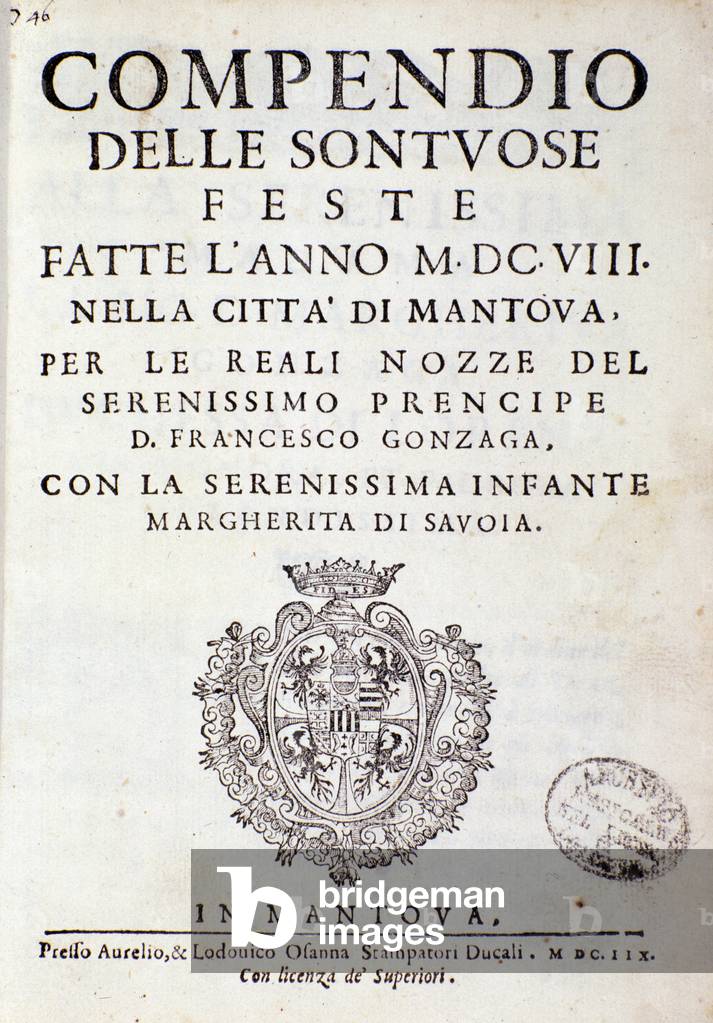
LRI4567658: Chronicles describing the celebrations organized in Mantua by prince of Gonzaga (1608), Italian School, (17th century) / Bridgeman Images

FLO4567842: Botanical Plate by Isaac Russell, engraved by Charles Matthews, taken from “English Botanical Phenomenes” by William Baxter (1788-1871), 1837 / Bridgeman Images

LRI4567415: Page of musical score of Harmonice Musices Odhecaton by Ottaviano Petrucci (1501), Unknown Artist, (16th century) / Bridgeman Images

FLO4567430: Neottie bird's nest (Listera nidus-reviews) - Botanical Plate by Isaac Russell, engraved by Charles Matthews, taken from “English Botanical Phenomenes” by William Baxter (1788-1871), 1837 / Bridgeman Images

FLO4567551: Callitriche (Callitriche verna) - Botanical Plate by Isaac Russell, engraved by Charles Matthews, from “English Botanical Phenomenes” by William Baxter (1788-1871), 1837 / Bridgeman Images

FLO4567879: Chataignier (Castanea vesca) - Botanical Plate by Isaac Russell, engraved by Charles Matthews, taken from “English Botanical Phenomenes” by William Baxter (1788-1871), 1837 / Bridgeman Images

FLO4567947: The great celandine or great light. Coloured copper engraving from a drawing by W.A. Delamotte from William Baxter's book “English Botanical Phenomenes””, 1834. William Baxter (1788-1871) was the curator of the Oxford Botanical Garden from 1813 to 1854. Celandine, Chelidonium majus. Handcoloured copperplate engraving from a drawing by W.A. Delamotte from William Baxter's “” British Phaenogamous Botany”” 1834. Scotsman William Baxter (1788-1871) was the curator of the Oxford Botanic Garden from 1813 to 1854. / Bridgeman Images

FLO4568133: Common carnation or florists or carnation cloves. Coloured copper engraving from a drawing by Isaac Russell from William Baxter's book “English Botanical Phenomenes””, 1834. William Baxter (1788-1871) was the curator of the Oxford Botanical Garden from 1813 to 1854. Clove pink carnation, Dianthus cariophyllus. Handcoloured copperplate engraving from a drawing by Isaac Russell from William Baxter's “” British Phaenogamous Botany”” 1834. Scotsman William Baxter (1788-1871) was the curator of the Oxford Botanic Garden from 1813 to 1854. Engraved by Charles Mathews. / Bridgeman Images

PIX4568137: Open cluster M44 in cancer - Open star cluster M44 in Cancer - M44 is a cluster of stars located only 600 years - light from Earth, in the constellation Cancer. M44 (NGC 2632), the Beehive Cluster, also known as Praesepe, is an easy naked eye object more than twice the size across of the full moon, and has thus been noted since prehistoric times. It was one of the first objects on which Galileo trained his newly acquired telescope. M44 is one of the nearest open clusters, close to 600 light - years away / Bridgeman Images

FLO4568171: Eupatory sour. Coloured copper engraving from a drawing by C. Mathews from William Baxter's book “English Botanical Phenomenes””, 1834. William Baxter (1788-1871) was the curator of the Oxford Botanical Garden from 1813 to 1854. Common agrimony, Agrimonia eupatoria. Handcoloured copperplate engraving by Charles Mathews of a drawing by W.A. Delamotte from William Baxter's “” British Phaenogamous Botany”” 1834. Scotsman William Baxter (1788-1871) was the curator of the Oxford Botanic Garden from 1813 to 1854. / Bridgeman Images

FLO4567929: Field Astragalus (Oxytrophis campestris) - Botanical Plate by Isaac Russell, engraved by Charles Matthews, from “English Botanical Phenomenes” by William Baxter (1788-1871), 1837 / Bridgeman Images

FLO4567977: Canary seed. Coloured copper engraving from a drawing by C. Mathews from William Baxter's book “English Botanical Phenomenes””, 1834. William Baxter (1788-1871) was the curator of the Oxford Botanical Garden from 1813 to 1854. Canary grass, Phalaris canariensis. Handcoloured copperplate engraving from a drawing by C. Mathews from William Baxter's “” British Phaenogamous Botany”” 1834. Scotsman William Baxter (1788-1871) was the curator of the Oxford Botanic Garden from 1813 to 1854. / Bridgeman Images

FLO4568115: Burning lobelie. Coloured copper engraving from a drawing by Isaac Russell from William Baxter's book “English Botanical Phenomenes””, 1834. William Baxter (1788-1871) was the curator of the Oxford Botanical Garden from 1813 to 1854. Acrrid lobelia, Lobelia urens. Handcoloured copperplate engraving from a drawing by Isaac Russell from William Baxter's “” British Phaenogamous Botany”” 1834. Scotsman William Baxter (1788-1871) was the curator of the Oxford Botanic Garden from 1813 to 1854. / Bridgeman Images

FLO4568309: Victorian children dancing in front of a chemist's store while a policeman watches. Chromolithograph after an illustration by Francis Donkin Bedford from Edward Verrall Lucas' The Book of Shops, 1899., Bedford, Francis Donkin (1864-1954) / Bridgeman Images

PIX4567914: Open cluster M35 and NGC 2158 in Gemeaux - Open clusters M35 and NGC 2158 in Gemini - Open cluster M35 (NGC 2168) is visible to the naked eye under good conditions. NGC 2158, lower right, is weaker and is only observed at the telescope. M35 is about 2800 years of light from Earth and is about 110 million years old. M35 (NGC 2168), center, is a spectacular large open cluster containing about 200 stars located in Gemini. Shining at magnitude 5, it is visible to the unaided eye off the foot of Gemini. It is accompanied by a jewel - like smaller companion, open cluster NGC 2158, seen at the lower right center of the photo / Bridgeman Images

FLO4567931: Veronique little oak. Coloured copper engraving from a drawing by W.A. Delamotte from William Baxter's book “English Botanical Phenomenes””, 1834. William Baxter (1788-1871) was the curator of the Oxford Botanical Garden from 1813 to 1854. Germander speedwell, Veronica chamaedrys. Handcoloured copperplate engraving from a drawing by W.A. Delamotte from William Baxter's “” British Phaenogamous Botany”” 1834. Scotsman William Baxter (1788-1871) was the curator of the Oxford Botanic Garden from 1813 to 1854. / Bridgeman Images

FLO4567982: Field binders. Coloured copper engraving from a drawing by C. Mathews from William Baxter's book “English Botanical Phenomenes””, 1834. William Baxter (1788-1871) was the curator of the Oxford Botanical Garden from 1813 to 1854. Corn bindweed, Convolvulus arvensis. Handcoloured copperplate engraving from a drawing by C. Mathews from William Baxter's “” British Phaenogamous Botany”” 1834. Scotsman William Baxter (1788-1871) was the curator of the Oxford Botanic Garden from 1813 to 1854. / Bridgeman Images

FLO4568011: Borage officinale (Borago officinalis). Coloured copper engravings from a drawing by William Delamotte from William Baxter's book “English Botanical Phenomenes””, 1834. William Baxter (1788-1871) was the curator of the Oxford Botanical Garden from 1813 to 1854. / Bridgeman Images

FLO4568031: Yellow centauree or chlorine perfoliated. Coloured copper engraving from a drawing by Miss Isabella M. Clark from William Baxter's book “English Botanical Phenomenes””, 1834. William Baxter (1788-1871) was the curator of the Oxford Botanical Garden from 1813 to 1854. Perfoliate yellow wort, Chlora perfoliata, Blackstonia perfoliata. Handcoloured copperplate engraving from a drawing by Miss Isabella M. Clark from William Baxter's “” British Phaenogamous Botany”” 1834. Scotsman William Baxter (1788-1871) was the curator of the Oxford Botanic Garden from 1813 to 1854. / Bridgeman Images