Print Friendly Version Page

2501815 Search Results

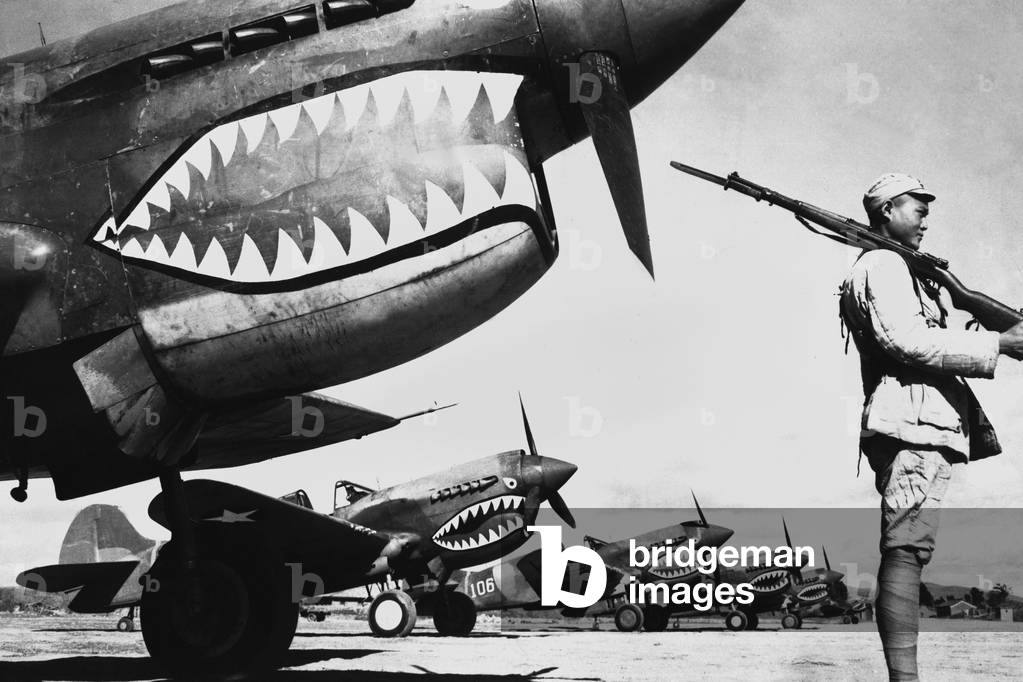
Chinese soldier guards a line of American P-40 fighter planes, c. 1942. The shark-face fighters of the 'Flying Tigers' had a 12-to-1 victory ratio over the Japanese planes during World War 2

EVB2945153: Chinese soldier guards a line of American P-40 fighter planes, c. 1942. The shark-face fighters of the 'Flying Tigers' had a 12-to-1 victory ratio over the Japanese planes during World War 2 / Bridgeman Images
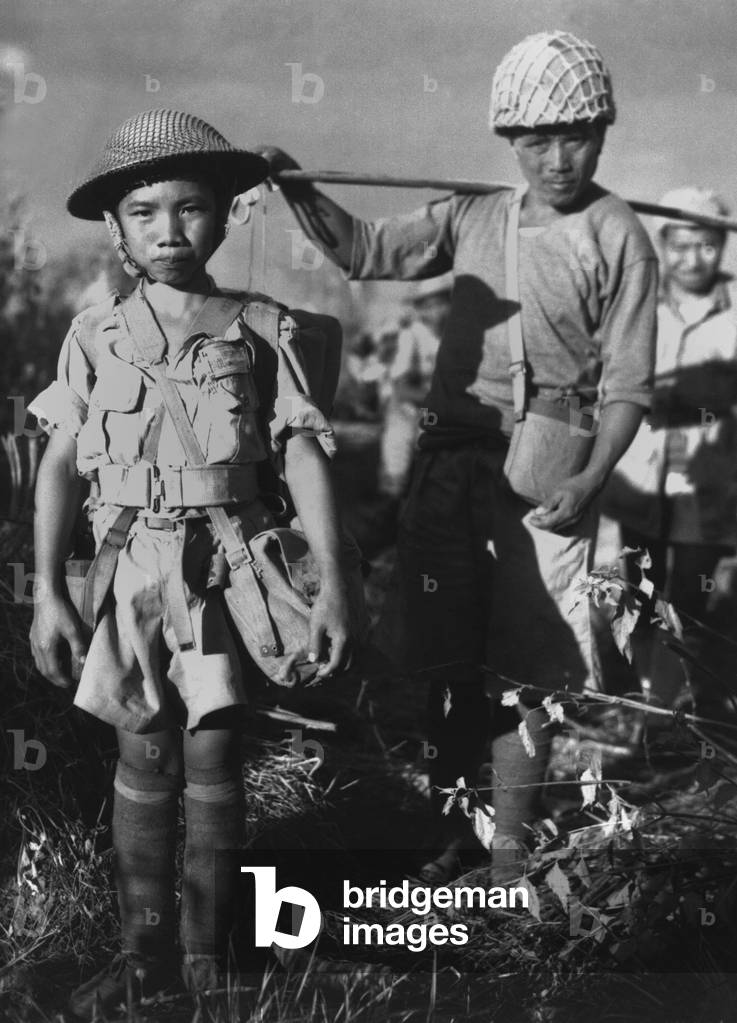
Chinese soldier, age 10, with heavy pack, is a member of a Chinese division. He is about to board a plane at Myitkyina, Burma, bound for China. Dec. 5, 1944. Second Sino-Japanese War/ World War 2

EVB2945159: Chinese soldier, age 10, with heavy pack, is a member of a Chinese division. He is about to board a plane at Myitkyina, Burma, bound for China. Dec. 5, 1944. Second Sino-Japanese War/ World War 2 / Bridgeman Images
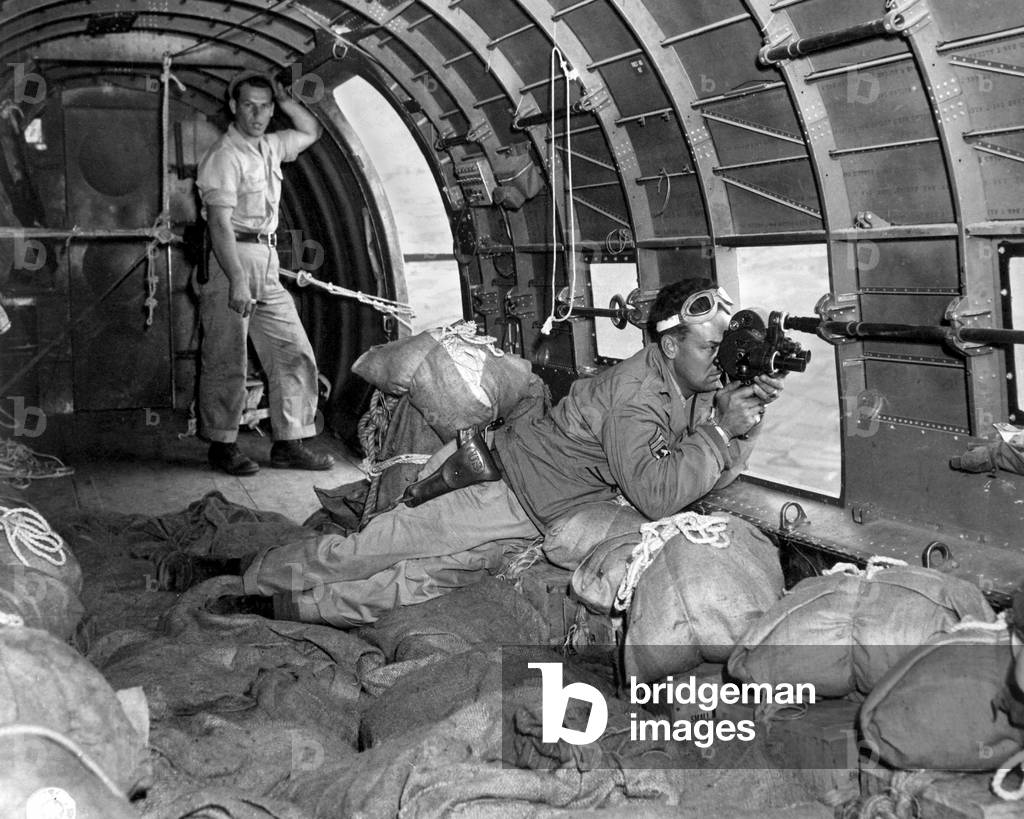
Army Signal Corps photographer, shoots motion pictures of a supply drop to Chinese Forces. World War 2, June 17, 1944

EVB2945168: Army Signal Corps photographer, shoots motion pictures of a supply drop to Chinese Forces. World War 2, June 17, 1944 / Bridgeman Images
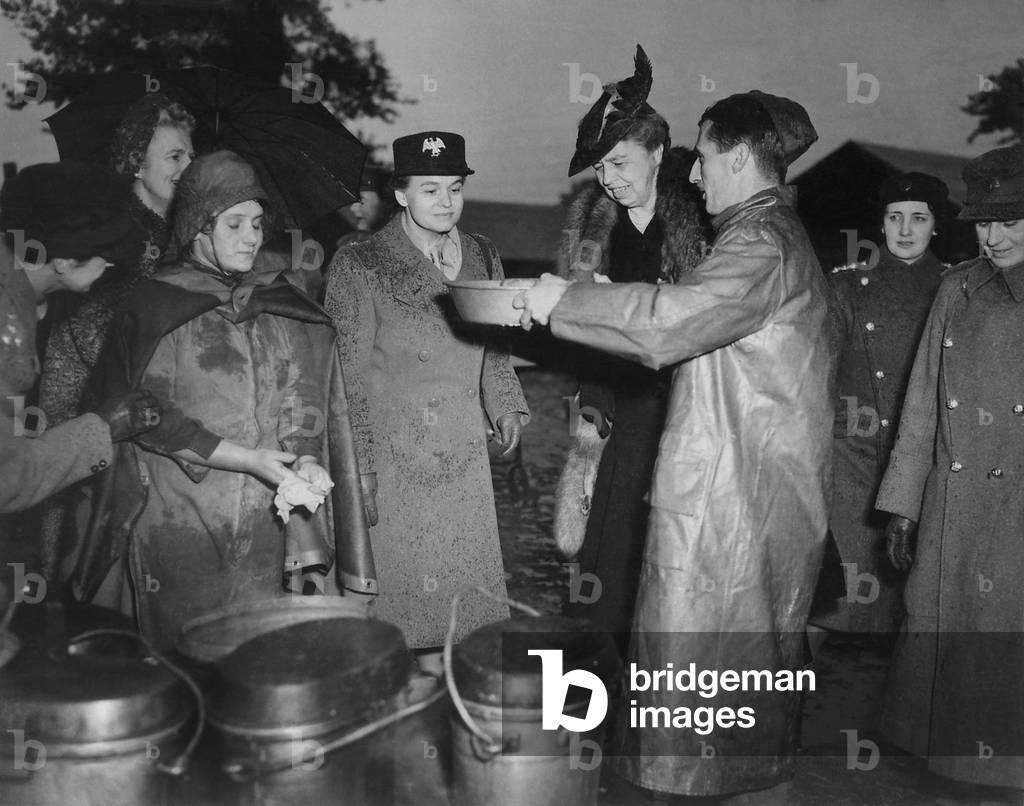
Eleanor Roosevelt and Director of the WAAC, Colonel Oveta Culp Hobby, in England. Also in the photo, is Clementine Churchill, at left partially visible behind a member of the Women's Army Auxiliary Corps. Oct. 26, 1942. World War 2

EVB2945177: Eleanor Roosevelt and Director of the WAAC, Colonel Oveta Culp Hobby, in England. Also in the photo, is Clementine Churchill, at left partially visible behind a member of the Women's Army Auxiliary Corps. Oct. 26, 1942. World War 2 / Bridgeman Images
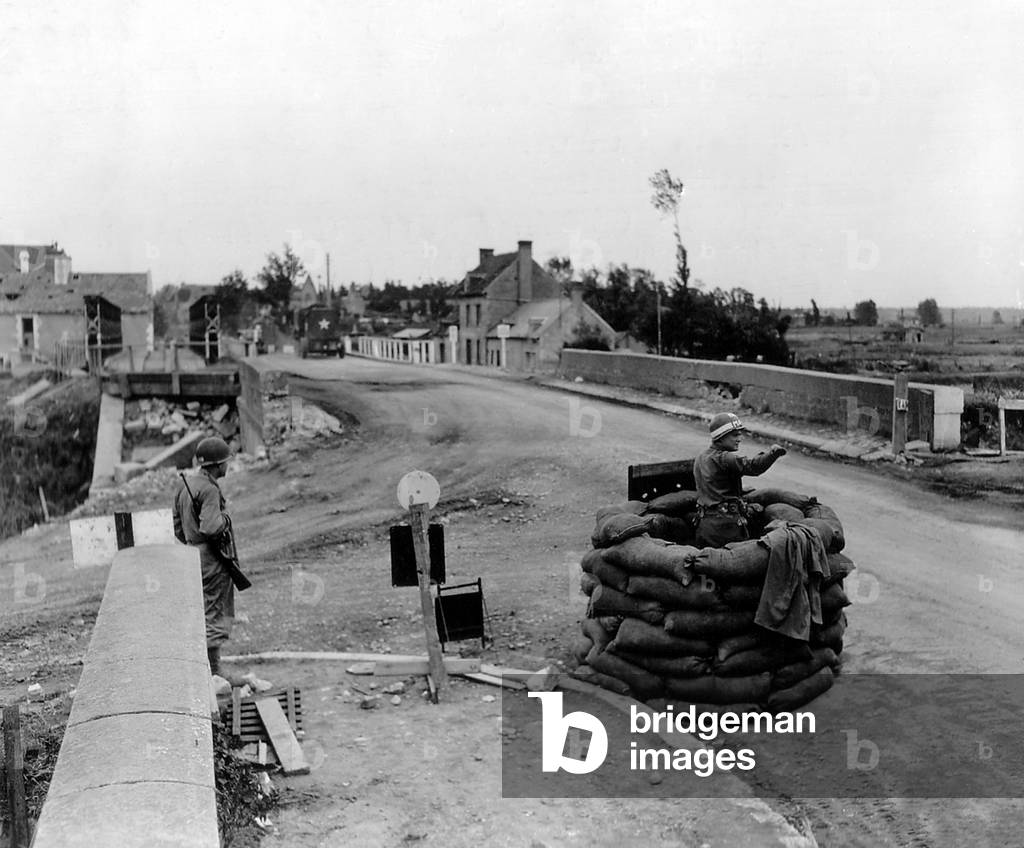
U.S. MP controls traffic on a bridge at Carentan, sheltered in a 'booth' made ??with sandbags. July 5, 1944. Normandy Campaign, France, World War 2

EVB2945195: U.S. MP controls traffic on a bridge at Carentan, sheltered in a 'booth' made ??with sandbags. July 5, 1944. Normandy Campaign, France, World War 2 / Bridgeman Images
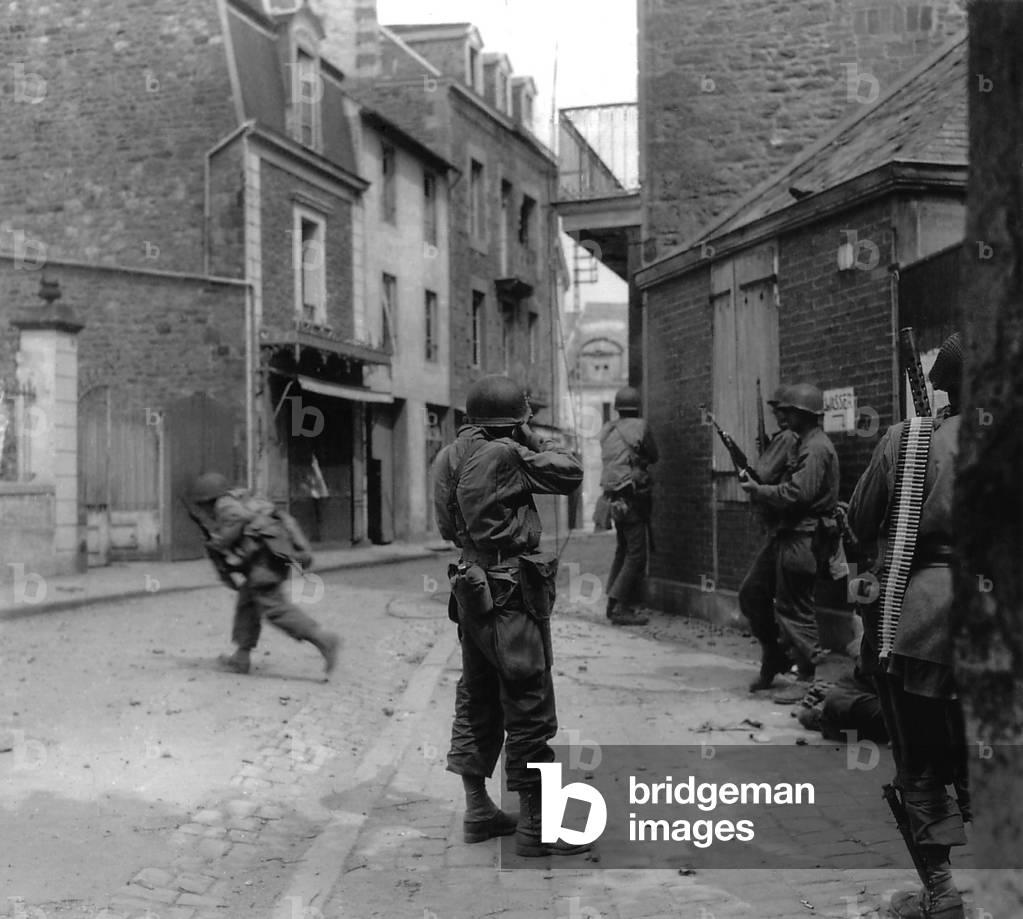
U.S. soldier aims at a German sniper during street fighting in Saint Malo, France, Aug. 8, 1944. The Atlantic port city was captured on Aug. 17, 1944, with the 10,000 German POWS. World War 2

EVB2945237: U.S. soldier aims at a German sniper during street fighting in Saint Malo, France, Aug. 8, 1944. The Atlantic port city was captured on Aug. 17, 1944, with the 10,000 German POWS. World War 2 / Bridgeman Images
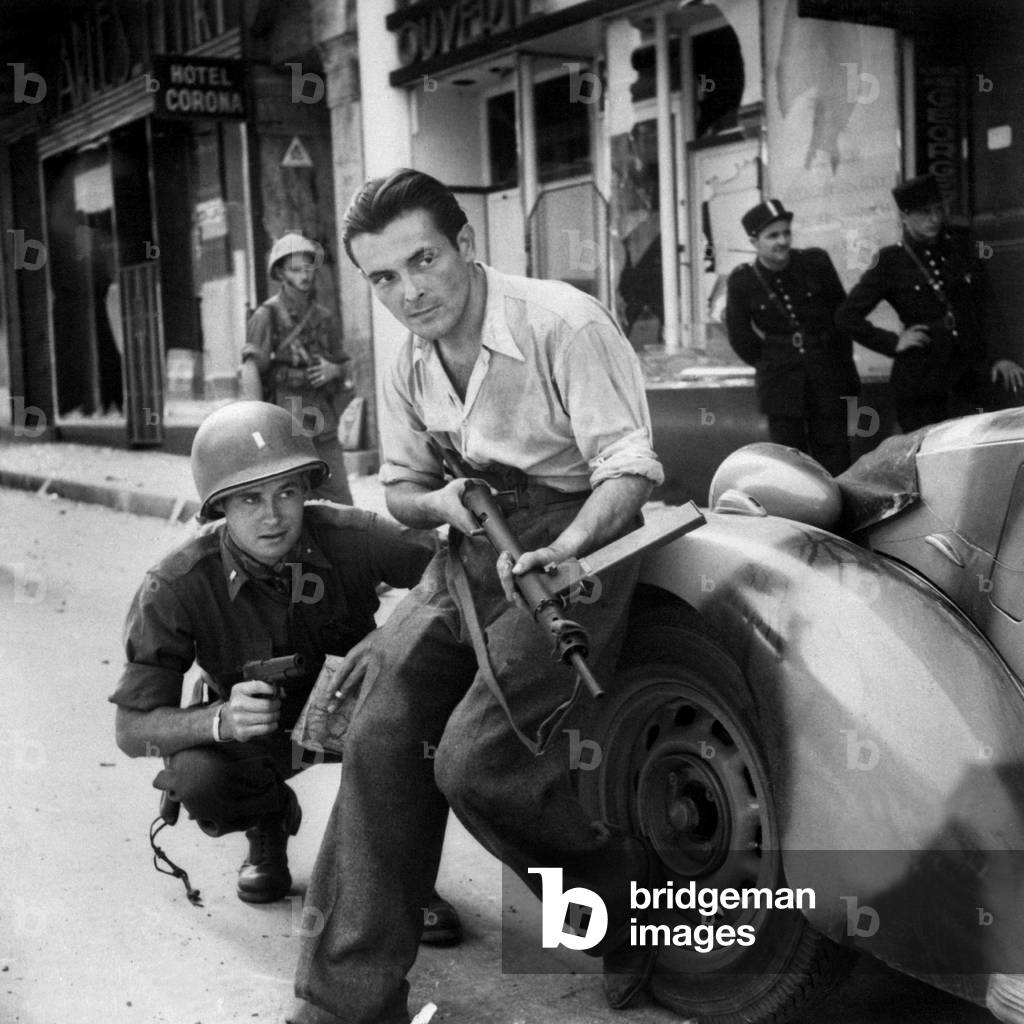
U.S. Army Lieutenant and French partisan crouch behind an auto in street fighting. Summer 1944. World War 2

EVB2945246: U.S. Army Lieutenant and French partisan crouch behind an auto in street fighting. Summer 1944. World War 2 / Bridgeman Images
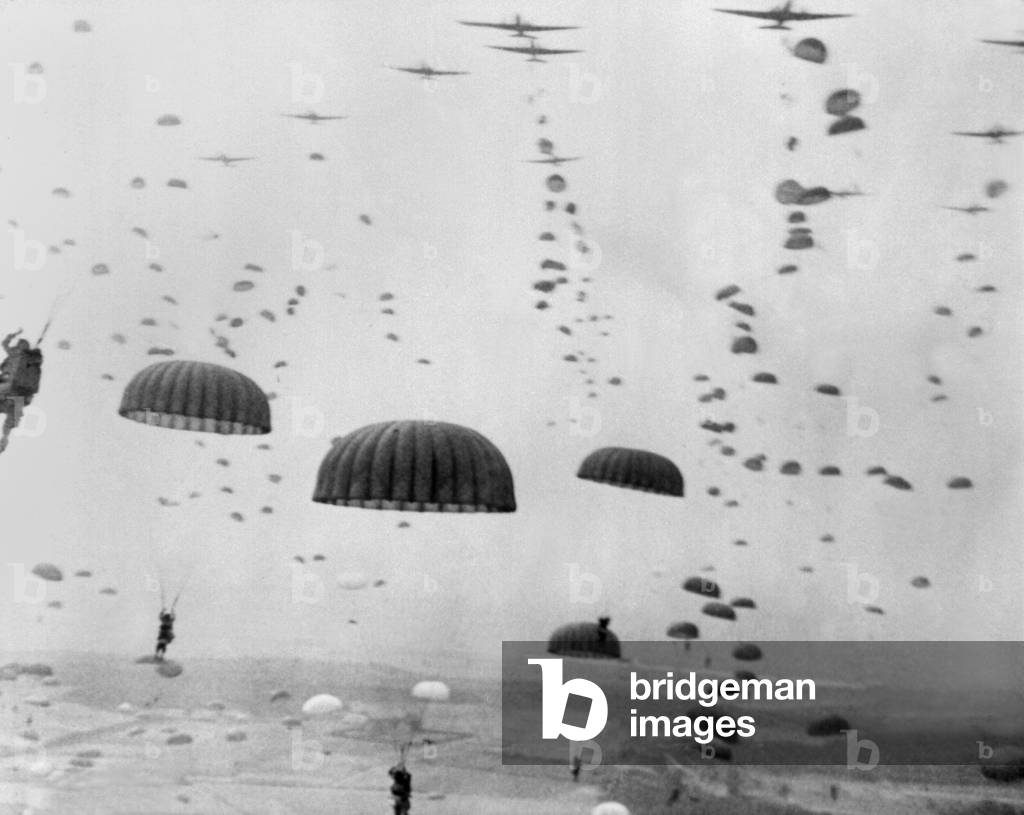
Allied aircraft drop paratroopers into German held Netherlands, for Operation Market Garden. The plan to capture key bridges in Netherlands failed with 15,000 Allied casualties. A BRIDGE TO FAR, was a 1977 film based on Cornelius Ryan's 1974 book about the battle. World War 2

EVB2945255: Allied aircraft drop paratroopers into German held Netherlands, for Operation Market Garden. The plan to capture key bridges in Netherlands failed with 15,000 Allied casualties. A BRIDGE TO FAR, was a 1977 film based on Cornelius Ryan's 1974 book about the battle. World War 2 / Bridgeman Images

A Yank in Versailles by Bert Brandt, Sept. 1944. One of the first Americans to visit Versailles' Hall of Mirrors, after its liberation. Sept. 1944

EVB2945276: A Yank in Versailles by Bert Brandt, Sept. 1944. One of the first Americans to visit Versailles' Hall of Mirrors, after its liberation. Sept. 1944 / Bridgeman Images

Rows of 40mm Bofors light anti-aircraft guns beside railroad tracks in England. There was a massive build up of soldiers and weapons in Britain before the Allied invasion at Normandy, 1944, World War 2

EVB2945306: Rows of 40mm Bofors light anti-aircraft guns beside railroad tracks in England. There was a massive build up of soldiers and weapons in Britain before the Allied invasion at Normandy, 1944, World War 2 / Bridgeman Images

Armored amphibious tractors in the first waves of the Marine invasion of Okinawa. April 1, 1945. World War 2

EVB2944859: Armored amphibious tractors in the first waves of the Marine invasion of Okinawa. April 1, 1945. World War 2 / Bridgeman Images

Marine Pfc. Paul E. Ison runs through Japanese machine gun fire on Okinawa, May 10, 1945. He was the first of his unit to cross 'Death Valley' when the 29 year old father of four was photographed by Pvt. Bob Bailey. World War 2

EVB2944868: Marine Pfc. Paul E. Ison runs through Japanese machine gun fire on Okinawa, May 10, 1945. He was the first of his unit to cross 'Death Valley' when the 29 year old father of four was photographed by Pvt. Bob Bailey. World War 2 / Bridgeman Images

Japanese bomber explodes after direct hit by 5 inch shell from USS Yorktown, Dec. 4, 1943. Off Kwajalein Atoll. World War 2, Pacific Ocean

EVB2944871: Japanese bomber explodes after direct hit by 5 inch shell from USS Yorktown, Dec. 4, 1943. Off Kwajalein Atoll. World War 2, Pacific Ocean / Bridgeman Images

Woman war workers assembling oxygen masks at American Anode Company, in Akron, Ohio. During World War 2, c. 1942-45

EVB2944910: Woman war workers assembling oxygen masks at American Anode Company, in Akron, Ohio. During World War 2, c. 1942-45 / Bridgeman Images

North American Aviation employees go to work in Inglewood, California, during World War 2. Employees must display their badges and identification cards before admittance. c. 1941-45

EVB2944988: North American Aviation employees go to work in Inglewood, California, during World War 2. Employees must display their badges and identification cards before admittance. c. 1941-45 / Bridgeman Images
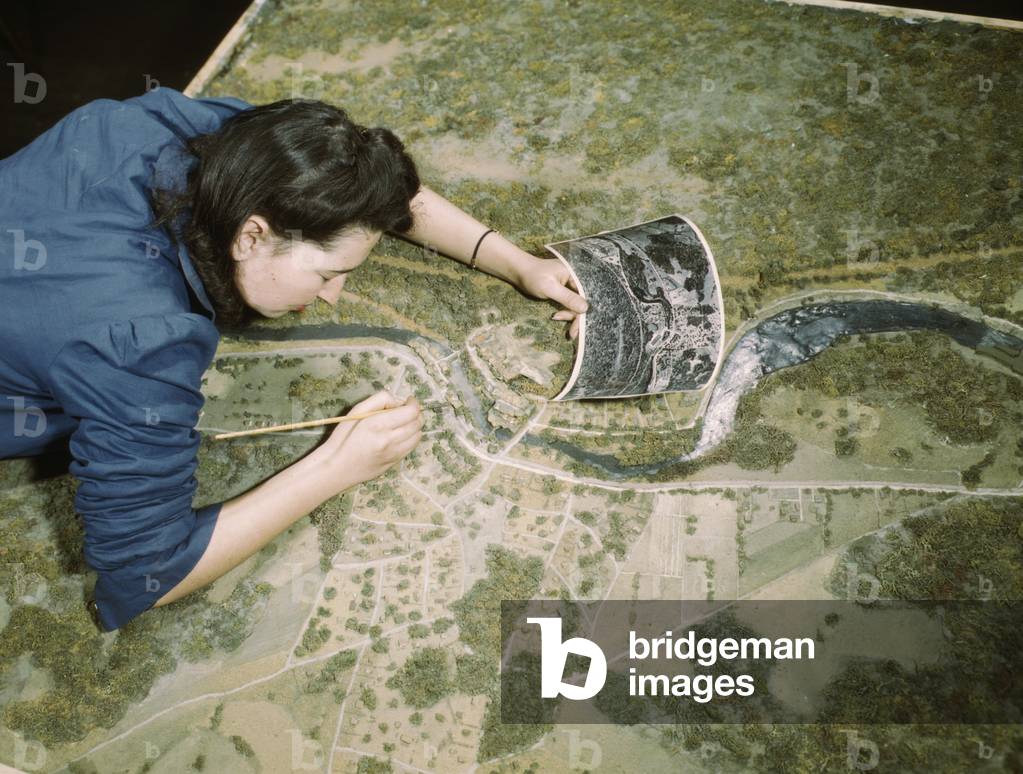
Young women in camouflage class at New York University during World War 2. She is disguising a model defense plant in preparation for jobs in the Army or in industry. March 1943

EVB2944991: Young women in camouflage class at New York University during World War 2. She is disguising a model defense plant in preparation for jobs in the Army or in industry. March 1943 / Bridgeman Images

German displaced persons wait in Berlin's Anhalter Station in 1945. Refugees are carrying their few belongings, as the stand behind a rope and double strand of barbed wire. World War 2

EVB2945027: German displaced persons wait in Berlin's Anhalter Station in 1945. Refugees are carrying their few belongings, as the stand behind a rope and double strand of barbed wire. World War 2 / Bridgeman Images

Soldiers of the 29th Marines on a Sherman tank on the first day of the invasion of Okinawa. April 1, 1945. They are advancing to take the town of Ghuta. April 1, 1945. World War 2

EVB2944864: Soldiers of the 29th Marines on a Sherman tank on the first day of the invasion of Okinawa. April 1, 1945. They are advancing to take the town of Ghuta. April 1, 1945. World War 2 / Bridgeman Images

Discharged Japanese soldiers going home after the end of World War 2. Sept. 1945

EVB2945081: Discharged Japanese soldiers going home after the end of World War 2. Sept. 1945 / Bridgeman Images

U.S. Marine observation plane flies low over Naha, capital of Okinawa, May 1945. The small plane drew small arms and anti-aircraft fire from the city which was in Japanese control at the time. World War 2

EVB2944879: U.S. Marine observation plane flies low over Naha, capital of Okinawa, May 1945. The small plane drew small arms and anti-aircraft fire from the city which was in Japanese control at the time. World War 2 / Bridgeman Images

American Women's Voluntary Services, posed on steps, wearing various AWVS uniforms, 1942. AWVS was founded in January 1940 by Alice Throckmorton McLean and other wealthy internationalist women in New York City. World War 2

EVB2944888: American Women's Voluntary Services, posed on steps, wearing various AWVS uniforms, 1942. AWVS was founded in January 1940 by Alice Throckmorton McLean and other wealthy internationalist women in New York City. World War 2 / Bridgeman Images

Woman war worker riveting an A-20 bomber. Douglas Aircraft Company plant, Long Beach, California, during World War 2, c. 1942-45

EVB2944906: Woman war worker riveting an A-20 bomber. Douglas Aircraft Company plant, Long Beach, California, during World War 2, c. 1942-45 / Bridgeman Images

Muscular woman lathe operator machining aircraft parts during World War 2. Consolidated Aircraft Corporation plant, Fort Worth, Texas. Oct. 1942

EVB2944930: Muscular woman lathe operator machining aircraft parts during World War 2. Consolidated Aircraft Corporation plant, Fort Worth, Texas. Oct. 1942, Palmer, Alfred T. (1906-93) / Bridgeman Images

African American woman working on the Liberty Ship, SS George Washington Carver. Eastine Cowner, works as a scaler at the Kaiser shipyards, Richmond, California. May 7, 1943, during World War 2

EVB2944942: African American woman working on the Liberty Ship, SS George Washington Carver. Eastine Cowner, works as a scaler at the Kaiser shipyards, Richmond, California. May 7, 1943, during World War 2 / Bridgeman Images

'How many points will it take?', a shopper asks before she buys food during World War 2. The government issued ration book discouraged use of commodities needed for the War effort. March 1943

EVB2944957: 'How many points will it take?', a shopper asks before she buys food during World War 2. The government issued ration book discouraged use of commodities needed for the War effort. March 1943 / Bridgeman Images

A bombed out London women carrying a few belongings talks with an Air Raids Precautions worker. 1940 during the Battle of Britain in World War 2

EVB2944960: A bombed out London women carrying a few belongings talks with an Air Raids Precautions worker. 1940 during the Battle of Britain in World War 2 / Bridgeman Images

German production minister, Albert Speer, addressed workers at a German munitions factory. Speer thanked the men and women for their speedy return to production after the factory was damaged by a bombing raid. 1944. World War 2

EVB2944987: German production minister, Albert Speer, addressed workers at a German munitions factory. Speer thanked the men and women for their speedy return to production after the factory was damaged by a bombing raid. 1944. World War 2 / Bridgeman Images

United we are strong, United we can win, 1943 (poster)

EVB2945002: United we are strong, United we can win, 1943 (poster), Koerner, Henry (1915-91) / Bridgeman Images

'Back Them Up!', 1940 (poster)

EVB2945008: 'Back Them Up!', 1940 (poster) / Bridgeman Images

Sgt. Franklin Williams, on leave from army duty, with his best girl Ellen Hardin, splitting a soda. May 1942, during World War 2

EVB2945050: Sgt. Franklin Williams, on leave from army duty, with his best girl Ellen Hardin, splitting a soda. May 1942, during World War 2 / Bridgeman Images

Marine on the stretcher at a dressing station on Tarawa smokes as he is attended by medics. He has a wounded arm and leg. Nov. 20-23, 1943 during World War 2

EVB2945053: Marine on the stretcher at a dressing station on Tarawa smokes as he is attended by medics. He has a wounded arm and leg. Nov. 20-23, 1943 during World War 2 / Bridgeman Images

American aircraft carrier USS Yorktown hit by a Japanese bomb in the Battle of Midway, June 4, 1942. A torpedo attack later that day crippled the ship, which sunk on June 7. World War 2 combat against Japanese

EVB2945059: American aircraft carrier USS Yorktown hit by a Japanese bomb in the Battle of Midway, June 4, 1942. A torpedo attack later that day crippled the ship, which sunk on June 7. World War 2 combat against Japanese / Bridgeman Images

World War 2 dead from European War Cemeteries arriving at Brooklyn Army Base, New York, in 1947. U.S. government transferred dead soldiers bodies at their families request

EVB2945065: World War 2 dead from European War Cemeteries arriving at Brooklyn Army Base, New York, in 1947. U.S. government transferred dead soldiers bodies at their families request / Bridgeman Images

POW captured near Ubach, Germany, wears a tag indicating he has an sprained back. Dec. 1, 1944 during World War 2

EVB2945092: POW captured near Ubach, Germany, wears a tag indicating he has an sprained back. Dec. 1, 1944 during World War 2 / Bridgeman Images

U.S. Marines tired and weary from continuous fighting, march to the U.S. held valley on Guadalcanal. Jan. 1943, during World War 2

EVB2945104: U.S. Marines tired and weary from continuous fighting, march to the U.S. held valley on Guadalcanal. Jan. 1943, during World War 2 / Bridgeman Images

World War 2, Battle of Britain. A Union Jack flag lies among the rubble of homes smashed by a German missile, either a V-1 or V-2. Camberwell Road, London, 1944-45

EVB2944545: World War 2, Battle of Britain. A Union Jack flag lies among the rubble of homes smashed by a German missile, either a V-1 or V-2. Camberwell Road, London, 1944-45 / Bridgeman Images


Back to top