Search options

Orientation
Colour

Display options

View

Print

To print search results, use print friendly version of this page.

2497653 Search Results

Aesop, the drunken rhyming cobbler of Eton, 17th century. Engraving by R. Grave from James Caulfield's Portraits, Memoirs and Characters of Remarkable Persons, London, 1819.

FLO4601917: Aesop, the drunken rhyming cobbler of Eton, 17th century. Engraving by R. Grave from James Caulfield's Portraits, Memoirs and Characters of Remarkable Persons, London, 1819. / Bridgeman Images

Mary Magdalene. detail (tempera on panel, 1490)

LRI4602030: Mary Magdalene. detail (tempera on panel, 1490), Bellini, Giovanni (c.1430-1516) / Bridgeman Images
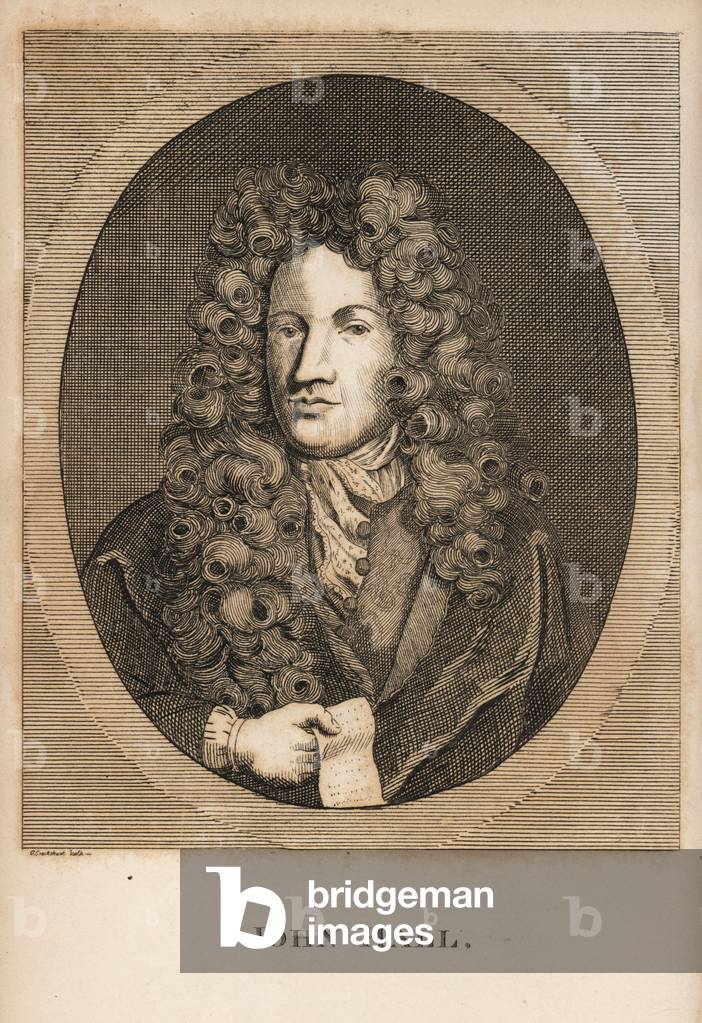
John Hall, rebel supporter executed for treason at Tyburn, 1716. Engraving by George Cruikshank from James Caulfield's Portraits, Memoirs and Characters of Remarkable Persons, London, 1819.

FLO4602258: John Hall, rebel supporter executed for treason at Tyburn, 1716. Engraving by George Cruikshank from James Caulfield's Portraits, Memoirs and Characters of Remarkable Persons, London, 1819. / Bridgeman Images

William Pattison, unfortunate young poet, died of the smallpox, 1706Ð1727. Engraving by R. Grave from James Caulfield's Portraits, Memoirs and Characters of Remarkable Persons, London, 1819.

FLO4602382: William Pattison, unfortunate young poet, died of the smallpox, 1706Ð1727. Engraving by R. Grave from James Caulfield's Portraits, Memoirs and Characters of Remarkable Persons, London, 1819. / Bridgeman Images

Triptych of St Sebastian. Central panel (tempera on panel, 1460-1464)

LRI4602000: Triptych of St Sebastian. Central panel (tempera on panel, 1460-1464), Bellini, Giovanni (c.1430-1516) / Bridgeman Images

The redeemer. Detail (tempera on panel, 1500-1502)

LRI4602008: The redeemer. Detail (tempera on panel, 1500-1502), Bellini, Giovanni (c.1430-1516) / Bridgeman Images

Roman Caprice with Door and Walls, detail (oil on canvas, 1742-1747)

LRI4602157: Roman Caprice with Door and Walls, detail (oil on canvas, 1742-1747), Bellotto, Bernardo (1720-80) / Bridgeman Images
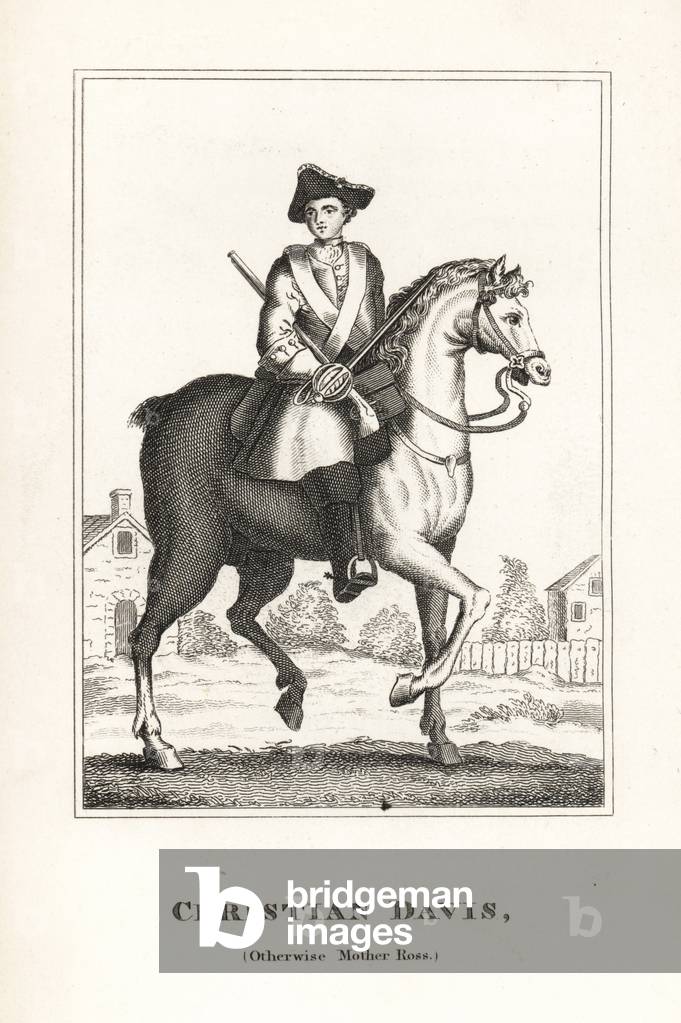
Christian Davis, a.k.a. Mother Ross, enlisted as a man named Christopher Welsh, and fought duels and battles. Died 1739. Engraving from James Caulfield's Portraits, Memoirs and Characters of Remarkable Persons, London, 1819.

FLO4602215: Christian Davis, a.k.a. Mother Ross, enlisted as a man named Christopher Welsh, and fought duels and battles. Died 1739. Engraving from James Caulfield's Portraits, Memoirs and Characters of Remarkable Persons, London, 1819. / Bridgeman Images

Study for self-portrait in Montorsoli, 1892 (painting)

LRI4602332: Study for self-portrait in Montorsoli, 1892 (painting), Boldini, Giovanni (1842-1931) / Bridgeman Images
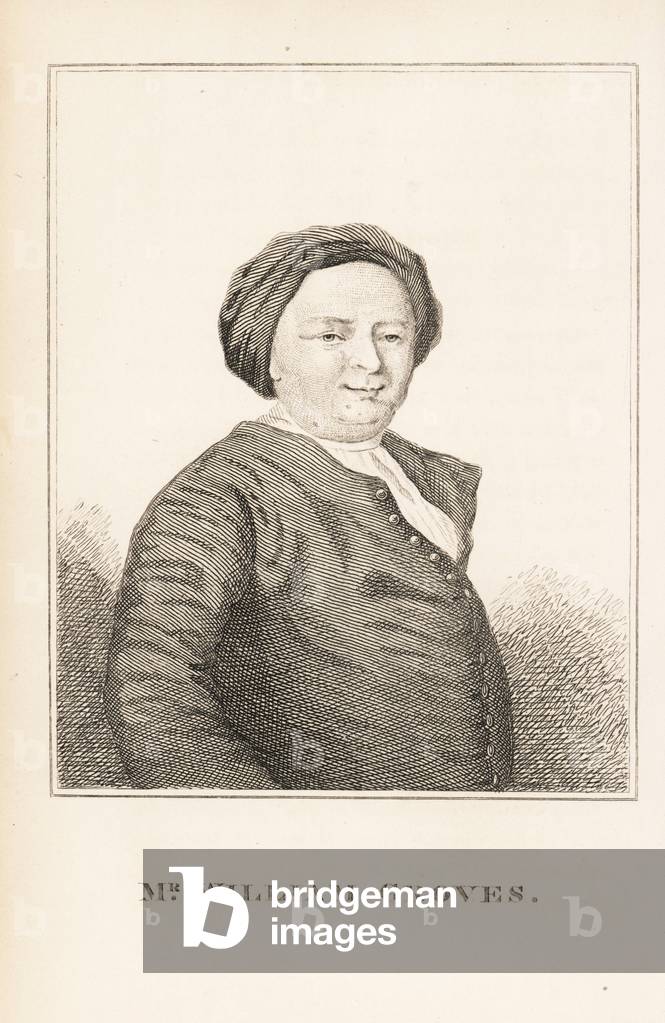
William Groves, publican and famous punch seller of London. Copperplate engraving from John Caulfield's Portraits, Memoirs and Characters of Remarkable Persons, Young, London, 1819.

FLO4602640: William Groves, publican and famous punch seller of London. Copperplate engraving from John Caulfield's Portraits, Memoirs and Characters of Remarkable Persons, Young, London, 1819. / Bridgeman Images

William Page, Gage or Williams, notorious robber and highwayman hanged on Pennenden Heath, Kent, in 1758. Copperplate engraving from John Caulfield's Portraits, Memoirs and Characters of Remarkable Persons, Young, London, 1819.

FLO4602864: William Page, Gage or Williams, notorious robber and highwayman hanged on Pennenden Heath, Kent, in 1758. Copperplate engraving from John Caulfield's Portraits, Memoirs and Characters of Remarkable Persons, Young, London, 1819. / Bridgeman Images

Henry Simons, a Polish Jew, robbed in Cranford Bridge then falsely charged with perjury by the innkeeper and accessories in 1751. Copperplate engraving from John Caulfield's Portraits, Memoirs and Characters of Remarkable Persons, Young, London, 1819.

FLO4602921: Henry Simons, a Polish Jew, robbed in Cranford Bridge then falsely charged with perjury by the innkeeper and accessories in 1751. Copperplate engraving from John Caulfield's Portraits, Memoirs and Characters of Remarkable Persons, Young, London, 1819. / Bridgeman Images

Layton Smith, bearded debtor in Fleet Prison, who vowed never to shave until his release. Died in prison. Copperplate engraving from John Caulfield's Portraits, Memoirs and Characters of Remarkable Persons, Young, London, 1819.

FLO4602924: Layton Smith, bearded debtor in Fleet Prison, who vowed never to shave until his release. Died in prison. Copperplate engraving from John Caulfield's Portraits, Memoirs and Characters of Remarkable Persons, Young, London, 1819. / Bridgeman Images
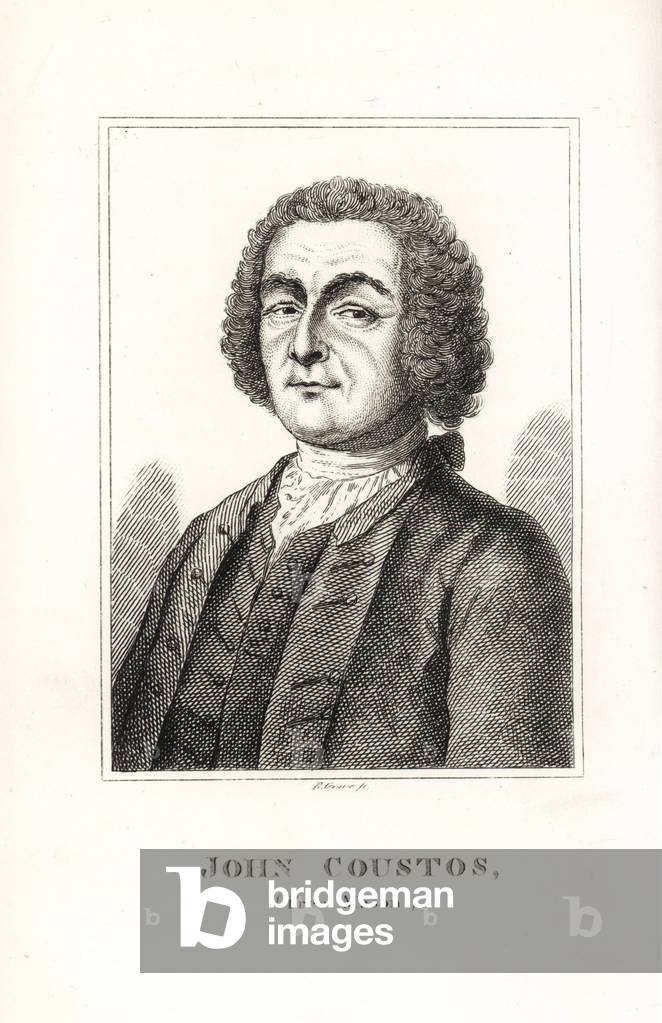
John Coustos, Swiss lapidary tortured by the Inquisition or Auto Da Fe in Portugal for being a Freemason. Copperplate engraving by R. Grave from John Caulfield's Portraits, Memoirs and Characters of Remarkable Persons, Young, London, 1819.

FLO4602540: John Coustos, Swiss lapidary tortured by the Inquisition or Auto Da Fe in Portugal for being a Freemason. Copperplate engraving by R. Grave from John Caulfield's Portraits, Memoirs and Characters of Remarkable Persons, Young, London, 1819. / Bridgeman Images

Maximilian Christopher Miller, the German Giant, 8 feet tall, exhibited at London fairs. He wears a Hungarian jacket, fancy cap with plume of feathers and carries a gilt sceptre and falchion sword. Copperplate engraving by R. Grave from John Caulfield's Portraits, Memoirs and Characters of Remarkable Persons, Young, London, 1819.

FLO4602857: Maximilian Christopher Miller, the German Giant, 8 feet tall, exhibited at London fairs. He wears a Hungarian jacket, fancy cap with plume of feathers and carries a gilt sceptre and falchion sword. Copperplate engraving by R. Grave from John Caulfield's Portraits, Memoirs and Characters of Remarkable Persons, Young, London, 1819. / Bridgeman Images

John Stone, executed in 1750 for arson committed for his employer John Collington. Copperplate engraving from John Caulfield's Portraits, Memoirs and Characters of Remarkable Persons, Young, London, 1819.

FLO4602523: John Stone, executed in 1750 for arson committed for his employer John Collington. Copperplate engraving from John Caulfield's Portraits, Memoirs and Characters of Remarkable Persons, Young, London, 1819. / Bridgeman Images
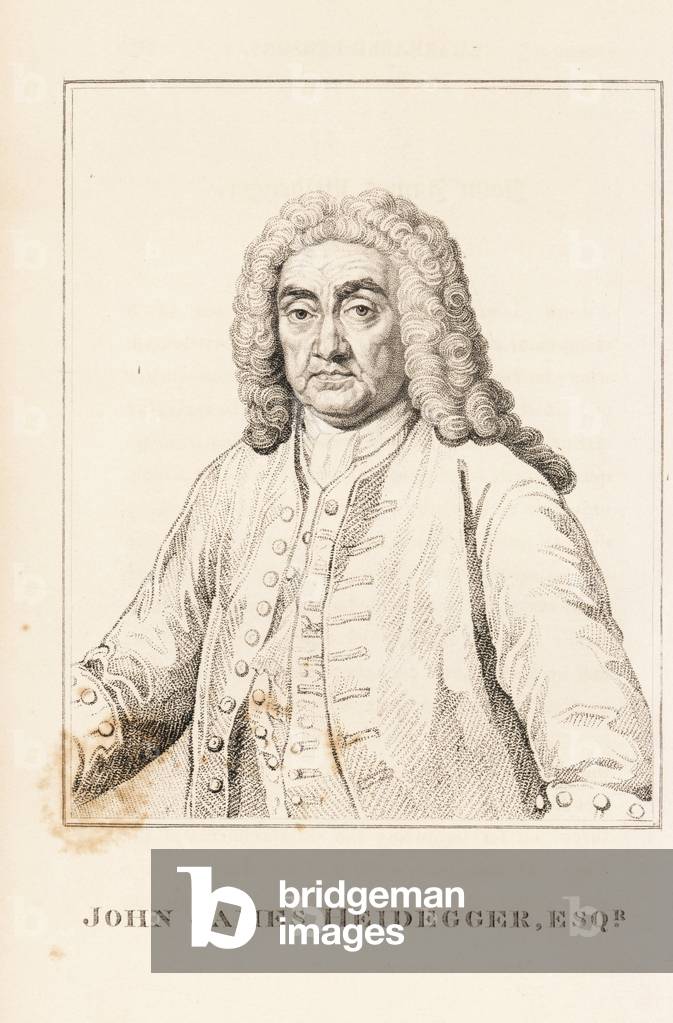
John James Heidegger, Swiss gentleman who became manager of the Opera House and Master of Revels in London under King George II. Copperplate engraving from John Caulfield's Portraits, Memoirs and Characters of Remarkable Persons, Young, London, 1819.

FLO4602728: John James Heidegger, Swiss gentleman who became manager of the Opera House and Master of Revels in London under King George II. Copperplate engraving from John Caulfield's Portraits, Memoirs and Characters of Remarkable Persons, Young, London, 1819. / Bridgeman Images

Richard Turpin or Dick Turpin, celebrated thief and highwayman, executed at York, 1739. Copperplate engraving by R. Grave from John Caulfield's Portraits, Memoirs and Characters of Remarkable Persons, Young, London, 1819.

FLO4602988: Richard Turpin or Dick Turpin, celebrated thief and highwayman, executed at York, 1739. Copperplate engraving by R. Grave from John Caulfield's Portraits, Memoirs and Characters of Remarkable Persons, Young, London, 1819. / Bridgeman Images

Young man at the club (Giovane dalla mazza) Cycle of the Men of Arms of the Panigarola family. Fresco by Donato Bramante (1444-1514) Pinacoteca di Brera, Milan

LRI4602994: Young man at the club (Giovane dalla mazza) Cycle of the Men of Arms of the Panigarola family. Fresco by Donato Bramante (1444-1514) Pinacoteca di Brera, Milan, Bramante, Donato (1444-1514) / Bridgeman Images

Chippewa warriors Ka-bes-kunk, He Who Travels Everywhere 241 and Ka-be-mub-be, He Who Sits Everywhere 244. Handcoloured lithograph from George Catlin's Manners, Customs and Condition of the North American Indians, London, 1841.

FLO4600920: Chippewa warriors Ka-bes-kunk, He Who Travels Everywhere 241 and Ka-be-mub-be, He Who Sits Everywhere 244. Handcoloured lithograph from George Catlin's Manners, Customs and Condition of the North American Indians, London, 1841. / Bridgeman Images

Fascist propaganda poster Star of Italy brings good luck, a beneficial flag for war orphans, 1922

LRI4600927: Fascist propaganda poster Star of Italy brings good luck, a beneficial flag for war orphans, 1922, Dudovich, Marcello (1878-1962) / Bridgeman Images

Women and children of the Assiniboine Nation, Sioux First Nation, in goatskin robes decorated with porcupine quills and elk's teeth. Handcoloured lithograph from George Catlin's Manners, Customs and Condition of the North American Indians, London, 1841.

FLO4600944: Women and children of the Assiniboine Nation, Sioux First Nation, in goatskin robes decorated with porcupine quills and elk's teeth. Handcoloured lithograph from George Catlin's Manners, Customs and Condition of the North American Indians, London, 1841. / Bridgeman Images

Left panel of the Polyptych of Revelation: Christ with the Book of Life. Detrempe on wood by Jacobello Alberegno (1367-1397 approx.) 1360-1390. Gallerie dell'Accademia, Venice

LRI4600979: Left panel of the Polyptych of Revelation: Christ with the Book of Life. Detrempe on wood by Jacobello Alberegno (1367-1397 approx.) 1360-1390. Gallerie dell'Accademia, Venice, Alberegno, Jacopo (d. 1397) / Bridgeman Images
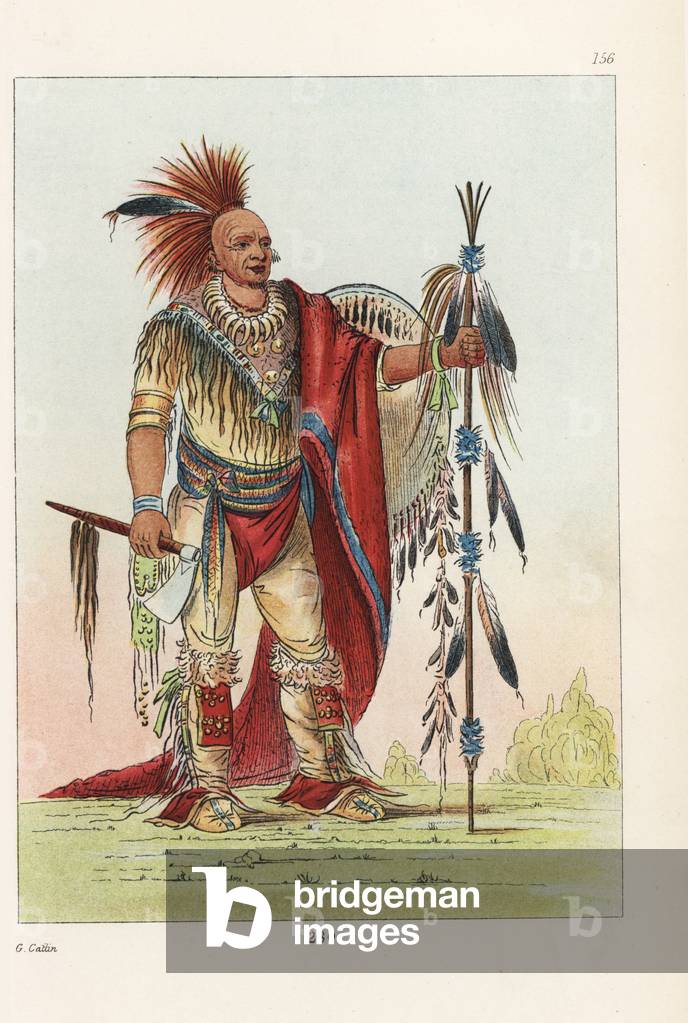
Meskwaki chief Kee-o-kuk, Running Fox, with shield, staff, tomahawk decorated with scalp-locks, bear teeth necklace, moccasins, and blanket. Handcoloured lithograph from George Catlin's Manners, Customs and Condition of the North American Indians, London, 1841.

FLO4601017: Meskwaki chief Kee-o-kuk, Running Fox, with shield, staff, tomahawk decorated with scalp-locks, bear teeth necklace, moccasins, and blanket. Handcoloured lithograph from George Catlin's Manners, Customs and Condition of the North American Indians, London, 1841. / Bridgeman Images

Venus and Adonis (Oil on canvas, 1740)

LRI4601048: Venus and Adonis (Oil on canvas, 1740), Amigoni, Jacopo (c. 1675-1752) / Bridgeman Images

Assumption Passerini Painting by Andrea del Sarto (1486-1531) 1522 Dim. 379x222 cm Florence, Palazzo Pitti

LRI4601059: Assumption Passerini Painting by Andrea del Sarto (1486-1531) 1522 Dim. 379x222 cm Florence, Palazzo Pitti, Sarto, Andrea del (1486-1530) / Bridgeman Images

Fountain Stravinsky, Place Stravinsky, Paris 4th arrondissement (photo)

TEC4601079: Fountain Stravinsky, Place Stravinsky, Paris 4th arrondissement (photo), Tinguely, Jean (1925-1991) & Saint-Phalle, Niki de (1930-2002) / Bridgeman Images

Fountain Stravinsky, Place Stravinsky, Paris 4th arrondissement (photo)

TEC4601097: Fountain Stravinsky, Place Stravinsky, Paris 4th arrondissement (photo), Tinguely, Jean (1925-1991) & Saint-Phalle, Niki de (1930-2002) / Bridgeman Images

La Fontaine Stravinski (Stravinsky), Place Stravinsky, Paris 4th arrondissement. Inaugural in March 1983, the fountain in tribute to Igor Stravinsky is composed of aluminum and steel sculptures painted in black and electric motors by Jean Tinguely (1925-1991). The figures of Niki de Saint-Phalle (Saint Phalle) (1930-2002) are made of polyester. View of the “Fire Bird”. Photography 12/04/83.

TEC4601119: La Fontaine Stravinski (Stravinsky), Place Stravinsky, Paris 4th arrondissement. Inaugural in March 1983, the fountain in tribute to Igor Stravinsky is composed of aluminum and steel sculptures painted in black and electric motors by Jean Tinguely (1925-1991). The figures of Niki de Saint-Phalle (Saint Phalle) (1930-2002) are made of polyester. View of the “Fire Bird”. Photography 12/04/83., Tinguely, Jean (1925-1991) & Saint-Phalle, Niki de (1930-2002) / Bridgeman Images

Tullock-chish-ko, He Who Drinks the Juice of the Stone, the most distinguished ball player of the Choctaw nation, with his sticks and a tail made of white horsehair or feathers, and a mane of dyed horsehair on his shoulders. Handcoloured lithograph from George Catlin's Manners, Customs and Condition of the North American Indians, London, 1841.

FLO4600832: Tullock-chish-ko, He Who Drinks the Juice of the Stone, the most distinguished ball player of the Choctaw nation, with his sticks and a tail made of white horsehair or feathers, and a mane of dyed horsehair on his shoulders. Handcoloured lithograph from George Catlin's Manners, Customs and Condition of the North American Indians, London, 1841. / Bridgeman Images

Muscogee or Creek Nation: chiefs Ste-cha-co-me-Co, Great King or Ben Perryman 219, and Hil-te-mal-te-Tez-te-Neehk-ee, Sam Perryman 220. Choctaw chief Mo-sho-la-tub-bee, He Who Puts out and Kills 221, and chief ha-tchoo-tuck-nee, Snapping Turtle or Peter Pinchlin (Pitchlynn) 222. Handcoloured lithograph from George Catlin's Manners, Customs and Condition of the North American Indians, London, 1841.

FLO4600831: Muscogee or Creek Nation: chiefs Ste-cha-co-me-Co, Great King or Ben Perryman 219, and Hil-te-mal-te-Tez-te-Neehk-ee, Sam Perryman 220. Choctaw chief Mo-sho-la-tub-bee, He Who Puts out and Kills 221, and chief ha-tchoo-tuck-nee, Snapping Turtle or Peter Pinchlin (Pitchlynn) 222. Handcoloured lithograph from George Catlin's Manners, Customs and Condition of the North American Indians, London, 1841. / Bridgeman Images
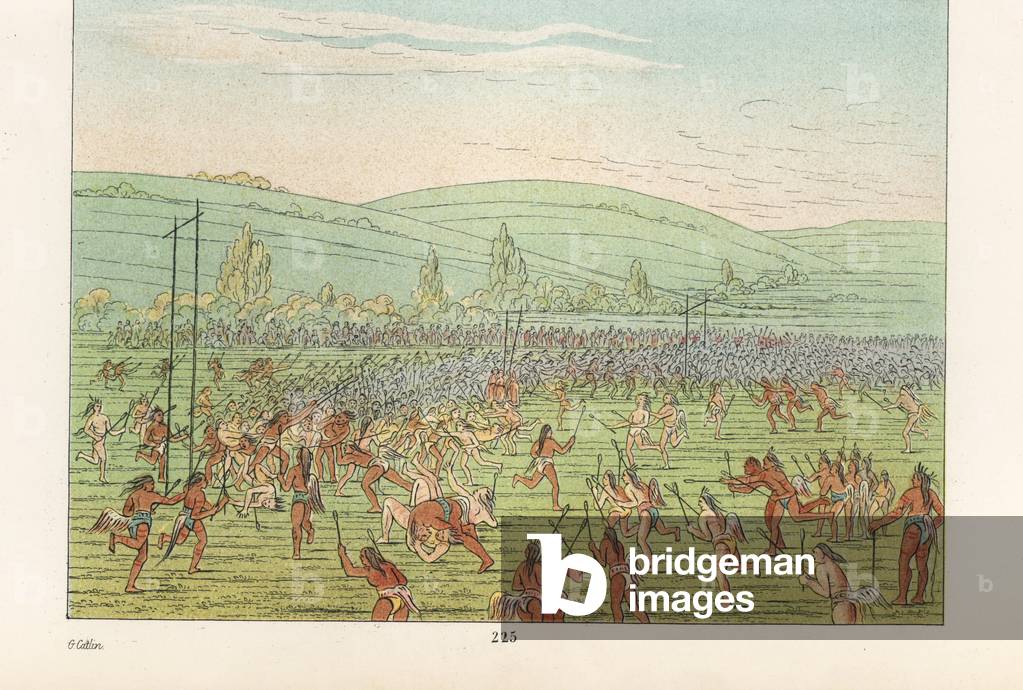
Choctaw men in loincloth and tail only playing the ball game similar to lacrosse or hockey. Handcoloured lithograph from George Catlin's Manners, Customs and Condition of the North American Indians, London, 1841.

FLO4600843: Choctaw men in loincloth and tail only playing the ball game similar to lacrosse or hockey. Handcoloured lithograph from George Catlin's Manners, Customs and Condition of the North American Indians, London, 1841. / Bridgeman Images
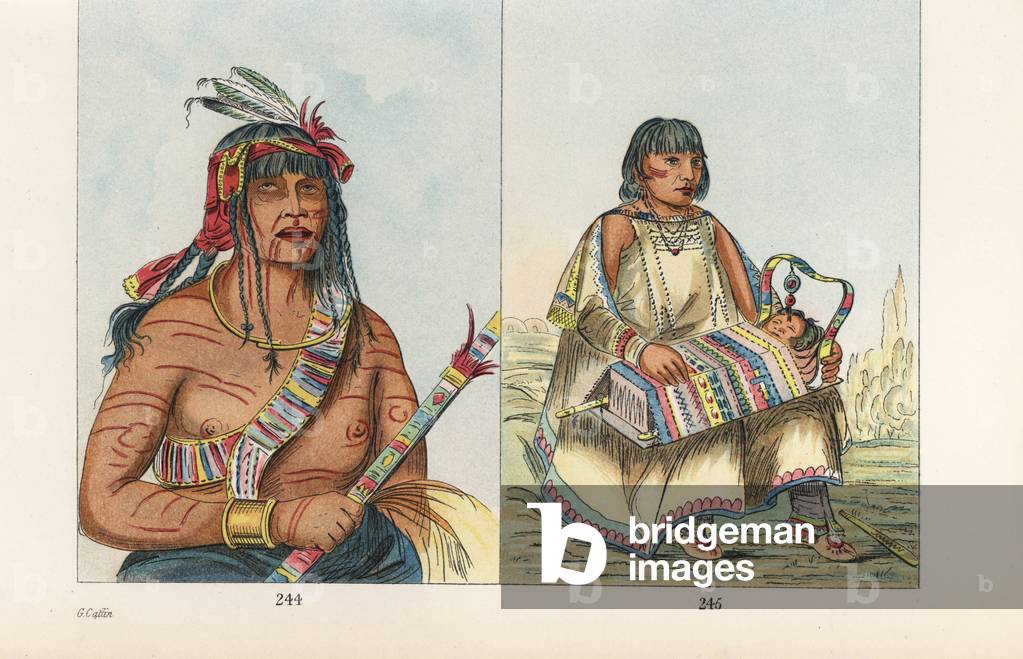
Chippewa warrior Ot-ta-wa, Otaway with his pipe 244 and Chippewa woman Ju-ah-kis-gaw with child in cradleboard 245. The baby's umbilical cord (ni-ahkust-ahg) hangs above its face for supernatural protection. Handcoloured lithograph from George Catlin's Manners, Customs and Condition of the North American Indians, London, 1841.

FLO4600936: Chippewa warrior Ot-ta-wa, Otaway with his pipe 244 and Chippewa woman Ju-ah-kis-gaw with child in cradleboard 245. The baby's umbilical cord (ni-ahkust-ahg) hangs above its face for supernatural protection. Handcoloured lithograph from George Catlin's Manners, Customs and Condition of the North American Indians, London, 1841. / Bridgeman Images
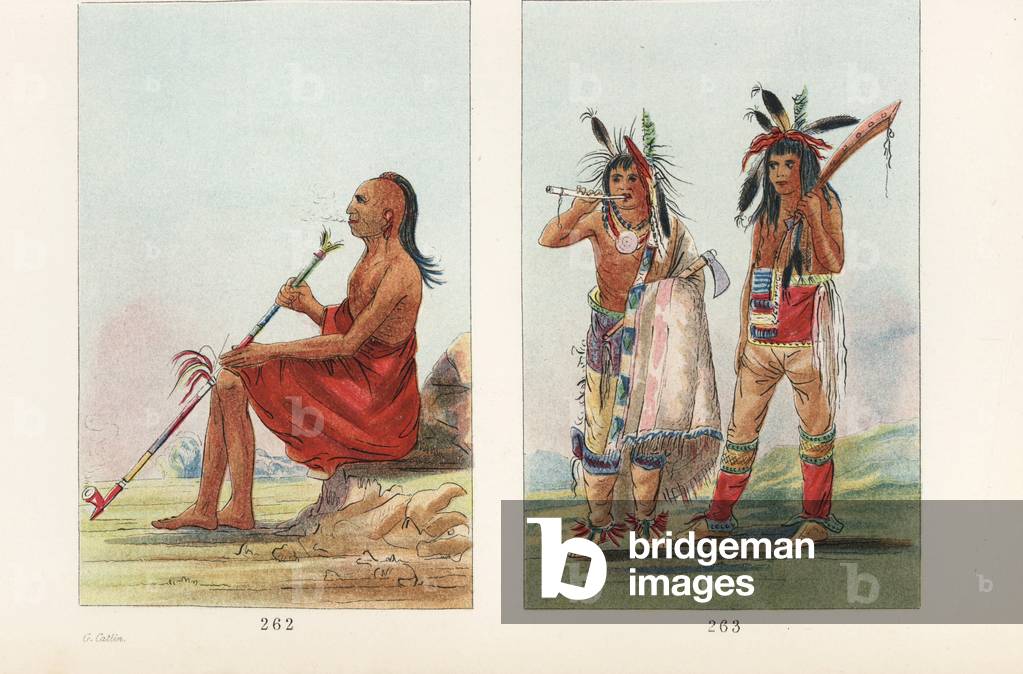
Menominee men: old chief Coo-coo-coo, Owl 262, and two youths with war club, tomahawk, blanket, and courting flute 263. Handcoloured lithograph from George Catlin's Manners, Customs and Condition of the North American Indians, London, 1841.

FLO4600980: Menominee men: old chief Coo-coo-coo, Owl 262, and two youths with war club, tomahawk, blanket, and courting flute 263. Handcoloured lithograph from George Catlin's Manners, Customs and Condition of the North American Indians, London, 1841. / Bridgeman Images
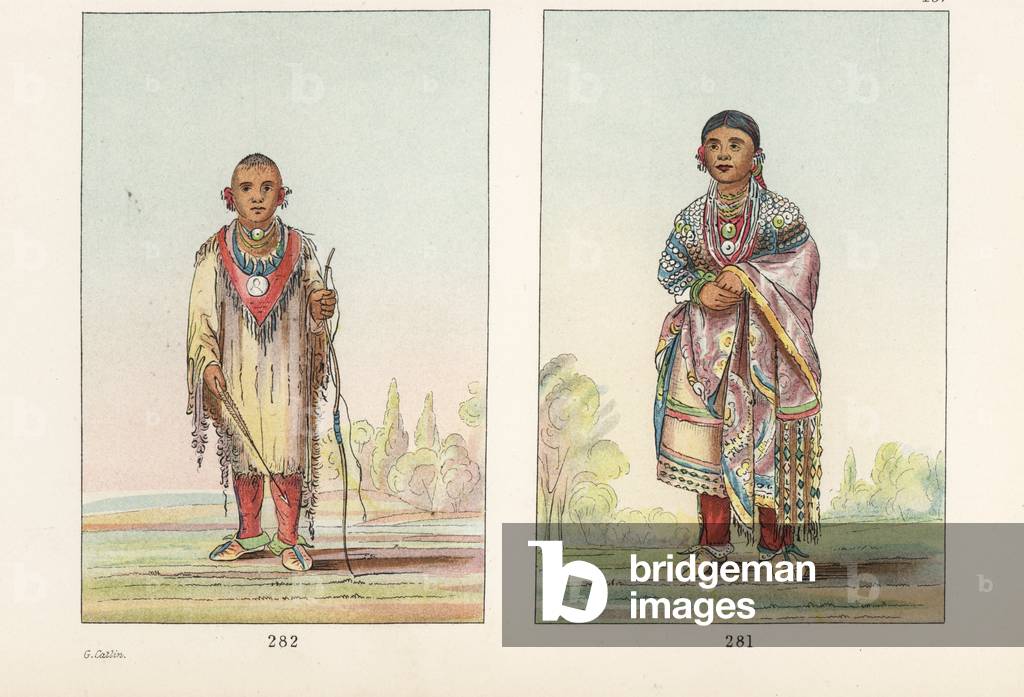
Meskwaki woman, wife of chief Kee-o-kuk, Running Fox, 281, and favorite son 282. Handcoloured lithograph from George Catlin's Manners, Customs and Condition of the North American Indians, London, 1841. Handcoloured lithograph from George Catlin's Manners, Customs and Condition of the North American Indians, London, 1841.

FLO4601021: Meskwaki woman, wife of chief Kee-o-kuk, Running Fox, 281, and favorite son 282. Handcoloured lithograph from George Catlin's Manners, Customs and Condition of the North American Indians, London, 1841. Handcoloured lithograph from George Catlin's Manners, Customs and Condition of the North American Indians, London, 1841. / Bridgeman Images
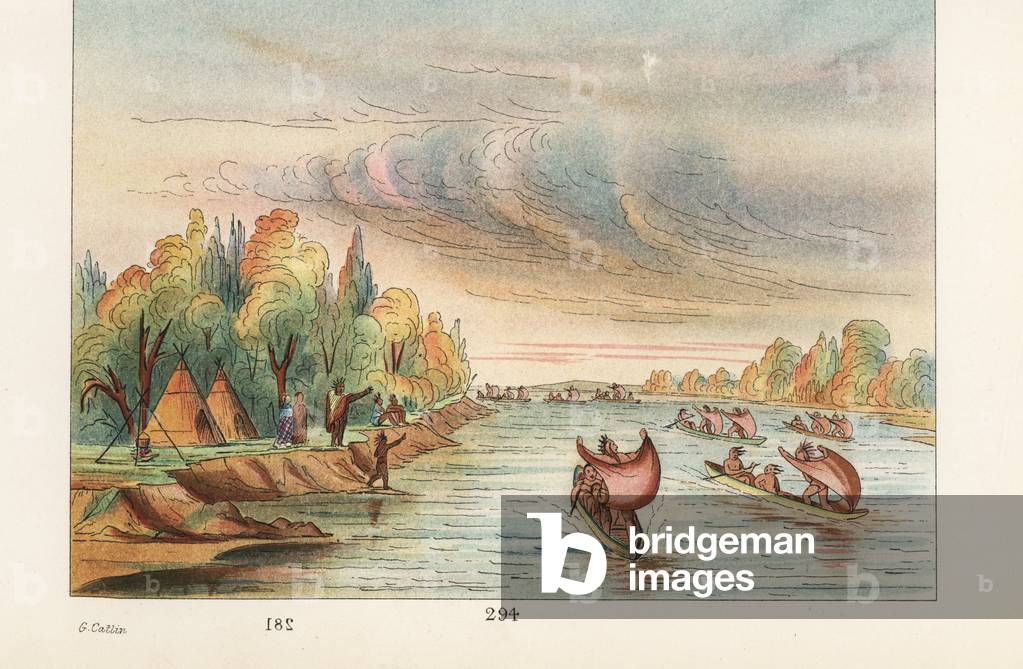
Meskwaki braves using blankets as sails as they ride in dugout canoes on the river, squaws steering with paddles. Handcoloured lithograph from George Catlin's Manners, Customs and Condition of the North American Indians, London, 1841.

FLO4601091: Meskwaki braves using blankets as sails as they ride in dugout canoes on the river, squaws steering with paddles. Handcoloured lithograph from George Catlin's Manners, Customs and Condition of the North American Indians, London, 1841. / Bridgeman Images


Back to top