2491557 Search Results

FLO4638108: Roughbark lignum-vitae or guaiacwood, Guaiacum officinale. Endangered. Handcoloured illustration drawn and lithographed by Henry Sowerby from Edward Hamilton's Flora Homeopathica, Bailliere, London, 1852. / Bridgeman Images

FLO4638163: Strychnine tree or poison nut, Strychnos nux-vomica. Handcoloured lithograph by A.M. Traice from Edward Hamilton's Flora Homeopathica, Bailliere, London, 1852. / Bridgeman Images

FLO4638177: Opium poppy, Papaver somniferum. Handcoloured lithograph by Henry Sowerby from Edward Hamilton's Flora Homeopathica, Bailliere, London, 1852. / Bridgeman Images

FLO4638210: Common Street, Ruta graveolens. Handcoloured lithograph by Henry Sowerby after an illustration by L.W. from Edward Hamilton's Flora Homeopathica, Bailliere, London, 1852. / Bridgeman Images

FLO4638216: Savin juniper or sabina, Juniperus sabina. Handcoloured lithograph by Henry Sowerby after an illustration by M.D. from Edward Hamilton's Flora Homeopathica, Bailliere, London, 1852. / Bridgeman Images

FLO4638240: Sarsaparilla, Smilax aristolochiifolia (Smilax medica). Handcoloured lithograph by Charlotte Caroline Sowerby from Edward Hamilton's Flora Homeopathica, Bailliere, London, 1852. / Bridgeman Images

PIX4638287: Landscape and Lake Way - Artist's view / Bridgeman Images

FLO4638378: Edward, Prince of Wales, aged 3-5, later King Edward VI of England, 1537-1553. Son of Henry VIII and Jane Seymour. Handcoloured copperplate engraving by Francis Bartolozzi after Hans Holbein from Facsimiles of Original Drawings by Hans Holbein, Hamilton, Adams, London, 1884. / Bridgeman Images

FLO4638446: Sir John Gage, English broker and politician, 1479-1556. Handcoloured copperplate engraving by Francis Bartolozzi after Hans Holbein from Facsimiles of Original Drawings by Hans Holbein, Hamilton, Adams, London, 1884. / Bridgeman Images

FLO4638614: Elizabeth Tuke, Lady Audley. Wife to George Tuchet, 9th Baron Audley. Handcoloured copperplate engraving by Francis Bartolozzi after Hans Holbein from Facsimiles of Original Drawings by Hans Holbein, Hamilton, Adams, London, 1884. / Bridgeman Images

FLO4638702: Lime hawk-moth, Mimas tillae, and common vapourer moth or rusty tussock, Orgyia antiqua, on lime leaves, Tillia europaea. Handcoloured lithograph after an illustration by Moses Harris from “The Aurelian; a Natural History of English Moths and Butterflies,””” new edition edited by J. O. Westwood, published by Henry Bohn, London, 1840. / Bridgeman Images

FLO4638759: Dot moth, Melanchra persicalae, hummingbird hawk-moth, Macroglossum stellatarum, feeding on the greater bindweed, Convolvulus species. Handcoloured lithograph after an illustration by Moses Harris from “The Aurelian; a Natural History of English Moths and Butterflies,””” new edition edited by J. O. Westwood, published by Henry Bohn, London, 1840. / Bridgeman Images

LRI4638789: On a tram (oil on canvas, 1923), Guidi, Virgilio (1892-1984) / Bridgeman Images
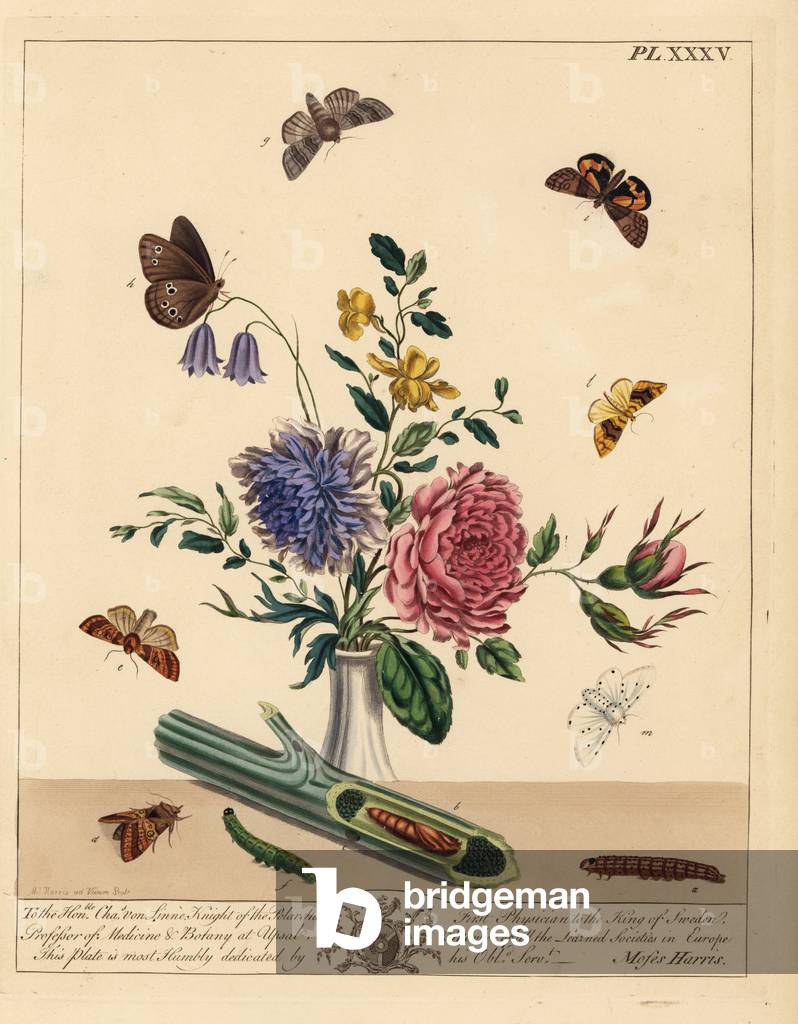
FLO4638871: Mottled or frosted orange moth, Gortyna flavago, half mourner, Ceropacha diluta, ringlet, Aphantopus hyperantus, barred yellow, Cidaria fulvata, seven-spot ermine or muslin moth, Diaphora mendica, and orange underwing, Archiearis parthenias. Handcoloured lithograph after an illustration by Moses Harris from “The Aurelian; a Natural History of English Moths and Butterflies,””” new edition edited by J. O. Westwood, published by Henry Bohn, London, 1840. / Bridgeman Images

FLO4638901: Puss moth, Cerula vinula, and heath or pearl-bordered likeness fritillary butterfly, Melitaea athalia. Handcoloured lithograph after an illustration by Moses Harris from “The Aurelian; a Natural History of English Moths and Butterflies,””” new edition edited by J. O. Westwood, published by Henry Bohn, London, 1840. / Bridgeman Images

FLO4639133: Geosaurus suevicus, a lost reptile resembling a marine crocodile, from the late Jurassic to the early Cretace. Chromolithography of F. John (series prehistoric animals of the Reichardt Cocoa Company), originally published in “Animals of the Prehistoric World”, 1910, Hamburg (Germany), text by Wilhelm Bolsche. / Bridgeman Images

LBY4639286: The Transamerica Pyramid in San Francisco, California (United States). Architect William Pereira (1909-1985), realisation 1969-1972. Photography 01/08/96., Boegly, Luc / Bridgeman Images

FLO4639305: Arsinoitherium, genus eteint of paenungulata, mammal apparent to the elephant. Chromolithography by Heinrich Garden (1858-1935) (series prehistoric animals of the Reichardt Cocoa Company), originally published in “Animals of the Prehistoric World”, 1916, Hamburg (Germany), text by Wilhelm Bolsche. / Bridgeman Images

LRI4639325: Etruscan civilization: stele of sepulchre in gres decoree of the silhouette of a lion wing from Londa in Italy. 550-500 BC. Florence, Museo Archeologico, Etruscan, (6th century BC) / Bridgeman Images

FLO4639475: Elotherium or Entelodon, genus of giant phacochere, from the period of Eocene inferior to Oligocene. Chromolithography by Heinrich Garder (1858-1935) (series prehistoric animals of the Reichardt Cocoa Company), originally published in “Animals of the Prehistoric World”, 1916, Hamburg (Germany), text by Wilhelm Bolsche. / Bridgeman Images

PIX4639479: Permanent station project between Mars and the Earth-Vue d'artiste - Mars Cycler - Artist view - Artist view of the Mars Cycler project, four space stations placed in cylindrical orbit between Mars and the Earth; this project defended by Edwin Aldrin will make it possible to make a permanent link between the two planets. Artist's concept of the Buzz Aldrin Mars Cycler. A Mars cycler is a space station project that is on a permanent orbit between the Mars and Earth, Dixon, Don (b.1951) / Bridgeman Images
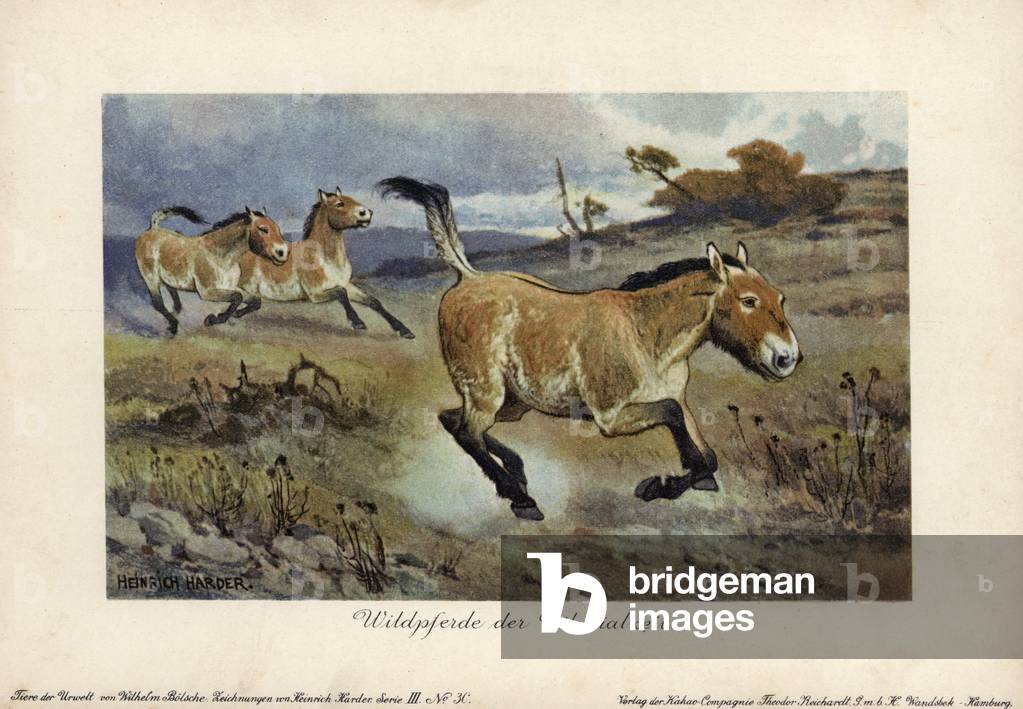
FLO4639552: Wild horses of the diluvian era, like equus ferus. Chromolithography by Heinrich Garden (1858-1935) (series prehistoric animals of the Reichardt Cocoa Company), originally published in “Animals of the Prehistoric World”, 1916, Hamburg (Germany), text by Wilhelm Bolsche. / Bridgeman Images

FLO4639702: Hesperornis regalis, a non-flying aquatic bird from the Cretace period. Chromolithography of F. John (series prehistoric animals of the Reichardt Cocoa Company), originally published in “Animals of the Prehistoric World”, 1910, Hamburg (Germany), text by Wilhelm Bolsche. / Bridgeman Images

FLO4639825: Apatosaurus excelsus, genus of sauropod dinosaur, also called the brontosaur, which lived during the Jurassic. Chromolithography of F. John (series prehistoric animals of the Reichardt Cocoa Company), originally published in “Animals of the Prehistoric World”, 1910, Hamburg (Germany), text by Wilhelm Bolsche. / Bridgeman Images

FLO4639840: Dimetrodon, like Permian carnivorous synapsid. Chromolithography of F. John (series prehistoric animals of the Reichardt Cocoa Company), originally published in “Animals of the Prehistoric World”, 1910, Hamburg (Germany), text by Wilhelm Bolsche. / Bridgeman Images

PIX4639900: Martian base - Illustration - Martian base - Illustratio / Bridgeman Images
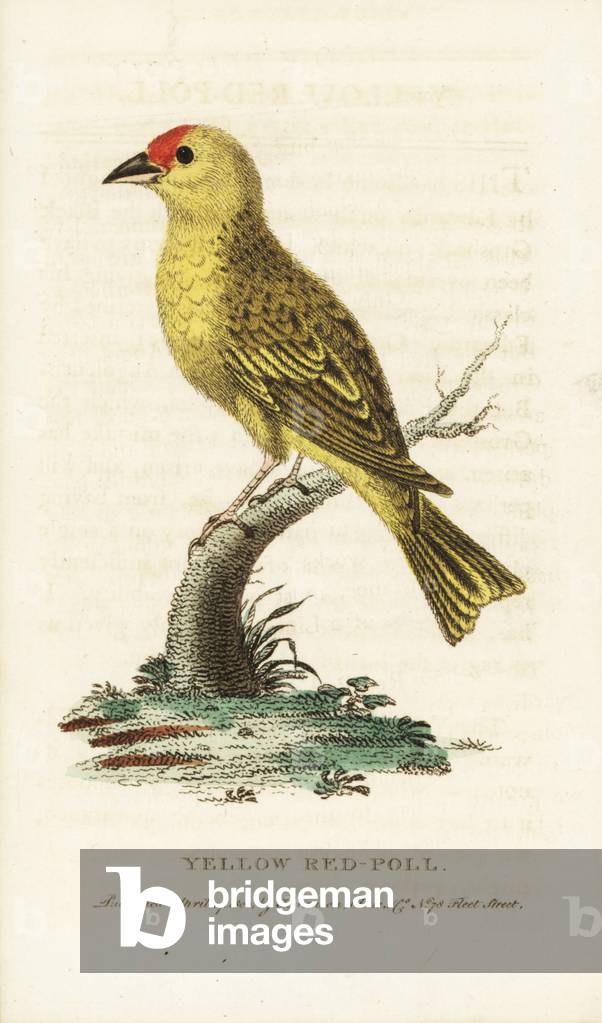
FLO4639935: American yellow warbler, Setophaga petechia. (Yellow red-poll). Illustration copied from George Edwards. Handcoloured copperplate engraving from “” The Naturalist's Pocket Magazine,”” Harrison, London, 1800. / Bridgeman Images
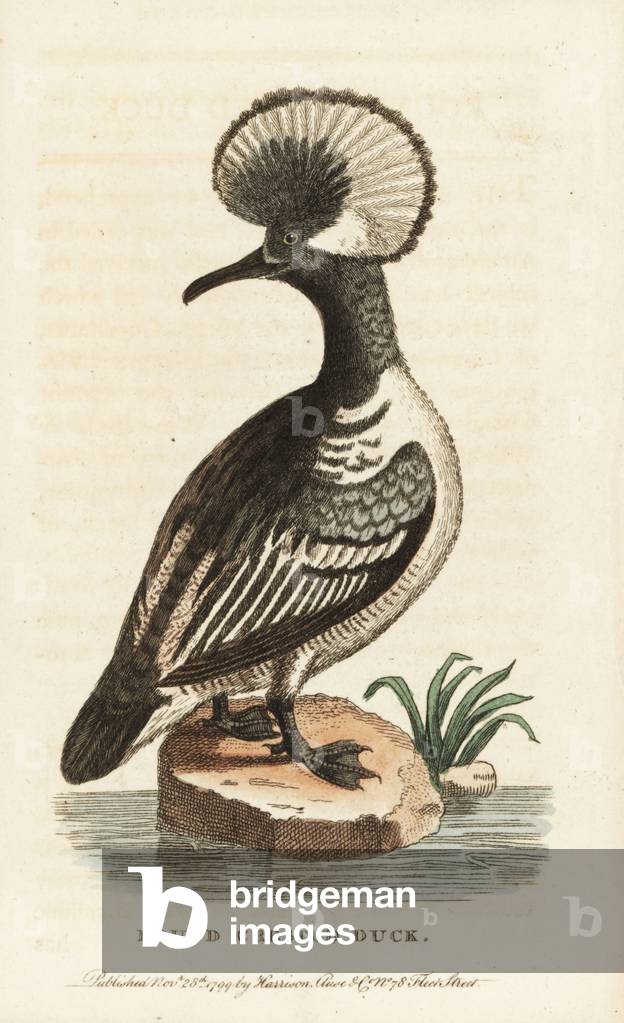
FLO4640009: Hooded merganser, Lophodytes cucullatus. (Round crested duck, Mergus cucullatus) Illustration copied from George Edwards. Handcoloured copperplate engraving from “” The Naturalist's Pocket Magazine,”” Harrison, London, 1799. / Bridgeman Images

FLO4640061: Indian pitta bird, Pitta brachyuran. (Short tailed pye, Corvus brachyurus) Illustration copied from George Edwards. Handcoloured copperplate engraving from “” The Naturalist's Pocket Magazine,”” Harrison, London, 1799. / Bridgeman Images

FLO4640167: Silvery marmoset, Mico argentatus. (Fair monkey, Simia sangoinus argentatus) Handcoloured copperplate engraving from “” The Naturalist's Pocket Magazine,”” Harrison, London, 1801. / Bridgeman Images

FLO4640214: Honeysuckle of New South Wales, Lonicera species. Illustration copied from George Edwards. Handcoloured copperplate engraving from “” The Naturalist's Pocket Magazine,”” Harrison, London, 1800. / Bridgeman Images

LRI4640259: Woman's head, 5th-4th century BC (terracotta), Carthaginian (7th-3rd century BC) / Bridgeman Images

PIX4640278: Journey to the stars - Spaceship - Artist view - Vue d'artiste / Bridgeman Images

FLO4640345: Spotted axis deer, Axis axis. Handcoloured copperplate engraving from “” The Naturalist's Pocket Magazine,”” Harrison, London, 1802. / Bridgeman Images

FLO4640377: Spotted blue fly of New South Wales. Handcoloured copperplate engraving from “” The Naturalist's Pocket Magazine,”” Harrison, London, 1802. / Bridgeman Images

PIX4640390: Solar veil near an exoplanet - Artist view - Solar sail and exoplanet - Artist view - Artist view of a probe using solar wind and photons emitted by the Sun as a means of propulsion, Dixon, Don (b.1951) / Bridgeman Images
