2491632 Search Results
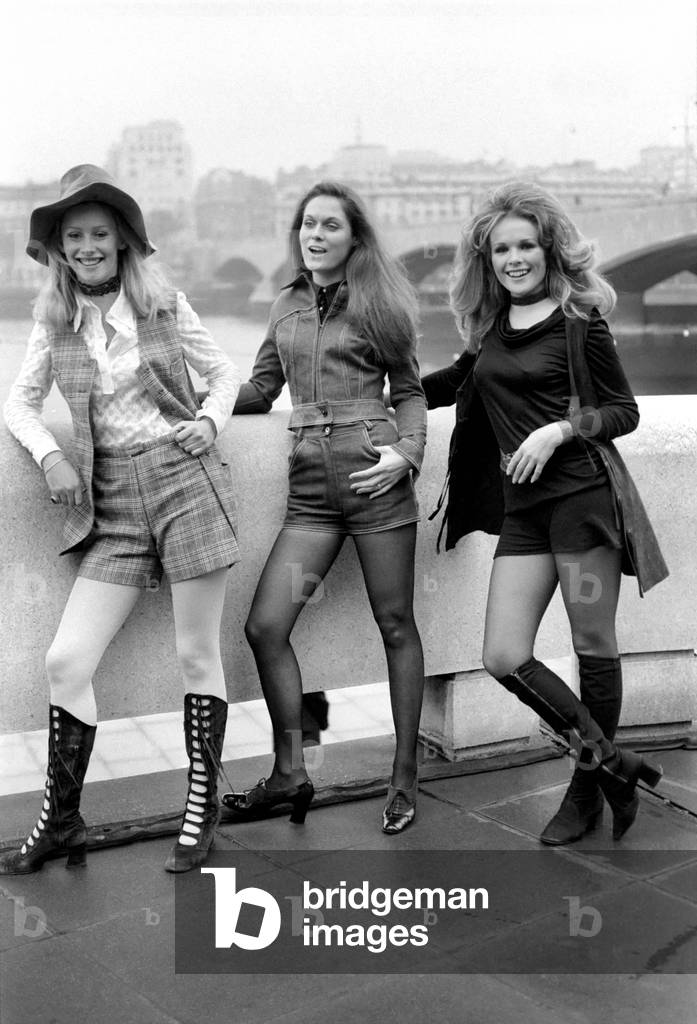
MPX5082482: 1970's Fashion: Shorts. January 1971 / Bridgeman Images

MPX5082492: Pictures taken in the Thornbury House, Kiddlington remand home where the "students" live sort of family units. Drying of cups and plates in the kitchen is only done on a voluntary basis. Mrs. A.L. Cook passing a cup to a boy. December 1969 / Bridgeman Images

MPX5082607: Derby v. Nottingham Forest. Dave Mackay not seeing eye to eye with the ref. December 1969 (photo) / Bridgeman Images

MPX5082611: Derby v. Nottingham Forest. Police and St. John mt. men at the trouble spot in the crowed. December 1969 (photo) / Bridgeman Images

MPX5082665: Politics: Wilson and Heath. Ted Heath leaves Palace after being sworn in as the new Prime Minister. June 1970 / Bridgeman Images

MPX5082820: Families: Mother, father and children. Father and son writing with pen and paper. November 1969 / Bridgeman Images

MPX5082704: Frank Zappa Composer and musician seen here at home. January 1971 / Bridgeman Images

MPX5082847: Ian Newman (19) a car salesman in Hounslow was getting worried as every time he got a new girlfriend and took her to dances other men who took a fancy to his girl would steal off with her and so Ian was left girl-less. But now he has the solution provided for him by hairdresser Len Pountney who has designed a long pigtail from Ian's hair that connects to Gloria Wootton (15) a florist, so that now everywhere the couple goes they are linked together. Ian Newman waits patiently outside the ladiesê whilst Gloria is powdering her nose. November 1969 / Bridgeman Images

MPX5082618: Kids in the Park: It was shoes off in Tabbard Gardens, Bermondsey, today (Saturday). Space Structures Workshop - a small group of experimental artists - had some of their plastic creations there for the children to play on, and in. There was a tunnel, a sort of balloon, and the "witch's cauldron" surrounded by coloured smoke. The kids lazed, romped, jumped, climbed, and just as often fell. It was a great day in the sun. June 1970 / Bridgeman Images

MPX5082624: Derby v. Nottingham Forest. Dave Mackay heading clear. December 1969 (photo) / Bridgeman Images

MPX5082636: Derby v. Nottingham Forest. Hennessey, Hector, Hindley and O'Hare. December 1969 (photo) / Bridgeman Images

MPX5082684: Senator Edmund Muskie answers questions at his London press conference. November 1969 / Bridgeman Images

MPX5082711: Petty officer Alan Hogarth on skis. Petty officer Alan Hogarth 33, tried out his device in Plymouth Harbour today, (he walks on water). Alan in his patented water shoes striding across the water from ship to ship. January 1971 / Bridgeman Images

MPX5082735: Arms for South Africa protest. Peter Hain addressing the meeting in Whitehall. July 1970 / Bridgeman Images

MPX5082756: Miss United Kingdom Sheena Drummond, greets her boy friend Jim Hill when he arrived at the Albert Hall where Sheena was rehearsing for Miss World contest. November 1969 / Bridgeman Images

MPX5082786: Boxing at Lime Grove Baths in Shepherd's Bush, London Vic Andretti in action to defeat Victor Paul during their lightweight bout. November 1969 / Bridgeman Images

MPX5082822: The new 3 litre Triumph Stag convertible". July 1970 / Bridgeman Images

MPX5082828: Families: Mother, father and children. Man relaxing at home, reading a book on his sofa, writing at table. November 1969 / Bridgeman Images

MPX5082846: Pre - Wimbledon fashion show at the Hurlingham Club. Unisex Fashions by Fred Perry. Apres tennis outfits by Teddy Tinling (left to right) Gloria Butler, Gale Chanfreau, Isoe Davis, Sally Holdsworth, Lea Pericili, and Ingrid Bentzen. June 1970 / Bridgeman Images

MPX5082914: A man a woman living in a sububan area of Manchester at home. Woman sitting an appliances, washing machine with man serving food on a plate. November 1969 / Bridgeman Images

MPX5082923: Actress Billie Whitelaw seen here posing on a bed. September 1973 / Bridgeman Images

MPX5082987: The French Rugby League team Carcassone, who are playing a series of games in England open their account by playing Swinton yesterday (Monday). Here is the French team:- G. Calbette, J. PY, H. Moutou, J. Poch, (Captain) M. Martin, G. Riccio Seated: Left to right- J. Albert, J. Maso, R. Trescases, Puig-Aubert, F. Labazuy, L.. LLari, E. Ponsinet. March 1947 / Bridgeman Images

MPX5083040: A team of schoolboys from Glendale County Secondary School do a spot of gardening in the graveyard at St Mary's Parish Church, Wooler, 11th July 1972 (b/w photo) / Bridgeman Images

MPX5083149: Derelict housing in an area of Sarah Street, Newcastle featuring a Dairy Milk chocolate advertisment, 1960 (b/w photo) / Bridgeman Images

MPX5083047: Woman drinking a pint of beer in her local pub, 14th November 1969 (b/w photo) / Bridgeman Images

MPX5083464: Roy Emerson in play at Wimbledon, 21st June 1965 (b/w photo) / Bridgeman Images

MPX5083216: This is one of three ponies which haul clay to the surface being led to the mine for his shift, 20 August 1969 (b/w photo) / Bridgeman Images
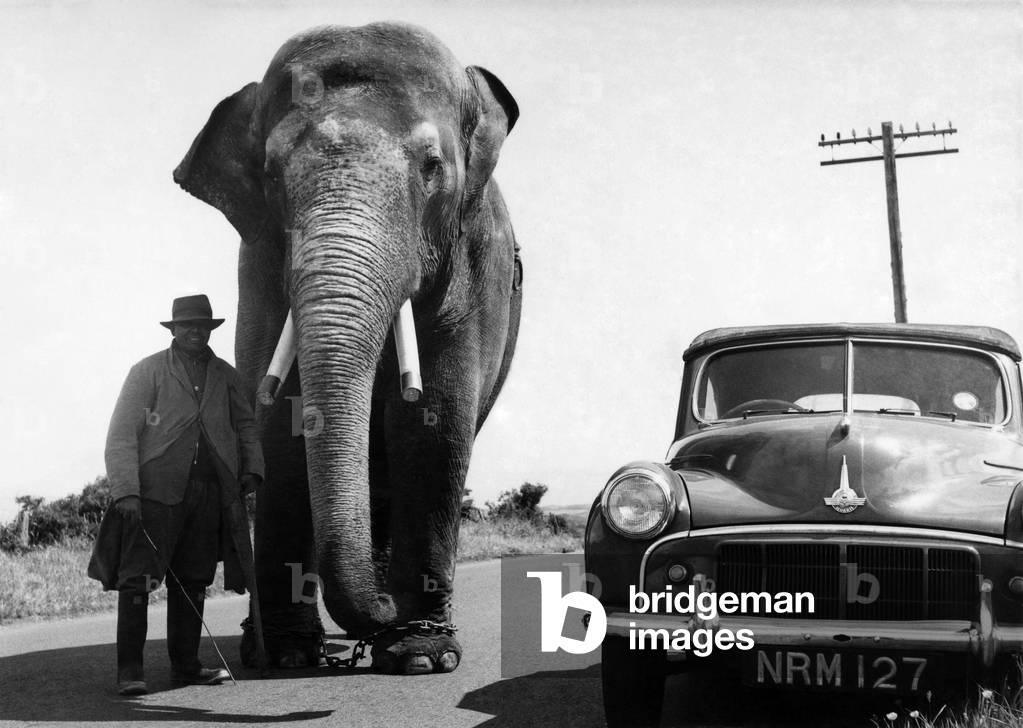
MPX5083379: Charlie goes for a stroll with his keeper along a country road in Ayrshire, Scotland, June 1957 (b/w photo) / Bridgeman Images
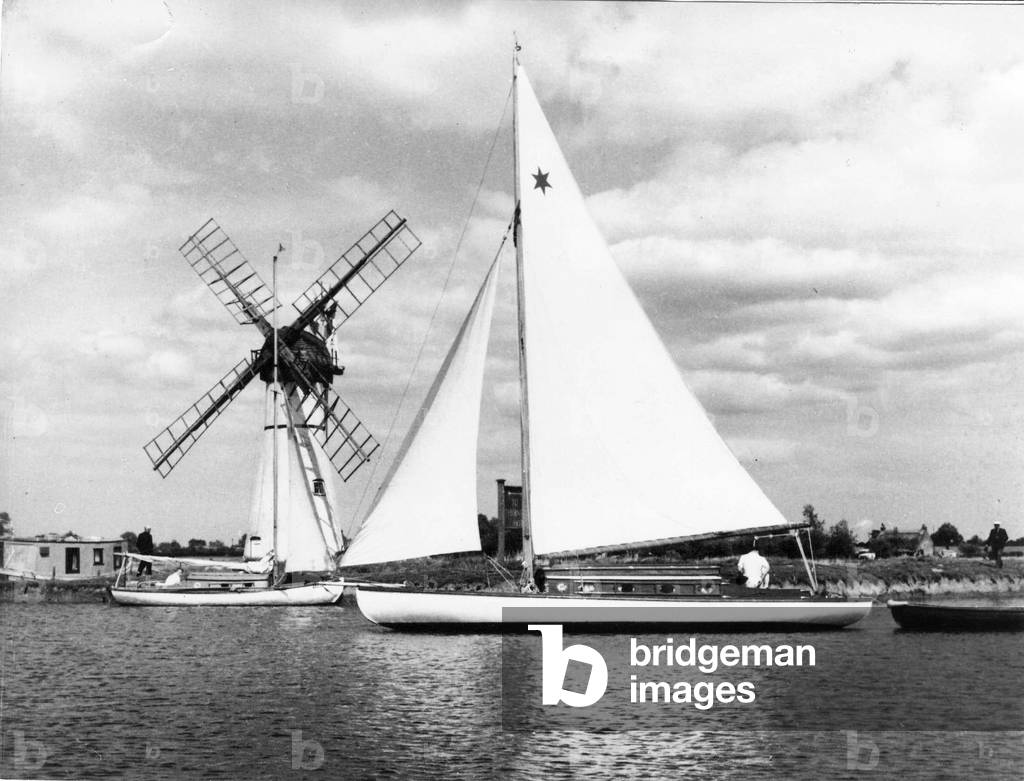
MPX5083403: A sailing boat on the Norfolk Broads, 1960 (b/w photo) / Bridgeman Images
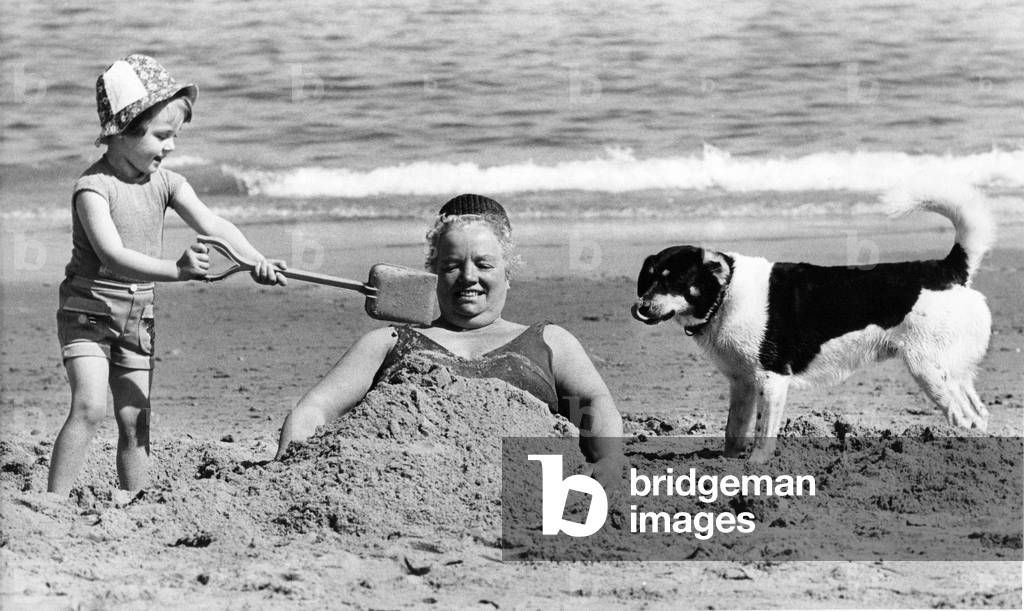
MPX5083409: Vera Tomlinson gets buried in the sand by little Kate Argent, 18 April 1981 (b/w photo) / Bridgeman Images

MPX5083454: Roy Emerson in action against Mark Cox during Wimbledon, 25th April 1968 (b/w photo) / Bridgeman Images
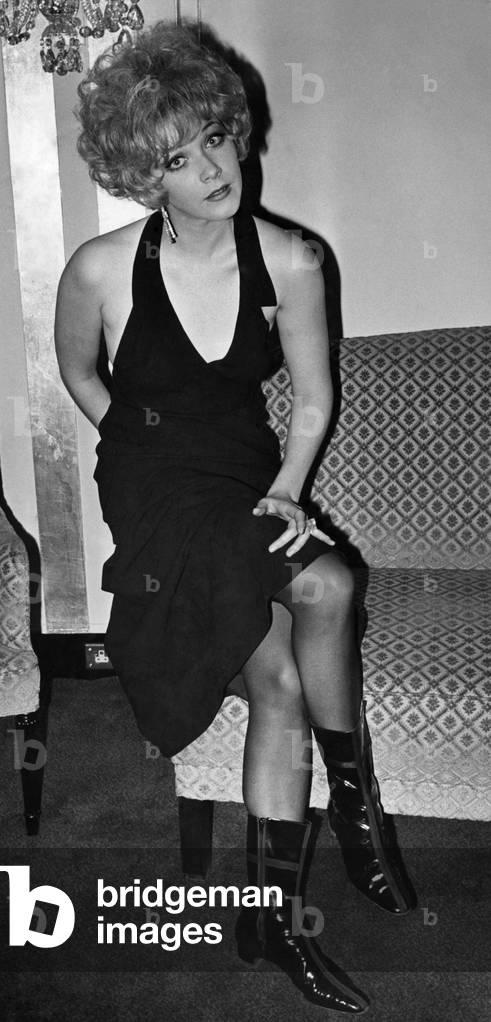
MPX5083339: Film actress Linda Thorson wearing a glamourous black dress, 14th March 1968 (b/w photo) / Bridgeman Images
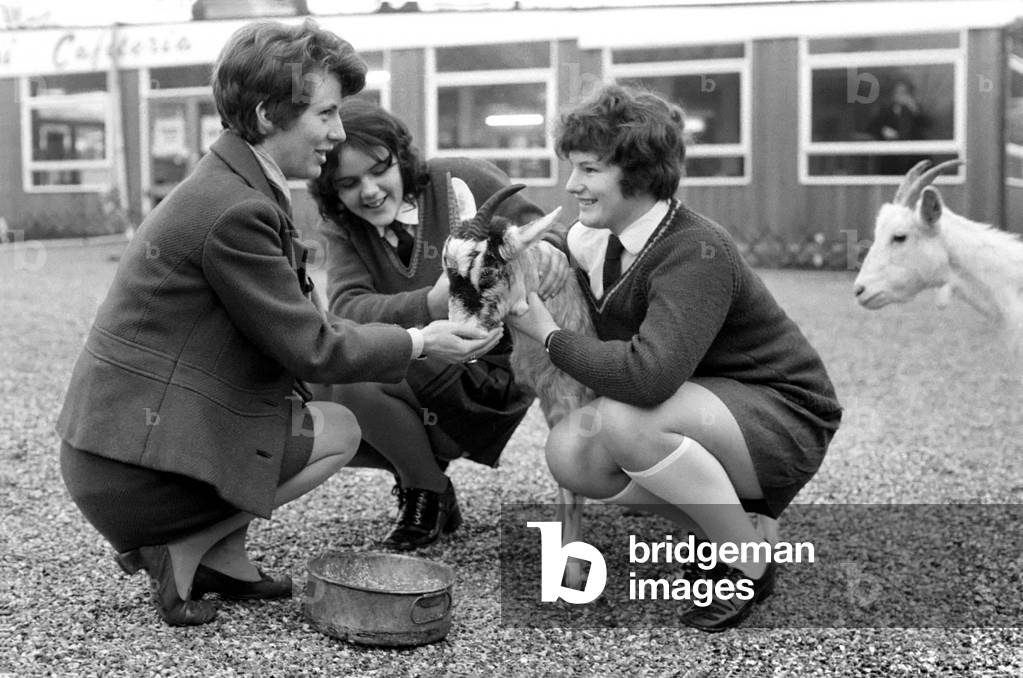
MPX5081691: 'Betty' the goat goes to school: Sallie and Jean with help of teacher Miss Angela Wood, start their selection of the goats at Windsor Safari Park. January 1971 / Bridgeman Images

MPX5081694: A Barbary sheep from North African must have thought it was still there, as it nodded off in the sunshine. January 1971 / Bridgeman Images

MPX5081720: About 1,000 striking members of the National Union of teachers took part in a march from Regent's Park to the Department of Education and Science in Curzon Street today, where a deputation presented a resolution and petitions to the minister Mr. Edward Short. 24 year old Miss Norma Hope of Hallfields School, Bayswater who was in the march. December 1969 / Bridgeman Images

MPX5081842: "Miss Canada", 21 year old Jacquie Perrin attended and spoke at the luncheon for the Ship and Boat Builders National Federation's 24th Annual General Meeting at the Connaught Rooms. Walking along the table top - the only woman amongst the 150 guests, Jacquie Perrin "Miss Canada" gives the guests a preview of her "Miss World" contest walk. November 1969 / Bridgeman Images
