Search options

Orientation
Colour

Display options

View

Print

To print search results, use print friendly version of this page.

2491695 Search Results

Apple king of pippins. Lithograph by Benjamin Maund (1790-1863) published in The Fruitist, London, England, 1850. King of Pippins apple, Malus domestica, within a Della Robbia ornamental frame with text below. Handcoloured glyphograph from Benjamin Maund's “” The Fruitist,”” London, 1850, Groombridge and Sons.

FLO4675401: Apple king of pippins. Lithograph by Benjamin Maund (1790-1863) published in The Fruitist, London, England, 1850. King of Pippins apple, Malus domestica, within a Della Robbia ornamental frame with text below. Handcoloured glyphograph from Benjamin Maund's “” The Fruitist,”” London, 1850, Groombridge and Sons. / Bridgeman Images

Common plum, nectarine variete. Lithograph by Benjamin Maund (1790-1863) published in The Fruitist, London, England, 1850. Nectarine plum, Prunus domestica. Handcoloured glyphograph from Benjamin Maund's “” The Fruitist,”” London, 1850, Groombridge and Sons.

FLO4675453: Common plum, nectarine variete. Lithograph by Benjamin Maund (1790-1863) published in The Fruitist, London, England, 1850. Nectarine plum, Prunus domestica. Handcoloured glyphograph from Benjamin Maund's “” The Fruitist,”” London, 1850, Groombridge and Sons. / Bridgeman Images
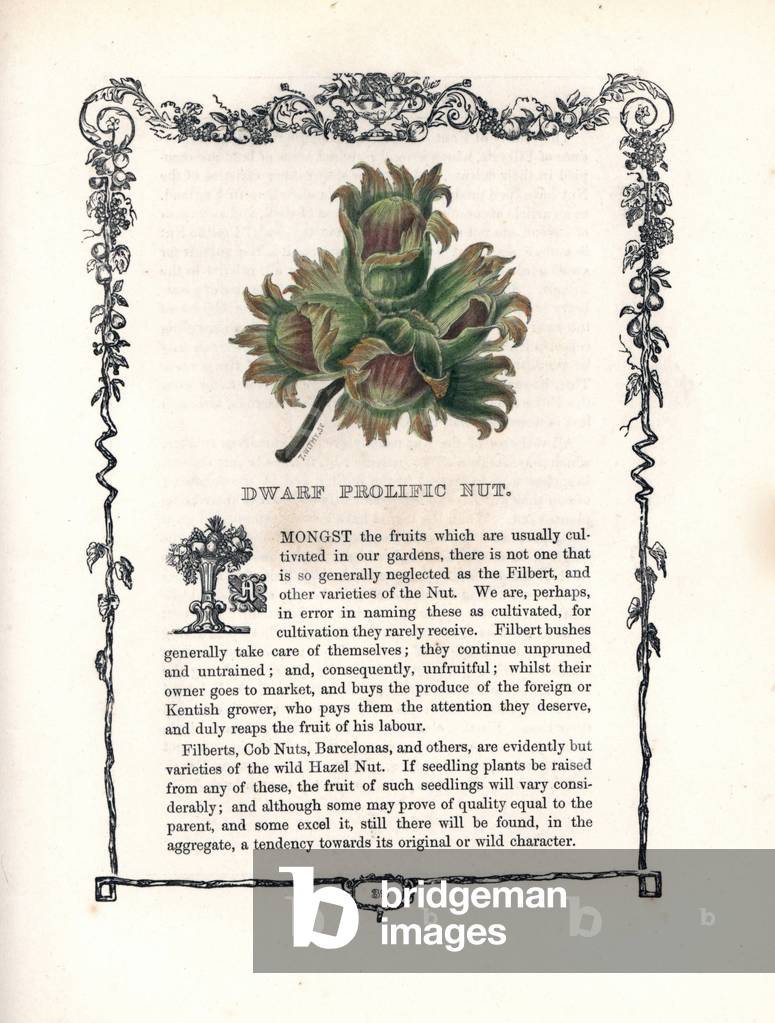
Dwarf prolific hazelnut. Lithograph by Benjamin Maund (1790-1863) published in The Fruitist, London, England, 1850. Dwarf Prolific Nut, Corylus avellana, within a Della Robbia ornamental frame with text below. Handcoloured glyphograph engraved by T. Withy from Benjamin Maund's “” The Fruitist,”” London, 1850, Groombridge and Sons.

FLO4675481: Dwarf prolific hazelnut. Lithograph by Benjamin Maund (1790-1863) published in The Fruitist, London, England, 1850. Dwarf Prolific Nut, Corylus avellana, within a Della Robbia ornamental frame with text below. Handcoloured glyphograph engraved by T. Withy from Benjamin Maund's “” The Fruitist,”” London, 1850, Groombridge and Sons. / Bridgeman Images
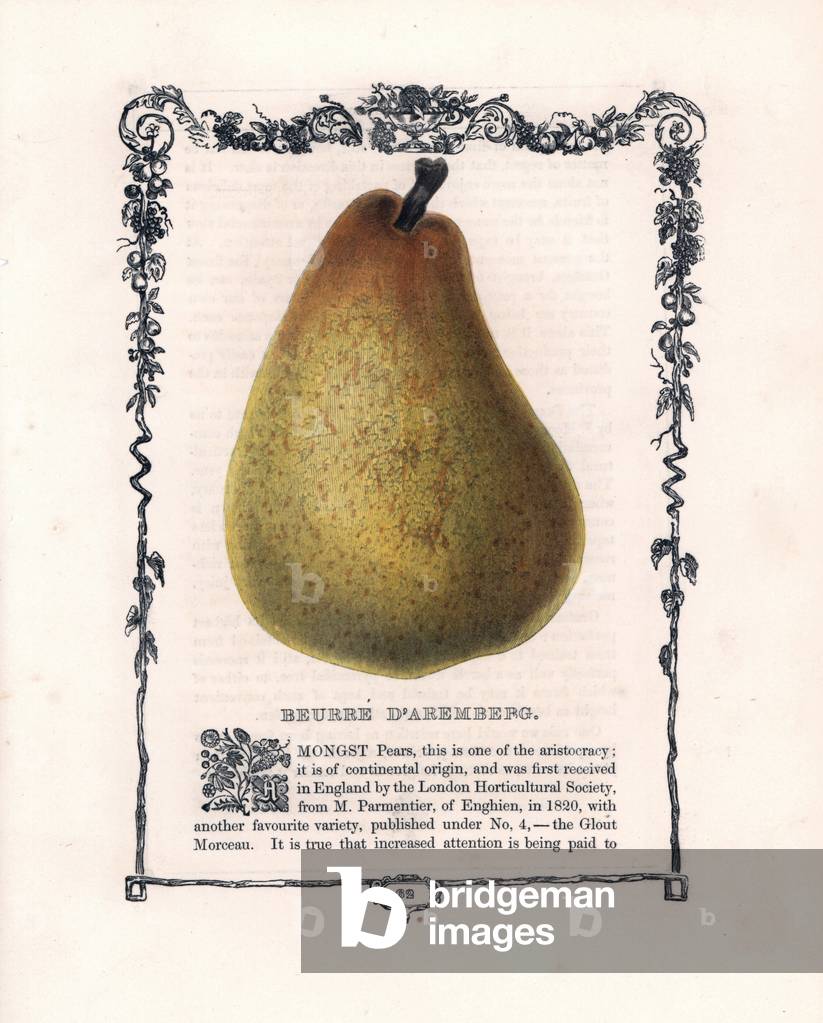
Common pear, Aremberg butter variete. Lithograph by Benjamin Maund (1790-1863) published in The Fruitist, London, England, 1850. Aremberg pear butter, Pyrus communis. Handcoloured glyphograph from Benjamin Maund's “” The Fruitist,”” London, 1850, Groombridge and Sons.

FLO4675487: Common pear, Aremberg butter variete. Lithograph by Benjamin Maund (1790-1863) published in The Fruitist, London, England, 1850. Aremberg pear butter, Pyrus communis. Handcoloured glyphograph from Benjamin Maund's “” The Fruitist,”” London, 1850, Groombridge and Sons. / Bridgeman Images
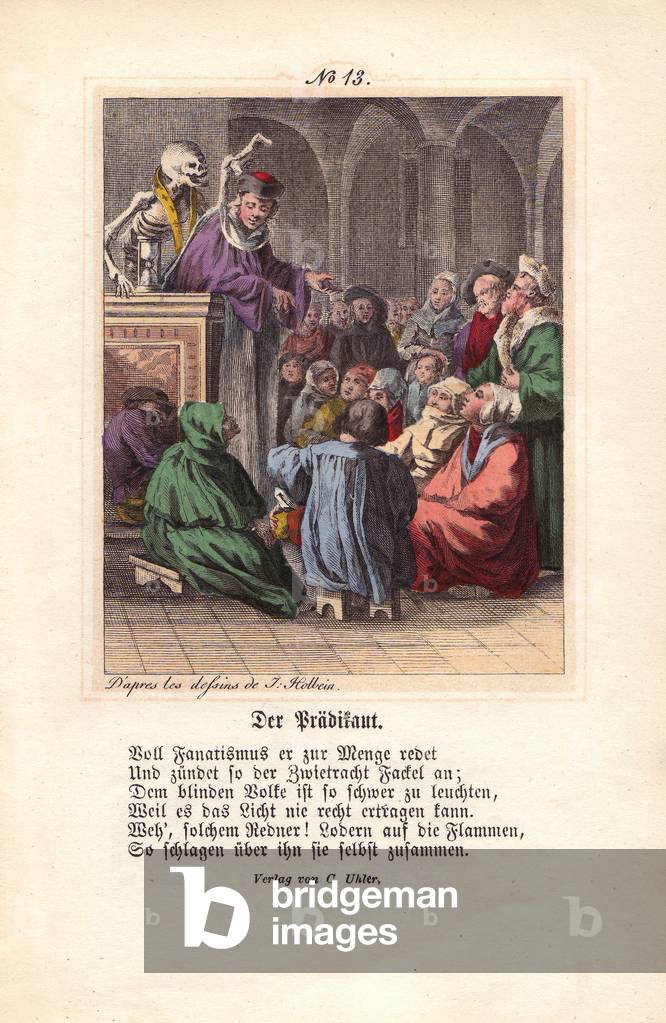
The Predicator. Death with a stole around his neck stands behind the predicator, holding a jaw above his head, possibly meaning that he is the best predictor of both. Plate 13. Hand-coloured engraving by Christian Von Mechel (or Chretien de Mechel, 1737-1817) in “The Triumph of Death”” based on original drawings by Hans Holbein the Young (1497-1543), 1860.

FLO4675530: The Predicator. Death with a stole around his neck stands behind the predicator, holding a jaw above his head, possibly meaning that he is the best predictor of both. Plate 13. Hand-coloured engraving by Christian Von Mechel (or Chretien de Mechel, 1737-1817) in “The Triumph of Death”” based on original drawings by Hans Holbein the Young (1497-1543), 1860. / Bridgeman Images

Apple Pitmaston golden curnne. Lithograph by Benjamin Maund (1790-1863) published in The Fruitist, London, England, 1850. Pitmaston Golden Wreath apple, Malus domestica, within a Della Robbia ornamental frame with text below. Handcoloured glyphograph from Benjamin Maund's “” The Fruitist,”” London, 1850, Groombridge and Sons.

FLO4675182: Apple Pitmaston golden curnne. Lithograph by Benjamin Maund (1790-1863) published in The Fruitist, London, England, 1850. Pitmaston Golden Wreath apple, Malus domestica, within a Della Robbia ornamental frame with text below. Handcoloured glyphograph from Benjamin Maund's “” The Fruitist,”” London, 1850, Groombridge and Sons. / Bridgeman Images

Apple Taunton golden pippin. Lithograph by Benjamin Maund (1790-1863) published in The Fruitist, London, England, 1850. Taunton Golden Pippin apple, Malus domestica, within a Della Robbia ornamental frame with text below. Handcoloured woodblock engraving from Benjamin Maund's “” The Fruitist,”” London, 1850, Groombridge and Sons.

FLO4675212: Apple Taunton golden pippin. Lithograph by Benjamin Maund (1790-1863) published in The Fruitist, London, England, 1850. Taunton Golden Pippin apple, Malus domestica, within a Della Robbia ornamental frame with text below. Handcoloured woodblock engraving from Benjamin Maund's “” The Fruitist,”” London, 1850, Groombridge and Sons. / Bridgeman Images
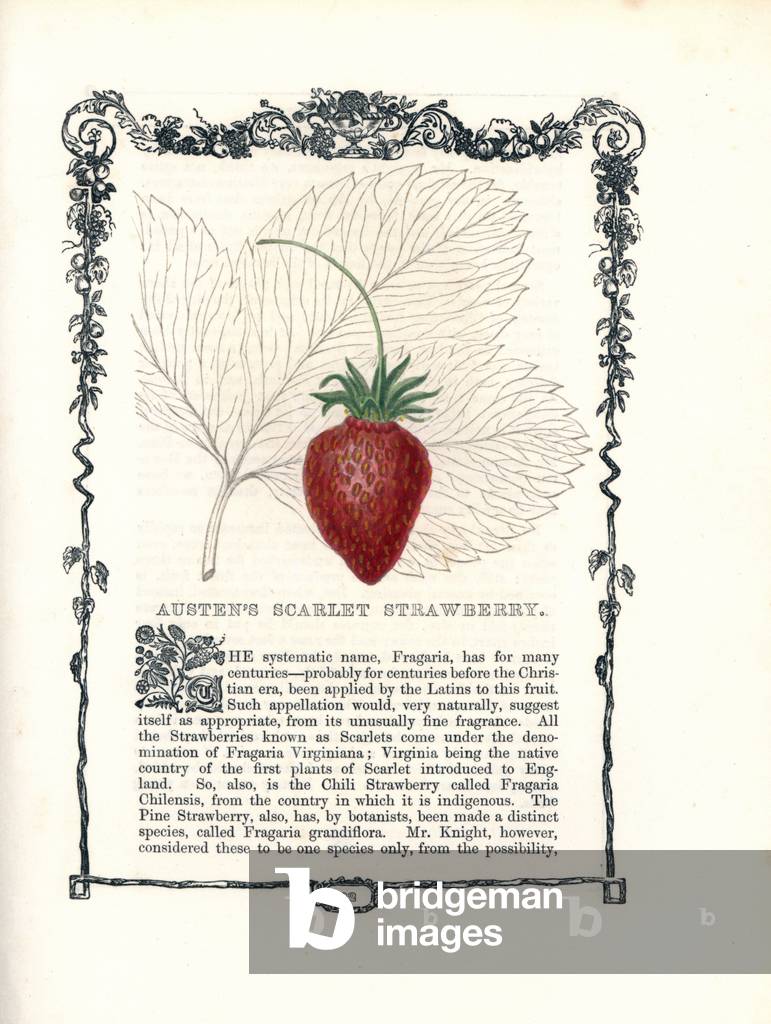
Strawberry Austen Scarlate. Lithograph by Benjamin Maund (1790-1863) published in The Fruitist, London, England, 1850. Austen's Scarlet strawberry, Fragaria virginiana, within a Della Robbia ornamental frame with text below. Handcoloured glyphograph from Benjamin Maund's “” The Fruitist,”” London, 1850, Groombridge and Sons.

FLO4675217: Strawberry Austen Scarlate. Lithograph by Benjamin Maund (1790-1863) published in The Fruitist, London, England, 1850. Austen's Scarlet strawberry, Fragaria virginiana, within a Della Robbia ornamental frame with text below. Handcoloured glyphograph from Benjamin Maund's “” The Fruitist,”” London, 1850, Groombridge and Sons. / Bridgeman Images

Pear, variety Susette de Bavay. Lithograph by Benjamin Maund (1790-1863) published in The Fruitist, London, England, 1850. Susette de Bavay pear, Pyrus communis. Handcoloured glyphograph from Benjamin Maund's “” The Fruitist,”” London, 1850, Groombridge and Sons.

FLO4675522: Pear, variety Susette de Bavay. Lithograph by Benjamin Maund (1790-1863) published in The Fruitist, London, England, 1850. Susette de Bavay pear, Pyrus communis. Handcoloured glyphograph from Benjamin Maund's “” The Fruitist,”” London, 1850, Groombridge and Sons. / Bridgeman Images

The emperor. Sitting on a throne, in the presence of his courtiers, the emperor seems to be listening, or doing justice, to a poor man who is kneeling before him and complains against his rich oppressor, whom the emperor, holding the sword of justice, seems to consider with an angry face. Behind him, death puts his hand on his crown. Hand-coloured engraving by Christian Von Mechel (or Chretien de Mechel, 1737-1817) in “The Triumph of Death”” based on original drawings by Hans Holbein the Young (1497-1543), 1860.

FLO4675580: The emperor. Sitting on a throne, in the presence of his courtiers, the emperor seems to be listening, or doing justice, to a poor man who is kneeling before him and complains against his rich oppressor, whom the emperor, holding the sword of justice, seems to consider with an angry face. Behind him, death puts his hand on his crown. Hand-coloured engraving by Christian Von Mechel (or Chretien de Mechel, 1737-1817) in “The Triumph of Death”” based on original drawings by Hans Holbein the Young (1497-1543), 1860. / Bridgeman Images
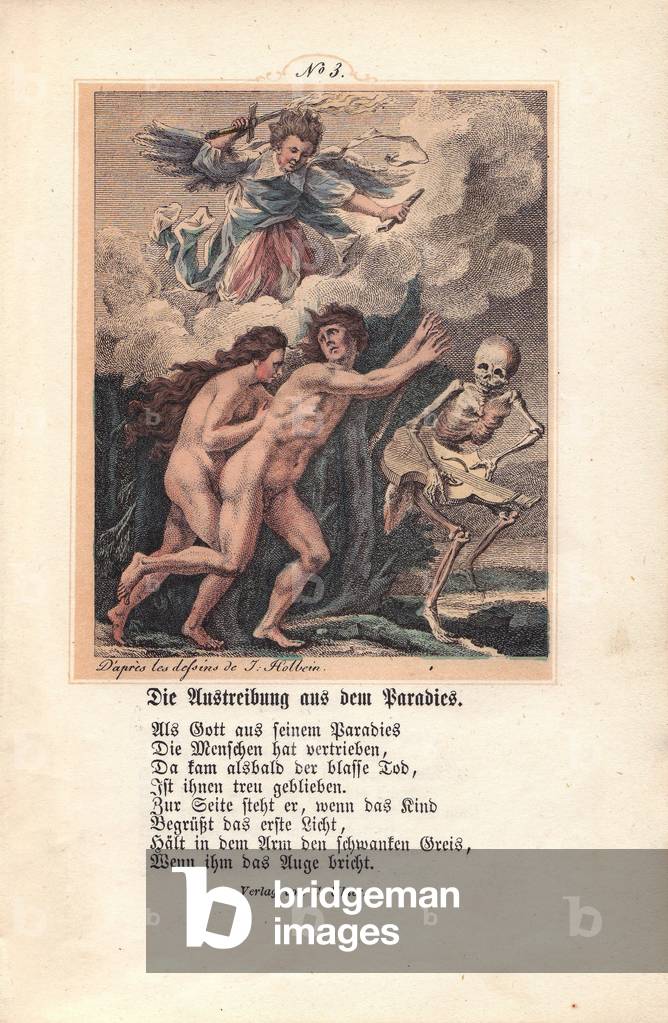
Expulsion from heaven. Adam and Eve are preceded by death, which plays on an old man, or a beggar's lyre, as if she wanted to show her joy in the victory he obtained over man. Hand-coloured engraving by Christian Von Mechel (or Chretien de Mechel, 1737-1817) in “The Triumph of Death”” based on original drawings by Hans Holbein the Young (1497-1543), 1860.

FLO4675675: Expulsion from heaven. Adam and Eve are preceded by death, which plays on an old man, or a beggar's lyre, as if she wanted to show her joy in the victory he obtained over man. Hand-coloured engraving by Christian Von Mechel (or Chretien de Mechel, 1737-1817) in “The Triumph of Death”” based on original drawings by Hans Holbein the Young (1497-1543), 1860. / Bridgeman Images

The blind. Death grabs the stick of the Blind and drains it with it. Hand-coloured engraving by Christian Von Mechel (or Chretien de Mechel, 1737-1817) in “The Triumph of Death”” based on original drawings by Hans Holbein the Young (1497-1543), 1860.

FLO4675806: The blind. Death grabs the stick of the Blind and drains it with it. Hand-coloured engraving by Christian Von Mechel (or Chretien de Mechel, 1737-1817) in “The Triumph of Death”” based on original drawings by Hans Holbein the Young (1497-1543), 1860. / Bridgeman Images
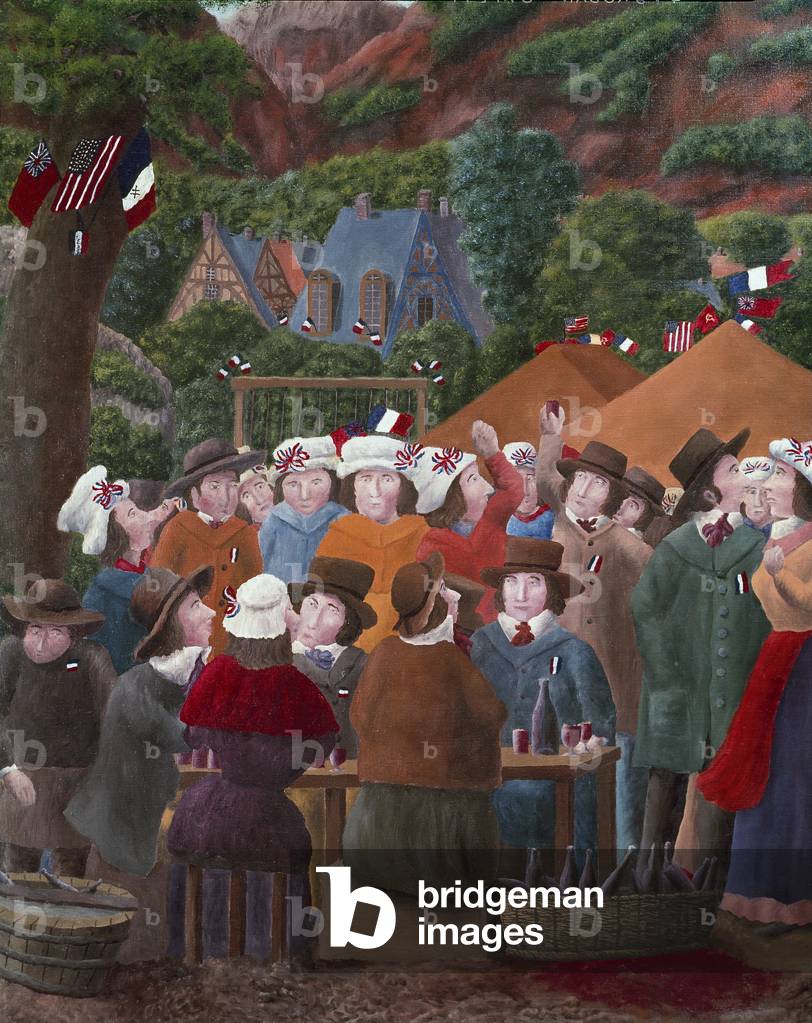
Liberation party, detail. Festival in an Alsatian village of the liberation of France in 1945 under the flags of the USSR with folk dance, 20th century (painting)

LRI4675913: Liberation party, detail. Festival in an Alsatian village of the liberation of France in 1945 under the flags of the USSR with folk dance, 20th century (painting), Bauchant, Andre (1873-1958) / Bridgeman Images

Costume d'une femme de la noblesse italian, 14th century - Costume of an Italian noblewoman, 14th century - She wears a veil, a blue dress trimmed with fur and edged with gold, over a pink dress - From a painting in the Academy of Fine Arts, Siena - Handcoloured illustration drawn and lithographed by Paul Mercuri with text by Camille Bonnard from “” Historical Costumes from the 12th to 15th Centuries,”” Levy Fils, Paris, 1861

FLO4675957: Costume d'une femme de la noblesse italian, 14th century - Costume of an Italian noblewoman, 14th century - She wears a veil, a blue dress trimmed with fur and edged with gold, over a pink dress - From a painting in the Academy of Fine Arts, Siena - Handcoloured illustration drawn and lithographed by Paul Mercuri with text by Camille Bonnard from “” Historical Costumes from the 12th to 15th Centuries,”” Levy Fils, Paris, 1861, Mercuri, Paolo (1804-84) / Bridgeman Images

Uniforms of Italian soldiers, 14th century - The wear tunics in Siena brown with coats of arms of Saint Mark (gold lion on red field), over suits of armour - The soldier with the banner of the church (two keys on a red field) wears a white helmet decorated with silver - From a fresco by Spinello Aretino in the Palazzo Pubblico, Siena, depicting Pope Alexander III presenting the Doge of Venice with a sword to fight Frederick Barbarossa - Handcoloured illustration drawn and lithographed by Paul Mercuri with text by Camille Bonnard from “” Historical Costumes from the 12th to 15th Centuries,”” Levy Fils, Paris, 1861

FLO4675962: Uniforms of Italian soldiers, 14th century - The wear tunics in Siena brown with coats of arms of Saint Mark (gold lion on red field), over suits of armour - The soldier with the banner of the church (two keys on a red field) wears a white helmet decorated with silver - From a fresco by Spinello Aretino in the Palazzo Pubblico, Siena, depicting Pope Alexander III presenting the Doge of Venice with a sword to fight Frederick Barbarossa - Handcoloured illustration drawn and lithographed by Paul Mercuri with text by Camille Bonnard from “” Historical Costumes from the 12th to 15th Centuries,”” Levy Fils, Paris, 1861, Mercuri, Paolo (1804-84) / Bridgeman Images

Vestment of an Italian cardinal, 14th century - From a painting of the Last Judgment by Ambrogio Lorenzetti in the Academy of Fine Arts, Siena - He wears a red hat, large red cape with hood, white surplice, blue cassock and red shoes - Handcoloured illustration drawn and lithographed by Paul Mercuri with text by Camille Bonnard from “” Historical Costumes from the 12th to 15th Centuries,”” Levy Fils, Paris, 1861

FLO4675979: Vestment of an Italian cardinal, 14th century - From a painting of the Last Judgment by Ambrogio Lorenzetti in the Academy of Fine Arts, Siena - He wears a red hat, large red cape with hood, white surplice, blue cassock and red shoes - Handcoloured illustration drawn and lithographed by Paul Mercuri with text by Camille Bonnard from “” Historical Costumes from the 12th to 15th Centuries,”” Levy Fils, Paris, 1861, Mercuri, Paolo (1804-84) / Bridgeman Images

Costume d'une dame de suite d'Alienor (Eleonore) du Portugal (1434-1467) (dame d'honneur ou dame de compagnie) - Lady in Waiting to Eleanor of Portugal, Holy Roman Empress - She wears her hair tied in gold, a white blouse, blue corset and sleeves open at the shoulder, white taffeta dress, and pink cape bordered with green - From a fresco by Pinturicchio and Raphael in Siena - Handcoloured illustration drawn and lithographed by Paul Mercuri with text by Camille Bonnard from “” Historical Costumes from the 12th to 15th Centuries,”” Levy Fils, Paris, 1861

FLO4676049: Costume d'une dame de suite d'Alienor (Eleonore) du Portugal (1434-1467) (dame d'honneur ou dame de compagnie) - Lady in Waiting to Eleanor of Portugal, Holy Roman Empress - She wears her hair tied in gold, a white blouse, blue corset and sleeves open at the shoulder, white taffeta dress, and pink cape bordered with green - From a fresco by Pinturicchio and Raphael in Siena - Handcoloured illustration drawn and lithographed by Paul Mercuri with text by Camille Bonnard from “” Historical Costumes from the 12th to 15th Centuries,”” Levy Fils, Paris, 1861, Mercuri, Paolo (1804-84) / Bridgeman Images

Maximilian I of Habsburg (1459-1519), Emperor of the Holy Roman Empire - Maximilian I, Holy Roman Emperor, in suit of armour and plumed helmet, mounted on an armoured horse with caparison with the coat of arms of Austria (five golden quail) and the Archdukedom of Austria (silver fess on a red field) - After a colored woodcut by Hans Gkmair, 1508 - Handcoloured illustration drawn and lithographed by Paul Mercuri with text by Camille Bonnard from “” Historical Costumes from the 12th to 15th Centuries,”” Levy Fils, Paris, 1861

FLO4676095: Maximilian I of Habsburg (1459-1519), Emperor of the Holy Roman Empire - Maximilian I, Holy Roman Emperor, in suit of armour and plumed helmet, mounted on an armoured horse with caparison with the coat of arms of Austria (five golden quail) and the Archdukedom of Austria (silver fess on a red field) - After a colored woodcut by Hans Gkmair, 1508 - Handcoloured illustration drawn and lithographed by Paul Mercuri with text by Camille Bonnard from “” Historical Costumes from the 12th to 15th Centuries,”” Levy Fils, Paris, 1861, Mercuri, Paolo (1804-84) / Bridgeman Images

Costume d'un magistrate florentin (Italy), 15th century - Costume of a government magistrate in Florence, 15th century - He wears a scarlet hood, pink cape and yellow tunic, all lined in ermine - From a miniature in a manuscript of Dante in the Vatican - Handcoloured illustration drawn and lithographed by Paul Mercuri with text by Camille Bonnard from “” Historical Costumes from the 12th to 15th Centuries,” Levy Fils, Paris, 1861

FLO4676242: Costume d'un magistrate florentin (Italy), 15th century - Costume of a government magistrate in Florence, 15th century - He wears a scarlet hood, pink cape and yellow tunic, all lined in ermine - From a miniature in a manuscript of Dante in the Vatican - Handcoloured illustration drawn and lithographed by Paul Mercuri with text by Camille Bonnard from “” Historical Costumes from the 12th to 15th Centuries,” Levy Fils, Paris, 1861, Mercuri, Paolo (1804-84) / Bridgeman Images

Italian military costume, 15th century - Italian military costume from the 15th century - He wears a steel helmet and cuirassed ornamented with gold, violet scarf, green doublet, pink stockings, and holds a sword - From a painting in the Sistine Chapel from Lucas Signorelli - Handcoloured illustration drawn and lithographed by Paul Mercuri with text by Camille Bonnard from “” Historical Costumes from the 12th to 15th Centuries,”” Levy Fils, Paris, 1861

FLO4676205: Italian military costume, 15th century - Italian military costume from the 15th century - He wears a steel helmet and cuirassed ornamented with gold, violet scarf, green doublet, pink stockings, and holds a sword - From a painting in the Sistine Chapel from Lucas Signorelli - Handcoloured illustration drawn and lithographed by Paul Mercuri with text by Camille Bonnard from “” Historical Costumes from the 12th to 15th Centuries,”” Levy Fils, Paris, 1861, Mercuri, Paolo (1804-84) / Bridgeman Images

Antrostomus vociferus - Lithography by Richard Polydore Nodder (1774-1823) published in The Naturalist Miscellany, 1812

FLO4682983: Antrostomus vociferus - Lithography by Richard Polydore Nodder (1774-1823) published in The Naturalist Miscellany, 1812 / Bridgeman Images

Leach's spider crab, Inachus phalangium (slender legged crab, Cancer phalangium). Illustration drawn and engraved by Richard Polydore Nodder. Handcoloured copperplate engraving from George Shaw and Frederick Nodder's The Naturalist's Miscellany, London, 1801.

FLO4683034: Leach's spider crab, Inachus phalangium (slender legged crab, Cancer phalangium). Illustration drawn and engraved by Richard Polydore Nodder. Handcoloured copperplate engraving from George Shaw and Frederick Nodder's The Naturalist's Miscellany, London, 1801. / Bridgeman Images

Spindle tibia shell, Tibia fusus (spindle strombus, Strombus fusus). Illustration drawn and engraved by Richard Polydore Nodder. Handcoloured copperplate engraving from George Shaw and Frederick Nodder's The Naturalist's Miscellany, London, 1801.

FLO4683054: Spindle tibia shell, Tibia fusus (spindle strombus, Strombus fusus). Illustration drawn and engraved by Richard Polydore Nodder. Handcoloured copperplate engraving from George Shaw and Frederick Nodder's The Naturalist's Miscellany, London, 1801. / Bridgeman Images

Great mormon butterfly, Papilio memnon (Agenor butterfly, Papilio agenor). Illustration drawn by George Shaw and engraved by Richard Polydore Nodder. Handcoloured copperplate engraving from George Shaw and Frederick Nodder's The Naturalist's Miscellany, London, 1801.

FLO4683072: Great mormon butterfly, Papilio memnon (Agenor butterfly, Papilio agenor). Illustration drawn by George Shaw and engraved by Richard Polydore Nodder. Handcoloured copperplate engraving from George Shaw and Frederick Nodder's The Naturalist's Miscellany, London, 1801. / Bridgeman Images

Turati's boubou, Laniarius turatii (Blue shrike, Lanius bicolor). Illustration drawn and engraved by Richard Polydore Nodder. Handcoloured copperplate engraving from George Shaw and Frederick Nodder's The Naturalist's Miscellany, London, 1802.

FLO4683174: Turati's boubou, Laniarius turatii (Blue shrike, Lanius bicolor). Illustration drawn and engraved by Richard Polydore Nodder. Handcoloured copperplate engraving from George Shaw and Frederick Nodder's The Naturalist's Miscellany, London, 1802. / Bridgeman Images

Humboldt squid, Dosidicus gigas (Balloon cuttlefish, Sepia tunicata). Illustration drawn and engraved by Richard Polydore Nodder. Handcoloured copperplate engraving from George Shaw and Frederick Nodder's The Naturalist's Miscellany, London, 1802.

FLO4683301: Humboldt squid, Dosidicus gigas (Balloon cuttlefish, Sepia tunicata). Illustration drawn and engraved by Richard Polydore Nodder. Handcoloured copperplate engraving from George Shaw and Frederick Nodder's The Naturalist's Miscellany, London, 1802. / Bridgeman Images

Apollo or mountain apollo butterfly, caterpillar and pupa, Parnassius apollo (Papilio apollo). Vulnerable. Illustration drawn and engraved by Richard Polydore Nodder. Handcoloured copperplate engraving from George Shaw and Frederick Nodder's The Naturalist's Miscellany, London, 1802.

FLO4683367: Apollo or mountain apollo butterfly, caterpillar and pupa, Parnassius apollo (Papilio apollo). Vulnerable. Illustration drawn and engraved by Richard Polydore Nodder. Handcoloured copperplate engraving from George Shaw and Frederick Nodder's The Naturalist's Miscellany, London, 1802. / Bridgeman Images
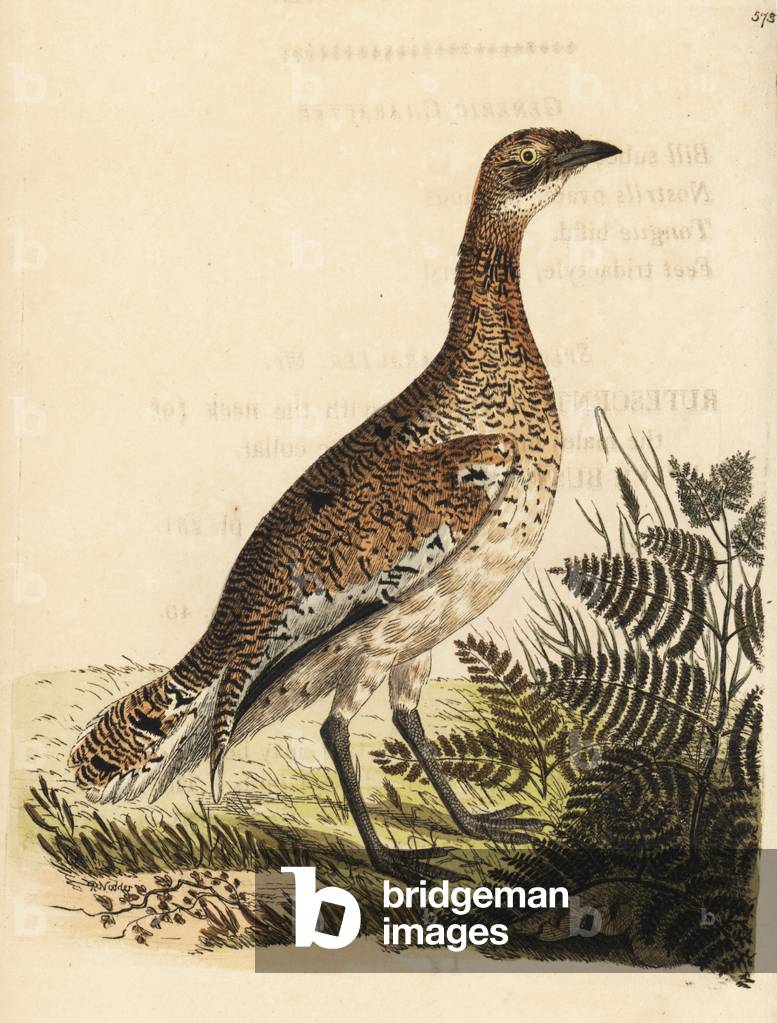
Little bustard, Tetrax tetrax (Otis tetrax). Illustration drawn and engraved by Richard Polydore Nodder. Handcoloured copperplate engraving from George Shaw and Frederick Nodder's The Naturalist's Miscellany, London, 1802.

FLO4683458: Little bustard, Tetrax tetrax (Otis tetrax). Illustration drawn and engraved by Richard Polydore Nodder. Handcoloured copperplate engraving from George Shaw and Frederick Nodder's The Naturalist's Miscellany, London, 1802. / Bridgeman Images

Slit worm shell, Tenagodus anguinus (Anguine serpula, Serpula anguina). Illustration drawn and engraved by Richard Polydore Nodder. Handcoloured copperplate engraving from George Shaw and Frederick Nodder's The Naturalist's Miscellany, London, 1802.

FLO4683465: Slit worm shell, Tenagodus anguinus (Anguine serpula, Serpula anguina). Illustration drawn and engraved by Richard Polydore Nodder. Handcoloured copperplate engraving from George Shaw and Frederick Nodder's The Naturalist's Miscellany, London, 1802. / Bridgeman Images

Unknown species of Australasian caterpillar, perhaps Sphinx moth family. Illustration drawn and engraved by Richard Polydore Nodder. Handcoloured copperplate engraving from George Shaw and Frederick Nodder's The Naturalist's Miscellany, London, 1802.

FLO4683478: Unknown species of Australasian caterpillar, perhaps Sphinx moth family. Illustration drawn and engraved by Richard Polydore Nodder. Handcoloured copperplate engraving from George Shaw and Frederick Nodder's The Naturalist's Miscellany, London, 1802. / Bridgeman Images
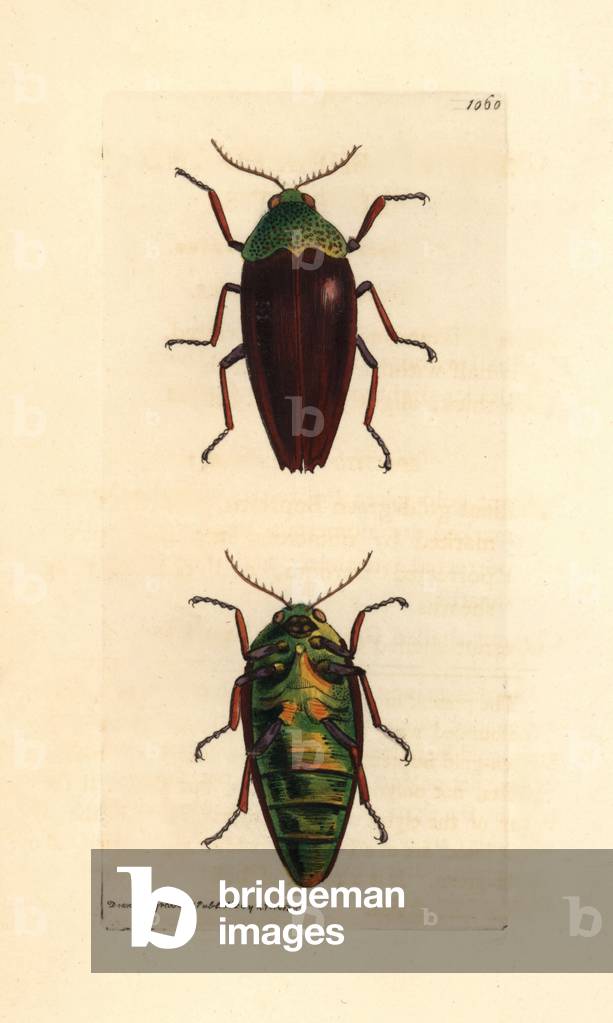
Coleoptere, Buprestis chrysis - Lithography by Richard Polydore Nodder (1774-1823) published in The Naturalist Miscellany, 1812

FLO4682993: Coleoptere, Buprestis chrysis - Lithography by Richard Polydore Nodder (1774-1823) published in The Naturalist Miscellany, 1812 / Bridgeman Images
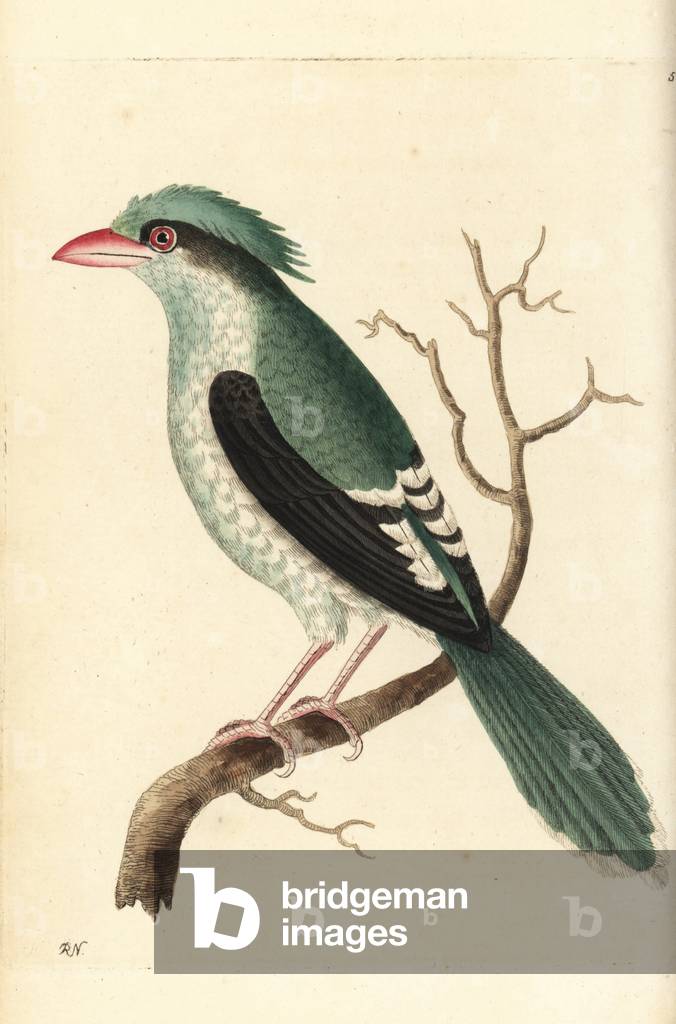
Chinese roller, Coracias sinensis. Illustration drawn and engraved by Richard Polydore Nodder. Handcoloured copperplate engraving from George Shaw and Frederick Nodder's The Naturalist's Miscellany, London, 1801.

FLO4683114: Chinese roller, Coracias sinensis. Illustration drawn and engraved by Richard Polydore Nodder. Handcoloured copperplate engraving from George Shaw and Frederick Nodder's The Naturalist's Miscellany, London, 1801. / Bridgeman Images
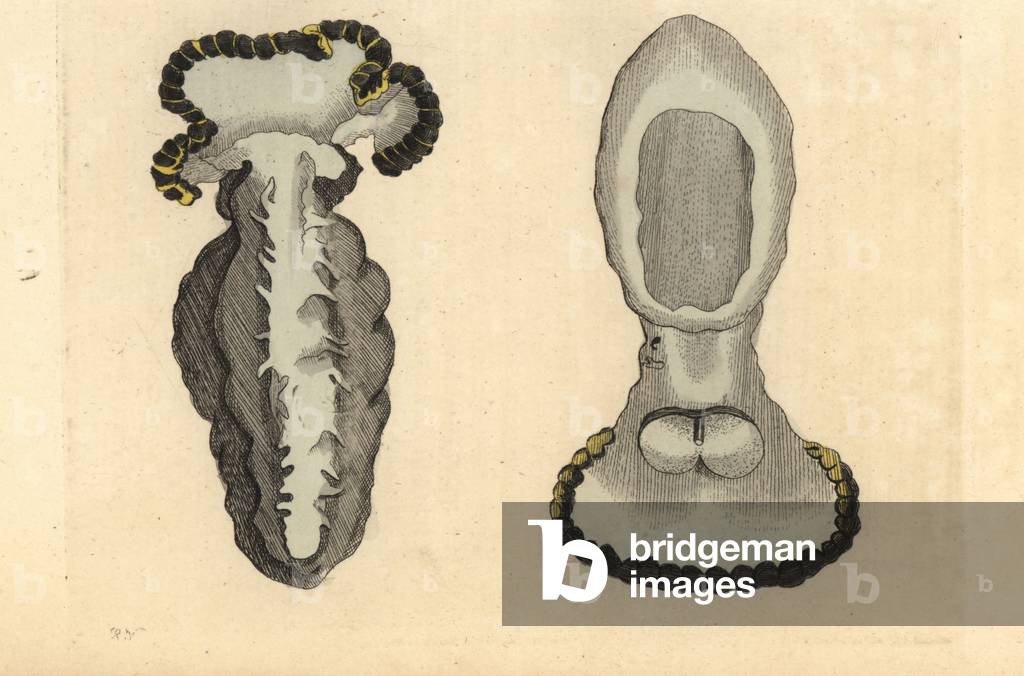
Tethys sea slug, Tethys fimbria (Crenulated tethys). Illustration drawn and engraved by Richard Polydore Nodder. Handcoloured copperplate engraving from George Shaw and Frederick Nodder's The Naturalist's Miscellany, London, 1801.

FLO4683124: Tethys sea slug, Tethys fimbria (Crenulated tethys). Illustration drawn and engraved by Richard Polydore Nodder. Handcoloured copperplate engraving from George Shaw and Frederick Nodder's The Naturalist's Miscellany, London, 1801. / Bridgeman Images

Common green birdwing, female, Ornithoptera priamus (Panthous butterfly, Papilio panthous). Illustration drawn and engraved by Richard Polydore Nodder. Handcoloured copperplate engraving from George Shaw and Frederick Nodder's The Naturalist's Miscellany, London, 1801.

FLO4683148: Common green birdwing, female, Ornithoptera priamus (Panthous butterfly, Papilio panthous). Illustration drawn and engraved by Richard Polydore Nodder. Handcoloured copperplate engraving from George Shaw and Frederick Nodder's The Naturalist's Miscellany, London, 1801. / Bridgeman Images
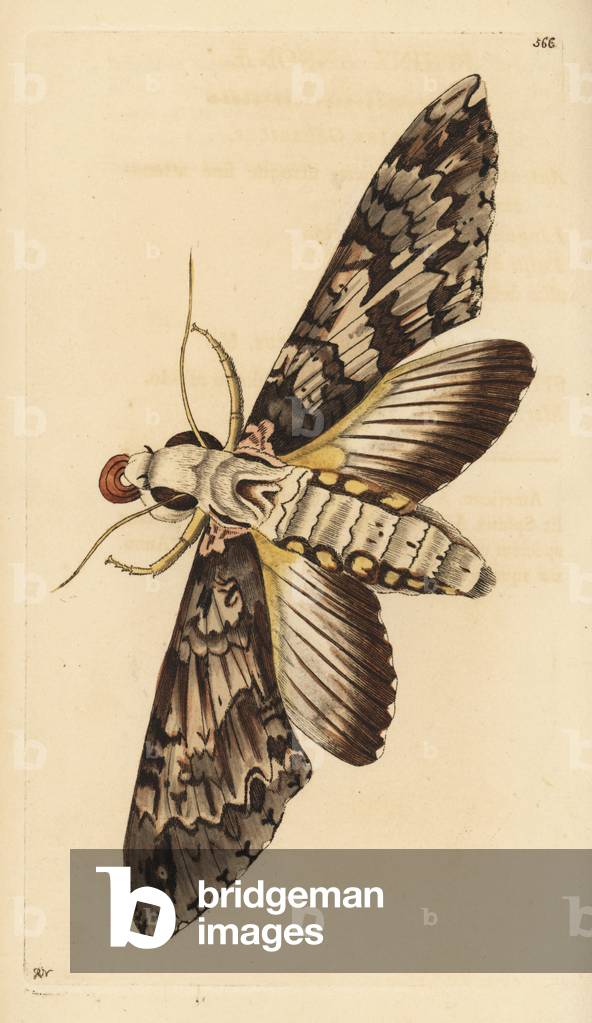
Giant sphinx moth, Cocytius antaeus (Annona sphinx, Sphinx annonae). Illustration drawn and engraved by Richard Polydore Nodder. Handcoloured copperplate engraving from George Shaw and Frederick Nodder's The Naturalist's Miscellany, London, 1802.

FLO4683436: Giant sphinx moth, Cocytius antaeus (Annona sphinx, Sphinx annonae). Illustration drawn and engraved by Richard Polydore Nodder. Handcoloured copperplate engraving from George Shaw and Frederick Nodder's The Naturalist's Miscellany, London, 1802. / Bridgeman Images
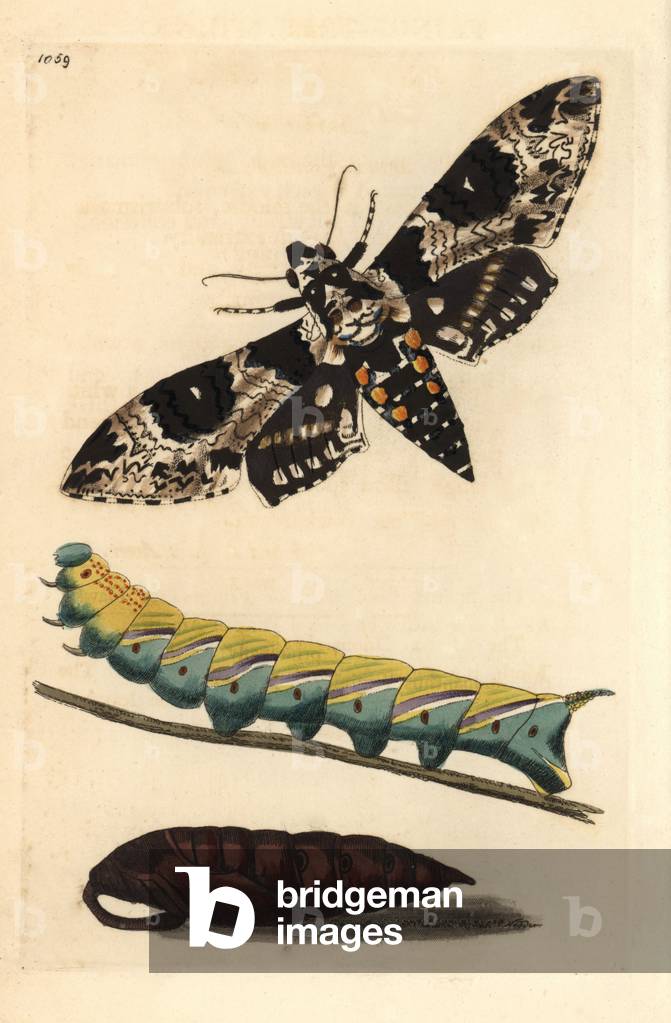
Lepidoptere, rustic sphinx, caterpillar, nymph and adult, Manduca rustica - Lithography by Richard Polydore Nodder (1774-1823) published in The Naturalist Miscellany, 1812

FLO4683005: Lepidoptere, rustic sphinx, caterpillar, nymph and adult, Manduca rustica - Lithography by Richard Polydore Nodder (1774-1823) published in The Naturalist Miscellany, 1812 / Bridgeman Images


Back to top