Search options

Orientation
Colour

Display options

View

Print

To print search results, use print friendly version of this page.

2497532 Search Results

U.S. paratroopers jumped from C-119's to cut off retreating enemy units south of Munsan, Korea. However, Chinese and North Korean troops had already retreated north. March 23, 1951. Korean War, 1950-53

EVB2946108: U.S. paratroopers jumped from C-119's to cut off retreating enemy units south of Munsan, Korea. However, Chinese and North Korean troops had already retreated north. March 23, 1951. Korean War, 1950-53 / Bridgeman Images

M46 tank of 6th Tank Battalion fires on enemy positions in support of the infantry near Song Sil-li, Korea. In the Korean War tank tactics were developed for the extreme rough terrain. January 10, 1952

EVB2946120: M46 tank of 6th Tank Battalion fires on enemy positions in support of the infantry near Song Sil-li, Korea. In the Korean War tank tactics were developed for the extreme rough terrain. January 10, 1952 / Bridgeman Images

U.S. Marines take cover in a deep trench as Red mortar shell lands nearby. May 12, 1952. The last two years of the Korean War, after armistice talks were started, became a stalemate along the 38th parallel. Without movement, entrenched positions developed, reminiscent of the World War 1

EVB2946126: U.S. Marines take cover in a deep trench as Red mortar shell lands nearby. May 12, 1952. The last two years of the Korean War, after armistice talks were started, became a stalemate along the 38th parallel. Without movement, entrenched positions developed, reminiscent of the World War 1 / Bridgeman Images

U.S. Marines firing during a night mission, on the front lines during the Korean War. April 15, 1953

EVB2946129: U.S. Marines firing during a night mission, on the front lines during the Korean War. April 15, 1953 / Bridgeman Images

Gen. Dwight Eisenhower reacts to MacArthur's dismissal by Truman. April 11, 1951. Eisenhower was then Supreme Commander of the North Atlantic Treaty Organization (NATO), and with operational command of NATO forces in Europe

EVB2946142: Gen. Dwight Eisenhower reacts to MacArthur's dismissal by Truman. April 11, 1951. Eisenhower was then Supreme Commander of the North Atlantic Treaty Organization (NATO), and with operational command of NATO forces in Europe / Bridgeman Images

U.S. Marine fighter pilots of the 'Devil Cats' Squadron with nearly 3,000 pin-ups. Their Quonset hut wallpaper includes over 200 pictures of Marilyn Monroe. Oct. 28, 1952. Korean War, 1950-53

EVB2946152: U.S. Marine fighter pilots of the 'Devil Cats' Squadron with nearly 3,000 pin-ups. Their Quonset hut wallpaper includes over 200 pictures of Marilyn Monroe. Oct. 28, 1952. Korean War, 1950-53 / Bridgeman Images

Two UN soldiers (probably U.S.) captured by North Korean soldiers. Probably in South Korea, c. July-Oct. 1950. Prisoners taken by North Koreans in the first six months of the war faced harsh, and often fatal, treatment from Koreans captors. Korean War, 1950-53

EVB2946170: Two UN soldiers (probably U.S.) captured by North Korean soldiers. Probably in South Korea, c. July-Oct. 1950. Prisoners taken by North Koreans in the first six months of the war faced harsh, and often fatal, treatment from Koreans captors. Korean War, 1950-53 / Bridgeman Images

North Korean and Chinese Communist prisoners assembled in a UN POW camp at Pusan, Korea. April 1951. Korean War, 1950-53

EVB2946179: North Korean and Chinese Communist prisoners assembled in a UN POW camp at Pusan, Korea. April 1951. Korean War, 1950-53 / Bridgeman Images

American POWs released during 'Operation Big Switch' being interviewed by the press. They display their camp mascot 'Oscar' a pet magpie at 'Freedom Village', where UN repatriated POWs were processed for return to their homes. Communists call use 'Peace Village' as their name for the prisoner exchange center. Sept. 1953. Korean War, 1950-53

EVB2946185: American POWs released during 'Operation Big Switch' being interviewed by the press. They display their camp mascot 'Oscar' a pet magpie at 'Freedom Village', where UN repatriated POWs were processed for return to their homes. Communists call use 'Peace Village' as their name for the prisoner exchange center. Sept. 1953. Korean War, 1950-53 / Bridgeman Images

Army First Lt. Alvin Anderson embracing his mother and sister as his family looks on. He spent 33 months as a POW during the Korean War. Sept. 14, 1953. Fort Mason, California. Korean War, 1950-53

EVB2946191: Army First Lt. Alvin Anderson embracing his mother and sister as his family looks on. He spent 33 months as a POW during the Korean War. Sept. 14, 1953. Fort Mason, California. Korean War, 1950-53 / Bridgeman Images

F-80C jet fighters fly in formation, c. 1950 (photo)

EVB2946243: F-80C jet fighters fly in formation, c. 1950 (photo) / Bridgeman Images

Korean refugees slog through snow outside of Kangnung (Gangneung), moving south with bundles of belongings. The South Korean Army was withdrawing south in the same area, with the North Korean/Chinese troops in pursuit. January 8, 1951. Korean War, 1950-53

EVB2946262: Korean refugees slog through snow outside of Kangnung (Gangneung), moving south with bundles of belongings. The South Korean Army was withdrawing south in the same area, with the North Korean/Chinese troops in pursuit. January 8, 1951. Korean War, 1950-53 / Bridgeman Images

Soldiers on a M-26 tank await an North Korean attempt to cross the Naktong River. Sept. 3, 1950. Second Battle of the Naktong River, part of the Battle of Pusan Perimeter. Korean War, 1950-53

EVB2946299: Soldiers on a M-26 tank await an North Korean attempt to cross the Naktong River. Sept. 3, 1950. Second Battle of the Naktong River, part of the Battle of Pusan Perimeter. Korean War, 1950-53 / Bridgeman Images

Marines guard Wolmi Island North Korean prisoners heading for landing craft. They were taken to Inchon for questioning, medical care and safe-keeping. Sept. 15, 1950. Korean War, 1950-53

EVB2946308: Marines guard Wolmi Island North Korean prisoners heading for landing craft. They were taken to Inchon for questioning, medical care and safe-keeping. Sept. 15, 1950. Korean War, 1950-53 / Bridgeman Images

U.S. Soldiers move up to the firing line in Korea on July 18, 1950. Troops on occupation duty in Japan were the first fight the North Korean invaders. African Americans in the near truck are with the now integrated 24th Infantry Regiment. Korean War, 1950-53

EVB2946356: U.S. Soldiers move up to the firing line in Korea on July 18, 1950. Troops on occupation duty in Japan were the first fight the North Korean invaders. African Americans in the near truck are with the now integrated 24th Infantry Regiment. Korean War, 1950-53 / Bridgeman Images

Puerto Rican children in a classroom, some with hands raised. New York City, April 25, 1947

EVB2946415: Puerto Rican children in a classroom, some with hands raised. New York City, April 25, 1947 / Bridgeman Images

In the 1940s, many women continued to sew their own clothing. Fashionable patterns were distributed nationwide. In the background is a contemporary Singer Sewing machine. 1943

EVB2946439: In the 1940s, many women continued to sew their own clothing. Fashionable patterns were distributed nationwide. In the background is a contemporary Singer Sewing machine. 1943 / Bridgeman Images

Young working women at an office party for an engaged co-worker. c. 1960

EVB2946455: Young working women at an office party for an engaged co-worker. c. 1960 / Bridgeman Images

A patron of 'Sammy's Bowery Follies', a downtown bar, sleeping at his table while the resident cat laps at his beer. Dec. 1947

EVB2946458: A patron of 'Sammy's Bowery Follies', a downtown bar, sleeping at his table while the resident cat laps at his beer. Dec. 1947 / Bridgeman Images

A block long crowd waiting for the opening of the A&P super market. Third Avenue and 163rd Street, Bronx, New York City. Oct. 22, 1946

EVB2946461: A block long crowd waiting for the opening of the A&P super market. Third Avenue and 163rd Street, Bronx, New York City. Oct. 22, 1946 / Bridgeman Images

Aerial view of limited access highway on Long Island. The new roads provide access from the growing suburbs to New York City. c. 1946

EVB2946479: Aerial view of limited access highway on Long Island. The new roads provide access from the growing suburbs to New York City. c. 1946 / Bridgeman Images

Ohio Governor John Bricker accepting the 1944 Republican vice presidential nomination. His campaign speeches attacked the 1930s New Deal policies when most citizens primary concern was World War 2. Sept. 22, 1944

EVB2946559: Ohio Governor John Bricker accepting the 1944 Republican vice presidential nomination. His campaign speeches attacked the 1930s New Deal policies when most citizens primary concern was World War 2. Sept. 22, 1944 / Bridgeman Images

John Gates, American Communist Party member and leader in 1948. At this time he was indicted under the Smith Act for being 'dedicated to the Marxist-Leninist principles of the overthrow and destruction of the Government.' He was convicted, served five years in prison, after which he became editor of the Communist Party's newspaper, 'The Daily Worker'

EVB2946583: John Gates, American Communist Party member and leader in 1948. At this time he was indicted under the Smith Act for being 'dedicated to the Marxist-Leninist principles of the overthrow and destruction of the Government.' He was convicted, served five years in prison, after which he became editor of the Communist Party's newspaper, 'The Daily Worker' / Bridgeman Images

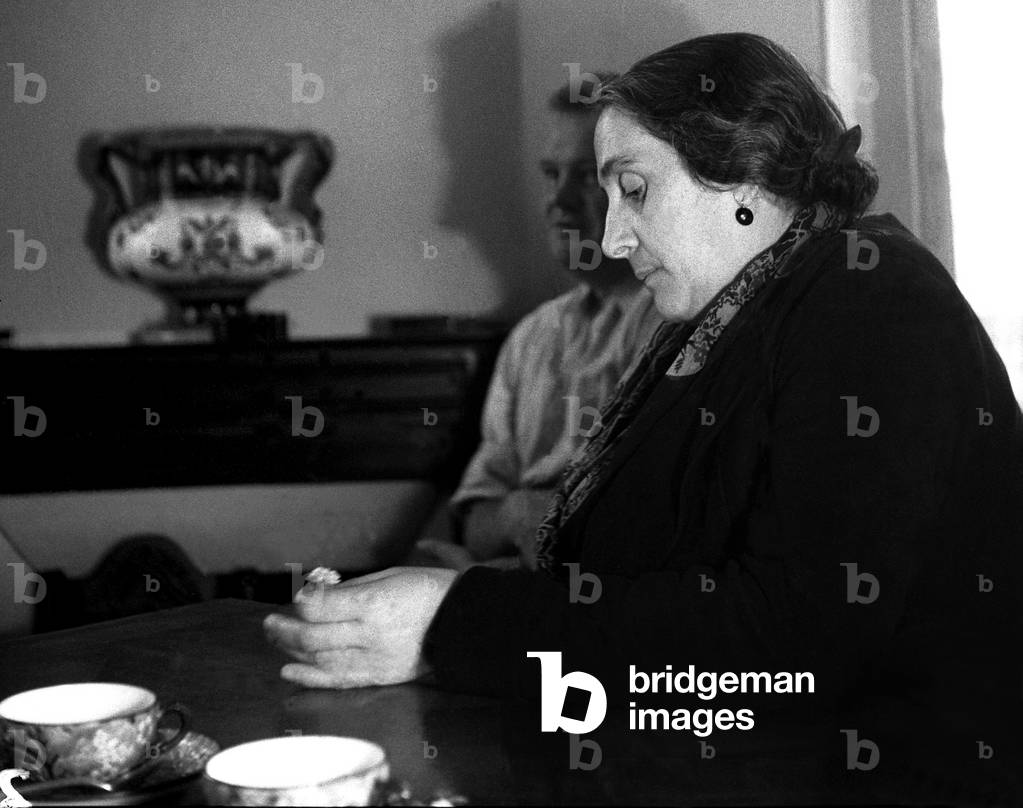
Millicent Fenwick served four-terms in the House of Representatives from New Jersey from 1975-83

EVB2946601: Millicent Fenwick served four-terms in the House of Representatives from New Jersey from 1975-83 / Bridgeman Images

Allen Welsh Dulles (2nd from left) as chief of the Near East division of the Department of State. He poses with F.M. Moussa (far right) Attache of the Egyptian Legation, and with engineers K. Faki Wassef, and Rifai. Feb.-Mar. 1924

EVB2946611: Allen Welsh Dulles (2nd from left) as chief of the Near East division of the Department of State. He poses with F.M. Moussa (far right) Attache of the Egyptian Legation, and with engineers K. Faki Wassef, and Rifai. Feb.-Mar. 1924 / Bridgeman Images

President Dwight Eisenhower smiling while golfing. c. 1954.

EVB2946652: President Dwight Eisenhower smiling while golfing. c. 1954. / Bridgeman Images

President Dwight Eisenhower and Secretary of State John Foster Dulles, Oct. 25, 1954. Dulles had returned from Bonn, London, and Paris, with agreements ending the occupation of and restoring sovereignty to West Germany, and providing for its admission to NATO.

EVB2946658: President Dwight Eisenhower and Secretary of State John Foster Dulles, Oct. 25, 1954. Dulles had returned from Bonn, London, and Paris, with agreements ending the occupation of and restoring sovereignty to West Germany, and providing for its admission to NATO. / Bridgeman Images

Prime Minister Jawaharlal Nehru at a Capitol luncheon, Oct. 13, 1949

EVB2946685: Prime Minister Jawaharlal Nehru at a Capitol luncheon, Oct. 13, 1949 / Bridgeman Images

Expectant fathers bathing a doll during an infant care class at the Brooklyn Red Cross Headquarters. 1947

EVB2946440: Expectant fathers bathing a doll during an infant care class at the Brooklyn Red Cross Headquarters. 1947 / Bridgeman Images

German refugee boy reading a Superman comic at the N.Y. Children's Colony school in 1942

EVB2946450: German refugee boy reading a Superman comic at the N.Y. Children's Colony school in 1942 / Bridgeman Images

Children with tricycles play near a puddle in Washington Square Park. New York City Aug. 3, 1948

EVB2946453: Children with tricycles play near a puddle in Washington Square Park. New York City Aug. 3, 1948 / Bridgeman Images

A complicated traffic signal to uncomplicate traffic in Washington, D.C. The 'Walk' and 'Don't Walk' signals help pedestrians safely cross the streets. 1949

EVB2946480: A complicated traffic signal to uncomplicate traffic in Washington, D.C. The 'Walk' and 'Don't Walk' signals help pedestrians safely cross the streets. 1949 / Bridgeman Images

Construction workers on airplane hangar with prefabricated 'Rilco' glued laminated wooden arches. The arch of the Morey Airplane Hangar has a span of 70 feet. Janesville, Wisconsin, c. 1942

EVB2946519: Construction workers on airplane hangar with prefabricated 'Rilco' glued laminated wooden arches. The arch of the Morey Airplane Hangar has a span of 70 feet. Janesville, Wisconsin, c. 1942 / Bridgeman Images

Workman operating an industrial loom strung with hundreds of wool threads. Chicago's Olsen Rug Company. c. 1950

EVB2946526: Workman operating an industrial loom strung with hundreds of wool threads. Chicago's Olsen Rug Company. c. 1950 / Bridgeman Images

Governor Strom Thurmond, States Rights Presidential candidate, campaigning in Austin, Texas. Oct. 29, 1948. He received 38 electoral votes from 4 traditionally Democratic southern states

EVB2946572: Governor Strom Thurmond, States Rights Presidential candidate, campaigning in Austin, Texas. Oct. 29, 1948. He received 38 electoral votes from 4 traditionally Democratic southern states / Bridgeman Images

Gov. Eugene Talmadge (left) at a clemency hearing for six East Point Ku Klux Klansmen. Dec. 1, 1941. Prosecutor Daniel Duke brandishes bull whip used on the African American victims. Talmadge, while 'feeling sorry' for the Klansmen, did not grant clemency to the six men serving 1-3 year prison sentences for a series of floggings in suburban Atlanta. Talmadge added he participated in a similar flogging of an African-American man years before

EVB2946575: Gov. Eugene Talmadge (left) at a clemency hearing for six East Point Ku Klux Klansmen. Dec. 1, 1941. Prosecutor Daniel Duke brandishes bull whip used on the African American victims. Talmadge, while 'feeling sorry' for the Klansmen, did not grant clemency to the six men serving 1-3 year prison sentences for a series of floggings in suburban Atlanta. Talmadge added he participated in a similar flogging of an African-American man years before / Bridgeman Images


Back to top