Search options

Orientation
Colour

Display options

View

Print

To print search results, use print friendly version of this page.

2497527 Search Results
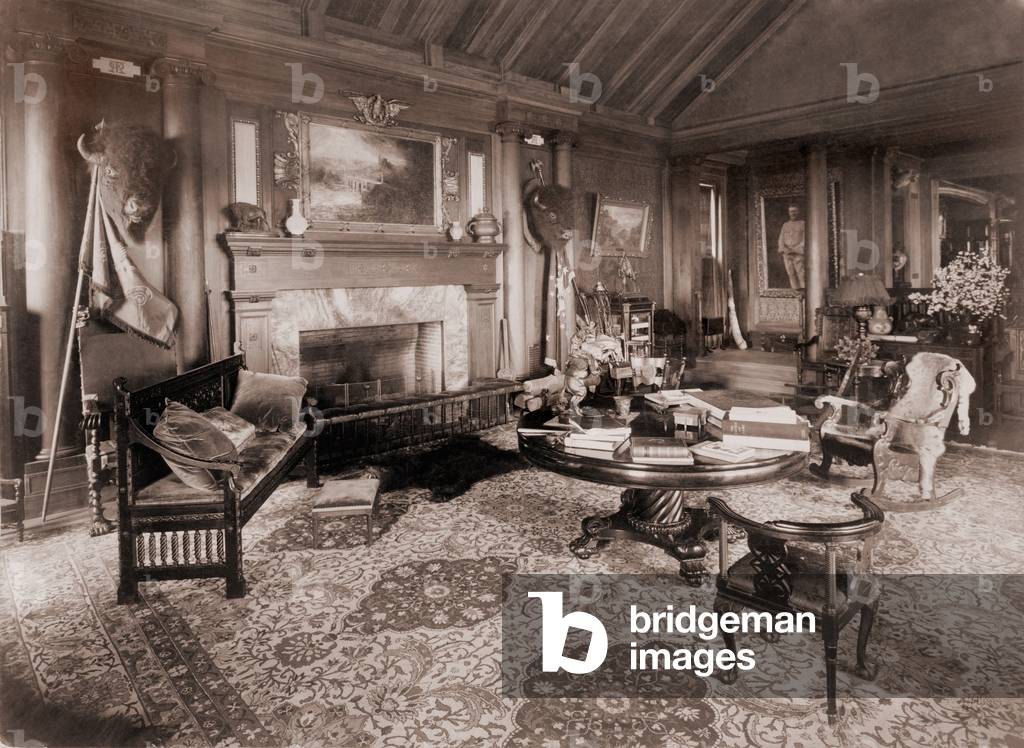
Trophy room at Sagamore Hill, summer home of President Theodore Roosevelt, with bison heads, bearskin rug, and battle standards. c. 1910

EVB2935948: Trophy room at Sagamore Hill, summer home of President Theodore Roosevelt, with bison heads, bearskin rug, and battle standards. c. 1910 / Bridgeman Images
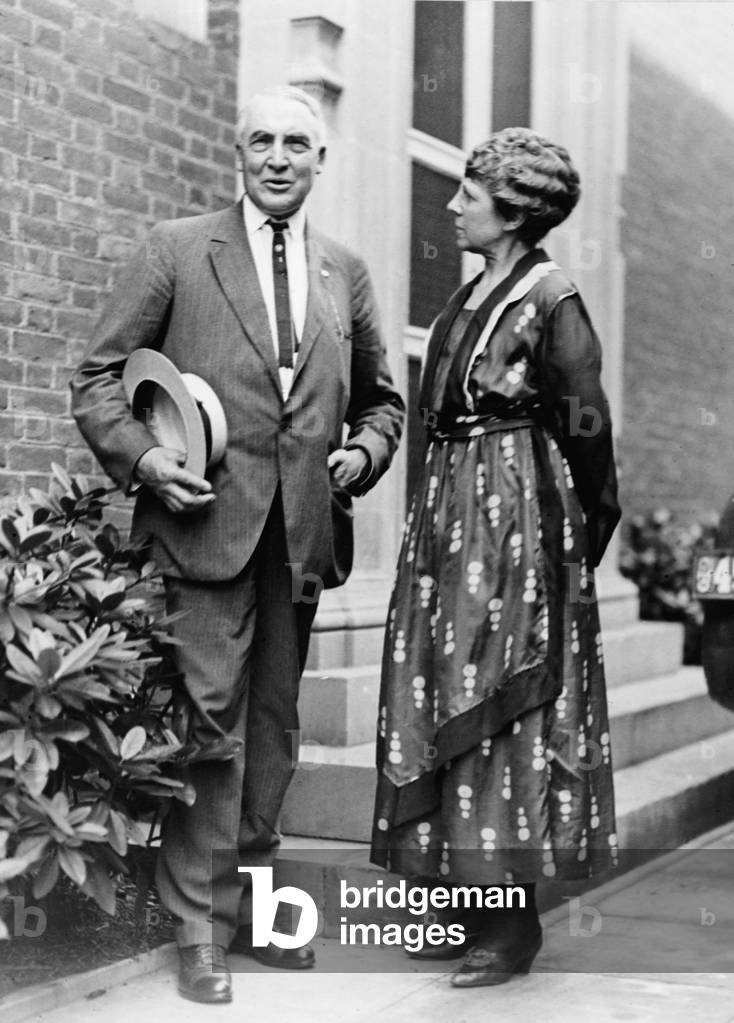
President Warren Harding with First Lady Florence Kling Harding in 1920

EVB2935958: President Warren Harding with First Lady Florence Kling Harding in 1920 / Bridgeman Images
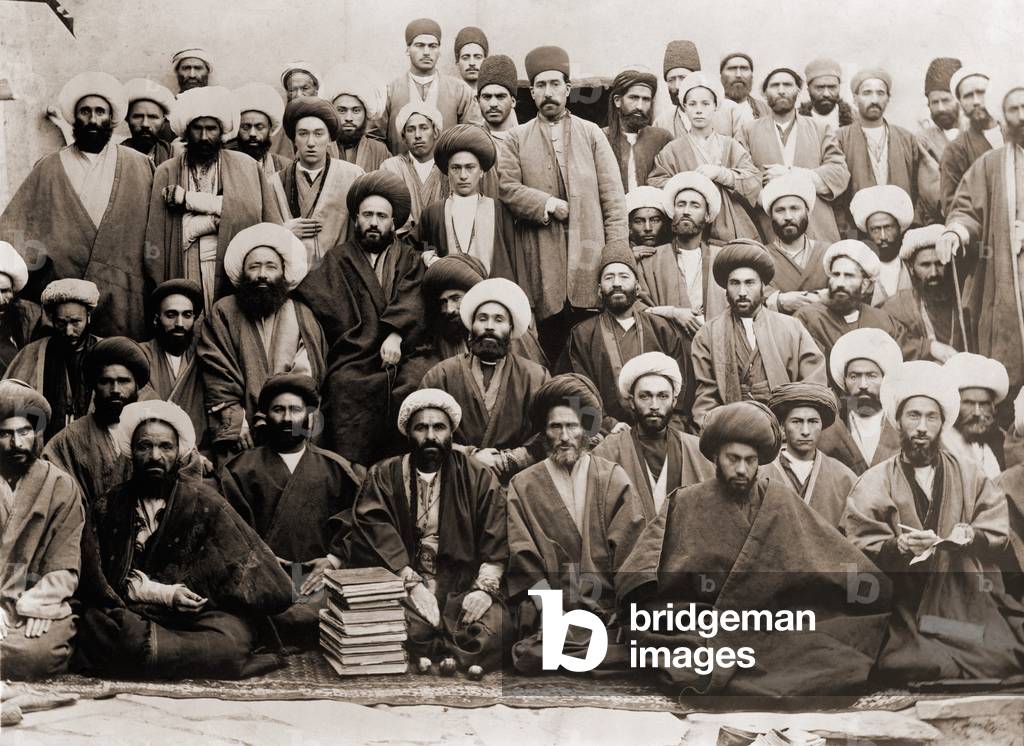
Islamic clerics is Persia, c. 1910. Reza Shah Pahlavi compromised with the Iranian mullahs when they opposed his imitation of Kamul Attaturk's secularization policies in the 1920s

EVB2935964: Islamic clerics is Persia, c. 1910. Reza Shah Pahlavi compromised with the Iranian mullahs when they opposed his imitation of Kamul Attaturk's secularization policies in the 1920s / Bridgeman Images
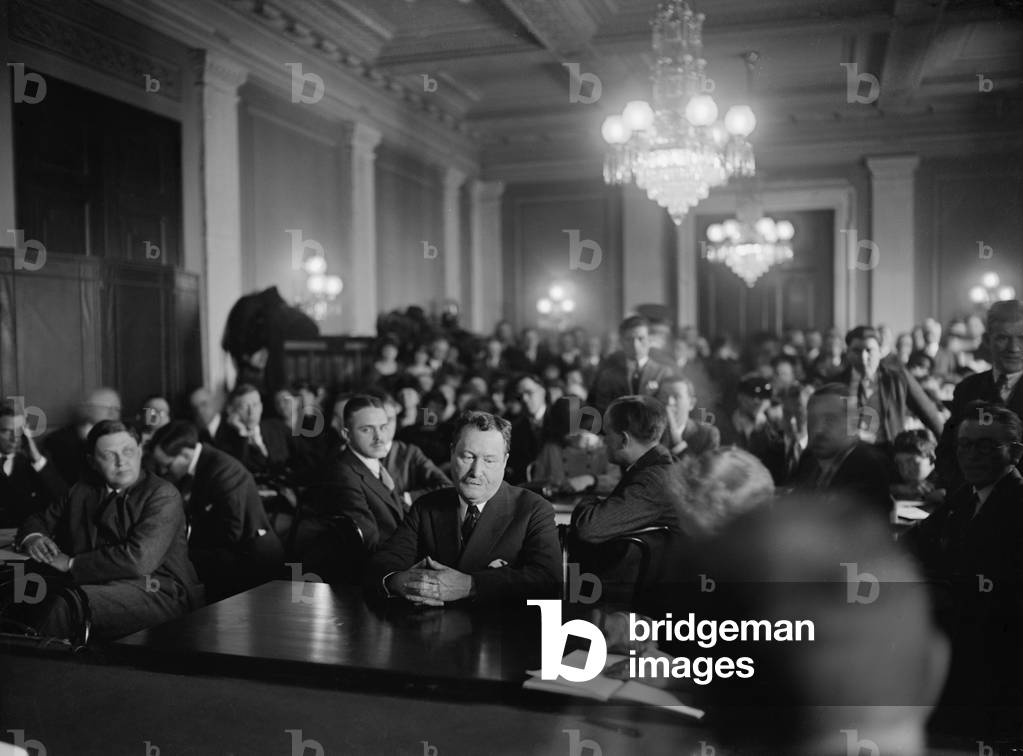
William 'Billy' Burns (1861-1932), testifying before the Senate Committee investigating the Teapot Dome scandal on April 4, 1924. A few days earlier, President Coolidge had demanded his resignation

EVB2935998: William 'Billy' Burns (1861-1932), testifying before the Senate Committee investigating the Teapot Dome scandal on April 4, 1924. A few days earlier, President Coolidge had demanded his resignation / Bridgeman Images

African American convicts in a Southern work gang breaking up rocks with sledge hammers. c. 1940

EVB2936001: African American convicts in a Southern work gang breaking up rocks with sledge hammers. c. 1940 / Bridgeman Images
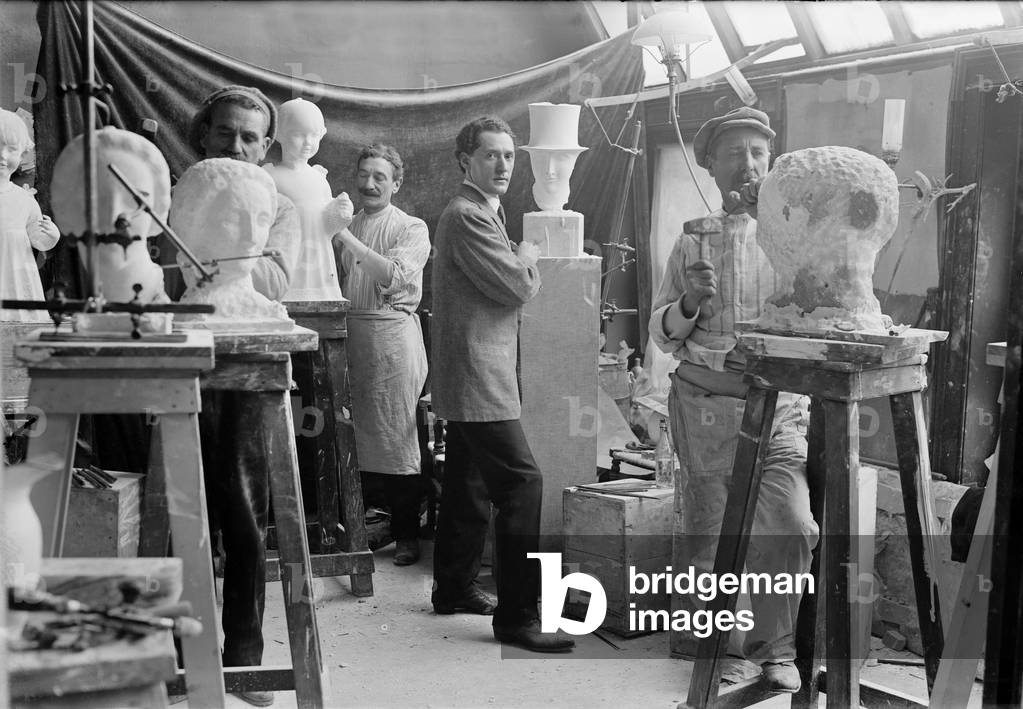
Elie Nadelman (1882-1946), Polish-born American sculptor standing beside his sculpture in an artists studio class. c. 1915

EVB2936062: Elie Nadelman (1882-1946), Polish-born American sculptor standing beside his sculpture in an artists studio class. c. 1915 / Bridgeman Images
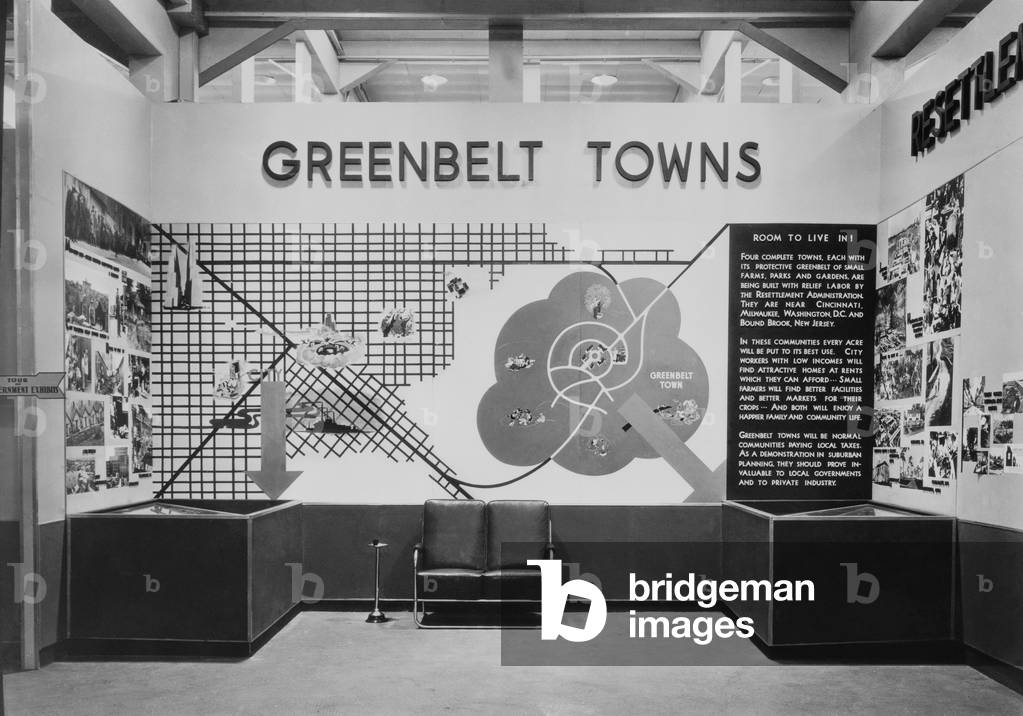
United States Resettlement Administration exhibit in Cleveland, Ohio, promoting construction of planned communities by relief labor during the early years of the New Deal. Federal Emergency Relief Act, signed on 5/12/1933, authorized large scale public works projects

EVB2936073: United States Resettlement Administration exhibit in Cleveland, Ohio, promoting construction of planned communities by relief labor during the early years of the New Deal. Federal Emergency Relief Act, signed on 5/12/1933, authorized large scale public works projects / Bridgeman Images

African American soldiers aim their rifles at a picket station near Dutch Gap Canal, Virginia. Nov. 1864

EVB2936091: African American soldiers aim their rifles at a picket station near Dutch Gap Canal, Virginia. Nov. 1864, American Photographer, (19th century) / Bridgeman Images
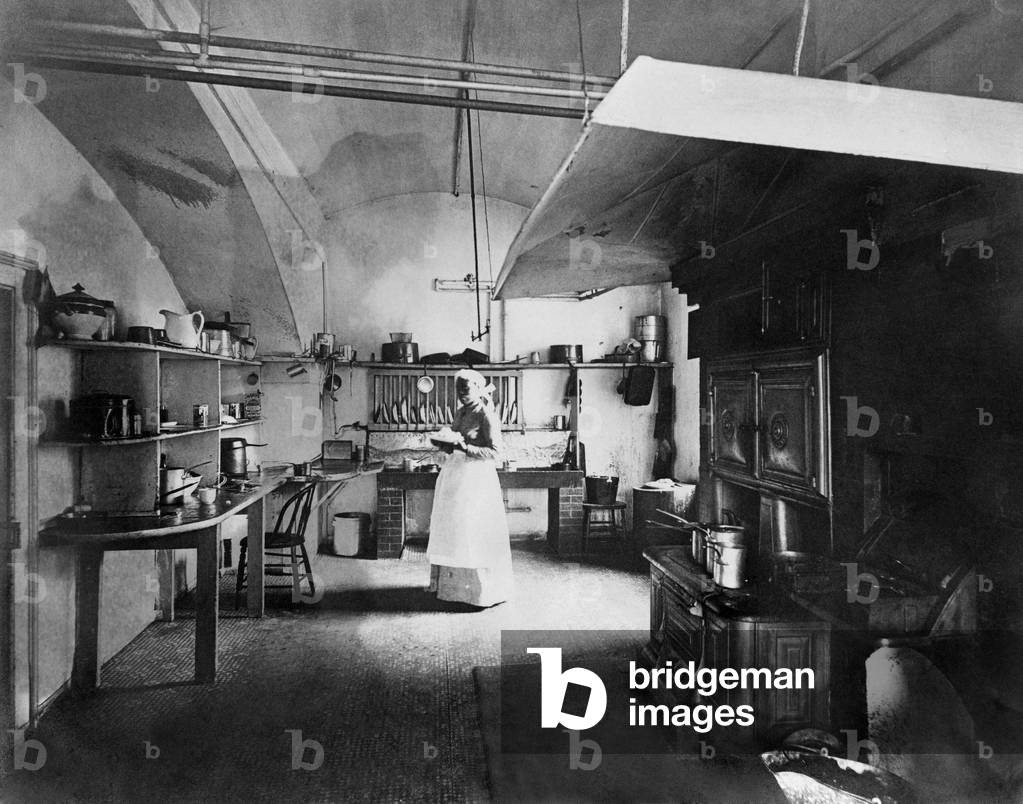
The White House kitchen during the presidency of Benjamin Harrison. c. 1892

EVB2936113: The White House kitchen during the presidency of Benjamin Harrison. c. 1892, American Photographer, (19th century) / Bridgeman Images
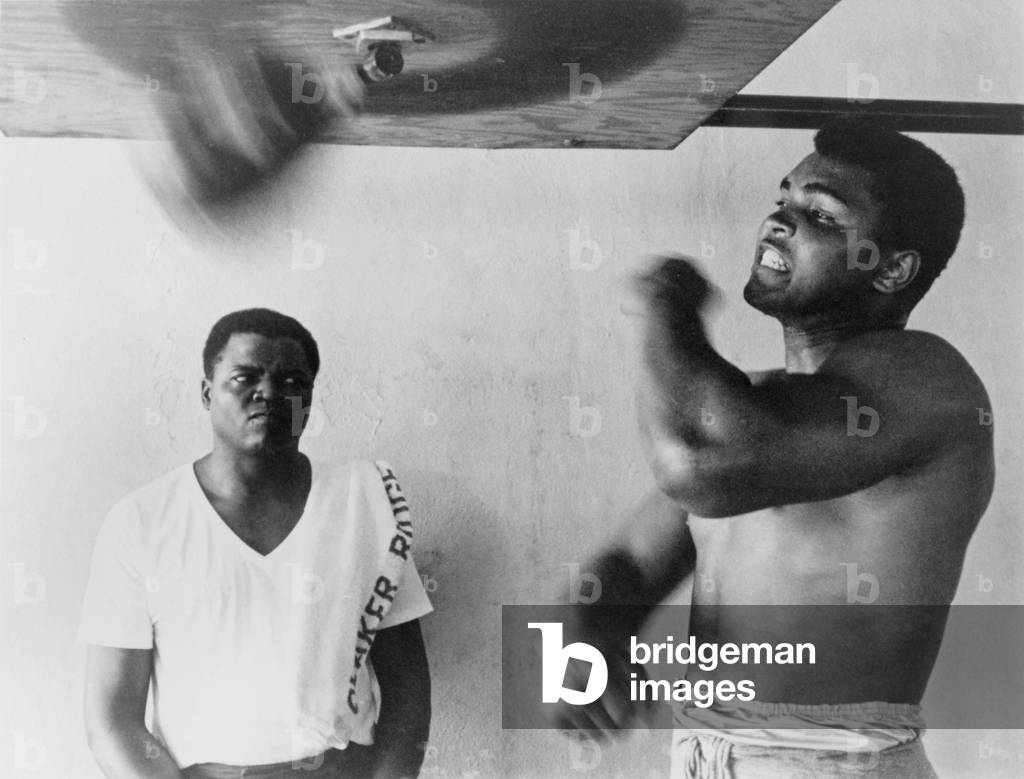
Muhammad Ali, works out on light bag in Miami, Florida. 1965

EVB2936173: Muhammad Ali, works out on light bag in Miami, Florida. 1965 / Bridgeman Images
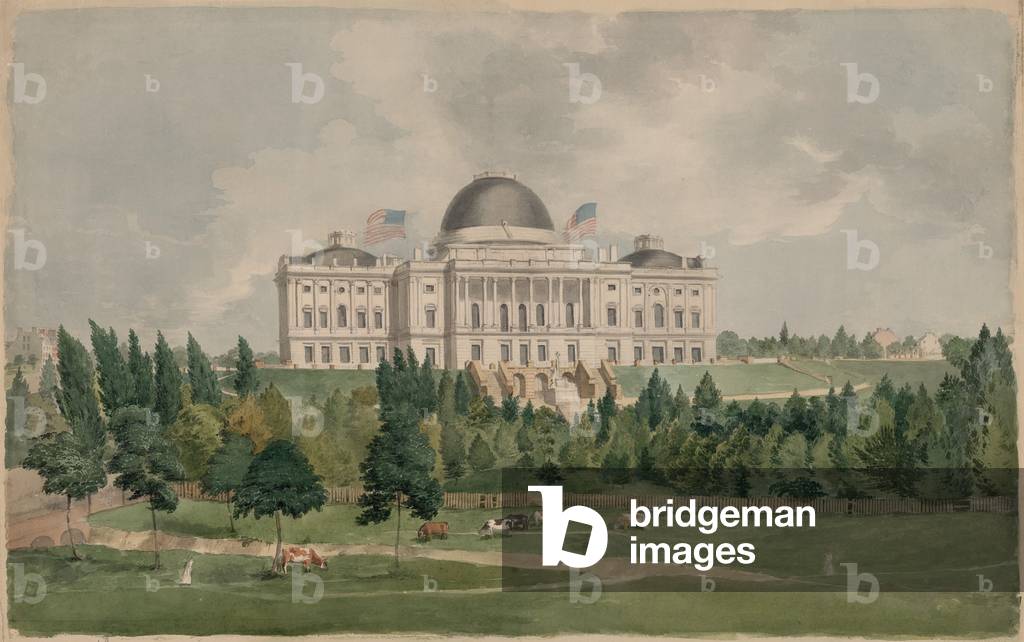
United States Capitol Building in 1828, showing the west front with cows grazing in the foreground. Watercolor painting John Rubens Smith

EVB2936182: United States Capitol Building in 1828, showing the west front with cows grazing in the foreground. Watercolor painting John Rubens Smith / Bridgeman Images

Crowd of Eastern European emigrants, possibly Jewish, with three Russian officials, who are reviewing their travel papers. c. 1912

EVB2936822: Crowd of Eastern European emigrants, possibly Jewish, with three Russian officials, who are reviewing their travel papers. c. 1912, Unknown photographer, (20th century) / Bridgeman Images
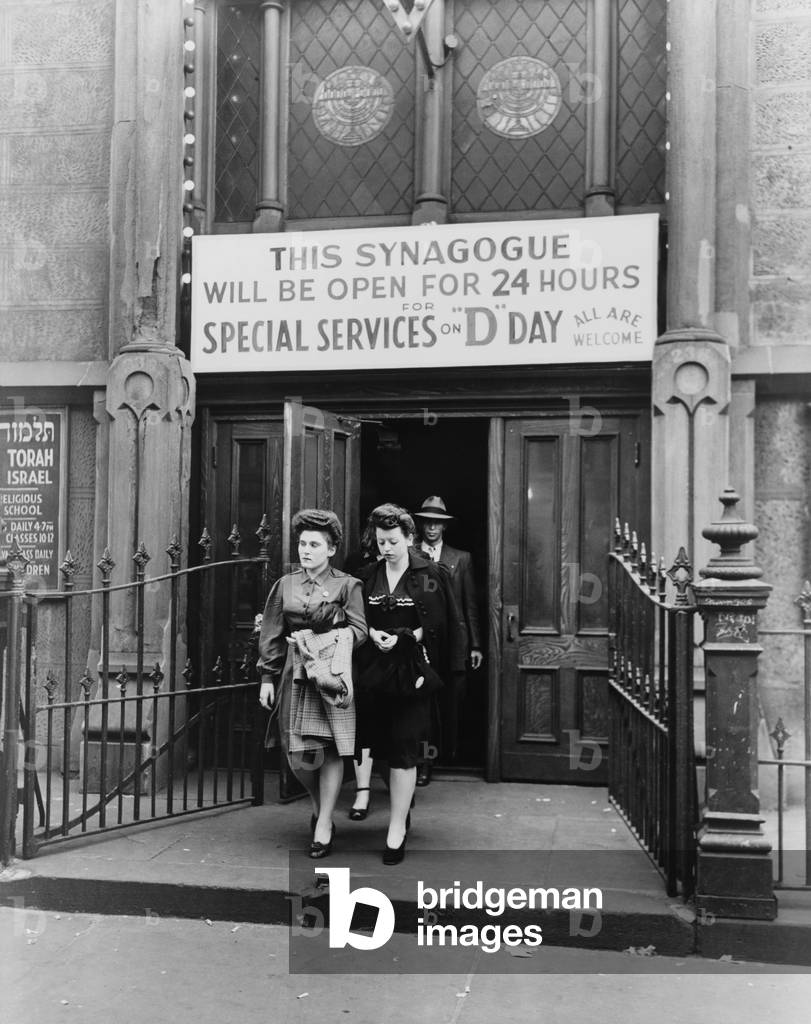
Wives and families of Jewish American GIs leave a New York City synagogue on West Twenty-third Street, which was open all day on D-Day, June 6, 1944. They awoke to the announcement that Allied troops were landing on the beaches of Normandy and prayed for the safety of their loved ones in military service

EVB2936841: Wives and families of Jewish American GIs leave a New York City synagogue on West Twenty-third Street, which was open all day on D-Day, June 6, 1944. They awoke to the announcement that Allied troops were landing on the beaches of Normandy and prayed for the safety of their loved ones in military service / Bridgeman Images
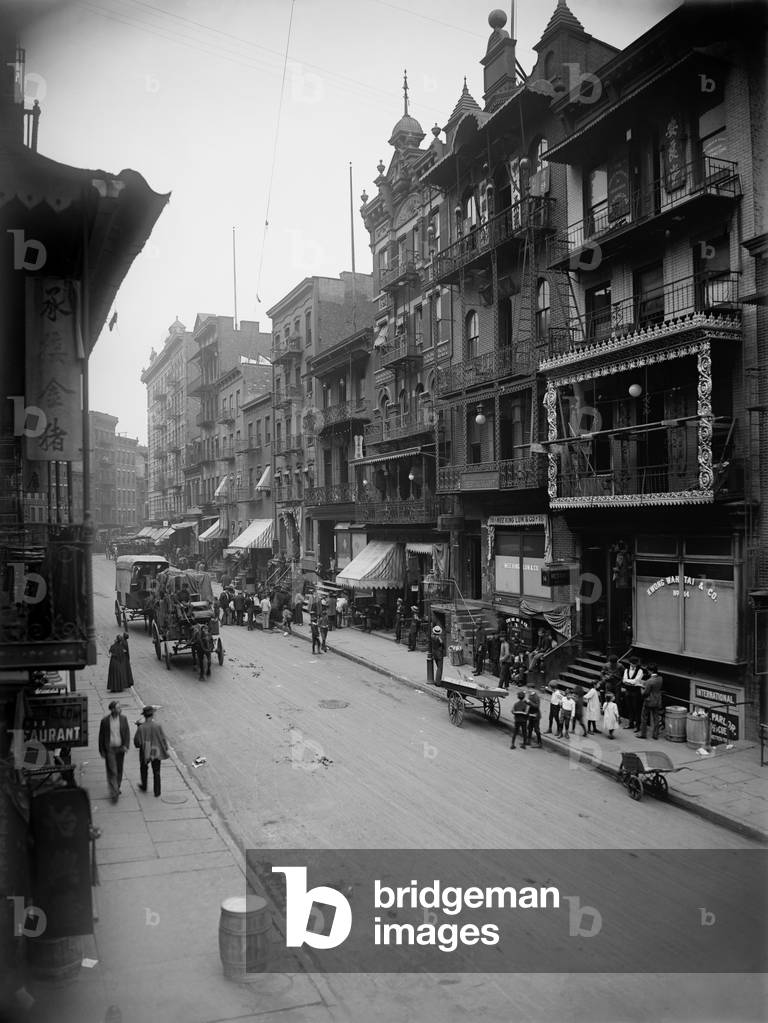
Mott Street in New York City's Chinatown presents a cosmopolitan scene mixing Asian and American-European dress and faces. The street is lined with restaurants, laundries, and pushcarts. c. 1900

EVB2936854: Mott Street in New York City's Chinatown presents a cosmopolitan scene mixing Asian and American-European dress and faces. The street is lined with restaurants, laundries, and pushcarts. c. 1900 / Bridgeman Images

Italian woman carrying heavy bundle of clothing on her head Near Astor Place, New York City. She will sew the garments at home for low wages. February 1912 photograph by Lewis Hine

EVB2936868: Italian woman carrying heavy bundle of clothing on her head Near Astor Place, New York City. She will sew the garments at home for low wages. February 1912 photograph by Lewis Hine, Hine, Lewis Wickes (1874-1940) / Bridgeman Images
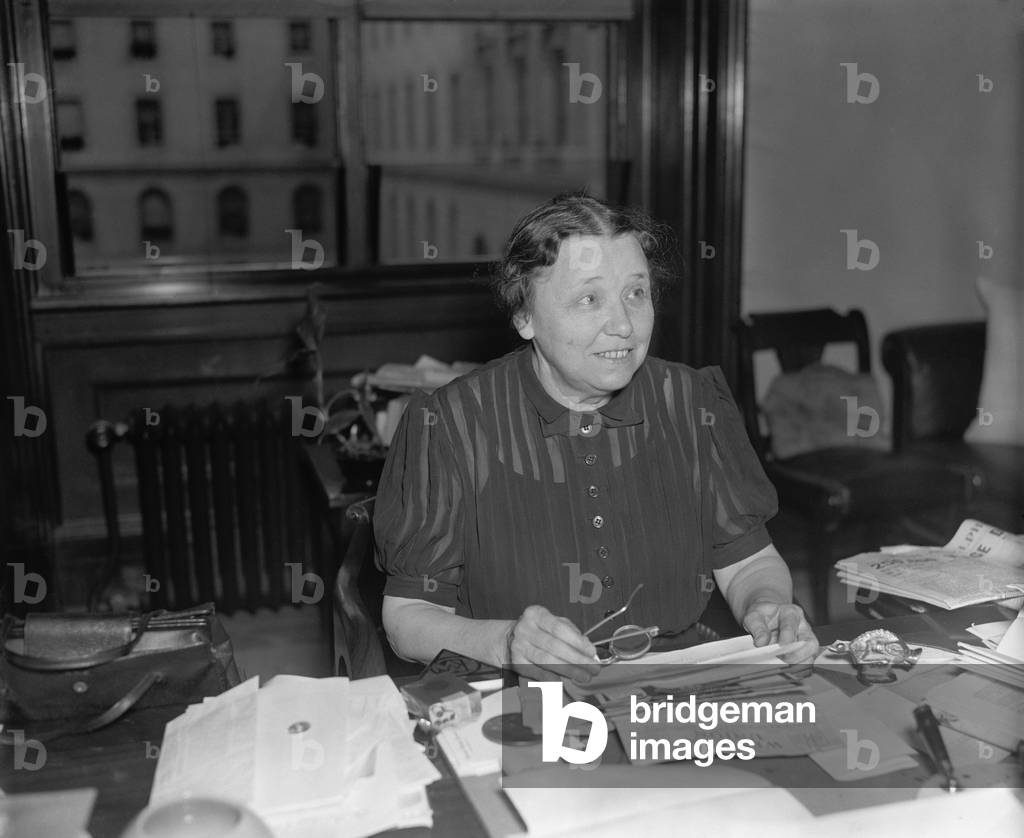
Senator Hattie W. Caraway, Democrat of Arkansas, became the first women Senior Senator to serve in Congress in 1937

EVB2936892: Senator Hattie W. Caraway, Democrat of Arkansas, became the first women Senior Senator to serve in Congress in 1937 / Bridgeman Images

Jeannette Rankin (1880-1973), first woman member of the U.S. Congress (1917–19, 1941–43),

EVB2936898: Jeannette Rankin (1880-1973), first woman member of the U.S. Congress (1917–19, 1941–43), / Bridgeman Images

Interned Japanese Americans, mostly women, holding books, walking on a dirt road, within the guarded fences of the Manzanar Relocation Center during World War II. Master photographer Ansel Adams captured the bleak landscape of the isolated internment camp in the California desert. 1943

EVB2936922: Interned Japanese Americans, mostly women, holding books, walking on a dirt road, within the guarded fences of the Manzanar Relocation Center during World War II. Master photographer Ansel Adams captured the bleak landscape of the isolated internment camp in the California desert. 1943, Adams, Ansel (1902-84) / Bridgeman Images

New York City street types: Emigrant man and women pretzel vendor. 1896 photograph by Alice Austen

EVB2936930: New York City street types: Emigrant man and women pretzel vendor. 1896 photograph by Alice Austen / Bridgeman Images
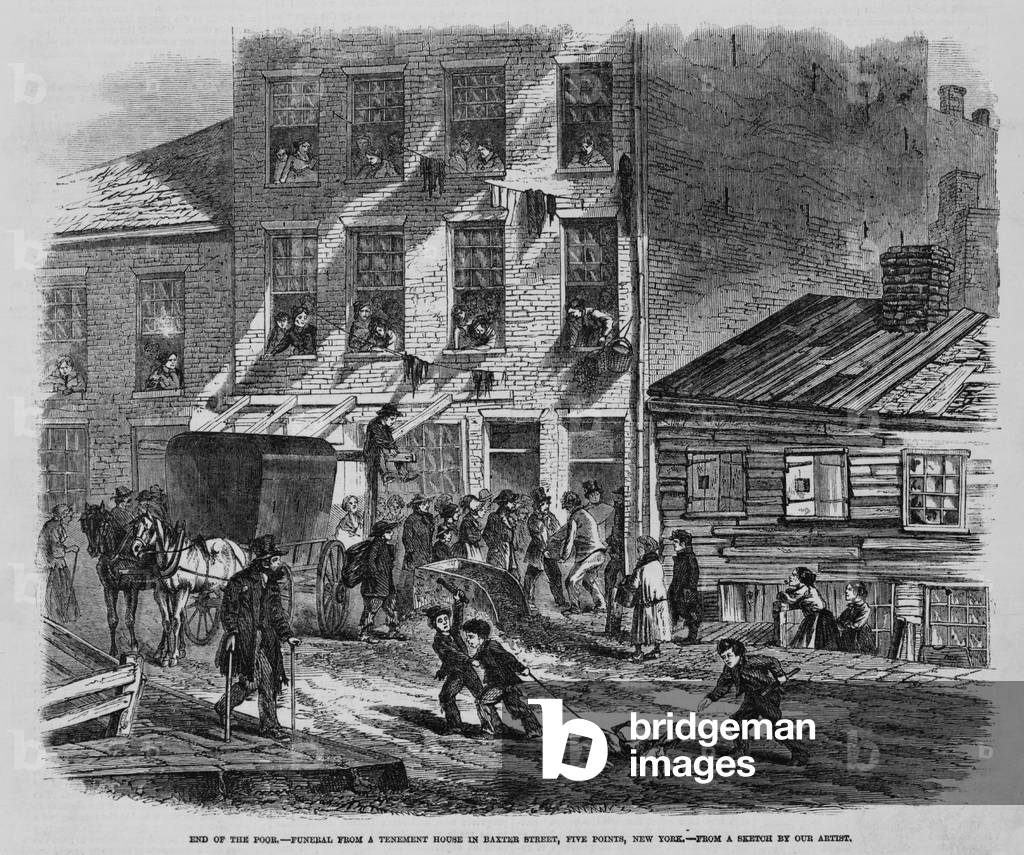
Depressing scene of poverty at Five Points in New York City. People at a tenement house watch men carry out a coffin; in the street, two boys drag a dead dog by one leg. Wood engravings of 1865

EVB2936941: Depressing scene of poverty at Five Points in New York City. People at a tenement house watch men carry out a coffin; in the street, two boys drag a dead dog by one leg. Wood engravings of 1865 / Bridgeman Images

Political cartoon showing Iroquois women on cliff overlooking women marching with banner 'woman suffrage.' It's caption reads: Savagery to 'civilization'--The Indian women: We whom you pity as drudges reached centuries ago the goal that you are now nearing. By Udo Keppler for PUCK Magazine, May 1914

EVB2936948: Political cartoon showing Iroquois women on cliff overlooking women marching with banner 'woman suffrage.' It's caption reads: Savagery to 'civilization'--The Indian women: We whom you pity as drudges reached centuries ago the goal that you are now nearing. By Udo Keppler for PUCK Magazine, May 1914 / Bridgeman Images
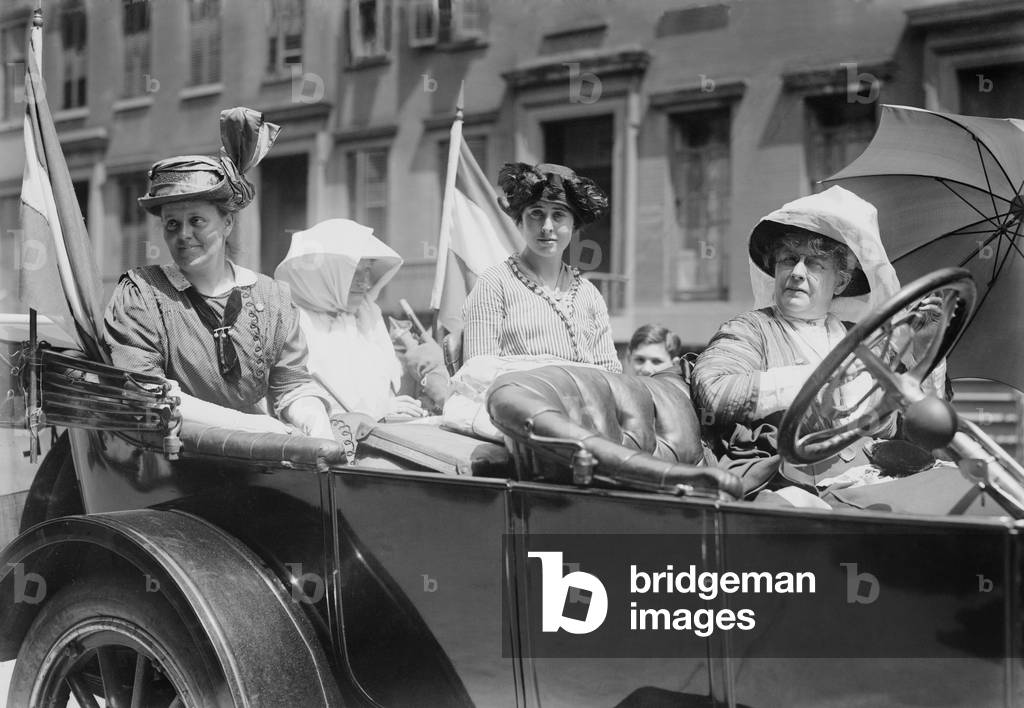
Women's suffrage leaders in an open car at a Votes for Women parade in New York City. Photo shows Susan Walker Fitzgerald, Emma Bugbee, Maggie Murphy, and Harriot Stanton Blatch. Blatch was the daughter of 19th century women's rights leader Elizabeth Cady Stanton. July 30, 1913

EVB2936952: Women's suffrage leaders in an open car at a Votes for Women parade in New York City. Photo shows Susan Walker Fitzgerald, Emma Bugbee, Maggie Murphy, and Harriot Stanton Blatch. Blatch was the daughter of 19th century women's rights leader Elizabeth Cady Stanton. July 30, 1913 / Bridgeman Images
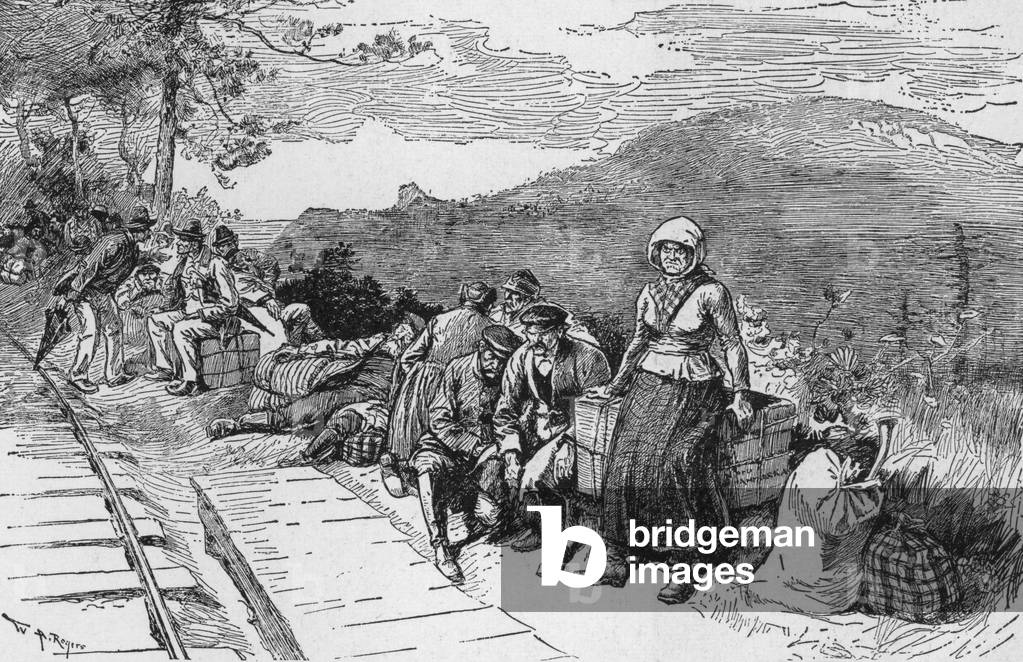
Newly arrived Slavic immigrants recruited to work in Pennsylvania coal mines wait for their train. After the U.S. Civil War, the anthracite mines and steel industry in Pennsylvania attracted Eastern Europeans from Poland, the Austro-Hungarian, and the Russian Empires, building one of the largest concentrations of Slavic Americans in the United States. c. 1880

EVB2936839: Newly arrived Slavic immigrants recruited to work in Pennsylvania coal mines wait for their train. After the U.S. Civil War, the anthracite mines and steel industry in Pennsylvania attracted Eastern Europeans from Poland, the Austro-Hungarian, and the Russian Empires, building one of the largest concentrations of Slavic Americans in the United States. c. 1880 / Bridgeman Images
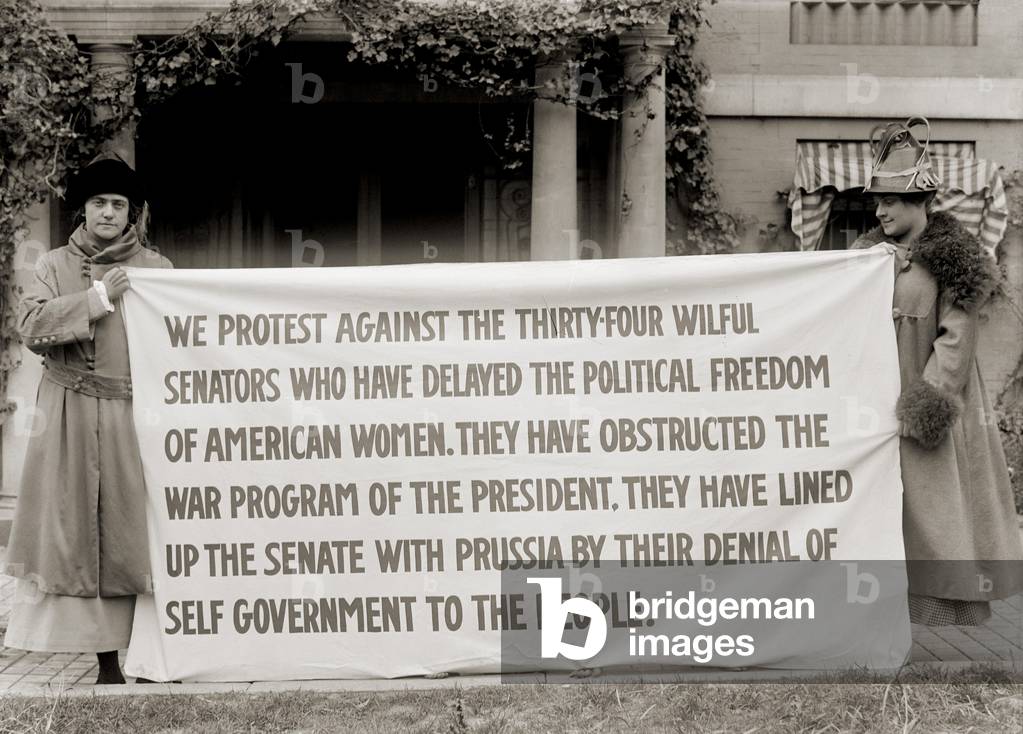
Women's suffrage activists protest the U.S. Senate's failure to pass the federal woman suffrage amendment in 1918. In January 1918, after President Wilson finally declared his support, the House of Representatives, unlike the Senate, passed the amendment by two-thirds majority

EVB2936997: Women's suffrage activists protest the U.S. Senate's failure to pass the federal woman suffrage amendment in 1918. In January 1918, after President Wilson finally declared his support, the House of Representatives, unlike the Senate, passed the amendment by two-thirds majority / Bridgeman Images
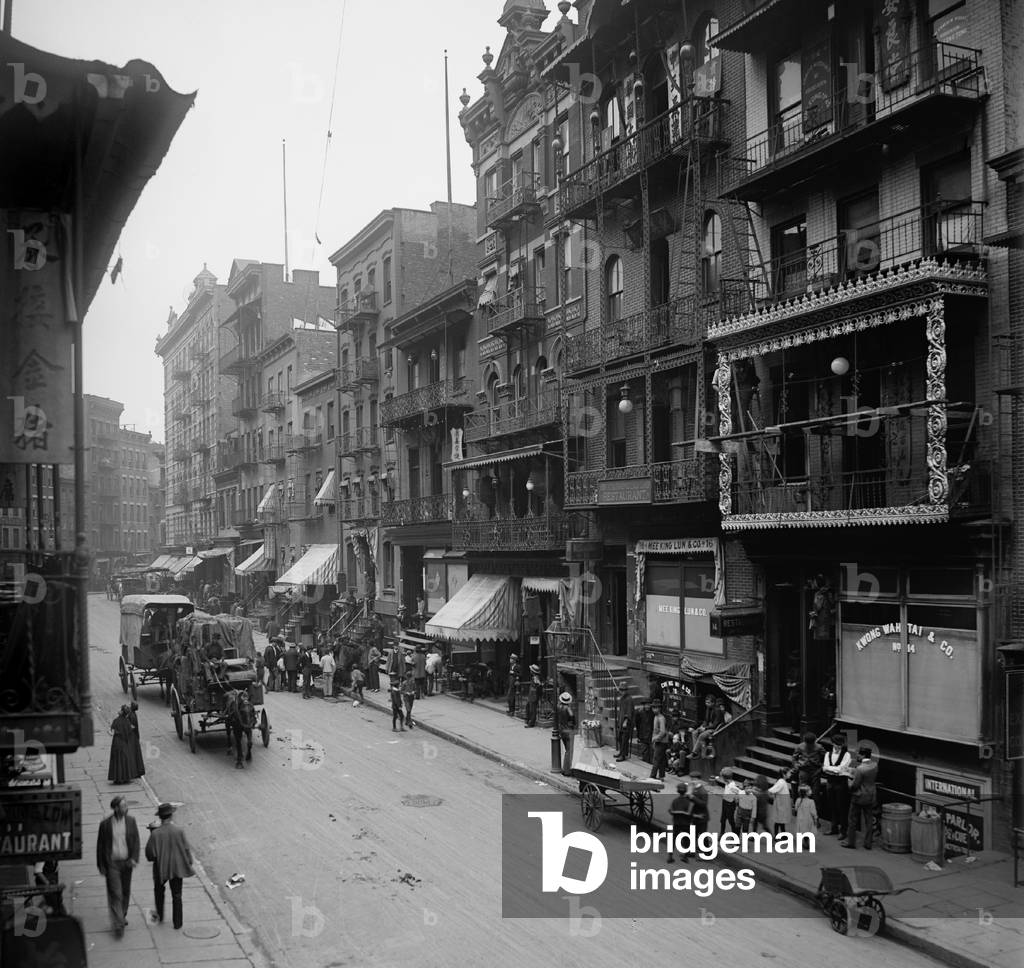
Mott Street in New York City's Chinatown presents a cosmopolitan scene mixing Asian and American-European dress and faces. The street is lined with restaurants, laundries, and pushcarts. c. 1900

EVB2936855: Mott Street in New York City's Chinatown presents a cosmopolitan scene mixing Asian and American-European dress and faces. The street is lined with restaurants, laundries, and pushcarts. c. 1900 / Bridgeman Images
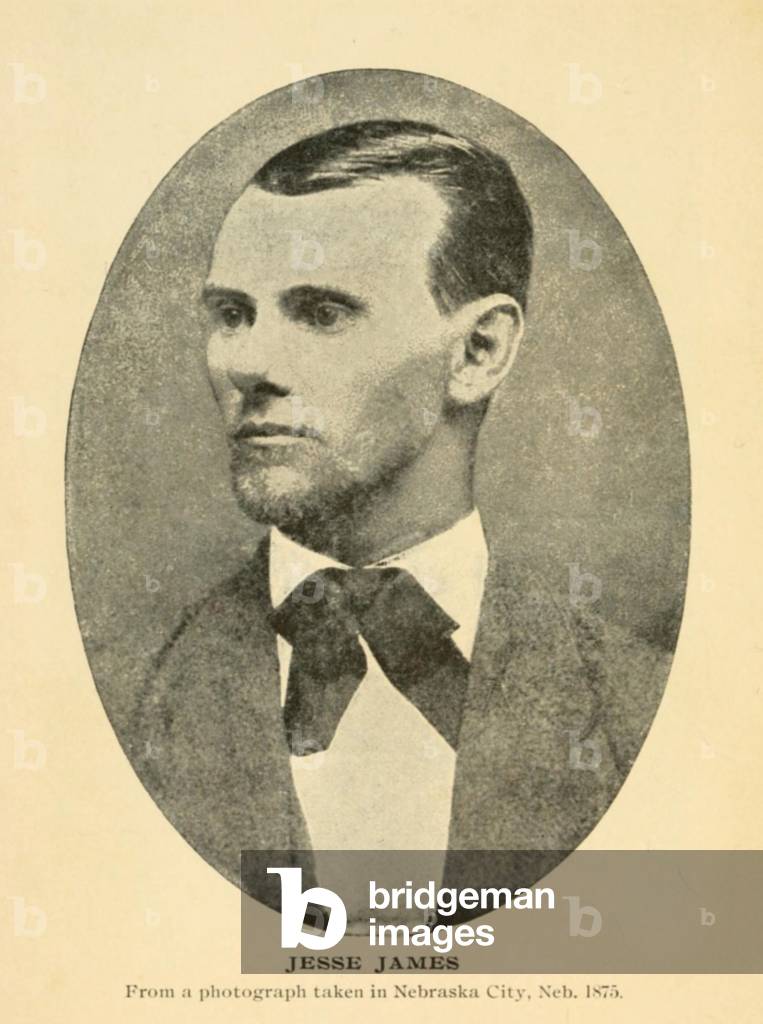
Jesse James (1847-1882)

EVB2937033: Jesse James (1847-1882) / Bridgeman Images

Workers in a cramped New York City garment sweatshop in 1908. Photograph by Lewis Hine

EVB2937098: Workers in a cramped New York City garment sweatshop in 1908. Photograph by Lewis Hine, Hine, Lewis Wickes (1874-1940) / Bridgeman Images
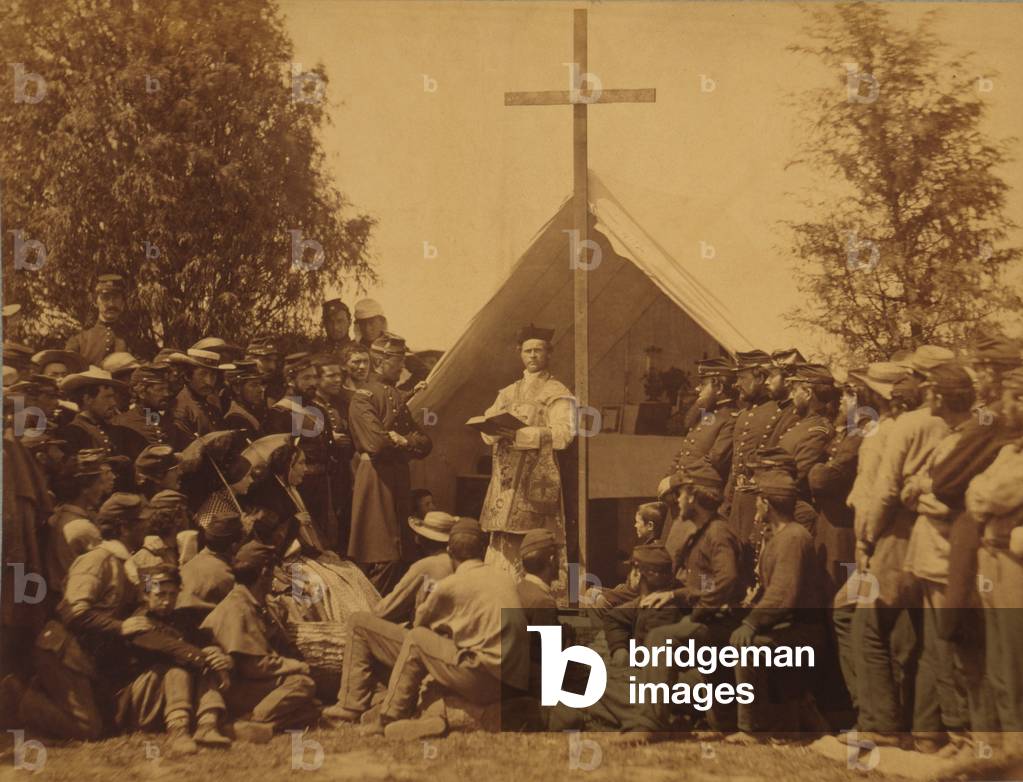
Irish-American soldiers of the 69th New York State Militia, attend Sunday morning mass in camp in Washington, D.C. area, during the first year of the U.S. Civil War. 1861

EVB2936905: Irish-American soldiers of the 69th New York State Militia, attend Sunday morning mass in camp in Washington, D.C. area, during the first year of the U.S. Civil War. 1861, Brady, Mathew (1823-96) / Bridgeman Images

Anti-Immigrant cartoon showing two men with barrels as bodies, labeled 'Irish Wiskey' and 'Lager Bier', carrying a ballot box. In the background is a rioting crowd at a polling place. Nativism, a social and political movement that opposed immigration of Catholic Irish, non-Protestants, and non-English speaking peoples. c. 1850

EVB2936915: Anti-Immigrant cartoon showing two men with barrels as bodies, labeled 'Irish Wiskey' and 'Lager Bier', carrying a ballot box. In the background is a rioting crowd at a polling place. Nativism, a social and political movement that opposed immigration of Catholic Irish, non-Protestants, and non-English speaking peoples. c. 1850 / Bridgeman Images
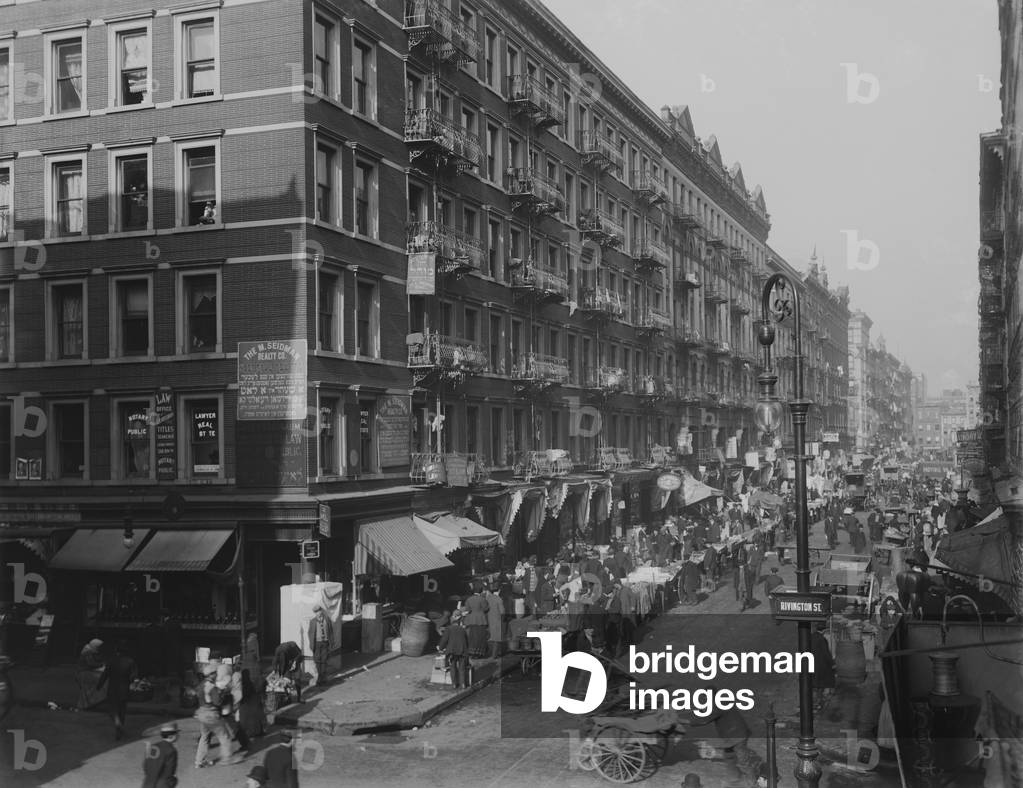
View from Rivington Street on New York City's Lower East Side Jewish neighborhood in 1909

EVB2936924: View from Rivington Street on New York City's Lower East Side Jewish neighborhood in 1909, Unknown photographer, (20th century) / Bridgeman Images
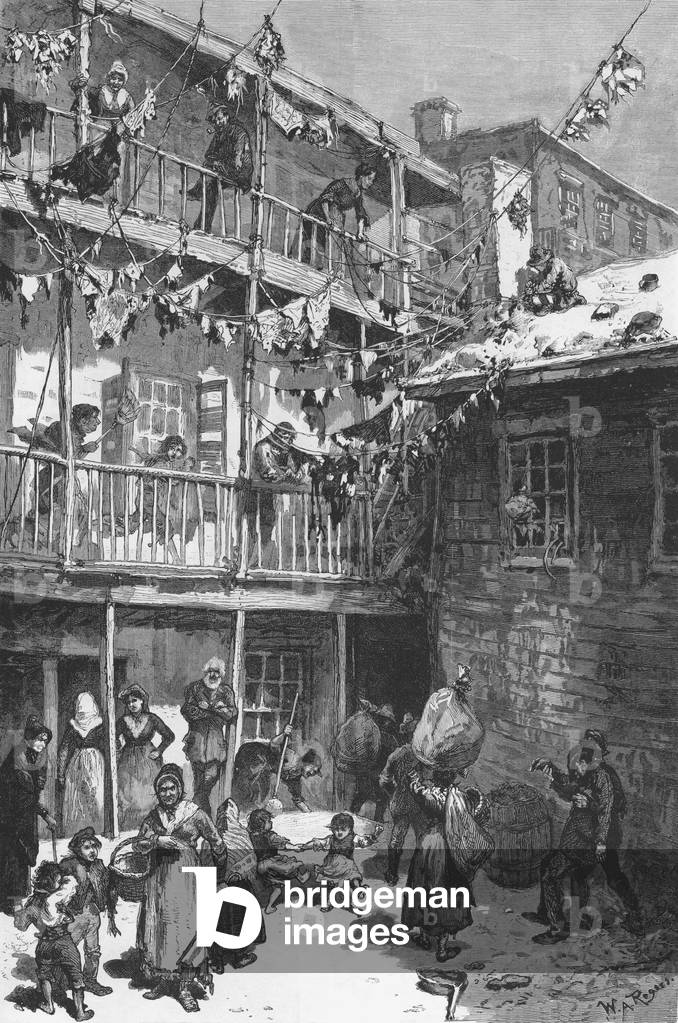
Rag Picker's court, Mulberry Street, 1879. Many poor immigrants started at the bottom of the economic ladder, as rag pickers, who collected useable refuse for reprocessing, essentially recycling in an economy of scarcity. At lower right men carry bundles collected rags. Above, laundered rags are hung out to dry after cleaning

EVB2936936: Rag Picker's court, Mulberry Street, 1879. Many poor immigrants started at the bottom of the economic ladder, as rag pickers, who collected useable refuse for reprocessing, essentially recycling in an economy of scarcity. At lower right men carry bundles collected rags. Above, laundered rags are hung out to dry after cleaning / Bridgeman Images
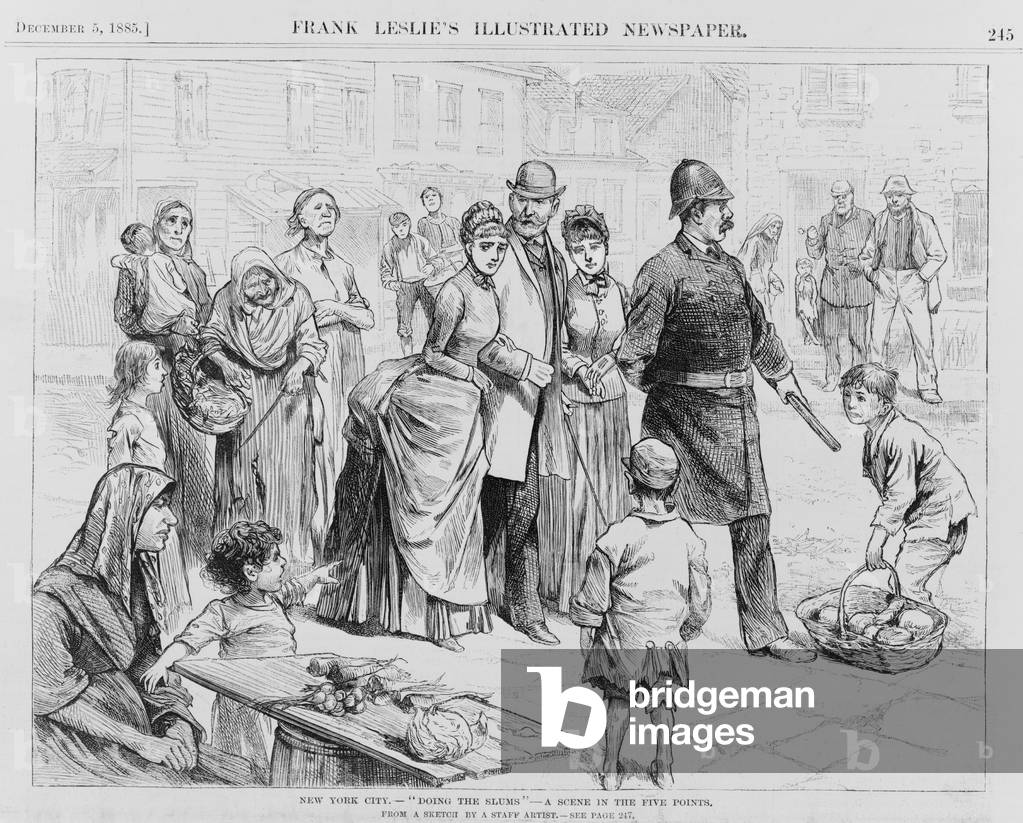
DOING THE SLUMS. A policeman leading three well dressed upper class people through the Five Points neighborhood of New York City. 1885 wood engraving

EVB2936946: DOING THE SLUMS. A policeman leading three well dressed upper class people through the Five Points neighborhood of New York City. 1885 wood engraving / Bridgeman Images
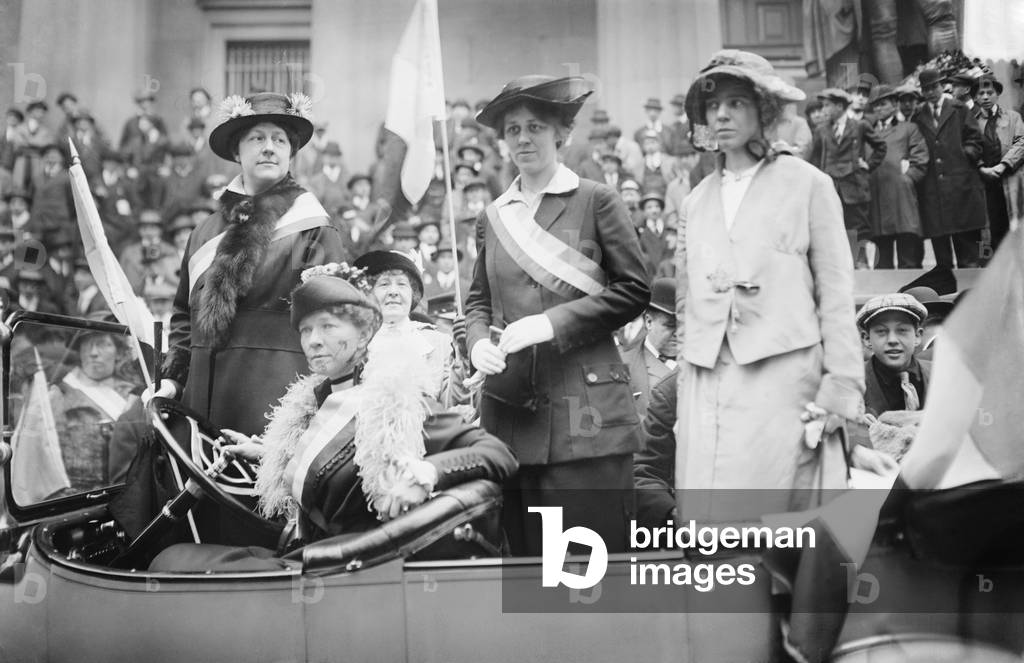
Prominent woman's suffrage advocates parade in an open car supporting the ratification of the 19th amendment granting women the right to vote in federal elections. Left to right: Mrs. W.L. Prendergast, Mrs. W.L. Colt, Doris Stevens, Alice Paul

EVB2936967: Prominent woman's suffrage advocates parade in an open car supporting the ratification of the 19th amendment granting women the right to vote in federal elections. Left to right: Mrs. W.L. Prendergast, Mrs. W.L. Colt, Doris Stevens, Alice Paul / Bridgeman Images
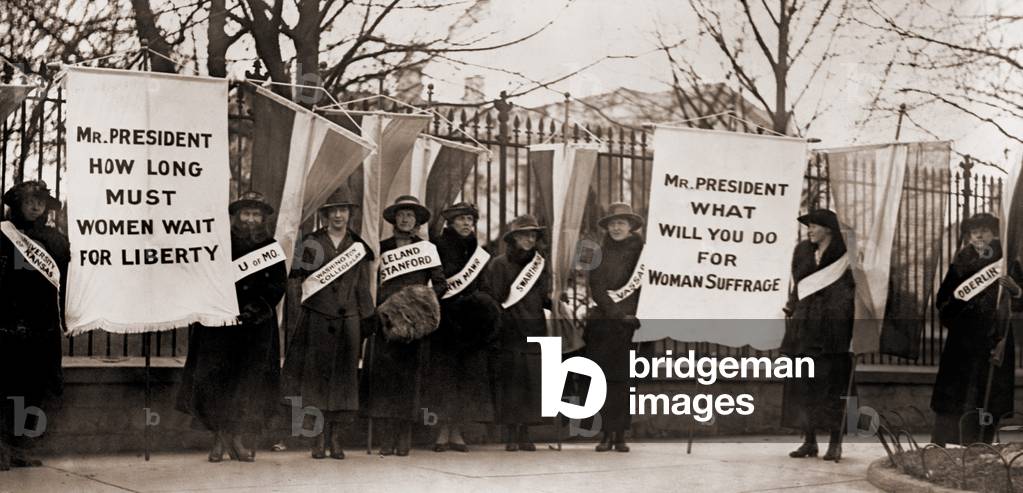
National Women's Party demonstration by college women in front of the White House in 1918. The banner protests Wilson's failure to support women's suffrage

EVB2937002: National Women's Party demonstration by college women in front of the White House in 1918. The banner protests Wilson's failure to support women's suffrage / Bridgeman Images
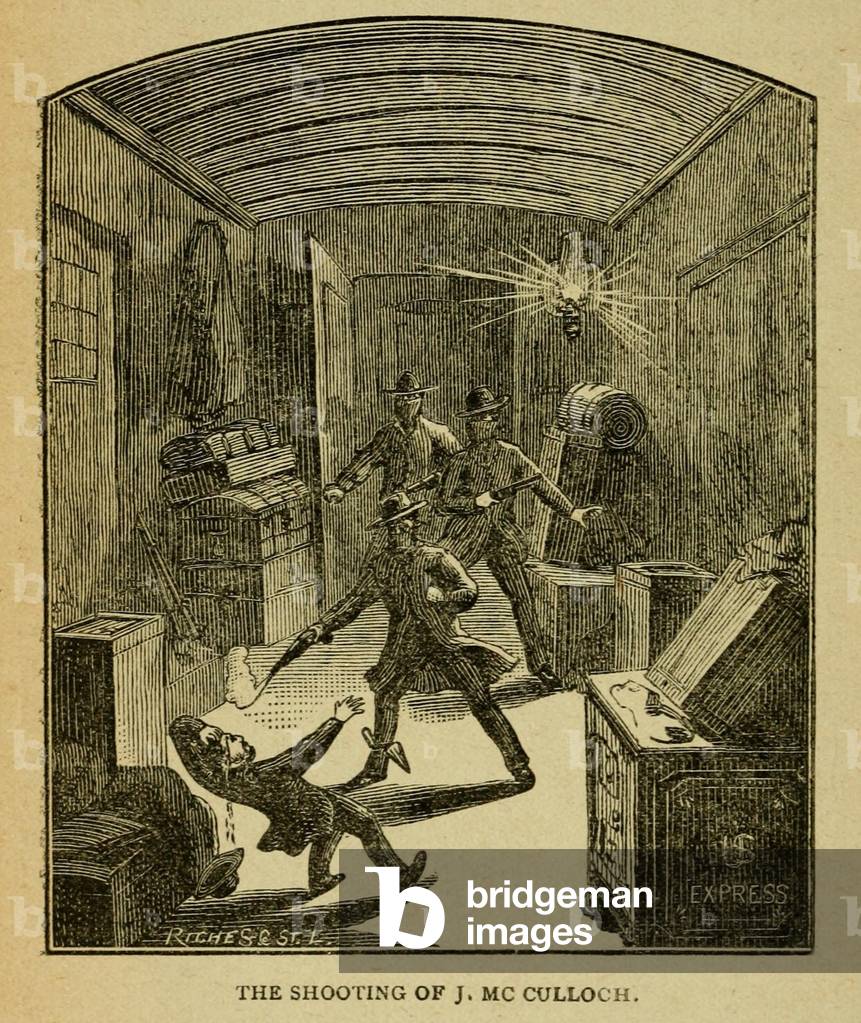
Unidentified masked robbers, suspected to be the James gang, robbed a passenger train at Winston, Missouri on July 15, 1881. They killed a second man in the baggage car before they escaped with ,000 in bills and coins. In response, the governor of Missouri placed a ,000 reward for the gang

EVB2937031: Unidentified masked robbers, suspected to be the James gang, robbed a passenger train at Winston, Missouri on July 15, 1881. They killed a second man in the baggage car before they escaped with ,000 in bills and coins. In response, the governor of Missouri placed a ,000 reward for the gang / Bridgeman Images
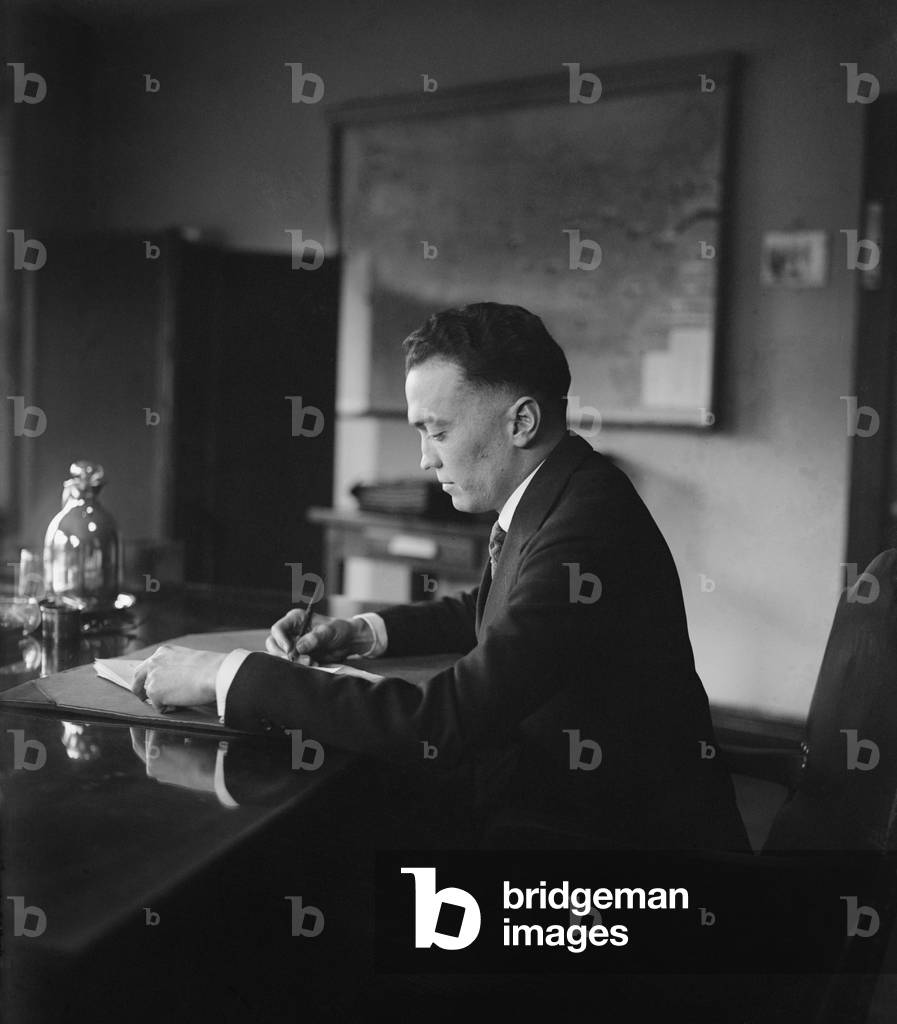
J. Edgar Hoover (1895-1972), as director of the Bureau of Investigation in 1924. Under his leadership the Bureau became the FBI in 1935, which he headed until his death in 1972. Photo taken Dec. 22, 1924

EVB2937044: J. Edgar Hoover (1895-1972), as director of the Bureau of Investigation in 1924. Under his leadership the Bureau became the FBI in 1935, which he headed until his death in 1972. Photo taken Dec. 22, 1924 / Bridgeman Images


Back to top